

Is the Toyota Yaris Cross Reliable? 2026 Guide

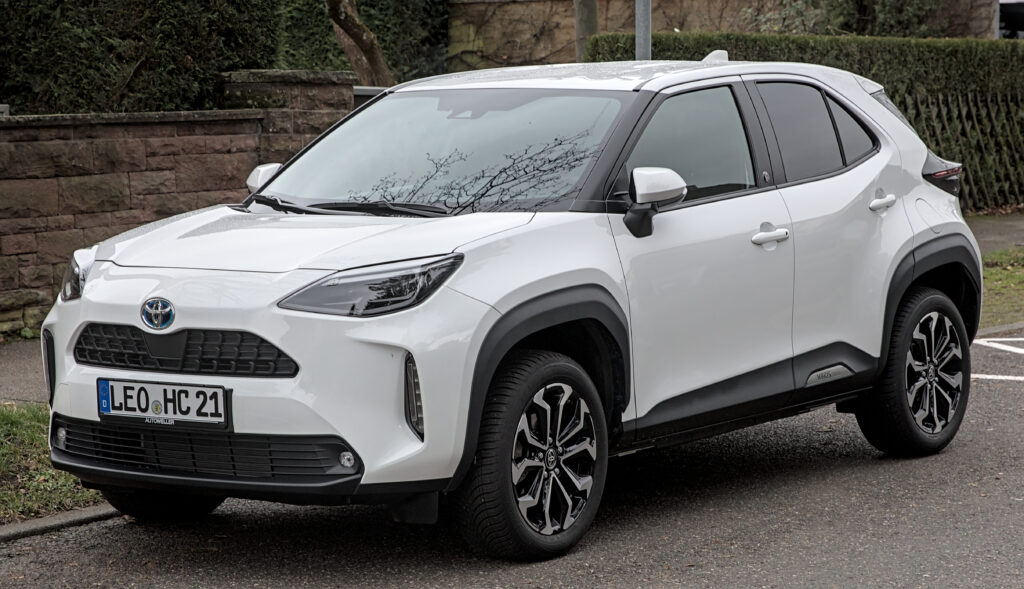
The Toyota Yaris Cross has become one of the most popular small SUVs for drivers looking for excellent fuel economy, manageable running costs, and the reassurance of Toyota's reputation for reliability. But is the Toyota Yaris Cross reliable enough to justify buying one in 2026?
The answer is generally yes, although its reliability record is more complicated than Toyota's reputation might suggest.
The Yaris Cross benefits from a well-established hybrid system, a relatively straightforward petrol engine, and a durable automatic transmission design. However, independent reliability surveys have identified a significant weakness involving the 12V auxiliary battery.
In this guide, we'll examine Toyota Yaris Cross reliability ratings, common problems, hybrid battery durability, maintenance requirements, and the model years worth considering. We'll also look at whether buying a used Yaris Cross makes financial sense.
Content in this publication
- Is the Toyota Yaris Cross a Reliable Car?
- Toyota Yaris Cross Reliability Ratings in 2026
- Common Toyota Yaris Cross Problems
- Is the Toyota Yaris Cross Hybrid Reliable?
- Does the Toyota Yaris Cross Have Hybrid Battery Problems?
- Is the Toyota Yaris Cross Engine Reliable?
- Is the Toyota Yaris Cross e-CVT Transmission Reliable?
- How Long Does a Toyota Yaris Cross Last?
- Toyota Yaris Cross Reliability by Model Year
- Toyota Yaris Cross Years to Avoid
- Toyota Yaris Cross Recalls and Safety Issues
- Toyota Yaris Cross Maintenance Costs
- Toyota Yaris Cross Warranty Coverage
- Toyota Yaris Cross vs Competitors: Reliability
- Is the Toyota Yaris Cross Good for Long-Distance Driving?
- Is the Toyota Yaris Cross Reliable for City Driving?
- What to Check Before Buying a Used Toyota Yaris Cross
- Is a Used Toyota Yaris Cross Worth Buying?
- Toyota Yaris Cross Reliability: Pros and Cons
- How to Improve Toyota Yaris Cross Reliability
- Frequently Asked Questions
- Conclusion: Is the Toyota Yaris Cross Reliable?
Is the Toyota Yaris Cross a Reliable Car?
The Toyota Yaris Cross is a generally dependable small hybrid SUV, but it is not among the most reliable vehicles in its class according to recent independent surveys.
Its biggest strengths include an established hybrid powertrain, relatively simple mechanical construction, and Toyota's extensive experience manufacturing fuel-efficient vehicles.
Unlike some small SUVs that use complicated turbocharged engines or dual-clutch transmissions, the European Yaris Cross hybrid combines a naturally aspirated 1.5-litre petrol engine with an electric motor and an electronically controlled continuously variable transmission (e-CVT).
This configuration has several potential reliability advantages:
- No conventional turbocharger on the hybrid engine.
- An e-CVT that avoids traditional stepped automatic gear changes.
- Regenerative braking that can reduce wear on conventional brakes.
- An established Toyota hybrid operating system.
- Generally predictable routine maintenance requirements.
- Extensive manufacturer and dealer support.
Nevertheless, the model has experienced more reported electrical problems than some buyers might expect.
The most important issue involves the small 12V battery, which supports the vehicle's electrical systems and allows the hybrid system to start operating.
Toyota Yaris Cross Reliability at a Glance
| Category | Reliability assessment |
|---|---|
| Petrol engine | Established design with encouraging durability characteristics |
| Hybrid system | Proven technology, but limited very-long-term model data |
| e-CVT transmission | Mechanically straightforward and generally robust |
| 12V auxiliary battery | Main documented reliability weakness |
| High-voltage hybrid battery | No comparable widespread failure pattern established |
| Electronics | Some reported issues; recalls should be checked |
| Maintenance | Relatively straightforward |
| Long-term durability | Promising, but still developing |
| Overall verdict | A sensible choice with an important battery-related caveat |
The distinction between mechanical reliability and electrical dependability is particularly important.
A vehicle can have a durable engine and transmission yet still leave its owner stranded because of a relatively inexpensive electrical component.
That is exactly why we should examine the Yaris Cross's independent reliability data instead of relying exclusively on Toyota's reputation.
Toyota Yaris Cross Reliability Ratings in 2026
Recent independent research gives us a clearer picture of how the Yaris Cross performs in everyday ownership.
What Car? Reliability Survey
In the 2025 What Car? Reliability Survey, the Toyota Yaris Cross received a reliability rating of approximately 91.4%.
That placed it below several competing small SUVs, despite Toyota's traditionally strong performance in reliability research.
The result was significantly influenced by problems involving the 12V battery.
It is important to understand that a 91.4% reliability score does not mean that exactly 8.6% of Yaris Cross vehicles will break down.
Reliability surveys use their own methodologies, which can consider fault frequency, repair duration, and repair costs.
The percentage is therefore a comparative reliability rating rather than an individual vehicle's probability of failure.
What Does the Which? Reliability Survey Reveal?
Research published by the UK consumer organisation Which? identified a particularly concerning pattern.
In its survey data, the Toyota Yaris Cross had a reported 12V battery fault rate of 19.1%.
For comparison, approximately 5.6% of full hybrid vehicles across all brands in that survey experienced a 12V battery problem.
This suggests that auxiliary battery reliability has been a disproportionately important issue for Yaris Cross owners.
However, this does not mean that 19.1% of every Yaris Cross ever manufactured has experienced a battery failure.
The result reflects the surveyed vehicles and the research methodology.
What Do German Breakdown Statistics Show?
Germany's ADAC breakdown statistics provide another useful perspective.
Its 2026 report recorded the following roadside breakdown rates for Yaris Cross vehicles registered in different years:
| Registration year | Breakdowns per 1,000 vehicles |
|---|---|
| 2022 | 63.4 |
| 2023 | 43.0 |
The auxiliary battery was identified as the principal problem.
These figures refer to breakdown incidents recorded through ADAC's methodology. They should not be interpreted as the percentage of cars that will necessarily experience a breakdown during their lifetime.
The evidence reinforces one important conclusion: 12V battery problems are a genuine reliability concern rather than an isolated owner complaint.
Common Toyota Yaris Cross Problems
Although the Yaris Cross is not generally associated with widespread catastrophic engine or transmission failures, there are several issues we should understand before purchasing one.
1. Toyota Yaris Cross 12V Battery Problems
The most widely documented Toyota Yaris Cross problem involves the 12V auxiliary battery.
Owners may experience:
- A vehicle that will not enter READY mode.
- Warning messages after attempting to start.
- Electrical accessories failing to operate normally.
- The need for roadside assistance.
- Repeated battery discharge after periods of inactivity.
The auxiliary battery is different from the much larger high-voltage hybrid battery.
Even when the hybrid battery contains sufficient energy, a discharged 12V battery may prevent the vehicle from starting.
Why Does the Yaris Cross 12V Battery Go Flat?
Several factors can contribute to auxiliary battery discharge.
These include repeated short journeys, extended parking periods, battery deterioration, and electrical consumption while the vehicle is switched off.
The charging behaviour of a hybrid vehicle also differs from that of a conventional petrol car.
When operating normally, the vehicle uses its hybrid electrical system to maintain the 12V battery rather than depending on a traditional engine-driven alternator.
Toyota has acknowledged battery-related problems and introduced higher-capacity batteries in various markets.
According to information published in 2026, higher-capacity batteries became available for Yaris and Yaris Cross vehicles in the UK from October 2025.
Toyota also reported improvements after introducing larger batteries into German-market production from late 2024.
Nevertheless, buyers should confirm whether the specific vehicle they are considering has received the relevant improvement.
How Can We Reduce the Risk?
Practical precautions include:
- Having the 12V battery tested during servicing.
- Checking for outstanding manufacturer service campaigns.
- Avoiding unnecessary electrical accessory use while the vehicle is switched off.
- Following Toyota's recommendations when storing the vehicle.
- Investigating repeated discharge instead of simply replacing the battery without diagnosis.
For an older used vehicle, documented battery replacement or manufacturer-approved corrective work can be reassuring.
2. Infotainment and Connectivity Complaints
Some Yaris Cross owners have reported occasional frustrations with multimedia technology.
Possible symptoms include slow touchscreen responses, smartphone connection problems, and intermittent software behaviour.
However, we should distinguish occasional owner complaints from a verified widespread mechanical defect.
If we are purchasing a used Yaris Cross, testing the infotainment system is sensible.
We should check the reversing camera, Bluetooth connectivity, navigation functions where equipped, and smartphone integration.
Software updates may resolve certain issues, although they cannot guarantee that every electronic problem will disappear.
3. Dashboard Warning Lights and Electronic Faults
Unexpected warning messages are another area worth checking.
These can have many causes, ranging from a weak auxiliary battery to genuine faults involving sensors or electronic systems.
A low 12V battery can sometimes produce multiple warnings, making the situation appear more serious than the underlying problem.
Nevertheless, warning lights should never be dismissed automatically as battery-related.
If a used Yaris Cross displays persistent hybrid-system, brake-system, or other important warning messages, we recommend having it inspected before purchasing.
4. Suspension Noise and Ride Comfort
Some drivers describe the Yaris Cross as having a firm ride, particularly on versions equipped with larger alloy wheels.
This is primarily a comfort characteristic rather than evidence of poor suspension reliability.
Nevertheless, knocking noises, uneven tyre wear, leaking shock absorbers, and excessive vibration should be investigated.
A vehicle used frequently on poorly maintained roads may experience greater suspension wear than one driven mainly on smooth urban roads.
During a test drive, we should pay attention to unusual noises when crossing bumps or turning at low speeds.
5. Interior Rattles and Cabin Noise
The Yaris Cross prioritises practical construction and efficiency rather than luxury-level refinement.
Some drivers notice road noise, engine noise during acceleration, or occasional cabin rattles.
The hybrid engine can sound particularly noticeable during demanding acceleration because the transmission allows engine speed to rise independently of road speed.
This behaviour is generally normal.
However, a new vibration, metallic noise, or unusually harsh mechanical sound deserves inspection.
We should not confuse typical hybrid operating characteristics with an actual reliability problem.
Is the Toyota Yaris Cross Hybrid Reliable?
The hybrid system is one of the strongest arguments in favour of purchasing the Yaris Cross.
Toyota has been developing and manufacturing hybrid vehicles for decades, beginning with the original Prius.
That extensive experience matters because the Yaris Cross does not depend on an entirely unfamiliar propulsion concept.
How the Hybrid System Works
In many markets, the Yaris Cross uses a 1.5-litre three-cylinder petrol engine combined with an electric motor and a compact high-voltage battery.
Depending on the model year and market, the European Yaris Cross has been offered in Hybrid 115 and Hybrid 130 versions.
Both use the same general full-hybrid concept.
The vehicle can switch between petrol power, electric assistance, and combined operation according to driving conditions.
Energy recovered during braking helps recharge the hybrid battery.
Unlike a plug-in hybrid, the conventional Yaris Cross full hybrid does not need external charging.
Why Toyota's Hybrid Design Can Be Durable
Several technical characteristics are favourable for long-term ownership.
The petrol engine does not rely on a turbocharger in the European hybrid configuration, avoiding one additional component that could eventually require expensive repair.
The electric motor can support the petrol engine during acceleration and allow limited electric-only operation.
The hybrid transmission also avoids the conventional multi-speed gear changes found in many automatic vehicles.
However, mechanical simplicity should not be confused with immunity from faults.
You may be interested in reading Toyota Yaris Cross vs C-HR: Which Hybrid SUV Reigns Supreme?
Hybrid vehicles still contain power electronics, cooling systems, sensors, wiring, and expensive high-voltage components.
Regular servicing and proper diagnosis remain essential.
Does the Toyota Yaris Cross Have Hybrid Battery Problems?
One of the biggest misconceptions about the Yaris Cross involves the difference between its two batteries.
The frequently reported 12V auxiliary battery failures are not the same as failures of the high-voltage hybrid traction battery.
The hybrid battery supplies energy for electric propulsion.
The auxiliary battery supports the vehicle's low-voltage electrical systems and startup controls.
| Feature | 12V auxiliary battery | Hybrid traction battery |
|---|---|---|
| Main purpose | Electrical systems and vehicle startup | Electric propulsion and energy storage |
| Relative size | Small | Larger high-voltage system |
| Documented Yaris Cross issue | Elevated reported fault rate | No equivalent widespread failure pattern established |
| Replacement complexity | Generally lower | Requires specialised procedures |
| Typical replacement expense | Relatively modest | Potentially substantial |
The Yaris Cross's high-voltage hybrid battery has not demonstrated the same documented widespread failure pattern as its auxiliary battery.
That is encouraging.
However, because the model was introduced in 2021 in Europe, there is still less model-specific evidence about hybrid battery performance after 12 to 15 years than there is for older Toyota hybrids.
We should therefore avoid treating long-term hybrid battery durability as fully proven for this particular model.
Is the Toyota Yaris Cross Engine Reliable?
The European Yaris Cross hybrid uses a 1.5-litre three-cylinder petrol engine.
Its naturally aspirated design avoids the additional pressure and thermal demands associated with turbocharging, although this alone does not establish a particular failure rate.
The engine operates alongside the electric motor, allowing the hybrid system to manage engine use according to driving requirements.
Are Three-Cylinder Engines Less Reliable?
A common concern is whether three-cylinder engines are inherently less durable than four-cylinder alternatives.
The number of cylinders does not determine reliability by itself.
Engine design, manufacturing quality, lubrication, cooling, maintenance, and operating conditions all play important roles.
The Yaris Cross's three-cylinder layout can produce a different sound and vibration character from a larger four-cylinder engine.
That does not automatically indicate abnormal wear.
For long-term ownership, we recommend prioritising oil changes, coolant condition, appropriate servicing, and prompt investigation of unusual noises.
Are There Major Engine Failure Reports?
As of 2026, the strongest independent evidence concerning Yaris Cross reliability centres on auxiliary battery failures rather than an established epidemic of catastrophic petrol-engine damage.
This does not mean that engine failures are impossible.
Individual vehicles may develop problems because of manufacturing defects, neglect, overheating, contamination, or other causes.
A complete service history remains more valuable than simply assuming that every Toyota engine will last indefinitely.
Is the Toyota Yaris Cross e-CVT Transmission Reliable?
The e-CVT is another important advantage of the hybrid Yaris Cross.
Despite its name, Toyota's hybrid e-CVT is not the same mechanical design as a conventional belt-driven CVT.
Instead, the hybrid system uses a power-split arrangement that coordinates the petrol engine and electric motors.
This avoids some of the components and operating characteristics found in traditional automatic transmissions.
Does the e-CVT Require Maintenance?
The exact maintenance requirements depend on the vehicle's market, service schedule, and operating conditions.
Toyota does not necessarily prescribe frequent transmission fluid replacements under every normal-use schedule.
Nevertheless, we recommend checking the official maintenance documentation for the specific vehicle.
Transmission fluid condition, leaks, unusual noises, and fault codes should be investigated whenever appropriate.
We would not recommend assuming that any transmission is permanently maintenance-free simply because its design is considered durable.
How Long Does a Toyota Yaris Cross Last?
The Toyota Yaris Cross has the potential to provide many years of service, but there is not yet enough long-term, model-specific evidence to establish a definitive average lifespan.
With proper maintenance, reaching 150,000 miles or more is a reasonable ownership goal rather than a guaranteed outcome.
Some vehicles may exceed that distance, while others may require significant repairs much earlier.
The factors influencing longevity include:
- Maintenance history.
- Driving conditions.
- Annual mileage.
- Climate and road quality.
- Battery health.
- Previous accident damage.
- Timely repairs.
- Quality of replacement components.
Can the Toyota Yaris Cross Last 200,000 Miles?
It is possible for a well-maintained Yaris Cross to reach 200,000 miles, but we cannot yet treat that as an established typical lifespan.
The model is still relatively young, and the number of high-mileage examples remains limited compared with older Toyota vehicles.
When considering long-term ownership, we should assess not only whether the engine can survive but also whether maintaining the vehicle remains economically worthwhile.
Battery replacements, suspension components, electronics, and other age-related repairs can affect the total cost of ownership.
Toyota Yaris Cross Reliability by Model Year
Not every Yaris Cross is identical.
Equipment, battery specifications, software, and hybrid powertrain options have evolved since the model's introduction.
The following overview focuses primarily on European-market vehicles. Specifications and production changes may differ in Australia, Japan, and other markets.
| Model year | Reliability considerations |
|---|---|
| 2021 | Early vehicles; inspect auxiliary battery condition and recall history |
| 2022 | Higher breakdown rates recorded in German data for this registration year |
| 2023 | Battery concerns remain relevant; check applicable recalls |
| 2024 | Updated technology and additional hybrid powertrain options in some markets |
| 2025 | Battery improvements introduced or made available in certain markets |
| 2026 | Updated specifications; confirm production date and battery equipment |
Are the 2021–2023 Toyota Yaris Cross Models Reliable?
Earlier Yaris Cross vehicles can still represent good used purchases.
However, their auxiliary battery history deserves particular attention.
ADAC's breakdown data identifies 2022 and 2023 registrations as problematic, largely because of battery failures.
Buyers should check whether the battery has been replaced, whether there have been repeated roadside assistance incidents, and whether relevant manufacturer improvements have been completed.
Are the 2024–2026 Models Better?
Later models benefit from Toyota's continuing product development, although we should avoid assuming that every newer Yaris Cross is automatically problem-free.
Toyota introduced various specification updates, including newer hybrid powertrain options and additional technology.
More importantly for reliability, larger-capacity auxiliary batteries were introduced in different markets during the subsequent production period.
Toyota reported a substantial reduction in battery-related warranty claims on newer German-market Yaris and Yaris Cross vehicles after its changes.
That is encouraging manufacturer-reported evidence, although independent long-term confirmation is still developing.
For UK buyers, the larger battery's availability from October 2025 is particularly relevant.
The manufacturing date and actual battery fitted are more useful than the registration year alone.
Toyota Yaris Cross Years to Avoid
We would not recommend automatically avoiding every Yaris Cross manufactured before 2024.
However, 2022 and 2023 examples deserve closer inspection because of the battery problems highlighted in independent breakdown statistics.
A well-maintained 2022 vehicle with a documented battery improvement and completed recalls could be a better purchase than a neglected 2025 example.
Similarly, a newer vehicle that repeatedly experiences electrical failures should not be considered reliable simply because it has a recent registration date.
Our recommendation is to evaluate each vehicle individually rather than relying exclusively on model-year labels.
Toyota Yaris Cross Recalls and Safety Issues
Reliability problems and safety recalls are related but different subjects.
A recall can involve a safety-related defect even when most vehicles never experience a breakdown.
The Yaris Cross has been included in several recall campaigns in certain markets.
These have included issues involving emergency-call software, incorrectly tightened wheel nuts on a limited production batch, and instrument display programming on affected vehicles.
The exact campaigns vary by market and production date.
Before buying a used Yaris Cross, we recommend asking an authorised Toyota dealer to check the vehicle identification number (VIN) for outstanding recalls and service campaigns.
A completed recall does not automatically mean that a vehicle is unreliable. In fact, confirming that corrective work has been performed is an important part of responsible used-car purchasing.
Toyota Yaris Cross Maintenance Costs
One reason the Yaris Cross remains attractive is its relatively straightforward routine servicing.
Its full-hybrid powertrain can deliver excellent fuel efficiency, particularly during urban driving, helping offset some ownership expenses.
However, maintenance costs depend on the country, dealership, mileage, labour rates, and condition of the vehicle.
Recommended Service Intervals
For UK-market 1.5-litre hybrid Yaris Cross models, Toyota has published a routine service interval of approximately:
Every 12 months or 10,000 miles, whichever comes first.
Other markets may specify different intervals.
We should always follow the schedule applicable to the vehicle's specification and operating conditions.
Typical Maintenance Items
| Maintenance item | Why it matters |
|---|---|
| Engine oil and filter | Protects internal engine components |
| Engine air filter | Maintains suitable airflow |
| Cabin filter | Supports ventilation performance |
| Brake fluid | Maintains braking system condition |
| Brake inspection | Checks wear, corrosion, and operation |
| Tyres | Supports safety, grip, and efficiency |
| Coolant inspection | Helps protect engine and hybrid-system components |
| 12V battery testing | Particularly important due to known issues |
| Hybrid-system inspection | Helps identify developing electrical or cooling problems |
Toyota hybrids can sometimes experience reduced conventional brake wear because regenerative braking performs part of the deceleration.
Nevertheless, friction brakes still require inspection.
In areas with frequent rain, winter road salt, or limited braking activity, corrosion can become a concern.
Is the Toyota Yaris Cross Expensive to Repair?
Routine servicing is generally manageable for a vehicle in this class.
The more significant potential expenses involve repairs outside warranty coverage.
High-voltage hybrid components and specialised electronic systems can be expensive if replacement becomes necessary.
However, potential repair cost should not be confused with the likelihood of the repair being required.
We recommend obtaining local servicing estimates and checking the remaining warranty before calculating total ownership costs.
Toyota Yaris Cross Warranty Coverage
Toyota's warranty support is an important factor when evaluating Yaris Cross reliability.
You may be interested in readingToyota Yaris Cross vs C-HR: Which Hybrid SUV Reigns Supreme?You may be interested in reading
 Toyota Yaris Cross vs Lexus LBX: The Compact SUV Showdown
In the UK, eligible vehicles can benefit from Toyota's service-activated warranty programme.
Newer UK-market Toyota vehicles generally receive an initial three-year or 60,000-mile manufacturer warranty.
After that, qualifying servicing at an authorised Toyota dealer can provide additional warranty coverage until the vehicle reaches 10 years of age or 100,000 miles, whichever comes first.
Terms, exclusions, and eligibility requirements apply.
Hybrid batteries and related components may have separate warranty provisions depending on the market and programme.
We recommend checking the precise warranty terms before purchasing rather than assuming that every part is covered for the maximum period.
Why Warranty Coverage Matters
A long warranty does not prove that a vehicle never develops faults.
However, it can reduce the financial consequences of certain unexpected repairs.
For buyers planning to keep their Yaris Cross for several years, documented servicing and continued eligibility for manufacturer coverage are valuable advantages.
Toyota Yaris Cross vs Competitors: Reliability
The Yaris Cross competes with several popular small SUVs, including the Honda HR-V, Ford Puma, Renault Captur, Nissan Juke, and Volkswagen T-Roc.
Each model has different strengths and potential reliability concerns.
| Model | Reliability consideration |
|---|---|
| Toyota Yaris Cross | Established hybrid technology but notable 12V battery issues |
| Honda HR-V | Hybrid-focused alternative worth comparing using current owner data |
| Ford Puma | Different powertrain characteristics and maintenance requirements |
| Renault Captur | Reliability depends partly on engine and transmission version |
| Nissan Juke | Petrol and hybrid versions should be assessed separately |
| Volkswagen T-Roc | Strong results in recent small-SUV reliability research |
The Yaris Cross does not automatically outperform its competitors simply because it carries the Toyota badge.
For example, the Volkswagen T-Roc performed strongly in the 2025 What Car? small-SUV reliability survey, while the Yaris Cross received a more modest rating.
That does not mean every T-Roc is necessarily more dependable than every Yaris Cross.
Survey results reflect particular vehicle populations, model years, and reported ownership experiences.
Is the Toyota Yaris Cross More Reliable Than the Honda HR-V?
Both vehicles use established Japanese hybrid technology in markets where their hybrid versions are sold.
The Honda HR-V is a credible alternative for drivers prioritising practicality, efficiency, and long-term ownership.
However, we would not declare either model the universal winner without comparing equivalent production years and current reliability evidence.
The Yaris Cross's documented auxiliary battery weakness is a relevant disadvantage to investigate.
Toyota Yaris Cross vs Ford Puma Reliability
The Ford Puma offers an engaging driving experience and practical features.
Its engines and transmission options differ from Toyota's full-hybrid configuration, meaning the potential maintenance considerations are not identical.
Both vehicles deserve inspection for model-specific faults.
The Yaris Cross may particularly appeal to drivers seeking full-hybrid fuel economy, while the Puma may suit buyers who place greater emphasis on driving dynamics.
Is the Toyota Yaris Cross Good for Long-Distance Driving?
Reliability is about more than surviving daily trips around town.
For drivers regularly travelling on motorways or rural roads, comfort, performance, and fuel efficiency also matter.
The Yaris Cross is capable of longer journeys, although it is primarily designed as a compact crossover.
Its hybrid system is particularly efficient in stop-start traffic, where regenerative braking and electric assistance can provide substantial benefits.
At sustained motorway speeds, the electric assistance generally offers fewer opportunities for fuel savings than in urban conditions.
The petrol engine may also become noticeably louder during overtaking or steep climbs.
None of these characteristics automatically indicates mechanical unreliability.
For frequent high-speed motorway driving, a larger vehicle with additional cabin insulation may provide a more relaxed experience.
Is the Toyota Yaris Cross Reliable for City Driving?
Urban driving is one of the Yaris Cross's strongest applications.
Its compact dimensions make parking and manoeuvring easier, while the hybrid system is well suited to low-speed traffic.
The engine can switch off during suitable conditions, and the electric motor helps support acceleration.
However, drivers who make only very short journeys should pay particular attention to auxiliary battery health.
The documented 12V battery issue means that a vehicle's suitability for city driving should not be evaluated purely on fuel economy.
We recommend following Toyota's battery maintenance advice and having repeated low-voltage problems investigated under the appropriate warranty or service programme.
What to Check Before Buying a Used Toyota Yaris Cross
A used Yaris Cross can represent good value, but a careful inspection remains essential.
We would prioritise the following checks.
1. Check the 12V Battery
Ask whether the auxiliary battery has previously failed or required replacement.
Request a battery health test and investigate evidence of repeated discharge.
Where applicable, confirm whether an upgraded battery has been installed.
2. Review the Service History
Look for regular maintenance performed according to Toyota's schedule.
A detailed history should include dates, mileage, and the work completed.
3. Verify Recall Completion
Ask Toyota to check the VIN for outstanding safety recalls or relevant manufacturer campaigns.
4. Test the Hybrid System
The vehicle should enter READY mode normally and drive without persistent hybrid-system warnings.
Have unusual behaviour inspected by a technician familiar with Toyota hybrids.
5. Test All Electrical Equipment
Check the touchscreen, instrument display, cameras, windows, central locking, and driver-assistance functions where equipped.
6. Inspect the Suspension and Tyres
Uneven tyre wear, damaged wheels, leaking shock absorbers, and unexpected noises can indicate additional repair costs.
7. Examine the Vehicle's History
Check previous ownership, accident records where available, mileage consistency, and evidence of flood damage.
8. Confirm the Remaining Warranty
Ask whether the vehicle remains eligible for manufacturer coverage and what servicing is required to maintain it.
A professional pre-purchase inspection is particularly valuable when buying from a private seller or purchasing a higher-mileage vehicle.
Is a Used Toyota Yaris Cross Worth Buying?
For many buyers, yes.
The Yaris Cross combines efficient hybrid technology, practical dimensions, and a strong manufacturer support network.
Its mechanical design remains attractive, especially for drivers who want to avoid some of the complexity associated with alternative turbocharged or dual-clutch powertrains.
However, the 12V battery issue means that we should not approach a used Yaris Cross with the assumption that reliability is guaranteed.
The best examples are those with comprehensive service records, properly functioning electronics, completed recalls, and evidence that any previous battery problem was resolved.
Price also matters.
An expensive used Yaris Cross with limited remaining warranty may be less attractive than a similarly priced newer competitor offering stronger warranty protection.
We should consider purchase price, fuel costs, insurance, servicing, depreciation, and potential repairs together.
Toyota Yaris Cross Reliability: Pros and Cons
| Advantages | Disadvantages |
|---|---|
| Established full-hybrid technology | Documented 12V auxiliary battery problems |
| Relatively straightforward petrol engine | Some earlier vehicles have high breakdown rates |
| Generally robust e-CVT design | Electrical faults can prevent starting |
| Excellent potential urban fuel economy | Limited evidence beyond a decade of ownership |
| Long warranty opportunities in some markets | High-voltage repairs could be costly outside warranty |
| Compact and practical for daily use | Road noise and firm ride on some versions |
The overall picture is positive in several important areas, but not without meaningful concerns.
For buyers seeking a compact hybrid SUV, the Yaris Cross deserves consideration alongside competitors rather than automatic first place.
How to Improve Toyota Yaris Cross Reliability
While no maintenance routine can prevent every manufacturing defect, sensible ownership practices can reduce avoidable problems.
Our main recommendations are to keep the vehicle serviced according to its official schedule, investigate dashboard warnings promptly, and request regular 12V battery checks.
We should also avoid ignoring early signs of suspension wear, coolant leaks, or abnormal noises.
Using appropriate fluids and quality replacement parts is important for maintaining engine and hybrid-system health.
For vehicles driven infrequently, we recommend following Toyota's storage and battery-care instructions rather than experimenting with charging equipment that may not be suitable.
Finally, checking for manufacturer campaigns during routine servicing helps ensure that important improvements are not overlooked.
Frequently Asked Questions
1. Is the Toyota Yaris Cross a Reliable Car in 2026?
Yes, the Toyota Yaris Cross is generally a sensible and mechanically promising small hybrid SUV. However, independent reliability surveys have identified significant 12V auxiliary battery problems. Buyers should check battery condition, production date, recall history, and service records before purchasing.
2. What Is the Most Common Toyota Yaris Cross Problem?
The most significant widely documented issue is premature discharge or failure of the 12V auxiliary battery. This can prevent the vehicle from starting even when the high-voltage hybrid battery is functioning normally. Toyota has introduced higher-capacity batteries and related improvements in certain markets.
3. How Many Miles Can a Toyota Yaris Cross Last?
A properly maintained Yaris Cross could potentially exceed 150,000 miles, and reaching 200,000 miles is possible. However, because the model was introduced relatively recently, there is insufficient long-term evidence to establish a guaranteed or typical lifespan. Maintenance and driving conditions are important.
4. Is the Toyota Yaris Cross Hybrid Battery Expensive to Replace?
The high-voltage hybrid traction battery can be expensive to replace outside warranty, although actual costs depend on the country, battery specification, and repair method. The widely reported Yaris Cross battery issue concerns the smaller 12V auxiliary battery, which is generally much less expensive to replace.
5. Which Toyota Yaris Cross Year Is the Most Reliable?
There is not yet enough comparable long-term evidence to identify one definitively most reliable model year. German breakdown statistics highlighted battery problems in 2022 and 2023 registrations, while Toyota has introduced battery improvements in later production. A newer vehicle with documented maintenance and the updated battery specification may be preferable, but its individual condition remains essential.
Conclusion: Is the Toyota Yaris Cross Reliable?
So, is the Toyota Yaris Cross reliable?
Our conclusion is that the Toyota Yaris Cross remains a worthwhile small hybrid SUV, particularly for drivers who value fuel efficiency, practical dimensions, and established Toyota hybrid engineering.
The petrol engine and e-CVT configuration offer encouraging durability characteristics, while Toyota's warranty programmes can provide valuable protection against qualifying unexpected repairs.
However, we cannot ignore the independent reliability evidence.
The Yaris Cross has experienced a notable rate of 12V auxiliary battery problems, and these failures have affected its standing in reliability surveys and roadside breakdown statistics.
Toyota's introduction of higher-capacity batteries is a positive development, but buyers should confirm the specification and repair history of individual vehicles rather than assuming every example has been upgraded.
For a used Yaris Cross, we would prioritise full service records, completed recalls, and a healthy or appropriately upgraded auxiliary battery.
For a new vehicle, we would compare warranty terms, local dealer support, and the latest available reliability information.
Our final verdict: The Toyota Yaris Cross offers promising mechanical durability and excellent everyday efficiency, but its documented auxiliary battery weakness prevents us from calling it an unquestioned leader in small-SUV reliability.
You may be interested in readingToyota Yaris Cross vs C-HR: Which Hybrid SUV Reigns Supreme?You may be interested in reading
Toyota Yaris Cross vs Lexus LBX: The Compact SUV ShowdownYou may be interested in reading
 Toyota Yaris Cross vs Renault Captur: Which Urban SUV Wins the Battle?
With careful purchasing and proper maintenance, it can still be a practical and rewarding vehicle to own for many years.
If you want to know other articles similar to Is the Toyota Yaris Cross Reliable? 2026 Guide you can visit the category Blog.
Kia Sportage Gas Tank Size: Complete Guide

BMW X1 Life Expectancy: How Long Does It Last?

Kia Sportage Weight Guide: Curb, Kerb & GVWR

Toyota RAV4 Gas Tank Size (Chart & Explanation)

Toyota RAV4 Depreciation: Complete Resale Value Guide

Volkswagen Passat Years to Avoid: Complete Reliability Guide
Leave a Reply
More content of your interest