

BMW 2 Series Years to Avoid: A Complete Used-Buyer Guide

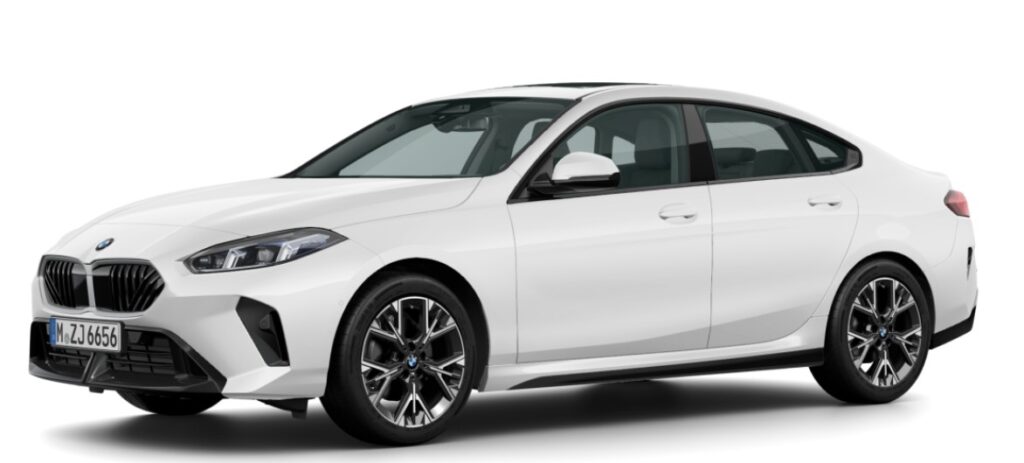
The BMW 2 Series has earned a reputation as one of the brand’s most entertaining modern cars. It is compact, quick, beautifully balanced, and available with engines that range from sensible four-cylinders to seriously energetic six-cylinder units. On the right road, a good 2 Series can feel like a tailored suit with a turbocharger attached.
However, not every production year offers the same ownership experience.
Some early cars are more vulnerable to age-related cooling-system leaks, neglected maintenance, oil seepage, electronic glitches, and worn suspension components. Certain later examples have also been involved in safety recalls that make checking the vehicle identification number essential.
So, which BMW 2 Series years should we avoid?
For most shoppers, the 2014, 2015, and 2016 model years deserve the greatest caution, particularly when the car has incomplete servicing, multiple modifications, or no evidence of preventive maintenance. We would also inspect a 2022 model especially carefully, since it was the first year of the redesigned G42 Coupe and first-year cars can carry more production updates and software concerns than later examples.
That does not mean every BMW built during these years is unreliable. A well-maintained 2015 M235i may be a far better purchase than a neglected 2019 230i. With used BMWs, the badge on the service folder often matters more than the number on the registration document.
Let us separate the genuinely risky cars from the merely misunderstood ones.
Content in this publication
- BMW 2 Series Years to Avoid at a Glance
- First, Understand What “BMW 2 Series” Means
- 2014 BMW 2 Series: The Year We Would Treat Most Carefully
- 2015 BMW 2 Series: Better Known, but Still Ageing
- 2016 BMW 2 Series: Not Bad, but No Longer Young
- 2017 BMW 2 Series: A Turning Point
- 2018 and 2019 BMW 2 Series: The Sweet-Spot Years
- 2020 and 2021 BMW 2 Series: Good Cars With Recall Homework
- 2022 BMW 2 Series: First Year of the G42 Generation
- 2023 and Newer BMW 2 Series Models
- Most Common BMW 2 Series Problems to Check
- How Maintenance History Changes the Answer
- Red Flags That Should Make Us Walk Away
- BMW 2 Series Pre-Purchase Inspection Checklist
- Best BMW 2 Series Years to Buy
- Which BMW 2 Series Engine Should We Choose?
- Are High-Mileage BMW 2 Series Cars Worth Buying?
- Final Verdict: Which BMW 2 Series Years Should We Avoid?
- Frequently Asked Questions
BMW 2 Series Years to Avoid at a Glance
Here is our practical assessment of the model years that require the most caution:
| Model year | Our assessment | Main reason for caution |
|---|---|---|
| 2014 | Avoid unless exceptionally maintained | First production year, ageing components, N20/N55 maintenance risks |
| 2015 | Approach carefully | Cooling, oil-leak and neglected-service concerns |
| 2016 | Inspect thoroughly | Older mechanical components and potentially expensive wear |
| 2017 | Better, but history matters | Improved maturity, although maintenance remains critical |
| 2018–2019 | Generally good choices | Mature first-generation production and stronger engine options |
| 2020–2021 | Usually good, but check recalls | Certain configurations may be affected by safety campaigns |
| 2022 | Approach carefully | First year of the G42 redesign and recall exposure on some cars |
| 2023 onward | Generally preferable | Later production refinements, but still verify recalls and software updates |
This table is a buying guide rather than a declaration that every vehicle from a certain year is defective. Mileage, engine, body style, maintenance, previous ownership, climate, and driving style can completely change the picture.
First, Understand What “BMW 2 Series” Means
The 2 Series name covers several fundamentally different vehicles. Treating them as one mechanical family would be like grouping trainers, hiking boots, and football boots together because they all have laces.
BMW 2 Series Coupe and Convertible
The first-generation F22 Coupe arrived for the 2014 model year, while the related F23 Convertible followed shortly afterward. These cars used a traditional longitudinal engine layout and rear-wheel drive, with xDrive available on selected versions.
This is the model most enthusiasts imagine when someone says “BMW 2 Series.”
Popular versions include:
- 228i and 230i
- M235i and M240i
- 220i and 220d
- M2, M2 Competition and M2 CS
The second-generation G42 Coupe appeared for the 2022 model year. It retained the rear-wheel-drive-based philosophy but added newer electronics, updated powertrains, more technology, and a considerably different design.
BMW 2 Series Gran Coupe
The F44 Gran Coupe is not simply a four-door version of the traditional Coupe. It uses a transverse-engine platform related to other compact BMW and MINI products.
Models such as the 228i Gran Coupe and M235i xDrive Gran Coupe therefore have different engines, transmissions, suspension layouts, and potential problem areas from the two-door Coupe.
BMW 2 Series Active Tourer and Gran Tourer
European buyers may also encounter the 2 Series Active Tourer and seven-seat Gran Tourer. These family-oriented models are mechanically separate from the rear-wheel-drive Coupe.
When researching reliability, always confirm:
- The body style
- The chassis generation
- The engine code
- The production date
- Whether the car is rear-wheel drive, all-wheel drive, or front-wheel drive
Otherwise, we could end up avoiding a car because of a problem affecting an entirely different model.
2014 BMW 2 Series: The Year We Would Treat Most Carefully
The 2014 model year sits at the top of our caution list. It launched the F22 generation, and the oldest examples are now well beyond the age at which rubber seals, coolant hoses, suspension bushings, batteries, plastic fittings, and electronic modules can begin asking for attention.
Why the First Model Year Is Riskier
First-year vehicles are not automatically unreliable, but they provide manufacturers with their first large-scale exposure to real-world use. Small weaknesses that do not appear during development may emerge after thousands of customers drive the cars through heat, snow, traffic, potholes, and enthusiastic weekend journeys.
More importantly, a 2014 car has had over a decade to accumulate:
- Poor servicing
- Cheap replacement parts
- Accident repairs
- Engine tuning
- Deferred maintenance
- Repeated short journeys
- Aggressive driving
- Improper oil-change intervals
At this age, condition is more important than the original factory specification.
The 2014 228i and N20 Engine
The 2014 228i generally used BMW’s turbocharged 2.0-litre N20 four-cylinder engine. It offers excellent performance and fuel economy, but earlier N20-family engines developed a reputation for timing-chain and timing-chain-guide concerns.
Not every 228i experiences timing-chain trouble. Nevertheless, the possible consequences are serious enough that we would not buy an early example without examining its maintenance history and listening carefully during a cold start.
Warning signs may include:
- Whining or unusual mechanical noise
- Rattling from the front of the engine
- Rough running
- Engine-warning messages
- Timing-related fault codes
- Metal or plastic debris in the oil filter
A proper pre-purchase inspection is not optional here. It is the financial equivalent of looking before stepping onto a frozen lake.
The 2014 M235i and N55 Engine
The six-cylinder M235i uses the turbocharged N55 engine. In general, this engine is admired for its combination of performance, smoothness, and durability, but it is not maintenance-free.
Ageing N55-powered cars may require attention around:
- Electric water pump
- Thermostat
- Valve-cover gasket
- Oil-filter-housing gasket
- Charge pipes
- Ignition coils
- Spark plugs
- Coolant hoses
- Accessory-belt area
A carefully maintained M235i can still be a wonderful purchase. A tuned example with missing invoices, mismatched tyres, and an owner who claims the oil “never needed topping up” should have us walking in the opposite direction.
Should We Completely Avoid a 2014 BMW 2 Series?
Not necessarily. We would consider one only when it has:
- A documented service history
- No unexplained warning lights
- A clean diagnostic scan
- Evidence of frequent oil changes
- No suspicious engine noise
- No major fluid leaks
- Sensible or no modifications
- A successful specialist inspection
Without those things, later model years are usually worth the extra money.
2015 BMW 2 Series: Better Known, but Still Ageing
The 2015 model year benefited from another year of production experience, yet it shares many mechanical characteristics with the 2014 car. Today, its biggest enemy is not necessarily poor original engineering. It is accumulated neglect.
Common Areas Requiring Inspection
On a 2015 BMW 2 Series, we would pay close attention to:
- Cooling-system condition
- Oil leaks around the engine
- Suspension knocks
- Uneven tyre wear
- Brake vibration
- Battery age
- Window and locking operation
- Convertible-roof operation
- Infotainment behaviour
- Evidence of water entering the cabin or boot
A small oil seep may seem harmless during a viewing. In reality, oil can spread across undertrays, contaminate nearby components, damage rubber parts, or reach the accessory belt. What begins as a mist can become a repair bill with sharp teeth.
Modified M235i Models Need Extra Scrutiny
The M235i became popular among tuning enthusiasts because the N55 responds well to software and hardware upgrades. Added power is not automatically a problem, but it increases the importance of responsible maintenance.
Ask whether the car has ever had:
- An ECU tune
- A transmission tune
- An upgraded turbocharger
- A downpipe
- An aftermarket intake
- Lowered suspension
- Track use
- Launch-control use
A seller may return the car to standard before advertising it. A diagnostic scan, careful inspection, service receipts, and signs such as altered clamps or non-original fasteners can reveal more than the advertisement.
2016 BMW 2 Series: Not Bad, but No Longer Young
The 2016 model year is not one we would automatically reject. However, it remains part of the earlier production period and is old enough for major maintenance items to become relevant.
Its desirability depends heavily on mileage and engine.
Why 2016 Still Appears on the Caution List
By now, many 2016 examples have reached the stage where several expensive jobs can arrive close together:
- Cooling-system repairs
- Suspension replacement
- Engine-gasket work
- Brake replacement
- Tyres
- Battery registration
- Spark plugs and coils
- Transmission or differential servicing
None of these items alone makes the car unreliable. The danger comes when the previous owner postpones all of them and sells the vehicle just before the mechanical orchestra begins playing.
A cheap purchase price can quickly become an entrance ticket to premium-car repair costs.
Late-2016 Production Can Be More Appealing
BMW transitioned the four-cylinder Coupe from the 228i to the 230i designation around this period, depending on the market and model year. The newer 230i generally uses the B48 engine family, which many buyers prefer over the earlier N20.
Production dates matter. Never rely solely on the badge attached to the boot lid, since badges can be replaced and registration dates do not always align neatly with manufacturing changes.
You may be interested in reading BMW 2 Series Coupe vs Gran Coupe: Which Should UK Buyers Choose?
Check the vehicle identification number and engine code before making assumptions.
2017 BMW 2 Series: A Turning Point
The 2017 model year is where the buying picture begins to improve. The first-generation car was more mature, and versions equipped with BMW’s B-series engines became increasingly common.
The 230i received the B48 four-cylinder, while the M240i used the B58 inline-six. Both engines are generally considered desirable, especially with evidence of sensible servicing.
Why the B48 and B58 Matter
The B48 and B58 belong to BMW’s modular engine family. They brought newer designs and have developed a broadly positive reputation in numerous BMW applications.
That does not make them indestructible. Buyers should still check for:
- Coolant loss
- Oil seepage
- Misfires
- Rough cold starts
- Turbocharger noises
- Cooling-system faults
- Damaged engine mounts
- Software-related warnings
- Evidence of tuning
However, a clean 2017 or later 230i or M240i often represents a more reassuring ownership proposition than an early 228i.
Is 2017 a BMW 2 Series Year to Avoid?
We would not place it in the main “avoid” category. Instead, we would call it a transitional year worth buying selectively.
A strong 2017 example can offer much of the value of an early car while carrying a more appealing engine. Just remember that it is still old enough to require preventive maintenance.
2018 and 2019 BMW 2 Series: The Sweet-Spot Years
For many shoppers, 2018 and 2019 provide the best blend of maturity, performance, equipment, and affordability.
By this stage, BMW had refined the F22 platform, the B48 and B58 powertrains were established, and the cars were still relatively simple compared with newer, screen-heavy models.
Why These Years Make Sense
A well-kept 2018 or 2019 model may offer:
- Mature first-generation production
- Strong engine choices
- Traditional BMW proportions
- Physical controls
- Good performance
- Lower depreciation than a nearly new car
- More independent-specialist knowledge
- Broad parts availability
These years are not immune to problems. Yet they are often the point where the 2 Series recipe feels fully baked rather than still warm in the middle.
The 2018–2019 M240i
The M240i is one of the most desirable non-M cars in the range. Its B58 engine produces effortless performance and has significant tuning potential.
Ironically, that tuning potential is also a buying risk.
We would rather purchase a standard car with complete maintenance than a heavily modified example promising enormous power. Modifications can add excitement, but they also make it harder to know how much stress the engine, gearbox, driveshafts, cooling system, and differential have experienced.
The 2018–2019 M2
The original M2 and later M2 Competition deserve separate consideration. They are performance cars, so wear patterns can differ sharply from those of a commuter-driven 220i.
Look for:
- Track-day history
- Brake-disc cracking or heavy lips
- Heat-damaged tyres
- Uneven tread
- Clutch wear
- Differential noise
- Underbody damage
- Non-standard suspension
- Poorly fitted aftermarket parts
- Accident repairs
An M2 that has been driven hard but maintained properly may still be excellent. The dangerous car is the one driven hard and maintained cheaply.
2020 and 2021 BMW 2 Series: Good Cars With Recall Homework
The final years of the first-generation Coupe are attractive because the platform was mature and the major mechanical combinations were well established.
Nevertheless, shoppers must perform a VIN recall check rather than assuming a later car is automatically trouble-free.
Why the VIN Check Is Essential
Recall campaigns do not always cover every vehicle from an advertised model year. Eligibility can depend on the exact production date, engine, component batch, assembly plant, and market.
BMW provides official recall and technical-update checkers that allow owners to enter the 17-character VIN. BMW UK also operates a dedicated VIN recall service.
In the United States, NHTSA has reported a major recall involving certain 2019–2022 BMW vehicles because moisture could enter an engine starter relay, potentially causing corrosion, a short circuit, starting problems, or fire. Some 230i vehicles were among the listed models, making VIN-level verification particularly important.
A recall does not automatically mean we should avoid the entire model year. It means we should verify that:
- The car is affected or unaffected
- Any required repair has been completed
- The dealer can provide documentation
- No related symptoms remain
Are 2020 and 2021 Models Worth Buying?
Yes, especially when the car has an excellent history and all campaigns are complete. These late F22 models may be among the most polished versions of the original 2 Series.
We simply would not hand over money before checking the VIN through the appropriate official database.
2022 BMW 2 Series: First Year of the G42 Generation
The 2022 model year introduced the second-generation G42 Coupe. It delivered newer technology, stronger performance, a more modern cabin, and increased refinement.
It also represented a major redesign, which is why we would inspect it more carefully than a 2023 or later example.
Why First-Year Redesigns Deserve Caution
A completely redesigned car introduces a new combination of:
- Body electronics
- Sensors
- Software
- Interior hardware
- Driver-assistance systems
- Wiring
- Production processes
- Supplier components
Even when the engine and transmission are evolutions of proven units, the complete vehicle is new.
Early problems may involve annoyances rather than catastrophic failures. These can include software warnings, connectivity difficulties, display issues, sensor errors, rattles, or components that later receive revised parts.
The 2022 230i Recall Question
Because certain 2019–2022 BMW models equipped with relevant four-cylinder powertrain components have been included in the starter-relay fire-risk campaign, buyers should check every 2022 230i individually. NHTSA advised owners of affected vehicles to park outside and away from structures until the recall remedy was completed.
This is a serious issue, but it should not be interpreted as evidence that every 2022 2 Series is unsafe. Recall applicability is determined by VIN.
Should We Avoid the 2022 M240i?
Not categorically. The B58 engine and eight-speed automatic transmission form a strong mechanical combination.
Our caution is based mainly on its first-year status. A 2022 M240i with completed recalls, current software, a clean inspection, and documented maintenance can be a superb car.
However, when a comparable 2023 model costs only slightly more, the later car may provide extra peace of mind.
2023 and Newer BMW 2 Series Models
Later G42 models benefit from additional production time and ongoing software or component refinements. For buyers seeking a newer car, 2023 and later examples are generally the ones we would prioritise.
That does not remove the need for research.
BMW and NHTSA recall databases evolve as new campaigns are announced. A vehicle that showed no open recall when originally sold may be included in a later action. Official VIN checking is therefore more dependable than an old article or forum post.
In 2026, reports also described further BMW starter-motor-related recalls affecting multiple model lines, including some 2 Series vehicles in certain markets. The exact models and production ranges differ by region, reinforcing the need to check the individual car rather than relying on a general model-year label.
Most Common BMW 2 Series Problems to Check
Model year is only the opening chapter. The inspection tells us how the story ends.
Cooling-System Leaks
BMW engines rely on several plastic cooling-system parts, electric pumps, thermostats, hoses, seals, and connectors. Heat cycles can eventually make these components brittle.
Look for:
- Low coolant warnings
- Sweet smells
- White or coloured residue
- Damp areas in the engine bay
- Overheating history
- Frequent coolant top-ups
- Electric-fan operation after short journeys
A seller who regularly adds coolant but claims there is “no leak” is describing a leak that has not yet been diagnosed.
Oil Leaks
Common leakage areas vary by engine but may include the valve-cover assembly, oil-filter-housing area, oil pan, turbocharger lines, and related seals.
You may be interested in readingBMW 2 Series Coupe vs Gran Coupe: Which Should UK Buyers Choose?You may be interested in reading
BMW 2 Series Years UK: Generations, Changes and Best ModelsInspect the top, front, sides, and underside of the engine. Freshly cleaned surfaces can sometimes hide evidence, so look for residue in less accessible corners.
Suspension Wear
The 2 Series handles beautifully because its suspension works hard. Worn dampers, bushes, mounts, ball joints, and links can make the car feel nervous or imprecise.
During the test drive, listen for:
- Knocks over small bumps
- Clunks while braking
- Steering vibration
- Wandering
- Excessive bouncing
- Tyre roar
- Uneven tyre wear
Large wheels and low-profile tyres can accelerate wear when the car regularly encounters potholes.
Electronic and Infotainment Issues
Modern BMWs depend heavily on stable battery voltage and communication between numerous control modules. A weak battery can create a Christmas tree of warning messages that appear unrelated.
Test every feature, including:
- Central locking
- Windows
- Mirrors
- Parking sensors
- Reversing camera
- Bluetooth
- Navigation
- Seat adjustment
- Climate control
- Dashboard displays
- Steering-wheel controls
- Driver-assistance systems
Do not accept “it probably just needs a reset” without proof.
Automatic Transmission Behaviour
BMW’s eight-speed automatic gearbox is generally impressive, but it should shift smoothly in normal driving.
Warning signs include:
- Delayed engagement
- Harsh shifts
- Shuddering
- Flared engine speed
- Transmission warnings
- Fluid leaks
- Clunks when selecting Drive or Reverse
Ask whether the transmission has ever been serviced. The phrase “lifetime fluid” should not end the discussion, especially on a high-mileage car.
Manual Gearbox and Clutch Wear
On manual models, test for clutch slip in a high gear under moderate acceleration. Check the biting point, pedal feel, gear selection, and noises from the flywheel area.
A modified car producing more torque than standard may have accelerated clutch wear.
How Maintenance History Changes the Answer
Suppose we are choosing between two cars:
- A 2015 M235i with complete invoices, annual oil changes, recent cooling-system work, quality tyres, and no modifications
- A 2019 M240i with missing records, budget tyres, an aggressive tune, and warning lights cleared immediately before sale
The older car may be the safer purchase.
Maintenance documents should show more than dealer stamps. Detailed invoices help us identify:
- Oil-change frequency
- Correct oil specification
- Brake-fluid servicing
- Spark-plug replacement
- Cooling-system work
- Battery replacement and registration
- Transmission or differential servicing
- Recall completion
- Repeated unresolved faults
A thick folder is not glamorous, but neither is standing beside a broken BMW in the rain.
Red Flags That Should Make Us Walk Away
Some cars are not worth rescuing, regardless of price.
We would leave immediately when we find:
- Persistent engine or drivetrain warnings
- Heavy smoke
- Severe coolant loss
- Metallic engine noise
- Evidence of overheating
- Poor accident repairs
- Mismatched low-quality tyres
- Missing VIN labels
- Undisclosed modifications
- Seller refusal to allow inspection
- Multiple diagnostic codes recently cleared
- No service history
- Suspicious mileage inconsistencies
- Water damage
- Outstanding safety recalls with no repair plan
A cheap BMW can be tempting. Yet the purchase price is only the front door. Maintenance, tyres, brakes, insurance, fuel, and repairs are the rooms waiting behind it.
BMW 2 Series Pre-Purchase Inspection Checklist
Before buying, we recommend following this process.
Before Viewing the Car
- Decode the VIN
- Confirm the exact engine
- Check official recalls
- Review inspection or MOT history
- Research insurance costs
- Ask for service invoices
- Ask whether the car has been tuned
- Request a cold start
- Check whether finance is outstanding
- Review accident-history information
During the Viewing
- Make sure the engine is genuinely cold
- Inspect coolant and oil levels
- Look for leaks
- Check tyre brands and tread
- Inspect panel gaps
- Test every electrical feature
- Examine the boot and carpets for moisture
- Look underneath for damage
- Check the convertible roof where fitted
- Inspect brakes for heavy wear
During the Test Drive
- Listen during cold start
- Check steering alignment
- Test the gearbox at low and higher speeds
- Brake progressively
- Drive over uneven surfaces
- Watch the coolant temperature
- Test the climate control
- Listen for differential or wheel-bearing noise
- Accelerate firmly once the engine is warm
- Look for warning messages
After the Test Drive
Arrange an inspection with a BMW specialist. Ask for a full diagnostic scan, underbody examination, fluid-leak check, cooling-system assessment, and evaluation of any modifications.
The inspection fee may feel expensive for an hour. An engine or gearbox repair makes it look like pocket change.
Best BMW 2 Series Years to Buy
Although every vehicle must be judged individually, our preferred years are generally:
Best Affordable Choice: 2018 BMW 2 Series
A 2018 model sits in the mature part of the F22 production run and offers desirable B-series engines in many markets.
Best First-Generation Choice: 2019–2021
These later F22 cars combine the original Coupe’s compact design with mature production and strong engine options. Recall status must still be checked.
Best Newer Choice: 2023 or Later
A 2023 or later G42 avoids the very first model year of the redesign while providing newer technology, safety equipment, and cabin refinement.
Best Performance Value: M240i
A properly maintained M240i offers remarkable speed without the full running costs or aggressive character of an M2. We would prioritise condition and originality over the lowest price.
Which BMW 2 Series Engine Should We Choose?
For lower risk and balanced running costs, the B48-powered 230i is often the sensible choice. It provides enough performance for everyday driving without the fuel use and higher component costs associated with the six-cylinder models.
The B58-powered M240i is the enthusiast’s choice. It feels smooth, muscular, and effortlessly quick. However, tyres, brakes, insurance, fuel, and evidence of previous tuning deserve consideration.
Early N20-powered 228i models can be affordable, but they require greater caution around engine history and timing-system concerns.
N55-powered M235i models remain appealing, provided their cooling systems, gaskets, ignition components, and modifications have been managed responsibly.
Are High-Mileage BMW 2 Series Cars Worth Buying?
High mileage should not frighten us as much as poor maintenance.
A motorway-driven car with 100,000 miles and complete servicing can be healthier than a 45,000-mile example used for short journeys, modified heavily, and serviced only when a warning appeared.
For a higher-mileage vehicle, budget for:
- Suspension refurbishment
- Cooling-system repairs
- Gaskets and seals
- Engine mounts
- Battery replacement
- Brake components
- Wheel bearings
- Transmission servicing
- Turbo-related hoses and pipes
- Interior wear
The key question is not merely, “How far has it travelled?” It is, “How was every mile treated?”
Final Verdict: Which BMW 2 Series Years Should We Avoid?
The 2014 BMW 2 Series is the year we would approach with the greatest caution, particularly in 228i form with the earlier N20 engine. The combination of first-year production, age, potential engine concerns, and accumulated neglect makes a specialist inspection essential.
The 2015 and 2016 model years also require careful selection. They can be rewarding cars, but cooling-system wear, oil leaks, ageing suspension, ignition components, modifications, and deferred maintenance can create substantial costs.
We would also scrutinise the 2022 model year, mainly because it introduced the redesigned G42 Coupe and because certain vehicles may fall within safety-recall production ranges. This does not make every 2022 car unreliable; it simply gives us reasons to prefer a comparable 2023 or later example when prices are close.
For the best balance of value and dependability, the 2018–2021 F22 models are often the sweet spot, especially the 230i and M240i. Buyers wanting the newer generation should generally look toward 2023 and later cars.
Above everything, remember this: there is no model-year label powerful enough to rescue a neglected car or condemn a properly maintained one.
Check the VIN. Read the invoices. Start the engine cold. Scan every module. Inspect the underside. Let a BMW specialist look beneath the polished paint.
The right BMW 2 Series can feel like a loyal dance partner—quick on its feet, responsive, and always ready for another road. The wrong one can dance just as well, but directly across our bank account.
Frequently Asked Questions
1. What is the worst year for the BMW 2 Series?
The 2014 model year deserves the most caution because it was the first year of the F22 generation and may feature older N20 or N55 engines with age-related maintenance needs. However, a fully documented 2014 car may still be better than a neglected later model.
2. Is the BMW 228i unreliable?
The 228i is not universally unreliable, but early cars using the N20 engine require careful inspection. Buyers should investigate timing-system history, oil leaks, cooling-system condition, cold-start noise, and service frequency before purchasing.
3. Is the BMW M235i a reliable used car?
A maintained M235i can be reliable and enjoyable. Potential expenses include water-pump failure, thermostat problems, gasket leaks, ignition components, charge-pipe damage, suspension wear, and repairs related to previous modifications.
You may be interested in readingBMW 2 Series Coupe vs Gran Coupe: Which Should UK Buyers Choose?You may be interested in reading
BMW 2 Series Years UK: Generations, Changes and Best ModelsYou may be interested in reading
Which BMW 2 Series to Buy in the UK: Complete Buyer’s Guide4. Which BMW 2 Series year is the most reliable?
There is no single guaranteed winner, but 2018–2021 models are generally attractive because they come from the mature portion of first-generation production. A 2023 or later G42 may suit buyers who prefer a newer vehicle. Always verify the individual car’s history and recall status.
5. How many miles can a BMW 2 Series last?
A properly serviced BMW 2 Series can exceed 150,000 miles, and some may travel considerably farther. Longevity depends on oil changes, cooling-system care, driving conditions, engine type, modifications, accident history, and whether emerging faults are repaired promptly.
If you want to know other articles similar to BMW 2 Series Years to Avoid: A Complete Used-Buyer Guide you can visit the category Models.
Land Rover Defender 90 Alternative: The Best Rivals Worth Considering
Land Rover Defender 90 Models: Complete Guide to Trims, Engines and Versions
Toyota Hilux Generations: Complete History, Evolution, and Key Differences
BMW M2 vs M340i: Which BMW Performance Car Should We Buy?
BMW M2 vs Porsche 911: Which Sports Car Makes More Sense?
BMW M2 vs Mustang GT: Which Performance Coupe Should We Buy?
Leave a Reply
More content of your interest