

Nissan Note Years to Avoid: New Zealand Buyer’s Guide

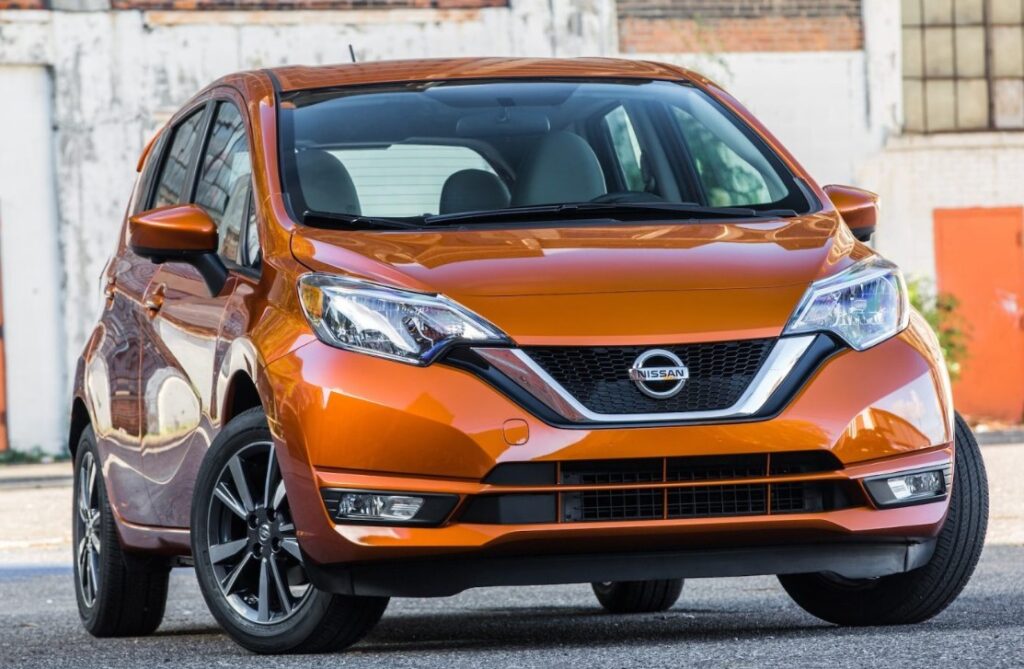
The Nissan Note has become a familiar sight on New Zealand roads. It is compact enough for tight city streets, spacious enough for everyday family duties, and generally cheaper to run than a larger hatchback or SUV. Add the popularity of Japanese imports, and it is easy to see why so many Notes appear on dealer yards from Auckland to Christchurch.
However, not every Nissan Note represents an equally sensible purchase.
Some model years are older, less refined, poorly equipped, or more likely to have accumulated deferred maintenance. Others introduce complicated technology that requires more careful inspection. That does not mean every car from a particular year is defective. It means certain years deserve considerably more caution.
So, which Nissan Note years should we avoid in New Zealand?
As a practical rule, we would be especially cautious with:
- 2005–2008 first-generation Nissan Note models
- 2012–2014 early second-generation petrol models
- 2016–2017 early Nissan Note e-POWER examples
- Any Note with an uncertain odometer, missing service records, accident repairs, transmission symptoms, warning lights, or evidence of flood damage
The strongest used-car choices are often later, well-maintained examples rather than the cheapest cars available. A tidy 2018 Note with documented maintenance may be a safer purchase than a neglected 2020 car. Age matters, but condition, history, specification, and previous care matter just as much.
Let us examine the Nissan Note generation by generation and identify where buyers should tread carefully.
Content in this publication
- Nissan Note Generations Sold in New Zealand
- What Does “Years to Avoid” Really Mean?
- Nissan Note Years to Avoid at a Glance
- 2005–2008 Nissan Note: The Main Years to Avoid
- 2009–2011 Nissan Note: Better, but Still an Ageing Car
- 2012–2014 Nissan Note: Early E12 Models Need Careful Inspection
- Should We Avoid the 2012 Nissan Note Completely?
- 2015 Nissan Note: A Reasonable Middle Ground
- 2016–2017 Nissan Note e-POWER: Avoid or Buy?
- 2018–2020 Nissan Note: Usually the Best E12 Years
- What About the E13 Nissan Note From 2021 Onward?
- The Real Nissan Note Years to Avoid Are Neglected Ones
- Japanese Import History Matters More Than Many Buyers Realise
- Check for Recalls by Chassis Number
- Nissan Note CVT Test-Drive Checklist
- Nissan Note e-POWER Inspection Checklist
- Common Nissan Note Problems Across Both Generations
- Safety Equipment Can Vary by Trim
- How Much Should We Spend on an Inspection?
- Complete a Vehicle History Check
- Best Nissan Note Years to Buy in New Zealand
- Which Nissan Note Should We Avoid Most?
- Questions to Ask the Dealer Before Visiting
- Red Flags That Should End the Purchase
- How to Avoid a Bad Nissan Note Purchase
- Final Verdict: Nissan Note Years to Avoid in New Zealand
- Frequently Asked Questions
Nissan Note Generations Sold in New Zealand
Most Nissan Notes in New Zealand are used Japanese imports rather than vehicles originally sold new through Nissan New Zealand.
Japanese Domestic Market vehicles are cars originally produced for Japanese buyers before being exported as used vehicles to countries such as New Zealand. Thousands of these vehicles have entered the New Zealand fleet over the years.
The models buyers commonly encounter fall into three groups:
| Generation | Model code | Approximate production period | Common versions in New Zealand |
|---|---|---|---|
| First generation | E11 | 2004–2012 | 1.5-litre petrol, CVT |
| Second generation | E12 | 2012–2020 | 1.2-litre petrol, supercharged petrol, CVT |
| Second-generation e-POWER | E12 | 2016–2020 | 1.2-litre petrol-electric series hybrid |
Although the third-generation E13 Note began appearing from 2020 in Japan, many New Zealand used-car shoppers primarily compare the E11 and E12 because these generations occupy the affordable end of the local market.
What Does “Years to Avoid” Really Mean?
A “year to avoid” should not be interpreted as a declaration that every car produced during that year will fail.
Cars do not read calendars.
A beautifully maintained 2008 Nissan Note could outlast a neglected 2018 example. Similarly, a high-kilometre car with complete records can be a better bet than an unusually low-kilometre import that has sat unused for years.
When we call a year risky, we usually mean it combines several disadvantages:
- Greater age and component deterioration
- Earlier versions of a drivetrain or electronic system
- Fewer safety features
- More uncertainty around imported service history
- Higher likelihood of neglected CVT maintenance
- Greater exposure to corrosion or previous repairs
- Lower resale appeal
- More difficulty verifying odometer and auction history
The year is therefore a warning flag, not a final verdict.
Nissan Note Years to Avoid at a Glance
Here is our practical New Zealand buying summary.
| Model years | Recommendation | Main concern |
| 2005–2008 | Avoid unless exceptionally tidy | Age, basic safety, CVT wear, electrical deterioration |
| 2009–2011 | Buy cautiously | Still old; condition matters more than mileage |
| 2012–2014 | Approach carefully | Early E12 issues, CVT condition, import history |
| 2015 | Generally acceptable with inspection | Improved maturity, but maintenance remains crucial |
| 2016–2017 petrol | Mixed | Petrol models can be fine; inspect CVT closely |
| 2016–2017 e-POWER | Higher-caution purchase | Early hybrid system, battery condition, specialist diagnosis |
| 2018–2020 | Usually the preferred E12 range | Newer, more refined, but not immune to neglect |
| 2021 onward | Potentially strong but expensive | More complex technology and limited long-term local data |
The Most Important Point
We would not automatically reject a Nissan Note because of its registration year. We would reject it because the year, condition, history, price, and inspection results collectively create too much risk.
2005–2008 Nissan Note: The Main Years to Avoid
The earliest E11 Nissan Notes are now roughly two decades old. That fact alone deserves attention.
These cars may still look surprisingly fresh because Japanese vehicles are often cosmetically well preserved. A shiny dashboard and clean fabric, however, can disguise ageing underneath. Rubber seals harden. Suspension bushes crack. Electrical connections corrode. Plastic cooling-system components become brittle. Transmission fluid gets forgotten.
Buying one can feel like purchasing an inexpensive old refrigerator: it may run perfectly today, but we should not be shocked when several small problems arrive together.
Why Early E11 Models Carry More Risk
The principal issue is not necessarily a dramatic design defect. It is the accumulation of age-related wear.
A 2005–2008 Note may require attention to:
- CVT operation
- Engine mounts
- Front suspension bushes
- Wheel bearings
- Steering components
- Air-conditioning performance
- Starter motor or alternator
- Cooling-system hoses
- Door locks and window switches
- Rubber weather seals
- Engine oil leaks
- Rust beneath the body
- Cloudy headlamps
- Weak 12-volt battery
One repair may be manageable. Three or four repairs shortly after purchase can erase the saving that attracted us to the car in the first place.
Limited Safety Compared With Newer Notes
Older vehicles also tend to provide less occupant protection and fewer driver-assistance features than modern alternatives.
Rightcar explains that vehicle safety ratings indicate how a vehicle is likely to perform in a crash and that ratings can change as newer evidence and assessment methods become available.
A Nissan Note listing on Rightcar may carry a Vehicle Safety Risk Rating based on real-world data or comparable vehicles, but shoppers should check the precise chassis and year rather than assuming all Notes share one rating. One listed Note variant has a four-star VSRR, although ratings can differ by generation and specification.
Who Might Still Consider an Early E11?
An early E11 may make sense when:
- The price is genuinely low
- It has a documented New Zealand maintenance history
- The CVT operates smoothly
- It passes an independent inspection
- There is no structural rust
- The buyer only needs a basic local runabout
- A repair budget is available
Nevertheless, for buyers who depend on one vehicle for daily commuting, we would generally move toward a later model.
2009–2011 Nissan Note: Better, but Still an Ageing Car
Later E11 models are often a more sensible choice than 2005–2008 examples. By this point, the generation was mature, and many cars feel remarkably practical.
The tall roof, sliding rear seating arrangement on some versions, large door openings, and efficient packaging make the Note feel like a small van wearing hatchback clothing.
Still, a 2009 Note is not young.
Why We Would Not Automatically Avoid Them
A well-kept 2009–2011 Note can provide:
- Simple controls
- Useful interior space
- Affordable tyres
- Reasonable fuel use
- Good urban visibility
- Straightforward petrol-engine maintenance
The problem is that many buyers focus on the odometer and ignore the calendar.
A car showing 55,000 kilometres may appear safer than one showing 120,000 kilometres, but low mileage does not cancel ageing. The AA advises buyers to balance age and mileage while also considering service and ownership history.
A low-mileage car may have spent long periods sitting, making short journeys, or receiving little maintenance because the owner assumed it “had hardly been driven.”
What We Would Check
Before buying a 2009–2011 Note, we would examine:
- Whether the CVT engages without hesitation
- Whether acceleration is smooth
- Whether there is droning or shuddering
- Whether engine mounts allow excessive vibration
- Whether the air conditioning cools properly
- Whether all windows, locks, mirrors, and lights work
- Whether the underside shows corrosion
- Whether the tyres have aged despite good tread depth
- Whether the brake fluid and coolant look neglected
- Whether the service history supports the odometer reading
These years are not necessarily ones to avoid, but they should be bought as older cars, not mistaken for cheap near-new transport.
2012–2014 Nissan Note: Early E12 Models Need Careful Inspection
The E12 Nissan Note brought a sharper body, a more modern cabin, smaller engines, and improved fuel efficiency.
On paper, it looks like a clear upgrade. In reality, early examples deserve caution because they sit at the intersection of new-generation complexity, Japanese-import uncertainty, and increasingly sophisticated transmissions.
Why Early E12 Models Can Be Riskier
The 2012–2014 E12 may feature:
- A naturally aspirated 1.2-litre three-cylinder engine
- A supercharged 1.2-litre DIG-S engine
- A continuously variable transmission
- Idle-stop technology
- Japanese-language infotainment
- Electronic systems unfamiliar to some general repair shops
These cars can be economical and pleasant around town. However, they are sensitive to maintenance quality.
Three-cylinder engines naturally produce a different sound and vibration pattern from four-cylinder engines. Some buyers mistake normal characteristics for faults, while sellers may dismiss genuine roughness as “normal for a three-cylinder.”
That ambiguity makes a proper inspection especially important.
CVT Concerns Should Not Be Ignored
The transmission is one of the biggest items to assess on an older Nissan Note.
A continuously variable transmission does not shift through conventional fixed gears in the same way as a traditional automatic. During acceleration, engine speed may rise and remain steady while road speed catches up. That behaviour can be normal.
The following symptoms are not normal:
- Juddering when pulling away
- Delayed engagement after selecting Drive or Reverse
- Engine revs rising without matching acceleration
- Surging at constant throttle
- Metallic whining
- Violent shuddering on hills
- Transmission warning lights
- Limp mode
- A burning-fluid smell
A neglected CVT can turn an inexpensive Note into an expensive ornament.
Ask About Transmission Fluid
Many sellers advertise a car as “fully serviced” when they mean the engine oil was changed.
That is not the same as documented CVT maintenance.
We would ask:
- When was the CVT fluid last replaced?
- What fluid specification was used?
- Was the work completed by a reputable workshop?
- Is there an invoice?
- Has the transmission ever been repaired or replaced?
- Are there stored fault codes?
Vague answers are not proof of trouble, but they should reduce the price we are willing to pay.
Should We Avoid the 2012 Nissan Note Completely?
Not necessarily.
A clean 2012 example with an excellent auction grade, verifiable odometer, smooth drivetrain, and thorough inspection could still be a worthwhile budget purchase.
The reason we classify it as a higher-caution year is simple: it is the first year of a new generation and is now old enough for maintenance quality to matter enormously.
When two similarly priced cars are available, we would usually choose the later one.
For example:
- A tidy 2015 Note is generally preferable to a comparable 2012 Note.
- A documented 2014 car is preferable to an undocumented 2017 car.
- A smooth 100,000-kilometre example may be preferable to a suspicious 35,000-kilometre example.
- A slightly more expensive inspected car may be cheaper over two years than a bargain car needing transmission work.
2015 Nissan Note: A Reasonable Middle Ground
The 2015 model year often represents a useful compromise for New Zealand buyers.
It is newer than the earliest E12 cars but usually cheaper than e-POWER versions. The generation had also been in production long enough for initial manufacturing refinements and servicing knowledge to develop.
You may be interested in reading Chevrolet Silverado Models: A Complete Guide to the U.S. Lineup
Why 2015 Can Be Worth Considering
A good 2015 Note may offer:
- Strong cabin space for its footprint
- Easy urban manoeuvrability
- Low fuel consumption
- Widely available standard service items
- Modern styling without hybrid complexity
- More attractive resale appeal than an E11
We should still inspect the CVT, idle-stop system, 12-volt battery, engine mounts, air conditioning, and underbody.
A 2015 badge does not magically protect a car from eight or ten years of skipped maintenance.
2016–2017 Nissan Note e-POWER: Avoid or Buy?
The arrival of the Note e-POWER transformed the model.
Nissan introduced the E12 Note e-POWER in Japan in 2016. Rather than mechanically driving the wheels, its petrol engine generates electricity, while the electric motor provides propulsion.
That distinction is important.
The e-POWER Note is not a conventional petrol Note with an ordinary CVT. It is a series hybrid with:
- A petrol generator engine
- A high-voltage battery
- An inverter
- A generator
- An electric traction motor
- Power electronics
- Regenerative braking
Nissan describes e-POWER as an electric-motor-driven system in which the petrol engine generates electricity for the battery and motor.
Why Early e-POWER Models Deserve Extra Caution
The 2016–2017 cars are the earliest examples of this drivetrain and are now entering the age when battery condition, electrical connections, cooling systems, and previous repair quality become meaningful.
We would not say that all early e-POWER Notes are unreliable. Many deliver excellent service. Nevertheless, they are not ideal blind purchases.
Potential risks include:
- Reduced high-voltage battery performance
- Warning lights hidden or temporarily cleared
- Weak 12-volt auxiliary battery
- Inverter or power-electronics faults
- Noisy generator-engine operation
- Cooling-system issues
- Accident damage affecting electrical components
- Inadequate knowledge among non-specialist repairers
- Expensive diagnosis if a complex fault appears
- Japanese-language warning messages
A cheap early e-POWER may look like the smartest car in the yard. Without a hybrid battery test and electronic scan, however, we may be buying a question mark on wheels.
Does an e-POWER Note Need CVT Inspection?
The e-POWER version does not use the same conventional belt-type CVT arrangement found in many petrol Notes because the wheels are driven by the electric motor.
That removes one traditional concern, but replaces it with a different set of checks involving the hybrid battery, motor, inverter, generator system, and control electronics.
This is why buyers should confirm which drivetrain they are viewing. Dealers sometimes use broad descriptions such as “automatic hybrid,” which tell us very little.
2018–2020 Nissan Note: Usually the Best E12 Years
For most New Zealand buyers, later E12 Notes from approximately 2018 to 2020 are the most attractive part of the range.
They combine newer age, improved equipment, greater refinement, and stronger resale appeal. They may also have travelled fewer kilometres and experienced fewer years of environmental exposure.
Why Later E12 Models Are Preferable
Depending on specification, buyers may find:
- Autonomous emergency braking
- Around-view cameras
- Lane-departure warning
- Improved interior trim
- Better sound insulation
- Updated exterior styling
- More mature e-POWER calibration
- Newer battery components
- Better resale demand
These features vary considerably between Japanese trim grades, so we should inspect the actual vehicle rather than rely on the model year alone.
A base Note and a high-spec Medalist or e-POWER X may wear similar bodywork but offer very different equipment.
They Are Not Problem-Free
Even a 2019 or 2020 Note should be checked for:
- Accident history
- Underbody corrosion
- Battery health
- Fault codes
- Tyre age
- Brake wear
- Japanese recall completion
- Correct servicing
- Camera and sensor operation
- Water entry
- Interior electronics
- Previous commercial use
Later years reduce risk. They do not eliminate it.
What About the E13 Nissan Note From 2021 Onward?
The E13 represents a substantial technological step forward and uses Nissan’s later-generation e-POWER technology.
Nissan says its second-generation e-POWER system improved powertrain efficiency, output, and component integration compared with the original system.
The E13 may provide a quieter cabin, stronger performance, advanced safety systems, and more modern styling. It can be an appealing option for buyers with a larger budget.
However, we should remember that newer technology often means:
- More expensive body sensors
- Complex calibration after collision repair
- Greater reliance on specialist diagnostics
- Costlier lighting and camera components
- Limited long-term New Zealand repair data
- Potential parts delays for Japanese-market specifications
We would not place the E13 on an avoid list, but we would insist on an appropriate hybrid and electronic inspection.
The Real Nissan Note Years to Avoid Are Neglected Ones
This is the heart of the matter.
A production year tells us when the car was built. It does not tell us how the car was treated.
The worst Nissan Note to buy is usually one with several of these warning signs:
- No service records
- A recently cleared dashboard warning light
- Inconsistent odometer paperwork
- Fresh underseal hiding corrosion
- Mixed low-quality tyres
- Poor accident repairs
- Milky engine oil
- Low coolant
- CVT shudder
- Hybrid warning messages
- A seller refusing an inspection
- A suspiciously low price
- Only one worn key
- Interior wear inconsistent with mileage
- Water stains under the carpet
- Rust around seat mountings
- A strong air-freshener smell hiding dampness
When a car seems too good to be true, it often arrives with an invoice attached—just not yet.
Japanese Import History Matters More Than Many Buyers Realise
Many Nissan Notes enter New Zealand without a complete English-language service history.
The AA notes that Japanese imports may sometimes have little or no accessible service history, making an independent pre-purchase inspection particularly valuable.
That does not make Japanese imports bad. New Zealand’s vehicle fleet depends heavily on them, and many provide excellent value.
It simply means we should verify more and assume less.
Request the Japanese Auction Sheet
An original auction sheet may reveal:
- Auction grade
- Interior grade
- Recorded mileage
- Panel repairs
- Scratches and dents
- Structural repair history
- Corrosion comments
- Mechanical warnings
- Whether the vehicle was previously modified
Be cautious when a seller claims the auction sheet is unavailable but describes the vehicle as a “high-grade import.”
Ask how that claim was verified.
Check the Odometer Trail
We should compare:
- Japanese export certificate mileage
- Auction-sheet mileage
- Entry-certification records
- Warrant of Fitness history
- Service labels
- Dashboard condition
- Steering-wheel wear
- Pedal wear
- Driver-seat wear
A 40,000-kilometre car should not normally have a polished steering wheel, collapsed driver’s seat, worn pedal rubber, and scratched cargo area unless its use was unusually harsh.
Check for Recalls by Chassis Number
Recalls are not always neatly organised by model year, especially with Japanese imports.
A recall campaign may affect only certain production batches, chassis numbers, engines, or control modules.
Therefore, we should:
- Record the full chassis number
- Search New Zealand recall resources
- Ask a Nissan dealer whether overseas campaigns apply
- Request evidence that recall work was completed
- Avoid relying solely on the seller’s verbal assurance
Rightcar includes a recall-lookup pathway as part of its vehicle information resources.
A car having a recall is not necessarily a reason to reject it. An unresolved safety recall is a reason to pause.
Nissan Note CVT Test-Drive Checklist
The test drive should last longer than a five-minute circle around the dealership.
Before Starting
Check whether:
- The engine is genuinely cold
- The seller warmed it before arrival
- Warning lights illuminate during the startup check
- Warning lights then extinguish normally
- The transmission-fluid smell is burnt
- The idle is excessively rough
During Low-Speed Driving
Test:
- Reverse engagement
- Drive engagement
- Gentle pull-away
- Stop-start traffic
- Parking manoeuvres
- Tight turns
- Hill starts
There should be no major delay, clunk, grinding noise, or repeated shudder.
During Open-Road Acceleration
Apply steady throttle and observe:
- Whether speed rises smoothly
- Whether engine revs flare abnormally
- Whether the drivetrain surges
- Whether vibration appears under load
- Whether warning lights illuminate
- Whether the car enters reduced-power mode
After the Drive
Leave the engine running, open the bonnet, and listen for unusual knocking, squealing, rattling, or cooling-fan behaviour.
Then restart the car. Some intermittent problems only appear after a warm restart.
Nissan Note e-POWER Inspection Checklist
An e-POWER inspection should go beyond a standard petrol-car check.
We would request:
- A high-voltage battery health test
- A full diagnostic scan
- Confirmation that no fault codes were recently erased
- Inspection of battery cooling components
- Generator-engine performance assessment
- Inverter and motor-system checks
- 12-volt battery testing
- Charging and voltage checks
- Regenerative-braking assessment
- Inspection for accident damage around high-voltage components
The AA currently offers an EV or hybrid main-battery test as an add-on to its pre-purchase inspection and warns that main batteries can be costly to replace.
For an e-POWER Note, that extra testing is not an unnecessary luxury. It is part of responsible due diligence.
Common Nissan Note Problems Across Both Generations
Regardless of year, we should watch for several recurring categories of wear.
Engine Mount Vibration
Worn mounts can transmit vibration into the steering wheel, dashboard, and seats.
A three-cylinder E12 may naturally feel different from a four-cylinder car, but harsh shaking in Drive with the brake applied deserves investigation.
You may be interested in readingChevrolet Silverado Models: A Complete Guide to the U.S. LineupYou may be interested in reading
 2025 GMC Sierra Trim Levels: Complete Canadian Guide
Suspension Noise
Knocking over small bumps may come from:
- Sway-bar links
- Control-arm bushes
- Strut mounts
- Shock absorbers
- Steering joints
These repairs are not always catastrophic, but multiple worn parts can add up.
Air-Conditioning Faults
Test the air conditioning for at least ten minutes.
Check:
- Cooling at idle
- Cooling while driving
- Fan speeds
- Unusual compressor noises
- Damp smells
- Water leaking into the cabin
Electrical Accessories
Japanese-market Notes may contain:
- Around-view cameras
- Intelligent keys
- Folding mirrors
- Climate-control panels
- Lane-warning systems
- Imported stereos
- Aftermarket English head units
Test every button. Electrical accessories are easiest to appreciate before purchase and easiest to regret afterward.
12-Volt Battery Weakness
A weak auxiliary battery can trigger strange behaviour, particularly in electronically complex vehicles.
Symptoms may include:
- Slow startup
- Warning messages
- Keyless-entry problems
- Stop-start malfunction
- Hybrid-system alerts
- Flickering displays
Do not assume every dashboard message means a failed major component, but do not let a seller dismiss all warnings as “just the little battery.”
Safety Equipment Can Vary by Trim
One Nissan Note may have six airbags, autonomous emergency braking, stability control, and surround-view cameras. Another from the same year may lack some of those features.
This is common with used Japanese imports because trim levels and option packages differ.
We should verify:
- Number of airbags
- Electronic stability control
- Autonomous emergency braking
- Lane-departure warning
- Reversing camera
- Around-view monitor
- ISOFIX points
- ABS warning-light function
- Tyre-pressure monitoring, where fitted
Never assume a camera is a safety system. Some cameras only assist with parking and do not provide collision avoidance.
How Much Should We Spend on an Inspection?
The temptation to skip an inspection increases as the car’s price decreases.
That logic is backward.
An inexpensive car can require repairs representing a huge percentage of its purchase price. Spending a few hundred New Zealand dollars on inspection may prevent a loss of several thousand.
The AA describes its pre-purchase inspection as an independent assessment of a vehicle’s condition using mechanical knowledge and diagnostic equipment.
A good inspection should include:
- Road test
- Underbody examination
- Brake and tyre assessment
- Fluid checks
- Electronic scan where appropriate
- Steering and suspension inspection
- Cooling-system assessment
- Signs of structural repair
- Battery testing
- Written findings
The inspector should be independent of the seller.
Complete a Vehicle History Check
Mechanical condition is only half the story.
A history check may help identify whether the car:
- Has been reported stolen
- Has money owing
- Was previously written off
- Has inconsistent odometer records
- Has problematic registration history
The AA says its Vehicle History Report checks millions of records and is intended to help buyers avoid stolen vehicles, insurance write-offs, and vehicles subject to finance claims.
No single report catches everything, but buying without one is an unnecessary gamble.
Best Nissan Note Years to Buy in New Zealand
For buyers focusing on the E11 and E12 generations, our preferred years would generally be:
Best Budget Choice: 2010–2011 E11
Choose one only when:
- The body is rust-free
- The CVT is smooth
- The service history is convincing
- The safety specification meets your needs
- The price leaves room for age-related repairs
Best Conventional Petrol Choice: 2015–2018 E12
This range offers a good balance of:
- Purchase price
- Age
- Fuel efficiency
- Interior space
- Parts availability
- Drivetrain familiarity
The petrol CVT still requires careful testing.
Best e-POWER Choice: 2018–2020 E12
Later e-POWER models are usually preferable to the earliest 2016–2017 cars because they are newer and benefit from a more mature production period.
We would still require:
- Battery-health testing
- Electronic diagnostics
- Verified history
- Confirmation of safety equipment
- A proper road test
Which Nissan Note Should We Avoid Most?
If we had to identify the riskiest combination, it would be:
An unusually cheap 2005–2008 E11 or early 2016 e-POWER with no service history, no auction sheet, warning lights, questionable mileage, and a seller unwilling to allow an independent inspection.
That is not one red flag. It is a parade.
Conversely, a higher-mileage car with complete documentation, clean diagnostics, smooth operation, and an independent inspection may be a much safer purchase.
Questions to Ask the Dealer Before Visiting
Save time by asking these questions before driving across town:
- Is the car New Zealand-new or a Japanese import?
- Is the original auction sheet available?
- What is the chassis number?
- Is the odometer verified?
- Has the vehicle suffered structural damage?
- Are there any warning lights?
- Has the CVT fluid been changed?
- Has the hybrid battery been tested?
- Are there service invoices?
- Are all cameras and safety systems operational?
- How many keys are included?
- Can we arrange an independent inspection?
- Are any recalls outstanding?
- Does the car come with a dealer warranty?
- What specifically does that warranty exclude?
A trustworthy seller should answer calmly and clearly.
Red Flags That Should End the Purchase
Some problems are negotiable. Others should make us walk away.
We would leave when:
- The seller refuses an independent inspection
- The chassis number does not match the paperwork
- Structural repairs appear poorly completed
- Multiple warning lights remain illuminated
- The CVT shudders badly
- The e-POWER system enters reduced-power mode
- The odometer history is inconsistent
- There is substantial underbody rust
- Coolant and oil are mixing
- The cabin shows flood damage
- The seller pressures us to pay immediately
- The finance or ownership status is unclear
There will always be another Nissan Note.
The car we walk away from costs nothing. The bad car we take home may keep charging rent.
How to Avoid a Bad Nissan Note Purchase
Use this simple buying sequence:
Step 1: Choose the Right Year Range
Prioritise:
- 2015–2018 for a petrol E12
- 2018–2020 for an e-POWER E12
- 2010–2011 only for a low-budget E11 purchase
Step 2: Verify the Vehicle
Obtain:
- Chassis number
- Auction sheet
- Export certificate
- Odometer records
- New Zealand history report
- Recall information
Step 3: Conduct a Long Test Drive
Test the car:
- Cold
- Warm
- In reverse
- In traffic
- On a hill
- At open-road speed
- During firm acceleration
- After restarting
Step 4: Arrange an Independent Inspection
For e-POWER models, add a hybrid-battery assessment and diagnostic scan.
Step 5: Price the Defects
A minor defect is not always a reason to reject the car.
Obtain written repair estimates, then decide whether the purchase still makes sense.
Step 6: Be Prepared to Walk Away
The ability to leave is our strongest negotiating tool and our best protection against emotional buying.
Final Verdict: Nissan Note Years to Avoid in New Zealand
The Nissan Note can be a practical, economical, and surprisingly roomy used car for New Zealand motorists. Its compact exterior hides an interior that behaves like a much larger vehicle, while later e-POWER versions deliver smooth electric-motor performance without external charging.
Still, buyers should avoid treating all model years as equal.
The 2005–2008 E11 models are the main years we would avoid unless they are exceptionally well maintained. Their age, older safety specification, CVT exposure, and potential for accumulated wear make them difficult to recommend as dependable long-term transport.
The 2012–2014 E12 models are not universally bad, but early examples should receive a detailed transmission, electronic, and history inspection.
The 2016–2017 e-POWER Notes deserve extra caution because they are early examples of a more complicated drivetrain. We should never buy one without a hybrid battery assessment and diagnostic scan.
For most shoppers, the safer targets are 2015–2018 petrol E12 models or 2018–2020 e-POWER models, provided their condition and records support the asking price.
Ultimately, we should not buy a year. We should buy evidence: evidence of maintenance, evidence of honest mileage, evidence of sound mechanical condition, and evidence that the car has not lived a harder life than its polished paint suggests.
Frequently Asked Questions
1. What Nissan Note years should we avoid in New Zealand?
We would be most cautious with 2005–2008 E11 models, 2012–2014 early E12 cars, and 2016–2017 early e-POWER versions. These years are not automatically defective, but they carry greater age, drivetrain, technology, or maintenance-history risks.
2. Is the Nissan Note CVT unreliable?
A Nissan Note CVT can operate reliably when serviced correctly, but neglected units may shudder, hesitate, whine, surge, or slip. Buyers should insist on a long test drive, diagnostic scan, and evidence of correct CVT-fluid maintenance.
3. Is a Nissan Note e-POWER worth buying?
Yes, a well-maintained e-POWER Note can be efficient, smooth, and enjoyable in urban driving. We would favour 2018–2020 examples and require a hybrid battery test, electronic scan, and independent inspection before purchase.
4. Is high mileage bad on a Nissan Note?
High mileage is not automatically bad. A well-serviced Note with 120,000 kilometres may be safer than a 50,000-kilometre car with unclear history. Service records, odometer verification, operating condition, and previous use matter more than one number.
5. What is the best used Nissan Note year to buy?
For a conventional petrol model, 2015–2018 is a strong target range. For e-POWER, 2018–2020 is generally preferable. The best individual car will be the one with verified history, sound diagnostics, a clean inspection, and a fair price.
You may be interested in readingChevrolet Silverado Models: A Complete Guide to the U.S. LineupYou may be interested in reading
2025 GMC Sierra Trim Levels: Complete Canadian GuideYou may be interested in reading
GMC Sierra Years to Avoid: A Canadian Used-Truck GuideIf you want to know other articles similar to Nissan Note Years to Avoid: New Zealand Buyer’s Guide you can visit the category Models.
Land Rover Defender 90 Alternative: The Best Rivals Worth Considering
Land Rover Defender 90 Models: Complete Guide to Trims, Engines and Versions
Toyota Hilux Generations: Complete History, Evolution, and Key Differences
BMW M2 vs M340i: Which BMW Performance Car Should We Buy?
BMW M2 vs Porsche 911: Which Sports Car Makes More Sense?
BMW M2 vs Mustang GT: Which Performance Coupe Should We Buy?
Leave a Reply
More content of your interest