

BMW M2 vs Porsche 911: Which Sports Car Makes More Sense?

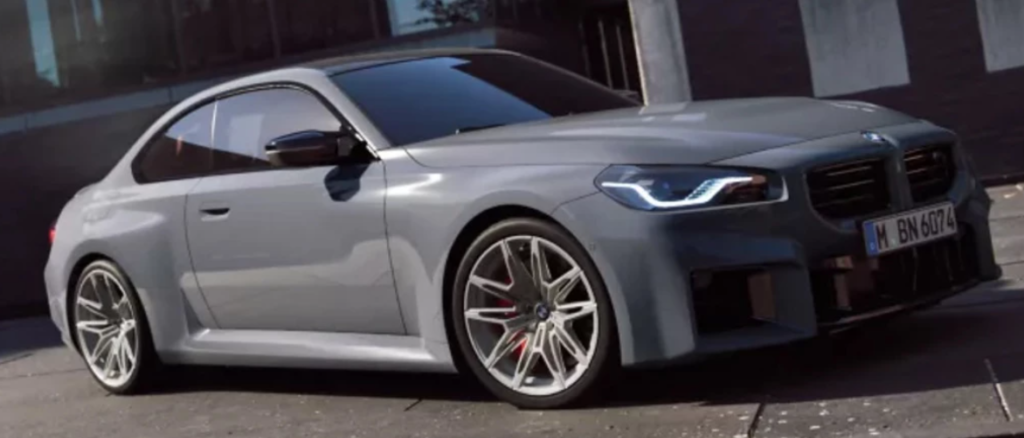
The BMW M2 vs Porsche 911 comparison looks strange at first. One is the smallest full-fat BMW M car, built to deliver big performance without wandering too far into supercar pricing. The other is the Porsche 911, a sports-car institution that has spent decades polishing essentially the same rear-engined recipe.
Yet put them on the same winding road and the gap suddenly feels much smaller.
The current BMW M2 packs a 3.0-liter turbocharged inline-six producing 473 horsepower, while the current base Porsche 911 Carrera uses a twin-turbo 3.0-liter flat-six producing 388 horsepower. Despite having considerably less power, the lighter Porsche can match the automatic rear-wheel-drive M2's manufacturer-quoted 3.9-second 0-60 mph time.
That tells us almost everything about this battle.
The M2 attacks performance with muscle. The 911 achieves it through refinement, traction, balance, and decades of engineering evolution.
So, is the Porsche really worth so much more? Or does the BMW M2 deliver nearly as much entertainment for a dramatically lower price?
Let's find out.
Content in this publication
- BMW M2 vs Porsche 911 at a Glance
- BMW M2 vs Porsche 911 Performance
- BMW M2 vs Porsche 911 Handling
- Which Car Is More Fun to Drive?
- Transmission Comparison
- Interior Quality and Driving Position
- BMW M2 vs Porsche 911 Practicality
- Design: Aggression vs Timelessness
- Engine Character and Sound
- Braking and Track Driving
- BMW M2 vs Porsche 911 Price
- Which Offers Better Value?
- Running Costs and Ownership
- What About Depreciation?
- Which Is Better as a Daily Driver?
- Which Is Better for Weekend Drives?
- Which Is Better for Enthusiasts Who Want a Manual?
- Who Should Buy the BMW M2?
- Who Should Buy the Porsche 911?
- BMW M2 vs Porsche 911: Our Verdict
- Frequently Asked Questions
BMW M2 vs Porsche 911 at a Glance
For a clean comparison, we're primarily looking at the current rear-wheel-drive BMW M2 and the standard Porsche 911 Carrera.
| Specification | BMW M2 | Porsche 911 Carrera |
|---|---|---|
| Engine | 3.0L turbo inline-6 | 3.0L twin-turbo flat-6 |
| Horsepower | 473 hp | 388 hp |
| Torque | 406 lb-ft manual / 443 lb-ft auto | 331 lb-ft |
| Drive | Rear-wheel drive | Rear-wheel drive |
| Transmission | 6-speed manual / 8-speed automatic | 8-speed PDK |
| 0-60 mph | 4.1 sec manual / 3.9 sec auto | 3.9 sec |
| Top speed | 155 mph standard | 183 mph |
| Curb weight | 3,814 lb manual | About 3,342 lb |
| Length | 180.3 in | 178.8 in |
| Starting MSRP | Around $69,500 | Around $135,500 |
BMW currently lists the M2 Coupe at $69,500 and the newer M2 M xDrive at $73,600, while Porsche lists the standard 911 Carrera from $135,500 before options and additional charges.
Right away, we can see the defining theme: the Porsche costs nearly twice as much, but it isn't twice as powerful or twice as fast.
Cars don't work like spreadsheets, though.
The interesting stuff happens between those numbers.
BMW M2 vs Porsche 911 Performance
The M2 Brings the Bigger Hammer
Open the BMW's hood and you'll find the sort of engine that explains why enthusiasts continue to love BMW M cars.
The turbocharged 3.0-liter inline-six delivers 473 horsepower. In the manual version, BMW lists 406 lb-ft of torque, while the automatic increases that figure to 443 lb-ft.
It feels muscular almost everywhere.
Put your foot down and the M2 doesn't politely build speed. It lunges toward the horizon like somebody suddenly released a compressed spring.
The automatic version reaches 60 mph in a claimed 3.9 seconds, while the manual requires 4.1 seconds.
And we'd gladly sacrifice those two tenths for three pedals.
Why?
Because this car isn't really about winning stopwatch competitions. It's about interaction.
The 911 Uses Its Power More Efficiently
The base Carrera's numbers appear almost underwhelming beside the BMW.
Its twin-turbocharged 3.0-liter flat-six produces 388 horsepower and 331 lb-ft of torque. Porsche quotes 0-60 mph in 3.9 seconds, or 3.7 seconds with the Sport Chrono Package. Top speed is 183 mph.
Less power.
Less torque.
Similar acceleration.
How?
Weight and traction play enormous roles.
The Carrera weighs roughly 3,342 pounds in current U.S. specifications, compared with roughly 3,814 pounds for the manual M2.
That's roughly the mass of two adult passengers plus a substantial pile of luggage separating them.
The 911 also places its engine over the driven rear wheels, giving the tires tremendous traction when launching.
The result is beautifully efficient acceleration rather than brute-force acceleration.
Straight-Line Winner: Too Close to Call
In ordinary road conditions, both are absurdly quick.
The BMW feels more explosive because of its torque and dramatic delivery. The Porsche feels cleaner and more composed.
If we're racing specifications, it's effectively a draw between the automatic M2 and standard Carrera.
If we're talking sensation?
The BMW may actually feel faster.
BMW M2 vs Porsche 911 Handling
Here's where the comparison changes.
The M2 can compete with the Porsche on acceleration.
Matching a 911 through corners is another story.
The BMW M2 Feels Playful and Slightly Wild
The M2's chassis encourages experimentation.
There's lots of grip, but you remain aware that 473 horsepower is being sent toward the rear axle. Apply the throttle early in a corner and you can feel the car rotating underneath you.
It feels alive.
Sometimes mischievous.
The experience is like walking a powerful dog that knows you're technically holding the leash but also knows who's really stronger.
BMW's adaptive M suspension helps the car transition between everyday driving and aggressive cornering, while an electronically controlled rear differential helps distribute power effectively.
Yet there is no escaping the M2's weight.
At almost 3,900 pounds depending on configuration, this is no featherweight sports coupe.
You feel that mass under heavy braking and rapid direction changes.
The Porsche 911 Feels Almost Surgical
The 911 approaches the same road differently.
Its steering is wonderfully precise. The body seems to settle almost instantly after each input. Rather than wrestling with the car, we feel like we're conducting it.
Turn in.
Clip the apex.
Feed in power.
Repeat.
Its rear-engine layout sounds fundamentally wrong on paper. Putting the engine behind the rear axle should be a recipe for awkward handling.
Decades of Porsche development have turned that supposed disadvantage into one of the 911's greatest strengths.
The front responds lightly, while the loaded rear tires deliver incredible traction when accelerating away from a corner.
Handling Winner: Porsche 911
No surprise here.
The M2 is hugely capable.
The 911 feels more polished.
When the road becomes increasingly technical, the Porsche's lower weight, lower seating position, and sports-car-focused architecture become impossible to ignore.
Which Car Is More Fun to Drive?
Now things become subjective.
And frankly, this may be the most important section.
The M2 Turns Driving Into an Event
The BMW feels rowdy.
Its engine dominates the experience. There's always another lump of torque waiting when we press the accelerator.
Better still, BMW still offers a six-speed manual transmission.
That matters.
In an era where performance cars are becoming increasingly automated, grabbing a gear ourselves can transform an ordinary Sunday drive into something memorable.
Is the manual slower?
Yes.
Do we care?
Not particularly.
The M2 reminds us that sometimes imperfections create personality.
The 911 Turns Driving Into a Craft
The Carrera is less theatrical.
Its brilliance slowly reveals itself.
The steering tells us where the front tires are. The brake pedal feels natural. The suspension controls movement without turning every pothole into a personal insult.
And then there's the engine.
Because it's mounted behind us, the flat-six creates an entirely different soundtrack and sensation from the BMW's inline-six.
You don't simply hear the Porsche working.
You feel it happening behind your shoulders.
Fun Winner: BMW M2 for Chaos, Porsche 911 for Precision
This one's personal.
Want playful oversteer, a manual transmission and muscle-car energy wrapped in a German coupe?
Take the M2.
Want the car to feel like an extension of your fingertips?
Take the 911.
Transmission Comparison
BMW Gives Us Something Porsche Doesn't
One major advantage of the M2 is simple:
You can buy it with a manual.
BMW's six-speed gearbox isn't the slickest manual transmission ever produced, but having three pedals fundamentally changes the relationship between driver and car.
We have to participate.
You may be interested in reading BMW M2 vs M340i: Which BMW Performance Car Should We Buy?
Every corner involves another decision.
Porsche PDK Is Brilliantly Fast
The standard Carrera uses Porsche's eight-speed dual-clutch PDK transmission. Porsche describes it as providing exceptionally fast shifts without interrupting power delivery.
It's difficult to criticize.
Changes happen almost instantly.
In traffic, it behaves smoothly.
On a mountain road, pull the paddles and it seems to predict what you were going to request before your fingers even move.
But if your definition of a sports car includes manually operating a clutch pedal, the standard Carrera won't scratch that itch.
Interior Quality and Driving Position
BMW M2 Interior
Inside the M2, we're reminded that the car originates from BMW's 2 Series family.
That's not necessarily criticism.
The displays are sharp, the technology is modern, and the cabin feels properly premium.
Optional carbon bucket seats transform the atmosphere dramatically. They look as though somebody stole them from a race car at midnight and installed them before anyone noticed.
They're supportive.
They're dramatic.
They're also something we'd definitely try before ordering because getting in and out can become an athletic event.
Porsche 911 Interior
The Porsche feels more purpose-built.
You sit lower.
The dashboard wraps naturally around the driver.
Visibility remains surprisingly good for a serious sports car.
The materials also feel a step above the BMW's.
Not dramatically in every location, perhaps, but enough that we start seeing where some of that additional money went.
Interior Winner: Porsche 911
The M2 cabin is excellent.
The 911 cabin feels special.
That distinction matters when we're talking about a car this expensive.
BMW M2 vs Porsche 911 Practicality
Nobody buys either vehicle to move furniture.
Still, usability matters.
The M2 Is the Easier Everyday Coupe
The BMW's larger overall dimensions translate into useful interior space.
At 180.3 inches long with a 108.1-inch wheelbase, the M2 is actually slightly longer overall than the Carrera and has a considerably longer wheelbase.
Its trunk is conventional.
Its rear seats are more genuinely useful.
The cabin feels less claustrophobic.
If the M2 will be your only car, it makes surprisingly good sense.
Groceries?
Easy.
Airport run?
Fine.
Weekend getaway?
No problem.
The 911 Is Surprisingly Usable Too
The 911 has always possessed a weird superpower: being a serious sports car that can still function as transportation.
The Carrera offers a front luggage compartment, while its tiny rear seats can double as additional storage.
Porsche lists about 4.8 cubic feet of front luggage capacity.
The rear seats aren't where we'd voluntarily put tall adults.
But throw jackets, backpacks or grocery bags back there and the layout suddenly makes plenty of sense.
Practicality Winner: BMW M2
For everyday life, we'll take the BMW.
Its greater cabin flexibility simply makes things easier.
Design: Aggression vs Timelessness
Beauty is subjective, but these cars communicate very different ideas.
BMW M2 Styling
The M2 looks angry.
Its squared-off surfaces, swollen arches and aggressive proportions make it resemble a bulldog wearing running shoes.
Some love it immediately.
Others need time.
We're somewhere in the middle.
Certain colors and wheel combinations flatter the shape dramatically, and in person the wide stance gives it serious presence.
Porsche 911 Styling
The Porsche follows another philosophy.
Evolution instead of revolution.
Park a modern 911 beside an older generation and the family connection is instantly obvious.
Round headlights.
Sloping roofline.
Wide rear haunches.
The design doesn't scream.
It doesn't need to.
Design Winner: Porsche 911
The M2 gets attention.
The 911 has identity.
Twenty years from now, we'd expect the Porsche to age more gracefully.
Engine Character and Sound
Both cars use six-cylinder turbocharged engines, yet they couldn't feel more different.
BMW's Inline-Six
BMW's inline-six is smooth, powerful and wonderfully flexible.
Torque arrives with authority.
There is barely a moment in normal driving when the engine feels asleep.
The downside?
Modern emissions regulations and turbocharging inevitably mute some of the high-rpm magic that older naturally aspirated BMW M engines delivered.
Porsche's Flat-Six
The Porsche's boxer engine has a more distinctive rhythm.
Its cylinders lie horizontally opposed, helping contribute to the car's low center of gravity. Porsche places the engine at the rear, continuing one of the defining characteristics of the 911.
As revs build, the sound becomes sharper and more mechanical.
It's unmistakably Porsche.
Engine Winner: Depends What We Want
For raw punch: M2.
For character and heritage: 911.
Braking and Track Driving
Take these cars onto a track and another layer of their personalities appears.
M2 on Track
The M2's strength is accessibility.
It allows us to explore rear-wheel-drive behavior without immediately feeling like the car is judging every mistake.
The chassis communicates clearly.
The engine provides ridiculous reserves of power.
And because an M2 costs far less than a 911 Carrera, psychologically we might be more willing to push it.
That's worth considering.
Would we really attack every curb at a track day in a heavily optioned $140,000-plus Porsche?
Some owners will.
Others will hear imaginary dollar signs every time gravel touches the paint.
911 on Track
The Porsche is fundamentally the more focused sports-car platform.
Its lower mass immediately helps under braking and direction changes.
The controls work together with extraordinary consistency.
After several laps, the biggest difference may not be outright speed.
It's confidence.
You may be interested in readingBMW M2 vs M340i: Which BMW Performance Car Should We Buy?You may be interested in reading
 Toyota Hilux Generations: Complete History, Evolution, and Key Differences
The 911 makes us feel like we can place the car exactly where we want it.
Track Winner: Porsche 911
The M2 is brilliant for track-day fun.
The 911 is simply the more complete tool.
BMW M2 vs Porsche 911 Price
And now we reach the elephant sitting rather comfortably in the showroom.
The price difference is enormous.
BMW currently lists the M2 Coupe from roughly $69,500, while Porsche lists the 911 Carrera from $135,500 before options and other charges.
That's around a $66,000 gap before options.
Think about that.
You could buy an M2 and still have enough money left over for another perfectly respectable car.
Or a frightening number of tires.
Porsche options can also push the final transaction price significantly higher.
This is where the BMW becomes incredibly persuasive.
The Porsche may be the better sports car.
But is it nearly twice the sports car?
No.
Which Offers Better Value?
BMW M2 Is the Value Champion
Let's look at what the M2 gives us:
- 473 horsepower
- Rear-wheel drive
- Available six-speed manual
- Sub-four-second 0-60 mph capability with the automatic
- Serious track ability
- Four-seat practicality
- Premium interior technology
- An authentic BMW M driving experience
For roughly half the starting price of a 911 Carrera.
That's difficult to beat.
The BMW wins the performance-per-dollar fight comfortably.
The Porsche Sells Something Beyond Value
Trying to justify a 911 entirely through specifications misses its point.
You're paying for engineering refinement.
You're paying for history.
You're paying for a unique rear-engined architecture.
You're paying for steering, brake feel, weight distribution and thousands of tiny details that don't fit neatly into a horsepower chart.
It's a little like comparing a great mechanical watch with a smartwatch.
The cheaper product may objectively perform more functions.
That's not why people buy the expensive one.
Running Costs and Ownership
Neither vehicle belongs in the "cheap transportation" category.
Performance tires are expensive.
Large brakes are expensive.
Dealer labor is expensive.
Insurance can be expensive.
Yet the Porsche generally sits another level higher financially.
Even basic consumables can cost substantially once we're working with premium Porsche parts and servicing.
The BMW isn't exactly a Toyota Corolla to maintain, but its lower purchase price leaves buyers with far more financial breathing room.
For someone stretching the budget just to enter 911 ownership, that's worth serious consideration.
A sports car is a lot less fun when every unfamiliar noise produces financial panic.
What About Depreciation?
Here's an important counterargument.
Porsche 911s have historically enjoyed unusually strong desirability in the used-car market, particularly well-specified enthusiast variants.
The M2 also attracts enthusiasts and may hold value better than ordinary BMW models, but the 911 operates in a different cultural space.
It's an icon.
Demand spans generations.
That doesn't mean every 911 is an investment—we absolutely wouldn't buy one assuming guaranteed appreciation—but long-term desirability can soften the financial argument against the Porsche.
Which Is Better as a Daily Driver?
We'd choose the BMW M2.
Why?
Because we can park it without developing a nervous twitch.
It has more practical rear seating.
The luggage area is easier to use.
Replacement costs are generally less intimidating.
And despite all that, the car remains fast enough to make almost any commute entertaining.
The 911 is surprisingly civilized, but the M2 asks us to make fewer compromises.
Which Is Better for Weekend Drives?
Now we'd choose the Porsche 911.
Imagine an empty mountain road early Sunday morning.
No traffic.
Cool air.
Full tank.
That's where the 911 starts earning its reputation.
Its balance, steering, driving position and throttle response combine into something that numbers struggle to explain.
The BMW entertains us.
The Porsche connects us.
There's a difference.
Which Is Better for Enthusiasts Who Want a Manual?
The BMW wins by default when comparing it with the standard current Carrera.
BMW continues to offer the M2 with a six-speed manual, while the base 911 Carrera is paired with PDK.
That alone could settle the decision for some buyers.
If your dream weekend involves heel-and-toe downshifts and perfectly timed gear changes, the M2 provides the old-school involvement many enthusiasts fear is disappearing.
Who Should Buy the BMW M2?
Choose the M2 if you:
- Want maximum performance for the money.
- Love rear-wheel-drive cars with playful handling.
- Want a manual transmission.
- Need reasonable everyday practicality.
- Prefer muscular acceleration.
- Want a car you can track without feeling financially terrified.
- Don't care about owning the more prestigious badge.
- Would rather spend the price difference elsewhere.
The M2 makes particularly strong sense for younger enthusiasts moving into their first serious performance car.
It gives us access to staggering performance without requiring supercar-level spending.
Who Should Buy the Porsche 911?
Choose the 911 if you:
- Prioritize steering precision and chassis balance.
- Want a dedicated sports-car platform.
- Appreciate the 911's heritage.
- Want something that feels special at every speed.
- Care about long-term desirability.
- Prefer a smaller, lighter-feeling performance car.
- Are comfortable paying substantially more for refinement.
- Have dreamed about owning a 911 for years.
And that last point matters more than people admit.
If the poster on your childhood bedroom wall showed a 911, buying an M2 because a spreadsheet says it's better value may never completely satisfy you.
Dream cars aren't always rational.
That's why they're dream cars.
BMW M2 vs Porsche 911: Our Verdict
So, which car wins?
The Porsche 911 is the better sports car.
Its lower weight, exceptional steering, unique engine placement and beautifully integrated controls create a driving experience the M2 can't completely reproduce.
But there's a twist.
The BMW M2 might be the smarter purchase.
For roughly half the base price, it delivers more horsepower, comparable manufacturer-quoted straight-line acceleration in automatic form, an available manual gearbox and better everyday practicality.
That's astonishing.
If we had unlimited money and wanted one car purely for driving pleasure, we'd take the 911.
If we were spending our own money and wanted the greatest combination of speed, personality, practicality and value, the M2 would be incredibly difficult to ignore.
The BMW is a sledgehammer with surprising finesse.
The Porsche is a scalpel capable of cutting with extraordinary precision.
Neither approach is wrong.
The question is simply whether we want maximum excitement for our money—or whether we're willing to pay a substantial premium for one of the most polished sports-car experiences available.
Frequently Asked Questions
1. Is the BMW M2 faster than the Porsche 911?
It depends on the versions being compared. BMW quotes the rear-wheel-drive automatic M2 at 3.9 seconds from 0-60 mph, which matches the standard Porsche 911 Carrera's quoted 3.9 seconds. The manual M2 is quoted at 4.1 seconds. Porsche says the Carrera can reach 60 mph in 3.7 seconds with the Sport Chrono Package.
2. Does the BMW M2 have more horsepower than the Porsche 911 Carrera?
Yes. The current M2 produces 473 horsepower, while the current standard 911 Carrera produces 388 horsepower. The Porsche compensates with substantially lower weight and excellent traction.
3. Is the Porsche 911 worth the extra money over the BMW M2?
For drivers who prioritize chassis refinement, steering feel, heritage and the unique 911 experience, it can be. From a pure performance-per-dollar perspective, however, the BMW M2 provides much greater value. Its starting MSRP is roughly half that of the base Carrera in the United States.
You may be interested in readingBMW M2 vs M340i: Which BMW Performance Car Should We Buy?You may be interested in reading
Toyota Hilux Generations: Complete History, Evolution, and Key DifferencesYou may be interested in reading
 Land Rover Defender 90 Models: Complete Guide to Trims, Engines and Versions
4. Which is better for daily driving, BMW M2 or Porsche 911?
We'd give the M2 a slight advantage for everyday use thanks to its more conventional luggage space, more useful rear seating and lower purchase price. The 911 remains unusually practical for a dedicated sports car, though, and can comfortably serve as a daily driver for many owners.
5. Should I buy a BMW M2 or Porsche 911?
Buy the BMW M2 if value, power, a manual transmission and daily practicality matter most. Buy the Porsche 911 if you prioritize steering precision, handling balance, low weight, heritage and a more focused sports-car experience. For most enthusiasts working within a realistic budget, the M2 is the rational winner; if budget is secondary, the 911 is the more polished driver's car.
If you want to know other articles similar to BMW M2 vs Porsche 911: Which Sports Car Makes More Sense? you can visit the category Models.
Honda Passport vs Toyota 4Runner: Which SUV Is Better?
Honda Passport vs Ford Bronco: Which SUV Is Better?
Honda Passport vs Ford Explorer: Which SUV Is Better?
Honda Passport or Pilot: Which SUV Is Better?
Honda Passport vs Jeep Grand Cherokee: Which SUV Is Better?
Honda Passport vs Nissan Pathfinder: Which SUV Is Better?
Leave a Reply
More content of your interest