
Nissan Note Generations: Complete Model History Guide

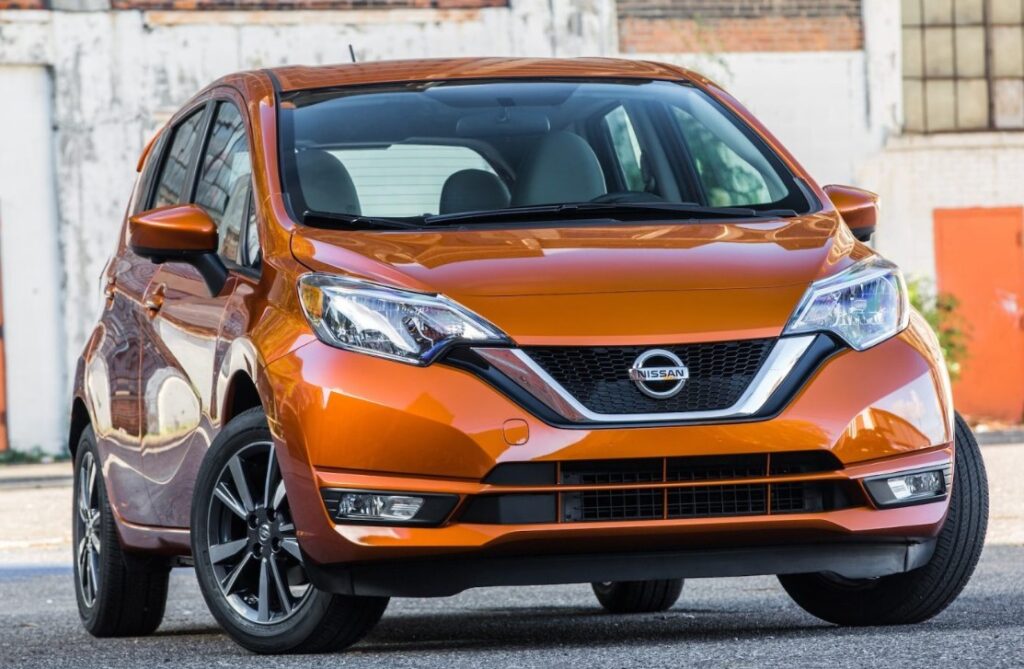
The Nissan Note has always been a clever little car. It does not shout like a sports coupe, tower over traffic like an SUV, or attempt to turn every journey into a technology showcase. Instead, it quietly solves everyday problems.
Need a compact car that fits into a tight parking space? The Note can do that. Want enough rear-seat room for adults, children, shopping bags, or a bulky pushchair? It handles that surprisingly well too. Looking for low fuel consumption without moving into a large or expensive hybrid? Depending on the generation, the Nissan Note offers several attractive answers.
Since its Japanese launch in 2005, the model has evolved through three principal generations:
- First generation: E11
- Second generation: E12
- Third generation: E13
Each one reflects a different stage in Nissan’s approach to compact cars. The E11 concentrated on space and practicality. The E12 became lighter, more aerodynamic, and more efficient. The E13 transformed the Note into an electrified, technology-focused hatchback powered exclusively by Nissan’s e-POWER system in Japan.
So, which Nissan Note generation is best? What changed between the E11, E12, and E13? And why do imported Notes sometimes appear different from models originally sold in Europe or North America?
Let’s open the family album and examine how this practical hatchback grew from a simple small car into one of Nissan’s most important electrified models.
Content in this publication
- Nissan Note Generations at a Glance
- How the Nissan Note Began
- First-Generation Nissan Note E11
- Second-Generation Nissan Note E12
- The 2016 Nissan Note E12 Facelift
- Recognising an E12 e-POWER
- E12 Strengths and Weaknesses
- Third-Generation Nissan Note E13
- Second-Generation e-POWER Technology
- Nissan Note e-POWER AWD
- The Nissan Note Aura
- E11 vs E12 vs E13 Nissan Note
- Which Nissan Note Generation Is Most Reliable?
- Which Nissan Note Generation Should We Buy?
- How to Identify Your Nissan Note Generation
- Understanding Imported Nissan Notes
- The Evolution of the Nissan Note
- Conclusion: Three Generations, One Practical Idea
- Frequently Asked Questions
Nissan Note Generations at a Glance
Before examining every model in detail, here is a simplified overview of the Nissan Note generation timeline.
| Generation | Model code | Main production era | Defining characteristic |
|---|---|---|---|
| First generation | E11 | 2005–2012/2013 | Spacious, practical compact hatchback |
| Second generation | E12 | 2012–2020/2021 | Improved efficiency and introduction of e-POWER |
| Third generation | E13 | 2020–present in Japan | Electrified range centred on e-POWER |
Production and sales dates can overlap because Nissan introduced and discontinued the car at different times in different markets. Japan often received new versions before Europe, while North America used the Versa Note name for a closely related version of the second-generation car.
Nissan’s own Japanese catalogue archive identifies the three main chassis families as E11, E12, and E13.
How the Nissan Note Began
The original Note arrived at a time when compact cars were expected to do more than simply transport two people and a couple of shopping bags.
Drivers wanted something economical, but they did not necessarily want a cramped city car. Families wanted flexible interiors, but many did not need the size or fuel consumption of a traditional people carrier. Nissan spotted the gap between those two worlds.
The result was a tall, five-door hatchback with a long wheelbase, generous passenger space, and an upright seating position. It was like a small apartment designed by someone who understood storage: modest from the outside, surprisingly roomy once we stepped through the door.
Nissan introduced the E11 Note in Japan in January 2005. The company later reported that global accumulated sales from its rollout through 2012 exceeded 900,000 units, demonstrating that its practical formula travelled well beyond its home market.
First-Generation Nissan Note E11
When Was the E11 Nissan Note Produced?
The first-generation Nissan Note, known by the E11 chassis code, made its Japanese debut in 2005. It subsequently reached European markets and remained available in various regions until the arrival of the second generation.
Because market launches did not happen simultaneously, buyers may find E11 examples registered as late as 2013 in some countries. Registration year alone therefore does not always confirm the generation. The chassis code, exterior design, engine and vehicle identification information provide a clearer answer.
The Purpose Behind the E11
The E11 was developed around a straightforward concept: give drivers compact exterior dimensions without forcing passengers to tolerate a miniature interior.
Its proportions tell the story. The bonnet is short, the roof is relatively high, and the wheels sit close to the corners. Nissan gave the Japanese-market model a 2,600 mm wheelbase, helping it create significantly more cabin room than its small footprint might suggest.
Rather than chasing sporty styling at the expense of visibility and headroom, the first Note behaved like a practical toolbox. Everything had a purpose.
Its main strengths included:
- Wide-opening doors
- A tall roofline
- Good rear legroom
- Flexible luggage arrangements
- Easy access for children and older passengers
- Compact dimensions for urban driving
E11 Exterior Design
The first-generation Note has a friendly, rounded appearance. Large headlights sweep back into the front wings, while the compact bonnet flows into a relatively tall passenger compartment.
At the rear, vertically arranged lights climb beside the back window. This design became one of the easiest ways to recognise an E11 from a distance.
It is not an aggressive-looking car, and that was never the point. The E11 looks approachable, practical, and slightly playful. Imagine a comfortable pair of trainers rather than polished formal shoes: not glamorous, perhaps, but ready for almost anything.
E11 Interior and Practicality
Inside, the E11 focuses on visibility, storage, and flexibility. The high seating position makes it easy to judge the car’s corners, while the broad glass area prevents the cabin from feeling enclosed.
Depending on the market and trim, buyers may encounter sliding rear seats, adjustable luggage-floor systems, underfloor storage, folding seatbacks, and numerous smaller compartments.
The sliding rear bench is particularly useful. We can move it backwards to improve passenger legroom or forwards to create more luggage space. That simple feature captures the E11 philosophy perfectly: the car adjusts to the day rather than forcing the day to adjust to the car.
Who Does the E11 Suit?
The first-generation Nissan Note remains attractive for:
- First-time drivers
- Small families
- Older motorists who prefer easy entry
- Urban commuters
- Buyers seeking an inexpensive second car
- Drivers who value practicality over image
E11 Engine Choices
Engine availability varied considerably by region. Common petrol options included 1.4-litre and 1.6-litre engines in Europe, while Japanese models frequently used Nissan’s 1.5-litre HR15DE engine.
Nissan’s heritage example of the 2005 Japanese Note 15S uses the 1.5-litre HR15DE, producing 80 kW, or approximately 109 PS.
Some European markets also received diesel versions, providing better long-distance economy for drivers covering high annual mileage.
Transmission options could include:
- Five-speed manual gearboxes
- Conventional automatic transmissions
- Continuously variable transmissions, depending on market
When shopping for an E11 today, we should identify the exact engine and gearbox rather than relying solely on the model year.
E11 Strengths and Weaknesses
Main Strengths
The first-generation Note stands out for its usable interior, straightforward controls, good visibility, and relatively simple mechanical layout.
It also has a broad supply of used parts in markets where it sold in large numbers. Independent garages are generally familiar with the common petrol engines, and routine maintenance is usually uncomplicated.
Potential Weaknesses
Age is now the E11’s greatest enemy. Even a mechanically solid example may require attention to suspension components, wheel bearings, air-conditioning equipment, electrical connections, door locks, exhaust parts, or deteriorated rubber seals.
Some cars have also spent years making short urban journeys. A low odometer reading may look appealing, but constant cold starts, speed bumps, potholes, and stop-start use can still produce significant wear.
A careful inspection matters more than finding the newest badge or the lowest advertised mileage.
Second-Generation Nissan Note E12
The E12 Arrives in 2012
Nissan revealed the second-generation Note in 2012, with the Japanese launch preceding its arrival in other international markets.
The E12 was not merely an E11 wearing sharper clothes. Nissan redesigned the body, reduced weight, improved aerodynamics, introduced newer engines, and placed greater emphasis on fuel efficiency.
At launch, Nissan described the new global hatchback as combining advanced engine technology, a lighter platform, and improved aerodynamic performance.
The car retained the original Note’s practical character but moved closer to the shape of a conventional hatchback.
How the E12 Design Changed
Compared with the rounded E11, the E12 looks longer, lower, and more sculpted.
Its defining visual features include:
- Swept-back headlights
- A more pronounced front grille
- A rising side character line
- Boomerang-inspired rear lights
- A smoother roof profile
- More aerodynamic bodywork
The E11 looks like a tiny multipurpose vehicle. The E12 looks more like a modern supermini that has secretly packed an oversized suitcase.
That distinction matters. Nissan wanted to preserve interior flexibility while giving the car a more efficient and internationally appealing design.
E12 Cabin Improvements
The second generation brought a more contemporary dashboard, improved materials on many versions, newer infotainment options, and a wider selection of driver-assistance equipment.
Equipment depended heavily on trim level and country, but available features could include:
- Touchscreen navigation
- Around View Monitor cameras
- Keyless entry and starting
- Climate control
- Lane-related warning systems
- Blind-spot monitoring
- Automatic emergency braking
- Digital displays on e-POWER models
The driving position remained upright and user-friendly. Rear passenger space was still one of the Note’s major selling points, although the cabin felt more like that of a regular hatchback than the tall, airy E11.
E12 Petrol and Diesel Engines
Early E12 models were sold with several powertrains across global markets.
European buyers commonly encountered versions of Nissan’s 1.2-litre three-cylinder petrol engine. A supercharged 1.2-litre DIG-S variant offered additional performance while targeting improved efficiency.
Diesel power was also available in certain markets, often using a 1.5-litre engine associated with the Renault-Nissan partnership.
You may be interested in reading Nissan Note Years to Avoid: New Zealand Buyer’s Guide
Japanese domestic-market cars used different combinations, including naturally aspirated and supercharged petrol engines paired with continuously variable transmissions.
This wide powertrain variety means the phrase “2015 Nissan Note” does not describe one universal car. A British manual diesel, a Japanese CVT petrol model, and another export-market version can feel surprisingly different.
The North American Nissan Versa Note
In North America, the second-generation design appeared as the Nissan Versa Note.
It shared much of the E12 Note’s underlying concept but was positioned within the Versa range. Nissan presented it as a distinct hatchback companion to the Versa sedan, with its own styling and practical identity.
The Versa Note remained focused on affordability, passenger space, and fuel economy. Nevertheless, market-specific trim levels, bumpers, lighting, safety equipment, engines, transmissions, and emissions systems can distinguish it from Japanese or European Notes.
We should therefore avoid assuming that every component listed for a Nissan Note will fit a Versa Note—or vice versa—without checking the chassis and part number.
The 2016 Nissan Note E12 Facelift
More Than a Cosmetic Update
The most important development in the second-generation story came in 2016.
Nissan revised the E12’s styling with a new front-end design featuring the brand’s more prominent V-motion grille. Interior details and equipment were also updated.
Yet the headline was not the grille, lights, or bumper. It was the introduction of Nissan Note e-POWER.
Nissan launched the redesigned Note with e-POWER in November 2016, turning an already practical hatchback into a far more innovative vehicle.
What Is Nissan e-POWER?
The e-POWER system is a series-hybrid arrangement. The wheels are driven by an electric motor, while a petrol engine generates electricity for the battery and motor system.
This differs from many conventional hybrids, where the petrol engine can mechanically drive the wheels. In a Note e-POWER, the driving sensation is closer to an electric car because propulsion comes from the electric motor.
However, unlike a fully electric vehicle, the Note e-POWER does not require external charging. We fill its fuel tank as we would in a normal petrol car.
Nissan explains that e-POWER uses a petrol engine to generate electricity while the high-output motor drives the vehicle, providing an EV-like response without depending on a charging connection.
Why the E12 e-POWER Mattered
The first Note e-POWER arrived before series-hybrid systems became widely familiar to ordinary hatchback buyers.
Its appeal was easy to understand:
- Immediate electric-motor response
- Smooth urban acceleration
- No external charging cable
- Strong efficiency in stop-start driving
- Regenerative braking
- A quieter low-speed experience than many ordinary petrol cars
It turned the humble Note into something of a mechanical magician. We poured petrol into the tank, yet the car accelerated using an electric motor.
The system was not completely silent because the petrol engine still needed to run. Under heavy acceleration or when charging was required, engine speed could rise independently of road speed. New owners sometimes found this behaviour unusual, but it is a normal characteristic of the system.
Recognising an E12 e-POWER
A facelifted E12 e-POWER can often be identified by its e-POWER badging, updated front grille, distinctive instrument display, and Japanese-market specification.
Nevertheless, badges can be replaced, removed, or added. The safest identification method is to verify:
- The chassis code
- The registration documentation
- The engine and motor specifications
- The instrument cluster
- The under-bonnet layout
- The vehicle identification plate
Imported E12 e-POWER cars are now common in several right-hand-drive markets. They can offer outstanding urban efficiency, but buyers should locate a workshop familiar with Nissan’s hybrid system before purchasing.
E12 Strengths and Weaknesses
Why Buyers Like the E12
The second-generation Note generally feels more refined and efficient than the E11. It offers a newer cabin, sharper styling, more safety technology, and—in e-POWER form—a distinctive driving experience.
It is particularly well suited to urban families, rideshare drivers, commuters, and anyone who wants electric-style acceleration without installing a charger.
What Buyers Should Inspect
On conventional E12 models, we should pay attention to CVT operation, service history, suspension noise, battery condition, warning lights, air-conditioning performance, infotainment functions, and evidence of accident repairs.
On e-POWER models, inspection should also cover:
- Hybrid battery health
- Cooling-system operation
- Electric-motor warning messages
- Generator-engine condition
- Diagnostic fault codes
- Correct operation of regenerative braking
- The condition of the conventional 12-volt battery
The small 12-volt battery deserves special attention. Even though it does not propel the vehicle, a weak battery can trigger strange warnings or prevent the system from starting correctly.
Third-Generation Nissan Note E13
The All-New Note Launches in 2020
Nissan introduced the third-generation Note in Japan in November 2020, with sales scheduled to begin on December 23 of that year.
This time, the transformation was dramatic. Nissan launched the E13 Note exclusively with its newer e-POWER system in Japan, leaving conventional petrol-only versions behind.
Where the original E11 used clever packaging to redefine a small hatchback, the E13 used electrification and digital technology to redefine how the Note drives.
E13 Exterior Styling
The E13 has a cleaner, more mature appearance than the E12.
Its thin headlights, smooth surfaces, crisp shoulder line, and restrained grille treatment give it a modern electric-car flavour, even though it still carries a petrol engine as an onboard generator.
The body looks less busy than that of the facelifted E12. Instead of relying on numerous creases and dramatic details, the E13 presents a calmer, more confident shape.
It is as though the Note swapped a colourful sports jacket for a tailored coat.
A More Advanced Interior
The third-generation cabin represents an equally large step forward.
Depending on specification, features may include:
- A digital instrument panel
- A large central infotainment display
- Electronic gear selection
- Connected navigation functions
- Advanced driver-assistance technology
- Electric parking brake
- High-quality trim materials
- ProPILOT assistance on selected grades
The layout feels wider and more open, while the screens place essential information directly in front of the driver.
Unlike the straightforward E11 dashboard, which resembles a clearly labelled household appliance, the E13 cabin belongs firmly to the smartphone era.
Second-Generation e-POWER Technology
The E13 uses Nissan’s later e-POWER technology, developed to improve smoothness, efficiency, refinement, and motor performance.
The underlying principle remains familiar: the electric motor drives the wheels, while the petrol engine generates electrical energy.
However, the newer system is more integrated and sophisticated than the original E12 setup. The improved control strategy can manage engine operation more intelligently, reducing unwanted noise and matching generator activity more effectively to driving conditions.
The result is an experience that feels increasingly close to an electric vehicle, particularly in city traffic.
Does the E13 Need Charging?
No. The standard E13 Note e-POWER is not a plug-in hybrid.
We refuel it with petrol, and the car manages electricity generation automatically. There is no requirement to connect it to a home charger or public charging point.
That makes it useful for drivers who want an electric-motor driving experience but cannot charge at home.
Nissan Note e-POWER AWD
Nissan also introduced an all-wheel-drive E13 version using electric motors at both ends of the vehicle.
The rear motor does more than assist on slippery roads. Nissan designed the system to improve traction, acceleration, stability, and deceleration control.
The all-new Note e-POWER AWD was launched in Japan in December 2020 with dual electric motors.
This setup can be especially valuable in areas with snow, heavy rain, steep roads, or loose surfaces. Still, it should not be confused with the heavy-duty four-wheel-drive system of an off-road SUV. The Note remains a compact road car.
The Nissan Note Aura
Is the Aura a Separate Generation?
The Nissan Note Aura is closely related to the E13 Note rather than representing a fourth generation.
It is a wider, more premium interpretation of the same basic concept, with distinctive bodywork, upgraded cabin materials, enhanced equipment, and more powerful e-POWER performance in certain specifications.
You may be interested in readingNissan Note Years to Avoid: New Zealand Buyer’s GuideYou may be interested in reading
 Chevrolet Silverado Models: A Complete Guide to the U.S. Lineup
Nissan launched the Note Aura as a premium compact car in Japan, expanding the E13 family beyond the standard Note.
Note Aura NISMO
The Aura NISMO adds sportier styling, chassis tuning, aerodynamic details, unique drive modes, larger wheels, and a more aggressive interior theme.
It proves how far the Note name has travelled. The first E11 was an honest family runabout. The Aura NISMO presents the same family tree through a performance-inspired lens.
The transformation is rather like watching a practical office worker arrive at the weekend wearing racing shoes.
E11 vs E12 vs E13 Nissan Note
Design Comparison
The E11 is the tallest-looking and most utilitarian. Its rounded body and vertical rear lights make it easy to recognise.
The E12 has a sleeker profile, stronger side creases, and more conventional hatchback styling.
The E13 looks cleaner, wider, and more technologically advanced, with slim lighting and a more minimalist design language.
Driving Experience
The E11 provides light controls, good visibility, and a simple driving character. It is not especially sporty, but it is easy to understand and easy to place on the road.
The conventional E12 feels more stable and refined, while the E12 e-POWER introduces immediate electric-motor response and stronger regenerative braking.
The E13 takes that electric sensation further. It is smoother, quieter, more responsive, and more sophisticated, particularly in higher trims.
Technology Comparison
The difference between generations becomes most obvious when we compare their cabins.
E11 Technology
- Basic trip computer
- Conventional audio systems
- Simple climate controls
- Limited driver assistance
E12 Technology
- Touchscreen options
- Around-view cameras
- More advanced safety features
- Keyless access
- e-POWER displays on hybrid models
E13 Technology
- Digital instrumentation
- Larger multimedia systems
- Connected services
- Advanced driver assistance
- Newer e-POWER management
- Available dual-motor AWD
Practicality Comparison
The E11 remains one of the most practical choices relative to its price. Its upright body and flexible rear seating make it extremely useful.
The E12 offers similar family-friendly qualities in a sleeker shape, although exact luggage and seating arrangements vary by version.
The E13 is still practical, but its appeal extends beyond space. Buyers choose it for refinement, technology, safety, and electrified performance as much as for its cabin flexibility.
Which Nissan Note Generation Is Most Reliable?
There is no universal winner because reliability depends on engine type, maintenance, climate, mileage, previous ownership, and accident history.
That said, each generation presents a different ownership proposition.
The E11 is mechanically simpler but now considerably older. Rust, worn suspension, perished seals, and age-related electrical faults may matter more than the original design.
The E12 is newer and more refined, but buyers need to inspect the CVT carefully where fitted. The e-POWER version adds hybrid components, making specialist diagnostics more important.
The E13 benefits from newer engineering and improved technology, but it is more complex and can be more expensive to repair after a collision or major electrical failure.
A well-maintained E11 can be a better purchase than a neglected E12. Likewise, an E12 with complete service records may be a safer bet than a poorly repaired E13 import.
Condition beats generation.
Which Nissan Note Generation Should We Buy?
Choose the E11 When…
We should consider the first generation when low purchase price, simple controls, excellent visibility, and practical cabin space are the priorities.
It is a sensible budget option, provided we find a rust-free, well-maintained example and accept that age-related repairs may be necessary.
Choose the E12 When…
The second generation offers the broadest variety.
A conventional petrol E12 can provide economical everyday transport without the complexity of a hybrid system. An E12 e-POWER is more attractive for drivers who spend much of their time in urban traffic and want smooth electric-motor acceleration.
The E12 often represents the sweet spot between price, age, technology, and efficiency.
Choose the E13 When…
The third generation suits buyers who want the most modern Note experience.
It offers stronger safety technology, a significantly more advanced cabin, improved refinement, and newer e-POWER performance. It is the obvious choice when budget allows and access to knowledgeable servicing is available.
How to Identify Your Nissan Note Generation
Identifying the generation is essential when ordering parts, purchasing accessories, selecting tyres, researching recalls, or arranging insurance.
Use the following checklist:
- Check the chassis plate or registration papers.
Look for E11, E12, or E13 within the model or frame code. - Confirm the production year.
Remember that generation years can overlap between markets. - Examine the exterior design.
Vertical rear lights usually suggest E11, while the sleeker body suggests E12. Slim headlights and a cleaner modern shape point to E13. - Identify the powertrain.
An e-POWER badge usually indicates a facelifted E12 or an E13, but verification is still necessary. - Use the full vehicle identification number.
Parts suppliers and Nissan dealers can use it to confirm specifications. - Do not rely on the registration year alone.
Imported vehicles may have been registered several years after manufacture.
Understanding Imported Nissan Notes
Many used Nissan Notes outside Japan are grey imports. These vehicles can offer excellent value, high equipment levels, and efficient powertrains unavailable through local new-car dealerships.
However, imported models require careful research.
Potential considerations include:
- Japanese-language infotainment systems
- Radio-frequency differences
- Limited local navigation compatibility
- Insurance classification
- Availability of body and electronic parts
- Hybrid-trained repair facilities
- Unclear auction or accident history
- Odometer verification
- Region-specific recall eligibility
None of these issues automatically makes an imported Note a bad purchase. They simply mean we should inspect the car with our eyes open.
A well-documented import can be a clever bargain. A poorly repaired vehicle with missing history can become a wallet-sized thunderstorm.
The Evolution of the Nissan Note
The three Nissan Note generations reveal a clear progression.
The E11 asked: How much interior space can we fit into a small car?
The E12 asked: How can we make that practical car lighter, cleaner, and more efficient?
The E13 asked: How can we give everyday drivers an electric-style experience without requiring a charging cable?
That evolution explains why the Note has remained relevant. Nissan did not simply change the headlights every few years and call the job finished. Each generation adjusted the car’s central purpose to match changing customer expectations.
Conclusion: Three Generations, One Practical Idea
The Nissan Note has passed through three main generations, but its core personality has remained remarkably consistent.
The E11 established the formula with a spacious, flexible cabin wrapped in compact bodywork. It remains a useful budget car, although age and condition now require close attention.
The E12 sharpened the design, improved efficiency, expanded available technology, and introduced the revolutionary e-POWER version. For many used-car buyers, it offers the strongest balance of practicality, affordability, and modern features.
The E13 moved the Note into a new era. With e-POWER as its defining drivetrain, digital technology throughout the cabin, available electric AWD, and premium Aura derivatives, it feels more sophisticated than the modest Note badge might suggest.
Which one should we choose? That depends on our budget, driving environment, servicing options, and appetite for technology. Yet whether we select a simple E11 or a polished E13, the same idea sits beneath the metal: make everyday travel easier without making the car unnecessarily large.
That may not sound dramatic, but clever design rarely needs to shout.
Frequently Asked Questions
1. How many Nissan Note generations are there?
There are three principal Nissan Note generations: the E11, E12, and E13. The E11 began in 2005, the E12 arrived in 2012, and the E13 launched in Japan in 2020.
2. Which Nissan Note generation introduced e-POWER?
The second-generation E12 introduced Nissan’s e-POWER system during its 2016 facelift. The third-generation E13 was subsequently launched exclusively with e-POWER in the Japanese market.
3. Is the Nissan Versa Note the same as the Nissan Note?
The North American Versa Note is closely related to the second-generation E12 Nissan Note. However, market-specific engines, transmissions, equipment, lighting, safety systems, and body components can differ.
4. Does a Nissan Note e-POWER need to be plugged in?
No. A standard Note e-POWER is not externally charged. Its petrol engine generates electricity, while an electric motor drives the wheels.
You may be interested in readingNissan Note Years to Avoid: New Zealand Buyer’s GuideYou may be interested in reading
Chevrolet Silverado Models: A Complete Guide to the U.S. LineupYou may be interested in reading
 2025 GMC Sierra Trim Levels: Complete Canadian Guide
5. What is the best Nissan Note generation to buy used?
The E12 is often the most balanced used choice because it combines reasonable prices with modern equipment and efficient engines. Nevertheless, the best individual car is the one with a verified history, correct maintenance, sound battery or transmission condition, and no hidden accident damage.
If you want to know other articles similar to Nissan Note Generations: Complete Model History Guide you can visit the category Models.
Volkswagen T-Cross vs Volkswagen T-Roc: Which Is Better?
Hyundai Tucson Weight: Complete Guide to Curb, Gross, and Payload Specs
Honda Passport vs Toyota 4Runner: Which SUV Is Better?
Honda Passport vs Ford Bronco: Which SUV Is Better?
Honda Passport vs Ford Explorer: Which SUV Is Better?
Honda Passport or Pilot: Which SUV Is Better?
Leave a Reply
More content of your interest