

Mitsubishi Outlander vs Kia Sorento: Which SUV Is Better?

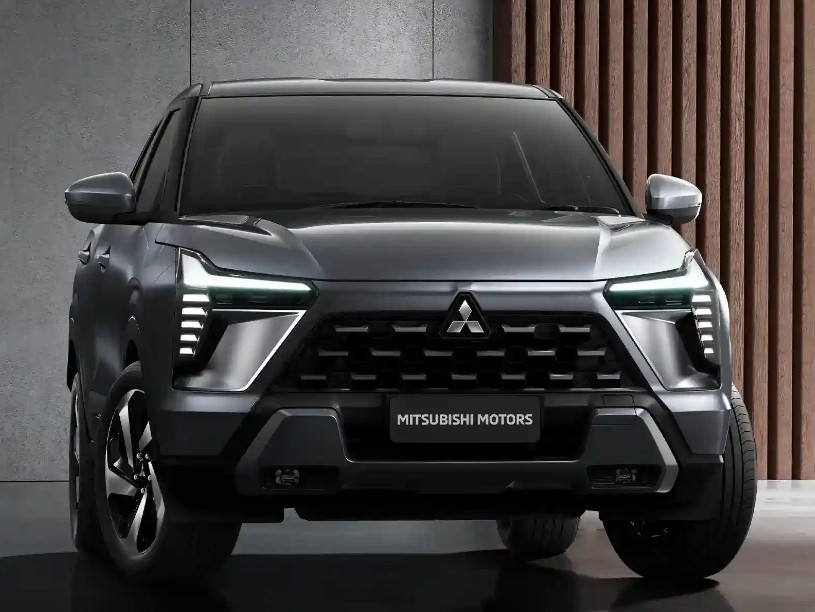
Choosing between the Mitsubishi Outlander vs Kia Sorento can feel a little like choosing between two different interpretations of the same family-SUV recipe. Both offer three-row practicality in many markets, available electrification, plenty of technology, and the versatility buyers expect from a modern crossover. Yet once we look beneath the surface, their personalities separate rather quickly.
The Mitsubishi Outlander generally leans toward value, efficient everyday transportation, available plug-in hybrid technology, and manageable exterior dimensions. The Kia Sorento tends to feel larger, more powerful, more polished, and more convincing when we regularly carry passengers or tow.
So which one should we buy?
For many families, the Kia Sorento is the more complete all-round SUV, particularly when passenger space, performance, and highway driving matter. However, the Mitsubishi Outlander becomes extremely attractive for buyers prioritizing value and plug-in hybrid capability, especially when regular charging is available.
Let's break down the differences carefully rather than simply declaring one SUV the winner.
Content in this publication
- Mitsubishi Outlander vs Kia Sorento at a Glance
- Which Is Bigger: Mitsubishi Outlander or Kia Sorento?
- Interior Space: Which SUV Is More Comfortable?
- Cargo Space: Sorento Has the Practical Advantage
- Mitsubishi Outlander vs Kia Sorento Performance
- Outlander PHEV vs Sorento Hybrid: Two Different Approaches
- Mitsubishi Outlander PHEV Explained
- Kia Sorento Hybrid Explained
- Which Hybrid Is Better?
- Fuel Economy: Which SUV Uses Less Fuel?
- Ride Comfort: Outlander vs Sorento
- Handling and Driving Feel
- Mitsubishi Outlander vs Kia Sorento AWD
- Towing Capacity: Sorento Usually Wins
- Technology and Infotainment
- Safety Features
- Reliability: Mitsubishi Outlander vs Kia Sorento
- Warranty: Check Your Country Carefully
- Maintenance Costs
- Dealer Network and Parts Availability
- Resale Value
- Mitsubishi Outlander vs Kia Sorento for Families
- Mitsubishi Outlander vs Kia Sorento for City Driving
- Which Is Better for Highway Driving?
- Which Is Better for Fuel-Conscious Buyers?
- Which Is Better for Buyers on a Budget?
- Used Mitsubishi Outlander vs Used Kia Sorento
- Outlander vs Sorento: Advantages and Disadvantages
- Mitsubishi Outlander vs Kia Sorento: Which Should We Buy?
- Final Verdict: Sorento Wins Overall, Outlander Wins Specific Battles
- Frequently Asked Questions
- Is the Mitsubishi Outlander better than the Kia Sorento?
- Which is bigger, Kia Sorento or Mitsubishi Outlander?
- Which is more fuel-efficient, Mitsubishi Outlander or Kia Sorento?
- Which is better for seven passengers, Outlander or Sorento?
- Is the Mitsubishi Outlander PHEV worth buying instead of a Sorento?
Mitsubishi Outlander vs Kia Sorento at a Glance
Before digging into the details, here's the simplest way to understand these two SUVs.
| Category | Mitsubishi Outlander | Kia Sorento |
|---|---|---|
| Overall size | Compact-to-midsize | Midsize |
| Typical seating | Up to 7 | Usually 6 or 7 |
| Third-row usefulness | Best for occasional use | More practical |
| Gasoline performance | Adequate | Generally stronger |
| Hybrid availability | Depends on market | Available in several markets |
| Plug-in hybrid | Major strength | Available in selected markets |
| AWD | Available/standard depending on version | Available |
| Urban maneuverability | Better | Good |
| Cargo practicality | Good | Better overall |
| Towing ability | Moderate | Generally stronger |
| Best suited to | Efficiency/value buyers | Families/all-round buyers |
There is an important catch: specifications vary significantly between countries. Mitsubishi and Kia sell different engines and electrified versions around the world, so we should always verify the exact local model before buying.
Which Is Bigger: Mitsubishi Outlander or Kia Sorento?
The Kia Sorento is generally the larger SUV.
That difference might not look dramatic when the vehicles are parked separately, but place them next to each other and the Sorento feels more substantial.
The Outlander occupies an interesting position. It offers three rows of seating in a footprint that remains reasonably easy to drive around crowded cities. That can be extremely useful if we need seven seats occasionally but don't want something the size of a traditional large SUV.
The Sorento stretches the formula.
Its larger dimensions translate into more breathing room for passengers, a more useful third row, and typically stronger cargo versatility.
Why Size Matters in Everyday Driving
Bigger isn't automatically better.
The Outlander is easier to squeeze into tight parking spaces, narrow streets, and urban garages. Drivers moving up from a compact crossover may find it less intimidating.
The Sorento needs slightly more space, but that extra footprint pays dividends every time the whole family climbs aboard.
Think of the Outlander as an apartment with an intelligently designed guest room. The Sorento is closer to a small house—the additional space simply gives everybody more freedom.
Interior Space: Which SUV Is More Comfortable?
The Sorento usually wins the interior-space comparison.
Both models can accommodate families comfortably in the first two rows, but the differences become clearer behind them.
Front-Seat Comfort
Front passengers in either vehicle receive plenty of space.
The latest Outlander cabins feel significantly more sophisticated than older Mitsubishi interiors. Depending on trim and market, buyers can find large digital displays, premium materials, heated seats, leather upholstery, and impressive audio equipment.
The Sorento also presents a surprisingly upscale interior.
Its dashboard design, screens, switchgear, and overall presentation often resemble something from a more expensive vehicle.
Neither SUV feels cheap in well-equipped trim levels.
Second-Row Space
Move into the second row and the Sorento begins pulling ahead.
Adults typically have more generous legroom and shoulder room, while available captain's chairs on certain versions can make the cabin considerably more comfortable.
The Outlander remains perfectly usable for a typical family, though.
Parents carrying two children will probably never complain about the second row.
Third-Row Space
Here we reach one of the biggest differences in the Mitsubishi Outlander vs Kia Sorento debate.
The Outlander's third row should generally be treated as occasional seating.
Children? Absolutely.
Smaller teenagers? Usually.
Adults for a short journey? Possible.
Adults on a three-hour highway trip? We wouldn't volunteer.
The Sorento isn't a limousine either, but its third row is typically more accommodating.
If six or seven people will regularly travel together, we'd choose the Sorento.
Who Should Choose the Outlander Third Row?
The Outlander makes sense when we normally carry four or five occupants but occasionally need two additional seats.
That's actually a very common family scenario.
We don't always need a huge SUV. Sometimes we simply want emergency seating for grandparents, children's friends, or an unexpected passenger.
For that purpose, Mitsubishi's approach works surprisingly well.
Cargo Space: Sorento Has the Practical Advantage
Third-row SUVs always involve compromise.
Raise every seat and cargo capacity shrinks. Fold the rear seats and suddenly the vehicle transforms into something considerably more practical.
The Sorento's larger body usually gives it the cargo advantage.
Behind the third row, neither vehicle provides van-like storage, but the Kia is generally easier to live with when carrying several passengers plus luggage.
Fold the third row and both SUVs become useful family haulers.
The Outlander still provides enough space for grocery runs, pushchairs, sports equipment, suitcases, and ordinary household duties.
But if we're carrying six passengers to the airport with six large suitcases?
The Sorento is the safer bet.
Mitsubishi Outlander vs Kia Sorento Performance
This category depends heavily on engine choice and market.
The Sorento is usually offered with a broader range of relatively powerful engines, while the Outlander tends to emphasize smoothness and efficiency rather than outright speed.
Mitsubishi Outlander Performance
Gasoline Outlanders have historically been competent rather than exciting.
That's not necessarily criticism.
Family SUVs spend most of their lives commuting, sitting in traffic, transporting children, and cruising at normal highway speeds. We don't need sports-car acceleration to accomplish any of those jobs.
However, load the vehicle with passengers and luggage, point it toward a steep road, and the limits of a less powerful engine become easier to notice.
Recent Outlander powertrains have also been evolving. For example, Mitsubishi announced a new mild-hybrid gasoline-electric powertrain for the 2026 North American Outlander, highlighting its continued move toward electrification.
Kia Sorento Performance
The Sorento generally offers stronger performance, especially with turbocharged and electrified powertrains.
Acceleration tends to feel more effortless when merging onto highways or overtaking.
This becomes particularly valuable when the SUV is fully loaded.
We press the accelerator and the Sorento usually responds with greater authority, whereas some Outlander versions need a little more patience.
Outlander PHEV vs Sorento Hybrid: Two Different Approaches
Electrification makes this comparison much more interesting.
The Outlander PHEV is one of Mitsubishi's most compelling products, while Kia offers hybrid and, depending on the market, plug-in hybrid Sorento configurations.
These systems solve the efficiency problem differently.
Mitsubishi Outlander PHEV Explained
The Outlander PHEV combines a gasoline engine, battery, and electric motors.
Charge it regularly and many everyday journeys can be completed largely—or sometimes entirely—using electricity.
That's the attraction.
Imagine our typical commute is relatively short. We charge overnight, drive to work, return home, and recharge.
The gasoline engine may barely participate in ordinary weekday driving.
Then Saturday arrives and we want to travel several hundred kilometres.
No problem.
Instead of searching for a charging station like we might in a fully electric vehicle, the gasoline engine provides long-distance flexibility.
Recent versions have expanded that capability further. Mitsubishi's updated 2026 Outlander PHEV introduced a larger 22.7-kWh battery in Canada, with Mitsubishi quoting approximately 72 km of electric range under the applicable test method.
The U.S.-market 2026 model is rated at up to 45 miles of electric range according to Mitsubishi, illustrating why range figures should always be compared using the same local testing standard.
Why the Outlander PHEV Makes Sense
The plug-in Mitsubishi is especially appealing when:
- We can charge at home.
- Most daily journeys are short.
- We still make frequent long-distance trips.
- We want AWD capability.
- A fully electric car isn't practical yet.
- Local fuel prices are high.
- Electricity is relatively inexpensive.
Without regular charging, however, a PHEV loses much of its advantage.
Buying one and never plugging it in is a little like buying running shoes and taking the bus everywhere.
Kia Sorento Hybrid Explained
The standard Sorento Hybrid works differently.
We don't need to plug it in.
The vehicle automatically manages the gasoline engine, electric motor, and battery.
That makes the system wonderfully simple.
Get in. Start driving. That's it.
For reference, Kia's 2026 U.S.-market Sorento Hybrid combines a turbocharged engine and electric motor for a quoted 227 hp. Kia also lists AWD availability on certain configurations.
Again, specifications elsewhere may differ.
Who Benefits Most From the Sorento Hybrid?
The Sorento Hybrid makes sense when we want better fuel economy without changing our habits.
No charging routine.
No garage socket required.
No worrying about whether someone remembered to plug the SUV in overnight.
It simply behaves like an efficient conventional vehicle.
Which Hybrid Is Better?
It depends entirely on how we drive.
If we have home charging and cover short distances most days, the Outlander PHEV can be the more interesting solution.
If we cannot charge reliably, the Sorento Hybrid is easier to live with.
You may be interested in reading Mitsubishi Outlander vs Toyota RAV4: Which SUV Is the Better Buy?
That's perhaps the most important electrified-vehicle lesson in this entire comparison.
The best technology isn't always the technology with the biggest battery.
It's the one that matches our life.
Fuel Economy: Which SUV Uses Less Fuel?
There isn't one universal answer because engine lineups vary globally.
Generally, conventional gasoline versions of the Outlander benefit from the vehicle's slightly smaller size, while hybrid Sorentos can deliver impressive efficiency considering their passenger capacity.
The Outlander PHEV potentially changes the equation dramatically.
Someone completing most daily driving electrically might visit a fuel station far less frequently than a conventional Sorento owner.
But real-world PHEV economy depends enormously on charging habits.
The PHEV Trap Buyers Should Understand
Official plug-in hybrid efficiency figures can look spectacular.
Yet those figures assume we actually use the battery.
Drive 40 km each day and recharge every night? Brilliant.
Drive 600 km every day without charging? Completely different story.
Therefore, don't compare a PHEV's headline efficiency figure directly with an ordinary gasoline vehicle unless we understand how each test is calculated.
Ride Comfort: Outlander vs Sorento
Both SUVs prioritize comfort, but the Sorento generally feels more substantial on the road.
Its longer wheelbase and larger platform tend to provide a calm highway character.
The Mitsubishi isn't uncomfortable.
Far from it.
Recent Outlanders have made enormous progress in refinement compared with older generations.
Around town, the Outlander's slightly smaller dimensions can actually make it feel lighter and easier to place.
Over rough roads, wheel size matters too.
Large fashionable wheels might look fantastic outside a restaurant, but smaller wheels with taller tire sidewalls usually absorb potholes more gracefully.
That's true for both vehicles.
Handling and Driving Feel
Neither SUV exists primarily for enthusiastic cornering.
That's fine.
Nobody buys a seven-seat family crossover because they dream of setting a Nürburgring lap record.
Still, handling affects confidence.
The Sorento generally feels stable and planted, particularly during highway driving.
The Outlander feels reasonably agile for something with three rows, while Mitsubishi's available Super All-Wheel Control system is an important selling point, particularly in the PHEV.
Drivers living in wet, snowy, or mountainous areas may appreciate that technology.
Mitsubishi Outlander vs Kia Sorento AWD
Both manufacturers offer all-wheel-drive capability, although availability depends on trim, powertrain, and market.
Mitsubishi has built much of its reputation around AWD and four-wheel-control technology.
The Outlander PHEV's S-AWC system is particularly noteworthy because the electric drivetrain can manage power delivery in ways that feel smooth and controlled.
The Sorento also provides capable AWD systems and, in some versions, multiple terrain modes.
For ordinary snow, rain, gravel roads, and family adventures, either should serve us well.
Are They True Off-Road SUVs?
Not really.
Both are fundamentally road-oriented crossovers.
They can tackle rough tracks, snow, gravel, muddy campsites, and imperfect country roads, but they are not direct replacements for serious body-on-frame 4x4s.
If our weekends involve rock crawling, deep mud, or crossing remote terrain, we should probably be shopping in another category.
Towing Capacity: Sorento Usually Wins
If towing matters, the Kia Sorento is generally the stronger choice.
Exact towing ratings vary dramatically between countries, engines, drivetrains, and homologation standards, so quoting one universal number would be misleading.
Some Sorento versions are engineered to tow substantially more than certain Outlander versions.
That makes the Kia more attractive for caravans, boats, and heavier trailers.
The Outlander can still handle lighter recreational towing when properly equipped.
Always Check Local Towing Specifications
Never assume two visually identical vehicles have the same towing rating.
Before towing, verify:
- Maximum braked trailer capacity.
- Maximum unbraked trailer capacity.
- Tow-ball or tongue weight limit.
- Gross vehicle mass.
- Gross combination mass.
- Payload while towing.
- Whether the specific drivetrain is approved for towing.
These numbers matter more than marketing brochures.
Technology and Infotainment
Technology has become another battleground.
Both SUVs offer modern infotainment systems, smartphone integration, digital driver displays, cameras, and extensive driver assistance depending on specification.
The Sorento often feels especially polished here.
Kia has become extremely good at creating cabins that look expensive without necessarily entering luxury-brand territory.
Mitsubishi has responded strongly with newer Outlander updates.
The refreshed 2026 Outlander PHEV, for example, received interior and technology changes including a larger central display and upgraded Yamaha audio systems in certain markets.
For buyers comparing older used models, however, the difference may be much larger.
Technology changes quickly from one model year to another.
Safety Features
Both vehicles can offer an extensive collection of active safety systems.
Depending on trim and region, equipment may include automatic emergency braking, adaptive cruise control, lane assistance, blind-spot monitoring, rear cross-traffic alert, parking sensors, surround-view cameras, and other semi-automated driving aids.
We should never assume every version includes everything.
A base Outlander in one country might have equipment that requires an option package elsewhere. The same applies to the Sorento.
When buying used, checking the actual car's equipment is more important than reading a generic model overview.
Reliability: Mitsubishi Outlander vs Kia Sorento
Reliability discussions often become dangerously simplistic.
Someone owns one problematic vehicle and declares the entire model terrible.
Someone else drives 200,000 km without trouble and concludes every example is indestructible.
Reality lives somewhere between those extremes.
Both the Outlander and Sorento have been sold with multiple engines, transmissions, hybrid systems, and generations.
That means reliability depends heavily on the exact model year and drivetrain.
Mitsubishi Outlander Reliability
Mitsubishi often appeals to buyers looking for relatively straightforward ownership and long warranty coverage in markets where generous factory warranties are offered.
The Outlander PHEV adds complexity through its battery, motors, charging equipment, and hybrid control systems, although electrified drivetrains also reduce dependence on certain conventional mechanical components.
A used PHEV deserves careful battery and charging-system inspection.
Kia Sorento Reliability
The Sorento has also used many different powertrains across generations.
Certain older engines and transmissions have stronger reputations than others.
When shopping used, service history should influence our decision far more than the badge on the bonnet.
A beautifully maintained Sorento is usually a better purchase than a neglected Outlander—and vice versa.
Warranty: Check Your Country Carefully
Warranty coverage is one area where both Mitsubishi and Kia often compete aggressively.
However, terms vary significantly worldwide.
Some regions receive unusually long warranties, while others receive shorter coverage or mileage limitations.
Hybrid batteries may also have separate warranty terms.
Before buying, verify the manufacturer's local warranty documentation rather than relying on information from another country.
A warranty quoted on an American website may be completely irrelevant to a buyer in Australia, New Zealand, Canada, Europe, or Asia.
Maintenance Costs
The Outlander will often appeal to cost-conscious buyers.
Routine servicing should generally remain manageable, although dealership availability can influence ownership costs in markets where Mitsubishi has a smaller network.
The Sorento may cost slightly more to maintain depending on engine complexity and specification.
Turbochargers, AWD systems, hybrid components, large wheels, and sophisticated electronics can all affect long-term expenses.
PHEV Maintenance Considerations
An Outlander PHEV isn't maintenance-free simply because it can drive electrically.
The gasoline engine still needs servicing.
The cooling system still matters.
Brakes, tires, suspension, fluids, and other components still wear.
The electrical drivetrain simply changes the ownership equation—it doesn't abolish maintenance.
Dealer Network and Parts Availability
This is one category buyers often overlook until something breaks.
Kia has a strong presence across numerous global markets.
You may be interested in readingMitsubishi Outlander vs Toyota RAV4: Which SUV Is the Better Buy?You may be interested in reading
Mitsubishi Outlander vs Hyundai Tucson: Which SUV Should You Buy?Mitsubishi is also well established in many regions, particularly Australia, New Zealand, parts of Asia, Canada, and other markets, but its network can be thinner elsewhere.
Before buying either SUV, search locally.
How far away is the nearest authorized workshop?
Are independent mechanics familiar with the model?
Are common replacement parts readily available?
A theoretically reliable SUV becomes frustrating very quickly if a minor component takes six weeks to arrive.
Resale Value
Resale value depends heavily on geography.
A Mitsubishi Outlander might hold its value strongly in one country and depreciate faster in another.
The same applies to the Sorento.
Hybrid demand, fuel prices, local taxes, brand reputation, warranty transferability, and new-car supply all affect used prices.
Broadly, the Sorento's strong family-SUV appeal can support demand, while the Outlander PHEV may attract buyers specifically searching for an affordable used plug-in hybrid.
Battery condition will become increasingly important for older electrified models.
Mitsubishi Outlander vs Kia Sorento for Families
For most families, the Sorento wins.
Why?
Because it provides more useful passenger space and typically stronger performance.
The third row is easier to use, especially as children grow.
That last point matters.
A seven-year-old might happily sit in an Outlander third row today. Five years later, that same child suddenly has the legs of a giraffe.
The Sorento gives families more room to grow.
When the Outlander Is Better for Families
The Outlander remains clever for families that rarely use all seven seats.
It gives us:
- Manageable dimensions.
- Good second-row space.
- Emergency third-row seating.
- Potentially lower purchase costs.
- Strong PHEV capability.
- AWD availability.
- Good everyday practicality.
That's a compelling package.
Mitsubishi Outlander vs Kia Sorento for City Driving
Here we'd lean toward the Outlander.
Its smaller footprint generally makes it easier to park and navigate through tight streets.
If our daily reality involves underground garages, narrow parking spaces, school drop-offs, and urban traffic, a slightly smaller SUV can be genuinely refreshing.
The Sorento isn't enormous, but we notice the extra size.
Add large wheels and a high trim level and suddenly those concrete parking columns start looking suspiciously close.
Which Is Better for Highway Driving?
The Sorento.
Its larger platform, stronger engine options, and more spacious interior generally make it the better long-distance cruiser.
It feels relaxed with passengers aboard.
Overtaking tends to require less effort.
The third row is more usable.
Cargo flexibility improves.
For families that regularly drive hundreds of kilometres at a time, those advantages accumulate.
Which Is Better for Fuel-Conscious Buyers?
This one depends on charging.
Choose the Outlander PHEV if we can plug in at home and complete most everyday journeys on battery power.
Choose the Sorento Hybrid if we want excellent efficiency but cannot—or simply don't want to—plug in.
There's no universally superior answer.
Driving habits determine the winner.
Which Is Better for Buyers on a Budget?
The Outlander often has an advantage.
Depending on the country, Mitsubishi positions the Outlander very competitively, particularly considering its available seven-seat configuration.
This can make it appealing to buyers who need maximum practicality without entering the price bracket of larger SUVs.
However, don't compare sticker prices alone.
Compare equivalent equipment.
A cheaper vehicle may become significantly more expensive once we add AWD, leather upholstery, driver-assistance packages, or premium technology.
Used Mitsubishi Outlander vs Used Kia Sorento
Used buyers need to shift the comparison slightly.
At that point, condition matters more than theoretical superiority.
A five-year-old Sorento with perfect maintenance records beats a badly neglected Outlander.
Likewise, a carefully maintained Outlander PHEV with documented servicing and a healthy battery may be far more attractive than an abused turbocharged Sorento.
What to Inspect Before Buying Either SUV
Check service history carefully.
Inspect tires for uneven wear.
Test every electrical feature.
Listen for suspension noises.
Test the transmission from cold and warm.
Check AWD warning lights.
Scan for stored diagnostic trouble codes.
Inspect accident repairs.
Verify recalls have been completed.
For hybrids and PHEVs, request a battery-health assessment where possible.
That inspection could save us thousands later.
Outlander vs Sorento: Advantages and Disadvantages
Mitsubishi Outlander Pros
The Outlander offers several compelling benefits:
- More city-friendly dimensions.
- Available seven-seat practicality.
- Strong plug-in hybrid option.
- Competitive pricing in many markets.
- Good AWD technology.
- Stylish modern interior.
- Potentially low fuel use with regular PHEV charging.
Mitsubishi Outlander Cons
Its weaknesses include:
- Tight third row.
- Less cargo room than the Sorento.
- Gasoline performance can feel modest.
- PHEV benefits depend heavily on charging.
- Dealer availability varies by country.
Kia Sorento Pros
The Sorento counters with:
- More spacious cabin.
- Better third-row usability.
- Stronger engine choices.
- Excellent highway manners.
- Attractive technology.
- Hybrid availability.
- Greater towing ability in many configurations.
- More convincing family versatility.
Kia Sorento Cons
Possible disadvantages include:
- Larger exterior dimensions.
- Higher purchase price in some markets.
- Certain powertrains are relatively complex.
- Heavier vehicle.
- High-end trims can become expensive.
Mitsubishi Outlander vs Kia Sorento: Which Should We Buy?
If we had to recommend only one vehicle to the widest possible group of buyers, we'd choose the Kia Sorento.
It's simply the more rounded family SUV.
The extra interior space matters. The stronger performance matters. The more usable third row matters. And for people towing or carrying a full load regularly, those differences become even more important.
But that doesn't make the Outlander second-rate.
In fact, for certain buyers we'd choose the Mitsubishi without hesitation.
Choose the Mitsubishi Outlander If...
Buy the Outlander when we prioritize efficiency, easier urban driving, value, occasional seven-seat use, and especially plug-in hybrid capability.
The Outlander PHEV is arguably Mitsubishi's strongest card.
For someone with home charging and a short daily commute, it can be an exceptionally logical family vehicle.
Choose the Kia Sorento If...
Buy the Sorento when we genuinely need three-row space.
It's also our pick for frequent highway driving, heavier towing, larger families, and drivers who prefer stronger acceleration.
The hybrid version adds another compelling dimension for people who want improved economy without plugging in.
Final Verdict: Sorento Wins Overall, Outlander Wins Specific Battles
The Mitsubishi Outlander vs Kia Sorento contest doesn't produce one perfect answer.
The Sorento wins our overall comparison because it performs the traditional family-SUV job better. It's roomier, generally stronger, more capable for towing, and easier to recommend to a household regularly using all three rows.
The Outlander wins when efficiency, compact dimensions, affordability, and plug-in hybrid driving rise to the top of our priority list.
And that's the important part.
We shouldn't buy the SUV that wins the most categories.
We should buy the one that wins our categories.
For a family of six regularly traveling long distances, we'd take the Sorento.
For a family of four living in the city, occasionally needing seven seats and charging at home every night, the Outlander PHEV could be the smarter purchase.
Both vehicles are good at solving family transportation problems.
They simply solve different versions of them.
Frequently Asked Questions
Is the Mitsubishi Outlander better than the Kia Sorento?
The Mitsubishi Outlander can be better for buyers seeking a smaller, potentially more affordable three-row SUV with strong plug-in hybrid capability. However, the Kia Sorento is generally better for families needing more passenger room, stronger performance, greater towing capability, and a more usable third row.
Which is bigger, Kia Sorento or Mitsubishi Outlander?
The Kia Sorento is generally larger than the Mitsubishi Outlander. Its additional size contributes to more passenger space and greater third-row usability, making the Sorento particularly attractive to families regularly carrying six or seven occupants.
Which is more fuel-efficient, Mitsubishi Outlander or Kia Sorento?
It depends on the powertrain. A regularly charged Mitsubishi Outlander PHEV can complete many short journeys largely on electricity, dramatically reducing gasoline consumption. The Kia Sorento Hybrid is highly convenient for buyers wanting improved fuel economy without needing to plug in.
Which is better for seven passengers, Outlander or Sorento?
The Kia Sorento is the better choice for regularly carrying seven passengers. The Outlander's third row is useful but best suited to children or occasional use. The Sorento's larger interior makes its rear seating more practical.
You may be interested in readingMitsubishi Outlander vs Toyota RAV4: Which SUV Is the Better Buy?You may be interested in reading
Mitsubishi Outlander vs Hyundai Tucson: Which SUV Should You Buy?You may be interested in reading
Mitsubishi Outlander vs Nissan Pathfinder: Which SUV Is the Better Choice?Is the Mitsubishi Outlander PHEV worth buying instead of a Sorento?
Yes, particularly if we can charge at home and most daily trips are relatively short. The Outlander PHEV can operate electrically for many everyday journeys while retaining a gasoline engine for longer trips. If charging isn't convenient, a Sorento Hybrid may make more sense.
If you want to know other articles similar to Mitsubishi Outlander vs Kia Sorento: Which SUV Is Better? you can visit the category Models.
Kia Sorento Models: Complete Guide to Trims, Engines and Versions
BYD Shark 6 vs Ranger vs HiLux: Which Ute Makes the Most Sense in 2026?
BYD Shark 6 vs MG U9: Which Ute Makes More Sense in 2026?
BYD Shark 6 vs Ford Ranger Raptor: Which Performance Ute Is Better in 2026?
BYD Shark 6 vs Kia Tasman: Which Ute Is Better?
BYD Shark 6 vs 7: What We Know So Far
Leave a Reply
More content of your interest