

Hyundai Santa Fe Best Years: Which Models Should You Buy?

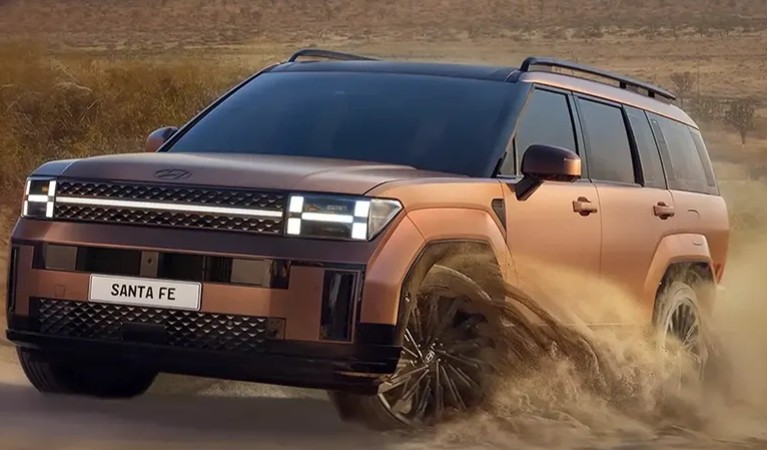
Buying a used SUV can feel a little like choosing a restaurant in a city you have never visited. Almost everything looks good in the photos, every seller has a positive story, and somehow every vehicle has supposedly been “well maintained.” That is why knowing the Hyundai Santa Fe best years matters before we start shopping.
The Santa Fe has been around for more than two decades, and during that time Hyundai has transformed it from a fairly basic value-focused SUV into a sophisticated family vehicle packed with technology, safety equipment, turbocharged engines, hybrid options, and near-luxury features.
But not every Santa Fe year deserves the same enthusiasm.
Some model years stand out because they offer a particularly strong combination of reliability, equipment, safety, comfort, and price. Others introduced new engines or transmissions that make us more cautious. Certain vehicles have also been affected by important safety recalls, meaning the VIN and repair history should always be checked before purchase.
For most used-SUV shoppers, we consider 2019, 2020, and 2023 among the most attractive modern Hyundai Santa Fe years, depending on budget and priorities. Buyers considering newer vehicles should also look closely at the 2025 and 2026 models, although they simply have not accumulated enough years and mileage for us to describe their long-term reliability as proven.
Let's break down the generations and figure out which Santa Fe belongs in our driveway.
Content in this publication
- What Are the Hyundai Santa Fe Best Years?
- Best Hyundai Santa Fe Years at a Glance
- 2020 Hyundai Santa Fe: Our Used-Value Sweet Spot
- 2021 Hyundai Santa Fe: Better Technology, More Complexity
- 2022 Hyundai Santa Fe: Attractive but Inspect the Exact Configuration
- 2023 Hyundai Santa Fe: One of the Best Recent Years
- What About the 2024 Hyundai Santa Fe?
- 2025 Hyundai Santa Fe: A Smarter New-Generation Target
- 2026 Hyundai Santa Fe: Excellent Safety, Too New for Longevity Data
- Best Older Hyundai Santa Fe Years
- Hyundai Santa Fe Years We Would Approach More Carefully
- Hyundai Santa Fe Best Year for Reliability
- Hyundai Santa Fe Best Year for Safety
- Hyundai Santa Fe Best Year for Value
- Hyundai Santa Fe Best Year for Technology
- Hyundai Santa Fe Best Year for Families
- Gas, Turbo, or Hybrid Santa Fe: Which Should We Choose?
- How Many Miles Is Too Many for a Used Santa Fe?
- What Should We Check Before Buying a Used Hyundai Santa Fe?
- Is a High-Mileage Hyundai Santa Fe Worth Buying?
- Is It Better to Buy an Older Santa Fe or a Newer One?
- Which Hyundai Santa Fe Year Is the Best Overall?
- Final Verdict: Hyundai Santa Fe Best Years
- Frequently Asked Questions
What Are the Hyundai Santa Fe Best Years?
If we want the short version before diving into thousands of words, our preferred years generally look like this:
- 2019 Hyundai Santa Fe: Great balance between modern technology and used pricing.
- 2020 Hyundai Santa Fe: One of our favorite value choices from the 2019-2023 generation.
- 2023 Hyundai Santa Fe: A compelling late-generation option with updated equipment.
- 2025 Hyundai Santa Fe: Interesting choice for buyers wanting the dramatically redesigned generation without buying its first model year.
- 2026 Hyundai Santa Fe: Appealing as a newer purchase, particularly from a safety perspective, but still too young for meaningful long-term reliability conclusions.
There is an important distinction here: “best” does not automatically mean “fewest recalls.” Recalls can affect otherwise good vehicles and are generally repaired free of charge. What matters when buying used is whether the individual vehicle received the required remedy.
NHTSA, for example, announced a tow-hitch-related fire-risk recall involving certain 2019-2023 Santa Fe models, along with Santa Fe Hybrid and Plug-in Hybrid vehicles from specific years.
That is why a clean-looking SUV with low mileage is only the beginning of our research.
Best Hyundai Santa Fe Years at a Glance
2019 Hyundai Santa Fe: Best Affordable Modern Choice
The 2019 model year deserves serious attention because it marked a major redesign.
Hyundai renamed what had previously been sold as the Santa Fe Sport, and the redesigned 2019 Santa Fe arrived with a standard 2.4-liter GDI four-cylinder or an optional 2.0-liter turbocharged engine.
Why do we like it?
Because it sits in a useful place in the depreciation curve. It feels significantly more modern than older Santa Fe models, yet it is now old enough that depreciation has already done much of the financial damage for us.
The cabin also took a noticeable step forward. Driver-assistance technology became a bigger part of the package, and the overall driving experience moved closer to the polished crossover formula buyers expect today.
The 2019-2023 Santa Fe generation also earned strong crash-test results in several IIHS evaluations. IIHS notes that the Santa Fe was redesigned for 2019 and applies several of its crashworthiness ratings across the 2019-2023 model range.
Would we buy one without an inspection?
Absolutely not.
At this age, maintenance history becomes as important as the model year itself. A meticulously serviced 2019 Santa Fe can be a better purchase than a neglected vehicle several years newer.
Who Should Buy a 2019 Santa Fe?
It makes the most sense for buyers who want modern SUV features without paying modern SUV prices.
We would specifically look for:
- Consistent oil-change records
- Smooth transmission operation
- No unexplained warning lights
- Evidence that applicable recalls have been completed
- Even tire wear
- Clean coolant and appropriate fluid levels
- A cold-start inspection with no unusual engine noises
Think of the 2019 model as the gateway into the modern Santa Fe era.
2020 Hyundai Santa Fe: Our Used-Value Sweet Spot
If we had to choose a single model year for someone shopping for a reasonably priced modern Santa Fe, 2020 would be high on our list.
Why?
The 2019 redesign had already spent a year in consumers' hands, but Hyundai had not yet introduced the major 2021 powertrain changes that brought the 2.5-liter engines and, on turbocharged versions, an eight-speed dual-clutch transmission.
That relative simplicity can be attractive in a used vehicle.
The 2020 Santa Fe belongs to the same 2019-2023 design generation that received strong IIHS crashworthiness assessments.
It also offers the comfortable ride, roomy interior, good visibility, and practical cargo area that made this generation competitive.
Why the 2020 Santa Fe Makes So Much Sense
A used vehicle is ultimately a compromise between three things:
Age, technology, and price.
Go too old and we may save money but sacrifice safety and convenience features.
Go too new and depreciation can hit like a hammer.
The 2020 Santa Fe lands somewhere comfortably in the middle.
We get a vehicle that still looks contemporary while avoiding the price premium attached to almost-new SUVs.
Cars.com also highlighted extensive active-safety equipment on this generation, including technologies such as automatic emergency braking and lane-keeping assistance depending on specification.
The Catch With a 2020 Santa Fe
No used SUV becomes automatically dependable simply because we like its model year.
NHTSA's 2023 consumer alert included certain 2019-2023 Santa Fe vehicles in a tow-hitch harness recall related to fire risk.
So before handing over any money, enter the VIN into an official recall database or ask a Hyundai dealer to verify whether outstanding campaigns remain.
2021 Hyundai Santa Fe: Better Technology, More Complexity
The 2021 model is interesting.
Hyundai substantially refreshed the Santa Fe and brought new powertrain choices. From the buyer's seat, the changes were attractive. The SUV looked sharper, the cabin became more upscale, and performance improved substantially in turbo versions.
There is, however, a reason we do not automatically place the 2021 turbo at the top of our list.
Certain 2021-2022 Santa Fe vehicles equipped with the 2.5-liter turbo engine and eight-speed wet dual-clutch transmission were included in a transmission safety recall. Hyundai's recall documentation describes potential drivability problems and possible loss of motive power; affected vehicles could require a transmission-control software update or, in certain cases, transmission replacement.
That does not mean every 2021 Santa Fe is bad.
Far from it.
It simply means we would investigate a turbo model more carefully.
Should We Buy a 2021 Santa Fe?
Yes, provided the individual vehicle passes inspection and its recall history checks out.
A properly maintained 2021 Santa Fe can be appealing, particularly if we value a richer interior and stronger performance.
But compared with the relatively straightforward value proposition of a 2020 model, the 2021 deserves additional homework.
Check the Transmission Carefully
During a test drive, pay attention to:
- Hesitation pulling away
- Rough or inconsistent shifting
- Warning messages
- Delayed engagement
- Abnormal noises
- Sudden loss of acceleration
More importantly, verify by VIN whether applicable transmission recall work was completed.
Paperwork beats promises.
2022 Hyundai Santa Fe: Attractive but Inspect the Exact Configuration
The 2022 model follows a similar philosophy.
It offers plenty of technology, handsome styling, available turbocharged performance, and electrified choices. But configuration matters enormously.
A naturally aspirated Santa Fe and a turbocharged Santa Fe may look almost identical in a parking lot while using different drivetrain hardware underneath.
Certain 2021-2022 Santa Fe 2.5T vehicles were included in Hyundai's eight-speed wet-DCT recall documentation.
Meanwhile, the 2022-2023 Santa Fe received an IIHS Top Safety Pick+ designation for qualifying vehicles built after July 2021.
That illustrates something important about buying used cars: reliability and safety cannot always be compressed into one score.
A vehicle can offer excellent crash protection while still having a particular mechanical system we should investigate.
2023 Hyundai Santa Fe: One of the Best Recent Years
For shoppers with a larger budget, 2023 may be one of the most attractive Santa Fe model years from the previous generation.
By then, the design had matured considerably.
It retained the practical two-row layout of the 2019-2023 generation while giving us modern connectivity, extensive driver-assistance technology, available luxury equipment, and multiple powertrain choices.
The 2023 model also falls under IIHS ratings applied to the 2021-2023 Santa Fe range, with good performance documented in multiple crash evaluations.
Why We Prefer 2023 Over Earlier Refresh Years
When manufacturers refresh a model, we generally like looking toward the later years of that generation.
Why?
Because later production often benefits from incremental improvements, manufacturing experience, revised components, updated software, and fewer first-year surprises.
That does not magically make every 2023 perfect, of course.
The 2019-2023 Santa Fe range was included in the tow-hitch harness recall described by NHTSA.
Still, a well-documented 2023 with completed campaigns can be a very appealing used family SUV.
Best 2023 Santa Fe Buyer
We would recommend it to someone who wants nearly new-car technology without jumping into the completely redesigned 2024 generation.
It is the mature final chapter of a familiar story.
What About the 2024 Hyundai Santa Fe?
The 2024 Santa Fe is almost impossible to confuse with its predecessor.
Hyundai completely redesigned it, giving the SUV an upright, boxier appearance and a dramatically different personality. IIHS confirms that the Santa Fe was redesigned for the 2024 model year.
You may be interested in reading Hyundai Santa Fe Generations: Complete History and Evolution
It is larger-feeling, more adventurous-looking, and more focused on cargo flexibility than the curvier Santa Fe that came before it.
So why isn't it our automatic recommendation?
Because 2024 was the first year of an entirely new generation.
When we are choosing a used vehicle for long-term ownership, first-year redesigns naturally deserve additional scrutiny. New electronics, body systems, software, interior components, manufacturing processes, and drivetrain calibrations all arrive together.
That does not mean the 2024 is unreliable.
It means we do not yet have the same depth of long-term information available for it as we do for older models.
Is the 2024 Santa Fe Worth Buying?
Yes, especially if design, cabin space, and newer technology matter more to us than choosing the most established year.
We simply would not call it the most proven Santa Fe year yet.
Those are different questions.
2025 Hyundai Santa Fe: A Smarter New-Generation Target
If we love the redesigned Santa Fe, the 2025 model is arguably more interesting from a buyer's perspective.
Instead of buying the introductory 2024 model year, we move one year deeper into the generation.
The 2024-2025 Santa Fe earned IIHS Top Safety Pick recognition under the organization's 2024 award criteria.
That gives safety-conscious families another reason to consider it.
Still, anyone calling the 2025 Santa Fe one of the “most reliable Santa Fe models ever” is getting ahead of the evidence. As of 2026, these vehicles simply have not been on the road long enough to accumulate the mileage we would want for a genuine longevity verdict.
Best Reason to Buy a 2025 Santa Fe
Buy it because we want the new-generation packaging without taking the earliest possible production year.
Do not buy it purely because somebody promises it will run trouble-free for 200,000 miles.
Nobody knows that yet.
2026 Hyundai Santa Fe: Excellent Safety, Too New for Longevity Data
The 2026 Santa Fe deserves attention for shoppers buying new or nearly new.
Most notably, IIHS lists the 2026 Hyundai Santa Fe as a Top Safety Pick+.
That is impressive.
But safety performance and long-term mechanical reliability are separate subjects.
A 2026 vehicle cannot have ten years of reliability history in 2026. It sounds obvious, yet internet rankings frequently treat brand-new models as if somebody has already driven them to the moon and back.
So our position is simple:
The 2026 Santa Fe looks promising, but it is too new to rank among the most proven Santa Fe years.
Best Older Hyundai Santa Fe Years
Not everyone wants a $25,000 or $30,000 used SUV.
Sometimes our budget points toward vehicles that have already celebrated their tenth birthday.
In that case, older Santa Fe models can still make sense—but condition dominates model year.
2009-2012 Santa Fe: Worth Considering on a Tight Budget
Late examples of the second-generation Santa Fe can represent inexpensive transportation when maintained carefully.
These models are simpler than modern SUVs. That means fewer giant screens, fewer electronic driver-assistance systems, and far less cabin technology.
For some buyers, that is a disadvantage.
For others?
It is refreshing.
The critical issue is age.
Rubber bushings, suspension components, hoses, seals, air-conditioning systems, wheel bearings, alternators, starters, and cooling-system components do not care whether the internet calls a certain year “reliable.” Time catches every vehicle eventually.
A beautifully maintained older Santa Fe can therefore be preferable to a newer but neglected one.
Hyundai Santa Fe Years We Would Approach More Carefully
We would not create a simplistic “never buy these years” blacklist.
Used cars are individuals.
A supposedly troublesome year with perfect maintenance and completed recalls may be safer money than a supposedly great year with sludge in the engine and three mismatched tires.
Still, there are certain model ranges where we would increase our level of scrutiny.
2013-2018 Santa Fe and Santa Fe Sport
This generation introduced attractive styling and competitive equipment, but shoppers should examine recall history and engine condition carefully.
For example, NHTSA issued a specific consumer alert concerning certain 2018 Santa Fe vehicles because an ABS module malfunction could create an electrical short and an engine-compartment fire risk. Owners of affected vehicles were instructed to park outside until repairs were completed.
That does not condemn every 2018 Santa Fe.
It does illustrate exactly why checking an individual VIN is so important.
2021-2022 Santa Fe 2.5T
We would not automatically avoid these vehicles either, but the turbocharged DCT combination deserves extra attention because certain vehicles were subject to the transmission recall discussed earlier.
If the recall was properly completed and the vehicle drives flawlessly, the picture changes significantly.
Again, condition and documentation rule.
Hyundai Santa Fe Best Year for Reliability
If our definition of reliability includes mechanical simplicity, established history, availability of parts, and reasonable acquisition cost, our favorite modern compromise is probably the 2020 Hyundai Santa Fe.
It is new enough to feel modern but old enough for us to evaluate it with considerably more real-world perspective than a 2025 or 2026 vehicle.
For buyers wanting something newer, we would move toward the 2023 Santa Fe.
Those two model years occupy different price brackets but represent compelling points within the previous-generation lineup.
Hyundai Santa Fe Best Year for Safety
Safety technology improves rapidly, so newer models naturally gain an advantage here.
For buyers prioritizing the latest crash-protection standards, the new-generation models deserve consideration.
The 2026 Santa Fe achieved IIHS Top Safety Pick+ status, while qualifying 2022-2023 models also received Top Safety Pick+ recognition under the criteria applicable at that time.
Remember, however, that IIHS criteria evolve.
We should not compare awards from different eras as though the testing requirements were identical.
Hyundai Santa Fe Best Year for Value
Our value winner is the 2020 Santa Fe.
Depreciation has had years to work in our favor, yet the vehicle does not feel prehistoric.
It delivers the basic formula most Santa Fe shoppers actually need:
Comfort, space, automatic transmission, modern safety features, reasonable road manners, and family-friendly practicality.
We do not need the newest dashboard animation to drive the children to school.
Sometimes boring value is beautiful.
Hyundai Santa Fe Best Year for Technology
Here the new generation wins.
A 2025 or 2026 Santa Fe provides the kind of digital cabin environment and modern convenience features that make a 10-year-old crossover feel almost prehistoric.
But there is a tradeoff.
More technology means more systems.
More systems mean more potential repair points as a vehicle ages.
Whether that matters depends on how long we plan to own it.
Someone leasing for three years has completely different priorities from somebody hoping to keep an SUV until 2040.
Hyundai Santa Fe Best Year for Families
The answer depends partly on how many seats we need.
The 2019-2023 Santa Fe was primarily positioned as a two-row midsize crossover in the United States. IIHS specifically notes that the redesigned 2019 model had two rows and replaced the model previously called Santa Fe Sport.
The redesigned 2024 generation changed the packaging substantially and brought a more utility-focused approach.
For smaller families that do not need maximum seating flexibility, a 2020 or 2023 Santa Fe can make excellent sense.
You may be interested in readingHyundai Santa Fe Generations: Complete History and EvolutionYou may be interested in reading
 Nissan Frontier SV vs PRO-4X: Which Truck Is Better?
For families wanting the newer layout and more adventurous box-shaped body, 2025-2026 versions become much more attractive.
Gas, Turbo, or Hybrid Santa Fe: Which Should We Choose?
Model year is only half the equation.
Powertrain matters too.
A base gasoline Santa Fe, turbocharged Santa Fe, Santa Fe Hybrid, and Santa Fe Plug-in Hybrid are fundamentally different ownership propositions.
Naturally Aspirated Gasoline Models
These generally appeal to buyers prioritizing simplicity.
Performance may feel modest, particularly when the vehicle is loaded with passengers, but simpler powertrain configurations can be attractive when shopping used.
Turbocharged Santa Fe Models
Turbo models provide considerably stronger acceleration and effortless passing power.
That performance feels fantastic during a test drive.
But additional drivetrain complexity means maintenance history becomes even more important.
On 2021-2022 2.5T examples, we also need to verify the status of the DCT recall applicable to certain vehicles.
Santa Fe Hybrid
The Hybrid can be one of the most interesting choices for buyers who spend lots of time in urban traffic.
Electrification makes particularly good sense when the vehicle repeatedly accelerates and decelerates rather than cruising endlessly at highway speed.
But used hybrid shoppers should inspect both conventional vehicle systems and hybrid-specific components.
The cheapest vehicle in the classifieds is not automatically the cheapest vehicle to own.
How Many Miles Is Too Many for a Used Santa Fe?
There is no magical mileage where a Santa Fe suddenly becomes bad.
We would rather buy a 90,000-mile vehicle with meticulous maintenance than a 55,000-mile example whose owner regarded oil changes as optional.
Mileage matters, but maintenance matters more.
Once a Santa Fe passes roughly 80,000 to 100,000 miles, we would pay greater attention to:
- Suspension wear
- Engine oil consumption
- Cooling-system condition
- Transmission behavior
- Wheel bearings
- Steering components
- Air-conditioning performance
- Engine mounts
- Fluid leaks
- Spark plugs and scheduled maintenance
- Battery and charging-system health
Hyundai itself has published technical guidance concerning diagnosis of engine-oil-consumption complaints across gasoline-powered models, reinforcing why checking oil level and service history should be part of our inspection routine.
What Should We Check Before Buying a Used Hyundai Santa Fe?
Never buy based solely on the year.
A model-year ranking gives us a starting point. The inspection determines whether we should actually buy the vehicle.
1. Check the VIN for Recalls
This is essential.
NHTSA maintains vehicle-specific recall resources, and various Santa Fe years have been involved in campaigns covering different systems.
2. Start the Engine Cold
Ask the seller not to warm it before we arrive.
Listen for abnormal knocking, rattling, ticking, or prolonged startup noises.
3. Examine the Oil
Check both level and condition.
Extremely low oil is a major warning sign.
4. Drive Long Enough to Warm Everything Up
A five-minute trip around the dealership proves almost nothing.
Drive in traffic, on faster roads, uphill if possible, and through several transmission shifts.
5. Test Every Electronic Feature
Push buttons.
Lots of them.
Windows, locks, cameras, infotainment, climate control, heated seats, powered tailgate, parking sensors, adaptive cruise functions—whatever equipment the vehicle has should be tested.
6. Inspect Underneath
Look for leaks, collision repairs, corrosion, damaged shields, and suspension problems.
7. Get a Pre-Purchase Inspection
This may be the best money we spend during the entire buying process.
An independent mechanic has no emotional attachment to the shiny paint or panoramic roof.
Neither should we.
Is a High-Mileage Hyundai Santa Fe Worth Buying?
It can be.
High mileage is not automatically frightening when it accumulated gradually through highway driving and the owner followed the maintenance schedule.
A high-mileage vehicle with:
- One or two owners
- Detailed service records
- No major accident history
- Smooth drivetrain behavior
- Properly completed recalls
can be surprisingly attractive.
By contrast, a low-mileage vehicle that spent years taking short trips, missing oil changes, overheating, or sitting outside unused may be the bigger gamble.
Mileage tells us how far a car traveled.
Maintenance tells us how it traveled.
Is It Better to Buy an Older Santa Fe or a Newer One?
Our decision should match our ownership goal.
Choose an older Santa Fe if purchase price, mechanical simplicity, and minimizing depreciation matter most.
Choose a newer Santa Fe if we prioritize modern crash protection, infotainment, driver assistance, cabin refinement, and warranty coverage.
For many buyers, the middle ground remains strongest.
That is precisely why 2019, 2020, and 2023 stand out to us.
They provide much of the modern Santa Fe experience without necessarily demanding new-SUV money.
Which Hyundai Santa Fe Year Is the Best Overall?
If we had to pick one for a typical used-SUV buyer, we would start shopping for a 2020 Hyundai Santa Fe.
Not because every 2020 is perfect.
Not because newer Santa Fe models are worse.
And certainly not because it is immune from recalls or maintenance.
We like it because it hits a particularly attractive balance of age, equipment, safety, familiarity, pricing, and mechanical complexity.
Our second choice would be the 2023 Santa Fe for buyers willing to spend more.
Someone buying nearly new might instead target a 2025 Santa Fe, particularly if the boxier latest-generation design is appealing.
Final Verdict: Hyundai Santa Fe Best Years
The Hyundai Santa Fe has evolved tremendously since the original appeared more than two decades ago.
Choosing the best one is not about finding a mythical model year that never breaks. Cars are machines, and machines wear.
Instead, we want the year that gives us the right balance between reliability history, technology, safety, price, and complexity.
For most shoppers, our shortlist looks like this:
2020 Santa Fe — Best overall used value.
2019 Santa Fe — Best budget entry into the modern generation.
2023 Santa Fe — Best newer option from the mature 2019-2023 generation.
2025 Santa Fe — Best newer-generation target if we want to skip its introductory model year.
2026 Santa Fe — Excellent safety credentials but still too new for a meaningful long-term reliability verdict.
We would approach certain 2013-2018 vehicles with extra attention to recall and maintenance history, while 2021-2022 2.5T models deserve careful verification of applicable DCT recall work. NHTSA documentation confirms relevant safety campaigns affecting specific Santa Fe vehicles across these periods.
Most importantly, never buy the model year.
Buy the individual vehicle.
A documented, inspected, properly maintained Santa Fe will almost always be a smarter choice than chasing whichever year happens to rank number one on the internet.
Frequently Asked Questions
1. What is the best year Hyundai Santa Fe to buy used?
For a typical used buyer, the 2020 Hyundai Santa Fe is one of our favorite choices because it combines modern features, strong practicality, substantial depreciation, and the established 2019-generation platform. A well-maintained 2023 is another excellent choice for shoppers with a larger budget.
2. Is the 2023 Hyundai Santa Fe a good year?
Yes. The 2023 Santa Fe is particularly appealing because it came late in the 2019-2023 generation and offers modern technology and extensive safety equipment. The 2022-2023 Santa Fe also achieved IIHS Top Safety Pick+ recognition for qualifying vehicles under the applicable criteria. Always check the VIN for outstanding recall work before purchasing.
3. Which Hyundai Santa Fe years should we inspect most carefully?
We would pay particular attention to certain 2013-2018 vehicles because of age, maintenance history, and applicable safety campaigns. We would also investigate 2021-2022 2.5T models carefully because certain vehicles equipped with the eight-speed wet DCT were included in a Hyundai transmission recall. This does not mean every vehicle from these years should be avoided.
You may be interested in readingHyundai Santa Fe Generations: Complete History and EvolutionYou may be interested in reading
Nissan Frontier SV vs PRO-4X: Which Truck Is Better?You may be interested in reading
Nissan Frontier King Cab vs Crew Cab: Which One Should You Buy?4. How long can a Hyundai Santa Fe last?
There is no guaranteed lifespan. A well-maintained Santa Fe can provide many years of service, but longevity depends heavily on maintenance, driving conditions, powertrain, climate, accident history, and previous ownership. For a high-mileage purchase, service documentation and a professional pre-purchase inspection matter far more than optimistic mileage claims.
5. Is the newest Hyundai Santa Fe the most reliable?
Not necessarily. Newer models usually offer better technology and increasingly sophisticated safety equipment, but long-term reliability can only be judged after vehicles accumulate substantial age and mileage. The 2026 Santa Fe, for example, has earned IIHS Top Safety Pick+ recognition, but in 2026 it is simply too new to have a decade of reliability evidence behind it.
If you want to know other articles similar to Hyundai Santa Fe Best Years: Which Models Should You Buy? you can visit the category Models.
Kia Sorento Models: Complete Guide to Trims, Engines and Versions
BYD Shark 6 vs Ranger vs HiLux: Which Ute Makes the Most Sense in 2026?
BYD Shark 6 vs MG U9: Which Ute Makes More Sense in 2026?
BYD Shark 6 vs Ford Ranger Raptor: Which Performance Ute Is Better in 2026?
BYD Shark 6 vs Kia Tasman: Which Ute Is Better?
BYD Shark 6 vs 7: What We Know So Far
Leave a Reply
More content of your interest