

Nissan Frontier Engine Specs: Complete Guide by Generation

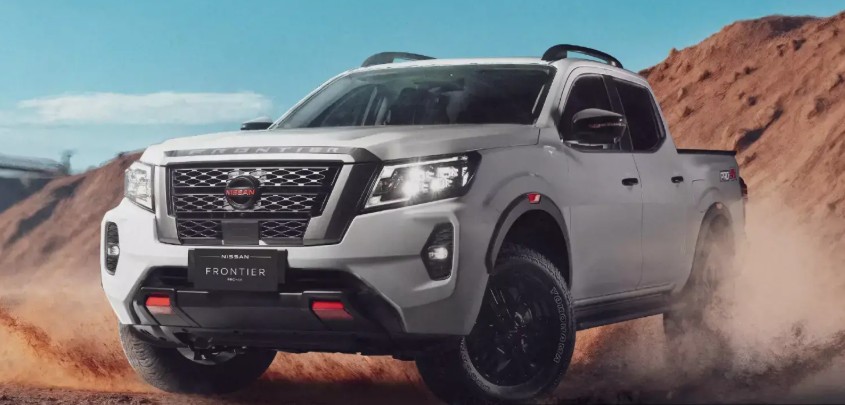
The Nissan Frontier engine specs tell a surprisingly interesting story. What began as a simple compact pickup with a naturally aspirated four-cylinder eventually grew into a midsize truck powered exclusively by a 310-horsepower V6.
And the transformation did not happen overnight.
Over the Frontier's lifespan, Nissan experimented with naturally aspirated four-cylinder engines, conventional V6 engines, a factory-supercharged V6, different manual transmissions, several automatic gearboxes, and eventually a sophisticated direct-injection 3.8-liter V6.
If we're shopping for a used Frontier, comparing generations, or simply wondering what hides beneath that squared-off hood, engine specifications matter. Horsepower gets most of the attention, but torque, transmission gearing, displacement, engine design, and the truck's overall weight can affect how powerful a Frontier actually feels.
So, rather than throwing numbers at the wall like loose bolts in a toolbox, we're going to make sense of them.
Content in this publication
- Nissan Frontier Engine Specs at a Glance
- First-Generation Nissan Frontier Engine Specs: 1998–2004
- The Supercharged Nissan Frontier Engine
- Second-Generation Nissan Frontier Engine Specs: 2005–2021
- Nissan Frontier Transmission Options
- The 2020 Frontier's Major Engine Change
- Why 310 Horsepower Was Such a Big Deal
- Third-Generation Nissan Frontier Engine Specs: 2022–Present
- Is the Nissan Frontier Engine Turbocharged?
- Does the Nissan Frontier Have a Four-Cylinder Engine?
- Which Nissan Frontier Engine Has the Most Horsepower?
- Which Frontier Engine Has the Most Torque?
- Nissan Frontier Engine Specs and Towing
- Nissan Frontier Engine Evolution
- Which Nissan Frontier Engine Is Best?
- What to Check Before Buying a Used Frontier Engine
- North American vs Global Nissan Frontier Engines
- Nissan Frontier Engine Specs: What Really Matters?
- Conclusion: Nearly Three Decades of Frontier Engine Evolution
- Frequently Asked Questions
Nissan Frontier Engine Specs at a Glance
For North American models, the Frontier's engine history can be summarized like this:
| Model Years | Engine | Configuration | Horsepower | Torque |
|---|---|---|---|---|
| 1998–2004 | 2.4L KA24DE | Inline-4 | Up to 143 hp | 154 lb-ft |
| Early 1st Gen | 3.3L VG33E | V6 | Around 170 hp | Around 200 lb-ft |
| 2001–2004 | 3.3L VG33ER | Supercharged V6 | 210 hp | Up to 246 lb-ft |
| 2005–2019 | 2.5L QR25DE | Inline-4 | 152 hp | 171 lb-ft |
| 2005–2019 | 4.0L VQ40DE | V6 | Up to 265 hp* | Up to 284 lb-ft* |
| 2020–2021 | 3.8L VQ38DD | V6 | 310 hp | 281 lb-ft |
| 2022–present generation | 3.8L VQ38DD | V6 | 310 hp | 281 lb-ft |
*Early second-generation models were initially rated at 265 hp and 284 lb-ft, while later ratings were 261 hp and 281 lb-ft. Nissan's 2005 documentation lists 265 horsepower and 284 lb-ft, while later specifications such as the 2017 Frontier list 261 horsepower and 281 lb-ft.
That's the quick answer. Now let's open the hood.
First-Generation Nissan Frontier Engine Specs: 1998–2004
The Frontier name arrived in the United States for the 1998 model year. Compared with today's truck, the original Frontier was refreshingly simple.
It was smaller, lighter, and much less powerful. Yet that simplicity is part of its charm.
Nissan's 1998 documentation lists a 2.4-liter 16-valve DOHC four-cylinder producing 143 horsepower and 154 lb-ft of torque.
By modern standards, 143 horsepower sounds almost lawnmower-like for a pickup. But we need to remember that these trucks weren't nearly as large or heavy as today's midsize pickups.
2.4-Liter KA24DE Inline-Four
The KA24DE was the basic workhorse of the early Frontier range.
Key specifications included:
- 2.4-liter displacement
- Four cylinders
- DOHC architecture
- 16 valves
- Approximately 143 horsepower
- 154 lb-ft of torque
It wasn't designed to win drag races. Instead, the four-cylinder Frontier appealed to buyers who wanted a straightforward pickup for commuting, hauling relatively light loads, or doing everyday work.
Think hammer rather than power drill: simple, familiar, and capable of doing plenty when used for the right job.
3.3-Liter VG33E V6
Buyers wanting more muscle could move into the 3.3-liter VG33E V6.
By the early 2000s, Nissan rated the naturally aspirated version at roughly 170 horsepower, giving the Frontier considerably better flexibility than the four-cylinder truck. Nissan's historical documentation confirms a 170-horsepower 3.3-liter V6 alongside the supercharged engine in this era.
The V6 became particularly attractive for heavier configurations, four-wheel-drive models, and drivers who regularly carried cargo.
Why the 3.3 V6 Felt Stronger Than the Numbers Suggest
A peak horsepower figure never tells the whole story.
Trucks spend much of their lives at relatively low engine speeds. Torque delivery therefore matters considerably. The 3.3-liter V6 delivered its power in a relaxed manner that suited the Frontier's utilitarian personality.
It wasn't quick by today's standards, but neither did it constantly beg for high revs.
The Supercharged Nissan Frontier Engine
Then Nissan decided to make things considerably more interesting.
Beginning in the early 2000s, customers could buy a Frontier with a factory-supercharged 3.3-liter VG33ER V6.
That's an unusual sentence today.
Modern manufacturers generally reach for turbocharging when they want more power from an existing engine. Nissan instead bolted a Roots-type supercharger to its V6.
The result was 210 horsepower, with Nissan listing up to 246 lb-ft of torque with the automatic transmission. Manual-equipped versions were rated at 231 lb-ft.
3.3-Liter VG33ER Supercharged V6 Specs
Important figures included:
- 3.3-liter displacement
- V6 configuration
- Roots-type supercharger
- 210 horsepower
- 246 lb-ft with automatic transmission
- 231 lb-ft with manual transmission
For its era, this was a meaningful upgrade.
The supercharger gave the Frontier more immediate low-end response without requiring a completely new engine family.
Was the Supercharged Frontier Actually Fast?
Not in a modern performance-car sense.
But compared with the standard compact pickups of its day, the supercharged Frontier had personality. Push the accelerator and there was an immediacy the naturally aspirated engines couldn't quite reproduce.
It was less "sports car with a bed" and more "work boots with running shoes hidden underneath."
Second-Generation Nissan Frontier Engine Specs: 2005–2021
The 2005 Frontier was where the truck really grew up.
Nissan enlarged the vehicle, modernized the platform, and dramatically improved engine performance. The headline engine became the 4.0-liter VQ40DE V6.
At launch, Nissan rated it at 265 horsepower and 284 lb-ft of torque.
That was an enormous leap compared with the engines of the previous generation.
2.5-Liter QR25DE Four-Cylinder
Not every second-generation Frontier received the V6.
Entry-level rear-wheel-drive King Cab models could be fitted with a 2.5-liter DOHC inline-four.
Nissan rated the engine at 152 horsepower and 171 lb-ft of torque.
Those numbers don't sound exciting, because they weren't supposed to be.
This engine targeted buyers who valued a lower entry price and basic pickup capability more than towing performance or acceleration.
The 2019 model year still offered that formula, with Nissan listing the 2.5-liter engine at 152 horsepower and 171 lb-ft.
4.0-Liter VQ40DE V6
The real star of this generation was the VQ40DE.
It belonged to Nissan's broader VQ engine family but was adapted specifically for trucks and SUVs.
Early versions produced:
265 horsepower and 284 lb-ft of torque.
Later official ratings settled at:
261 horsepower at 5,600 rpm and 281 lb-ft at 4,000 rpm.
That small numerical difference shouldn't lead us to believe the later truck suddenly became meaningfully weaker. The VQ40DE remained fundamentally the same muscular, naturally aspirated V6 concept throughout most of the second generation.
Why the VQ40DE Changed the Frontier
The difference from the old 3.3-liter engine was dramatic.
Suddenly, the Frontier had enough naturally aspirated power to compete seriously within the midsize pickup segment.
Throttle response was straightforward. There was no turbocharger waiting to build boost and no complicated hybrid system assisting the drivetrain.
Push harder. Engine revs rise. Truck accelerates.
There's something satisfying about that simplicity.
VQ40DE Bore, Stroke and Compression
Nissan's 2017 technical specifications list:
- Displacement: 3,954 cc
- Bore: 95.5 mm
- Stroke: 92 mm
- Compression ratio: 9.7:1
- Maximum output: 261 hp at 5,600 rpm
- Maximum torque: 281 lb-ft at 4,000 rpm
The nearly square bore-and-stroke relationship helped give the VQ40DE a balance between revving ability and low-to-midrange torque.
Nissan Frontier Transmission Options
An engine doesn't work alone.
Its transmission determines how effectively the available torque reaches the wheels, and Frontier transmissions changed considerably across generations.
Earlier trucks could be purchased with manual or conventional automatic gearboxes. Second-generation models continued that tradition for many years.
By 2020, though, Nissan made a radical change.
The new 3.8-liter engine arrived paired with a nine-speed automatic transmission.
Why Nine Gears Matter
Nine ratios allow Nissan to give the truck both a short first gear and relatively tall highway gearing.
That's useful because pickups have conflicting jobs.
We want short gearing when launching with a trailer, climbing an incline, or moving through difficult terrain. Once we're cruising at highway speed, however, we'd rather the engine settle into a relaxed rpm range.
More ratios help bridge that gap.
The 2020 Frontier's Major Engine Change
The 2020 Frontier looked familiar from the outside.
Underneath, it was anything but.
Nissan introduced an entirely new 3.8-liter direct-injection V6 producing 310 horsepower and 281 lb-ft of torque, combined with the new nine-speed automatic.
This created one of the strangest transition years in recent pickup history.
The body and much of the truck belonged to the older generation, but its engine and transmission previewed the upcoming redesigned Frontier.
3.8-Liter VQ38DD Specs
The important numbers were:
- 3,779 cc displacement
- Naturally aspirated V6
- Direct fuel injection
- DOHC design
- 310 horsepower at 6,400 rpm
- 281 lb-ft of torque at 4,400 rpm
- Nine-speed automatic transmission
The 2021 Frontier continued using the 3.8-liter V6 and nine-speed automatic, essentially carrying the powertrain bridge into the final year of the old body style.
Why 310 Horsepower Was Such a Big Deal
Compare the numbers.
The earlier VQ40DE produced 261 horsepower in later applications. The VQ38DD produced 310.
That's an increase of roughly 49 horsepower, despite losing a small amount of displacement.
The torque figure remained 281 lb-ft, however, so the transformation wasn't simply about producing dramatically more low-speed pulling force.
Instead, the newer engine could breathe and produce power much more effectively at higher rpm.
Direct Injection Explained Simply
Traditional port injection sprays fuel into the intake tract before it enters the combustion chamber.
Direct injection delivers fuel directly into the cylinder.
That allows engineers greater control over combustion and can help improve output and efficiency.
For drivers, none of that requires any special behavior. We simply press the accelerator while the engine management system performs a small symphony of calculations behind the scenes.
Third-Generation Nissan Frontier Engine Specs: 2022–Present
The redesigned 2022 Frontier finally gave the modern powertrain a modern truck around it.
Unlike many competitors that offer multiple engine choices, Nissan simplified things considerably.
Every 2022 Frontier grade used the 3.8-liter direct-injection V6 producing 310 horsepower, paired with the nine-speed automatic transmission.
The 2023 model continued with the same 310-horsepower 3.8-liter V6 and nine-speed automatic.
The setup also remained in the 2024 truck.
Current Frontier 3.8 V6 Output
Recent Frontier specifications maintain the same basic output:
310 horsepower and 281 lb-ft of torque.
Nissan's 2026 Frontier documentation confirms those figures and specifies the nine-speed automatic transmission.
Even the 2027 Frontier announced in 2026 retains the V6, with Nissan continuing to list 310 horsepower and 281 lb-ft.
That matters because naturally aspirated six-cylinder engines are becoming less common as manufacturers move toward smaller turbocharged engines and electrified powertrains.
Is the Nissan Frontier Engine Turbocharged?
Current North American Frontier models are not turbocharged.
The 3.8-liter VQ38DD is naturally aspirated.
That means there is no turbocharger forcing additional air into the cylinders.
Some buyers specifically appreciate this because the throttle response is predictable and the architecture remains relatively conventional.
Others may prefer turbocharged competitors because turbo engines can produce substantially more torque at lower rpm.
Neither approach is universally better. They simply create different personalities.
Does the Nissan Frontier Have a Four-Cylinder Engine?
Older Frontiers certainly did.
The original generation offered the 2.4-liter KA24DE four-cylinder, while the second generation offered a 2.5-liter QR25DE producing 152 horsepower and 171 lb-ft.
Modern North American Frontiers use the V6 instead.
That's worth remembering when shopping used.
A low-priced older Frontier advertised online might look identical to another truck in the photos but could have substantially less power underneath.
Four-Cylinder vs V6 Frontier
A four-cylinder Frontier makes sense if:
- Purchase price matters most.
- Heavy towing isn't part of the plan.
- The truck will primarily commute.
- We want relatively simple transportation.
A V6 is usually preferable when:
- We tow regularly.
- We carry heavier loads.
- We drive in mountainous areas.
- We want stronger acceleration.
- We frequently travel at highway speeds.
Which Nissan Frontier Engine Has the Most Horsepower?
Among regular-production North American Frontier engines, the 3.8-liter VQ38DD takes the crown with 310 horsepower. Nissan introduced it for the 2020 model year and continues to use the same basic engine architecture in the current generation.
Interestingly, displacement doesn't tell the story.
The older engine displaced 4.0 liters, yet the newer 3.8-liter V6 produces considerably more peak horsepower.
Technology beats cubic centimeters here.
Which Frontier Engine Has the Most Torque?
This question produces a more interesting answer.
The current 3.8-liter V6 produces 281 lb-ft.
Early versions of the 4.0-liter VQ40DE were officially rated at 284 lb-ft, giving them a tiny numerical edge.
That doesn't mean the old engine is stronger overall.
Transmission gearing dramatically influences how torque is delivered to the wheels, and the newer nine-speed automatic provides much broader ratio coverage than the older transmissions.
So comparing engine torque alone is like comparing two cyclists without looking at their gears.
Nissan Frontier Engine Specs and Towing
Horsepower matters when towing, but torque delivery, gearing, cooling, axle ratios, chassis configuration, and vehicle weight matter too.
That's why we should never calculate towing capacity from horsepower alone.
Recent Frontier engineering demonstrates that point clearly. Nissan says the Frontier's 3.8-liter V6 has undergone durability testing for demanding towing conditions, and its 2026 engineering material references towing capability of up to 7,150 pounds for applicable configurations.
Configuration remains critical.
A Crew Cab 4x4 and a lighter two-wheel-drive truck may share an identical engine but have different official towing limits.
Never Use Engine Output Alone to Determine Towing Capacity
Always check the specific model year's:
- Owner's manual
- Tow rating
- Gross Combined Weight Rating
- Payload rating
- Hitch rating
- Trailer tongue-weight limit
A 310-horsepower engine doesn't automatically mean every Frontier can tow the same trailer.
Nissan Frontier Engine Evolution
Look at the Frontier chronologically and the transformation becomes obvious.
The first truck's standard four-cylinder offered 143 horsepower.
Then came the naturally aspirated 3.3 V6.
Then the quirky supercharged V6 climbed to 210 horsepower.
The 2005 redesign brought the 4.0-liter V6 with as much as 265 horsepower.
Finally, the 3.8-liter V6 pushed output to 310 horsepower.
That's more than double the horsepower of the original four-cylinder Frontier.
Yet the mission hasn't really changed.
It's still supposed to haul gear, pull trailers, tackle dirt roads, and take us to work Monday morning.
The tools simply became sharper.
Which Nissan Frontier Engine Is Best?
There isn't one universal winner.
For pure power, the 3.8-liter VQ38DD wins comfortably.
For buyers who enjoy old-school truck character, the 4.0-liter VQ40DE has a strong appeal. It provides healthy naturally aspirated power without depending on turbocharging.
For budget-focused shoppers who don't tow much, the four-cylinder trucks can still accomplish plenty.
And if we're looking for something genuinely unusual?
The supercharged 3.3-liter Frontier is easily the oddball of the family.
Best Frontier Engine for Everyday Driving
The 3.8-liter V6 is the obvious modern choice.
Its 310 horsepower combined with the nine-speed automatic gives the Frontier considerably more performance flexibility than older four- and six-cylinder versions.
Best Frontier Engine for an Older Used Truck
The VQ40DE is likely the engine most used-truck shoppers will encounter when considering 2005–2019 Frontiers.
By 2019, Nissan offered the 4.0-liter at 261 horsepower and 281 lb-ft, alongside the 152-horsepower four-cylinder.
Which one should we choose?
If the price, mileage, maintenance history, and condition are comparable, we'd generally want the V6 for its extra flexibility.
What to Check Before Buying a Used Frontier Engine
Specifications tell us what an engine could do when new.
Maintenance history tells us what that particular engine might do tomorrow.
Before buying a used Frontier, check for:
- Cold-start behavior
- Unusual knocking or ticking
- Fluid leaks
- Coolant condition
- Oil level and condition
- Warning lights
- Service records
- Rough idle
- Exhaust smoke
- Transmission shifting quality
A meticulously maintained 152-horsepower Frontier can be a better purchase than a neglected 310-horsepower one.
Numbers don't replace an inspection.
Mileage Isn't the Whole Story
Suppose we're choosing between a truck with 70,000 miles and incomplete maintenance records and another with 100,000 miles plus detailed service documentation.
The lower number on the odometer doesn't automatically make the first truck better.
Age, use, towing history, climate, maintenance, modifications, accidents, and previous ownership all matter.
North American vs Global Nissan Frontier Engines
One point deserves clarification.
The Frontier name has been used differently across world markets, and trucks related to the Nissan Navara have been sold as the Frontier in numerous countries.
As a result, international buyers may encounter diesel engines and engine specifications that don't appear in this North American timeline.
So when researching replacement parts, oil specifications, towing figures, or maintenance procedures, don't rely on the word Frontier alone.
Check:
model year + market + engine code + drivetrain.
That combination is far safer.
A Frontier sold in the United States may not share its engine with a Frontier of the same year sold somewhere else.
Nissan Frontier Engine Specs: What Really Matters?
It's tempting to stare at horsepower.
310 is better than 261, right?
On paper, yes.
In the real world, however, engine choice is only one piece of the puzzle.
Torque curve, gearing, vehicle weight, axle ratio, tire size, drivetrain, transmission calibration, and throttle response determine how a truck actually feels.
That's why an older Frontier can sometimes feel punchier around town than its horsepower number suggests, while a more powerful modern truck may deliver its performance in a smoother, less dramatic manner.
Horsepower tells us part of the story.
Driving tells us the rest.
Conclusion: Nearly Three Decades of Frontier Engine Evolution
The history of Nissan Frontier engine specs is really the history of the truck itself.
The original Frontier was a compact, relatively modest machine powered by engines such as the 143-horsepower 2.4-liter four-cylinder.
Nissan then added more ambitious V6 options, including the memorable 210-horsepower supercharged 3.3-liter engine.
The second generation made a giant leap with the 4.0-liter VQ40DE, initially rated at 265 horsepower and 284 lb-ft.
Then came the most important modern change: the 3.8-liter direct-injection V6. Introduced into the old-generation truck for 2020, it produced 310 horsepower and 281 lb-ft while pairing with a nine-speed automatic.
That same basic formula carried into the fully redesigned 2022 Frontier and remains central to the modern truck.
The fascinating part is how Nissan got there.
More displacement wasn't always the answer. A 3.8-liter engine ultimately eclipsed the horsepower of a 4.0-liter engine. A conventional V6 replaced a supercharged one. Nine transmission ratios replaced the simpler gearboxes of earlier trucks.
Yet through every generation, Nissan kept the Frontier fundamentally recognizable: a relatively straightforward pickup built around conventional truck hardware.
Sometimes evolution doesn't look like reinventing the wheel.
Sometimes it simply means putting a much better engine behind it.
Frequently Asked Questions
1. What engine does the Nissan Frontier have?
Current North American Frontier models use a 3.8-liter naturally aspirated direct-injection V6. Nissan rates the engine at 310 horsepower and 281 lb-ft of torque, and it is paired with a nine-speed automatic transmission.
2. How much horsepower does a Nissan Frontier have?
Horsepower depends heavily on the year. Early four-cylinder Frontiers produced around 143 horsepower, while the supercharged first-generation V6 produced 210 hp. The second-generation 4.0-liter V6 produced up to 265 hp in early specifications, and the modern 3.8-liter V6 produces 310 hp.
3. Is the Nissan Frontier 3.8 V6 turbocharged?
No. The North American 3.8-liter Frontier V6 is naturally aspirated. Nissan identifies it as a 3.8-liter direct-injection V6 rather than a turbocharged engine.
4. Is the 4.0 or 3.8 Nissan Frontier engine more powerful?
The 3.8-liter V6 produces substantially more peak horsepower. Later 4.0-liter VQ40DE Frontiers were rated at 261 hp and 281 lb-ft, compared with 310 hp and 281 lb-ft for the 3.8-liter engine.
5. What year did the Nissan Frontier get the 3.8 V6?
The 2020 Nissan Frontier introduced the 3.8-liter V6 and nine-speed automatic transmission, even though the truck still used the older-generation body. The fully redesigned Frontier arrived for 2022 with that powertrain architecture already in place.
If you want to know other articles similar to Nissan Frontier Engine Specs: Complete Guide by Generation you can visit the category Service and Parts.
Kia Sorento Service Reset: How to Reset the Service Light
Kia Sorento Fuel Tank Capacity: Gallons, Litres and Model Differences
Kia Sorento Tyre Pressure: Recommended PSI, Bar and Complete Guide
Kia Sorento Boot Space: How Much Luggage Space Does It Really Have?
Kia Sorento Towing Capacity: How Much Can a Sorento Tow?

Honda Passport Payload Capacity: How Much Weight Can It Carry?
Leave a Reply
More content of your interest