

Ford Ka vs Hyundai i10: Which Small Car Is Better?

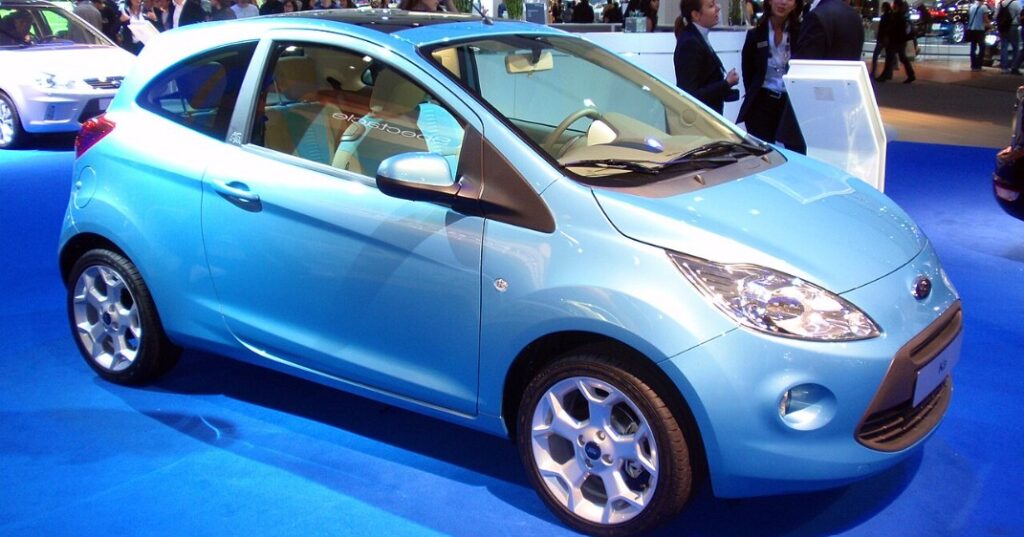
Choosing between the Ford Ka vs Hyundai i10 looks simple at first. Both are compact, relatively affordable city cars built to squeeze through tight streets, fit into small parking spaces, and avoid turning every trip to the fuel station into a financial event.
Yet these two cars approach the city-car formula rather differently.
The Ford Ka has traditionally leaned toward personality. The original Ka, introduced in the 1990s, became famous for its unusual rounded design and tiny footprint, while later versions became more conventional and practical. The Hyundai i10, meanwhile, developed around a slightly different philosophy: maximize usable space, provide straightforward controls, keep running costs sensible, and make everyday ownership easy.
There is another important complication. Neither name represents one single mechanical package. Different generations, engines, transmissions, trim levels, and markets can change the comparison considerably. Ford moved through several interpretations of the Ka, including the larger five-door Ka+, while Hyundai progressively developed the i10 into a more mature five-door city hatchback.
So which should we buy?
For most buyers seeking practicality, rear-seat usefulness, and everyday versatility, the Hyundai i10 has the advantage. But anyone attracted to character, compact dimensions, simple motoring, or the distinctive appeal of older city cars may find a Ford Ka considerably more interesting.
Let's dig deeper.
Content in this publication
- Ford Ka vs Hyundai i10 at a Glance
- Understanding the Different Ford Ka Generations
- Understanding the Hyundai i10
- Ford Ka vs Hyundai i10 Exterior Design
- Ford Ka vs Hyundai i10 Interior
- Ford Ka vs Hyundai i10 Interior Space
- Ford Ka vs Hyundai i10 Boot Space
- Ford Ka vs Hyundai i10 Engines
- Ford Ka vs Hyundai i10 Fuel Economy
- Ford Ka vs Hyundai i10 Driving Experience
- Ford Ka vs Hyundai i10 on the Motorway
- Ford Ka vs Hyundai i10 Comfort
- Ford Ka vs Hyundai i10 Reliability
- Ford Ka vs Hyundai i10 Maintenance Costs
- Ford Ka vs Hyundai i10 Safety
- Ford Ka vs Hyundai i10 for a First Car
- Ford Ka vs Hyundai i10 for Students
- Ford Ka vs Hyundai i10 for Families
- Ford Ka vs Hyundai i10 for City Driving
- Ford Ka vs Hyundai i10 Parking
- Ford Ka vs Hyundai i10 Build Quality
- Ford Ka vs Hyundai i10 Used-Car Value
- Which Ford Ka Should We Buy?
- Which Hyundai i10 Should We Buy?
- Ford Ka vs Hyundai i10: Pros and Cons
- Ford Ka vs Hyundai i10: Which Is Cheaper to Own?
- Ford Ka vs Hyundai i10: Which Is More Fun?
- Ford Ka vs Hyundai i10: Which Is More Practical?
- Ford Ka vs Hyundai i10: Which Is Better for Long Trips?
- Ford Ka vs Hyundai i10: Which Should We Buy?
- Ford Ka vs Hyundai i10 Comparison Verdict
- Frequently Asked Questions
Ford Ka vs Hyundai i10 at a Glance
Before examining engines, comfort, reliability, and ownership costs, here is the basic personality difference.
| Category | Ford Ka | Hyundai i10 |
|---|---|---|
| Main strength | Character and simplicity | Practicality and versatility |
| City driving | Excellent | Excellent |
| Rear-seat usability | Depends heavily on generation | Generally better |
| Boot practicality | Fair to good | Good for a city car |
| Driving character | Often more playful | Comfortable and easy |
| Used-car appeal | Strong for budget buyers | Strong all-rounder |
| Beginner friendliness | Very good | Excellent |
| Family suitability | Limited on older Ka models | Better |
| Parking | Excellent | Excellent |
| Overall winner | — | Hyundai i10 |
That does not mean the Hyundai wins every category. Think of the Ka as the slightly eccentric café around the corner and the i10 as the dependable supermarket that somehow has everything we need.
One has personality. The other is difficult to fault.
Understanding the Different Ford Ka Generations
We cannot meaningfully compare the Ford Ka with the Hyundai i10 without acknowledging how dramatically the Ka changed during its life.
The first-generation Ford Ka arrived in 1996 and became one of Ford's most recognizable small cars. Its curved body and unusual proportions made it look completely unlike most conventional hatchbacks of its era. The second-generation model arrived in 2008 and shared much of its underlying architecture with Fiat's small-car platform, while the later Ka+ moved toward a larger five-door configuration.
That matters.
Compare an early three-door Ka with a modern-generation i10 and the Hyundai will feel significantly more practical.
Compare a Ka+ with an i10 and the contest becomes much closer.
Original Ford Ka: Small, Simple and Full of Character
The first Ka represented the pure city-car idea brilliantly.
It was small.
It was easy to place on narrow roads.
And visually, it certainly didn't disappear into a parking lot.
Its biggest limitations today are equally obvious. Early examples are old cars, so condition matters enormously. Rust, maintenance history, suspension wear, electrical problems, and previous repairs can matter more than the specification sheet.
When buying one now, we should evaluate the individual car rather than simply assuming that every Ford Ka behaves the same way.
Second-Generation Ford Ka: A More Modern Alternative
The second-generation Ka looked and felt noticeably more modern.
It remained primarily focused on urban buyers, but its styling became less radical, its interior became more contemporary, and its overall experience moved closer to other European city cars of its period.
This generation is probably one of the more natural rivals for earlier Hyundai i10 generations.
Ford Ka+: The Practical Ka
Then Ford changed the formula again.
The Ka+ was larger and offered five-door practicality, making it fundamentally easier to use as everyday family transport than the original Ka.
Ford's own Ka+ material highlights its five-door layout and expanded luggage and passenger practicality, illustrating just how far the model had moved from the tiny original Ka concept.
For shoppers comparing a Ka+ against an i10, the Hyundai's practicality advantage becomes smaller.
Understanding the Hyundai i10
The Hyundai i10 has followed a more consistent evolutionary path.
Instead of reinventing the car completely, Hyundai repeatedly refined the same basic recipe: a compact five-door hatchback with impressive passenger space relative to its external dimensions.
The modern European-market i10 remains extremely compact. Hyundai lists it at roughly 3.67 metres long and 1.68 metres wide, which explains why it remains so easy to maneuver through crowded urban environments.
Yet the clever part is what happens inside.
Despite the tiny exterior, the i10 makes surprisingly efficient use of its footprint.
Hyundai i10 Generations Have Become More Mature
Earlier i10s were unmistakably budget-oriented cars.
Later generations became noticeably more sophisticated.
Cabin presentation improved. Equipment increased. Safety technology developed. Refinement became better. The car gradually evolved from something we might buy mainly because it was cheap into something we could choose because it genuinely works well.
That's an important distinction.
Ford Ka vs Hyundai i10 Exterior Design
Design is subjective, but there is little doubt which model has historically taken more risks.
The Ford Ka wins the personality contest.
Ford Ka Design
The original Ford Ka still looks unusual decades after its introduction.
Its rounded bumpers, sweeping wheel arches, and compact stance gave it an almost cartoon-like appearance. Whether we love it or hate it, we immediately know what it is.
Later Ka generations toned things down considerably.
The Ka+ became especially conventional. That improved practicality but removed some of the original model's visual magic.
Hyundai i10 Design
The i10 has generally followed a safer path.
Recent models look sharper and sportier than earlier generations, but functionality remains central to the design. The upright body helps maximize interior room, while short overhangs make the car easy to judge from behind the wheel.
It may not generate as many nostalgic glances as an original Ka.
But does that matter when we're trying to fit four people and several bags inside?
For many buyers, probably not.
Ford Ka vs Hyundai i10 Interior
Step inside and the Hyundai's practical mindset begins to shine.
The i10 tends to make impressive use of limited space, especially in later generations. Controls are generally positioned logically, visibility is good, and the five-door configuration makes everyday access much easier.
The Ka varies enormously.
An older Ka feels undeniably small and intimate. That's charming when we are driving alone through a city centre but less charming when adults start climbing into the back.
The Ka+ is significantly better in this respect.
Which Has the Better Dashboard?
This depends partly on age.
Comparing cars from equivalent periods, the i10 generally places greater emphasis on functionality.
The Ka often feels more playful.
Modern i10 versions also benefit from newer infotainment and connectivity options unavailable when earlier Ka generations were designed.
We therefore need to compare equivalent years, not simply badges.
Ford Ka vs Hyundai i10 Interior Space
Here the Hyundai i10 usually wins.
Why?
Packaging.
Hyundai has become very good at stretching small external dimensions around surprisingly usable cabins.
An i10 can feel almost one class larger from inside than it looks from outside.
The original Ford Ka does the opposite. It proudly feels like a tiny car.
That's fun until we need rear passengers.
Front-Seat Space
Both cars are generally comfortable enough for front occupants.
Drivers can find a sensible position in most versions, although taller buyers should always test the exact vehicle because seating adjustment differs according to generation and trim.
The Hyundai usually feels more airy.
The Ford can feel more cocooned.
Neither approach is automatically wrong.
Rear-Seat Space
This is where differences become obvious.
Older Ford Ka models prioritize front occupants and compactness.
The Hyundai i10 gives rear passengers more attention.
Second-generation and later i10 versions became particularly impressive for a city car, offering enough space to make occasional adult passengers realistic rather than merely theoretical.
For parents transporting children, friends sharing rides, or anyone regularly carrying passengers, this advantage matters enormously.
Ford Ka vs Hyundai i10 Boot Space
The Hyundai again performs strongly.
Current-generation European i10 specifications indicate approximately 252 litres of luggage capacity, expanding substantially when the rear seats are folded.
For such a tiny car, that's impressive.
Older Ford Ka models are less practical because their body shape and three-door layouts were not designed around maximizing cargo flexibility.
The Ka+ changes the picture considerably, offering the sort of luggage capacity expected from a larger city-focused hatchback.
Which Is Better for Shopping?
The i10.
A weekly supermarket trip is rarely exciting, but neither is discovering that our groceries don't fit.
The Hyundai's squarer cargo area and practical cabin make mundane jobs easier.
Which Is Better for Occasional Trips?
Again, probably the i10.
Fold the seats and a small city car suddenly becomes surprisingly useful.
We still wouldn't volunteer to move house with one, but luggage for a weekend trip should be manageable in many configurations.
Ford Ka vs Hyundai i10 Engines
Engine choices vary significantly according to generation and market, so there is no single Ford Ka engine or Hyundai i10 engine we can compare universally.
Both model families have relied heavily on small-displacement petrol engines.
The i10, for example, has been offered with engines around the 1.0- and 1.2-litre marks in several European generations. Hyundai's Model Year 2024 UK technical material lists 998 cc three-cylinder and 1,197 cc four-cylinder petrol configurations.
Ford Ka engine offerings have changed considerably through its generations.
Which Feels Faster?
Neither car was designed primarily for speed.
And that's fine.
City cars are less about winning drag races and more about getting through traffic without burning unnecessary fuel.
Performance depends heavily on engine choice, but smaller naturally aspirated versions of either model can feel slow when heavily loaded or climbing steep hills.
That's the trade-off for small engines.
Do We Need the Bigger Engine?
If most journeys involve flat urban streets, probably not.
If we regularly drive on motorways, carry several passengers, or live somewhere mountainous, the stronger engine option is usually worth considering.
A tiny engine working flat-out can feel like someone running up an escalator in the wrong direction: technically moving forward, but clearly working hard.
Ford Ka vs Hyundai i10 Fuel Economy
Fuel efficiency is one of the biggest reasons buyers look at cars this small.
Generally, both can be economical when driven appropriately.
However, real-world fuel use depends on far more than engine size.
Driving style matters.
Transmission matters.
Traffic matters.
You may be interested in reading Ford Ka vs Fiesta: Which Is Better for First-Time Buyers?
Temperature matters.
Tyre pressure matters.
Even short journeys can significantly affect consumption.
The i10's newer engines and later-generation technology give recent versions an advantage over much older Ka models when efficiency and emissions are considered together.
But when shopping used, maintenance condition can erase theoretical differences quickly.
A neglected economical car isn't economical for long.
Ford Ka vs Hyundai i10 Driving Experience
Here's where the Ford starts fighting back.
Small Ford models have often had a reputation for enjoyable steering and tidy handling, and several versions of the Ka are genuinely fun around town.
The Ka feels small because it is small.
Place it into a corner and there is a sense of agility that suits narrow European streets wonderfully.
The Hyundai takes a calmer approach.
Ford Ka: More Playful
Especially in earlier versions, the Ka feels eager and compact.
Steering responses can make urban driving entertaining without requiring huge power.
It's one of those cars where modest speeds can still feel engaging.
That is increasingly rare.
Hyundai i10: Easier and More Relaxed
The i10 prioritizes accessibility.
Controls are generally light.
Visibility is useful.
Dimensions are manageable.
The result is a car that asks very little from its driver.
For beginners, that can be exactly what we want.
Ford Ka vs Hyundai i10 on the Motorway
Neither vehicle's natural habitat is the motorway.
Both can handle longer journeys, but small-city-car compromises become more obvious as speed rises.
We may notice increased tyre noise.
Wind noise becomes more apparent.
Small engines may require more effort when overtaking.
Larger vehicles also feel more substantial around us.
Between the two, later i10 generations generally provide the more mature long-distance experience.
The Ka+ can also perform reasonably well because it is larger and more conventional than the earlier Ka.
For regular motorway commuting, however, we might ultimately be happier stepping up to a supermini such as a Ford Fiesta, Hyundai i20, Volkswagen Polo, or similar model.
Ford Ka vs Hyundai i10 Comfort
The i10 gets another point.
Its upright layout, practical seats, and increasingly refined suspension make it a comfortable city car, particularly in later generations.
The Ford Ka's ride varies.
Smaller wheels usually help.
Large aftermarket wheels usually do not.
An old Ka with worn suspension components can feel dramatically worse than one maintained properly, which is why road-testing any used example is essential.
Which Is Better Over Potholes?
Neither can perform miracles.
Short-wheelbase cars naturally respond more noticeably to broken surfaces than longer vehicles.
But later i10 versions generally provide a well-judged balance between maneuverability and comfort.
Ford Ka vs Hyundai i10 Reliability
This question needs nuance.
Asking whether the Ford Ka or Hyundai i10 is more reliable without specifying age, engine, and maintenance history is like asking whether an old house or a newer apartment is easier to maintain.
Condition changes everything.
A carefully maintained Ford Ka can be a far better purchase than an abused Hyundai i10.
The reverse is equally true.
Ford Ka Reliability
Potential issues depend heavily on generation.
On older cars, we should inspect:
- Body corrosion and previous rust repairs
- Suspension wear
- Cooling-system condition
- Clutch operation
- Gearbox behaviour
- Electrical equipment
- Warning lights
- Oil or coolant leaks
- Tyre wear
- Service history
Second-generation and Ka+ models have their own age- and engine-specific considerations, making a pre-purchase inspection valuable.
Hyundai i10 Reliability
The same logic applies to the Hyundai.
Check:
- Clutch operation on manual cars
- Engine cold-start behaviour
- Suspension noises
- Steering operation
- Air-conditioning
- Electrical equipment
- Brake condition
- Warning lights
- Service records
- Signs of accident repairs
A city car may cover relatively few kilometres while still experiencing substantial mechanical stress.
Why?
Stop.
Start.
Clutch.
Brake.
Speed bump.
Repeat.
Urban mileage isn't always easy mileage.
Ford Ka vs Hyundai i10 Maintenance Costs
Both cars can be relatively inexpensive to maintain compared with larger vehicles.
Small tyres usually cost less.
Brake components are modestly sized.
Engines generally require relatively small quantities of fluids.
Insurance can also be favourable for lower-powered versions, depending on market, age, driver profile, and exact specification.
But there is one major rule when buying older city cars:
Purchase price is not the same thing as ownership cost.
A £1,500 car requiring £1,200 of immediate repairs isn't necessarily cheaper than a £2,500 car needing nothing.
Always budget for maintenance.
Ford Ka vs Hyundai i10 Safety
Safety is one area where generation matters enormously.
A vehicle designed in the 1990s cannot realistically be expected to offer the same structural engineering, electronic assistance, or active-safety technology as a car developed decades later.
That is not criticism.
It's technological progress.
Later Hyundai i10 generations can offer equipment that simply did not exist when the earliest Ka was designed.
The Ford Ka also evolved considerably, with later models receiving more modern occupant-protection systems and available safety equipment. Ford brochures for later Ka versions highlight multiple airbags and structural occupant-protection features.
For safety-conscious buyers, newer cars generally deserve priority regardless of badge.
Ford Ka vs Hyundai i10 for a First Car
Both are strong candidates.
But we would lean toward the Hyundai i10.
Why?
It combines compact dimensions with better everyday versatility.
It's small enough that new drivers shouldn't fear narrow parking spaces, yet practical enough that they won't immediately outgrow it.
The Ford Ka remains appealing, especially for buyers prioritizing price and personality.
Why Choose the Ford Ka as a First Car?
Consider it if we value:
- Tiny dimensions
- Simple controls
- Distinctive styling
- Potentially low purchase prices
- Easy urban maneuverability
- Fun character
Why Choose the Hyundai i10 as a First Car?
Consider it if we want:
- Five-door practicality
- Better rear access
- Useful boot space
- Easy driving characteristics
- Good visibility
- More modern options
- Greater everyday flexibility
Ford Ka vs Hyundai i10 for Students
Students often need one car to perform several jobs.
Commute to university.
Carry friends.
Transport luggage.
Do supermarket runs.
Travel home occasionally.
And, ideally, consume very little money while doing all of it.
That makes the Hyundai i10 particularly compelling.
The Ka can be cheaper to buy depending on market and condition, but the i10's practical advantages become difficult to ignore when one tiny car needs to behave like a miniature Swiss Army knife.
Ford Ka vs Hyundai i10 for Families
The Hyundai wins comfortably when compared with older three-door Ka versions.
Five doors alone make a huge difference.
Anyone who has tried placing a child into a rear car seat through the front door of a three-door hatchback knows that theoretically possible and genuinely convenient are very different concepts.
The Ka+ is considerably more competitive.
For one- or two-child households using the vehicle primarily around town, either a Ka+ or i10 can potentially work.
For families regularly carrying bulky pushchairs, luggage, or several adults, moving one class upward may still make sense.
Ford Ka vs Hyundai i10 for City Driving
Now we arrive at what both cars were built to do.
And both are excellent.
Narrow road?
No problem.
Tiny parking bay?
Bring it on.
Crowded shopping centre?
You may be interested in readingFord Ka vs Fiesta: Which Is Better for First-Time Buyers?You may be interested in reading
Ford Ka or Vauxhall Corsa: Which Small Car Should We Buy?Easy.
The difference is personality.
The Ka feels like a small car that celebrates being small.
The i10 feels like a larger car cleverly compressed into a small package.
That's perhaps the simplest way to describe this entire comparison.
Ford Ka vs Hyundai i10 Parking
This category is almost a draw.
Older Ford Ka versions are exceptionally compact and therefore fantastic for squeezing into spaces abandoned by larger cars.
The modern i10 remains extremely short by contemporary standards, with Hyundai quoting approximately 3.67 metres for the current European model.
Reversing cameras and parking sensors may be available on newer or higher-specification versions, giving later i10s another advantage for nervous drivers.
But dimensionally?
Both belong in the city.
Ford Ka vs Hyundai i10 Build Quality
Older budget cars were built to a price.
We should therefore keep expectations realistic.
Hard plastics are normal.
Simple switchgear is normal.
Basic sound insulation is normal.
What matters more is how well everything survives.
Later Hyundai i10 generations feel noticeably more mature than the earliest cars, with better presentation and additional technology.
The original Ka's cabin is simpler but arguably more distinctive.
Again, personality versus polish.
Ford Ka vs Hyundai i10 Used-Car Value
For used-car shoppers, value depends less on the model badge than many people think.
A sensible buying hierarchy would be:
- Condition
- Maintenance history
- Mechanical inspection
- Mileage and usage pattern
- Engine and gearbox
- Specification
- Colour and cosmetic preferences
We would rather buy an immaculate, well-serviced Ka than a neglected i10 simply because an article told us the Hyundai was better.
Cars don't read rankings.
They respond to maintenance.
Which Ford Ka Should We Buy?
For buyers wanting the smallest and most characterful experience, an older Ka can still be appealing.
But it needs careful inspection due to age.
A second-generation Ka makes more sense for someone wanting a more modern interpretation without moving into the larger Ka+.
The Ka+ is the logical choice when practicality matters.
Its five-door layout fundamentally changes how useful the car is.
Which Hyundai i10 Should We Buy?
Later-generation i10 models generally make the strongest all-round used purchases because they combine compact dimensions with improved refinement, safety technology, cabin equipment, and practicality.
Engine choice should reflect usage.
A smaller petrol engine makes plenty of sense for mostly urban driving.
A stronger engine can be preferable if we frequently carry passengers or use faster roads.
The exact trim is less important than finding a well-maintained example with the equipment we actually need.
Ford Ka vs Hyundai i10: Pros and Cons
Ford Ka Pros
- Distinctive personality
- Excellent urban dimensions
- Easy to park
- Simple to drive
- Older examples can be inexpensive
- Enjoyable small-car character
- Ka+ offers much better practicality
Ford Ka Cons
- Early models are now old
- Rear-seat access is poor on three-door versions
- Practicality varies significantly by generation
- Older cars require careful inspection
- Later rivals offer more technology
Hyundai i10 Pros
- Excellent use of interior space
- Five-door practicality
- Useful boot
- Easy to drive
- Good urban visibility
- Broad appeal to first-time buyers
- Later generations feel refined for their size
- Works well as an everyday car
Hyundai i10 Cons
- Less distinctive than the original Ka
- Smaller engines can feel strained with heavy loads
- Motorway refinement remains limited compared with larger cars
- Used prices may be stronger because demand is high in some markets
Ford Ka vs Hyundai i10: Which Is Cheaper to Own?
There isn't one universal answer.
Running costs change according to model year, engine, insurance market, maintenance history, local parts prices, fuel prices, annual mileage, and even where we park the car overnight.
Still, both belong to a class designed around affordability.
The smartest way to reduce ownership costs isn't necessarily choosing the car with the lowest advertised fuel consumption.
It is buying the healthiest car.
A vehicle with four good tyres, recent servicing, healthy brakes, working air-conditioning, and no warning lights may save us hundreds compared with a cheaper neglected example.
That principle matters enormously at the budget end of the market.
Ford Ka vs Hyundai i10: Which Is More Fun?
Ford Ka.
At least when we're talking about the classic versions.
The original Ka has personality spilling from every curved body panel.
It feels unusual.
It looks unusual.
And because it is so small, driving it enthusiastically doesn't require ridiculous speed.
The Hyundai isn't boring, but entertainment isn't its main trick.
Its superpower is competence.
Ford Ka vs Hyundai i10: Which Is More Practical?
Hyundai i10.
No complicated argument required.
The combination of five doors, clever packaging, useful rear seats, and a boot of around 252 litres in current European specifications makes the i10 remarkably capable considering how little road space it occupies.
The Ka+ can challenge it.
The older Ka cannot.
Ford Ka vs Hyundai i10: Which Is Better for Long Trips?
Hyundai i10 again.
Especially if comparing newer generations.
More usable passenger space and greater overall maturity make the Hyundai easier to live with over distance.
Neither is an ideal grand tourer.
That's not their job.
We wouldn't buy hiking boots for a sprint or running shoes for climbing Everest. Cars are tools too.
For occasional motorway trips, the i10 is perfectly sensible.
For constant long-distance driving, we'd consider something larger.
Ford Ka vs Hyundai i10: Which Should We Buy?
Now the big question.
For most people, we would choose the Hyundai i10.
It is simply the more rounded package.
Its greatest achievement is that it rarely feels as compromised as its dimensions suggest. Passenger space is useful. The boot is respectable. Five doors make daily life easier. Parking remains effortless.
The Ford Ka remains the emotional choice.
And there is nothing wrong with that.
If we love the styling of an original Ka, mainly drive alone, want something tiny, and find a beautifully maintained example, choosing one can make perfect sense.
The Ka+ complicates matters because it delivers much of the Hyundai's practicality while retaining the Ford badge.
Yet the i10 still tends to offer the stronger blend of space, accessibility, modernity, and everyday usefulness.
Ford Ka vs Hyundai i10 Comparison Verdict
If this were a boxing match, the Ford Ka would enter wearing colourful shorts and throwing entertaining punches.
The Hyundai i10 would quietly accumulate points.
Round after round.
Practicality?
i10.
Rear access?
i10.
Boot usefulness?
i10.
Personality?
Ka.
Classic charm?
Ka.
Everyday versatility?
i10.
That's why the Hyundai i10 wins our Ford Ka vs Hyundai i10 comparison overall.
But there is an important final caveat.
When shopping for used cars, condition trumps reputation.
A low-priced Ka with excellent maintenance records may be far smarter than an i10 carrying hidden mechanical problems. Likewise, a carefully serviced Hyundai can be worth paying considerably more for than an old Ka requiring immediate repairs.
Don't buy the badge.
Buy the car in front of us.
Inspect it carefully.
Drive it.
Listen for noises.
Check the fluids.
Review the service records.
And if we're not mechanically confident, get a professional inspection.
The best small car isn't necessarily the one that wins on paper.
It's the one that starts every morning without creating drama.
Frequently Asked Questions
1. Is the Hyundai i10 better than the Ford Ka?
For most buyers, yes. The Hyundai i10 is generally more practical because its five-door configuration, efficient interior packaging, useful rear seats, and competitive luggage capacity make it easier to use every day. However, older Ford Ka models can offer more personality and may appeal to drivers who prioritize compact dimensions and character.
2. Is a Ford Ka or Hyundai i10 better for a first-time driver?
Both can make excellent first cars because they are compact and relatively easy to maneuver. We would give the Hyundai i10 the advantage because its visibility, five-door practicality, usable interior space, and later-generation technology make it especially easy to live with.
3. Which is more reliable, Ford Ka or Hyundai i10?
Reliability depends strongly on generation, engine, maintenance history, and condition. The Hyundai i10 has a strong reputation as a straightforward city car, but an exceptionally maintained Ford Ka can still be a better purchase than a neglected i10. On older cars, individual condition should be the deciding factor.
You may be interested in readingFord Ka vs Fiesta: Which Is Better for First-Time Buyers?You may be interested in reading
Ford Ka or Vauxhall Corsa: Which Small Car Should We Buy?You may be interested in reading
 Hyundai Santa Fe Trim Levels: Complete Guide to Choosing the Right Version
4. Which has more boot space, Ford Ka or Hyundai i10?
It depends on the Ford Ka generation, but the Hyundai i10 is generally the more practical luggage carrier when compared with older three-door Ka versions. Current European i10 specifications quote approximately 252 litres of luggage capacity with the rear seats in place.
5. Should I buy a Ford Ka or Hyundai i10 used?
Choose the Hyundai i10 if practicality, five-door access, passenger space, and everyday usability matter most. Choose the Ford Ka if purchase price, compact dimensions, driving character, or distinctive styling are higher priorities. Whichever one we choose, maintenance history and mechanical condition should matter more than mileage or badge alone.
If you want to know other articles similar to Ford Ka vs Hyundai i10: Which Small Car Is Better? you can visit the category Models.
Kia Sorento Models: Complete Guide to Trims, Engines and Versions
BYD Shark 6 vs Ranger vs HiLux: Which Ute Makes the Most Sense in 2026?
BYD Shark 6 vs MG U9: Which Ute Makes More Sense in 2026?
BYD Shark 6 vs Ford Ranger Raptor: Which Performance Ute Is Better in 2026?
BYD Shark 6 vs Kia Tasman: Which Ute Is Better?
BYD Shark 6 vs 7: What We Know So Far
Leave a Reply
More content of your interest