

Volvo XC90 Fuel Economy: MPG, Real-World Efficiency, and Running Costs

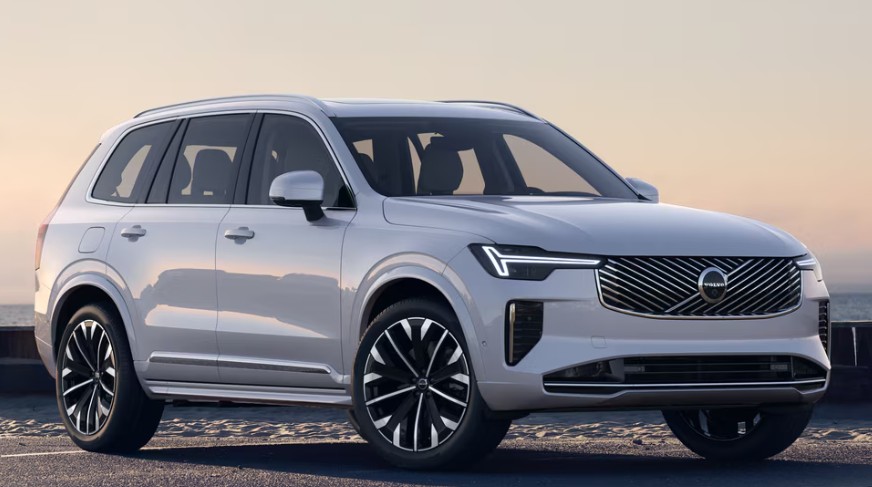
The Volvo XC90 fuel economy story is more interesting than a simple miles-per-gallon figure. This is a large, luxurious three-row SUV, after all. It carries plenty of weight, offers powerful engines, and is designed to transport families in comfort rather than chase economy-car efficiency records.
Yet the XC90 can be surprisingly sensible at the pumps.
Over the years, Volvo has offered diesel engines, turbocharged petrol units, mild-hybrid powertrains, and sophisticated plug-in hybrids. That means two XC90s parked beside each other can have dramatically different fuel consumption depending on their age, engine, driving environment, and charging habits.
So, what fuel economy should we realistically expect from a Volvo XC90? Is the plug-in hybrid genuinely cheaper to run? Does the diesel remain the smarter choice for highway drivers? And how much worse does fuel consumption become when we drive around town?
Let’s unpack it.
Content in this publication
- What Is the Volvo XC90 Fuel Economy?
- Volvo XC90 MPG by Engine Type
- Volvo XC90 Mild-Hybrid Fuel Economy
- Volvo XC90 Plug-In Hybrid Fuel Economy
- Volvo XC90 Real-World Fuel Economy
- Volvo XC90 Fuel Economy by Generation
- XC90 B5 vs B6 Fuel Economy
- XC90 T8 Fuel Economy
- Volvo XC90 Fuel Consumption in L/100 km
- Volvo XC90 MPG: US vs UK Gallons
- What Affects Volvo XC90 Fuel Economy?
- Does AWD Reduce XC90 Fuel Economy?
- Does Eco Mode Improve Volvo XC90 MPG?
- How to Improve Volvo XC90 Fuel Economy
- Volvo XC90 Fuel Economy When Towing
- Is the Volvo XC90 Expensive to Run?
- Is the XC90 Plug-In Hybrid Cheaper Than the Mild Hybrid?
- Volvo XC90 Fuel Economy Compared With Rivals
- Is an Older XC90 Still Fuel Efficient?
- Should You Buy an XC90 for Fuel Economy?
- Which Volvo XC90 Is Most Economical?
- Final Thoughts on Volvo XC90 Fuel Economy
- Frequently Asked Questions
What Is the Volvo XC90 Fuel Economy?
There is no single fuel economy number covering every XC90.
Depending on model year and powertrain, XC90 fuel consumption ranges from relatively thirsty figures for older petrol models to remarkably low official fuel-use numbers for plug-in hybrid versions.
As a general guide, owners may encounter figures roughly within these ranges:
- Older petrol XC90 models: around 15–23 mpg US depending on engine and driving conditions
- Diesel XC90 models: approximately 25–35 mpg US equivalent under favorable conditions
- Modern mild-hybrid petrol XC90s: commonly somewhere around the low-to-mid 20-mpg range
- Plug-in hybrid XC90s: dramatically higher equivalent efficiency when regularly charged, although petrol economy drops considerably once the battery is depleted
Those numbers should be treated as broad guidance rather than promises.
Why? Because fuel economy is like shoe size: the label gives us a starting point, but real-world fit depends on the individual.
Volvo XC90 MPG by Engine Type
The biggest factor affecting XC90 efficiency is the engine sitting underneath the hood.
Petrol XC90 Fuel Economy
Petrol-powered XC90s tend to offer the poorest fuel economy within the range, especially earlier six-cylinder and V8 examples.
That hardly comes as a shock.
A large SUV pushing a substantial body through the air requires energy. Add all-wheel drive, automatic transmission, seven seats, large wheels, and plenty of equipment, and physics begins collecting its tax.
Modern turbocharged petrol engines are much more efficient than the older powertrains, however.
Drivers who mainly make short journeys may actually find a petrol XC90 more suitable than an older diesel because petrol engines usually tolerate repeated short-distance use better.
When Does a Petrol XC90 Make Sense?
A petrol model can work well when we:
- Drive relatively low annual mileage
- Mostly travel around town or suburban roads
- Want simpler ownership than a plug-in hybrid
- Cannot conveniently charge a vehicle at home
- Prefer smoother petrol-engine characteristics
The trade-off is straightforward: expect higher fuel consumption than the most economical diesel or properly used plug-in hybrid versions.
Volvo XC90 Diesel Fuel Economy
For years, diesel was arguably the natural partner for a large European SUV.
Diesel engines produce strong low-end torque while usually consuming less fuel during long-distance driving. That combination suits the XC90 beautifully.
Older D5 models, for example, developed a reputation as comfortable long-distance cruisers.
Imagine the XC90 as a big Scandinavian express train. Diesel versions are happiest when they're rolling steadily down the motorway rather than repeatedly starting and stopping every three blocks.
Diesel Efficiency on Long Trips
Highway driving can reveal the diesel XC90 at its best.
With steady speeds, sensible acceleration, and a properly maintained engine, diesel versions can return substantially better mileage than comparable older petrol models.
However, short urban journeys may erode that advantage.
Modern diesels also use emissions equipment such as diesel particulate filters, which generally benefit from longer journeys that allow the exhaust system to reach appropriate operating temperatures.
Volvo XC90 Mild-Hybrid Fuel Economy
Volvo gradually moved away from traditional non-electrified petrol and diesel engines toward electrified powertrains.
Mild hybrids represent the halfway house.
They are not electric vehicles, and we cannot plug them into a wall. Instead, a small electrical system assists the combustion engine and recovers energy that would otherwise disappear during braking.
Think of it as giving the petrol engine a helpful push rather than replacing it.
Does the Mild-Hybrid System Save Much Fuel?
Usually, the improvement is modest rather than revolutionary.
A mild hybrid may:
- Reduce fuel use during stop-and-go driving
- Recover energy through regenerative braking
- Support smoother engine stop/start operation
- Provide electrical assistance during acceleration
- Reduce emissions compared with a similar conventional powertrain
What it will not do is transform a large SUV into an economy hatchback.
The XC90 remains heavy, tall, and powerful.
Owners expecting 40 or 50 mpg from a petrol mild-hybrid XC90 are likely to be disappointed.
Volvo XC90 Plug-In Hybrid Fuel Economy
Now things get considerably more interesting.
Plug-in hybrid XC90 models—often associated with Volvo's Recharge or T8 branding depending on year and market—combine a petrol engine with a much larger battery and electric motor.
This setup allows us to complete some journeys entirely on electricity.
That can dramatically reduce petrol consumption.
Why Official Plug-In Hybrid MPG Can Look Incredible
You may see official efficiency figures for plug-in hybrids that appear almost unbelievable.
There is a reason.
Standardized testing assumes the vehicle begins part of its cycle with electrical energy available in the battery. Because electricity replaces a portion of the petrol normally required, the calculated fuel consumption becomes extremely low.
But that does not mean an XC90 plug-in hybrid will travel hundreds of miles using barely any petrol under every circumstance.
Real-life results depend heavily on charging.
Charging Changes Everything
Imagine two owners with identical XC90 plug-in hybrids.
Owner A charges every night, drives 15 miles to work, plugs in at the office, and returns home.
Owner B never plugs the vehicle in and drives 300 highway miles every week.
Their fuel economy could be dramatically different.
The first owner may complete a substantial proportion of weekly driving without burning much petrol at all.
The second is effectively carrying a hybrid battery and electrical hardware while relying heavily on the combustion engine.
That is why plug-in hybrid efficiency should always be considered in context.
Volvo XC90 Real-World Fuel Economy
Official laboratory numbers are useful for comparing vehicles, but real roads are messier.
We deal with hills, weather, traffic, passengers, luggage, tire pressures, roof boxes, aggressive drivers, air conditioning, and countless other variables.
Real-world XC90 fuel consumption often differs from advertised figures.
City Driving
City driving is usually demanding for conventional petrol models.
The vehicle constantly needs energy to accelerate its considerable mass from a standstill.
Traffic lights appear.
We accelerate.
We brake.
We accelerate again.
It is the automotive equivalent of repeatedly climbing stairs while carrying shopping bags.
Plug-in hybrid versions can turn that weakness into a strength because electric motors are particularly well suited to low-speed stop-start driving.
Highway Driving
Highway journeys tend to flatten the differences.
Diesel XC90 models often excel here.
Petrol mild hybrids can also produce respectable results when cruising at moderate speeds.
Plug-in hybrids become more complicated because once the usable battery charge declines, the petrol engine performs a larger share of the work.
At steady motorway speed, aerodynamics also matter enormously.
And the XC90 is still shaped like a large SUV rather than a slippery sedan.
Volvo XC90 Fuel Economy by Generation
The XC90 has changed enormously since its introduction.
First-Generation Volvo XC90 Fuel Economy
The original XC90 was launched during an era when downsizing and electrification were nowhere near as important as they are today.
Engines included five-cylinder diesels, five- and six-cylinder petrol engines, and even a V8.
Character? Plenty.
Fuel economy? Less impressive.
Older Petrol Engines
Large-displacement petrol versions can be thirsty, especially around town.
V8 models sit firmly within the "buy it because you want it" category rather than the "buy it because it saves fuel" category.
Drivers attracted to these older models should consider fuel cost as part of the purchase price.
A cheap used luxury SUV can quickly become less cheap if we visit the filling station every few days.
Older Diesel Engines
Diesel versions generally provide the strongest fuel-economy case within the first-generation lineup.
They also suit towing and long-distance use thanks to strong torque delivery.
However, age matters.
An efficient engine in poor mechanical condition can quickly become inefficient.
Second-Generation Volvo XC90 Fuel Economy
The second-generation XC90 represented a major technological jump.
Volvo moved toward smaller turbocharged engines and eventually widespread electrification.
The result was significantly improved efficiency despite maintaining the size, luxury, and capability buyers expected.
Four-cylinder engines became central to the range, while plug-in hybrid technology delivered an entirely different way of thinking about fuel use.
XC90 B5 vs B6 Fuel Economy
Modern XC90 mild-hybrid lineups in some markets include B5 and B6 variants.
Exact specifications vary by country and model year, but the general principle remains simple.
The B5 usually prioritizes a more balanced blend of performance and economy.
The B6 generally delivers stronger performance but may consume slightly more fuel depending on conditions.
Should We Choose B5 for Better Economy?
For buyers primarily focused on fuel consumption, the less powerful engine often makes more sense.
The performance difference may matter if we frequently tow, carry heavy loads, or simply enjoy stronger acceleration.
Otherwise, extra horsepower can be like having a larger television in the guest room: nice to possess, but we may rarely need it.
XC90 T8 Fuel Economy
The T8 plug-in hybrid is the headline act when discussing XC90 efficiency.
It offers something earlier luxury SUVs could barely imagine: powerful acceleration combined with the possibility of completing everyday journeys using little or no petrol.
Yet its true economy depends on lifestyle.
Best Case Scenario
The T8 works brilliantly when:
- We have home charging
- Daily journeys fit within or near the electric driving range
- We charge frequently
- Most journeys involve urban or suburban roads
- Long-distance trips are occasional rather than constant
In those circumstances, petrol consumption can become remarkably low.
Worst Case Scenario
The numbers become much less attractive when:
- We rarely charge
- We frequently drive long motorway distances
- We accelerate aggressively
- The vehicle regularly carries heavy loads
- Cold weather reduces electric range
- We use large wheels and performance-oriented tires
A plug-in hybrid is a tool. Used correctly, it can be very efficient. Used incorrectly, it becomes a complicated petrol SUV carrying a battery around.
Volvo XC90 Fuel Consumption in L/100 km
Outside the United States, fuel consumption is commonly expressed in liters per 100 kilometers.
The logic is opposite to MPG.
With MPG, higher is better.
With L/100 km, lower is better.
For example:
- 12 L/100 km is relatively thirsty
- 9 L/100 km is better
- 7 L/100 km is quite efficient for a large SUV
- Extremely low official plug-in hybrid figures require careful interpretation because electricity contributes to the journey
When comparing XC90 versions internationally, always check which measurement system the source is using.
Volvo XC90 MPG: US vs UK Gallons
Here comes one of the internet's most common fuel-economy traps.
American and British MPG figures are not directly interchangeable.
A UK imperial gallon is larger than a US gallon.
Therefore, the same vehicle achieving exactly the same physical fuel consumption will display a higher numerical MPG figure under the UK system.
That means a quoted "30 mpg" figure needs context.
Is that 30 mpg US?
Or 30 mpg UK?
Without knowing, the comparison can become misleading.
What Affects Volvo XC90 Fuel Economy?
Even two identical XC90s can produce different numbers.
Several factors matter.
1. Driving Style
This is one of the largest variables.
Rapid acceleration requires considerably more energy than smooth acceleration.
Constantly charging toward red lights and braking hard is basically converting fuel into brake heat.
Smooth driving makes a noticeable difference.
2. Average Speed
Extremely low speeds hurt efficiency because of repeated stopping and starting.
Very high speeds hurt efficiency because aerodynamic drag rises sharply.
Moderate, steady cruising is usually the sweet spot.
3. Tire Pressure
Underinflated tires increase rolling resistance.
The engine then has to work harder to move the vehicle.
That may sound trivial, but over thousands of miles the difference can accumulate.
Always use the manufacturer-recommended pressure for the vehicle's load and tire configuration.
4. Wheel Size
Large wheels look fantastic on an XC90.
They can also work against fuel economy.
Larger wheel-and-tire combinations may increase weight, rolling resistance, and aerodynamic drag.
If maximum efficiency matters more than showroom drama, smaller factory wheel options often make more sense.
5. Temperature
Cold weather is particularly important for hybrid vehicles.
Batteries generally operate less efficiently in low temperatures, while cabin heating consumes energy.
Combustion engines also require time to warm up.
Short winter journeys can therefore produce noticeably worse results than long summer journeys.
6. Cargo and Passengers
Weight matters.
Carrying seven people plus luggage increases the energy required to accelerate.
A few shopping bags will not destroy your MPG, but routinely hauling heavy equipment may.
7. Roof Boxes
Roof boxes are surprisingly significant.
They increase frontal area and disturb airflow.
At motorway speeds, aerodynamic drag becomes a major factor.
If the roof box is not needed, removing it may improve fuel economy more than many drivers expect.
Does AWD Reduce XC90 Fuel Economy?
Generally, all-wheel-drive hardware can contribute additional weight and mechanical losses compared with a simpler two-wheel-drive system.
However, most modern XC90 buyers choose the vehicle for comfort, capability, stability, and all-season confidence rather than absolute minimum fuel consumption.
The important question is not whether AWD uses slightly more energy.
It is whether the benefits matter to us.
For drivers dealing with snow, steep roads, towing, or slippery conditions, AWD can be worth the trade-off.
Does Eco Mode Improve Volvo XC90 MPG?
Driving modes can influence throttle response, climate-control behavior, and drivetrain strategy depending on model year.
An economy-oriented mode may encourage smoother acceleration and prioritize efficiency.
But the driver still matters more.
Pressing the accelerator aggressively while using an Eco setting is rather like ordering a salad with a double milkshake and expecting the calories to disappear.
Use the mode as a tool, not magic.
How to Improve Volvo XC90 Fuel Economy
We do not need to drive at walking pace to save fuel.
A handful of sensible habits can help.
- Accelerate smoothly. Let the engine build speed progressively rather than flooring the throttle.
- Look ahead. Anticipate traffic and coast gently instead of constantly accelerating and braking.
- Maintain correct tire pressure. Check pressures regularly, particularly when temperatures change.
- Remove unnecessary roof accessories. Roof racks and cargo boxes add aerodynamic drag.
- Reduce unnecessary weight. There is no reason to carry heavy equipment year-round if it is rarely used.
- Service the vehicle properly. Dirty filters, old ignition components, incorrect oil, and mechanical faults can hurt efficiency.
- Use climate control sensibly. Extreme heating or cooling requires additional energy.
- Charge plug-in hybrids frequently. This is arguably the most important rule for maximizing T8 efficiency.
- Combine short journeys. A warm engine generally operates more efficiently than repeatedly starting from cold.
- Keep speeds reasonable. Small increases in highway speed can produce surprisingly large increases in fuel consumption.
Volvo XC90 Fuel Economy When Towing
Towing changes everything.
Whether we attach a caravan, boat, or utility trailer, the XC90 must move additional weight and overcome extra aerodynamic drag.
Fuel economy can decline considerably.
Large, box-shaped trailers are particularly demanding at highway speed.
Why Aerodynamics Matter More Than Weight at Speed
Weight dominates during acceleration and climbing.
Aerodynamic drag becomes increasingly important as speed rises.
That explains why towing a relatively light but tall caravan can sometimes hurt fuel economy more than carrying heavy cargo inside the vehicle.
If towing economy matters, reducing speed slightly can produce meaningful savings.
Is the Volvo XC90 Expensive to Run?
Fuel is only one part of XC90 ownership.
We should also consider:
- Insurance
- Tires
- Scheduled servicing
- Brake components
- Hybrid-system maintenance
- Depreciation
- Road taxes where applicable
- Electricity cost for plug-in hybrid charging
This is still a premium SUV.
Even an efficient XC90 may cost more to own than a smaller mainstream crossover.
However, buyers comparing it with similarly sized luxury SUVs may find its electrified powertrains attractive.
Is the XC90 Plug-In Hybrid Cheaper Than the Mild Hybrid?
Potentially, yes.
But there is no universal answer.
Suppose we drive 25 miles per day and charge cheaply at home every night.
A plug-in hybrid could use very little petrol during normal weekday driving.
Now imagine we live in an apartment without charging, travel hundreds of motorway miles every week, and rarely plug in.
The mild hybrid could become the more logical ownership proposition.
Calculate Your Driving Pattern First
Before choosing between the two, ask:
How many miles do we drive each day?
Can we charge at home?
How expensive is electricity?
How expensive is petrol?
How often do we take long trips?
Those questions reveal more than any brochure MPG number.
Volvo XC90 Fuel Economy Compared With Rivals
The XC90 competes with SUVs such as the BMW X5, Audi Q7, Mercedes-Benz GLE, Lexus RX in some configurations, and other premium family SUVs.
Fuel economy differences between them depend heavily on engine type.
A diesel XC90 should be compared with diesel rivals.
A plug-in hybrid XC90 should be compared with equivalent plug-in hybrids.
Comparing a T8's official combined fuel consumption with a conventional six-cylinder petrol SUV is technically possible but not always meaningful.
Their efficiency tests and energy sources are fundamentally different.
Is an Older XC90 Still Fuel Efficient?
Older diesel models can remain reasonably economical, particularly on longer journeys.
But age introduces another variable: condition.
A poorly maintained ten- or fifteen-year-old diesel may consume more fuel than it did when new.
Potential causes include:
- Faulty sensors
- Injector problems
- EGR issues
- Restricted air intake
- Incorrect tire pressure
- Binding brakes
- Transmission issues
- Poor wheel alignment
- Thermostat problems preventing proper engine warm-up
So when we evaluate used XC90 fuel economy, service history matters almost as much as engine choice.
Should You Buy an XC90 for Fuel Economy?
If absolute fuel economy is the priority, probably not.
A compact hybrid crossover will typically consume less energy.
But that misses the point.
The XC90 offers seating capacity, safety technology, luxury, strong performance, towing capability, and substantial cargo space.
The better question is:
Is the XC90 efficient for what it is?
In many configurations, yes.
Especially when we compare modern XC90 powertrains with large luxury SUVs from previous generations.
Which Volvo XC90 Is Most Economical?
For drivers who can charge regularly and complete many short or medium-distance journeys, the plug-in hybrid XC90 offers the greatest potential to reduce petrol use.
For frequent long-distance drivers, especially buyers considering older used examples, an efficient diesel can still make considerable sense where diesel ownership remains practical.
For drivers wanting simplicity without external charging, a modern mild-hybrid version provides a useful middle ground.
There is no universally "best" engine.
There is only the engine that best fits how we actually drive.
Final Thoughts on Volvo XC90 Fuel Economy
The Volvo XC90 fuel economy picture has evolved dramatically.
Early models were traditional large SUVs: comfortable, powerful, practical, and sometimes fairly thirsty.
Diesel engines improved long-distance efficiency.
Smaller turbocharged engines pushed consumption lower.
Mild-hybrid technology added another layer of optimization.
Then plug-in hybrids changed the rules altogether.
Today, an XC90 can behave like two different vehicles depending on how we use it. Charge a plug-in hybrid regularly and drive mostly short distances, and petrol stations may become occasional acquaintances. Ignore the charging cable and spend every week cruising hundreds of motorway miles, and the story changes quickly.
That is why we should never judge XC90 fuel economy by one headline MPG figure.
Look at the engine.
Look at the generation.
Look at the journey.
And most importantly, look at our own driving habits.
Fuel economy is not created inside a laboratory alone. It is created every morning when we start the vehicle, choose a route, press the accelerator, and decide how we drive.
Frequently Asked Questions
1. What is a good MPG for a Volvo XC90?
A good figure depends on the engine and generation. Low-to-mid 20s mpg US can be reasonable for a large petrol-powered XC90, while diesel versions may perform better on long journeys. Plug-in hybrids can use dramatically less petrol when regularly charged.
2. Which Volvo XC90 gets the best fuel economy?
Plug-in hybrid versions generally offer the greatest potential efficiency because they can complete part of a journey using electricity alone. However, their advantage depends heavily on frequent charging.
3. Is the Volvo XC90 good on fuel for a large SUV?
Modern versions can be relatively efficient considering the XC90's size, weight, performance, all-wheel-drive capability, and seven-seat configuration. Older large petrol engines are considerably thirstier.
4. Why is my Volvo XC90 using so much fuel?
Possible causes include frequent short journeys, aggressive acceleration, cold weather, low tire pressure, roof boxes, heavy loads, high highway speeds, mechanical problems, or simply an inherently thirsty engine. A sudden unexplained increase deserves mechanical investigation.
5. Does charging an XC90 T8 really reduce petrol costs?
Yes, particularly if most daily journeys fall within the vehicle's usable electric range. Frequent home charging can substantially reduce petrol consumption, while rarely charging eliminates much of the plug-in hybrid's efficiency advantage.
If you want to know other articles similar to Volvo XC90 Fuel Economy: MPG, Real-World Efficiency, and Running Costs you can visit the category Driving.
Kia Sorento Fuel Economy: MPG, Hybrid, and Plug-In Hybrid Explained

BYD Shark 6 Fuel Consumption: Real-World Economy, Range and What to Expect

Vauxhall Agila MPG: Real-World Fuel Economy and Engine Guide

Honda Passport MPG: Real-World Fuel Economy, Ratings, and What to Expect

Nissan Rogue Fuel Economy: MPG, Range, Costs, and Real-World Efficiency
BYD Shark 6 Long Range Fuel Tank: Is the 120L Upgrade Worth It?
Leave a Reply
More content of your interest