
Volvo XC90 Tyre Size: Complete Size and Fitment Guide

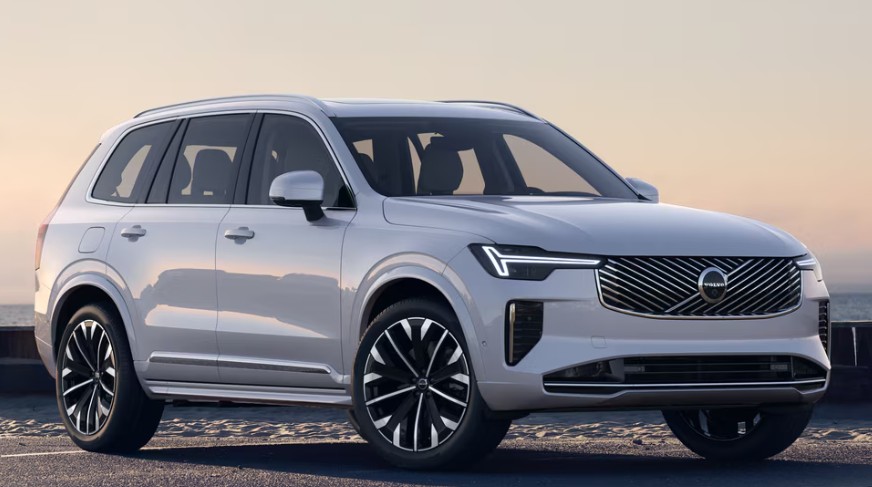
Choosing the correct Volvo XC90 tyre size sounds simple until we start shopping. Suddenly, we are staring at numbers such as 235/55 R19, 275/45 R20, and 275/35 R22 and wondering whether changing one of them will transform the SUV into a smoother cruiser—or create an expensive headache.
The good news? Volvo has used a relatively logical range of wheel and tyre combinations on the XC90. The trick is identifying which combination belongs to our particular model year, trim, powertrain, and wheel package.
On modern XC90 models, commonly approved tyre sizes include 235/55 R19, 275/45 R20, 275/40 R21, and 275/35 R22. Earlier versions of the second-generation XC90 can also be found with 235/60 R18, depending on configuration. Volvo's published specifications pair these sizes with specific rim widths and offsets rather than treating tyres as interchangeable accessories.
That distinction matters. The tyre is essentially the XC90's handshake with the road. Everything—braking, steering response, comfort, road noise, grip, and even fuel economy—passes through four relatively small contact patches.
Let's unpack the numbers and find the right setup without turning tyre shopping into advanced mathematics.
Content in this publication
- What Is the Standard Volvo XC90 Tyre Size?
- Volvo XC90 Tyre Size Chart
- How to Read a Volvo XC90 Tyre Size
- Volvo XC90 18-Inch Tyre Size
- Volvo XC90 19-Inch Tyre Size
- Volvo XC90 20-Inch Tyre Size
- Volvo XC90 21-Inch Tyre Size
- Volvo XC90 22-Inch Tyre Size
- First-Generation Volvo XC90 Tyre Sizes
- Does Volvo XC90 Trim Level Affect Tyre Size?
- Can We Change Volvo XC90 Tyre Size?
- Can We Fit Wider Tyres on a Volvo XC90?
- Volvo XC90 Wheel Size Versus Tyre Size
- What Is the Best Volvo XC90 Tyre Size for Comfort?
- What Is the Best XC90 Tyre Size for Appearance?
- Does Tyre Size Affect XC90 Fuel Economy?
- Does Tyre Size Affect Volvo XC90 Handling?
- XC90 Tyre Load Rating Matters
- What About XC90 Tyre Speed Rating?
- Volvo XC90 Tyre Pressure and Size
- Summer, Winter, and All-Season XC90 Tyres
- How Tyre Size Changes Replacement Costs
- Should All Four Volvo XC90 Tyres Match?
- How to Find Your Exact Volvo XC90 Tyre Size
- Original XC90 Wheels Versus Aftermarket Wheels
- Common Volvo XC90 Tyre Size Mistakes
- Which Volvo XC90 Tyre Size Should We Choose?
- Volvo XC90 Tyre Size: Final Thoughts
- Frequently Asked Questions About Volvo XC90 Tyre Size
What Is the Standard Volvo XC90 Tyre Size?
There isn't one universal Volvo XC90 tyre size.
Depending on model year and specification, Volvo has approved several combinations. On recent models, 19-, 20-, 21-, and 22-inch wheels are commonly associated with the XC90, while some earlier second-generation variants also have approved 18-inch configurations. Volvo currently lists wheel choices extending through 22 inches in several markets.
Typical XC90 sizes we may encounter include:
- 235/60 R18 — found on certain earlier second-generation configurations
- 235/55 R19 — relatively comfort-oriented setup
- 275/45 R20 — popular balance between appearance and ride quality
- 275/40 R21 — sportier, lower-profile configuration
- 275/35 R22 — aggressive appearance with the lowest sidewall of the common factory combinations
Those numbers aren't random. Volvo approves each tyre size together with a suitable rim.
For example, Volvo documentation for certain XC90 versions specifies 235/55 R19 tyres with an 8-inch-wide wheel, while 275-section 20-, 21-, and 22-inch tyres use 9-inch-wide rims.
Volvo XC90 Tyre Size Chart
The table below provides a useful reference for common second-generation XC90 factory combinations. It should be treated as a general guide rather than a replacement for the tyre information label on the individual vehicle.
| Wheel Size | Common XC90 Tyre Size | Typical Rim Specification | General Character |
|---|---|---|---|
| 18 inch | 235/60 R18 | 8x18 | Maximum sidewall and comfort |
| 19 inch | 235/55 R19 | 8x19 | Comfortable everyday setup |
| 20 inch | 275/45 R20 | 9x20 | Balanced comfort and appearance |
| 21 inch | 275/40 R21 | 9x21 | Sharper response and sportier look |
| 22 inch | 275/35 R22 | 9x22 | Maximum visual impact |
Volvo's published specifications for relevant models show offsets of approximately 42.5 mm for the 18- and 19-inch 8-inch-wide wheels and 38.5 mm for the 20-, 21-, and 22-inch 9-inch-wide wheels.
Notice how tyre width jumps from 235 mm to 275 mm when moving into many of the larger factory wheel packages. That change affects more than appearance. Wider tyres can alter steering feel, rolling resistance, wet-road behaviour, replacement cost, and susceptibility to road imperfections.
How to Read a Volvo XC90 Tyre Size
Let's take 275/45 R20 as an example.
At first glance it looks like a password somebody forgot to make memorable. In reality, every section tells us something important.
What Does 275 Mean?
The first number represents the nominal tyre width in millimetres.
A 275/45 R20 tyre is therefore approximately 275 mm wide.
A 235/55 R19 tyre is approximately 235 mm wide.
Wider doesn't automatically mean better. Width needs to suit the wheel, suspension geometry, vehicle weight, driving conditions, and manufacturer's specifications.
What Does 45 Mean?
The second number represents the sidewall height as a percentage of tyre width.
On a 275/45 tyre, the sidewall height equals roughly 45 percent of the tyre's nominal width.
This is why the number is called the aspect ratio rather than a direct measurement.
Smaller aspect ratios generally produce shorter sidewalls. They can make steering feel sharper but usually provide less cushioning between the wheel and the road.
What Does R Mean?
The R means radial construction.
Radial tyres dominate modern passenger vehicles, so this letter is hardly exciting—but it's still part of the tyre specification.
What Does 20 Mean?
The final number is wheel diameter in inches.
Therefore, a 275/45 R20 tyre fits a 20-inch wheel.
A 275/35 R22 fits a 22-inch wheel.
It sounds obvious, but this is one number we absolutely cannot improvise.
Volvo explains tyre dimensions using this same system and additionally identifies load index and speed rating as crucial parts of the complete tyre designation.
Volvo XC90 18-Inch Tyre Size
Some earlier second-generation XC90 configurations were approved with 235/60 R18 tyres.
These wheels don't create the same dramatic visual stance as 21- or 22-inch alloys, but they bring practical advantages.
More sidewall means more rubber between the rim and pothole. Think of it as giving the suspension another small cushion to work with.
That can be attractive when we regularly drive on imperfect streets, gravel roads, broken pavement, or areas where potholes appear faster than repair crews can fill them.
Why Choose 18-Inch XC90 Wheels?
Ride comfort is the obvious advantage.
A taller sidewall can absorb sharp impacts more effectively than an extremely low-profile tyre. Replacement tyres may also cost less depending on brand and region.
The compromise is appearance and response. An 18-inch setup may feel slightly less immediate when turning sharply, and owners seeking the XC90's most premium visual presentation usually gravitate toward larger alloys.
Volvo XC90 19-Inch Tyre Size
A common XC90 19-inch configuration is 235/55 R19.
For many drivers, this may be the sweet spot.
We retain a meaningful amount of tyre sidewall while enjoying a wheel that looks proportionate on such a large SUV.
Current Volvo documentation continues to identify 235/55 R19 among approved sizes for applicable XC90 versions.
Is 235/55 R19 Good for Everyday Driving?
Very much so.
The relatively narrow 235-mm footprint compared with a 275-mm tyre can also make this configuration attractive to drivers who prioritise efficiency and comfort over aggressive styling.
That's not to say the 19-inch setup feels soft or inadequate. The XC90 is engineered as a luxury SUV, not a track car wearing hiking boots.
For long journeys, family use, commuting, and mixed driving, 19-inch wheels deserve serious consideration.
Volvo XC90 20-Inch Tyre Size
One of the best-known modern XC90 configurations is 275/45 R20.
It blends a substantial 275-mm-wide tyre with enough sidewall to preserve reasonable ride comfort.
This combination has become something of a middle ground.
Twenty-inch wheels fill the XC90's arches more convincingly than 18s or 19s, yet the 45-series sidewall isn't brutally thin.
Is 275/45 R20 the Best XC90 Tyre Size?
There is no single "best," but for many owners it offers a compelling compromise.
We get:
good visual presence, substantial road contact, decent impact absorption, broad tyre availability in many markets, and less vulnerability than ultra-low-profile 22-inch setups.
For a large premium SUV, that balance makes plenty of sense.
Volvo XC90 21-Inch Tyre Size
The typical Volvo XC90 21-inch tyre size is 275/40 R21.
This is where appearance starts taking a more prominent role.
A 40-profile sidewall gives the SUV a tauter, more athletic stance. Steering can feel more immediate because there is less flexible sidewall between the road and wheel.
Yet every engineering coin has two sides.
Less tyre sidewall also means less protection from sharp road impacts.
Are 21-Inch XC90 Tyres Comfortable?
Comfort is subjective.
On smooth motorways, 21-inch wheels can feel perfectly refined. On rough city streets, however, passengers may notice more texture and sharper impacts than they would with 19- or 20-inch wheels.
Tyre construction also matters. Two different 275/40 R21 tyres can feel noticeably different depending on compound, sidewall stiffness, noise-reduction technology, and intended performance characteristics.
The size is only part of the story.
Volvo XC90 22-Inch Tyre Size
The common Volvo XC90 22-inch tyre size is 275/35 R22.
These are the fashion models of the family.
A 22-inch wheel fills the wheel arch beautifully, and the narrow sidewall creates the upscale, muscular appearance many XC90 buyers want.
Volvo lists 275/35 R22 among approved sizes for relevant versions, although its support documentation notes that certain larger-wheel applications are approved only with specified fender-extension arrangements.
The Trade-Off With 22-Inch Wheels
The problem isn't that 22-inch tyres are bad.
They're simply less forgiving.
With a 35-profile tyre, there isn't much rubber separating an expensive alloy wheel from a vicious pothole.
Expect sharper impact responses and potentially higher replacement costs.
That doesn't make them the wrong choice. If appearance matters heavily and our roads are relatively smooth, 22-inch wheels can suit the XC90 beautifully.
But choosing them purely because "bigger must be better" is like wearing dress shoes on a mountain trail. They look fantastic until the surface starts fighting back.
First-Generation Volvo XC90 Tyre Sizes
The original XC90 was introduced long before oversized factory wheels became as common as they are today.
Consequently, first-generation models can use quite different tyre and wheel combinations from the second-generation SUV.
This is precisely why searching only for "Volvo XC90 tyre size" and buying the first tyre shown online isn't wise.
The XC90 nameplate spans vehicles built across dramatically different periods, and specification differences can exist between engines, markets, trims, suspension packages, and model years.
For an older XC90, confirm the tyre placard, owner's documentation, wheel dimensions, and original equipment specification before ordering replacement tyres.
Does Volvo XC90 Trim Level Affect Tyre Size?
Absolutely.
Trim and equipment packages frequently determine the installed wheel design.
Two XC90s from the same model year can look similar from twenty metres away but sit on completely different wheel and tyre combinations.
Powertrain can matter too. Plug-in hybrids, mild hybrids, and earlier petrol or diesel versions may have different approved combinations depending on the year and market.
Brake dimensions can also limit which wheels physically fit.
That's why tyre fitting isn't simply about whether the circumference looks approximately correct.
Can We Change Volvo XC90 Tyre Size?
Yes—but carefully.
Changing tyre dimensions involves more than finding something that physically fits inside the wheel arch.
Overall rolling diameter should remain appropriate, while load rating, speed rating, wheel width, offset, suspension clearance, brake clearance, and legal requirements all need consideration.
The XC90's electronic systems also rely on predictable wheel behaviour.
A poorly chosen setup can alter speedometer accuracy, stability-control operation, steering characteristics, ride quality, clearance, and tyre wear.
Volvo itself recommends using wheel and tyre combinations that it has tested and approved.
Can We Downsize XC90 Wheels?
Sometimes.
An owner with 22-inch wheels may want 20-inch wheels for winter use or better comfort.
That's a perfectly understandable goal.
However, the smaller wheel must clear the brakes and must be approved for that vehicle configuration.
We shouldn't assume that because another XC90 came with smaller wheels, those wheels automatically fit ours.
Why Downsize?
Downsizing often creates a taller tyre sidewall while preserving a similar overall tyre diameter.
That can provide greater pothole resistance, potentially lower tyre costs, and a more compliant ride.
For snow and winter conditions, some drivers also prefer narrower tyres where an approved configuration exists.
Can We Fit Wider Tyres on a Volvo XC90?
Possibly, but wider isn't automatically superior.
Wider tyres can increase dry-road contact area and sharpen the SUV's stance.
Yet they may also increase rolling resistance and susceptibility to tramlining, cost more, and behave differently in standing water or snow.
More importantly, the tyre must match an appropriate wheel width.
Installing an excessively wide tyre on a narrow rim—or vice versa—changes the shape of the tyre and can compromise handling.
Our objective shouldn't be to fit the widest rubber possible. It should be to maintain a coherent vehicle setup.
Volvo XC90 Wheel Size Versus Tyre Size
People often use "wheel size" and "tyre size" interchangeably, but they describe different things.
The wheel is the metal rim.
The tyre wraps around it.
An XC90 with 20-inch wheels may use 275/45 R20 tyres, but "20 inch" tells us only the wheel diameter. It doesn't tell us tyre width, profile, load capacity, speed rating, or complete rim dimensions.
Volvo illustrates wheel specifications with designations such as 8Jx18x42.5, where the figures identify rim width, rim diameter, and offset.
Understanding that difference becomes especially important when buying aftermarket wheels.
What Is the Best Volvo XC90 Tyre Size for Comfort?
Generally speaking, the smaller approved wheel with the taller tyre sidewall will provide the strongest foundation for ride comfort.
So, where approved for the specific vehicle, an 18- or 19-inch setup will usually have a comfort advantage over a 22-inch configuration.
Think about hitting a pothole.
With a thick sidewall, the tyre has room to flex before the impact reaches the wheel and suspension.
With a low-profile tyre, there is far less cushioning material available.
That doesn't mean every smaller-wheel XC90 rides dramatically better. Suspension tuning, tyre pressure, tyre construction, load, and road surface all influence comfort.
Still, sidewall height matters.
What Is the Best XC90 Tyre Size for Appearance?
For visual drama, 21- and 22-inch wheels make a compelling argument.
Large wheels reduce the apparent amount of tyre sidewall and visually anchor the enormous body of the XC90.
The SUV suddenly looks lower, broader, and more planted.
We just need to remember that appearance doesn't exist in isolation.
If our daily commute resembles a pothole endurance competition, sacrificing sidewall purely for aesthetics may become tiring—and expensive.
Does Tyre Size Affect XC90 Fuel Economy?
It can.
Larger and wider wheel-and-tyre packages may add rotating mass and rolling resistance depending on their construction.
A 275-mm-wide performance-oriented tyre is solving a different design problem from a narrower comfort-focused tyre.
Driving conditions also matter enormously.
Pressure, alignment, temperature, tyre compound, vehicle load, acceleration habits, and traffic can easily influence fuel consumption.
So we shouldn't expect a dramatic economy transformation simply by changing wheel diameter.
Instead, consider efficiency one part of the larger trade-off between comfort, grip, appearance, response, and cost.
Does Tyre Size Affect Volvo XC90 Handling?
Yes.
Lower-profile tyres tend to flex less during directional changes.
That can make steering feel faster and give the SUV a more connected response.
On smooth pavement, this can be enjoyable.
But the XC90 is still a large three-row luxury SUV. We aren't turning it into a lightweight sports coupe simply by fitting 22-inch alloys.
Larger wheels can actually work against composure on damaged roads if the tyre struggles to absorb impacts.
The best handling setup isn't necessarily the one that feels hardest. Good handling is about maintaining predictable tyre contact with the road.
XC90 Tyre Load Rating Matters
This is one area owners should never ignore.
The XC90 is a substantial vehicle capable of carrying multiple passengers and luggage. The tyres therefore need adequate load-carrying capacity.
The load index appears after the tyre dimension.
For example, Volvo illustrates tyre markings using a size followed by a load index and speed symbol, explaining that these codes specify the tyre's permitted load and speed capability.
Matching the dimensions while choosing an inadequate load rating is not good enough.
What About XC90 Tyre Speed Rating?
Speed rating works alongside load index.
It indicates the maximum speed capability of a tyre under specified conditions.
We should use tyres meeting the requirements for the vehicle and market.
Again, this demonstrates why "275/45 R20" isn't the complete specification.
Two tyres can display the same physical dimensions yet have different load and speed ratings.
Volvo XC90 Tyre Pressure and Size
Tyre pressure should be based on Volvo's specification for the vehicle rather than a generic number taken from the internet.
For example, Volvo currently specifies 38 psi (260 kPa) front and rear for several 275-section 20-, 21-, and 22-inch XC90 tyre configurations in its Canadian support information, but pressure requirements can differ depending on configuration and market.
The safest reference remains the tyre pressure label on the vehicle and the documentation associated with the specific model.
Don't inflate tyres to the maximum pressure printed on the tyre sidewall simply because that number is visible.
That marking isn't the same thing as the vehicle manufacturer's recommended operating pressure.
Summer, Winter, and All-Season XC90 Tyres
Correct size doesn't automatically mean correct tyre.
Climate matters.
A high-performance summer tyre may provide wonderful warm-weather response but become unsuitable when temperatures plummet.
A winter tyre is designed around cold conditions and low-grip surfaces.
An all-season tyre aims for broader usability rather than maximum performance at either extreme.
Our climate, annual mileage, road conditions, and driving habits should shape the choice.
Size gets the tyre through the front door. Compound and construction determine what happens once it starts working.
How Tyre Size Changes Replacement Costs
Tyre pricing tends to rise as we move into very large premium SUV dimensions.
A 22-inch high-performance SUV tyre contains sophisticated construction and is sold in a less mainstream size than many ordinary passenger-car tyres.
Multiply the difference by four and suddenly wheel choice becomes a meaningful ownership expense.
That's worth considering before upgrading from 19- or 20-inch wheels purely for appearance.
The purchase price of the wheels is only chapter one. Replacement tyres arrive later and write chapter two.
Should All Four Volvo XC90 Tyres Match?
Ideally, tyre specification and characteristics should remain consistent across the vehicle unless Volvo specifically calls for a different arrangement.
Matching tyres help preserve predictable behaviour under braking, cornering, and poor weather.
Differences in tread depth can also become relevant on all-wheel-drive vehicles.
If one tyre is damaged while the others are significantly worn, replacing just one may not always be the ideal solution.
A qualified tyre specialist should evaluate tread depth and drivetrain requirements rather than treating each tyre as an isolated component.
How to Find Your Exact Volvo XC90 Tyre Size
When it's time to order tyres, checking the actual vehicle beats guessing from model name alone.
Look at the tyre currently installed, then confirm the size against the vehicle tyre placard and owner's documentation.
We should also verify the load index and speed rating.
If the car has aftermarket wheels, don't automatically assume the existing setup represents Volvo's original specification.
For complete certainty, use the VIN or exact model-year configuration with a Volvo retailer or reliable fitment database.
This extra minute of checking can prevent an expensive delivery of four tyres that don't belong anywhere near our SUV.
Original XC90 Wheels Versus Aftermarket Wheels
Aftermarket wheels can dramatically change the character of the XC90.
Some look fantastic.
But wheel diameter alone isn't enough.
Width, offset, centre bore, bolt pattern, brake clearance, load capacity, and tyre compatibility must all work together.
The XC90 is a carefully engineered suspension system, not a blank canvas where every wheel that bolts on is automatically suitable.
Volvo states that the vehicle is approved with particular wheel-and-tyre combinations and recommends tested and approved equipment.
That doesn't mean aftermarket wheels are inherently bad.
It means fitment needs to be engineering-led rather than appearance-led.
Common Volvo XC90 Tyre Size Mistakes
One of the easiest mistakes is buying purely by wheel diameter.
A driver sees a 20-inch XC90 wheel and orders any tyre with "R20" printed on the sidewall.
That's not how it works.
Another mistake is forgetting load rating.
Then we have drivers who install a dramatically different overall diameter because the tyre physically fits.
Perhaps the most common mistake of all is trusting a generic online lookup without verifying the vehicle itself.
XC90 specifications vary across years and countries.
The tyre placard doesn't have a marketing department. It simply tells us what the vehicle needs.
Trust it.
Which Volvo XC90 Tyre Size Should We Choose?
If we already have factory wheels and simply need replacement tyres, the answer is wonderfully uncomplicated: stay with the approved specification for those wheels.
If we're considering changing wheel size, the decision becomes more interesting.
For ride comfort and pothole resistance, lean toward the smaller approved wheel setup.
For balanced looks and everyday usability, 19- or 20-inch combinations are compelling.
For more aggressive styling and quicker steering response, 21-inch wheels make sense.
For maximum visual impact, 22-inch wheels sit at the top of the ladder—but expect less sidewall cushioning.
There isn't one perfect solution because we don't all drive on the same roads.
A driver cruising smooth Scandinavian motorways and someone navigating cratered city streets are asking their tyres to perform completely different jobs.
Volvo XC90 Tyre Size: Final Thoughts
Finding the right Volvo XC90 tyre size becomes much easier once we stop looking for one universal answer.
The XC90 has been offered with several factory-approved sizes, including common combinations such as 235/55 R19, 275/45 R20, 275/40 R21, and 275/35 R22, while certain earlier second-generation configurations can use 235/60 R18.
Each offers a different personality.
Smaller wheels and taller sidewalls generally favour comfort and durability. Larger wheels create sharper visual impact and a more immediate steering feel but provide less protection from rough roads.
The smartest tyre isn't necessarily the biggest, widest, or most expensive one.
It's the tyre that matches our exact XC90 specification and the way we actually use the car.
Before spending money, confirm the tyre placard, model year, rim dimensions, load rating, and approved vehicle specification. Do that, and tyre shopping becomes less of a guessing game and more of a straightforward maintenance decision.
Frequently Asked Questions About Volvo XC90 Tyre Size
1. What tyre size does a Volvo XC90 use?
The exact size depends on model year, trim, powertrain, and wheel package. Common modern XC90 sizes include 235/55 R19, 275/45 R20, 275/40 R21, and 275/35 R22. Some earlier second-generation versions also use 235/60 R18.
2. What is the Volvo XC90 20-inch tyre size?
A common factory 20-inch specification is 275/45 R20. Always verify the tyre information label or official documentation for the exact vehicle before buying.
3. What size tyres are on a Volvo XC90 with 22-inch wheels?
A commonly approved 22-inch XC90 tyre size is 275/35 R22. Certain configurations may have additional equipment or approval requirements, so owners should check their specific vehicle.
4. Can I put smaller wheels on my Volvo XC90?
Potentially, provided the smaller wheel clears the brakes and the complete wheel-and-tyre setup is approved for the vehicle. Downsizing can improve ride comfort and increase sidewall protection, but it should not be done based on diameter alone.
5. Are 20-inch or 22-inch tyres better for the Volvo XC90?
Twenty-inch tyres generally offer a stronger balance between ride comfort, protection, handling, and appearance. Twenty-two-inch tyres provide a more dramatic look and shorter sidewalls but may feel firmer and can be more vulnerable to pothole damage.
If you want to know other articles similar to Volvo XC90 Tyre Size: Complete Size and Fitment Guide you can visit the category Service and Parts.
Vauxhall Mokka Tyre Pressure Reset: Complete Guide
How to Reset the Tire Pressure System on Your Hyundai Tucson
Hyundai Kona Tire Pressure: Complete PSI Guide
Vauxhall Corsa Timing Belt Replacement Cost UK 2026
Mazda CX-5 Tire Size Chart: 2013–2026 Guide

How to Reset a Honda Civic: Complete Step-by-Step Guide
Leave a Reply
More content of your interest