

Nissan Frontier vs Navara: Which Nissan Pickup Is Better?

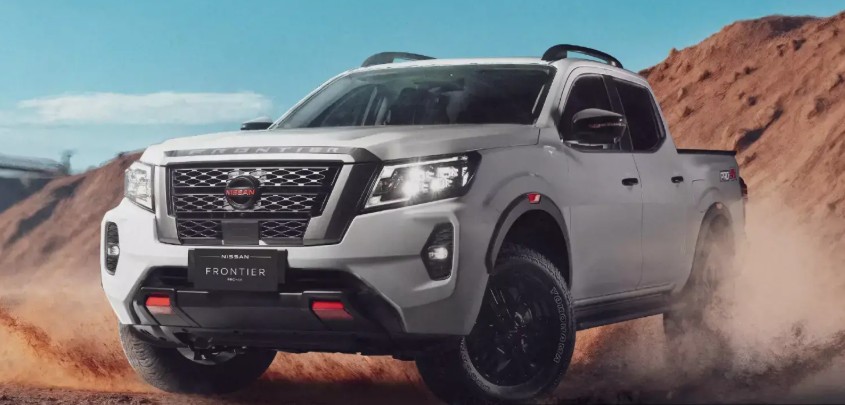
Put the Nissan Frontier vs Navara side by side and, at first glance, it feels like we are comparing two members of the same family. Both wear Nissan badges. Both are rugged midsize pickups. Both can tow, haul, tackle rough roads, and spend Monday morning at a worksite before disappearing down a dirt trail on Saturday.
Yet there is an important twist: the modern Frontier and Navara are not simply the same truck wearing different names.
That distinction matters more than ever in 2026. The current U.S.-market Nissan Frontier uses a naturally aspirated V6 and a nine-speed automatic transmission, while Australia's latest Navara has moved to a 2.4-liter twin-turbo diesel paired with a six-speed automatic. Nissan describes the newest Navara as being built on an Alliance platform, with engineering and suspension tuning specifically adapted for Australia and New Zealand.
So, which one would we rather have?
The answer depends heavily on where we live, what we're towing, how we use our truck, and whether we prefer old-school gasoline horsepower or low-rpm diesel torque.
Let's dig into the differences.
Content in this publication
- Nissan Frontier vs Navara at a Glance
- Are the Nissan Frontier and Navara the Same Truck?
- Engine Comparison: Petrol Muscle vs Diesel Torque
- Nissan Frontier vs Navara Towing Capacity
- Payload and Work Capability
- Fuel Economy: Navara Takes the Logical Advantage
- Transmission: Nine Speeds vs Six
- Nissan Frontier vs Navara Off-Road Ability
- Ride Comfort and Suspension
- Interior and Everyday Comfort
- Safety Technology
- Frontier vs Navara Size and Practicality
- Nissan Frontier vs Navara Reliability
- Maintenance and Ownership Costs
- Which Truck Is Better for Towing a Caravan or Camper?
- Which Is Better for Daily Driving?
- Which Is Better for Work?
- Which Looks Better?
- Nissan Frontier PRO-4X vs Navara PRO-4X
- Used Nissan Frontier vs Used Navara
- Who Should Buy the Nissan Frontier?
- Who Should Buy the Nissan Navara?
- Nissan Frontier vs Navara: Pros and Cons
- Final Verdict: Nissan Frontier or Navara?
- Frequently Asked Questions
Before getting buried in specifications, here's the simplest way to understand these trucks.
The Frontier is primarily tailored toward North American midsize-pickup buyers. It emphasizes gasoline V6 power, traditional truck character, recreational capability, and relatively straightforward mechanical hardware.
The Navara is designed around the demands of markets where one-tonne diesel utes dominate. In countries such as Australia and New Zealand, buyers expect pickups to function as commercial tools, tow vehicles, family transport, and long-distance adventure machines all at once.
That creates two noticeably different personalities.
| Category | Nissan Frontier | Nissan Navara |
|---|---|---|
| Primary market focus | North America | Australia, NZ and selected global markets |
| Current engine | 3.8L gasoline V6 | 2.4L twin-turbo diesel |
| Transmission | 9-speed automatic | 6-speed automatic |
| Power | 310 hp | 150 kW / about 201 hp |
| Torque | 281 lb-ft | 470 Nm / about 347 lb-ft |
| Maximum advertised towing | Up to 7,150 lb | 3,500 kg / 7,716 lb |
| Character | Recreational midsize pickup | Work-and-lifestyle ute |
| Performance feel | Revvy and powerful | Torquey and relaxed |
| Best suited to | U.S.-style truck use | Heavy-duty ute duties |
Current Nissan specifications list the 2026 Frontier with a 310-horsepower 3.8-liter V6 and towing capacity of up to 7,150 pounds. Nissan Australia's new Navara uses a 150 kW/470 Nm 2.4-liter turbo-diesel and is rated for 3,500 kg of braked towing across the range.
Already, we can see that this isn't an apples-to-apples matchup.
It's more like comparing two different recipes made from the same cookbook.
This question causes more confusion than almost anything else surrounding these pickups.
Historically, Their Family Trees Overlapped
In past generations and in various markets, Nissan used the Frontier and Navara names for closely related pickups. Depending on where we lived, a Nissan truck belonging to essentially the same global pickup family could carry different badges and specifications.
That's why older forum discussions often talk about the Frontier and Navara almost interchangeably.
But we shouldn't automatically carry that assumption into today's lineup.
The modern North American Frontier follows its own path.
The current Navara sold in Australia represents a new generation. Nissan says this model is built on a robust Alliance platform and receives locally developed suspension tuning specifically intended for Australian and New Zealand driving conditions.
In practical terms, that means we should treat today's Frontier and Navara as distinct pickups developed for different markets, not simply as badge-engineered copies.
That makes this comparison much more interesting.
Engine Comparison: Petrol Muscle vs Diesel Torque
Here's where the personalities split dramatically.
Nissan Frontier 3.8-Liter V6
Every current U.S. Frontier uses Nissan's 3.8-liter naturally aspirated V6.
It produces:
- 310 horsepower
- 281 lb-ft of torque
- Nine-speed automatic transmission
- Rear-wheel drive or available four-wheel drive
Nissan lists 310 hp as standard across the Frontier lineup.
And we like that simplicity.
There isn't a small turbocharger being asked to do Olympic-level gymnastics every time we press the accelerator. Instead, the V6 behaves like a traditional truck engine: smooth, predictable, eager to rev, and pleasantly muscular.
Hit the throttle and it feels alive.
The latest Australian Navara takes the opposite approach.
Its 2.4-liter twin-turbo diesel produces 150 kW and 470 Nm and works with a six-speed automatic transmission.
The horsepower figure won't make a Frontier owner jealous.
The torque might.
Diesel engines deliver their shove lower in the rev range, and that's precisely what we want when pulling trailers, crawling over difficult terrain, or carrying substantial loads.
Rather than sprinting toward the redline, the Navara feels as though it rolls up its sleeves and starts working.
Which Engine Would We Choose?
For general driving and outright horsepower?
Frontier.
For towing, carrying loads, low-speed off-roading, and fuel-conscious long-distance work?
Navara.
Neither philosophy is universally better.
They simply solve the pickup-truck problem differently.
Towing numbers always grab attention, but they require context.
The 2026 Frontier is rated to tow up to 7,150 pounds, depending on configuration.
The latest Navara can tow up to 3,500 kg braked, equivalent to roughly 7,716 pounds, across the range according to Nissan Australia.
On paper, therefore, Navara holds a modest advantage.
But maximum trailer weight isn't the whole story.
We also have to consider:
- Payload
- Tow-ball load
- Vehicle occupancy
- Gross vehicle mass
- Gross combined mass
- Accessories
- Cab configuration
- Local towing regulations
A truck capable of pulling a certain trailer when nearly empty may not retain the same practical capacity once we've loaded four passengers, camping equipment, tools, a canopy, and half the garage into the bed.
Diesel torque is particularly useful here.
A gasoline V6 might produce more horsepower, but the Navara's 470 Nm of torque gives it the sort of low-speed muscle that makes towing feel less frantic.
Imagine two people dragging a heavy sofa upstairs. The Frontier is the athlete who gets it moving with speed. The Navara is the stocky mover who simply leans into the weight.
Both get the job done.
The experience is different.
Payload and Work Capability
Payload matters just as much as towing for genuine truck owners.
Nissan lists the Frontier with payload capacity reaching up to approximately 1,620 pounds, although actual figures depend on trim and configuration.
The newest Australian Navara lineup includes variants engineered around the traditional one-tonne ute category, with Nissan advertising one-tonne payload capability on relevant versions.
And this reveals another cultural difference.
In North America, midsize trucks are increasingly recreational vehicles.
In Australia, utes still have one boot planted firmly on the worksite.
Tradespeople may appreciate the Navara's:
- Diesel torque
- One-tonne-class positioning
- 3,500 kg braked towing capability
- Load-focused suspension development
- Double-cab practicality
- Extensive accessory possibilities
Frontier for Recreational Owners
The Frontier counters with:
- Strong V6 horsepower
- Useful bed configurations
- Available Utili-track cargo system
- Competitive towing capability
- PRO-4X off-road trim
- Comfortable everyday drivability
Neither truck is afraid of work.
But we'd give Navara the conceptual edge for traditional commercial ute duties.
There's little suspense here.
A diesel pickup engineered for Australia naturally has an efficiency advantage over a 3.8-liter gasoline V6 in many real-world situations.
Nissan Australia quotes 7.7 L/100 km combined for the new Navara's 2.4-liter diesel under its applicable test procedure. Actual consumption will naturally depend on load, terrain, accessories, traffic, and driving style.
Nissan quotes the Frontier at up to 19 mpg city and 24 mpg highway in certain configurations.
We shouldn't directly compare test-cycle figures from different countries as though they came from identical laboratories, but the broader pattern remains obvious.
Frontier Drinks More but Delivers More Horsepower
That 310-hp V6 isn't surviving on fresh air.
Owners who spend thousands of miles commuting or towing may feel its thirst.
The diesel powertrain is much more aligned with owners covering huge distances.
Think remote roads, interstate journeys, farm work, touring, towing caravans, and long commutes.
For those conditions, the Navara makes plenty of sense.
Transmission: Nine Speeds vs Six
More gears aren't automatically better.
The Frontier uses a nine-speed automatic, while the current Navara uses a wide-ratio six-speed automatic.
The Frontier's extra ratios help keep its gasoline engine operating within an effective rev range. At motorway speeds, taller gears also help reduce engine speed.
Meanwhile, the Navara's diesel doesn't need to dance through nine gears constantly because it has a broader well of low-end torque.
Which Feels Better?
For faster acceleration, we'd lean Frontier.
You may be interested in reading Nissan Frontier vs Jeep Gladiator: Which Midsize Truck Wins?
For relaxed hauling and diesel-style operation, the Navara's six-speed suits the engine beautifully on paper.
Ultimately, calibration matters more than the number printed on the brochure.
Nine mediocre ratios don't beat six well-chosen ones.
Now things become fun.
Both trucks can leave pavement behind, but their off-road strategies differ.
Frontier PRO-4X
The Frontier PRO-4X is Nissan's factory trail-oriented American model.
It combines four-wheel drive with off-road-focused hardware and styling, creating something that can comfortably spend the week commuting and the weekend exploring trails.
The V6 is particularly entertaining off-road because throttle response feels predictable.
There's no waiting for a turbocharger to wake up.
Push the pedal.
Truck moves.
Simple.
The latest Navara PRO-4X offers a much more sophisticated four-wheel-drive strategy.
Nissan says upper Navara grades can use its Super 4WD system, incorporating full-time high-range operation, a Torsen limited-slip differential, and selectable terrain modes including Gravel, Snow, Mud, Sand, and Rock.
That breadth makes the newest Navara particularly interesting for mixed-surface driving.
Our Off-Road Verdict
For traditional American trail-truck character:
Frontier PRO-4X.
For sophisticated terrain management and long-distance overlanding potential:
Navara PRO-4X.
Ride Comfort and Suspension
Pickups once had an excuse for riding like shopping carts pushed down a staircase.
Not anymore.
Modern owners expect far more refinement.
Frontier Ride
The Frontier retains the reassuring solidity we associate with body-on-frame trucks. It isn't trying to disguise itself as a crossover.
We feel the road.
We know there's a truck underneath us.
Some buyers will love that.
The new Navara received extensive suspension testing and tuning in Australia by Premcar.
Nissan says the development program covered more than 18,000 km and included different road surfaces, loads, towing conditions, and off-road use.
That matters.
Australia can turn suspension development into something resembling military training. Corrugations, remote highways, loaded trailers, urban traffic, dirt tracks—the truck has to deal with everything.
If that tuning delivers what Nissan intends, the Navara should feel particularly well suited to Australian conditions.
Interior and Everyday Comfort
We don't buy pickups purely to stare at axle ratios.
Most of us spend far more time behind the steering wheel than crawling across rocks.
Both trucks therefore need comfortable cabins.
Frontier Cabin
The Frontier's interior is pleasantly conventional.
Buttons remain easy to understand. Controls don't require a university degree. Seating feels upright and truck-like.
That's refreshing in an age when manufacturers occasionally seem determined to turn dashboard functions into touchscreen scavenger hunts.
The latest Navara adds more modern connectivity, including a standard 9-inch infotainment system in Australia with Android Auto and wireless Apple CarPlay. Higher trims also add features such as wireless smartphone charging.
This gives Navara a more contemporary flavor.
Which Interior Is Better?
Frontier feels traditional.
Navara feels more globally modern.
Our preference would depend on whether we value simplicity or technology more.
Safety Technology
Safety systems are becoming increasingly important in pickups because these trucks often double as family vehicles.
The latest Navara includes an extensive suite of driver-assistance technologies. Nissan lists features including lane-departure warning, blind-spot warning, cross-traffic alerts, traffic-sign recognition, driver monitoring, and available adaptive cruise control depending on grade.
The Frontier also offers modern Nissan driver-assistance technology, though equipment varies by trim.
Here, the Navara's newer regional architecture and specification package gives it an especially strong technology story.
Both belong broadly to the midsize pickup world, yet their packaging reflects regional preferences.
The Frontier offers cab and bed configurations designed around North American buyers.
The newest Australian Navara launches exclusively as a double cab pickup with an automatic transmission, reflecting Nissan's finding that more than 90% of outgoing Navara customers chose that format.
That's an intriguing decision.
Instead of trying to sell everything to everyone, Nissan has concentrated on the configuration most customers actually buy.
Frontier Offers More Traditional Configuration Choice
Depending on trim and market availability, Frontier buyers may have greater flexibility if they don't require a conventional dual-cab lifestyle truck.
The Navara's double-cab focus acknowledges reality.
Modern utes aren't just farm machinery anymore.
They're work trucks, school-run vehicles, holiday transport, tow rigs, and adventure machines rolled into one.
Reliability comparisons become tricky because we're dealing with different engines, different generations, and different regional specifications.
Anyone claiming that one current truck will unquestionably outlast the other is getting ahead of the evidence.
Frontier Has Mechanical Simplicity on Its Side
The naturally aspirated 3.8-liter V6 avoids some of the complexity associated with modern turbo-diesel powertrains.
No turbocharging system means one fewer major subsystem to worry about.
That's attractive for long-term ownership.
However, modern reliability isn't determined by engine architecture alone. Electronics, transmissions, emissions components, maintenance quality, climate, towing loads, and previous ownership all matter.
Turbo-diesel engines are designed to deliver substantial torque and efficiency, but modern diesels can carry more complex emissions equipment.
Drivers who constantly make short urban trips may therefore use them differently from owners covering long motorway distances.
The new Navara is also too fresh for us to make sweeping 10-year reliability declarations based on meaningful long-term fleet data.
Which Would We Trust Long Term?
For simplicity, we'd lean toward Frontier.
For sustained work, towing, and high-mileage diesel use, Navara has an appealing powertrain format.
Maintenance history will ultimately matter more than badge loyalty.
Maintenance and Ownership Costs
Here again, geography changes everything.
Parts prices, labor costs, fuel prices, insurance, warranty coverage, and servicing networks vary dramatically between the United States, Australia, New Zealand, and other Navara markets.
In Australia, Nissan currently promotes its Nissan MORE ownership program with potential warranty coverage of up to 10 years/300,000 km when eligible servicing conditions are met. Conditions and shorter baseline warranty coverage apply if the servicing requirements aren't maintained.
That's a substantial ownership consideration.
Meanwhile, Frontier owners in North America benefit from a truck designed and officially supported in their domestic market.
The smartest answer is therefore wonderfully boring:
Buy the one officially sold where you live.
Importing the theoretically "better" truck can become expensive once parts availability, warranty support, emissions compliance, registration, and resale enter the equation.
Which Truck Is Better for Towing a Caravan or Camper?
For serious caravan-style touring, we'd lean Navara.
Why?
You may be interested in readingNissan Frontier vs Jeep Gladiator: Which Midsize Truck Wins?You may be interested in reading
Nissan Frontier vs Toyota Tundra: Which Truck Makes More Sense?Its combination of:
- 470 Nm diesel torque
- 3,500 kg braked towing rating
- Long-distance fuel efficiency
- Australian suspension tuning
- Available advanced 4WD
- One-tonne-ute philosophy
makes tremendous sense for towing over long distances.
The Frontier remains a capable tow vehicle, especially for boats, campers, utility trailers, and recreational equipment common in North America.
But the Navara feels as though towing was baked into its personality from the beginning.
Which Is Better for Daily Driving?
This one is closer.
The Frontier's V6 is smooth, responsive, and easy to understand.
For suburban driving, short trips, and mixed recreational use, we'd happily take it.
Diesel makes more sense when our daily routine includes longer distances or meaningful workloads.
Someone commuting five miles through city traffic each morning has very different needs from somebody driving 100 km between regional towns.
Choose Frontier If We Want
- Smooth gasoline power
- Strong acceleration
- Traditional pickup behavior
- Shorter-trip friendliness
- North American dealer support
- Diesel efficiency
- Strong low-end torque
- Long-distance capability
- Heavy-duty ute characteristics
- Australian/New Zealand market optimization
Which Is Better for Work?
For pure commercial duty, we'd choose the Navara.
It has been developed within the expectations of the competitive one-tonne ute segment.
Tradespeople need more than impressive horsepower figures. They care about range, payload, towing, torque, durability under load, accessories, and how a vehicle behaves after 10 hours behind the wheel.
That's exactly the battlefield the Navara enters.
The Frontier can certainly work hard.
It's simply positioned slightly more toward the American midsize lifestyle-truck buyer.
Which Looks Better?
Now we've reached dangerous territory.
Design is subjective.
The Frontier wears chunky, squared-off styling that suits its North American character beautifully. It looks almost like Nissan carved it from a rectangular block of metal.
We like that.
The latest Navara looks more technical and globally styled while retaining recognizable Nissan pickup cues.
Nissan says its design incorporates elements inspired by previous Navara generations, including a three-slot theme recalling the D21 and a modern interpretation of Nissan's V-strut grille.
If we want muscular American-truck styling, Frontier wins.
If we prefer modern ute design, Navara might take it.
These badges sound identical, but don't assume we're getting identical vehicles.
Frontier PRO-4X Personality
Think:
Trail driving.
Camping.
Weekend adventures.
Rocky roads.
V6 soundtrack.
Traditional four-wheel-drive pickup fun.
Think:
Long-range touring.
Remote tracks.
Diesel torque.
Sophisticated terrain management.
Caravan towing.
Australian conditions.
The Navara PRO-4X also receives distinct exterior details, black 17-inch wheels, all-terrain tires, and trim-specific styling in its Australian specification.
We'd gladly park either in the driveway.
When buying used, the comparison changes dramatically because model year suddenly matters more than nameplate.
Older Frontiers and Navaras have shared considerably more mechanical DNA than today's models in certain eras and regions.
Therefore, don't simply search:
"Nissan Frontier vs Navara reliability."
Search the specific combination instead:
2014 Nissan Frontier vs 2014 Nissan Navara
or:
D40 Frontier vs D40 Navara
Then investigate the exact engine, transmission, drivetrain, service history, recalls, corrosion exposure, and local specification.
A beautifully maintained older truck can be a much safer purchase than a neglected example of the supposedly "better" model.
Who Should Buy the Nissan Frontier?
We'd choose the Frontier if we:
- Live in the United States or Canada.
- Prefer gasoline engines.
- Want 310 hp without turbocharging.
- Need a strong recreational tow vehicle.
- Want traditional pickup character.
- Prefer the Frontier's available cab and bed choices.
- Like the PRO-4X as a trail-oriented midsize truck.
- Mostly drive shorter or mixed distances.
There's something reassuringly uncomplicated about the Frontier's formula.
Big V6.
Automatic transmission.
Pickup bed.
Four-wheel drive if required.
Go have fun.
We'd choose the Navara if we:
- Live in Australia, New Zealand, or another market where it is officially offered.
- Regularly tow substantial trailers.
- Want diesel fuel economy.
- Carry heavy loads.
- Drive long distances.
- Need a work-and-family dual-purpose ute.
- Value low-rpm torque.
- Want sophisticated four-wheel-drive technology on higher trims.
Navara feels less like a recreational pickup that can work and more like a workhorse that learned how to live comfortably with the family.
That's an important distinction.
Nissan Frontier Pros
- Powerful 310-hp V6
- No turbocharger on the gasoline engine
- Smooth nine-speed automatic
- Strong towing capability
- Attractive rugged styling
- Excellent fit for North American buyers
- Capable PRO-4X model
- Traditional pickup feel
Nissan Frontier Cons
- Gasoline consumption can be substantial
- Less low-rpm torque than Navara diesel
- Maximum towing is slightly lower on paper
- Not designed around the one-tonne ute market
- Less relevant outside its primary markets
- Strong 470 Nm diesel torque
- 3,500 kg braked towing capacity
- Potentially better long-distance fuel efficiency
- Work-oriented engineering
- Locally tuned Australian suspension
- Advanced 4WD technology on selected grades
- Strong payload focus
- Excellent touring credentials
- Less horsepower than Frontier
- Turbo-diesel complexity
- Modern diesel emissions equipment can add complexity
- New generation has limited long-term reliability history
- Availability depends heavily on market
So, after dissecting the Nissan Frontier vs Navara debate, do we have a winner?
Yes—but there are two of them.
For North American buyers wanting a powerful, straightforward midsize pickup, we'd choose the Nissan Frontier.
Its 310-hp naturally aspirated V6 feels refreshingly old-school in a market racing toward smaller turbocharged engines. It tows well, delivers useful payload capability, looks tough, and offers plenty of recreational potential.
For Australian or New Zealand buyers who tow, tour, carry loads, and cover long distances, we'd lean toward the Nissan Navara.
Its 470 Nm diesel engine, 3,500 kg towing capability, locally developed suspension, and sophisticated available four-wheel-drive technology make it particularly well suited to the ute lifestyle.
The fascinating part is that these trucks illustrate how differently two markets interpret the same basic idea.
America says: give us horsepower.
Australia says: give us torque, towing, and range.
Neither philosophy is wrong.
They're simply two roads leading toward the same destination: a capable Nissan pickup that can work hard during the week and disappear into the wilderness once Friday afternoon arrives.
And that's why choosing between the Frontier and Navara isn't really about finding the universally superior truck.
It's about choosing the one built for our road.
Frequently Asked Questions
Not in their current forms. Although the Frontier and Navara names have historically been associated with closely related Nissan pickup families in different regions, today's North American Frontier and the latest Australian Navara use different powertrains and are tailored to different markets. The current Frontier uses a 3.8-liter gasoline V6, while the new Australian Navara uses a 2.4-liter turbo-diesel.
The Frontier produces considerably more horsepower. Its 3.8-liter V6 develops 310 hp and 281 lb-ft of torque. The Australian Navara produces 150 kW and 470 Nm from its 2.4-liter turbo-diesel. That means Frontier wins on horsepower, while Navara delivers stronger torque.
Nissan rates the 2026 Frontier at up to 7,150 pounds of towing capacity, depending on configuration. The new Australian Navara is rated for up to 3,500 kg of braked towing, or roughly 7,716 pounds. Actual allowable towing capacity can depend on vehicle loading, equipment, configuration, and local regulations.
Neither automatically wins. The Frontier PRO-4X offers a traditional North American off-road pickup experience, while higher-grade versions of the latest Navara offer advanced 4WD technology, including selectable terrain modes and a Torsen limited-slip differential. Drivers should choose based on terrain, market availability, and intended use.
You may be interested in readingNissan Frontier vs Jeep Gladiator: Which Midsize Truck Wins?You may be interested in reading
Nissan Frontier vs Toyota Tundra: Which Truck Makes More Sense?You may be interested in reading
Nissan Frontier vs F150: Which Pickup Fits You Better?It is too early to make a definitive long-term reliability comparison involving the newest Navara generation. The Frontier's naturally aspirated V6 offers mechanical simplicity compared with a twin-turbo diesel in certain respects, while the Navara's diesel configuration is designed around demanding work and long-distance use. Service history, driving conditions, towing habits, and maintenance quality remain crucial factors for either truck.
If you want to know other articles similar to Nissan Frontier vs Navara: Which Nissan Pickup Is Better? you can visit the category Models.
Kia Sorento Models: Complete Guide to Trims, Engines and Versions
BYD Shark 6 vs Ranger vs HiLux: Which Ute Makes the Most Sense in 2026?
BYD Shark 6 vs MG U9: Which Ute Makes More Sense in 2026?
BYD Shark 6 vs Ford Ranger Raptor: Which Performance Ute Is Better in 2026?
BYD Shark 6 vs Kia Tasman: Which Ute Is Better?
BYD Shark 6 vs 7: What We Know So Far
Leave a Reply
More content of your interest