
Hyundai Santa Fe vs Toyota RAV4: Which SUV Is Better?

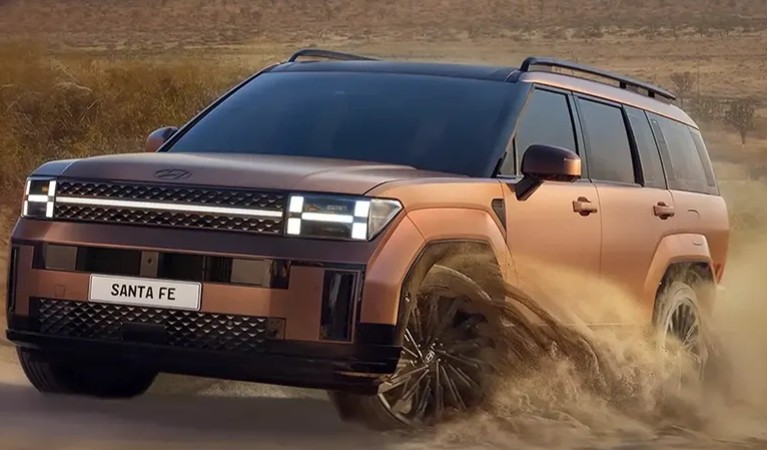
Choosing between the Hyundai Santa Fe and Toyota RAV4 looks simple until we park them side by side. Both are hugely practical SUVs, both can work brilliantly as everyday family vehicles, and both offer electrified powertrains. Yet they approach the job from noticeably different directions.
Think of the Toyota RAV4 as the efficient multitool you throw into your backpack. It is relatively compact, economical, easy to live with, and designed around everyday usefulness. The Hyundai Santa Fe feels more like the family-sized travel bag: larger, roomier, more flexible, and much better suited to buyers who regularly need to carry extra passengers.
That difference matters because these SUVs don't really occupy exactly the same space. The Santa Fe has grown into a three-row vehicle with seating for up to seven, whereas the RAV4 remains a two-row five-seat SUV. Hyundai lists 40.5 cubic feet of cargo space behind the Santa Fe Hybrid's second row and 14.6 cubic feet behind its third row. Toyota lists up to 37.8 cubic feet behind the RAV4's rear seats.
So, which should we buy?
If we want maximum practicality, passenger capacity, and a more substantial SUV experience, the Santa Fe has a compelling advantage. If fuel economy, maneuverability, and five-seat simplicity matter more, the RAV4 becomes extremely difficult to ignore.
Let's dig deeper.
Content in this publication
- Hyundai Santa Fe vs Toyota RAV4 at a Glance
- Size: Santa Fe Is the Bigger SUV
- Seating: The Biggest Difference Between Santa Fe and RAV4
- Cargo Space: Which One Carries More?
- Interior Design and Cabin Experience
- Hyundai Santa Fe vs Toyota RAV4 Hybrid
- RAV4 Plug-In Hybrid Adds Another Dimension
- Performance: Which Feels Better to Drive?
- Ride Comfort
- Fuel Economy: Toyota Takes the Advantage
- Technology and Infotainment
- Safety: Both Target Family Buyers
- Hyundai Santa Fe vs Toyota RAV4 for Families
- Which Is Better for Road Trips?
- Which Is Better for Couples or Solo Drivers?
- Towing and Outdoor Use
- Reliability and Long-Term Ownership
- Value for Money
- Styling: Rugged Box vs Familiar Crossover
- Hyundai Santa Fe Pros and Cons
- Toyota RAV4 Pros and Cons
- Hyundai Santa Fe vs Toyota RAV4: Which One Should We Buy?
- Santa Fe Hybrid vs RAV4 Hybrid: Our Pick
- Which SUV Wins Each Category?
- Conclusion: Santa Fe or RAV4?
- Frequently Asked Questions
Hyundai Santa Fe vs Toyota RAV4 at a Glance
Before disappearing down the rabbit hole of engines, cargo measurements, and trim levels, here's the easiest way to understand this comparison.
| Category | Hyundai Santa Fe | Toyota RAV4 |
|---|---|---|
| Seating | Up to 7 | 5 |
| Rows | 3 | 2 |
| Overall character | Larger family SUV | Compact everyday SUV |
| Best for | Families needing more room | Commuters and smaller families |
| Hybrid available | Yes | Yes |
| Plug-in hybrid | Market-dependent | Yes in the current U.S. lineup |
| Cargo versatility | Excellent | Excellent |
| City maneuverability | Good | Better |
| Long-trip practicality | Excellent | Very good |
| Fuel-efficiency focus | Strong | Excellent |
| Cabin feel | Spacious, modern | Functional, modern |
| Main advantage | Space | Efficiency |
The easiest decision therefore starts with one question:
Do we genuinely need a third row?
If the answer is yes, the Santa Fe immediately jumps ahead. If the answer is no, the competition becomes much closer.
Size: Santa Fe Is the Bigger SUV
The Hyundai Santa Fe has transformed considerably over recent generations. It now wears a squared-off, almost adventure-vehicle shape that makes it appear substantial even before we open the doors.
The Toyota RAV4 remains more compact.
That difference brings advantages and disadvantages.
The Santa Fe gives us more cabin flexibility and the ability to accommodate additional passengers. But the RAV4 is easier to squeeze into urban parking spaces, garages, and narrow streets.
Imagine using both in a crowded supermarket parking lot. The RAV4 generally feels like the vehicle we can thread into a gap without much thought. The Santa Fe demands slightly more awareness of where its corners are.
On a family road trip, however, the equation reverses.
Suddenly those extra dimensions stop being an inconvenience and start feeling like luxury.
Which SUV Is Better for City Driving?
For purely urban driving, we'd lean toward the Toyota RAV4.
Its smaller footprint makes it especially attractive if our typical routine involves commuting, school runs, underground parking garages, or navigating congested downtown streets.
The Santa Fe isn't unwieldy, but we're still carrying around considerably more vehicle.
For suburban life, the additional dimensions matter much less, making the Santa Fe's extra space easier to appreciate.
Seating: The Biggest Difference Between Santa Fe and RAV4
Here's where the comparison changes dramatically.
The Toyota RAV4 seats five people across two rows.
The Hyundai Santa Fe provides three-row seating, with configurations accommodating six or seven passengers depending on trim and seating arrangement. Hyundai's current specifications list seven-passenger versions as well as trims with second-row captain's chairs.
That's not a small difference.
It's potentially the deciding factor.
Santa Fe Third-Row Practicality
We shouldn't mistake the Santa Fe's third row for limousine seating. Like most SUVs of this size, those rear seats make the most sense for children, teenagers, or occasional adult passengers.
But having them is incredibly useful.
Picture taking your children and two of their friends somewhere. In the RAV4, somebody probably needs another car.
In the Santa Fe?
Fold up the third row and we're moving.
That's precisely why three-row SUVs appeal to families even when they rarely carry six or seven people.
RAV4 Five-Seat Simplicity
The RAV4's limitation can also become an advantage.
Because Toyota doesn't have to squeeze another row behind the rear seats, the cabin design remains straightforward. Five passengers get a practical two-row layout without compromising cargo room to accommodate unused seats.
Couples, smaller families, commuters, and empty nesters may never miss the extra chairs.
Why buy space we'll never use?
Cargo Space: Which One Carries More?
Cargo capacity is another fascinating part of the Hyundai Santa Fe vs Toyota RAV4 battle because raw numbers don't tell the entire story.
Toyota lists up to 37.8 cubic feet of cargo capacity in the 2026 RAV4 and up to 70.4 cubic feet with the second-row seats folded.
The Santa Fe Hybrid offers 40.5 cubic feet behind the second row and 79.6 cubic feet behind the front seats, according to Hyundai's current specifications. With all three rows upright, 14.6 cubic feet remains behind the third row.
In practical terms, the Santa Fe is the cargo champion.
But There's a Catch
Using the Santa Fe's third row reduces luggage room considerably.
That's simply physics.
Seven passengers plus seven people's luggage is a demanding assignment for almost any midsize crossover.
For airport duty or long vacations, we may find ourselves folding one third-row seat, using roof storage, or packing creatively.
With only five people onboard, however, the Santa Fe becomes exceptionally useful.
Its squared-off body also helps make the cargo area feel less compromised by styling.
Best Choice for Families With Lots of Gear
Santa Fe.
Camping equipment, sports bags, strollers, groceries, suitcases, and the mysterious collection of objects children somehow require on every journey all benefit from extra room.
For ordinary day-to-day cargo duties, though, the RAV4 still offers plenty of useful space.
Interior Design and Cabin Experience
Hyundai has become increasingly adventurous with interior design, and the Santa Fe reflects that philosophy.
Its wide dashboard, large displays, storage areas, and upright architecture produce a cabin that feels airy and modern.
Toyota's RAV4 takes a somewhat different approach.
Its interior emphasizes usability and durable everyday functionality rather than trying to imitate a luxury lounge.
Neither philosophy is inherently better.
If we enjoy a cabin that makes a strong visual impression every time we climb aboard, the Santa Fe will probably appeal more.
If we prefer something intuitive and relatively straightforward, the RAV4 fits the brief beautifully.
Santa Fe Interior Advantages
The Santa Fe's additional size gives designers more freedom.
We notice it through:
- greater passenger flexibility
- additional seating capacity
- generous storage options
- broad dashboard design
- available second-row captain's chairs
- more family-oriented cabin versatility
Upper Santa Fe trims can also add equipment such as ventilated front seats, heated second-row seating, memory settings, and rear side-window sunshades.
That's exactly the kind of equipment that makes a long family journey noticeably more comfortable.
RAV4 Interior Advantages
The RAV4 counters with efficiency of design.
Everything doesn't need to be oversized to work well.
Toyota's formula makes sense for someone who spends most journeys with one, two, or perhaps four occupants. We're not dedicating vehicle length to a third row we rarely use.
That's refreshing.
Hyundai Santa Fe vs Toyota RAV4 Hybrid
Now things get particularly interesting.
Hybrid technology suits these SUVs extremely well because both are likely to spend plenty of time doing mundane everyday jobs rather than blasting down racetracks.
Hyundai currently offers a Santa Fe Hybrid using a 1.6-liter turbocharged four-cylinder hybrid system producing a combined 231 horsepower. Hyundai rates the front-wheel-drive version at up to 37 mpg city, 36 mpg highway, and 36 mpg combined in the U.S.
Toyota has gone even further with the latest U.S.-market RAV4. The 2026 generation is offered with hybrid or plug-in-hybrid powertrains rather than a conventional gasoline-only setup. Toyota advertises fuel-economy estimates reaching 47 mpg city and 40 mpg highway on certain RAV4 configurations.
Exact figures vary by trim, drivetrain, market, and model year, so we'd always compare the specific versions available locally.
Still, the overall pattern is clear.
Which Hybrid Makes More Sense?
For maximum efficiency, the RAV4 has the edge.
For combining hybrid efficiency with three-row practicality, the Santa Fe Hybrid makes a remarkably convincing case.
It's a classic quality-versus-quantity equation, except here we're really comparing efficiency versus space.
RAV4 Plug-In Hybrid Adds Another Dimension
Toyota also offers a plug-in-hybrid RAV4.
The current U.S. version provides an EPA-estimated all-electric range of up to 54 miles in SE form, allowing some owners to complete everyday commutes with little or no gasoline consumption when regularly charging at home.
For the right owner, that's significant.
Imagine having a 15-mile commute.
You may be interested in reading Hyundai Santa Fe vs Nissan Rogue: Which SUV Should You Buy?
Charge overnight, drive to work, come home, plug it back in, repeat.
Gasoline becomes something we use primarily for longer trips.
The value proposition depends heavily on purchase price, charging access, electricity rates, gasoline prices, and local incentives, but the technology gives the RAV4 another weapon.
Performance: Which Feels Better to Drive?
Neither SUV exists primarily to entertain us on a winding mountain road.
That's perfectly fine.
Most buyers care far more about smooth acceleration, predictable braking, highway comfort, and low-speed refinement.
The RAV4 benefits from being the smaller vehicle. It tends to feel more manageable and nimble in everyday environments.
The Santa Fe trades some of that compact agility for a more substantial road presence.
Highway Driving
This is where we'd start leaning back toward the Hyundai.
A larger body and spacious cabin make the Santa Fe feel naturally suited to long-distance family travel.
Highway miles are often less stressful when everyone has breathing room.
The RAV4 remains perfectly capable of devouring long journeys, of course. But if we're regularly carrying four or five people plus luggage, the Santa Fe's additional dimensions begin paying dividends with every mile.
Urban Driving
The RAV4 strikes back immediately.
Smaller vehicles generally make urban life easier.
Less vehicle to maneuver means less mental arithmetic when parking, reversing, making tight turns, or navigating older streets.
If our SUV spends 90% of its existence moving between home, work, school, and the grocery store, that simplicity matters more than a third row sitting empty.
Ride Comfort
Comfort is subjective, so we'd always recommend driving both before buying.
Yet vehicle size and mission provide clues.
The Santa Fe aims toward family touring and passenger comfort, while the RAV4 walks the line between family crossover and practical compact SUV.
On rough roads, wheel size matters too.
Huge wheels may look fantastic in dealership photographs, but tires with taller sidewalls can sometimes provide a more forgiving ride.
Don't automatically assume the most expensive trim is therefore the most comfortable.
Sometimes the humble version glides over potholes better.
Fuel Economy: Toyota Takes the Advantage
This may be one of the strongest reasons to pick the Toyota.
The RAV4 is smaller and its current powertrain lineup places enormous emphasis on electrification and efficiency. Toyota says the latest RAV4 reaches up to an estimated 47 mpg city in certain configurations.
The Santa Fe Hybrid remains efficient for something with three rows, but we're still moving a larger vehicle.
We can't cheat physics forever.
Who Should Care Most About MPG?
Fuel economy becomes especially important if we:
- drive 15,000–20,000 miles annually
- commute in heavy traffic
- face expensive gasoline
- keep vehicles for many years
- rarely need more than five seats
In that scenario, shaving several miles per gallon from consumption can become meaningful over the ownership period.
If we drive relatively little or genuinely need seven-seat capability, the Santa Fe's additional utility may easily justify using slightly more fuel.
Technology and Infotainment
Technology has gone from pleasant bonus to central part of modern vehicle ownership.
We interact with the infotainment screen virtually every journey, so poor interface design becomes irritating surprisingly quickly.
Hyundai equips current Santa Fe models with a large 12.3-inch touchscreen, with wireless Apple CarPlay and Android Auto available as standard equipment on current U.S. versions.
Toyota's redesigned RAV4 likewise moves strongly toward the connected, screen-driven experience expected from a modern SUV.
The differences increasingly come down to personal preference rather than one vehicle simply lacking technology.
Our recommendation?
Spend ten minutes inside each one without a salesperson talking.
Pair the phone.
Adjust the climate control.
Find a radio station.
Enter a destination.
Switch between menus.
That little experiment tells us more about everyday usability than reading fifty equipment lists.
Safety: Both Target Family Buyers
A modern Santa Fe or RAV4 can be equipped with a wide collection of driver-assistance systems.
Depending on year and trim, features may include technology designed to assist with lane keeping, forward-collision avoidance, blind-spot awareness, adaptive cruise control, parking, and surrounding traffic detection.
But we'd avoid choosing solely by the number of electronic acronyms in a brochure.
Instead, compare the exact trim levels.
Some of the most useful safety or convenience features may be standard on one version but optional or trim-dependent on another.
For families, features like good outward visibility, straightforward controls, rear-seat access, and usable child-seat mounting points can be every bit as important as another dashboard icon.
Hyundai Santa Fe vs Toyota RAV4 for Families
This sounds like an easy Santa Fe victory.
And for larger families, it probably is.
Three rows fundamentally change what a vehicle can do.
Two children plus grandparents?
Santa Fe.
Three children?
Santa Fe.
Regular carpools?
Santa Fe.
Need occasional seats for visiting relatives?
Again, Santa Fe.
But a family of three or four may actually find the RAV4 easier to own.
There's no prize for hauling around unused seats.
Best for a Family of Four
This becomes surprisingly close.
We'd choose the RAV4 if fuel efficiency and everyday convenience dominate.
We'd choose the Santa Fe if vacations, road trips, sports equipment, dogs, or occasional additional passengers routinely test the limits of a smaller SUV.
Best for a Family of Five or More
Santa Fe.
This is where the Hyundai's packaging advantage becomes difficult to overcome.
Which Is Better for Road Trips?
For road trips, we'd generally choose the Hyundai Santa Fe.
Extra interior volume makes a difference after four hours on the road.
Passengers can spread out.
Bags have somewhere to go.
Families have more flexibility when deciding who sits where.
The RAV4 might consume less fuel along the way, making it attractive for high-mileage travelers, but space becomes increasingly valuable as journey length increases.
A small difference in cabin room feels irrelevant during a ten-minute drive.
After eight hours?
It can feel enormous.
Which Is Better for Couples or Solo Drivers?
RAV4.
You may be interested in readingHyundai Santa Fe vs Nissan Rogue: Which SUV Should You Buy?You may be interested in reading
Hyundai Santa Fe vs Kia Sportage: Which SUV Is Better?Unless we frequently transport large equipment, there's little reason for one or two people to carry three rows everywhere.
The Toyota provides SUV practicality without becoming unnecessarily large.
This is particularly true for people living in cities, apartment buildings, or neighborhoods where parking space is precious.
The Santa Fe still works perfectly well for couples — particularly active buyers with dogs, bicycles, outdoor equipment, or frequent guests — but the RAV4 is arguably the more logical default.
Towing and Outdoor Use
Here's an area where buyers need to pay careful attention to specifications.
Towing limits vary according to engine, trim, drivetrain, equipment, and market.
The current U.S. RAV4 lineup advertises maximum towing capacity of up to 3,500 pounds on properly configured versions.
Rather than assuming every RAV4 or Santa Fe can tow the same amount, check the exact vehicle.
That's particularly important if we're pulling a camper, boat, or trailer.
What About Light Off-Road Driving?
Both vehicles are crossovers rather than hardcore body-on-frame off-roaders.
That doesn't mean we need to panic when the pavement ends.
All-wheel-drive configurations can be very useful for snow, gravel roads, wet grass, campsites, and slippery conditions.
But if our weekends involve deep mud, rock crawling, and serious trails, neither should automatically be treated like a Jeep Wrangler or Toyota Land Cruiser.
For typical adventure use, both can work well.
Reliability and Long-Term Ownership
Toyota's reputation for long-term dependability is one of the RAV4's strongest selling points.
That reputation also contributes to why so many buyers are willing to accept a relatively conservative ownership experience: they simply want an SUV that can become a dependable appliance for family life.
Hyundai counters with increasingly competitive vehicles and generous warranty coverage in markets such as the United States.
Still, reliability isn't merely a badge on the grille.
A well-maintained vehicle with proper service history will usually be a safer used-car proposition than a neglected example from a supposedly bulletproof brand.
Buying Used Changes the Equation
For used examples, we would focus heavily on:
- documented maintenance history
- accident history
- mileage
- engine and transmission behavior
- hybrid-system condition where relevant
- tires and suspension wear
- recalls and campaign completion
- evidence of water damage
- warning lights
- previous ownership
Model year matters too.
A Santa Fe built five years ago and a brand-new Santa Fe can be dramatically different vehicles.
The same is true of the RAV4.
Never apply a review of one generation blindly to another.
Value for Money
Value isn't the same thing as price.
A cheaper SUV can be worse value if it doesn't do what we need.
Suppose the Santa Fe costs more than an equivalent RAV4.
If we regularly need six seats, the Hyundai may still represent better value because buying the RAV4 doesn't solve the problem at any price.
Conversely, paying extra for a Santa Fe because it technically carries seven people makes little sense if we have never transported more than four.
Santa Fe Value Proposition
The Santa Fe's value lies in how much vehicle we get.
We receive three rows, considerable cargo versatility, substantial road presence, and a cabin designed around family life.
RAV4 Value Proposition
The RAV4 sells efficiency.
We're getting enough SUV rather than the maximum amount of SUV.
That's a subtle but important distinction.
Styling: Rugged Box vs Familiar Crossover
Design is wonderfully subjective.
The Santa Fe takes the bigger risk.
Its boxy proportions make it visually distinctive, and that's refreshing in a segment where SUVs sometimes resemble slightly different sizes of the same jelly bean.
Some people will love it.
Others won't.
The RAV4 maintains a recognizably Toyota SUV identity, although the latest generation adopts a noticeably refreshed appearance. Toyota describes the redesigned 2026 model as having a more upright cargo area and updated SUV proportions.
Neither choice is wrong.
We have to look at the vehicle every morning.
Buy the one that makes us smile.
Hyundai Santa Fe Pros and Cons
The Hyundai's strengths revolve around versatility.
Pros:
- Three-row seating
- Up to seven-passenger capacity
- Excellent cargo flexibility
- Spacious interior
- Strong family-road-trip credentials
- Hybrid option
- Modern cabin presentation
- Available captain's chairs
Cons:
- Larger footprint
- More vehicle than some owners need
- Third-row use reduces cargo capacity
- Hybrid efficiency generally cannot match the best RAV4 figures
- Parking can be slightly more cumbersome
Toyota RAV4 Pros and Cons
The Toyota follows a different recipe.
Pros:
- Excellent fuel-economy potential
- Easier to maneuver
- Useful cargo area
- Strong reputation as a practical everyday SUV
- Hybrid-focused current lineup
- Plug-in-hybrid option
- Ideal size for many couples and smaller families
Cons:
- Only two rows
- Five-seat maximum
- Less overall interior space than Santa Fe
- Cannot replicate Santa Fe's passenger versatility
- Large families may quickly outgrow it
Hyundai Santa Fe vs Toyota RAV4: Which One Should We Buy?
Here's the simplest answer.
Buy the Hyundai Santa Fe if…
We regularly carry more than five people, want significantly more cabin flexibility, take frequent family road trips, need more cargo capacity, or simply enjoy the feeling of a larger SUV.
The Santa Fe is particularly persuasive for families that aren't quite ready for something as large as a full-size SUV but need more flexibility than a traditional compact crossover provides.
Buy the Toyota RAV4 if…
We rarely need more than five seats, prioritize fuel economy, want something easier to park, spend substantial time commuting, or simply don't need the extra bulk of the Santa Fe.
The RAV4 fits neatly into everyday life.
That's arguably its superpower.
Santa Fe Hybrid vs RAV4 Hybrid: Our Pick
If we're judging purely as a hybrid commuter, we'd choose the RAV4.
Its emphasis on fuel efficiency, smaller dimensions, and current hybrid-focused lineup makes a tremendous amount of sense for everyday driving. The latest RAV4 generation is offered as either a hybrid or plug-in hybrid in the U.S. market.
But add three children, grandparents, or regular carpools to the equation?
Everything changes.
Then we'd happily sacrifice some efficiency and take the Santa Fe Hybrid.
It gives us something the RAV4 simply cannot manufacture through clever engineering:
another row of seats.
Which SUV Wins Each Category?
If we had to score the comparison quickly, we'd call it this way:
- Passenger space: Hyundai Santa Fe
- Seating capacity: Hyundai Santa Fe
- Cargo versatility: Hyundai Santa Fe
- Fuel efficiency: Toyota RAV4
- City driving: Toyota RAV4
- Parking ease: Toyota RAV4
- Family road trips: Hyundai Santa Fe
- Large families: Hyundai Santa Fe
- Couples: Toyota RAV4
- Daily commuting: Toyota RAV4
- Hybrid efficiency: Toyota RAV4
- Cabin flexibility: Hyundai Santa Fe
Notice something?
There isn't one universal winner.
There are two SUVs designed around different definitions of practicality.
Conclusion: Santa Fe or RAV4?
The Hyundai Santa Fe vs Toyota RAV4 comparison isn't really about discovering which SUV is objectively superior.
It's about deciding how much SUV we actually need.
The Santa Fe is the better choice when space sits near the top of the priority list. Three rows, up to seven seats, generous cargo flexibility, and a roomy cabin make it an excellent family machine. It's the SUV we'd rather have when the entire household is coming along for the journey.
The RAV4 is the smarter choice when efficiency and simplicity matter more. It carries five people, provides a useful cargo area, fits more comfortably into congested urban life, and delivers excellent fuel-economy potential — especially in its latest electrified forms.
We can boil the whole debate down to one sentence:
Choose the Santa Fe when you need more SUV; choose the RAV4 when you want to make the most of less.
Neither philosophy is wrong.
And that's precisely why both make so much sense.
Frequently Asked Questions
1. Is the Hyundai Santa Fe bigger than the Toyota RAV4?
Yes. The Santa Fe is the larger and more passenger-focused vehicle. Most importantly, it offers three rows of seating, while the RAV4 uses a two-row, five-passenger configuration. That makes the Santa Fe much more suitable for families that regularly need additional seats.
2. Which is more fuel-efficient, the Hyundai Santa Fe or Toyota RAV4?
The Toyota RAV4 generally has the advantage when fuel economy is the priority. Toyota's current U.S. RAV4 lineup is fully electrified with hybrid and plug-in-hybrid versions, and certain configurations are rated at up to an estimated 47 mpg city and 40 mpg highway. The Santa Fe Hybrid remains impressively efficient for a larger three-row SUV.
3. Does the Toyota RAV4 have a third row?
No. The current Toyota RAV4 is a two-row SUV designed for five passengers. If we need three-row seating, the Hyundai Santa Fe has a major advantage because it can accommodate up to seven passengers depending on configuration.
You may be interested in readingHyundai Santa Fe vs Nissan Rogue: Which SUV Should You Buy?You may be interested in reading
Hyundai Santa Fe vs Kia Sportage: Which SUV Is Better?You may be interested in reading
Hyundai Santa Fe vs Honda Pilot: Which Three-Row SUV Is Better?4. Which is better for a family, Santa Fe or RAV4?
For a larger family, we'd choose the Santa Fe because its third row and additional interior capacity provide much greater flexibility. For a family of three or four that values fuel economy and easy maneuverability, the RAV4 may actually be the better everyday vehicle.
5. Is the Santa Fe Hybrid better than the RAV4 Hybrid?
It depends on what "better" means. The RAV4 is particularly appealing when maximizing fuel efficiency is the goal, while the Santa Fe Hybrid combines electrified driving with three-row passenger capacity. If we need seven-seat versatility, we'd choose the Santa Fe. If five seats are enough and fuel consumption matters most, we'd lean toward the RAV4.
If you want to know other articles similar to Hyundai Santa Fe vs Toyota RAV4: Which SUV Is Better? you can visit the category Models.
Nissan Rogue Dark Armor vs Platinum: Which Trim Is Better?

Kia Sorento Models: Complete Guide to Trims, Engines and Versions
BYD Shark 6 vs Ranger vs HiLux: Which Ute Makes the Most Sense in 2026?
BYD Shark 6 vs MG U9: Which Ute Makes More Sense in 2026?
BYD Shark 6 vs Ford Ranger Raptor: Which Performance Ute Is Better in 2026?
BYD Shark 6 vs Kia Tasman: Which Ute Is Better?
Leave a Reply
More content of your interest