

Hyundai Santa Fe Versus Honda CR-V: Which SUV Is Better?

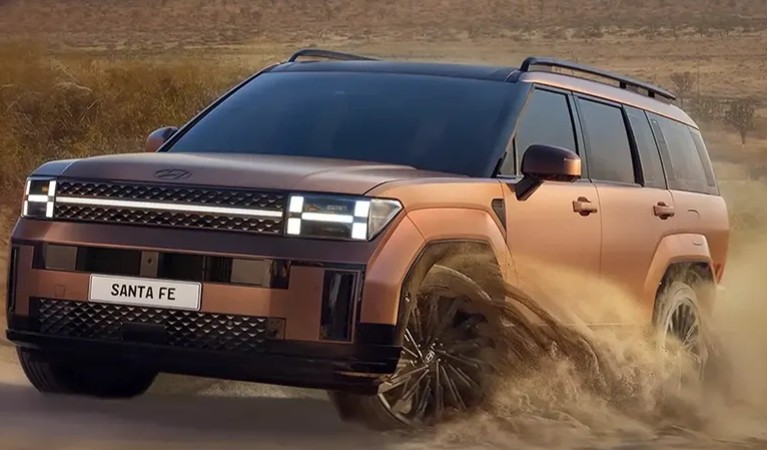
The Hyundai Santa Fe versus Honda CR-V comparison looks straightforward until we park these two SUVs next to each other. Then the difference becomes obvious. They may overlap on a family shopper's shortlist, but they solve different problems.
The Honda CR-V is the lighter, more compact, five-seat choice. It focuses on everyday practicality, efficiency, maneuverability, and simple usability. The Hyundai Santa Fe has moved farther up the family-SUV ladder. The current model offers three rows of seating, more overall space, substantially stronger available power, and the square-edged utility of something that feels almost like a midsize SUV.
So, which should we choose?
If our priorities are low fuel consumption, easy city driving, and enough space for a family of four or five, the CR-V makes an extremely persuasive case. If we regularly carry more passengers, want stronger performance, need greater towing ability, or simply prefer a roomier SUV, the Santa Fe starts pulling away.
For this comparison, we're focusing primarily on the 2026 U.S.-market Hyundai Santa Fe and 2026 Honda CR-V, including their gasoline and hybrid variants where relevant.
Content in this publication
- Hyundai Santa Fe vs Honda CR-V at a Glance
- Size and Exterior Design
- Interior Space: Santa Fe Has the Big Advantage
- Cargo Space: Closer Than You Might Expect
- Hyundai Santa Fe Versus Honda CR-V Performance
- Santa Fe Hybrid vs CR-V Hybrid
- Fuel Economy: Honda Strikes Back
- Driving Experience and Comfort
- Towing Capacity: Santa Fe Wins Easily
- Technology and Infotainment
- Safety: Both Take It Seriously
- Honda CR-V Versus Hyundai Santa Fe Reliability
- Ownership Costs
- Hyundai Santa Fe vs Honda CR-V for City Driving
- Which Is Better for Road Trips?
- Which SUV Is Better for Snow and Bad Weather?
- Santa Fe vs CR-V for Camping
- Which SUV Is Easier to Live With Every Day?
- Reasons to Buy the Hyundai Santa Fe
- Reasons to Buy the Honda CR-V
- Hyundai Santa Fe Versus Honda CR-V: Which Hybrid Should We Buy?
- Hyundai Santa Fe Versus Honda CR-V: Which One Should You Buy?
- Final Verdict
- Frequently Asked Questions
Hyundai Santa Fe vs Honda CR-V at a Glance
Before diving into the details, here's the central difference between these SUVs.
| Category | Hyundai Santa Fe | Honda CR-V |
|---|---|---|
| Seating | Up to 7 | 5 |
| Standard engine | 2.5L turbo four-cylinder | 1.5L turbo four-cylinder |
| Gasoline horsepower | 277 hp | 190 hp |
| Hybrid output | 231 hp combined | 204 hp combined |
| Maximum cargo space | 79.6 cu ft behind front seats | Up to 76.5 cu ft |
| Maximum towing | Up to 4,500 lbs depending on configuration | Up to 1,500 lbs gas / 1,000 lbs hybrid |
| Best role | Larger family SUV | Efficient compact family SUV |
Hyundai lists 277 horsepower for the Santa Fe's 2.5-liter turbo engine and 231 combined horsepower for its hybrid powertrain. Honda's 2026 CR-V produces 190 horsepower with its turbocharged gasoline engine and 204 total system horsepower in hybrid form.
Already we can see why this isn't quite an apples-to-apples comparison. It's more like comparing a large backpack with a compact rolling suitcase. Both carry our stuff, but they approach the job differently.
Size and Exterior Design
The latest Santa Fe has one of the most distinctive shapes in the family-SUV market. Hyundai abandoned the soft, rounded appearance associated with older generations and replaced it with a tall, boxy silhouette.
The result makes the Santa Fe look larger than a traditional compact crossover because, practically speaking, it is.
The CR-V follows a much more conventional formula. Its proportions are clean and mature rather than adventurous. Honda clearly designed it around efficiency, visibility, and everyday usefulness instead of trying to make it resemble an off-road vehicle.
Which SUV Looks Better?
That's subjective, but they communicate completely different personalities.
The Santa Fe is the SUV we choose if we want something people notice in a parking lot. Its squared-off rear, broad body, and rugged styling give it visual presence.
The CR-V takes the opposite route. It looks tidy rather than dramatic. We probably won't turn around after parking it just to admire it, but its design is unlikely to become tiresome either.
Our Design Verdict
For personality: Santa Fe.
For understated simplicity: CR-V.
Neither approach is wrong. It comes down to whether we want our SUV to shout or quietly get on with the job.
Interior Space: Santa Fe Has the Big Advantage
This is where the comparison starts separating clearly.
The Honda CR-V is a five-passenger, two-row SUV. The Hyundai Santa Fe provides three rows, giving us room for up to seven occupants depending on configuration.
That third row changes everything.
A family with two children may never need it. A family regularly carrying grandparents, friends, or three-plus children could find it invaluable.
Hyundai lists approximately 151 cubic feet of passenger volume for certain 2026 Santa Fe Hybrid configurations, illustrating just how much cabin space the larger body provides.
Is the Santa Fe Third Row Actually Useful?
We should keep expectations realistic.
The Santa Fe isn't a Hyundai Palisade or Honda Pilot. Its third row works best for children, teenagers, and occasional adult use rather than carrying six-foot passengers across several states.
Still, having compact third-row seats is much better than not having them when we suddenly need to transport six people.
That's the Santa Fe's secret weapon.
The CR-V simply can't match it because five seats are all we get.
Which Is Better for a Family?
For a household of three, four, or five people, the CR-V may actually be simpler. Nobody has to climb into a third row, and the cabin offers excellent practical space without the exterior bulk of a larger SUV.
Once our passenger needs regularly exceed five, however, the answer becomes easy:
Santa Fe wins.
Cargo Space: Closer Than You Might Expect
Here's an interesting twist.
Although the Santa Fe is considerably larger and has a third row, the CR-V is remarkably good at packaging cargo space.
Honda lists as much as 39.3 cubic feet behind the second row and 76.5 cubic feet with the rear seats folded on certain gasoline CR-V configurations. Hybrid versions sacrifice a little space, providing approximately 36.3 cubic feet behind the second row and 71.8 cubic feet maximum.
The Santa Fe offers approximately 40.5 cubic feet behind its second row and 79.6 cubic feet behind the front seats.
So when both SUVs are configured primarily for cargo rather than passengers, the difference isn't enormous.
Where the Santa Fe Still Wins
The Santa Fe's squarer body makes bulky cargo easier to accommodate.
Think:
- Camping equipment
- Large suitcases
- Baby gear
- Furniture boxes
- Sports equipment
- Pet crates
- Home-improvement supplies
Its broad, upright cargo area feels like opening a storage room rather than squeezing luggage through a narrow hatch.
The CR-V counters with excellent everyday packaging. Groceries, strollers, backpacks, and luggage disappear into its cargo area surprisingly easily.
Cargo Winner
Santa Fe by a small margin for total utility.
But the CR-V punches far above its weight.
Hyundai Santa Fe Versus Honda CR-V Performance
Now the gap gets much larger.
The standard 2026 Santa Fe uses a 2.5-liter turbocharged four-cylinder producing 277 horsepower. The gasoline CR-V uses a 1.5-liter turbocharged four-cylinder producing 190 horsepower.
That's an 87-horsepower difference.
And yes, we can feel it.
Santa Fe Gasoline Performance
The Santa Fe doesn't behave like a sports SUV, but its 277 horsepower gives it effortless motorway merging and reassuring passing power.
Press the accelerator and there's enough muscle to move the larger body without making the engine sound as though it has received an emergency memo.
Loaded with passengers and luggage, that reserve power becomes even more valuable.
Honda CR-V Gasoline Performance
The CR-V's 190-horsepower turbo engine takes a calmer approach.
For commuting, suburban driving, and regular highway cruising, it gets the job done comfortably. Honda's own figures list the engine at 190 horsepower.
What it doesn't provide is the Santa Fe's shove.
Put five passengers onboard, point the vehicle uphill, and ask for a rapid overtake, and we become much more aware that the CR-V prioritizes efficiency over outright punch.
Gasoline Performance Winner
Hyundai Santa Fe, comfortably.
Santa Fe Hybrid vs CR-V Hybrid
Now things become more interesting.
Hyundai's Santa Fe Hybrid combines a 1.6-liter turbocharged engine with electrification for 231 horsepower and 271 lb-ft of combined torque.
Honda's CR-V Hybrid delivers 204 total system horsepower.
The Santa Fe Hybrid therefore remains the stronger vehicle on paper, but raw horsepower isn't the only story.
Honda's hybrid system feels particularly appropriate for city driving, where electric assistance, regenerative braking, and smooth low-speed operation suit the CR-V's mission.
The Hyundai hybrid has a different appeal: it gives us useful efficiency without asking us to sacrifice the Santa Fe's three-row flexibility.
Which Hybrid Makes More Sense?
Choose the CR-V Hybrid if fuel efficiency is near the top of the priority list.
Choose the Santa Fe Hybrid if space and family practicality come first but we still want respectable mileage.
That's essentially the difference.
Fuel Economy: Honda Strikes Back
If horsepower belongs to Hyundai, fuel economy belongs to Honda.
The 2026 CR-V Hybrid can achieve EPA ratings as high as 43 mpg city, 36 highway, and 40 combined in certain front-wheel-drive configurations. Honda also quotes approximately 40 city/34 highway for other hybrid variants, depending on configuration.
The gasoline CR-V reaches around 28 city/33 highway/30 combined mpg with front-wheel drive.
You may be interested in reading Hyundai Santa Fe and Palisade: Which Hyundai SUV Is Better?
Hyundai's Santa Fe Hybrid is rated at 37 city/36 highway/36 combined mpg with front-wheel drive, or about 35/34/34 mpg with all-wheel drive.
That's good for something this roomy, but the CR-V Hybrid still holds the efficiency advantage.
What Does That Mean in Daily Driving?
If we drive 15,000 miles each year, even a few miles per gallon can matter.
The driver dealing with congested commutes every morning will probably appreciate the CR-V Hybrid's efficiency far more than the Santa Fe's extra seats.
The family taking weekend road trips with six passengers may feel exactly the opposite.
Fuel economy is important, but unused space costs nothing. Missing space can ruin a trip.
Fuel Economy Winner
Honda CR-V Hybrid.
Driving Experience and Comfort
The CR-V benefits from being smaller.
It feels easier to place on narrow streets, easier to maneuver through packed parking lots, and generally less intimidating in urban environments.
We sit in it and quickly understand where the corners of the vehicle are. That's exactly what many crossover buyers want.
The Santa Fe feels more substantial.
The longer, wider impression gives us more of that "big SUV" sensation behind the wheel. That can feel reassuring on long journeys, though it naturally requires more room when navigating tight streets.
Which Is Better on Long Trips?
We'd lean toward the Santa Fe when passenger comfort is the priority.
There's simply more vehicle around us, more seating flexibility, and more capacity for luggage.
For one or two people covering long highway distances, however, the CR-V's fuel economy may make it the smarter traveling companion.
It's the difference between booking a spacious hotel room and traveling with carry-on luggage. One gives us room to spread out; the other makes the journey simpler.
Towing Capacity: Santa Fe Wins Easily
Anyone intending to tow should pay close attention here.
The CR-V's maximum towing capability is modest. Honda lists 1,500 pounds for gasoline versions and 1,000 pounds for hybrid trims.
The Santa Fe can handle significantly more. Hyundai indicates that towing capacity varies by configuration and can reach up to 4,500 pounds on appropriately equipped versions.
That's not a subtle difference.
What Can Each SUV Tow?
The CR-V makes sense for relatively light loads such as a small utility trailer.
The Santa Fe opens the door to substantially heavier recreational equipment when properly configured.
We should always verify the exact trim, drivetrain, hitch equipment, trailer-brake requirements, payload, and owner's manual before towing. Maximum advertised capacity doesn't mean every Santa Fe can tow 4,500 pounds.
Towing Winner
Hyundai Santa Fe by a landslide.
Technology and Infotainment
Hyundai has become particularly aggressive with cabin technology.
Even the 2026 Santa Fe SE features a 12.3-inch touchscreen, wireless Apple CarPlay, wireless Android Auto, Bluelink+, and multiple USB charging ports.
Honda takes a slightly more restrained approach, though the current CR-V includes modern essentials such as wireless Apple CarPlay and Android Auto, while upper configurations add features including Google built-in.
Hyundai Feels More Futuristic
The Santa Fe's dashboard design suits its adventurous exterior. Large screens and a more architectural cabin create something closer to a modern lounge.
Honda concentrates on intuitive operation.
Its interior doesn't scream for our attention. Buttons are where we expect them, visibility is good, and the cabin makes sense quickly.
That matters.
Fancy technology is wonderful until adjusting the temperature feels like operating an airport control tower.
Technology Winner
Santa Fe for visual impact and screen-heavy presentation.
CR-V for straightforward usability.
Safety: Both Take It Seriously
Both manufacturers provide extensive driver-assistance technology.
The Santa Fe includes standard systems such as blind-spot detection, lane-departure warning and prevention, and rear automatic braking according to IIHS equipment listings.
More importantly, the 2026 Hyundai Santa Fe is an IIHS Top Safety Pick+. IIHS lists good ratings in several major crashworthiness categories, with the award applying to qualifying 2026 models.
The CR-V offers Honda Sensing driver-assistance technology across the lineup, including systems designed to help with collision avoidance, lane management, and adaptive cruising.
A Note About Safety Ratings
Safety ratings change as testing standards evolve.
That's especially important because IIHS has recently introduced tougher evaluations covering areas such as rear-seat protection and whiplash prevention. Buyers comparing exact builds should therefore check current IIHS and NHTSA results rather than relying on a badge remembered from a previous model year.
Honda CR-V Versus Hyundai Santa Fe Reliability
This is one of the questions buyers ask most often, and it deserves a careful answer.
Honda has built an enormous reputation around durable family vehicles, and the CR-V has been part of that story for decades.
Hyundai, meanwhile, backs the Santa Fe with one of the more generous new-vehicle warranty structures in the U.S. market, which can make ownership more reassuring during the early years.
But reliability doesn't exist in a vacuum.
Engine choice, maintenance history, driving conditions, manufacturing changes, and even software updates can make two examples of the same model age differently.
Which Would We Keep for Ten Years?
If we're choosing based purely on historical brand confidence and a simpler five-passenger mission, the CR-V has a reassuring case.
But that doesn't automatically make the current Santa Fe unreliable.
The more useful question is:
Which vehicle gives us the space and capability we'll actually need for the next decade?
Saving money by buying the smaller SUV is pointless if our family outgrows it three years later.
Ownership Costs
This category extends far beyond fuel.
We should consider:
- Purchase price
- Insurance
- Tires
- Scheduled maintenance
- Fuel
- Financing
- Depreciation
- Registration
- Potential repairs
The CR-V's smaller size and superior fuel economy—particularly in hybrid form—give it a natural advantage when minimizing running costs is the goal.
The Santa Fe asks us to operate more vehicle, but it also delivers capabilities that might eliminate the need to upgrade to something larger later.
That's an important distinction.
Cheaper Isn't Always Better Value
Suppose we save money with the CR-V but eventually need a third row.
Did we really save?
Likewise, buying a seven-seat Santa Fe for one person commuting alone every day is like renting a conference room to write an email. Nice to have, perhaps, but unnecessary.
The best value depends on whether we use what we're paying for.
Hyundai Santa Fe vs Honda CR-V for City Driving
The CR-V gets our vote.
Its five-passenger layout and compact footprint make more sense in congested areas. Parking is easier, fuel consumption is lower, and there's still enough cargo capacity for most everyday needs.
The CR-V feels like it was designed around normal life: school runs, supermarkets, office commutes, weekend errands.
The Santa Fe can obviously do those things too, but we're carrying extra size everywhere we go.
City Driving Winner
Honda CR-V.
Which Is Better for Road Trips?
This depends largely on how many people we're bringing.
You may be interested in readingHyundai Santa Fe and Palisade: Which Hyundai SUV Is Better?You may be interested in reading
Hyundai Santa Fe or Similar Car Rental: What Does It Actually Mean?For two adults and perhaps one or two children, the CR-V Hybrid is compelling. Excellent fuel economy and plentiful luggage space make it a road-trip machine that doesn't constantly stare hungrily at fuel stations.
For five or more travelers, the Santa Fe becomes much more attractive.
Passengers get additional seating flexibility, luggage is easier to organize, and the stronger powertrains feel more relaxed when the vehicle is fully loaded.
Road-Trip Winner
Small family: CR-V.
Large family: Santa Fe.
Which SUV Is Better for Snow and Bad Weather?
Both models offer all-wheel drive.
Honda's Real Time AWD system is available on multiple CR-V trims, while selected versions—including TrailSport Hybrid and Sport Touring Hybrid—come with AWD as standard. The TrailSport Hybrid also adds all-terrain tires and an adventure-oriented setup.
Hyundai offers its HTRAC all-wheel-drive system across the Santa Fe range, including hybrid configurations.
But remember: tires matter enormously.
A front-wheel-drive SUV on proper winter tires can sometimes inspire more confidence in snow than an AWD vehicle skating around on unsuitable rubber.
AWD helps us accelerate.
Good tires help us accelerate, turn, and stop.
Santa Fe vs CR-V for Camping
Here the Santa Fe starts smiling.
Its squared cargo area, optional AWD, stronger towing capability, available third row, and substantial maximum cargo room make it particularly appealing for outdoor adventures.
Hyundai has essentially leaned into that lifestyle with the current Santa Fe's design.
The CR-V isn't helpless, though.
Honda's TrailSport Hybrid introduces all-terrain tires and gives the CR-V a more adventure-oriented personality while retaining the efficiency of the 204-horsepower hybrid system.
Camping Winner
Santa Fe for serious gear hauling and larger groups.
CR-V TrailSport Hybrid for couples or smaller families prioritizing efficiency.
Which SUV Is Easier to Live With Every Day?
Probably the CR-V.
And that's not an insult to the Hyundai.
The Honda's appeal comes from how little thinking it requires. Five seats. Good cargo room. Good efficiency. Available AWD. Familiar controls. Manageable dimensions.
It's the Swiss Army knife of everyday family crossovers.
The Santa Fe is more like a full toolbox.
It can do more—but carrying a toolbox makes sense only when we actually need the extra tools.
Reasons to Buy the Hyundai Santa Fe
The Santa Fe makes more sense if we:
- Need seating for more than five people
- Want noticeably stronger acceleration
- Plan to tow heavier trailers
- Carry lots of bulky equipment
- Prefer bold styling
- Want a more spacious cabin
- Frequently travel with a large family
- Like the combination of hybrid efficiency and three-row practicality
Its greatest strength is versatility.
It can handle the morning school run, swallow vacation luggage, tow on weekends, and still deliver respectable hybrid fuel economy.
Reasons to Buy the Honda CR-V
The CR-V makes more sense if we:
- Rarely carry more than five people
- Prioritize fuel economy
- Want something easier to maneuver
- Spend lots of time in urban traffic
- Don't need substantial towing capacity
- Prefer a straightforward interior
- Want excellent cargo space without buying a larger SUV
- Like Honda's long-established reputation in the compact-SUV segment
The CR-V proves that sometimes the smartest solution isn't the vehicle that does the most.
It's the vehicle that does exactly enough.
Hyundai Santa Fe Versus Honda CR-V: Which Hybrid Should We Buy?
For most efficiency-focused shoppers, we'd choose the CR-V Hybrid.
Its EPA estimates can reach about 40 mpg combined in suitable front-wheel-drive configurations, while its 204-horsepower system provides enough power for normal family driving.
But there's a major caveat.
The CR-V Hybrid still seats only five.
If we need three rows, Hyundai's 231-horsepower Santa Fe Hybrid becomes one of the more interesting compromises in this comparison. With front-wheel drive, Hyundai quotes approximately 37 city/36 highway/36 combined mpg.
That's a remarkably different proposition: near-compact-hybrid efficiency in a substantially roomier family package.
Hybrid Winner
Efficiency: Honda CR-V Hybrid.
Space and flexibility: Hyundai Santa Fe Hybrid.
Hyundai Santa Fe Versus Honda CR-V: Which One Should You Buy?
If we strip away badges, styling, marketing slogans, and trim names, the decision becomes surprisingly simple.
Buy the Honda CR-V if we need five seats.
Buy the Hyundai Santa Fe if we genuinely need more SUV.
That's the heart of this entire comparison.
The CR-V is more efficient, easier to maneuver, and brilliantly practical considering its footprint. For commuters, couples, and families with one or two children, it's arguably the more rational vehicle.
The Santa Fe gives us the capability the Honda doesn't: three-row seating, stronger engines, higher towing capability, and a larger, more flexible overall package.
The mistake would be judging them purely on horsepower or miles per gallon.
Instead, we should picture a normal Saturday.
How many people are in the vehicle?
How many bags are in the back?
Are we squeezing into downtown parking?
Are we towing anything?
Are there car seats installed?
Do grandparents regularly come along?
That imaginary Saturday will probably tell us which SUV to buy faster than another hour staring at specification sheets.
Final Verdict
In the Hyundai Santa Fe versus Honda CR-V battle, there isn't one universal winner because these SUVs occupy slightly different positions.
The Honda CR-V wins for efficiency, simplicity, city friendliness, and five-passenger practicality. Its hybrid model is especially compelling for drivers who cover lots of miles and want to reduce fuel consumption without switching to an EV.
The Hyundai Santa Fe wins for passenger capacity, performance, towing, flexibility, and overall family versatility. Its third row fundamentally changes what the vehicle can do, while the hybrid version softens the fuel-economy penalty we'd normally expect from moving into a larger SUV.
For most households that never need more than five seats, we'd lean toward the CR-V Hybrid.
For growing families, regular road-trippers, campers, or anyone regularly transporting six or seven people, we'd choose the Santa Fe.
One is the more efficient tool.
The other is the bigger toolbox.
Neither is inherently better—but one will fit our life far better.
Frequently Asked Questions
1. Is the Hyundai Santa Fe bigger than the Honda CR-V?
Yes. The current Santa Fe is the larger vehicle and includes three-row seating, whereas the Honda CR-V remains a two-row SUV with seating for five. The Santa Fe therefore makes more sense for shoppers requiring additional passenger capacity.
2. Which gets better gas mileage, the Hyundai Santa Fe or Honda CR-V?
The Honda CR-V generally wins, especially in hybrid form. Certain front-wheel-drive 2026 CR-V Hybrid versions are rated at up to 43 mpg city, 36 highway, and 40 combined, while Hyundai rates the 2026 Santa Fe Hybrid FWD at 37 city, 36 highway, and 36 combined mpg.
3. Is the Hyundai Santa Fe more powerful than the Honda CR-V?
Yes. The gasoline Santa Fe's 2.5-liter turbo engine produces 277 horsepower, compared with 190 horsepower from the gasoline CR-V's 1.5-liter turbo engine. In hybrid form, the Santa Fe produces 231 combined horsepower versus 204 horsepower for the CR-V Hybrid.
You may be interested in readingHyundai Santa Fe and Palisade: Which Hyundai SUV Is Better?You may be interested in reading
Hyundai Santa Fe or Similar Car Rental: What Does It Actually Mean?You may be interested in reading
Hyundai Santa Fe Versus Kia Telluride: Which SUV Makes More Sense?4. Which is better for a family, Santa Fe or CR-V?
The CR-V is an excellent choice for families that need no more than five seats. The Santa Fe is better suited to larger households because its third row allows it to accommodate additional passengers while retaining substantial cargo flexibility.
5. Can the Hyundai Santa Fe tow more than the Honda CR-V?
Yes. Depending on configuration, Hyundai advertises maximum Santa Fe towing capability of up to 4,500 pounds, while Honda lists maximum towing capacity of 1,500 pounds for gasoline CR-V models and 1,000 pounds for hybrid versions.
If you want to know other articles similar to Hyundai Santa Fe Versus Honda CR-V: Which SUV Is Better? you can visit the category Models.
Kia Sorento Models: Complete Guide to Trims, Engines and Versions
BYD Shark 6 vs Ranger vs HiLux: Which Ute Makes the Most Sense in 2026?
BYD Shark 6 vs MG U9: Which Ute Makes More Sense in 2026?
BYD Shark 6 vs Ford Ranger Raptor: Which Performance Ute Is Better in 2026?
BYD Shark 6 vs Kia Tasman: Which Ute Is Better?
BYD Shark 6 vs 7: What We Know So Far
Leave a Reply
More content of your interest