

Toyota Sequoia Years to Avoid: Which Models Should We Think Twice About?

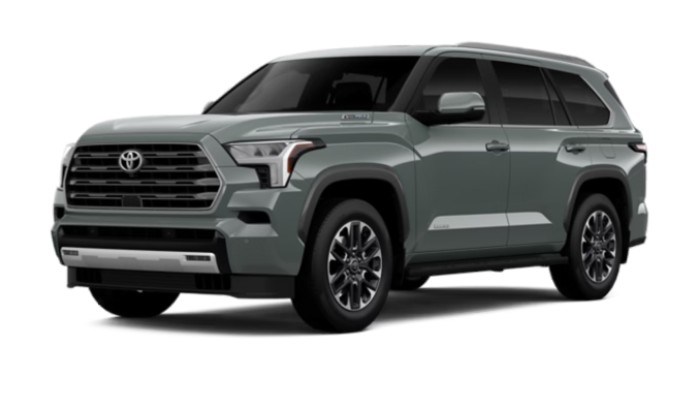
The Toyota Sequoia has earned a strong reputation for durability, large-family practicality, towing ability, and old-school toughness. Plenty of examples have traveled enormous distances without major drama, which is exactly why the Sequoia remains popular on the used market.
Still, Toyota reliability does not mean every model year is equally desirable.
If we're shopping for one today, the more useful question isn't simply, "Is a Toyota Sequoia reliable?" We should be asking: What Toyota Sequoia years should we avoid, and which ones offer the best balance of reliability, age, price, and proven engineering?
Generally speaking, we'd approach 2001-2004 Toyota Sequoias with the greatest caution. The 2005-2007 models can still be worthwhile, although age, rust, suspension condition, and maintenance history become critical. Early examples of the second generation, particularly 2008-2010, also deserve a closer inspection simply because they combine higher age with first-years-of-a-redesign concerns.
By contrast, many 2011-2022 Sequoias represent a particularly attractive part of the used market. The redesigned 2023-and-newer models shouldn't automatically be avoided either, although their hybrid twin-turbo powertrain is considerably more complex and doesn't yet have the decades-long track record of the older V8.
So, which one should we put in our driveway?
Let's dig into the Toyota Sequoia years to avoid, the problems worth watching, and the model years we'd rather spend our money on.
Content in this publication
- Quick Answer: What Toyota Sequoia Years Should We Avoid?
- Understanding the Toyota Sequoia Generations
- 2001 Toyota Sequoia: Why We'd Be Careful
- 2002 Toyota Sequoia: Suspension Condition Is Crucial
- 2003 Toyota Sequoia: Warning Lights Deserve Investigation
- 2004 Toyota Sequoia: Still in the High-Caution Group
- Should We Avoid the 2005 Toyota Sequoia?
- 2006 and 2007 Toyota Sequoia: Better First-Generation Choices
- 2008 Toyota Sequoia: First Year of the Big Redesign
- 2009 Toyota Sequoia: Still an Early Second-Generation SUV
- 2010 Toyota Sequoia: Where Things Start Getting More Interesting
- 2011-2014 Toyota Sequoia: Strong Used-Buy Territory
- 2015-2017 Toyota Sequoia: A Strong Middle Ground
- 2018-2022 Toyota Sequoia: Our Favorite Traditional Sequoia Years
- Is the 2023 Toyota Sequoia a Year to Avoid?
- What About the 2024 Toyota Sequoia?
- Should We Avoid the Newest Toyota Sequoia Models?
- What Problems Should We Check on a Used Toyota Sequoia?
- Is a High-Mileage Toyota Sequoia Worth Buying?
- What Is the Worst Toyota Sequoia Year?
- Which Toyota Sequoia Years Are Best to Buy?
- Our Toyota Sequoia Pre-Purchase Inspection Checklist
- Toyota Sequoia Years to Avoid vs Years to Buy
- Should We Buy a First-Generation Toyota Sequoia Today?
- Should We Buy a Second-Generation Toyota Sequoia?
- Should We Buy a Third-Generation Toyota Sequoia?
- Final Verdict: Toyota Sequoia Years to Avoid
- Frequently Asked Questions About Toyota Sequoia Years to Avoid
Quick Answer: What Toyota Sequoia Years Should We Avoid?
If we want the short version before digging into all the details, we'd divide used Sequoias roughly like this:
- 2001-2004: Highest caution because of age, potential frame corrosion, suspension concerns, and early-generation issues.
- 2005-2007: Potentially good buys, but careful inspection of the frame and suspension is essential.
- 2008-2010: Not necessarily bad, although we'd scrutinize these early second-generation models more closely.
- 2011-2017: Generally strong used-buy territory when maintenance has been consistent.
- 2018-2022: Among our favorite traditional V8 Sequoia years.
- 2023-present: Modern, powerful, and appealing, but still relatively unproven for long-term ownership.
Those categories shouldn't be treated like absolute rules.
A meticulously maintained 2004 Sequoia might be a much better vehicle than an abused 2018 model.
When we're buying something this old and complicated, condition often matters more than the badge on the model-year sticker.
Understanding the Toyota Sequoia Generations
Before deciding which Toyota Sequoia years to avoid, it helps to understand how the SUV evolved.
Toyota doesn't redesign the Sequoia every few years. Instead, each generation tends to remain in production for a long time.
That can be very good news for used buyers because later vehicles within the same generation benefit from years of manufacturing experience and incremental engineering improvements.
First-Generation Toyota Sequoia: 2001-2007
The original Sequoia arrived for the 2001 model year.
It was built around a traditional truck-based formula with a body-on-frame platform, a naturally aspirated 4.7-liter V8, three-row seating, and available four-wheel drive.
These vehicles are mechanically straightforward compared with modern SUVs and remain popular among people looking for inexpensive tow vehicles, adventure rigs, or family transportation.
Their biggest enemy today?
Time.
Even a beautifully engineered SUV can develop expensive problems after two decades of heat cycles, winters, road salt, worn bushings, leaking seals, and deferred maintenance.
Second-Generation Toyota Sequoia: 2008-2022
Toyota completely redesigned the Sequoia for 2008.
The second generation grew larger, more comfortable, more powerful, and substantially more sophisticated.
The 5.7-liter V8 available throughout much of this generation became one of its defining characteristics.
For many buyers, this is the Sequoia generation we'd look at first.
It combines reasonably modern comfort with old-school naturally aspirated V8 engineering.
Third-Generation Toyota Sequoia: 2023-Present
The third-generation Sequoia represented a dramatic shift.
Gone was the big naturally aspirated V8.
Toyota instead adopted its i-FORCE MAX hybrid powertrain, which combines a twin-turbocharged V6 with electric assistance.
The result is stronger torque, more technology, and improved efficiency relative to the older V8 formula.
However, we're also dealing with additional complexity.
Turbochargers, hybrid hardware, batteries, electronic control systems, and more sophisticated software introduce additional components that haven't yet had 15 or 20 years to prove themselves.
That doesn't mean they're unreliable.
It means the long-term verdict is still being written.
2001 Toyota Sequoia: Why We'd Be Careful
The 2001 model was the first Sequoia ever sold.
First-year vehicles always deserve a little additional caution because consumers are essentially driving the first production version of a new platform.
Today, however, the bigger concern isn't simply that 2001 was the first year.
It's age.
A 2001 Sequoia is now old enough that almost every rubber component, suspension joint, gasket, hose, electrical connector, and chassis component deserves inspection.
The 4.7-liter V8 itself can be impressively durable when properly maintained, but a strong engine doesn't guarantee a strong vehicle.
A perfect-running V8 sitting inside a badly corroded frame doesn't make a good purchase.
Frame Rust Can Be the Deal-Breaker
Rust deserves to be near the top of our inspection list when shopping for an early Sequoia.
Vehicles that lived in regions where roads are heavily salted during winter deserve particularly careful attention.
A little surface oxidation isn't automatically catastrophic.
Heavy scaling, weakened structural areas, corroded suspension mounting points, or holes in critical frame sections are much more serious.
This is one area where photographs aren't enough.
We want the SUV on a lift.
Be Suspicious of Fresh Undercoating
Fresh black undercoating can mean the owner carefully protected the chassis.
It can also hide years of corrosion.
We shouldn't automatically reject a coated frame, but we'd want to look around seams, welds, corners, suspension mounting points, and areas where the coating appears unusually thick.
Pretty paint underneath doesn't automatically mean healthy steel underneath.
2002 Toyota Sequoia: Suspension Condition Is Crucial
The 2002 Sequoia is another year we'd inspect closely.
As with other first-generation models, front-suspension components deserve particular attention.
A worn ball joint, control-arm bushing, tie-rod end, or steering component can change the way a heavy SUV behaves dramatically.
Listen for clunks when turning or traveling over bumps.
Pay attention to uneven tire wear.
Notice whether the steering feels vague or loose.
If the vehicle wanders down the road like a shopping cart with one bad wheel, something deserves investigation.
Don't Assume Recall Work Solves Today's Wear
Even if earlier recall repairs were completed, suspension components continue to age.
That's important.
A part replaced many years ago may itself now have substantial mileage.
We should inspect the suspension based on its current condition rather than assuming old paperwork guarantees modern reliability.
2003 Toyota Sequoia: Warning Lights Deserve Investigation
The 2003 model is another early Sequoia we'd treat cautiously.
Older vehicles can develop ABS, stability-control, traction-control, wheel-speed sensor, and related warning-light problems.
The important lesson isn't that every illuminated warning light means disaster.
It's that we shouldn't buy first and diagnose later.
If the dashboard resembles a Christmas tree, scan the vehicle before signing anything.
VSC and ABS Lights Shouldn't Be Ignored
Sellers sometimes say things like:
"It's just a sensor."
Maybe.
But if it's truly just an inexpensive sensor, why wasn't it repaired before the vehicle was listed?
We should never let a seller's confidence replace a proper diagnosis.
A professional scan can tell us much more than a verbal promise.
2004 Toyota Sequoia: Still in the High-Caution Group
A 2004 Sequoia can absolutely be worth buying.
However, we'd still keep it in the high-caution category because it's old enough for age-related deterioration to dominate the ownership experience.
At this point, we care about:
- Frame condition
- Brake lines
- Suspension bushings
- Ball joints
- Steering components
- Cooling-system maintenance
- Four-wheel-drive operation
- Fluid leaks
- Timing-belt history
- Previous accident repairs
- Electrical accessories
The badge may say Toyota.
The calendar still says the vehicle is more than two decades old.
That matters.
Should We Avoid the 2005 Toyota Sequoia?
Not automatically.
In fact, if we're specifically looking for a first-generation Sequoia, we'd usually prefer one of the later years over the earliest 2001-2004 vehicles.
By 2005, Toyota had several years of production experience with the platform.
There were also drivetrain updates that improved the overall package.
Still, age remains unavoidable.
Why a Well-Maintained 2005 Can Be a Bargain
Older SUVs often depreciate based on age rather than remaining capability.
That can make a clean Sequoia surprisingly attractive.
A properly maintained 2005 model can offer:
- Strong V8 performance
- Three-row seating
- Substantial towing ability
- Traditional body-on-frame construction
- Relatively straightforward mechanical systems
- Plenty of cargo and passenger room
The key phrase is properly maintained.
Maintenance records become extremely valuable on older vehicles.
2006 and 2007 Toyota Sequoia: Better First-Generation Choices
The final two years of the first generation can make more sense than the earliest Sequoias.
Toyota had already been building the platform for years, meaning buyers benefit from a more mature product.
That doesn't make 2006 and 2007 models immune to problems.
It simply means we'd generally rather investigate a clean late-production first-gen example than an equally priced early-production SUV.
Condition Matters More Than Mileage Here
Consider two vehicles.
One is a 2007 Sequoia with 125,000 miles but limited maintenance records, visible rust, old tires, and a suspicious transmission shudder.
The other is a 2006 model with 190,000 miles, detailed service invoices, recent suspension work, a clean frame, and excellent fluids.
Which would we prefer?
Probably the higher-mileage vehicle.
Mileage tells us how far the SUV traveled.
Maintenance tells us how carefully it traveled.
You may be interested in reading Toyota Sequoia Best Years: Which Model Years Are Worth Buying?
2008 Toyota Sequoia: First Year of the Big Redesign
The 2008 model began an entirely new Sequoia generation.
Toyota gave the SUV a much more modern chassis, significantly larger dimensions, updated suspension, additional technology, and powerful V8 options.
The redesign was substantial.
And that's why we'd scrutinize 2008 models somewhat more carefully.
First-year redesigns aren't automatically problematic.
However, manufacturers often make small hardware, software, supplier, and manufacturing changes as a generation matures.
If we have two similar Sequoias sitting next to each other—one from 2008 and another from several years later—we'd generally lean toward the later example if condition and price are comparable.
2009 Toyota Sequoia: Still an Early Second-Generation SUV
The 2009 model benefits from another year of production experience, although it still belongs to the earliest phase of the second generation.
At this age, we'd look carefully for high-mileage wear.
Pay attention to suspension noises, cooling-system condition, oil leaks, drivetrain behavior, air-conditioning performance, and electrical functions.
A Sequoia is a heavy vehicle.
Heavy vehicles work their suspension and braking components hard.
Even very durable hardware eventually wears.
2010 Toyota Sequoia: Where Things Start Getting More Interesting
By 2010, the second-generation platform was becoming more established.
We wouldn't automatically avoid this year.
However, we'd still compare it carefully against newer second-generation vehicles because Toyota continued producing essentially the same generation for many more years.
That unusually long production run gives used buyers a luxury that many other vehicles don't provide.
We can skip early versions without abandoning the overall platform.
2011-2014 Toyota Sequoia: Strong Used-Buy Territory
This is where our comfort level starts increasing considerably.
By 2011, Toyota had several years of second-generation production experience.
The overall formula was mature.
For buyers who don't care about having the latest styling or technology, these years can offer excellent value.
The 5.7-liter V8 provides strong performance and suits the Sequoia's size beautifully.
The downside is predictable.
Fuel consumption can be substantial.
But nobody buys a full-size V8 SUV because they dream about setting fuel-economy records.
It's like adopting a Saint Bernard and complaining that it eats more than a Chihuahua.
2015-2017 Toyota Sequoia: A Strong Middle Ground
These middle-years Sequoias can be particularly appealing.
They're new enough to avoid some of the age-related headaches of first-generation trucks but old enough to cost substantially less than late-production examples.
When properly maintained, they combine:
- Proven V8 engineering
- Body-on-frame durability
- Three-row practicality
- Serious towing capability
- Large cargo capacity
- Mature second-generation hardware
This is where we'd start getting enthusiastic.
Why Mature Platforms Often Make Good Used Cars
New generations generate headlines.
Mature generations generate reliability.
There's something appealing about buying a vehicle after the manufacturer has spent years making small improvements behind the scenes.
Maybe a bracket changed.
Maybe a seal was revised.
Maybe software was updated.
Maybe a supplier improved a component.
None of those changes produces glamorous advertising.
Collectively, however, they can create a more polished vehicle.
2018-2022 Toyota Sequoia: Our Favorite Traditional Sequoia Years
If we wanted a V8 Sequoia and had enough budget, this is where we'd spend a lot of time shopping.
These are late-production versions of an exceptionally long-lived generation.
Toyota had years to refine the platform.
We also get newer safety technology and updated styling compared with older second-generation models.
For someone who values proven engineering over cutting-edge efficiency, these late V8 Sequoias are compelling.
Why 2018-2022 Models Make Sense
These years offer a useful combination of:
- Mature drivetrain engineering
- Relatively modern technology
- Improved safety equipment
- Strong towing capability
- Excellent passenger space
- Naturally aspirated V8 simplicity compared with modern turbo-hybrid systems
They're not perfect.
Nothing is.
But from a risk-management perspective, late-generation vehicles are often where we'd rather put our money.
Is the 2023 Toyota Sequoia a Year to Avoid?
We wouldn't call it a definite year to avoid.
We would call it a year to buy carefully.
The 2023 model completely reinvented the Sequoia.
Instead of the naturally aspirated V8 used for years, Toyota introduced the i-FORCE MAX hybrid system combining a twin-turbocharged V6 with an electric motor.
Performance is impressive.
Torque is abundant.
Technology is significantly more advanced.
But we're now dealing with a fundamentally different ownership proposition.
More Technology Means More Potential Failure Points
This doesn't mean technology is bad.
Modern powertrains can be extremely reliable.
However, additional components create additional possibilities for something to eventually require service.
The modern Sequoia has:
- Twin turbochargers
- Hybrid components
- High-voltage battery hardware
- Additional cooling systems
- Sophisticated electronics
- More software
- More sensors
- Additional emissions equipment
Compare that with an old naturally aspirated V8.
The newer system is smarter.
The older system is simpler.
Which one will be cheaper to keep for 20 years?
We don't fully know yet.
Time hasn't answered that question.
What About the 2024 Toyota Sequoia?
The 2024 model follows the same modern formula.
We wouldn't automatically avoid it either.
However, buyers should still verify that all applicable recall work and software updates have been completed.
That recommendation applies to essentially every modern vehicle.
Today's recalls aren't always about broken metal parts.
Many involve software, cameras, sensors, electronic control modules, and other systems that barely existed in older generations.
Should We Avoid the Newest Toyota Sequoia Models?
No.
We just shouldn't pretend we possess long-term reliability data that doesn't exist yet.
A 2024 or 2025 Sequoia cannot have a 15-year durability record because it hasn't existed for 15 years.
Simple.
If we're buying new or keeping the SUV for five or six years, that may not matter.
If our dream is to keep a Sequoia until the odometer approaches 300,000 miles, a later second-generation V8 currently offers something the new hybrid cannot:
Proof.
What Problems Should We Check on a Used Toyota Sequoia?
Model-year guides are useful, but they're only the starting point.
Once we've found a Sequoia we're serious about buying, the condition of that individual SUV becomes more important than internet rankings.
Frame and Underbody Corrosion
This is particularly important on first-generation vehicles.
We want to inspect:
- Frame rails
- Crossmembers
- Suspension mounts
- Welds
- Brake lines
- Fuel lines
- Body mounts
- Areas hidden behind shields
Surface rust is one thing.
Structural deterioration is another.
Front Suspension Wear
A heavy SUV puts tremendous stress on suspension components.
Check:
- Ball joints
- Control-arm bushings
- Tie rods
- Wheel bearings
- Shocks
- Alignment
- Steering play
Uneven tire wear can be one of the easiest clues that something isn't right.
Timing-Belt Maintenance on Older V8 Models
Older first-generation 4.7-liter V8 models require attention to timing-belt maintenance.
We want documentation.
Not guesses.
Not "the previous owner probably did it."
Not "my mechanic said it looks fine."
Invoices.
If the maintenance can't be verified, we should budget for the service accordingly.
Cooling-System Condition
Cooling systems become increasingly important as vehicles age.
Inspect the:
- Radiator
- Water pump
- Thermostat
- Hoses
- Coolant reservoir
- Fans
- Coolant quality
A small cooling-system issue can turn into major engine damage if ignored.
You may be interested in readingToyota Sequoia Best Years: Which Model Years Are Worth Buying?You may be interested in reading
Toyota Sequoia Competitors: The Best Full-Size SUV AlternativesTransmission Behavior
The transmission should behave smoothly during normal driving.
Watch for:
- Delayed engagement
- Hard shifts
- Shuddering
- Slipping
- Gear flare
- Unusual clunks
- Fluid leaks
Make sure we test the vehicle both cold and after reaching operating temperature.
Some transmission problems only become obvious once everything gets hot.
Four-Wheel-Drive Operation
If the Sequoia has four-wheel drive, use it.
A button that illuminates doesn't automatically mean the entire system works correctly.
Engage the appropriate modes following the manufacturer's operating instructions and verify that everything responds correctly.
Rear Hatch and Power Window
Toyota Sequoias have several large electrical accessories that are easy to overlook during a quick test drive.
Check the rear hatch.
Check the rear window.
Check power locks.
Check every window.
Try every seat adjustment.
Use the air conditioning in every zone.
Small electrical problems aren't necessarily deal-breakers, but several broken features can quickly turn a bargain into an irritating project.
Is a High-Mileage Toyota Sequoia Worth Buying?
It can be.
A Sequoia with high mileage isn't automatically worn out.
This is particularly true when the vehicle has spent most of its life doing long highway journeys with regular maintenance.
Meanwhile, a low-mileage SUV may have spent its life:
- Making short cold trips
- Towing heavy trailers
- Sitting unused
- Driving on salted roads
- Receiving inconsistent maintenance
- Experiencing repeated overheating
- Being repaired cheaply after accidents
The odometer doesn't tell us any of that.
Maintenance History Beats a Pretty Odometer
We'd happily consider a higher-mileage vehicle with:
- Complete service documentation
- Clean fluids
- A solid frame
- Recent suspension work
- Quality tires
- No major warning lights
- Smooth drivetrain operation
That history tells us somebody cared.
And ownership quality matters.
What Is the Worst Toyota Sequoia Year?
We wouldn't crown one single model year as universally terrible.
Instead, we'd say the 2001-2004 period represents the highest-risk shopping zone today.
Why?
Because these vehicles combine several risk factors simultaneously.
They're old.
They're early-generation models.
They're more likely to have accumulated substantial mileage.
Corrosion has had decades to develop.
Previous repairs may have been performed by multiple owners.
Maintenance documentation may be incomplete.
That's a larger risk cocktail than we'd find in a clean 2018 Sequoia.
Which Toyota Sequoia Years Are Best to Buy?
For many shoppers, the answer depends on budget.
If we're shopping inexpensively, a clean 2005-2007 model can still make sense.
If we want an affordable second-generation SUV, we'd look seriously at 2011-2017.
If our budget permits and we want the most mature version of the traditional V8 platform, 2018-2022 is particularly attractive.
If we want maximum modern technology, stronger torque, and hybrid assistance, we'll be looking at 2023 and newer models.
There's no universal winner.
There's simply the right Sequoia for the way we intend to use it.
Our Toyota Sequoia Pre-Purchase Inspection Checklist
Before buying any used Sequoia, we'd want to complete the following:
- Verify the VIN and recall history.
- Review maintenance documentation.
- Obtain a vehicle-history report.
- Inspect the frame on a lift.
- Look for collision repairs.
- Scan the vehicle for stored trouble codes.
- Inspect suspension and steering components.
- Check brake condition.
- Inspect tires for unusual wear.
- Test all four-wheel-drive functions.
- Check engine and transmission fluids.
- Look for coolant and oil leaks.
- Verify timing-belt history where applicable.
- Test every electrical accessory.
- Drive the SUV from a cold start.
- Drive it again at operating temperature.
- Listen for drivetrain noises.
- Have an independent mechanic perform a full pre-purchase inspection.
The final step is particularly important.
Spending a little money on an inspection before purchasing can prevent spending thousands afterward.
Toyota Sequoia Years to Avoid vs Years to Buy
If we wanted to summarize everything into a straightforward buying strategy, we'd rank the years like this.
Highest Caution: 2001-2004
These are the years we'd inspect most aggressively.
Age and condition are the biggest concerns.
Buy Carefully: 2005-2010
There can be good vehicles here.
However, we're dealing with either aging first-generation examples or early second-generation models.
We'd want excellent maintenance records and a clean inspection.
Strong Value: 2011-2017
These years sit in a useful middle ground.
The second-generation platform had matured, yet prices can remain considerably lower than late-production examples.
Our Preferred V8 Years: 2018-2022
For traditional Sequoia buyers, this is arguably the sweet spot.
We're getting the final years of the long-running V8 generation after Toyota had plenty of time to refine the platform.
Modern but Less Proven: 2023-Present
These vehicles are dramatically more advanced.
We simply don't have the same long-term ownership history yet.
Should We Buy a First-Generation Toyota Sequoia Today?
Yes, if we find the right one.
The first-generation Sequoia has plenty of charm.
It's big without feeling excessively complicated.
The 4.7-liter V8 has a strong reputation.
Parts availability is generally good.
And purchase prices can be attractive.
However, we wouldn't shop based on price alone.
A cheap old Sequoia can become expensive surprisingly quickly.
Rust repair, suspension work, timing-belt maintenance, tires, brakes, and cooling-system repairs can erase the savings.
The cleanest example is often the cheapest one in the long run.
Should We Buy a Second-Generation Toyota Sequoia?
For many buyers, yes.
This would probably be the generation we'd recommend most broadly.
It delivers the qualities people associate with the Sequoia name:
Size.
Power.
Durability.
Comfort.
Towing capacity.
Three-row practicality.
And that big naturally aspirated V8.
Fuel economy won't impress anyone.
But that's part of the bargain.
We're buying a full-size truck-based SUV, not a commuter hatchback.
Should We Buy a Third-Generation Toyota Sequoia?
That depends on our priorities.
If we want stronger acceleration, newer safety systems, modern technology, and hybrid assistance, the newest Sequoia makes sense.
If simplicity and decades-proven mechanical durability matter more, we'd still feel very comfortable shopping among late second-generation examples.
The third generation isn't necessarily worse.
It's simply different.
And because it's newer, we can't yet judge how those vehicles will behave after 150,000, 200,000, or 300,000 miles.
Final Verdict: Toyota Sequoia Years to Avoid
So, what Toyota Sequoia years should we avoid?
We'd exercise the greatest caution with 2001-2004 Toyota Sequoias.
They're the oldest models, they're early examples of the first generation, and decades of potential corrosion, suspension wear, neglected maintenance, and previous repairs can create additional risk.
The 2005-2007 models can still be very good purchases, particularly when they're rust-free and properly maintained.
We'd also inspect 2008-2010 Sequoias closely because they're among the earliest examples of the second-generation redesign.
For shoppers wanting a proven V8 SUV, the 2011-2022 period is where we'd focus most of our attention, with 2018-2022 models standing out as especially appealing because they're late versions of the mature second-generation platform.
The 2023-and-newer Sequoias shouldn't automatically be placed on an avoid list. They offer impressive power and technology, but their twin-turbo hybrid powertrain hasn't yet accumulated enough years in service to provide the same long-term evidence available for Toyota's older V8s.
Most importantly, we shouldn't buy a model year.
We should buy a vehicle.
A clean frame, consistent maintenance records, healthy drivetrain, completed recall work, and professional pre-purchase inspection can tell us far more than a number on the registration document.
Find the right Sequoia, and even an older example may still have plenty of adventures left in it.
Frequently Asked Questions About Toyota Sequoia Years to Avoid
What Toyota Sequoia years should we avoid most?
We'd be most cautious with 2001-2004 models because they're now the oldest Sequoias and combine early-generation status with greater exposure to corrosion, component wear, and deferred maintenance. That doesn't make every example bad, but inspection becomes particularly important.
Is the 2008 Toyota Sequoia a bad year?
Not necessarily. The 2008 Sequoia launched the second generation, so we'd simply scrutinize it more carefully than later examples of the same platform. A well-maintained 2008 can still be a good SUV.
What are the best Toyota Sequoia years for reliability?
For buyers who want a proven traditional drivetrain, many 2011-2022 models are compelling. We'd be particularly interested in 2018-2022 examples because they represent the later years of the mature second-generation V8 platform.
You may be interested in readingToyota Sequoia Best Years: Which Model Years Are Worth Buying?You may be interested in reading
Toyota Sequoia Competitors: The Best Full-Size SUV AlternativesYou may be interested in reading
Toyota Sequoia Lexus Equivalent: Which Lexus Is Closest?Should we avoid the 2023 Toyota Sequoia?
We wouldn't automatically avoid it. The bigger consideration is that 2023 introduced a completely redesigned Sequoia with a more complex twin-turbo hybrid powertrain. Long-term reliability cannot yet be judged as confidently as it can with older V8 models.
How many miles can a Toyota Sequoia last?
There's no guaranteed mileage figure. Maintenance quality, driving conditions, towing use, climate, corrosion, and previous ownership matter enormously. A well-maintained Sequoia can remain useful at very high mileage, while a neglected low-mileage example can require expensive repairs much sooner.
If you want to know other articles similar to Toyota Sequoia Years to Avoid: Which Models Should We Think Twice About? you can visit the category Models.
Kia Sorento Models: Complete Guide to Trims, Engines and Versions
BYD Shark 6 vs Ranger vs HiLux: Which Ute Makes the Most Sense in 2026?
BYD Shark 6 vs MG U9: Which Ute Makes More Sense in 2026?
BYD Shark 6 vs Ford Ranger Raptor: Which Performance Ute Is Better in 2026?
BYD Shark 6 vs Kia Tasman: Which Ute Is Better?
BYD Shark 6 vs 7: What We Know So Far
Leave a Reply
More content of your interest