
Toyota Sequoia Depreciation: How Well Does It Hold Its Value?

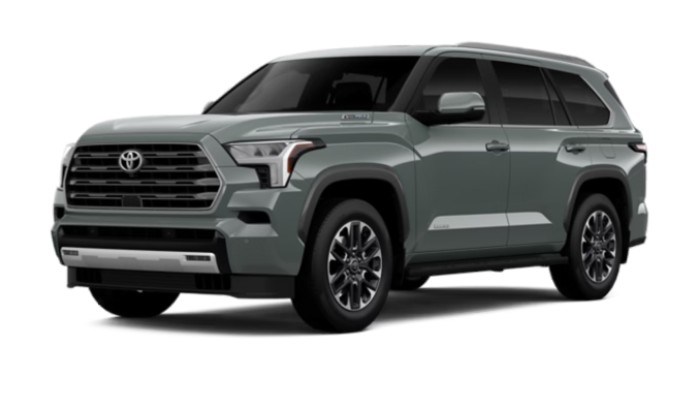
Buying a full-size SUV is a little like buying a house with wheels. The purchase price matters, sure, but what happens to that value after three, five, or eight years can make an equally large difference to our wallets. That brings us straight to Toyota Sequoia depreciation.
The Sequoia has never been a cheap SUV. For 2026, Toyota lists a starting MSRP of $65,025 in the United States, before moving into increasingly expensive trim levels and options. When we're spending that kind of money, depreciation isn't some tiny accounting detail. It can represent tens of thousands of dollars.
The encouraging news is that the Sequoia generally holds its value better than the average SUV. Current iSeeCars data estimates that a new Toyota Sequoia loses about 35.6% of its value after five years, compared with approximately 44.9% for SUVs overall. CarEdge produces a similar estimate, projecting roughly 37% depreciation after five years.
Those are estimates rather than guarantees, of course. Trim, mileage, accident history, location, market conditions, maintenance, color, drivetrain, and even fuel prices can change what an individual Sequoia is worth.
Still, one thing becomes pretty clear: the Toyota Sequoia isn't exactly a depreciation disaster.
Let's look deeper.
Content in this publication
- What Is Toyota Sequoia Depreciation?
- How Much Does a Toyota Sequoia Depreciate After Five Years?
- Does the Toyota Sequoia Hold Its Value Well?
- Why Toyota Sequoias Can Retain Strong Resale Value
- How the Third-Generation Sequoia Changed Depreciation
- Toyota Sequoia Depreciation by Age
- How Fast Does a New Toyota Sequoia Lose Value?
- Which Toyota Sequoia Trims Hold Value Best?
- Does Mileage Affect Sequoia Depreciation?
- How Condition Changes Toyota Sequoia Resale Value
- Does 4WD Help Sequoia Resale Value?
- How Accident History Affects Toyota Sequoia Depreciation
- Does the Hybrid Powertrain Help or Hurt Resale Value?
- Toyota Sequoia Depreciation Compared With the Average SUV
- Is Buying a Used Toyota Sequoia Smarter Than Buying New?
- When Is the Best Time to Sell a Toyota Sequoia?
- How to Reduce Toyota Sequoia Depreciation
- Are High-Mileage Sequoias Still Worth Money?
- Can a Toyota Sequoia Ever Appreciate?
- Toyota Sequoia Depreciation: New vs Used Ownership
- Is Toyota Sequoia Depreciation Better Than We Might Expect?
- Who Should Care Most About Sequoia Depreciation?
- Final Thoughts: Is the Toyota Sequoia Good for Resale Value?
- Frequently Asked Questions
What Is Toyota Sequoia Depreciation?
Depreciation simply measures how much value a vehicle loses compared with what it originally cost.
Imagine we purchase a Sequoia for $70,000 and sell it several years later for $49,000. Our vehicle has lost $21,000 in market value, or roughly 30%.
Simple enough, right?
The confusing part is that depreciation isn't evenly distributed across a vehicle's life. A new SUV generally experiences its steepest losses early in ownership. Later, the depreciation curve tends to flatten.
That's why someone buying a three-year-old Sequoia may experience a very different ownership cost than someone ordering one brand-new.
Depreciation vs Resale Value
Depreciation and resale value are basically opposite sides of the same coin.
If our SUV has depreciated 35%, approximately 65% of its original value remains.
Higher retained value means lower depreciation.
And lower depreciation can be surprisingly important.
Fuel economy gets plenty of attention because we see the numbers every time we visit a gas station. Depreciation is quieter. It sits in the background like a slow leak in a tire.
Yet on an expensive vehicle such as the Sequoia, it can easily become one of our largest ownership expenses.
How Much Does a Toyota Sequoia Depreciate After Five Years?
Current industry estimates put Toyota Sequoia five-year depreciation somewhere around the mid-30% range.
iSeeCars estimates five-year depreciation at 35.6%, leaving roughly 64.4% of the original value. Its analysis also puts the Sequoia slightly behind the average hybrid large SUV, which loses approximately 35.2%, but substantially ahead of SUVs overall.
CarEdge's forecast is close, estimating a five-year decline of approximately 37%.
Those numbers shouldn't be treated like a guaranteed future selling price. They're more useful as a compass than a ruler.
If we bought a hypothetical Sequoia for $70,000 and it depreciated 35.6%, the vehicle would retain roughly $45,080 after five years.
At 37% depreciation, it would retain around $44,100.
That's still a significant loss, but compare it with an SUV that loses closer to half its original value. Suddenly the Sequoia's resale strength becomes much more meaningful.
A Simple Toyota Sequoia Depreciation Example
Suppose we pay $75,000 for a nicely equipped Sequoia.
If it retains around 64% of its value after five years, it could theoretically be worth somewhere around $48,000.
Our depreciation cost would therefore be approximately $27,000.
Spread over five years, that's around $5,400 per year before considering taxes, financing costs, insurance, maintenance, repairs, or fuel.
Now we can see why depreciation deserves a place in the conversation.
Why Real Trade-In Value Can Be Lower
Here's where things get interesting.
A theoretical resale value isn't necessarily what a dealership will write on our trade-in paperwork.
Dealers need room for inspection, reconditioning, transportation, inventory risk, warranties, advertising, and profit. As a result, trade-in offers are normally lower than retail-market values.
Kelley Blue Book's depreciation pages illustrate this gap clearly. Its value estimates separately distinguish resale value from trade-in value rather than treating them as identical figures.
So if we're calculating future ownership costs, we shouldn't automatically assume we'll receive full retail value when trading the vehicle.
Does the Toyota Sequoia Hold Its Value Well?
Generally, yes.
Among large three-row SUVs, the Sequoia has developed a strong resale reputation. A 2026 Edmunds analysis reported by the Associated Press placed the Toyota Sequoia among the strongest large three-row SUVs for retained value, with the study finding approximately 80% value retention after three years for the 2023 model year vehicles analyzed.
That's impressive for something this large and expensive.
Full-size SUVs often face several depreciation pressures. They consume more fuel than smaller vehicles, cost more to insure, use expensive tires, and can become costly once repairs start piling up.
The Sequoia counters some of those disadvantages with Toyota's reputation, long-term demand, towing capability, body-on-frame construction, and relatively strong expectations for longevity.
In other words, buyers shopping for a used Sequoia aren't necessarily looking at it as an old SUV.
Many see it as a vehicle with years of usable life remaining.
That distinction matters enormously.
Why Toyota Sequoias Can Retain Strong Resale Value
There's no secret button hidden beneath the dashboard that makes the Sequoia depreciate slowly. Instead, several factors work together.
Toyota's Reputation Helps
Brand perception matters in the used-car market.
Buyers are generally willing to pay more for a vehicle they expect to remain usable for a long time. Toyota has spent decades building exactly that type of reputation.
The Sequoia benefits particularly strongly because shoppers purchasing a large SUV often intend to keep it for years. They're thinking about road trips, towing trailers, carrying children, hauling camping equipment, and surviving high mileage.
Long-term durability therefore isn't a small selling point.
It's central to the purchase.
The Sequoia Has Genuine Long-Life Appeal
Used buyers don't simply ask, "How old is it?"
They also ask, "How much life is left?"
That's an important difference.
Research published in 2025 based on an iSeeCars analysis of more than 174 million vehicles placed the Toyota Sequoia among vehicles with an unusually high probability of reaching very high mileage. While such statistical projections don't guarantee the lifespan of any individual vehicle, they help explain why older Sequoias can continue attracting buyers.
A ten-year-old SUV that consumers expect to remain useful is naturally easier to sell than a ten-year-old SUV viewed as a ticking repair bill.
Full-Size SUV Demand Supports Used Values
The Sequoia also occupies a relatively specialized corner of the market.
People who genuinely need three rows, substantial towing capacity, body-on-frame toughness, and lots of passenger space don't have an endless catalog of alternatives.
That helps used examples remain relevant.
The Sequoia competes with vehicles such as the Chevrolet Tahoe, GMC Yukon, Ford Expedition, Nissan Armada, and related premium SUVs.
When new examples become expensive, clean used Sequoias can look increasingly attractive.
How the Third-Generation Sequoia Changed Depreciation
The 2023 redesign matters enormously when discussing depreciation.
Toyota transformed the Sequoia rather than simply refreshing its headlights and calling it a day. The third generation introduced a radically different platform, styling direction, interior, technology package, and standard hybridized twin-turbo V6 powertrain.
That reset the market.
Suddenly, older second-generation Sequoias looked much older.
Yet something unusual happened: they didn't become irrelevant.
Older V8 Sequoias Still Have Their Own Audience
The previous generation used Toyota's naturally aspirated V8 architecture, and plenty of used-SUV shoppers appreciate its simplicity, familiar character, and long-standing reputation.
That creates two somewhat different Sequoia audiences.
Some buyers want the newer hybrid's torque, technology, modern interior, and improved fuel efficiency.
Others actively search for the older V8.
This can help prevent late second-generation models from collapsing in value simply because a newer generation exists.
The Last-Year Effect
Final-year examples of an outgoing generation can occasionally become particularly interesting in the used market.
Why?
Because they've benefited from years of production refinements while retaining the older design buyers already understand.
A well-maintained late-production second-generation Sequoia may therefore appeal to someone who wants proven V8 hardware without paying third-generation prices.
That doesn't mean every older Sequoia will become collectible.
It means depreciation isn't determined by age alone.
Toyota Sequoia Depreciation by Age
We shouldn't expect every Sequoia to follow exactly the same depreciation curve, but the broad pattern is fairly predictable.
The steepest dollar losses generally occur near the beginning.
The decline then becomes progressively less painful.
A practical way to think about it is this:
- Years 0–1: Buyers absorb the new-car premium, taxes, dealer-related costs, and the transition from "new" to "used."
- Years 2–3: Depreciation continues, but the SUV may become increasingly attractive to used buyers seeking a modern vehicle without new-car pricing.
- Years 4–5: Value retention depends more heavily on mileage, condition, service history, trim, and local demand.
- Years 6–10: Condition starts carrying far more weight than age alone. Two same-year Sequoias can differ enormously in value.
- Beyond 10 years: Mechanical health, rust, maintenance documentation, accident history, drivetrain condition, and ownership history increasingly determine the price.
The takeaway?
Depreciation begins as a calendar problem and gradually becomes a condition problem.
How Fast Does a New Toyota Sequoia Lose Value?
The first few years deserve the most attention if we're purchasing new.
Kelley Blue Book's general depreciation guidance says new cars often lose around 30% during their first two years, followed by roughly 8% to 12% annually afterward, although individual vehicles can perform considerably better or worse.
The Sequoia often fares better than average, but it cannot completely escape the new-car depreciation curve.
Consider a 2023 example.
Kelley Blue Book currently estimates that a 2023 Toyota Sequoia has lost roughly 24% over three years in one of its published calculations, while also ranking it among the stronger SUVs of that age for depreciation performance.
You may be interested in reading Toyota Sequoia Pros and Cons: Is This Full-Size SUV Worth It?
That's precisely why one- to three-year-old Sequoias can be such interesting purchases.
Someone else has absorbed part of the early depreciation, yet the vehicle remains comparatively modern.
Which Toyota Sequoia Trims Hold Value Best?
This question looks simple but doesn't always have a simple answer.
A more expensive trim doesn't automatically retain a higher percentage of its original price.
Luxury equipment tends to depreciate differently from fundamental capability.
For example, buyers may happily pay thousands more for premium leather, larger wheels, special interior trim, or advanced convenience features when the vehicle is new.
Five years later?
Used buyers might appreciate those features, but they aren't necessarily willing to reimburse the original owner dollar for dollar.
SR5 and Limited
Mainstream trims such as SR5 and Limited can make strong used-market sense because they deliver most of what buyers actually need without starting from extremely high prices.
They may also appeal to a broader pool of shoppers.
That's important.
A vehicle's value depends not only on desirability but also on how many people can afford it.
TRD Pro
The TRD Pro is different.
Toyota's off-road-oriented trims often attract enthusiastic buyers who actively seek them out.
Distinctive styling, upgraded suspension components, off-road hardware, and the TRD identity can support demand.
But condition becomes critical.
A pristine TRD Pro that lived an easy suburban life isn't the same used proposition as one that spent every weekend bouncing over rocks.
Capstone
At the opposite end sits the luxurious Capstone.
It offers a richer interior and premium positioning, but high-end trims can lose more dollars simply because they begin at a higher price.
KBB's current data for the 2023 Sequoia shows how meaningful this can become: it lists the original price of the range-topping 2023 Capstone at more than $81,000 while showing substantially lower current-market values.
The Capstone can therefore become especially tempting on the used market.
Someone buying secondhand may receive expensive features for a much smaller premium than the original owner paid.
Does Mileage Affect Sequoia Depreciation?
Absolutely.
But mileage deserves more nuance than "lower is always better."
A Sequoia driven 12,000 miles annually with impeccable maintenance may be more appealing than an ultra-low-mileage example that sat neglected for years.
Used buyers look at the whole story.
Still, unusually high mileage usually lowers market value because it increases perceived wear and brings the vehicle closer to expensive maintenance milestones.
Mileage Becomes More Important With Age
On a nearly new Sequoia, a difference of 10,000 miles can have a noticeable effect on price.
On an older vehicle, mechanical condition can matter more.
Suppose we're comparing two ten-year-old Sequoias.
One has 90,000 miles but questionable maintenance.
The other has 130,000 miles, one owner, complete service records, clean bodywork, and consistent preventative maintenance.
Plenty of knowledgeable buyers may prefer the second SUV.
That's why protecting resale value means protecting the vehicle itself, not simply staring nervously at the odometer.
How Condition Changes Toyota Sequoia Resale Value
Picture two identical Sequoias parked side by side.
Same year. Same trim. Same mileage.
One has scratched wheels, stained seats, mismatched tires, missing service records, faded paint, and several warning lights.
The other looks cared for.
Would we pay the same amount?
Of course not.
Condition becomes a giant lever in the used market.
Service Records Can Be Surprisingly Valuable
A folder of maintenance receipts isn't glamorous.
Nobody posts photos of oil-change invoices on Instagram.
Yet detailed service records reduce uncertainty for a buyer.
That matters particularly on expensive vehicles where deferred maintenance can become painful.
Records can demonstrate that we've changed fluids, replaced wear items, addressed recalls, maintained the hybrid system correctly, and treated the vehicle as something worth preserving.
Small Cosmetic Problems Add Up
One tiny door ding isn't disastrous.
Neither is a scratched wheel.
But a dozen little defects send a message: this vehicle may not have been cared for.
Before selling, correcting sensible cosmetic issues can sometimes produce a better return than simply accepting the first trade-in number.
We shouldn't spend $5,000 trying to make an old SUV perfect.
We should make it look maintained rather than abandoned.
Does 4WD Help Sequoia Resale Value?
In many regions, four-wheel drive can increase desirability.
That advantage is especially relevant in areas where buyers tow, encounter snow, live on rural roads, or use SUVs recreationally.
But location matters.
A capability that adds thousands of dollars in one market might produce a smaller premium somewhere else.
This is why national depreciation percentages only tell part of the story.
Used-car markets are local.
A Sequoia selling in Colorado doesn't necessarily face exactly the same demand as one selling in suburban Florida.
How Accident History Affects Toyota Sequoia Depreciation
Here's one depreciation factor we definitely want to avoid.
Accident history can reduce resale value even when repairs were professionally completed.
Why?
Uncertainty.
Buyers don't know whether hidden structural damage exists. They worry about paint quality, alignment, airbag repairs, future rust, and diminished structural integrity.
A clean vehicle-history report therefore has genuine economic value.
Minor cosmetic accidents may produce relatively modest reductions.
Major structural damage can haunt the vehicle for years.
If resale value matters, protecting the Sequoia from unnecessary damage is one of the easiest depreciation strategies available to us.
Does the Hybrid Powertrain Help or Hurt Resale Value?
The current Sequoia makes this question particularly interesting.
Unlike many hybrid SUVs where the electric side mainly exists to maximize fuel economy, Toyota's i-FORCE MAX setup combines electrification with strong performance.
That gives the hybrid powertrain a different identity.
We aren't choosing between a "normal" Sequoia and an obscure efficiency version.
The current-generation Sequoia is fundamentally built around this system.
Battery Concerns Could Influence Older Examples
As today's third-generation Sequoias age, hybrid-component condition will naturally become more relevant to resale values.
Used buyers may eventually care about battery health much as they currently care about transmission condition, turbocharger health, or cooling-system maintenance.
But we shouldn't automatically assume hybrid equals terrible depreciation.
Current iSeeCars data actually places the Sequoia's five-year depreciation close to the hybrid large-SUV category average and meaningfully ahead of SUVs overall.
So far, the numbers don't support the idea that hybridization has destroyed Sequoia resale value.
Toyota Sequoia Depreciation Compared With the Average SUV
This is where the Sequoia starts looking quite strong.
The iSeeCars five-year figures estimate approximately:
Toyota Sequoia: 35.6% depreciation.
Hybrid large SUV average: 35.2%.
All SUVs: 44.9%.
All vehicles: 41.5%.
That means the Sequoia isn't some magical appreciating asset, but it can preserve a notably larger share of its initial value than the typical SUV.
You may be interested in readingToyota Sequoia Pros and Cons: Is This Full-Size SUV Worth It?You may be interested in reading
Toyota Sequoia Life Expectancy: How Long Can It Really Last?This matters more as purchase prices rise.
A 10-percentage-point difference in depreciation on a $70,000 vehicle represents $7,000.
Suddenly percentages stop looking boring.
Is Buying a Used Toyota Sequoia Smarter Than Buying New?
For value-focused shoppers, often yes.
But "used" doesn't automatically mean "better."
The sweet spot depends on what we prioritize.
Someone who wants the latest warranty coverage, exact color, preferred options, known history, and zero previous-owner uncertainty may happily accept the depreciation of buying new.
Someone focused primarily on minimizing ownership costs may prefer a two- or three-year-old example.
Why a Two- to Four-Year-Old Sequoia Can Make Sense
At this point, someone else has already swallowed part of the depreciation.
Yet the SUV may still feel contemporary.
We can potentially save thousands while keeping many years of practical life ahead.
The challenge is availability.
Strong-resale vehicles don't always become bargain-basement used cars.
If a lightly used Sequoia costs only a few thousand dollars less than a new one after incentives, buying new may still make more sense.
Always compare actual transaction prices—not just MSRP versus advertised used prices.
When Is the Best Time to Sell a Toyota Sequoia?
There isn't one magical birthday when a Sequoia should immediately be listed for sale.
The answer depends on financing, mileage, condition, warranty coverage, and replacement plans.
Still, constantly changing vehicles can be expensive because we repeatedly expose ourselves to the steepest part of the depreciation curve.
Longer ownership can spread that early value loss over more years.
This becomes especially important with longer auto loans. Recent reporting has highlighted growing negative-equity problems among consumers using six- and seven-year financing terms, particularly when vehicles are traded before enough principal has been repaid.
If we're financing a Sequoia, the question shouldn't simply be, "What is it worth?"
We also need to ask:
"What do we still owe?"
How to Reduce Toyota Sequoia Depreciation
We can't stop depreciation, but we can avoid throwing gasoline on the fire.
Buy the right configuration for the market, avoid dramatically overpaying, maintain it properly, keep complete records, repair meaningful damage, use quality tires, protect the interior, and think twice before installing highly personalized modifications.
That's the recipe.
Radical suspension lifts, giant wheels, unusual wraps, aftermarket lighting, aggressive engine tuning, and heavily customized interiors may look fantastic to us.
But resale markets reward broad appeal.
The more personalized our Sequoia becomes, the smaller the group of buyers who want exactly what we've created.
Factory condition is boring.
Factory condition also sells.
Are High-Mileage Sequoias Still Worth Money?
Yes, provided they're healthy.
This is one of the Sequoia's most interesting depreciation characteristics.
Some vehicles reach high mileage and effectively fall off a cliff in perceived value.
A well-maintained Sequoia may decline more gradually because buyers still see practical life ahead.
That's one reason longevity matters so much.
If shoppers believe a vehicle can reliably cover substantial mileage, 120,000 miles doesn't necessarily look like the finish line.
It may simply look like halftime.
Of course, high-mileage examples must still be priced correctly.
Reputation cannot magically erase worn suspension components, leaking seals, tired interiors, neglected differentials, corrosion, damaged cooling systems, or overdue maintenance.
Can a Toyota Sequoia Ever Appreciate?
Occasionally, individual examples can.
But we shouldn't buy one expecting appreciation.
Unusual market shortages, collector interest, exceptionally low mileage, desirable specifications, or rare configurations can temporarily push certain used vehicles upward.
The pandemic-era used-car market demonstrated that vehicle prices don't always move in a neat downward line.
Still, depreciation should remain our default assumption.
A Sequoia is transportation first.
If we happen to own an unusually desirable older example that becomes collectible, wonderful.
That's dessert.
It shouldn't be the meal.
Toyota Sequoia Depreciation: New vs Used Ownership
If minimizing depreciation is the priority, buying gently used is usually the more defensive strategy.
A new Sequoia gives us maximum control and minimum uncertainty.
A used Sequoia allows someone else to absorb some early value loss.
Neither approach is automatically right.
Consider this question:
Would we rather spend more money for certainty or accept some uncertainty in exchange for savings?
That's really what the new-versus-used decision becomes.
Is Toyota Sequoia Depreciation Better Than We Might Expect?
For a massive, expensive three-row SUV, yes.
The Sequoia carries plenty of traits that could theoretically hurt resale value: high purchase price, considerable operating costs, large dimensions, and a relatively specialized customer base.
Yet those disadvantages are counterbalanced by strong Toyota demand, durability expectations, capability, recognizable branding, and a healthy used-SUV audience.
Current five-year depreciation estimates in the mid-30% range place it comfortably ahead of the broad SUV market according to iSeeCars, while CarEdge arrives at a very similar long-term projection.
That's a strong result.
Not perfect.
Strong.
Who Should Care Most About Sequoia Depreciation?
Depreciation matters most if we plan to replace the vehicle relatively quickly.
Someone who buys a brand-new Sequoia and trades it after two years is highly exposed to market-value changes.
Someone who buys one, maintains it carefully, and drives it for 12 or 15 years may care much less.
Why?
Because the initial depreciation gets spread across a much longer ownership period.
That's why two buyers can purchase identical SUVs and experience completely different financial outcomes.
One constantly trades.
The other keeps.
The second buyer doesn't eliminate depreciation, but time dilutes its impact.
Final Thoughts: Is the Toyota Sequoia Good for Resale Value?
The Toyota Sequoia depreciation story is surprisingly positive.
No $65,000-plus SUV should ever be mistaken for a savings account, and we should expect meaningful value loss during ownership. Toyota itself lists the 2026 Sequoia from $65,025, meaning even relatively modest percentage depreciation translates into substantial dollars.
But context changes everything.
Compared with the broader SUV market, the Sequoia currently demonstrates strong value retention. iSeeCars estimates approximately 35.6% depreciation after five years, while CarEdge's forecast lands at roughly 37%.
That doesn't make every Sequoia a great investment.
It makes the Sequoia a relatively strong depreciating asset in a category where depreciation can be brutal.
If we're buying new, we should expect the first few years to carry the biggest dollar losses. If we're buying used, a two- to four-year-old Sequoia may offer an appealing balance between modern features and reduced depreciation exposure.
And if we already own one?
Keep it clean. Maintain it properly. Save the records. Avoid questionable modifications. Don't rack up unnecessary damage.
Resale value is a little like reputation: difficult to build overnight, easy to damage quickly, and surprisingly valuable when the day finally comes to sell.
Frequently Asked Questions
1. How much does a Toyota Sequoia depreciate in five years?
Current estimates vary depending on methodology. iSeeCars estimates approximately 35.6% depreciation after five years, while CarEdge estimates roughly 37%. Individual vehicles can perform differently depending on trim, condition, mileage, accident history, location, and market conditions.
2. Does the Toyota Sequoia hold its value well?
Yes. The Sequoia generally retains value better than the average SUV. iSeeCars estimates overall SUVs lose around 44.9% after five years, compared with approximately 35.6% for the Sequoia. Its durability reputation and strong demand among full-size SUV buyers help support resale prices.
3. Is it better to buy a new or used Toyota Sequoia?
Buying used can reduce depreciation exposure because the first owner absorbs part of the vehicle's early value loss. However, buying new offers full warranty coverage, known history, and the ability to choose the exact configuration. Comparing actual new and used transaction prices is more useful than relying on depreciation percentages alone.
You may be interested in readingToyota Sequoia Pros and Cons: Is This Full-Size SUV Worth It?You may be interested in reading
Toyota Sequoia Life Expectancy: How Long Can It Really Last?You may be interested in reading
 Volkswagen Amarok Reliability: How Dependable Is This Pickup?
4. Which Toyota Sequoia holds its value best?
There isn't one universally best trim. Mainstream trims such as SR5 and Limited can appeal to a broad audience, while TRD Pro models may attract buyers willing to pay extra for factory off-road capability. High-end trims such as Capstone can remain desirable but may lose more dollars because of their higher original prices.
5. How can we improve the resale value of a Toyota Sequoia?
Maintain the SUV according to Toyota's recommendations, save service records, keep mileage reasonable, repair significant cosmetic damage, avoid major accidents, use quality replacement parts and tires, preserve the interior, and avoid modifications that dramatically narrow the pool of future buyers.
If you want to know other articles similar to Toyota Sequoia Depreciation: How Well Does It Hold Its Value? you can visit the category Blog.
Is Vauxhall Agila a Good Car? Reliability, Problems and Buying Guide

Honda Passport Life Expectancy: How Many Miles Can It Last?
Honda Passport Depreciation: How Well Does It Hold Its Value?
Nissan Rogue Reliability Rating: How Reliable Is the Rogue?
Nissan Rogue Life Expectancy: How Long Does It Last?
Vauxhall Agila Reliability: Common Problems, Best Engines and What to Check
Leave a Reply
More content of your interest