
Toyota Sequoia Life Expectancy: How Long Can It Really Last?

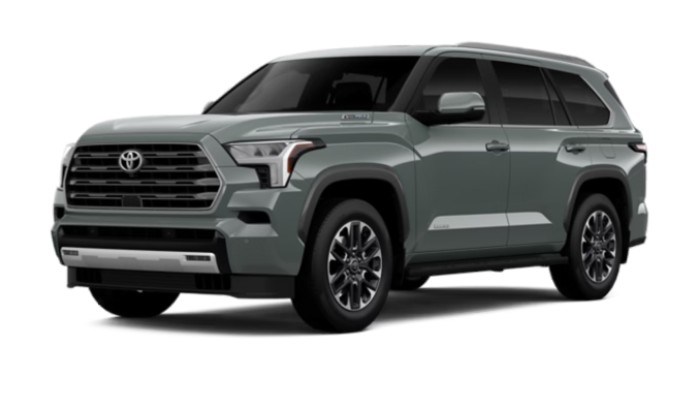
The Toyota Sequoia has never really been the SUV we buy because we want something small, delicate, or inexpensive to fuel. We buy it because we want space, strength, towing capability, and—perhaps most importantly—a vehicle capable of staying on the road for a very long time.
That raises an obvious question: what is the Toyota Sequoia life expectancy?
For a properly maintained Sequoia, reaching 200,000 miles is entirely realistic, while many well-cared-for examples can continue toward 250,000 to 300,000 miles or more. Mileage alone, however, does not tell the whole story. Maintenance history, climate, towing frequency, driving style, generation, and corrosion can matter just as much as the number glowing on the odometer.
A Sequoia with 180,000 miles and meticulous maintenance may be a much safer purchase than one with 110,000 miles that has spent its life towing heavy trailers while receiving sporadic oil changes.
In this guide, we'll look closely at how long a Toyota Sequoia can last, what affects its lifespan, which components tend to determine whether an older Sequoia stays economical, and what we should inspect before buying one with high mileage.
Content in this publication
- What Is the Average Toyota Sequoia Life Expectancy?
- How Many Years Can a Toyota Sequoia Last?
- Why Toyota Sequoias Often Last So Long
- Toyota Sequoia Life Expectancy by Generation
- Can a Toyota Sequoia Last 200,000 Miles?
- Can a Toyota Sequoia Reach 300,000 Miles?
- How Long Does the Toyota Sequoia Engine Last?
- How Long Does a Toyota Sequoia Transmission Last?
- Does Towing Reduce Toyota Sequoia Life Expectancy?
- How Maintenance Affects Sequoia Lifespan
- Rust Can Kill a Sequoia Before the Engine Does
- Highway Miles vs City Miles
- Is a Sequoia With 150,000 Miles Too Old?
- What Mileage Is Too High for a Used Toyota Sequoia?
- Most Important Signs of a Healthy High-Mileage Sequoia
- Warning Signs That Could Shorten Its Remaining Life
- How Driving Style Affects Toyota Sequoia Longevity
- Can You Daily Drive a High-Mileage Toyota Sequoia?
- How Expensive Is It to Keep a Sequoia Past 200,000 Miles?
- How to Make a Toyota Sequoia Last Longer
- Does the Hybrid Sequoia Have the Same Life Expectancy?
- Toyota Sequoia Life Expectancy Compared With Other Large SUVs
- Is Buying a High-Mileage Toyota Sequoia Worth It?
- How Long Should We Expect a Used Sequoia to Last After Purchase?
- Toyota Sequoia Life Expectancy: Final Verdict
- Frequently Asked Questions
What Is the Average Toyota Sequoia Life Expectancy?
A reasonable expectation for a Toyota Sequoia is approximately 200,000 to 300,000 miles when maintained properly.
That does not mean every Sequoia automatically reaches 300,000 miles.
Think of 300,000 miles as something closer to a marathon finish line than a factory guarantee. The SUV has the mechanical foundation to reach very high mileage, but maintenance determines whether it actually gets there.
For many owners, the practical lifespan will fall somewhere around:
- 150,000 miles: usually achievable without extraordinary effort
- 200,000 miles: realistic with consistent maintenance
- 250,000 miles: achievable for carefully maintained vehicles
- 300,000 miles: possible when major components remain healthy
- Beyond 300,000 miles: uncommon, but certainly not impossible
Age matters too.
Even a low-mileage Sequoia can develop problems after 15 or 20 years because rubber seals, suspension components, wiring connectors, hoses, bushings, and interior materials deteriorate with time.
How Many Years Can a Toyota Sequoia Last?
Mileage gets most of the attention, but years of service often matter more to families planning long-term ownership.
Suppose we drive approximately 12,000 miles annually.
At that pace:
| Mileage | Approximate Vehicle Age |
|---|---|
| 100,000 miles | 8 years |
| 150,000 miles | 12–13 years |
| 200,000 miles | 16–17 years |
| 250,000 miles | 20–21 years |
| 300,000 miles | 25 years |
That means a Sequoia capable of reaching 250,000 miles could potentially remain usable for roughly two decades.
Of course, climate changes everything.
A 20-year-old SUV from a dry region may have an excellent chassis underneath. A similar Sequoia driven through salty winter roads every year could suffer serious corrosion long before the engine reaches the end of its mechanical life.
Mileage Isn't Always the Main Limitation
Here's the interesting part: an older Sequoia's engine may still be perfectly willing to continue while everything surrounding it becomes expensive.
Suspension components wear.
Air conditioning systems age.
Wheel bearings develop play.
Rubber bushings crack.
Electronic accessories begin acting strangely.
Eventually, ownership becomes less about whether the vehicle can run and more about whether keeping it running still makes financial sense.
Why Toyota Sequoias Often Last So Long
The Sequoia historically shares much of its underlying engineering philosophy with Toyota's heavy-duty trucks and full-size SUVs.
Rather than building the vehicle primarily for lightweight efficiency, Toyota designed the Sequoia around durability, towing, passenger capacity, and substantial mechanical components.
That tends to work in favor of longevity.
Body-on-Frame Construction Helps
Unlike crossover SUVs built around car-style unibody platforms, the Sequoia uses body-on-frame construction.
Imagine the chassis as the skeleton of the SUV.
The body sits above a substantial frame designed to handle:
- towing
- rough roads
- heavy loads
- repeated suspension movement
- long-term structural stress
That doesn't make the vehicle indestructible, but it gives the Sequoia a rugged foundation.
Toyota's Naturally Aspirated V8 Era Built a Strong Reputation
Earlier Sequoia generations became particularly well known for their V8 engines.
These engines were not designed around tiny displacement figures or aggressive levels of turbocharging. Instead, Toyota generally relied on relatively large engines producing power without extreme mechanical stress.
For longevity, simplicity can be valuable.
Fewer highly stressed components can sometimes mean fewer expensive surprises as mileage accumulates.
Toyota Sequoia Life Expectancy by Generation
Not every Sequoia is mechanically identical. Understanding the generations helps us set realistic expectations.
First-Generation Toyota Sequoia
The first generation arrived for the 2001 model year and established the Sequoia's reputation as a large, truck-based family SUV.
Many surviving examples now have extremely high mileage.
That alone tells us something.
Vehicles that were fundamentally weak rarely remain common after two decades of use.
However, age-related deterioration becomes increasingly important with first-generation models.
What Matters Most on Older First-Generation Models?
When looking at one today, we'd pay particularly close attention to:
- frame corrosion
- timing-belt service history on applicable engines
- cooling system condition
- suspension wear
- transmission behavior
- steering components
- leaking seals and gaskets
- four-wheel-drive operation
At this age, documentation can matter more than mileage.
A carefully preserved 220,000-mile example may be preferable to an abused 140,000-mile one.
Second-Generation Toyota Sequoia
The second-generation Sequoia brought a larger platform, more power, modernized technology, and the well-known 5.7-liter V8 in many configurations.
For long-term ownership, this generation is particularly interesting.
Well-maintained examples can accumulate substantial mileage while remaining comfortable enough for daily driving.
However, these are big, heavy SUVs.
Weight naturally places considerable demand on:
- brakes
- tires
- suspension components
- wheel bearings
- driveline parts
The engine might feel fresh at 180,000 miles while the suspension reminds us that gravity always collects its bill eventually.
Third-Generation Toyota Sequoia
The latest generation dramatically changed the formula by replacing the traditional naturally aspirated V8 approach with a twin-turbocharged hybrid powertrain.
That provides much more torque and improved efficiency compared with older Sequoias, but it also introduces greater mechanical and electronic complexity.
Because this generation has not accumulated the decades of ownership history available for older Sequoias, estimating extreme long-term mileage requires more caution.
That doesn't automatically mean shorter life.
It simply means we have less real-world evidence showing how these vehicles behave at 200,000 or 300,000 miles.
Can a Toyota Sequoia Last 200,000 Miles?
Yes.
For a properly maintained Sequoia, 200,000 miles should not automatically be considered the end of its life.
In fact, this is one reason used Sequoias can appear surprisingly expensive even with six-digit mileage.
Buyers understand that mileage alone doesn't necessarily condemn the vehicle.
At 200,000 miles, however, expectations should change.
We shouldn't expect a showroom-new ownership experience.
Wear items may include:
- shocks or struts
- control-arm bushings
- engine mounts
- wheel bearings
- alternators
- starters
- water pumps
- radiators
- hoses
- steering components
- air-conditioning components
The engine may continue running beautifully while these supporting systems gradually demand attention.
Can a Toyota Sequoia Reach 300,000 Miles?
Yes, but reaching 300,000 miles generally requires more than routine luck.
A vehicle covering that distance has essentially driven around Earth about twelve times.
That puts extraordinary cumulative stress on thousands of individual components.
What Does a 300,000-Mile Sequoia Usually Need?
Even if the engine and transmission remain original, we'd expect substantial maintenance over that period.
Likely replacements may include:
- multiple sets of brakes
- numerous sets of tires
- suspension components
- spark plugs
- batteries
- belts
- hoses
- wheel bearings
- engine or transmission mounts
- cooling-system components
Possibly even:
- alternator
- starter
- air-conditioning compressor
- fuel-system components
- differential or driveline parts
The important distinction is that replacing wear components does not necessarily mean the vehicle is unreliable.
Long-life vehicles still require maintenance.
A refrigerator that runs for 25 years will eventually need something replaced. An SUV faces potholes, heat cycles, road salt, vibration, towing loads, and thousands of cold starts.
How Long Does the Toyota Sequoia Engine Last?
With consistent maintenance, Sequoia engines can often survive well beyond 200,000 miles, particularly the older V8 powertrains that built the model's durability reputation.
Engine longevity depends heavily on oil maintenance.
Oil is basically the engine's bloodstream.
Ignore it, and internal wear accelerates silently.
Maintain it properly, and major engine components can survive remarkable mileage.
Factors That Shorten Engine Life
Several habits can dramatically reduce longevity:
Skipping Oil Changes
Old oil loses its ability to properly lubricate and clean internal engine components.
Repeatedly stretching oil-change intervals can lead to sludge, deposits, and accelerated wear.
You may be interested in reading Volkswagen Amarok Reliability: How Dependable Is This Pickup?
Ignoring Cooling Problems
Heat destroys engines faster than mileage does.
A relatively inexpensive coolant leak can become catastrophic if overheating damages cylinder heads, seals, or other internal components.
Repeated Short Trips
Short journeys may prevent the engine from spending enough time at normal operating temperature.
That can increase moisture accumulation and contamination inside the engine oil.
Heavy Towing Without Extra Maintenance
Towing raises engine temperature, transmission temperature, and overall mechanical load.
A Sequoia used frequently for towing may still last a long time, but maintenance should reflect the harder workload.
How Long Does a Toyota Sequoia Transmission Last?
A well-maintained automatic transmission can potentially survive 200,000 miles or more, but transmission longevity varies significantly according to use.
Towing matters.
Heat matters.
Fluid condition matters.
Driving style matters.
A transmission repeatedly hauling heavy trailers through mountainous terrain lives a very different life from one cruising along highways with two passengers.
Signs of Transmission Wear
Before purchasing a high-mileage Sequoia, we'd watch for:
- delayed engagement when shifting into Drive or Reverse
- harsh gear changes
- slipping under acceleration
- shuddering
- unexplained RPM flare
- transmission-fluid leaks
- unusual whining noises
A transmission failure can turn what looked like a bargain SUV into a very expensive driveway ornament.
Does Towing Reduce Toyota Sequoia Life Expectancy?
It can.
The Sequoia is designed to tow, so towing itself isn't automatically harmful.
The bigger issue is how frequently and how heavily the vehicle tows.
Pulling a lightweight trailer occasionally is completely different from hauling close to maximum capacity every weekend.
Frequent heavy towing increases stress on:
- transmission
- cooling system
- brakes
- rear suspension
- differential
- tires
- wheel bearings
Proper trailer setup also matters.
A poorly balanced trailer can punish the suspension and drivetrain far more than a properly configured load.
How Maintenance Affects Sequoia Lifespan
If longevity is the goal, maintenance is not optional.
The difference between a Sequoia dying at 150,000 miles and cruising beyond 250,000 miles often comes down to hundreds of small decisions made throughout its life.
Oil Changes Matter More Than Almost Anything
Consistent oil servicing helps control:
- friction
- heat
- contamination
- sludge
- internal engine wear
We should always follow the maintenance requirements applicable to the specific engine and model year.
Don't Forget the Transmission
Owners often treat engine oil as sacred while forgetting that transmission fluid also works extremely hard.
Transmission service becomes especially important when the SUV regularly:
- tows
- climbs steep terrain
- operates in hot climates
- carries heavy loads
Cooling-System Maintenance Is Crucial
A healthy engine still depends on a functioning cooling system.
Watch for:
- coolant leaks
- deteriorating hoses
- radiator damage
- thermostat problems
- water-pump issues
- temperature fluctuations
Overheating once can cause more damage than tens of thousands of miles of normal driving.
Differentials and Transfer Case Need Attention Too
Four-wheel-drive Sequoias contain additional fluids and components that owners sometimes forget.
Those systems need maintenance as well.
Neglecting driveline fluids is like maintaining the heart while ignoring the arteries.
Eventually something complains.
Rust Can Kill a Sequoia Before the Engine Does
This may be the single biggest lesson when shopping for an older Sequoia.
A powerful engine can be repaired.
A transmission can be replaced.
Severe structural corrosion is another story.
Why Frame Condition Matters So Much
Because the Sequoia uses body-on-frame construction, the frame carries major structural loads.
Surface rust isn't necessarily alarming.
Heavy scaling, perforation, weakened mounting points, or extensive structural corrosion absolutely deserves attention.
If we're evaluating an older vehicle from a snowy region where roads are regularly salted, inspecting underneath should be mandatory.
Where Should We Check for Rust?
Look carefully around:
- frame rails
- suspension mounting points
- crossmembers
- rear axle areas
- fuel-tank mounting areas
- body mounts
- brake and fuel lines
A flashlight and ten minutes underneath the vehicle can sometimes reveal more than an hour-long test drive.
Highway Miles vs City Miles
Not all miles are created equal.
Imagine two Sequoias.
Vehicle A has 160,000 highway miles.
Vehicle B has 110,000 urban miles involving constant stop-and-go traffic.
Which one is healthier?
The answer isn't automatically Vehicle B.
Highway driving usually involves:
- fewer cold starts
- fewer gear changes
- less braking
- steadier engine temperatures
- fewer potholes
- less low-speed maneuvering
That's why odometer mileage should always be viewed alongside vehicle history.
Is a Sequoia With 150,000 Miles Too Old?
Not necessarily.
For many modern vehicles, buyers become nervous once the odometer passes 100,000 miles.
With a Sequoia, 150,000 miles can still represent a significant amount of usable life.
But we need context.
A 150,000-mile SUV with extensive maintenance records could be an excellent vehicle.
The same mileage combined with:
- unknown service history
- heavy rust
- transmission hesitation
- overheating history
- neglected fluids
would be much more concerning.
Maintenance Records Are Gold
Service documentation helps reveal how the previous owner treated the vehicle.
Ideally, we'd like evidence of:
- regular oil changes
- scheduled fluid services
- cooling-system repairs
- brake maintenance
- major engine services
- recall work
- suspension repairs
A thick folder of receipts isn't clutter.
For high-mileage vehicle shoppers, it's almost a résumé.
What Mileage Is Too High for a Used Toyota Sequoia?
There is no universal number.
However, once we move beyond approximately 200,000 miles, condition becomes increasingly important.
At that mileage, we'd want a professional pre-purchase inspection before committing substantial money.
A mechanic can examine areas we might miss during a casual test drive.
Mileage Should Influence Price
Higher mileage isn't automatically bad if the asking price reflects it.
The equation becomes:
Purchase price + likely repairs + expected remaining life = true ownership cost
That's more useful than mileage by itself.
A cheap Sequoia requiring $7,000 worth of immediate repairs isn't necessarily cheaper than a more expensive example that's been meticulously maintained.
Most Important Signs of a Healthy High-Mileage Sequoia
When we're inspecting one, several positive signs can increase confidence.
Look for:
- smooth cold startup
- stable idle
- clean gear shifts
- no overheating
- consistent braking
- tight steering
- no severe vibration
- clean engine oil
- working four-wheel-drive system
- minimal structural rust
- documented maintenance history
No used vehicle will be perfect.
The goal isn't perfection.
The goal is finding evidence that the previous owner treated the SUV as machinery rather than disposable transportation.
Warning Signs That Could Shorten Its Remaining Life
Some warning signs deserve immediate investigation.
These include:
- engine knocking
- blue exhaust smoke
- persistent overheating
- transmission slipping
- severe frame corrosion
- major coolant loss
- heavy oil consumption
- differential whining
- electrical problems affecting multiple systems
One minor problem isn't necessarily alarming.
You may be interested in readingVolkswagen Amarok Reliability: How Dependable Is This Pickup?You may be interested in reading
 Mazda 6 Cons: The Downsides You Should Know Before Buying
Several unrelated problems appearing simultaneously often suggest broader neglect.
How Driving Style Affects Toyota Sequoia Longevity
The driver's right foot can be either a maintenance tool or a demolition hammer.
Constant full-throttle acceleration puts additional stress on:
- engine components
- transmission
- driveshafts
- differentials
- brakes
- tires
Smooth driving reduces shock loads.
That's especially important in a heavy vehicle.
The Sequoia carries substantial mass, and every aggressive acceleration or sudden stop forces the drivetrain and brakes to control that mass.
Cold Engines Deserve Gentle Driving
Engines experience significant wear during cold operation.
We don't need to leave the SUV idling endlessly.
But driving aggressively immediately after startup isn't ideal either.
Allow the engine to reach normal operating conditions before asking for maximum performance.
Can You Daily Drive a High-Mileage Toyota Sequoia?
Absolutely—provided the vehicle is mechanically sound.
Many high-mileage vehicles remain perfectly capable daily drivers.
However, older vehicles require a different mindset.
Instead of waiting for something to break, proactive maintenance becomes increasingly valuable.
That means periodically checking:
- fluids
- belts
- hoses
- suspension components
- battery health
- tire wear
- leaks
At 200,000 miles, ignoring a small leak for six months isn't the same gamble it might have been at 30,000 miles.
How Expensive Is It to Keep a Sequoia Past 200,000 Miles?
This is where ownership becomes very individual.
The basic engine may remain healthy while age-related components start requiring replacement.
We should budget for occasional repairs rather than expecting completely trouble-free ownership.
A useful mindset is to compare repair costs against replacement costs.
Imagine spending $2,000 on suspension, cooling-system, and brake repairs.
That sounds substantial.
But if those repairs give us another three years of dependable service, they may still cost far less than replacing the SUV with a significantly newer vehicle.
When Repairs Stop Making Sense
There eventually comes a point where maintaining the SUV becomes economically questionable.
That usually happens when several expensive problems appear together, such as:
- severe corrosion
- engine problems
- transmission failure
- major electrical faults
- worn suspension
If repair costs start approaching a large percentage of the vehicle's market value, replacing it may become the smarter decision.
How to Make a Toyota Sequoia Last Longer
We don't need exotic maintenance tricks.
Consistency beats complexity.
A few habits provide enormous long-term value:
- Change engine oil on schedule.
- Monitor coolant and engine temperature.
- Service transmission and drivetrain fluids appropriately.
- Repair leaks before they become major failures.
- Inspect the frame for corrosion.
- Maintain correct tire pressure.
- Avoid repeatedly exceeding towing or payload limits.
- Replace worn suspension parts promptly.
- Use quality replacement parts.
- Keep detailed maintenance records.
Small preventive expenses can prevent enormous repair bills.
Does the Hybrid Sequoia Have the Same Life Expectancy?
The newer hybrid Sequoia changes the longevity equation.
Its powertrain combines a twin-turbocharged gasoline engine with hybrid components, producing impressive power and torque.
However, compared with older V8 Sequoias, there are more systems involved.
That doesn't necessarily make it unreliable.
Modern engines, turbochargers, batteries, electronic controls, and hybrid systems can all last a long time.
Still, it is simply too early to give the newest generation the same multi-decade real-world longevity record that older Sequoias have already accumulated.
Hybrid Batteries Don't Automatically Mean Short Life
Drivers sometimes assume a hybrid vehicle becomes useless when its battery eventually deteriorates.
That's overly simplistic.
Hybrid battery longevity depends on:
- temperature
- charging cycles
- vehicle age
- battery management
- usage patterns
Battery replacement is one possible long-term expense, but it should be considered alongside the maintenance costs that traditional drivetrains also accumulate.
Toyota Sequoia Life Expectancy Compared With Other Large SUVs
Full-size SUVs operate in a demanding environment.
They're heavy.
They often tow.
They may carry seven or eight people.
Many spend years traveling with cargo while coping with heat, snow, and rough roads.
Within this segment, the Sequoia's long-standing durability reputation makes it particularly attractive to buyers prioritizing long-term ownership.
Still, reliability depends heavily on the individual vehicle.
A neglected Toyota can absolutely be worse than a carefully maintained competitor.
Brand reputation should guide our research, not replace mechanical inspection.
Is Buying a High-Mileage Toyota Sequoia Worth It?
It can be.
High-mileage Sequoias are particularly attractive when they combine:
- strong maintenance records
- reasonable pricing
- minimal rust
- smooth drivetrain operation
- evidence of responsible ownership
The biggest mistake is assuming the Toyota badge eliminates risk.
It doesn't.
Toyota builds machines, not immortality.
Even exceptionally durable vehicles need parts replaced.
Who Should Consider a High-Mileage Sequoia?
A high-mileage example may make sense if we:
- need a large SUV without paying new-SUV prices
- don't mind occasional repairs
- have access to a trusted mechanic
- value towing and passenger capacity
- plan to keep the vehicle several years
It may be less attractive if we need completely predictable monthly expenses or cannot tolerate unexpected repair bills.
How Long Should We Expect a Used Sequoia to Last After Purchase?
Instead of asking only how many miles are already on the vehicle, we should estimate remaining life.
For example:
A properly maintained Sequoia purchased at 120,000 miles might potentially provide another 100,000 miles or more.
A neglected one purchased at 80,000 miles might become troublesome much sooner.
That's why the odometer is only one chapter of the story.
Condition tells us how the story ends.
Toyota Sequoia Life Expectancy: Final Verdict
So, how long does a Toyota Sequoia last?
For a properly maintained example, 200,000 miles is a realistic target, while 250,000 to 300,000 miles can be achievable for vehicles receiving consistent maintenance and avoiding severe corrosion or major neglect.
Older Sequoias built much of the model's reputation by demonstrating that large SUVs don't necessarily become disposable once they cross 100,000 miles.
Still, longevity isn't automatic.
Oil changes matter.
Cooling-system maintenance matters.
Transmission service matters.
Rust prevention matters.
Driving habits matter.
A Toyota Sequoia can be like an old workhorse: strong, dependable, and surprisingly difficult to retire—but only when we take care of it.
If we're shopping for one, maintenance records and structural condition should carry more weight than the odometer alone.
Find a clean example that has been treated properly, and there may still be a lot of road left ahead.
Frequently Asked Questions
1. How many miles will a Toyota Sequoia normally last?
A properly maintained Toyota Sequoia can realistically reach around 200,000 miles, while many carefully maintained examples may continue toward 250,000 to 300,000 miles or more. Actual lifespan depends heavily on maintenance, corrosion, towing history, and driving conditions.
2. Is 200,000 miles too much for a Toyota Sequoia?
Not automatically. A 200,000-mile Sequoia with excellent service records, minimal rust, and a healthy drivetrain can still have useful life remaining. A pre-purchase inspection becomes especially important at this mileage.
3. Can a Toyota Sequoia last 20 years?
Yes. A Sequoia driven roughly 10,000 to 12,000 miles per year could reach 20 years while remaining within the mileage range many well-maintained examples can handle. Age-related deterioration and rust become increasingly important, though.
4. What usually fails first on a high-mileage Toyota Sequoia?
Rather than the engine suddenly failing, owners may encounter age-related repairs involving suspension components, wheel bearings, cooling-system parts, alternators, starters, seals, air conditioning, or other supporting systems.
5. Should I buy a Toyota Sequoia with 150,000 miles?
A 150,000-mile Sequoia can still be a good purchase if it has a strong maintenance history, minimal corrosion, smooth transmission operation, and no major mechanical warning signs. Condition should matter more than mileage alone.
You may be interested in readingVolkswagen Amarok Reliability: How Dependable Is This Pickup?You may be interested in reading
Mazda 6 Cons: The Downsides You Should Know Before BuyingYou may be interested in reading
 Ram 1500 Reliability: How Dependable Is This Full-Size Truck?
If you want to know other articles similar to Toyota Sequoia Life Expectancy: How Long Can It Really Last? you can visit the category Blog.
How to Reset the Oil Light on a Kia Sportage

Volvo S90 Reliability: Problems, Costs & Best Years
Is Haval Jolion a Good Car? Honest Review, Reliability, Pros and Cons
How to Start Haval Jolion With Spare Key: Complete Guide
How to Calculate Per Diem on an Auto Loan

How to Calculate the Residual Value of a Car
Leave a Reply
More content of your interest