
Toyota Sequoia Pros and Cons: Is This Full-Size SUV Worth It?

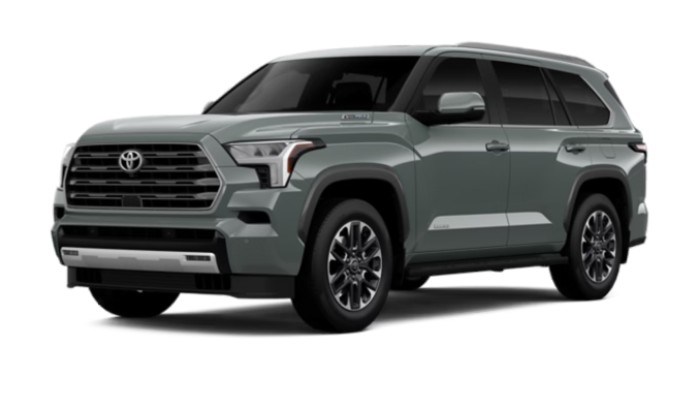
The Toyota Sequoia has always had a distinctive place in the full-size SUV world. It is big, powerful, practical, and built with the kind of rugged personality we normally associate with body-on-frame trucks. Add Toyota's hybrid i-FORCE MAX powertrain, three-row seating, serious towing ability, and available off-road hardware, and the latest Sequoia looks like a compelling all-rounder.
But is it actually the right SUV for most buyers?
That depends on what we expect from it.
When we examine the Toyota Sequoia pros and cons, we find a vehicle with enormous strengths in power, towing, family usability, and adventure capability. At the same time, there are compromises involving price, cargo packaging, maneuverability, fuel economy, and ride comfort.
The Sequoia is not trying to be a soft, city-focused crossover. It is more like a luxury hiking boot: comfortable enough for daily life but clearly designed for tougher jobs.
Let's look at where it shines and where it falls short.
Content in this publication
- Toyota Sequoia Pros and Cons at a Glance
- Pro: The Hybrid Powertrain Is Exceptionally Strong
- Pro: Excellent Towing Capacity
- Pro: Seating for Up to Eight People
- Pro: The Interior Can Feel Surprisingly Luxurious
- Pro: TRD Pro Offers Real Off-Road Capability
- Pro: Fuel Economy Is Better Than the Old V8 Formula
- Pro: Strong Maximum Cargo Capacity
- Pro: Strong Family-Friendly Technology
- Pro: It Has Strong Road Presence
- Con: The Toyota Sequoia Is Expensive
- Con: Hybrid Fuel Economy Is Not Revolutionary
- Con: Cargo Packaging Is Not Class-Leading
- Con: The Sequoia Is Huge Around Town
- Con: The Ride Still Feels Like a Truck-Based SUV
- Con: Its Size Means Higher Running Costs
- Con: It May Be More Vehicle Than Many People Need
- Toyota Sequoia Pros and Cons for Families
- Toyota Sequoia Pros and Cons for Towing
- Toyota Sequoia Pros and Cons for Off-Road Driving
- Toyota Sequoia Pros and Cons for Highway Driving
- Toyota Sequoia Pros and Cons Compared With Competitors
- Which Toyota Sequoia Trim Is Best?
- Is the Toyota Sequoia Reliable?
- Who Should Buy a Toyota Sequoia?
- Who Should Avoid a Toyota Sequoia?
- Is the Toyota Sequoia Worth Buying?
- Toyota Sequoia Pros and Cons: Final Verdict
- Frequently Asked Questions
Toyota Sequoia Pros and Cons at a Glance
The biggest advantages of the Toyota Sequoia include its powerful hybrid drivetrain, substantial towing capacity, spacious first and second rows, available eight-passenger seating, off-road capability, upscale interior options, and strong road-trip comfort.
Its biggest disadvantages are equally important. The Sequoia is expensive, its hybrid fuel economy is only moderately better than traditional full-size SUVs, its cargo area is not as straightforward as some competitors, and its massive dimensions can make daily urban driving more difficult.
In simple terms, the Sequoia is excellent when we actually use its capability. It makes less sense when we mostly need a comfortable commuter.
Pro: The Hybrid Powertrain Is Exceptionally Strong
One of the biggest reasons to consider the Sequoia is its standard i-FORCE MAX hybrid powertrain.
Toyota pairs a twin-turbocharged V6 engine with an electric motor to produce approximately 437 horsepower and 583 lb-ft of torque.
That torque figure is particularly important.
Torque is what makes a large SUV feel effortless when pulling away from a stop, overtaking on the highway, climbing hills, or towing a heavy trailer.
The Sequoia does not feel like a huge vehicle desperately trying to gather speed. Instead, the power arrives with authority.
Strong Acceleration for Such a Large SUV
Nobody buys a Sequoia because they want a sports car, but strong acceleration still matters.
When we merge onto a busy highway with several passengers and luggage onboard, we want confidence. The Sequoia delivers that.
The hybrid system helps provide immediate low-end response, which makes the SUV feel surprisingly energetic despite its size and weight.
The result is less like a traditional lumbering SUV and more like a freight train with an electric shove behind it.
The Hybrid System Focuses on Performance
Some buyers may misunderstand the Sequoia's hybrid badge.
This is not primarily an economy-focused hybrid.
Toyota uses electrification partly to improve efficiency, but it also uses the electric motor to strengthen torque delivery.
That is why the Sequoia can offer better fuel economy than older V8-powered versions while still producing massive pulling power.
If we expect Prius-style fuel savings, we may be disappointed.
If we want a powerful full-size SUV with respectable efficiency, the system makes much more sense.
Pro: Excellent Towing Capacity
Towing ability is one of the Sequoia's greatest strengths.
Depending on configuration, the Sequoia can tow up to approximately 9,500 pounds when properly equipped.
That makes it suitable for serious recreational and utility use.
We could use it for travel trailers, boats, utility trailers, ATVs, camping equipment, or other heavy loads within the vehicle's specific ratings.
Of course, maximum towing capacity is only part of the equation.
We also need to consider payload, passengers, cargo, trailer tongue weight, hitch equipment, and the exact configuration of the vehicle.
Still, the Sequoia's headline numbers place it firmly among capable full-size tow vehicles.
Useful Towing Technology Adds Confidence
Toyota also equips the Sequoia with towing-focused features such as an integrated trailer brake controller and Trailer-Sway Control on current models.
These features make towing less stressful, particularly when dealing with larger trailers.
Trailer sway can be unsettling. When a trailer begins moving from side to side, the combination can feel like the tail is trying to steer the dog.
Electronic assistance cannot replace correct trailer loading and safe driving, but it adds another layer of confidence.
Who Benefits Most From the Towing Capability?
The Sequoia makes particular sense for families that want one vehicle to handle several different roles.
During the week, it can transport children, groceries, luggage, and coworkers.
On weekends, it can tow a camper or boat.
That flexibility is one of the strongest arguments in its favor.
Pro: Seating for Up to Eight People
The Sequoia is a genuine three-row SUV.
Depending on configuration, it can accommodate seven or eight occupants.
Models with a second-row bench maximize passenger capacity, while available captain's chairs reduce seating capacity to seven but create a more premium second-row experience.
For large families, that flexibility matters.
The First Two Rows Are Particularly Comfortable
The Sequoia's exterior width creates generous interior space.
Front-seat passengers get the high seating position many full-size SUV owners love, while adults in the second row generally have enough room to remain comfortable on longer journeys.
Higher trims can add heated and ventilated seating, premium upholstery, upgraded audio systems, and additional convenience features.
Road-trip comfort is where the Sequoia starts to justify its size.
After several hours behind the wheel, we care less about dramatic horsepower figures and more about whether the seats are supportive, the cabin is quiet, and everyone has enough room to stretch.
Pro: The Interior Can Feel Surprisingly Luxurious
Older Sequoias were often respected more for durability than interior elegance.
The latest generation changes that considerably.
Toyota has given the Sequoia a more modern dashboard, larger screens, improved materials, and premium trims that genuinely feel upscale.
The 1794 Edition, for example, introduces western-inspired luxury touches, while Platinum and Capstone models move even closer to traditional luxury SUV territory.
Modern Technology Makes a Big Difference
Large available infotainment screens, a digital gauge cluster, smartphone connectivity, multiple cameras, driver-assistance systems, and premium audio options help modernize the cabin.
That matters because buyers spending full-size SUV money expect more than rugged hardware.
They expect technology that feels current.
The latest Sequoia delivers far more convincingly here than previous generations.
Pro: TRD Pro Offers Real Off-Road Capability
The Sequoia TRD Pro is not just an appearance package.
Toyota gives it genuine off-road equipment, including specialized suspension components, FOX shocks, rugged wheels, all-terrain-focused hardware, and other trail-oriented features.
That makes the Sequoia appealing to drivers who actually spend time away from paved roads.
A Three-Row SUV That Can Handle Adventure
The beauty of the Sequoia TRD Pro is versatility.
We can carry passengers, camping equipment, recovery gear, coolers, and luggage while still having the ability to tackle rough terrain.
That is difficult to replicate with many road-focused three-row SUVs.
However, the Sequoia's size can become a problem on narrow trails.
On open desert tracks or wider mountain roads, it feels at home.
On tight forest trails, its dimensions can make maneuvering more difficult.
Pro: Fuel Economy Is Better Than the Old V8 Formula
The current hybrid Sequoia is more fuel-efficient than the previous generation's thirsty V8.
Some configurations can achieve fuel economy in the low-20-mpg range under EPA testing.
For a full-size SUV producing more than 400 horsepower and capable of towing thousands of pounds, that is respectable.
It is not groundbreaking efficiency, but context matters.
Real-World Fuel Economy Depends on How We Drive
Driving style can dramatically affect consumption.
Aggressive acceleration, short urban trips, cold weather, heavy cargo, larger wheels, four-wheel drive, and towing can all increase fuel use.
A lightly loaded Sequoia cruising steadily on the highway will naturally perform better than one dragging a trailer through mountain roads.
The hybrid system helps, but physics still gets the final vote.
Pro: Strong Maximum Cargo Capacity
With the rear seats folded, the Sequoia provides substantial cargo space.
That makes it useful for large shopping trips, camping equipment, sports gear, luggage, bicycles, and household items.
Toyota also uses an adjustable cargo shelf system to create different loading configurations.
That flexibility helps compensate for one of the SUV's biggest packaging compromises.
Pro: Strong Family-Friendly Technology
Modern families tend to carry an impressive number of devices.
Phones, tablets, headphones, portable gaming systems, cameras, and laptops can quickly turn a road trip into a competition for charging ports.
The Sequoia addresses that with multiple connectivity and charging options depending on trim.
Large screens and available premium audio also make long journeys more pleasant.
Driver-assistance technology adds another useful layer.
Blind-spot monitoring, lane assistance, adaptive cruise control, automatic emergency braking, and parking aids can reduce some of the stress associated with driving such a large vehicle.
Pro: It Has Strong Road Presence
This benefit is subjective, but it matters to many buyers.
The Sequoia looks substantial.
Its upright stance, broad grille, muscular bodywork, and high ride height make it unmistakably a full-size SUV.
Some people want a vehicle that visually communicates strength.
The Sequoia does exactly that.
You may be interested in reading Toyota Sequoia Life Expectancy: How Long Can It Really Last?
It looks equally natural pulling a large trailer, arriving at a mountain lodge, or sitting in a suburban driveway.
Con: The Toyota Sequoia Is Expensive
The biggest barrier for many buyers is price.
Even entry-level versions cost significantly more than midsize three-row SUVs, while premium trims can move deep into luxury-vehicle territory.
Once we begin adding four-wheel drive, premium packages, upgraded interiors, larger wheels, and accessories, the final price can become substantial.
Higher Trims Create Tougher Competition
This is where the value equation becomes more complicated.
At lower trim levels, the Sequoia's combination of towing capability, hybrid torque, space, and ruggedness can justify the price.
At higher trim levels, however, we start comparing it with luxury SUVs.
Then the question becomes different.
Would we rather have Toyota toughness and serious towing ability, or a smoother ride and more sophisticated luxury experience?
There is no universal answer.
Con: Hybrid Fuel Economy Is Not Revolutionary
The hybrid badge can create unrealistic expectations.
A buyer may imagine dramatically reduced fuel bills.
That is unlikely.
The Sequoia remains a large, heavy, aerodynamically blunt vehicle.
Even excellent hybrid engineering cannot completely overcome the fact that we are moving several thousand pounds of SUV through the air.
Think of the Hybrid System as a Torque Booster
The easiest way to understand the Sequoia hybrid is to stop comparing it with economy hybrids.
Instead, think of the electric motor as an additional source of torque.
The benefit is that we receive strong performance and improved efficiency simultaneously.
But if minimizing fuel consumption is our top priority, a smaller hybrid crossover will be vastly cheaper to run.
Con: Cargo Packaging Is Not Class-Leading
This is one of the most significant practical criticisms of the latest Sequoia.
Although maximum cargo capacity is substantial, the rear cargo floor and third-row arrangement are not as simple or as flat as those in some competitors.
The hybrid battery and rear suspension packaging influence how the area is designed.
Toyota compensates with adjustable shelving and a sliding third row.
That is clever engineering.
But clever does not always mean ideal.
The Adjustable Shelf Helps, but It Also Adds Complexity
Imagine a kitchen where we need to rearrange shelves every time we change the size of the groceries.
It works.
But sometimes we would rather have a simple flat surface.
The Sequoia's cargo system can feel similar.
It provides flexibility, but buyers who constantly load strollers, large suitcases, pet crates, or bulky equipment should inspect it carefully.
Families Should Test the Cargo Area in Person
This is especially important for families using all three rows.
Do not only look at maximum cargo capacity.
Maximum cargo figures usually assume the rear seats are folded.
What really matters for a seven- or eight-person family is how much space remains when every seat is occupied.
Bring the stroller to the dealership if necessary.
Sometimes practical testing tells us more than a specification sheet ever could.
Con: The Sequoia Is Huge Around Town
Size is one of the Sequoia's greatest strengths and weaknesses simultaneously.
On highways, open roads, and long trips, the large footprint creates a commanding and stable driving experience.
In crowded cities, the same dimensions become less convenient.
Parking garages feel tighter.
Drive-through lanes feel narrower.
Parallel parking becomes an event rather than a casual maneuver.
Technology Helps, but Cannot Shrink the SUV
Parking cameras, sensors, and surround-view systems make maneuvering easier.
They do not change the physical dimensions.
If our daily routine involves dense neighborhoods, underground parking, narrow streets, or small parking spaces, the Sequoia can quickly feel oversized.
This is worth considering before buying.
Living with a large SUV every day is very different from enjoying one during a short test drive.
Con: The Ride Still Feels Like a Truck-Based SUV
The Sequoia uses body-on-frame construction.
That is one of the reasons it can tow heavily and handle rough conditions.
It also affects ride quality.
Although modern suspension tuning makes the current generation considerably more refined than older models, it may still feel firmer or more truck-like than unibody crossovers.
Truck Character Can Be Positive or Negative
Some drivers enjoy that substantial feeling.
The Sequoia feels rugged, planted, and purposeful.
Others want a large SUV that floats over broken pavement like a luxury sedan.
Those buyers should compare several vehicles before deciding.
Ride preference is intensely personal.
A suspension setup that feels confidence-inspiring to one driver can feel overly firm to another.
Con: Its Size Means Higher Running Costs
Fuel is not the only expense associated with a full-size SUV.
Large vehicles often require larger tires, more expensive replacement components, more oil and fluids, and sometimes higher insurance costs.
Brakes can also cost more because they must manage significant vehicle weight.
The hybrid system adds another layer of sophistication.
Toyota has substantial experience with hybrid technology, but a hybrid full-size SUV is still mechanically more complex than an old-school naturally aspirated V8.
That does not automatically mean poor reliability.
It simply means there are more components involved.
Con: It May Be More Vehicle Than Many People Need
This is perhaps the most important disadvantage.
The Sequoia makes sense when we need what it offers.
If we tow regularly, transport six or seven people, travel long distances, camp, drive on rough roads, or carry significant equipment, the capabilities become valuable.
But what if we usually drive alone?
What if we rarely use the third row?
What if we never tow?
Then we are carrying around substantial size, weight, and cost without using the benefits.
Buying a Sequoia solely because we like the appearance is similar to buying industrial equipment for household chores.
It works, but it may not be the most efficient solution.
Toyota Sequoia Pros and Cons for Families
For families, the Sequoia can be fantastic.
Its three rows, available eight-passenger layout, commanding driving position, comfort features, powerful climate control, large maximum cargo capacity, and towing ability create an impressive package.
Families that frequently travel may appreciate it even more.
The ability to load children, luggage, bikes, camping gear, and possibly a trailer into one vehicle is hugely convenient.
However, we need to think carefully about daily reality.
If the school parking lot is cramped, the Sequoia's size becomes annoying.
If all three rows are constantly occupied, cargo-area packaging becomes more important.
If we commute long distances without passengers, fuel and operating costs may feel unnecessarily high.
The Sequoia is a great family SUV when the family actually needs full-size capability.
Toyota Sequoia Pros and Cons for Towing
Towing is where the Sequoia makes one of its strongest arguments.
Its hybrid powertrain provides enormous low-end torque, while maximum towing capacity approaches 9,500 pounds in suitable configurations.
The available towing technology further improves usability.
For owners with travel trailers, boats, or recreational equipment, these strengths can easily outweigh several of the Sequoia's disadvantages.
However, towing should always be approached carefully.
Maximum trailer weight is not the only number that matters.
You may be interested in readingToyota Sequoia Life Expectancy: How Long Can It Really Last?You may be interested in reading
 Volkswagen Amarok Reliability: How Dependable Is This Pickup?
Payload capacity, tongue weight, passengers, cargo, accessories, and axle ratings all influence what we can safely tow.
The correct vehicle configuration matters just as much as the headline towing figure.
Toyota Sequoia Pros and Cons for Off-Road Driving
The Sequoia is unusually capable for a family-oriented three-row SUV.
Four-wheel-drive versions provide genuine traction capability, while TRD Pro models push the vehicle much further toward serious off-road use.
Strong torque is especially helpful on rough terrain.
The body-on-frame structure also suits demanding environments.
The main disadvantage is size.
A large SUV needs more space between obstacles.
On wide trails, beaches, deserts, and open mountain roads, this may not matter.
On tight wooded tracks, the Sequoia can feel like threading a needle with a hammer.
Toyota Sequoia Pros and Cons for Highway Driving
Highway driving suits the Sequoia well.
The elevated seating position gives us excellent forward visibility, while the powerful drivetrain makes overtaking easy.
The long wheelbase and substantial weight contribute to a planted feel.
Adaptive cruise control and other driver-assistance systems can make long-distance travel easier.
The main drawbacks are fuel consumption and overall size.
A large SUV naturally requires more energy to maintain speed than a smaller crossover.
Wind noise around the large body and tires may also become more noticeable depending on trim and wheel choice.
Still, road trips are arguably one of the environments where the Sequoia feels most natural.
Toyota Sequoia Pros and Cons Compared With Competitors
The Sequoia competes in a crowded segment.
Major alternatives include the Chevrolet Tahoe, GMC Yukon, Ford Expedition, Nissan Armada, Jeep Wagoneer, and other large SUVs.
Each takes a slightly different approach.
Some competitors prioritize cargo space.
Others emphasize luxury.
Some offer multiple engine choices.
The Sequoia's identity revolves around hybrid torque, Toyota's truck heritage, strong towing ability, and available off-road hardware.
That gives it a unique personality.
Why Choose the Sequoia Over a Chevrolet Tahoe?
The Sequoia may appeal more strongly to buyers who specifically want a hybrid powertrain and Toyota's particular approach to ruggedness.
The Tahoe, meanwhile, can be attractive for shoppers prioritizing interior packaging, powertrain variety, or traditional American full-size SUV characteristics.
Neither is automatically better.
The right choice depends on priorities.
Why Choose the Sequoia Over a Ford Expedition?
The Expedition is another strong towing-focused family SUV.
The Sequoia's hybrid drivetrain gives it a unique combination of torque and efficiency, while the TRD Pro provides a particularly adventurous personality.
The Expedition may appeal to drivers who prefer its cabin layout, road manners, or engine characteristics.
A back-to-back test drive is worthwhile.
Which Toyota Sequoia Trim Is Best?
Toyota offers several versions of the Sequoia, and choosing wisely can dramatically affect value.
The SR5 provides the essential powertrain and capability while keeping the price relatively controlled.
The Limited adds more comfort and technology and may represent the best balance for many buyers.
Platinum moves further toward luxury.
The 1794 Edition offers distinctive styling and upscale interior materials.
TRD Pro is the clear choice for serious off-road enthusiasts.
Capstone sits at the top of the lineup and focuses heavily on luxury.
The Limited May Be the Sweet Spot
For many families, the Limited makes sense because it adds desirable comfort and technology without pushing as far into premium pricing as the most expensive trims.
The important thing is avoiding unnecessary equipment.
It is easy to turn an already expensive SUV into a significantly more expensive one through packages and accessories.
We should pay for features we will actually use.
Is the Toyota Sequoia Reliable?
Toyota has built a strong reputation for durable trucks and SUVs, and previous Sequoia generations became famous for high-mileage longevity.
However, the current generation is mechanically different from older models.
The previous naturally aspirated V8 formula was relatively straightforward.
The latest model combines turbocharging, hybrid hardware, electric components, batteries, electronics, and a more complicated powertrain.
That does not mean it will be unreliable.
Toyota has decades of hybrid experience.
Still, buyers planning to keep a Sequoia for 15 or 20 years should remember that the new generation has not yet accumulated the same decades of real-world history as older models.
Regular maintenance remains crucial.
A Toyota badge cannot protect a neglected vehicle from physics.
Who Should Buy a Toyota Sequoia?
The Sequoia is especially suitable for buyers who need several capabilities simultaneously.
It makes sense if we regularly carry many passengers, tow substantial trailers, take long road trips, travel in difficult weather, explore unpaved roads, or carry large amounts of equipment.
It also works well for buyers who simply prefer the commanding driving position and rugged character of a body-on-frame SUV.
Who Should Avoid a Toyota Sequoia?
The Sequoia may be excessive if most of our driving involves short city trips.
It may also be unnecessary if we rarely use more than five seats and never tow.
Buyers focused primarily on fuel economy, easy parking, maximum cargo-floor efficiency, or low operating costs will probably be happier with a smaller three-row crossover or hybrid SUV.
The important question is not whether the Sequoia is good.
It clearly is.
The better question is whether we need what makes it good.
Is the Toyota Sequoia Worth Buying?
For the right owner, absolutely.
Few vehicles combine serious towing capability, three-row seating, strong hybrid torque, genuine off-road potential, family comfort, and premium features as effectively.
But value depends on usage.
If we tow a camper several times every summer, the Sequoia's capability matters.
If we regularly carry six passengers, the third row matters.
If our weekends involve mountain roads or rough terrain, four-wheel drive matters.
If none of those things describe our lifestyle, a smaller SUV may deliver almost everything we need while costing less to buy and operate.
Toyota Sequoia Pros and Cons: Final Verdict
The Toyota Sequoia is a capable, powerful, distinctive full-size SUV.
Its greatest strengths are easy to identify.
We get a 437-horsepower hybrid powertrain, massive torque, serious towing capability, up to three rows of seating, available eight-passenger capacity, modern technology, strong off-road credentials, and an increasingly luxurious cabin.
Those qualities make the Sequoia particularly attractive for families that travel, tow, camp, or need a single vehicle capable of handling several demanding jobs.
The disadvantages are equally important.
The Sequoia is expensive.
Its hybrid system improves efficiency but does not transform it into an economical vehicle.
Cargo-area packaging is less straightforward than we might expect from such a large SUV.
Its dimensions make city driving and parking more difficult.
And its body-on-frame design gives it a more truck-like personality than softer road-focused alternatives.
So, should we buy one?
If we actually need its towing strength, passenger capacity, and adventure capability, the Sequoia can be an excellent choice.
If we mainly commute, carry one or two passengers, and rarely leave paved roads, we may be paying for capability we never use.
The Sequoia is like a heavy-duty multitool. It is enormously useful when we regularly need several of its functions. If all we need is a simple screwdriver, however, there are cheaper and easier options.
Frequently Asked Questions
1. What Is the Biggest Advantage of the Toyota Sequoia?
The biggest advantage is its combination of power and versatility. The hybrid drivetrain delivers roughly 437 horsepower and 583 lb-ft of torque, while the SUV can seat up to eight people and tow approximately 9,500 pounds in properly equipped configurations. That makes it useful as a family vehicle, tow rig, road-trip SUV, and adventure vehicle.
2. What Is the Biggest Disadvantage of the Toyota Sequoia?
For many buyers, the biggest disadvantages are price and cargo packaging. The Sequoia is expensive even before adding options, while its third-row and cargo-floor arrangement can feel less convenient than some rival full-size SUVs.
3. Is the Toyota Sequoia Good on Gas?
It is reasonably efficient by full-size SUV standards, especially compared with older V8-powered Sequoias. However, it is still a large and heavy vehicle. Expect respectable rather than extraordinary fuel economy. The hybrid system is designed to improve both performance and efficiency rather than maximize fuel savings alone.
4. Is the Toyota Sequoia Good for Towing?
Yes. Towing is one of the strongest reasons to buy a Sequoia. Properly equipped versions can tow approximately 9,500 pounds, and the hybrid powertrain's substantial torque helps when pulling heavy loads. Always verify the exact towing and payload ratings for the specific vehicle before attaching a trailer.
You may be interested in readingToyota Sequoia Life Expectancy: How Long Can It Really Last?You may be interested in reading
Volkswagen Amarok Reliability: How Dependable Is This Pickup?You may be interested in reading
 Mazda 6 Cons: The Downsides You Should Know Before Buying
5. Is the Toyota Sequoia Worth Buying Over Other Full-Size SUVs?
It can be, especially if we value hybrid torque, towing capability, rugged construction, off-road ability, and Toyota's truck-focused personality. Buyers who prioritize maximum cargo flexibility, easy maneuverability, or a softer luxury-oriented ride should also compare the Chevrolet Tahoe, GMC Yukon, Ford Expedition, Nissan Armada, and Jeep Wagoneer before deciding.
If you want to know other articles similar to Toyota Sequoia Pros and Cons: Is This Full-Size SUV Worth It? you can visit the category Blog.
Is Nissan Rogue a Good Car? Reliability, Pros, Cons & What to Know
Nissan Rogue Not Starting? Common Causes and How to Fix It
Is Vauxhall Agila a Good Car? Reliability, Problems and Buying Guide
Honda Passport Life Expectancy: How Many Miles Can It Last?
Honda Passport Depreciation: How Well Does It Hold Its Value?
Nissan Rogue Reliability Rating: How Reliable Is the Rogue?
Leave a Reply
More content of your interest