

Toyota Sequoia Alternatives: Best Full-Size SUVs to Consider

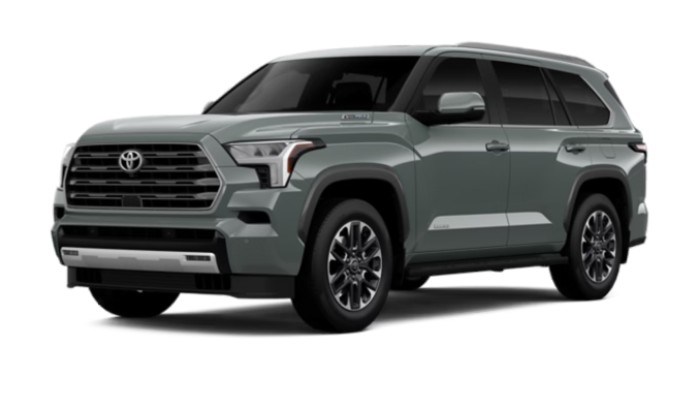
The Toyota Sequoia occupies an interesting corner of the full-size SUV market. It is big, rugged, powerful, family-friendly, and equipped with a standard hybrid powertrain that produces serious torque. For 2026, its i-FORCE MAX twin-turbo V6 hybrid delivers 437 horsepower and 583 lb-ft of torque, while properly configured models can tow up to 9,520 pounds. Toyota also estimates as much as 22 mpg combined for certain configurations.
That's a compelling recipe, but it doesn't automatically make the Sequoia the perfect SUV for every family.
Maybe we need more room behind the third row. Perhaps we prefer a traditional gasoline V8, a diesel engine, or a more luxurious cabin. Some buyers need maximum trailer capacity, while others want better third-row packaging or simply want to know what else exists before spending full-size-SUV money.
Fortunately, the Sequoia doesn't stand alone. The Chevrolet Tahoe, Chevrolet Suburban, Ford Expedition, Nissan Armada, GMC Yukon, Jeep Grand Wagoneer, and Lexus LX all approach the same basic mission from different angles.
So, which Toyota Sequoia alternative deserves our money? Let's sort through the strongest options.
Content in this publication
- Why Look for Toyota Sequoia Alternatives?
- Best Toyota Sequoia Alternatives at a Glance
- 1. Ford Expedition: Perhaps the Closest Sequoia Rival
- 2. Chevrolet Tahoe: The All-Round Alternative
- 3. Chevrolet Suburban: The Space Champion
- 4. Nissan Armada: A Strong Value-Oriented Rival
- 5. GMC Yukon: A More Premium Tahoe Alternative
- 6. Jeep Grand Wagoneer: For Towing and Luxury
- 7. Lexus LX: The Luxury Toyota Alternative
- Which Sequoia Alternative Is Best for Towing?
- Which Alternative Offers the Most Family Space?
- Which Toyota Sequoia Alternative Is Best for Off-Roading?
- Which Alternative Is Best for Fuel-Conscious Buyers?
- Toyota Sequoia vs Alternatives: Reliability Considerations
- Should We Buy a Sequoia or One of Its Alternatives?
- What to Check Before Choosing a Full-Size SUV
- Final Verdict: What Is the Best Toyota Sequoia Alternative?
- Frequently Asked Questions
Why Look for Toyota Sequoia Alternatives?
The Sequoia is built for people who need considerably more SUV than the typical compact crossover can provide. It can seat up to eight, tow heavy trailers, tackle rough terrain, and carry a family without feeling like an oversized minivan. Toyota's power-folding third-row seats are standard across the 2026 range, and the sliding third-row/cargo system gives us some flexibility when balancing passengers and luggage.
Still, full-size SUVs involve trade-offs.
A rugged body-on-frame platform can provide strength and towing confidence, but packaging isn't always as efficient as we'd expect from such a massive vehicle. Meanwhile, some competitors offer longer-wheelbase versions, enormous cargo areas, alternative engines, or cabins that lean further into luxury.
In other words, choosing a full-size SUV is a little like buying a house. Square footage matters, but the floor plan matters just as much.
What Makes a Good Sequoia Competitor?
A genuine Sequoia rival should offer more than three rows of seats and a tall driving position. We want enough power for a loaded cabin, substantial towing capability, meaningful passenger space, and the durability expected from a vehicle designed around truck-like demands.
Depending on our priorities, the ideal alternative might also need four-wheel drive, low-range capability, an off-road package, high-end technology, advanced trailering equipment, or enough cargo room to survive a week-long family road trip.
The Best Alternative Depends on the Job
That's the important part. There isn't one universal Sequoia replacement.
If towing is priority number one, the Ford Expedition and Grand Wagoneer deserve serious consideration. If cargo space matters most, the Chevrolet Suburban becomes hard to ignore. For strong value and rugged capability, the Nissan Armada looks increasingly interesting. And if we love the Toyota formula but want more luxury, the Lexus LX is the natural step upward.
Best Toyota Sequoia Alternatives at a Glance
For shoppers who want the short version before we dig deeper, these are the alternatives we'd put near the top of the test-drive list:
- Ford Expedition: excellent choice for towing, family space, and an available extended-length MAX body.
- Chevrolet Tahoe: versatile all-rounder with strong cargo room and multiple engine choices.
- Chevrolet Suburban: best suited to families that consider cargo space behind the third row essential.
- Nissan Armada: powerful twin-turbo V6, strong towing capability, and increasingly premium interior design.
- GMC Yukon: Tahoe-like practicality with a more upscale personality.
- Jeep Grand Wagoneer: premium alternative with a maximum available towing capacity of 10,000 pounds.
- Lexus LX: Toyota-related luxury option with genuine off-road credentials and available hybrid power.
Those vehicles overlap with the Sequoia, but they aren't carbon copies. That's good news. Choice becomes much easier when we match each SUV to a specific type of buyer.
1. Ford Expedition: Perhaps the Closest Sequoia Rival
If we could only test-drive one Sequoia alternative, we'd probably start with the Ford Expedition.
Like the Toyota, the Expedition is a large body-on-frame SUV built to carry people while handling work that would make a smaller crossover sweat. Its twin-turbocharged engine philosophy also feels more modern than the traditional naturally aspirated V8 approach.
More importantly, Ford attacks two areas that matter enormously in this segment: towing and space.
Expedition Towing vs Sequoia Towing
A properly configured 2026 Ford Expedition can tow as much as 9,600 pounds, narrowly exceeding the Sequoia's maximum 9,520-pound figure. Ford states that its Expedition Tremor can tow as much as 9,300 pounds.
The difference between 9,520 and 9,600 pounds is hardly enough to determine the purchase by itself. Once passengers, cargo, tongue weight, configuration, and individual vehicle ratings enter the equation, the sticker on the actual SUV becomes more important than a headline maximum.
Still, Ford clearly belongs in the same heavyweight division.
Why the Expedition MAX Matters
Here is where things become more interesting.
Ford offers the Expedition MAX for shoppers who need additional length and cargo flexibility. The 2026 Expedition MAX Platinum, for example, provides up to 123.1 cubic feet of cargo capacity behind the first row, 84.5 cubic feet behind the second row, and 37.4 cubic feet behind the third. It can seat up to eight and tow as much as 9,000 pounds in the cited configuration.
That's a big deal for families.
Anyone who has packed eight people into an SUV understands the problem: seating capacity looks fantastic on paper until everyone's suitcases arrive. An extended-body SUV can make the difference between loading normally and playing luggage Tetris at 6 a.m.
Who Should Buy the Expedition Instead?
We'd choose the Expedition over the Sequoia if usable family space and towing flexibility outweigh the appeal of Toyota's standard hybrid system.
The Expedition is especially attractive for road-trip families, boat owners, camper owners, and buyers who regularly use all three seating rows.
2. Chevrolet Tahoe: The All-Round Alternative
The Chevrolet Tahoe has become almost synonymous with the American full-size SUV.
Its appeal isn't complicated. It's roomy, powerful, widely recognized, available in numerous trims, and flexible enough to serve everyone from families to fleet operators.
For 2026, Chevrolet says the Tahoe offers seating configurations for seven, eight, or even nine occupants, depending on specification. Properly configured examples can tow up to 8,400 pounds.
That maximum towing number trails the Sequoia, but there's much more to the Tahoe story.
Tahoe Cargo Space Gives It an Advantage
Chevrolet lists up to 122.7 cubic feet of maximum cargo volume for the Tahoe.
This illustrates something buyers sometimes miss when comparing full-size SUVs. Exterior size doesn't tell us exactly how useful an interior will be.
The Sequoia's hybrid hardware and rear suspension/cargo arrangement can make its cargo area feel less straightforward than some rivals. Toyota counters that with a sliding power third row and adjustable cargo shelf system, but shoppers who regularly carry bulky items should physically compare the cargo floors of both SUVs before signing anything.
Tahoe Engine Choice Is Part of the Appeal
The Tahoe also follows a more traditional "pick your flavor" strategy than the Sequoia. Whereas Toyota commits the Sequoia to the i-FORCE MAX hybrid powertrain, Chevrolet has offered different gasoline engines as well as its Duramax turbo-diesel option in the current Tahoe family.
That matters because not every buyer wants the same kind of efficiency.
Someone covering huge highway distances may find a diesel appealing. Another person may simply prefer the character of a gasoline V8. Toyota gives us one very muscular hybrid solution; Chevrolet gives us more powertrain paths.
Tahoe vs Sequoia: Which One Feels More Practical?
For everyday family duty, we'd give the Tahoe serious consideration if interior packaging matters more than maximum torque or Toyota's hybrid identity.
The Sequoia feels like an adventurous truck-based SUV that happens to transport a family. The Tahoe often feels like a family SUV engineered around a truck-based foundation.
It's a subtle difference, but one we notice quickly when loading children, bags, strollers, coolers, and everything else that somehow follows a family everywhere.
3. Chevrolet Suburban: The Space Champion
Need something even larger?
Enter the Chevrolet Suburban.
The Suburban takes the basic Tahoe concept and stretches it into one of the classic solutions for large families that need both three-row seating and genuine luggage room.
The 2026 model provides as much as 144.5 cubic feet of cargo volume behind the first row, 93.8 cubic feet behind the second, and—perhaps most importantly—41.5 cubic feet behind the third. Chevrolet also lists maximum available towing at 8,200 pounds.
You may be interested in reading Mazda 6 Generations: Complete Guide by Year and Generation
Why Third-Row Cargo Space Changes Everything
Maximum cargo volume gets the headlines, but space behind the third row is arguably the more important number for a family SUV.
Why?
Because if all three rows are occupied, we can't fold the rear seats just because we brought too many bags.
This is where the Suburban's sheer length becomes its superpower. It's basically the difference between a large backpack and a full suitcase. Both carry belongings, but one gives us much more breathing room.
When the Suburban Makes More Sense Than a Sequoia
Choose the Suburban if we regularly travel with six, seven, or eight people plus their gear.
It won't match the Sequoia's maximum tow rating, and buyers who frequently negotiate tight urban parking garages may curse its dimensions. But for airport runs, vacations, sports equipment, camping gear, or large-family highway travel, the extra volume can be priceless.
4. Nissan Armada: A Strong Value-Oriented Rival
The latest Nissan Armada deserves more attention than shoppers sometimes give it.
The 2026 Armada uses a 3.5-liter twin-turbo V6 producing 425 horsepower and 516 lb-ft of torque through a nine-speed automatic transmission. Nissan rates maximum towing at 8,500 pounds, and seating for up to eight is available.
Those figures put it firmly in Sequoia territory.
The New Armada Has Become More Sophisticated
Armada isn't merely chasing Toyota on engine output. Available adaptive electronic air suspension and off-road-focused technology make the newer generation considerably more sophisticated than the old-school image many people still associate with the nameplate. Nissan also offers the PRO-4X for shoppers who intend to leave paved roads behind.
The PRO-4X provides terrain-oriented features, while Nissan's available camera technology can show a view beneath the front of the vehicle to help drivers place the SUV around obstacles.
That gives the Armada something it arguably lacked before: personality.
Armada vs Sequoia for Off-Road Buyers
The Sequoia TRD Pro carries genuine Toyota off-road credibility, but Armada PRO-4X now gives us another rugged three-row choice without shrinking into a midsize SUV.
We'd test both back-to-back.
The Toyota offers considerably more peak torque at 583 lb-ft versus the Nissan's 516 lb-ft, while the Sequoia also carries the higher maximum tow rating. Nissan counters with its own strong twin-turbo performance and potentially appealing pricing depending on trim and incentives.
For buyers who simply assumed "Toyota or nothing," the Armada is worth a fresh look.
Think of the GMC Yukon as a close relative of the Tahoe wearing a nicer jacket.
It shares the basic virtues we expect from GM's full-size SUV architecture but positions itself a little further toward upscale buyers.
The 2026 Yukon offers seating for up to eight, while GMC states that properly equipped models can tow as much as 8,400 pounds. The longer Yukon XL is also available for buyers needing more cargo space.
Why Pick Yukon Instead of Tahoe?
The decision often comes down to atmosphere.
If we like the Tahoe's size and capabilities but want the cabin, trim choices, and exterior presentation to feel somewhat more premium, the Yukon is a natural progression.
Higher Yukon trims also move convincingly toward luxury-SUV territory without forcing us into a traditional premium badge.
Yukon XL vs Sequoia
The Yukon XL deserves special mention for the same reason as the Suburban and Expedition MAX: length.
When we need to fill three rows with passengers and still carry a mountain of luggage, a stretched full-size SUV simply has a packaging advantage.
The Sequoia's compact-for-the-class cargo strategy makes sense for some owners, but it isn't magic. More vehicle length usually means more room to work with.
6. Jeep Grand Wagoneer: For Towing and Luxury
The Grand Wagoneer approaches the Sequoia from another direction.
Instead of emphasizing hybrid efficiency, Jeep mixes serious towing capability with an upscale cabin and a strong dose of American luxury.
For 2026, Jeep lists up to 420 horsepower and 468 lb-ft of torque from its Hurricane twin-turbo engine, along with an available maximum towing capacity of 10,000 pounds.
That towing figure is especially notable because it exceeds the Sequoia's maximum rating.
Grand Wagoneer Is the Alternative for Heavy Trailer Owners
If we're regularly pulling a sizeable boat, travel trailer, or recreational equipment, those maximum numbers will naturally catch our attention.
Of course, maximum towing capacity never tells the entire story. The actual limit depends on configuration, payload, passengers, hitch equipment, and the specific vehicle. But the 10,000-pound headline makes Grand Wagoneer one of the first alternatives we'd investigate for serious towing.
The Luxury Trade-Off
The Grand Wagoneer is also designed to feel more extravagant than a mainstream family SUV.
That's attractive if we want something closer to a luxury vehicle without moving to a Lexus LX, Cadillac Escalade, or Lincoln Navigator.
The downside is obvious: premium size, equipment, complexity, and performance rarely lead to low ownership costs. Anyone considering one should compare not only purchase price but insurance, fuel, maintenance, depreciation, and long-term ownership expectations.
7. Lexus LX: The Luxury Toyota Alternative
Maybe we fundamentally like what Toyota is doing with the Sequoia but wish the experience felt more special.
That's where the Lexus LX enters.
The LX isn't simply a dressed-up Sequoia, but both vehicles exist within Toyota's broader truck-based SUV universe and appeal to customers who value durability, towing, and off-road capability.
For 2026, Lexus offers the LX 600 and hybrid LX 700h. Lexus says both can tow up to 8,000 pounds. The LX 700h combines a twin-turbocharged 3.4-liter V6 with its hybrid system for 457 horsepower and 583 lb-ft of torque, with an EPA-estimated 20 mpg combined rating.
LX 700h vs Sequoia i-FORCE MAX
The comparison is fascinating.
Sequoia gives us 437 horsepower and 583 lb-ft; LX 700h delivers 457 horsepower and the same 583 lb-ft torque figure.
Yet they target different buyers.
The Sequoia is the more straightforward family adventure machine. The LX prioritizes premium materials, refinement, prestige, and sophisticated off-road capability.
If our budget allows it and we don't need maximum third-row cargo capacity, the Lexus can feel like the more polished expression of Toyota's rugged-SUV philosophy.
Why Not Simply Buy the Lexus?
Because luxury isn't free.
You may be interested in readingMazda 6 Generations: Complete Guide by Year and GenerationYou may be interested in reading
Mazda 6 Years to Avoid: Which Models Should You Think Twice About?We shouldn't pay for extra refinement unless we'll actually appreciate it. A Sequoia SR5, Limited, Platinum, TRD Pro, 1794 Edition, or Capstone can already deliver plenty of equipment depending on configuration.
The LX makes sense when the luxury experience itself is part of what we're shopping for.
Which Sequoia Alternative Is Best for Towing?
For maximum published towing figures among the models we've discussed, the 2026 Grand Wagoneer reaches up to 10,000 pounds, the Ford Expedition reaches up to 9,600 pounds in the appropriate configuration, and the Toyota Sequoia itself reaches up to 9,520 pounds.
So the Sequoia is already one of the stronger choices.
But we shouldn't buy a tow vehicle from a maximum-capacity leaderboard alone.
Payload can become the limiting factor before trailer weight does, especially when we combine a heavy trailer tongue weight with several adult passengers and luggage. We should always verify the payload label and towing specification of the exact vehicle we're considering.
Which Alternative Offers the Most Family Space?
For families using the third row constantly, our attention naturally shifts toward the long-wheelbase SUVs.
The Suburban is especially compelling with its published 41.5 cubic feet of cargo room behind the third row. The 2026 Expedition MAX Platinum, meanwhile, lists 37.4 cubic feet behind its third row.
That kind of space changes the ownership experience.
If we're only using the third row occasionally, the Sequoia's flexible sliding and folding arrangement may work perfectly well. If every seat is occupied every weekend, however, the stretched American SUVs deserve a careful look.
Which Toyota Sequoia Alternative Is Best for Off-Roading?
This is where the comparison becomes more subjective.
A Sequoia TRD Pro is already designed for serious adventure. But the Nissan Armada PRO-4X gives us a legitimate alternative, while the Lexus LX offers full-time four-wheel drive and sophisticated terrain-management systems. Lexus specifically highlights Multi-Terrain Select and Crawl Control among the LX's available off-road technologies.
The Grand Wagoneer also brings Jeep's long-standing off-road philosophy into the full-size luxury class.
What matters most is how difficult our adventures actually are. There's little sense paying for locking differentials, specialized suspension hardware, underbody protection, and aggressive tires if the wildest terrain we encounter is an unpaved campground entrance.
Which Alternative Is Best for Fuel-Conscious Buyers?
The Sequoia remains unusual because every 2026 model revolves around the i-FORCE MAX hybrid system.
Toyota quotes up to an EPA-estimated 22 mpg combined, and the engine produces 437 horsepower while delivering its huge 583 lb-ft torque output.
We should keep expectations realistic, though. This is not a Prius stretched into an eight-seat SUV.
The hybrid system is primarily doing the hard work of helping a large, heavy, powerful truck-based SUV combine responsiveness with improved efficiency. If minimizing fuel consumption is our absolute priority and we don't need 9,000-plus pounds of towing capability, a smaller three-row hybrid crossover may make more sense than any vehicle in this article.
Toyota Sequoia vs Alternatives: Reliability Considerations
Reliability is one reason many buyers arrive at the Sequoia in the first place.
Yet buying purely by badge is risky.
Modern full-size SUVs are extraordinarily complicated machines. Twin turbochargers, hybrid components, adaptive suspensions, large infotainment systems, advanced driver-assistance equipment, electronic differentials, powered seats, cameras, and countless control modules mean that ownership depends on much more than an automaker's historical reputation.
A used SUV with meticulous maintenance can be a better long-term bet than a neglected example wearing a supposedly dependable badge.
For new buyers, we'd compare warranty terms, dealer access, expected maintenance costs, insurance quotes, and local parts availability alongside traditional reliability expectations.
Should We Buy a Sequoia or One of Its Alternatives?
The answer gets much easier once we identify what annoys us about the Sequoia.
If nothing does, buy the Toyota.
That's easy to overlook when researching alternatives. We can compare ourselves into paralysis, chasing an SUV that's simultaneously more spacious, cheaper, quicker, more luxurious, more efficient, better off-road, easier to park, and capable of towing more.
That unicorn doesn't exist.
If we want more cargo room, look at the Suburban, Expedition MAX, or Yukon XL. If we want maximum towing, investigate the Grand Wagoneer and Expedition. If we want a different rugged personality, drive the Armada PRO-4X. If we want a more premium take on Toyota-style capability, look at the Lexus LX.
And if we want 583 lb-ft of hybrid torque, up to eight seats, serious off-road potential, and approximately 9,500 pounds of maximum towing in one Toyota package, the Sequoia remains difficult to replace.
What to Check Before Choosing a Full-Size SUV
A specification sheet can narrow our shortlist, but it shouldn't make the final decision.
Take everyone who regularly rides in the SUV to the dealership. Sit adults in the third row. Install the child seats. Fold every seat. Open the cargo area. Imagine loading six suitcases. Check visibility. Park it. Drive it over broken pavement. Accelerate onto a highway. If towing matters, investigate the exact tow package instead of assuming every trim reaches the advertised maximum.
Most importantly, compare similarly equipped vehicles.
A base model and a flagship trim can feel like they came from different manufacturers even though the badge on the hood is identical.
Final Verdict: What Is the Best Toyota Sequoia Alternative?
The Ford Expedition is arguably the strongest direct alternative to the Toyota Sequoia because it combines serious towing ability, three-row space, an available long-wheelbase MAX version, and powerful turbocharged performance. Its maximum 9,600-pound tow rating also puts it among the strongest vehicles in the segment.
The Chevrolet Tahoe may be the better all-around family option for shoppers prioritizing cargo versatility and broad configuration choice, while the Suburban is our pick when passenger space and luggage capacity must coexist.
The Nissan Armada deserves a place on the shortlist for shoppers seeking strong twin-turbo performance and off-road capability without automatically defaulting to Toyota. The GMC Yukon offers a more premium interpretation of the traditional American full-size SUV, and the Grand Wagoneer stands out with up to 10,000 pounds of towing capacity.
Finally, the Lexus LX makes sense when we want Toyota-related engineering philosophy wrapped in a substantially more luxurious package.
Yet the Sequoia still has a distinctive advantage: its standard hybrid setup blends 437 horsepower, 583 lb-ft of torque, seating for as many as eight, and up to roughly 9,500 pounds of towing capacity. That's a combination few competitors replicate exactly.
So the best alternative isn't necessarily the SUV that beats the Sequoia in the most categories. It's the one that beats it in the category we actually care about.
Frequently Asked Questions
What SUV Is Most Similar to the Toyota Sequoia?
The Ford Expedition is one of the closest overall alternatives. Both are large, truck-based three-row SUVs with powerful turbocharged engines and substantial towing capability. The Expedition also offers an extended MAX version for buyers who need considerably more cargo space.
Is a Chevrolet Tahoe Better Than a Toyota Sequoia?
It depends on our priorities. The Tahoe can be especially attractive for cargo flexibility, multiple seating configurations, and powertrain choice. The Sequoia counters with its standard 437-horsepower hybrid system, 583 lb-ft of torque, and a higher maximum towing figure.
What Is a Cheaper Alternative to a Toyota Sequoia?
Pricing varies substantially by trim, options, incentives, and model year, so there isn't one permanently cheaper answer. The Nissan Armada is worth comparing because it starts with a powerful twin-turbo V6 and offers eight-passenger capability while competing directly with the Sequoia. Buyers should compare transaction prices for equivalent equipment rather than base MSRPs alone.
What Is the Best Sequoia Alternative for a Large Family?
The Chevrolet Suburban is one of our strongest choices because it provides 41.5 cubic feet of cargo space even behind the third row. The Ford Expedition MAX is another excellent option, with the cited MAX Platinum offering 37.4 cubic feet behind its third row.
Which Sequoia Alternative Can Tow the Most?
Among the 2026 models covered here, Jeep advertises up to 10,000 pounds of maximum available towing capacity for the Grand Wagoneer. The Ford Expedition reaches as much as 9,600 pounds, while the Toyota Sequoia itself reaches up to 9,520 pounds when properly configured. Actual ratings depend on the individual configuration and equipment.
You may be interested in readingMazda 6 Generations: Complete Guide by Year and GenerationYou may be interested in reading
Mazda 6 Years to Avoid: Which Models Should You Think Twice About?You may be interested in reading
Mazda 6 Trim Levels: Complete Guide to Choosing the Right VersionIf you want to know other articles similar to Toyota Sequoia Alternatives: Best Full-Size SUVs to Consider you can visit the category Models.
Kia Sorento Models: Complete Guide to Trims, Engines and Versions
BYD Shark 6 vs Ranger vs HiLux: Which Ute Makes the Most Sense in 2026?
BYD Shark 6 vs MG U9: Which Ute Makes More Sense in 2026?
BYD Shark 6 vs Ford Ranger Raptor: Which Performance Ute Is Better in 2026?
BYD Shark 6 vs Kia Tasman: Which Ute Is Better?
BYD Shark 6 vs 7: What We Know So Far
Leave a Reply
More content of your interest