

Ram 1500 Generations: Complete Guide From 1981 to Today

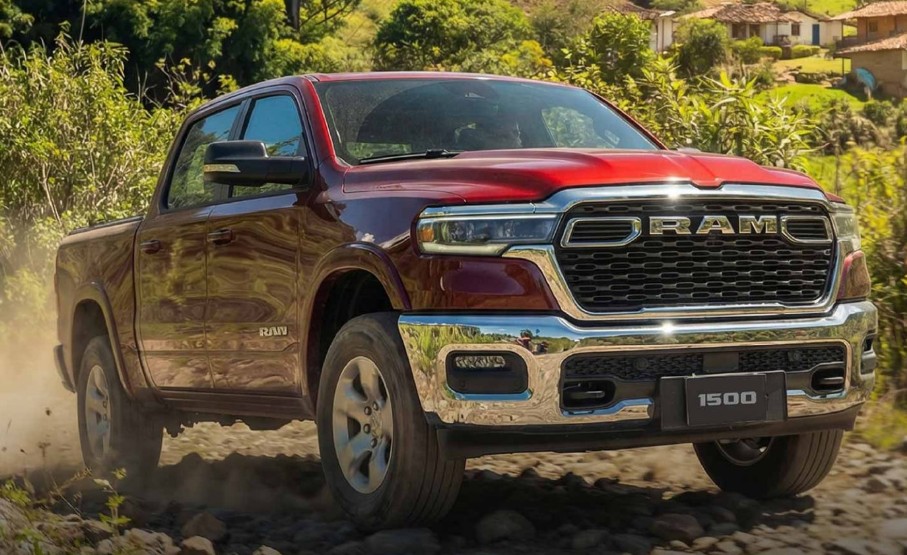
Few pickup trucks have reinvented themselves as dramatically as the Ram 1500. What started as a straightforward Dodge work truck has evolved into a refined full-size pickup with available luxury-car comfort, serious towing capability, advanced technology, and engines ranging from traditional V8s to turbocharged inline-sixes.
But when we start shopping for a used Ram—or simply trying to understand the truck's history—the timeline can get confusing fast. Which years belong to each generation? When did Dodge Ram become simply Ram? Is a 2019 Ram 1500 a fourth-generation or fifth-generation truck? And where exactly does the Ram 1500 Classic fit?
Those are important questions because two trucks built only a year apart can be fundamentally different machines.
In this guide, we'll break down Ram 1500 generations from 1981 to the current model, explain what changed with each redesign, highlight important engines and technology, and clarify one of the most confusing periods in Ram history: the overlap between the fourth-generation Ram 1500 Classic and the fifth-generation Ram 1500.
As of the 2026 model year, Ram continues to sell the fifth-generation 1500, now with engines including the 3.6-liter Pentastar V6, 3.0-liter Hurricane inline-six variants, and the returned available 5.7-liter HEMI V8.
Let's rewind the clock.
Content in this publication
- Ram 1500 Generations at a Glance
- First-Generation Dodge Ram: 1981–1993
- Second-Generation Dodge Ram: 1994–2001
- Why the 1994 Ram Design Was Such a Big Deal
- Third-Generation Ram 1500: 2002–2008
- The Ram 1500 Started Becoming More Than a Work Vehicle
- Fourth-Generation Ram 1500: 2009–2018
- Why Coil Springs Changed the Ram 1500
- The Fourth Generation Pushed Ram Toward Luxury
- The Ram 1500 Classic: The Generation That Refused to Die
- Fifth-Generation Ram 1500: 2019–Present
- The Interior Became Ram's Secret Weapon
- Fifth-Generation Ram Engine Evolution
- The 2025 Ram 1500 Refresh
- The HEMI Returns for the 2026 Ram 1500
- Which Ram 1500 Generation Is Best?
- Ram 1500 Generations and Reliability
- Ram 1500 Generation Codes: DS vs DT
- How Ram 1500 Size Changed Across Generations
- How Ram Interiors Evolved
- How Ram Styling Evolved
- What Generation Ram 1500 Should We Buy Used?
- The Most Important Ram 1500 Generational Changes
- Is Another Ram 1500 Generation Coming?
- Final Thoughts on Ram 1500 Generations
- Frequently Asked Questions
Ram 1500 Generations at a Glance
Before diving deeper, here's the simplest way to understand the timeline:
| Generation | Approximate Model Years | Major Identity |
|---|---|---|
| First Generation | 1981–1993 | Traditional Dodge Ram work truck |
| Second Generation | 1994–2001 | Iconic big-rig styling |
| Third Generation | 2002–2008 | More power, comfort, and refinement |
| Fourth Generation | 2009–2018 | Modern Ram identity and coil-spring suspension |
| Ram 1500 Classic | 2019–2024 | Continued production of fourth-gen design |
| Fifth Generation | 2019–Present | Luxury, technology, efficiency, and refinement |
There are a few complications because heavy-duty Ram models did not always switch generations during exactly the same model year as the Ram 1500. Since we're focusing specifically on the Ram 1500 generations, the light-duty timeline above is the one that matters most.
First-Generation Dodge Ram: 1981–1993
The modern Ram story really begins for the 1981 model year.
Back then, these trucks were still sold under the Dodge name. The Ram designation replaced Dodge's previous D-Series naming system, although the trucks underneath were evolutionary rather than completely revolutionary.
Compared with today's enormous touchscreen-equipped pickups, a first-generation Dodge Ram feels wonderfully simple. These were trucks built primarily around utility.
The design was square, upright, and unmistakably old-school.
What Defined the First-Generation Ram?
Think steel bumpers, rectangular bodywork, straightforward interiors, and relatively little electronic complexity.
Depending on the year and configuration, buyers could find gasoline six-cylinder and V8 engines as well as diesel power.
The first generation also introduced something that would become hugely important to the Ram brand: a serious diesel option.
The Cummins Diesel Changed the Conversation
The arrival of the Cummins turbo-diesel in Dodge's heavier-duty pickups near the end of the 1980s helped transform the reputation of Dodge trucks.
Suddenly, Dodge had a powertrain that attracted serious towing customers and commercial buyers.
Although the Cummins story primarily concerns heavier-duty Ram models rather than the light-duty Ram 1500 itself, it helped build the rugged identity that eventually benefited the entire Ram lineup.
What Is a First-Generation Ram Like Today?
Driving one now feels like stepping into another automotive era.
Steering is less precise. Cab insulation is minimal compared with modern trucks. Safety equipment is basic. Interior materials were selected more for durability than luxury.
And that's exactly why enthusiasts like them.
The mechanical simplicity gives these trucks a kind of honesty. They aren't pretending to be executive sedans with cargo beds attached.
They're trucks.
Second-Generation Dodge Ram: 1994–2001
If one generation truly changed Ram's identity, this might be it.
The 1994 Dodge Ram arrived looking unlike almost anything else in the pickup segment.
Instead of following the relatively flat, squared-off front ends common among pickups at the time, Dodge designers gave the Ram a massive grille surrounded by lower headlights.
The inspiration was obvious: heavy-duty tractor-trailers.
The truck looked like a miniature semi coming down the highway.
And people noticed.
Why the 1994 Ram Design Was Such a Big Deal
Imagine parking one beside an early-1990s pickup.
The difference was dramatic.
The second-generation Ram featured:
- A tall, prominent grille
- Lower-positioned headlights
- More muscular fenders
- Improved interior ergonomics
- Expanded engine choices
- More distinctive trim configurations
Instead of blending into traffic, Ram suddenly had a face.
That visual identity influenced Ram design for decades afterward.
Second-Generation Ram Engine Choices
Engine availability varied by model year and configuration, but buyers encountered familiar Dodge powerplants including gasoline V6 and V8 engines.
This was also the era when Dodge's Magnum engine family became strongly associated with Ram trucks.
For people shopping for older pickups today, the V8 models are often particularly attractive because they combine traditional American truck character with relatively simple mechanical systems.
The Second Generation Became a Cultural Icon
There's something else about these trucks that's difficult to capture on a specification sheet.
They looked tough.
That sounds superficial, but pickup-truck design matters enormously. Owners don't buy trucks solely with calculators; image plays a role too.
The second-generation Ram had presence.
Its grille practically entered the room five minutes before the rest of the truck.
Third-Generation Ram 1500: 2002–2008
The 2002 redesign brought another significant change.
Rather than abandoning the big-rig theme that made the previous Ram famous, Dodge refined it.
The truck became smoother, more aerodynamic, more comfortable, and substantially more modern.
We could think of this generation as the bridge between the traditional pickup and today's multipurpose full-size truck.
The Ram 1500 Started Becoming More Than a Work Vehicle
By the early 2000s, pickup buyers increasingly expected their trucks to serve several roles.
A Ram might tow a trailer on Saturday, carry building materials Monday morning, and transport a family to dinner that evening.
Interior quality therefore mattered more.
Ride comfort mattered more.
Technology mattered more.
Manufacturers could no longer treat the passenger compartment like a toolbox with seats.
Ram followed that trend aggressively.
The Return of HEMI Power
One of the most important developments of the third generation was the arrival of the modern 5.7-liter HEMI V8.
The HEMI name carried enormous historical weight for Chrysler.
Putting that badge on a Ram immediately gave the truck an emotional hook.
It wasn't simply about horsepower.
It was about sound, personality, and the feeling that a big pickup ought to have a big V8 under the hood.
Why the HEMI Became So Closely Associated With Ram
For years afterward, the words "Ram 1500" and "HEMI" were almost inseparable.
The engine offered the effortless low-end character truck drivers appreciated while giving Ram a recognizable marketing identity.
Even owners who rarely approached the truck's maximum capability enjoyed knowing what was waiting under their right foot.
Fourth-Generation Ram 1500: 2009–2018
The fourth generation arrived for the 2009 model year, and this is where the modern Ram 1500 really began taking shape.
Its exterior design evolved rather than starting from scratch, but underneath, one particular engineering decision changed the personality of the truck.
Ram adopted a coil-spring rear suspension instead of relying exclusively on the traditional leaf-spring arrangement commonly associated with full-size pickups.
That mattered.
A lot.
Why Coil Springs Changed the Ram 1500
Leaf springs are simple, durable, and excellent at handling loads. There's a reason trucks have used them forever.
But ride comfort can suffer.
Ram's rear coil-spring setup helped make the 1500 noticeably more comfortable when the bed wasn't heavily loaded—which describes a huge portion of everyday pickup driving.
Suddenly, the Ram could float over rough pavement rather than hop across it like a shopping cart with a refrigerator strapped to the back.
Ram Became Its Own Brand
Another major change occurred around this period.
Ram was separated from Dodge as Chrysler reorganized its brands. From the 2010 model year onward, trucks increasingly became Ram 1500 rather than Dodge Ram 1500.
That's why people still use both names.
You'll often hear someone casually call a modern truck a "Dodge Ram," even though today's trucks are officially sold under the Ram brand.
Fourth-Generation Engine Options
Depending on model year, important powertrains included several familiar names.
The lineup evolved over time and could include:
- Pentastar V6 gasoline power
- 5.7-liter HEMI V8
- EcoDiesel V6
- Earlier V6 and V8 choices in initial model years
The availability of diesel power in a light-duty pickup was especially noteworthy.
It appealed to drivers looking for strong low-rpm torque and potentially better highway efficiency than a traditional gasoline V8.
The Fourth Generation Pushed Ram Toward Luxury
This was also when Ram became increasingly ambitious with premium trims.
Higher-end models demonstrated that pickup interiors could include real wood accents, leather, large displays, heated and ventilated seating, premium audio, and design details that would have seemed absurd in a basic pickup a couple of decades earlier.
Ram understood something important:
Not everyone buying an expensive truck wanted it to feel like farm equipment.
Some customers wanted capability and luxury.
You may be interested in reading Ram 1500 Trims: Complete Guide to Every Trim Level
Why choose between the two?
The Ram 1500 Classic: The Generation That Refused to Die
Here's where the timeline gets confusing.
Ram introduced an all-new fifth-generation 1500 for 2019.
Normally, that would mean the previous truck disappeared.
But it didn't.
Ram continued producing the previous fourth-generation architecture under a new name:
Ram 1500 Classic.
So during this period, buyers could encounter two fundamentally different Ram 1500 designs in the same general market.
2019 Ram 1500 vs 2019 Ram 1500 Classic
This distinction matters enormously when researching replacement parts, reliability, dimensions, towing specifications, or used prices.
A 2019 Ram 1500 could refer to the new fifth-generation truck.
A 2019 Ram 1500 Classic was essentially a continuation of the older fourth-generation design.
They aren't simply different trim levels.
They're different truck generations.
How Can We Tell Them Apart?
The front end provides one of the quickest clues.
The newer fifth-generation Ram moved away from the traditional crosshair-style grille associated with older Dodge and Ram pickups.
The Classic retained the older styling.
If you're shopping online, however, never rely solely on a photograph.
Check the exact model designation, VIN information, body configuration, engine, and applicable generation before ordering parts.
Fifth-Generation Ram 1500: 2019–Present
The fifth-generation Ram 1500 debuted for the 2019 model year.
And this was not a mild facelift.
Ram seriously rethought the truck.
The structure became more advanced. The cabin improved dramatically. Technology took another leap. Aerodynamics were emphasized. Available air suspension strengthened Ram's reputation for excellent ride quality.
Perhaps most noticeably, the interior became a major selling point rather than merely somewhere to operate the truck.
The Interior Became Ram's Secret Weapon
Sit inside an upscale fifth-generation Ram and it's easy to understand why the cabin received so much attention.
Large vertical displays became available.
Materials improved.
Storage became exceptionally clever.
Premium trims blurred the line between pickup and luxury SUV.
The cabin wasn't just "good for a truck."
It could feel genuinely upscale.
The Giant Vertical Touchscreen
One of the signature features of this generation was Ram's available vertically oriented infotainment display.
At the time, it looked enormous.
It gave the dashboard a futuristic appearance and became one of those features people remembered after leaving a dealership.
Today, giant screens are everywhere.
Back then, putting one in the center of a pickup dashboard made a statement.
More Refined Road Manners
Ram didn't abandon capability while improving comfort.
Instead, it doubled down on the idea that a truck could do both.
With its suspension tuning, available air suspension, supportive seats, improved insulation, and increasingly sophisticated cabin, the fifth-generation Ram became particularly attractive to people who regularly drove long distances.
A truck that can tow is useful.
A truck that can tow without exhausting us during a six-hour highway trip is considerably more appealing.
Fifth-Generation Ram Engine Evolution
Powertrain choices evolved significantly over the fifth generation.
Earlier fifth-generation trucks could be equipped with engines such as the 3.6-liter Pentastar V6, 5.7-liter HEMI V8, and, for a period, the EcoDiesel.
Then came one of the biggest changes in modern Ram history.
The Hurricane arrived.
The Hurricane Inline-Six Era
Ram introduced its 3.0-liter Hurricane twin-turbocharged inline-six into the 1500 lineup as the brand began moving away from relying so heavily on traditional V8 power.
That transition generated plenty of debate.
Truck buyers are passionate about engines, and the HEMI had decades of emotional momentum behind it.
Replacing displacement with turbocharging can feel a bit like replacing a steakhouse with a science laboratory.
The numbers may work beautifully, but some people miss the theatre.
Still, the Hurricane offered substantial power and torque while representing Ram's new-generation powertrain strategy.
The 2025 Ram 1500 Refresh
The 2025 model year brought a major refresh to the existing fifth generation rather than creating an entirely new sixth generation.
That's an important SEO and shopping distinction.
A 2025 Ram 1500 is still part of the fifth generation.
However, the refresh introduced enough changes that buyers frequently distinguish between earlier fifth-generation trucks and updated 2025-and-newer examples.
Changes included revised styling, updated technology, new trim positioning, and a major powertrain shakeup centered on the Hurricane engine family.
Is the 2025 Ram 1500 a New Generation?
No.
It's better described as a significant mid-cycle refresh of the fifth-generation platform.
Automotive generations don't change simply because headlights, dashboards, engines, or trim names change.
A genuine new generation normally involves a much deeper redesign of the underlying vehicle architecture.
This distinction is useful when comparing reliability data.
We should avoid lumping every 2019-present truck together as though nothing changed, but we also shouldn't invent an additional generation merely because the truck received substantial updates.
The HEMI Returns for the 2026 Ram 1500
And then the story took another interesting turn.
For 2026, Ram brought the available 5.7-liter HEMI V8 back to the Ram 1500 lineup, alongside the Pentastar V6 and Hurricane inline-six engines. Ram's official 2026 materials currently list these powertrain choices.
For V8 enthusiasts, that was significant.
It showed that Ram's engine transition wasn't necessarily a straight line from naturally aspirated V8s toward turbocharged six-cylinder power.
Customer demand still matters.
Current 2026 Ram 1500 Lineup
Ram's official 2026 configuration tools show a broad selection of trims, including names such as Tradesman, Express, Warlock, Big Horn, Laramie, Rebel, RHO, Limited, Limited Longhorn, and Tungsten.
That lineup illustrates how far the Ram 1500 has evolved.
At one end, it's still a working pickup.
At the other, a Tungsten can operate in territory traditionally occupied by expensive luxury vehicles.
That's an extraordinary spread for one model family.
Which Ram 1500 Generation Is Best?
There isn't one universal answer.
The best generation depends on what we're trying to achieve.
Want an inexpensive mechanical project with old-school character? The first or second generation may have enormous appeal.
Want classic HEMI personality without the price of a nearly new truck? Third- and fourth-generation examples deserve attention.
Want comfort, technology, towing capability, safety features, and luxury? The fifth generation is difficult to ignore.
Best Ram Generation for Everyday Driving
For most people who use a truck as both transportation and utility vehicle, the fifth generation offers the strongest overall package.
It's quieter, more comfortable, technologically advanced, and easier to live with daily.
That doesn't automatically make it the cheapest generation to own.
More technology also means more systems that can eventually require diagnosis or repair.
Best Ram Generation for Simplicity
Older trucks naturally win here.
A first- or second-generation truck contains far fewer electronic modules, cameras, sensors, giant displays, networked computers, and driver-assistance systems.
But age creates its own problems.
You may be interested in readingRam 1500 Trims: Complete Guide to Every Trim LevelYou may be interested in reading
Ram 1500 Years to Avoid: Which Models Should We Be Careful With?A mechanically simple 30-year-old truck can still need suspension bushings, seals, cooling-system work, transmission repairs, rust treatment, electrical repairs, and every rubber component imaginable.
Simple doesn't always mean cheap.
Best Ram Generation for Value
The fourth generation often occupies an interesting middle ground.
These trucks provide recognizable modern features without commanding the prices of newer fifth-generation examples.
There's also a huge used supply.
However, condition and maintenance history matter far more than generation alone.
A carefully maintained older Ram can easily be a smarter purchase than a neglected newer one.
Ram 1500 Generations and Reliability
This is where buyers sometimes make a mistake.
They search for something like:
"Most reliable Ram generation"
Then they expect one generation to contain good trucks while another contains bad ones.
Reality isn't that neat.
Long production runs contain multiple engines, transmissions, electronics packages, supplier revisions, recalls, software updates, and mid-cycle improvements.
A truck built during the first year of a generation may share its basic architecture with one built many years later while still having meaningful mechanical differences.
Model Year Matters as Much as Generation
Instead of asking only, "Which generation?"
We should ask:
- Which model year?
- Which engine?
- Which transmission?
- Which drivetrain?
- Which cab configuration?
- Which options?
- What maintenance has been performed?
- Where was the truck driven?
- Was it frequently used for towing?
- Is there corrosion underneath?
Those questions tell us far more than the generation label alone.
Ram 1500 Generation Codes: DS vs DT
Enthusiasts and parts catalogs sometimes refer to Ram trucks by platform or body codes.
Two particularly important ones for recent Ram shoppers are DS and DT.
The fourth-generation Ram 1500 is commonly associated with the DS platform designation, while the fifth-generation Ram 1500 is associated with DT.
That's especially useful during the overlap period.
Why DS and DT Matter
Imagine ordering a suspension component for a 2019 Ram.
Typing only "2019 Ram 1500" may not tell the entire story.
If your truck is a Classic, you may be dealing with the older DS generation.
If it's the all-new 2019 Ram 1500, you're dealing with DT.
That tiny pair of letters can prevent a very annoying afternoon in the garage.
How Ram 1500 Size Changed Across Generations
Pickups have generally grown larger over time, and Ram is no exception.
The earliest trucks feel comparatively narrow and upright.
Later generations gained larger cabins, thicker doors, improved crash structures, more substantial interiors, bigger wheels, and increasingly elaborate front-end designs.
Park a first-generation Ram beside a fifth-generation Crew Cab and the contrast is almost comical.
The newer truck looks as though someone put the older one into a photocopier and pressed 130%.
Yet exterior growth produced benefits.
Modern Crew Cab models offer rear-seat space that older extended-cab trucks could only dream about.
How Ram Interiors Evolved
Interior evolution may be the clearest illustration of the Ram 1500 story.
First Generation
Functional and straightforward.
Second Generation
More distinctive and ergonomic, but still clearly truck-oriented.
Third Generation
Increasingly comfortable and passenger-friendly.
Fourth Generation
A major step toward sophisticated infotainment and luxury trims.
Fifth Generation
Large displays, premium materials, elaborate storage, advanced connectivity, digital instrumentation, upscale audio, and increasingly sophisticated driver technology.
It's difficult to believe the first- and fifth-generation trucks belong to the same family.
How Ram Styling Evolved
Despite enormous changes, Ram has consistently tried to make its trucks visually recognizable.
The second generation established the aggressive big-rig theme.
The third generation refined it.
The fourth generation polished it further.
The fifth generation reduced the dependence on Dodge-era cues and created a cleaner Ram-specific identity.
The result is evolutionary rather than random.
Each generation carries a little DNA from the truck before it.
Like looking through family photographs, the faces change—but we can still see the resemblance.
What Generation Ram 1500 Should We Buy Used?
For a used buyer, we wouldn't choose by generation alone.
Instead, start with budget and intended use.
If the truck will be a weekend vehicle, simplicity and character may matter more than fuel economy or infotainment.
If we're commuting daily, newer safety equipment and improved comfort become much more valuable.
If we're towing regularly, engine choice, axle ratio, payload rating, cooling equipment, hitch setup, and exact configuration deserve more attention than the badge on the grille.
And if we're buying a high-mileage truck?
Maintenance documentation becomes gold.
A thick folder of service records can be worth more than a shiny set of aftermarket wheels.
The Most Important Ram 1500 Generational Changes
If we had to compress more than four decades of evolution into a handful of milestones, these would stand out:
- 1981: Ram name establishes Dodge's modern pickup identity.
- 1994: Second-generation big-rig styling transforms the truck's image.
- 2002: Third generation increases comfort, refinement, and performance.
- 2009: Fourth generation introduces a more sophisticated chassis and coil-spring rear suspension.
- 2010 era: Ram transitions from a Dodge model identity into a standalone truck brand.
- 2019: Fifth-generation Ram 1500 arrives with major improvements in technology, comfort, and cabin design.
- 2019 onward: Ram 1500 Classic allows the previous generation to remain on sale alongside the new truck.
- 2025: Major fifth-generation refresh introduces extensive styling, technology, and powertrain changes.
- 2026: The available 5.7-liter HEMI V8 returns alongside Hurricane and Pentastar power.
Is Another Ram 1500 Generation Coming?
Eventually, certainly.
Every vehicle platform reaches the point where manufacturers move beyond refreshing the existing architecture and introduce something fundamentally new.
But we shouldn't call every facelift a new generation.
As of the 2026 model year, Ram's current 1500 remains part of the fifth-generation family, even though today's lineup has evolved substantially from the original 2019 truck. Ram's current official site lists the 2026 Ram 1500 and its contemporary engine and trim offerings.
Future redesigns will undoubtedly push electrification, software, connectivity, efficiency, and powertrain technology further.
Yet if Ram's history tells us anything, the company also understands that pickup buyers care about identity.
A truck still has to feel like a truck.
Final Thoughts on Ram 1500 Generations
The story of the Ram 1500 generations is really the story of how the American pickup changed.
The first-generation Dodge Ram was primarily a tool.
The second generation turned styling into a weapon.
The third brought greater performance and everyday usability.
The fourth transformed ride comfort and helped establish Ram as its own identity.
Then the fifth generation pushed the pickup into territory once reserved for luxury SUVs while retaining the capability expected from a full-size truck.
That's quite a journey.
And perhaps the most fascinating part is that every generation still appeals to a different type of owner.
Some of us want the mechanical simplicity of an old Dodge.
Others want the rumble of a HEMI.
Others couldn't imagine owning a truck without adaptive technology, premium leather, giant displays, and smartphone integration.
None of those preferences is inherently wrong.
The trick is understanding what each generation represents before handing over the money.
Do that, and choosing between Ram generations becomes much easier.
Frequently Asked Questions
1. How many generations of the Ram 1500 are there?
The modern Dodge/Ram light-duty pickup lineage is generally divided into five primary generations, beginning with the 1981 Dodge Ram and continuing through today's fifth-generation Ram 1500. The Ram 1500 Classic is generally considered a continuation of the fourth-generation design rather than a separate generation.
2. What years are fifth-generation Ram 1500 trucks?
The fifth-generation Ram 1500 began with the 2019 model year and continues through the current 2026 model year. The truck received an extensive refresh for 2025, but that update did not create a new generation.
3. Is a 2019 Ram 1500 fourth or fifth generation?
It can be confusing because both designs were available around this period. The redesigned 2019 Ram 1500 is fifth generation, while the 2019 Ram 1500 Classic continued using the previous fourth-generation architecture. Always verify which truck you're researching before buying parts.
4. When did Dodge Ram become Ram 1500?
The Ram truck lineup transitioned away from being marketed simply as Dodge trucks when Ram became a separate brand around the 2010 model year. That's why older models are properly called Dodge Rams while newer vehicles are officially Ram trucks, even though "Dodge Ram" remains common in everyday conversation.
5. What is the best Ram 1500 generation to buy?
For comfort, technology, refinement, and modern features, the fifth generation is generally the most appealing. Buyers looking for lower purchase prices and simpler mechanical systems may prefer earlier generations. More importantly, evaluate the exact model year, engine, drivetrain, service history, mileage, rust condition, and previous usage rather than choosing solely by generation.
You may be interested in readingRam 1500 Trims: Complete Guide to Every Trim LevelYou may be interested in reading
Ram 1500 Years to Avoid: Which Models Should We Be Careful With?You may be interested in reading
 Toyota Sequoia Years to Buy: Best Model Years for Reliability and Value
If you want to know other articles similar to Ram 1500 Generations: Complete Guide From 1981 to Today you can visit the category Models.
Nissan Rogue Dark Armor vs Platinum: Which Trim Is Better?

Kia Sorento Models: Complete Guide to Trims, Engines and Versions
BYD Shark 6 vs Ranger vs HiLux: Which Ute Makes the Most Sense in 2026?
BYD Shark 6 vs MG U9: Which Ute Makes More Sense in 2026?
BYD Shark 6 vs Ford Ranger Raptor: Which Performance Ute Is Better in 2026?
BYD Shark 6 vs Kia Tasman: Which Ute Is Better?
Leave a Reply
More content of your interest