
Ram 1500 Fuel Tank Size: Capacity, Range, and What to Know

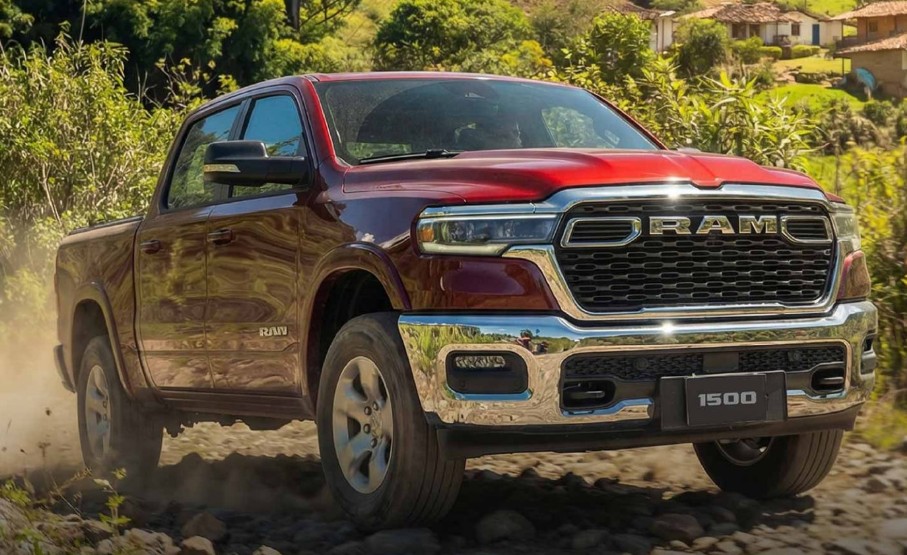
The Ram 1500 fuel tank size is one of those specifications that sounds simple until we start comparing trims, model years, engines, and optional equipment. Ask, “How many gallons does a Ram 1500 hold?” and the answer may be 26 gallons, 33 gallons, or another capacity on certain older configurations.
For the current 2026 Ram 1500, Ram lists a maximum available fuel-tank capacity of 33 gallons. Many configurations use a 26-gallon tank, while certain models and equipment combinations feature the larger 33-gallon setup.
That difference may not sound enormous on paper. Seven gallons, right? Yet on a highway trip, while towing, or when driving through areas where gas stations are scattered like islands, those extra gallons can make a noticeable difference.
In this guide, we'll break down Ram 1500 fuel capacity, explain why tank sizes vary, estimate driving range, discuss towing and fuel costs, and show how to determine the exact tank fitted to your truck.
Content in this publication
- What Is the Ram 1500 Fuel Tank Size?
- How Many Gallons Does a Ram 1500 Hold?
- Ram 1500 Fuel Tank Size by Trim
- Why Does Ram Offer Different Fuel Tank Sizes?
- Ram 1500 Fuel Tank Size by Model Year
- How Far Can a Ram 1500 Go on a Full Tank?
- Why Your Real Driving Range Is Lower
- Does Engine Choice Change Ram 1500 Fuel Capacity?
- Ram 1500 26-Gallon vs 33-Gallon Tank
- Ram 1500 Fuel Tank Size and Towing
- How Much Does It Cost to Fill a Ram 1500?
- How to Find Your Ram 1500's Exact Fuel Tank Size
- Why Can't I Put the Full Rated Capacity Into My Tank?
- Does a Larger Fuel Tank Reduce Payload?
- Can You Upgrade a Ram 1500 to a Larger Fuel Tank?
- How Fuel Tank Size Affects Road Trips
- How to Get More Range From Your Ram 1500
- Should You Buy a Ram 1500 With the 33-Gallon Tank?
- Ram 1500 Fuel Tank Size: Key Takeaways
- Conclusion
- Frequently Asked Questions
What Is the Ram 1500 Fuel Tank Size?
For modern Ram 1500 trucks, 26 gallons is a common fuel-tank capacity, while 33 gallons is available or fitted on selected configurations.
Ram's current specifications confirm that the 2026 Ram 1500 lineup can reach 33 gallons at maximum available capacity.
For example, Ram lists a 26-gallon fuel tank on some 2026 configurations, including specifications shown for the standard Ram 1500 and certain Laramie configurations.
Meanwhile, selected versions are listed with a 33-gallon tank, including the 2026 Ram 1500 Limited and Ram 1500 RHO.
So rather than memorizing one number, we should think of the Ram 1500 this way:
| Ram 1500 Tank | Approximate Capacity | Typical Use |
|---|---|---|
| Standard/common tank | 26 gallons | Everyday driving and many regular configurations |
| Larger tank | 33 gallons | Selected trims/configurations and longer-range use |
The exact equipment depends on the truck, so year, trim, drivetrain, engine, and factory options always matter.
How Many Gallons Does a Ram 1500 Hold?
A modern Ram 1500 commonly holds 26 gallons of gasoline, while selected configurations can hold 33 gallons.
That converts to approximately:
- 26 gallons = 98.4 liters
- 33 gallons = 124.9 liters
That is a difference of roughly 26.5 liters between the two capacities.
For someone commuting ten miles to work, the larger tank may simply mean fewer visits to the gas station. For someone towing a camper across several states, it can feel like carrying an extra canteen through the desert.
Is 26 Gallons the Standard Ram 1500 Tank Size?
It is a common capacity in the current lineup.
Ram's published 2026 specifications show a 26-gallon fuel tank on several configurations.
Still, we shouldn't automatically assume that every Ram 1500 parked in a driveway has a 26-gallon tank. Trucks can differ substantially depending on configuration.
The easiest rule is simple: check the individual truck rather than relying entirely on the trim name.
Does the Ram 1500 Have a 33-Gallon Fuel Tank?
Yes.
Ram states that the 2026 Ram 1500 offers up to 33 gallons of fuel capacity, and published specifications for models such as the Limited and RHO show a 33-gallon tank.
The 33-gallon tank is particularly attractive if we regularly:
- Tow trailers
- Drive long highway distances
- Travel in remote areas
- Use the truck for work
- Want fewer fuel stops
- Frequently drive in winter or heavy traffic
It doesn't magically improve fuel economy. It simply allows us to carry more fuel.
That distinction matters.
Ram 1500 Fuel Tank Size by Trim
Fuel capacity shouldn't be determined solely by reading the badge on the tailgate because individual configurations can change specifications.
Still, current Ram information gives us useful examples.
Ram 1500 Laramie Fuel Tank Size
Ram publishes a 26-gallon fuel tank for the 2026 Laramie configuration shown on its official specifications page.
Equipment can vary, however, so anyone purchasing a specific truck should confirm its build sheet.
Ram 1500 Limited Fuel Tank Size
The 2026 Ram 1500 Limited specifications list a 33-gallon fuel tank in the configuration displayed by Ram.
That larger capacity suits the Limited's role surprisingly well. It's a luxurious pickup, but many Limited owners still use their trucks for road trips, towing, and serious mileage.
Comfort and long-range capability make a pretty good marriage.
Ram 1500 RHO Fuel Tank Size
The performance-oriented 2026 Ram 1500 RHO is listed with a 33-gallon fuel tank.
That's welcome because high-performance trucks can consume considerably more fuel than economy-focused vehicles.
A small tank paired with a powerful engine would be like giving a marathon runner a shot glass of water.
Ram 1500 Rebel Fuel Tank Size
Ram's online specifications can display different Rebel configurations depending on equipment selected. Current Ram pages demonstrate why configuration matters: published specification results can show different fuel-tank values when powertrain and equipment selections change.
For that reason, Rebel shoppers should verify the individual truck rather than assume its capacity based purely on trim.
Why Does Ram Offer Different Fuel Tank Sizes?
Why not simply install the biggest tank in every truck?
Because vehicle engineering is an enormous game of Tetris.
Manufacturers have to fit fuel tanks around frames, exhaust components, driveline parts, suspension components, emissions equipment, spare tires, and other hardware.
They also have to consider weight and cost.
Fuel Adds Weight
Gasoline is not weightless.
A gallon of gasoline weighs roughly six pounds, depending on temperature and formulation. Therefore, carrying seven additional gallons can mean roughly another 40-plus pounds when the tank is full.
That isn't enormous for a full-size pickup, but manufacturers obsess over every pound when calculating payload, vehicle weight, emissions, and performance.
Packaging Matters
Truck configuration can influence how much space is available underneath the vehicle.
Cab design, drivetrain layout, exhaust routing, and optional equipment may affect packaging. That's one reason seemingly identical Ram 1500s can occasionally have different specifications.
Ram 1500 Fuel Tank Size by Model Year
This is where many online articles become misleading.
They publish one tank capacity and quietly imply that it applies to every Ram 1500 ever built.
It doesn't.
The Ram 1500 has existed across several generations, powertrains, cab layouts, and equipment packages. Fuel-tank choices have evolved along with the truck.
For older Ram 1500 models, the exact fuel capacity should therefore be verified using the owner's manual, VIN-specific build information, or factory documentation.
2026 Ram 1500 Fuel Tank Size
For 2026, Ram officially states that the Ram 1500 offers a maximum available fuel capacity of 33 gallons.
The general Ram 1500 specifications also show 26 gallons in common configurations.
That gives us two particularly important numbers for current shoppers:
26 gallons and 33 gallons.
2025 Ram 1500 Fuel Tank Size
The preceding-generation/current-body-period Ram 1500 lineup likewise includes configuration-dependent fuel capacities. The 2025 Ram 1500 RHO, for example, was officially listed with a 33-gallon tank.
Because options can alter specifications, we recommend confirming a particular 2025 truck individually rather than applying one figure across every trim.
Older Ram 1500 Fuel Tank Sizes
Older Rams are where VIN-specific checking becomes particularly valuable.
If we're shopping used, the listing description may be incomplete, equipment may have been changed, and sellers sometimes copy generic specifications from another truck.
Never make a purchasing decision based solely on a generic online specification table.
How Far Can a Ram 1500 Go on a Full Tank?
Now we reach the fun part.
Tank capacity only tells us how much fuel the truck carries. What most owners really want to know is:
How far can we drive before stopping?
The basic formula is:
Fuel tank capacity × real-world MPG = theoretical driving range
Suppose our truck averages 20 mpg.
With a 26-gallon tank:
26 × 20 = 520 miles
With a 33-gallon tank:
33 × 20 = 660 miles
The larger tank provides a theoretical difference of 140 miles at that fuel economy.
That's significant.
Estimated Ram 1500 Range With a 26-Gallon Tank
Here are simple theoretical examples:
| Fuel Economy | 26-Gallon Tank Range |
| 14 mpg | 364 miles |
| 16 mpg | 416 miles |
| 18 mpg | 468 miles |
| 20 mpg | 520 miles |
| 22 mpg | 572 miles |
| 24 mpg | 624 miles |
Remember, these are mathematical estimates rather than guaranteed driving ranges.
Estimated Ram 1500 Range With a 33-Gallon Tank
Using the same calculation:
| Fuel Economy | 33-Gallon Tank Range |
| 14 mpg | 462 miles |
| 16 mpg | 528 miles |
| 18 mpg | 594 miles |
| 20 mpg | 660 miles |
| 22 mpg | 726 miles |
| 24 mpg | 792 miles |
Suddenly the appeal of the 33-gallon tank becomes obvious.
If our driving style and conditions allow 20 mpg, carrying 33 gallons rather than 26 adds roughly 140 miles of theoretical range.
Why Your Real Driving Range Is Lower
We shouldn't expect to use every mathematical mile in those tables.
Several variables reduce actual range.
Wind is one. Temperature is another. Tire pressure matters. So do elevation, idle time, traffic, acceleration, payload, towing, wheel-and-tire choice, and driving speed.
And, naturally, most of us don't intentionally drive until the truck coughs its final drop of gasoline.
The Fuel Gauge Has a Reserve Margin
When the low-fuel warning appears, there is generally still fuel in the tank.
That's intentional.
Running a modern truck completely dry isn't a clever range experiment. Besides leaving us stranded, repeatedly operating near empty can create unnecessary headaches.
Think of the “E” on the fuel gauge as a warning, not a personal challenge.
Does Engine Choice Change Ram 1500 Fuel Capacity?
It can be associated with different configurations, although the engine itself should not be treated as the only determining factor.
The current Ram 1500 lineup includes multiple gasoline powertrains. For 2026, Ram advertises available 3.0-liter Hurricane engines, a 5.7-liter HEMI V8 on selected models, and the 3.6-liter Pentastar V6.
Different engines bring different fuel-consumption characteristics, so tank capacity and range shouldn't be confused.
A powerful engine with a 33-gallon tank might still travel fewer miles between fill-ups than a more economical engine using 26 gallons.
Fuel Capacity vs Fuel Economy
These terms sound related but describe completely different things.
Fuel capacity tells us how much fuel fits in the tank.
Fuel economy tells us how efficiently the truck uses that fuel.
A larger fuel tank does not automatically make a Ram 1500 more efficient.
It simply extends the potential distance between stops.
Ram 1500 26-Gallon vs 33-Gallon Tank
Which one would we choose?
For many everyday drivers, the 26-gallon tank is perfectly adequate.
For long-distance drivers, towers, campers, and people working far from reliable gas stations, the 33-gallon tank is considerably more appealing.
Advantages of the 26-Gallon Tank
A 26-gallon tank gives us plenty of usable range without carrying unnecessary fuel weight.
For commuting, errands, and suburban driving, the difference between 26 and 33 gallons may barely affect daily life.
The gas station is usually never far away.
Advantages of the 33-Gallon Tank
The larger tank offers one major luxury that doesn't appear on a leather or technology option list:
time.
Fewer fuel stops mean less interruption.
Imagine a 600-mile road trip. If the truck's fuel consumption is reasonable, a 33-gallon tank may allow us to complete dramatically more of the journey before stopping.
When towing, the advantage can become even more noticeable because fuel economy tends to fall.
When the 33-Gallon Tank Makes the Most Sense
We would lean toward the larger tank when the truck is regularly used for:
- Cross-country travel
- Trailer towing
- Camping
- Rural driving
- Construction work
- Long-distance commuting
- Areas with expensive or infrequent fuel stations
Ram 1500 Fuel Tank Size and Towing
Towing can turn fuel-range calculations upside down.
A Ram 1500 that travels comfortably between stations while empty may burn fuel much more quickly with a large trailer attached.
Aerodynamic drag is often a major culprit.
Picture towing a tall travel trailer as pulling a small wall through the atmosphere. At highway speed, that wall keeps fighting the air every second.
Why a Larger Tank Helps When Towing
Suppose our truck averages 20 mpg unloaded but falls to 11 mpg while towing.
A theoretical 26-gallon range becomes:
26 × 11 = 286 miles
With 33 gallons:
33 × 11 = 363 miles
That's roughly 77 additional theoretical miles.
Those miles become particularly valuable when traveling through remote regions or when we'd rather choose fuel stops based on convenience instead of desperation.
How Much Does It Cost to Fill a Ram 1500?
The calculation is easy:
Tank capacity × price per gallon = theoretical cost from empty
If regular gasoline costs $3.50 per gallon:
A 26-gallon fill from completely empty would cost:
26 × $3.50 = $91
A 33-gallon fill would cost:
33 × $3.50 = $115.50
The larger number can make our wallet wince at the pump, but there's an important point:
A bigger tank doesn't necessarily mean higher operating cost.
If two trucks achieve identical fuel economy, they consume the same amount of gasoline over a given distance. The 33-gallon truck simply buys more fuel at once and stops less frequently.
How to Find Your Ram 1500's Exact Fuel Tank Size
If we already own a Ram 1500, guessing isn't necessary.
There are several sensible ways to identify its exact fuel capacity.
1. Check the Owner's Manual
Start with the specifications or fluids section in the owner's documentation.
Make sure we're using information for the correct model year and configuration.
2. Check the Original Build Information
Factory build data is especially useful because it reflects how the individual truck was equipped when manufactured.
This is often more reliable than generic specifications.
3. Use the VIN
A Ram dealer can use the vehicle identification number to help identify factory equipment.
For a used truck with an uncertain history, this is one of the cleaner methods.
4. Don't Rely on a Fill-Up Test Alone
Some owners try to calculate tank size by running the fuel level low and recording how many gallons the pump accepts.
That isn't very precise.
If the gauge says empty, fuel may still remain in the tank. Likewise, automatic pump shutoff may occur before every bit of usable expansion volume is filled.
A 23-gallon fill doesn't necessarily mean we have a 23-gallon tank.
Why Can't I Put the Full Rated Capacity Into My Tank?
This confuses plenty of drivers.
Imagine we have a nominal 26-gallon tank, the low-fuel light comes on, and the pump clicks off after only 22 gallons.
Where did the other four gallons go?
They didn't disappear.
There was probably still fuel in the tank when we arrived.
“Empty” on a dashboard gauge doesn't literally mean zero liquid remains. The truck needs a practical warning margin.
Fuel Expansion Also Matters
Gasoline expands as temperature changes.
Fuel systems require vapor-management and expansion considerations rather than treating the tank like a simple bucket that should be filled to its absolute physical limit.
That's another reason we should stop adding fuel after the pump automatically shuts off instead of repeatedly topping it off.
Does a Larger Fuel Tank Reduce Payload?
Fuel is part of the vehicle's operating weight.
So yes, carrying more gasoline adds weight.
Seven extra gallons can add roughly 40-plus pounds compared with the same truck carrying seven fewer gallons.
That's not usually dramatic, but payload calculations matter when a Ram 1500 is loaded close to its rated limits.
If we're towing a heavy trailer while carrying passengers, tools, cargo, hitch weight, and a full tank, every pound belongs in the equation.
Can You Upgrade a Ram 1500 to a Larger Fuel Tank?
Aftermarket fuel-system modifications exist in the truck world, but we shouldn't treat a tank swap like replacing floor mats.
Fuel tanks interact with:
- Fuel pumps
- Sending units
- Emissions equipment
- Evaporative controls
- Fuel gauges
- Mounting hardware
- Vehicle electronics
- Crash protection systems
If we want more capacity, a factory-equipped larger tank is usually the cleanest solution when shopping for a truck.
For an existing truck, compatibility should be confirmed by a qualified specialist before modifying the fuel system.
How Fuel Tank Size Affects Road Trips
Here's where the larger tank becomes less about specifications and more about lifestyle.
Suppose two Ram 1500 owners take the same 1,000-mile trip.
One has 26 gallons.
The other has 33.
Even with identical fuel economy, the larger-tank truck can schedule stops less frequently.
Maybe that doesn't matter on Interstate highways packed with service stations.
But take both trucks through Wyoming, rural Nevada, northern Canada, or another sparsely populated region, and the equation changes.
Range becomes freedom.
A Bigger Tank Can Help You Choose Cheaper Fuel
There is another subtle advantage.
Greater range allows us to be more selective about where we refill.
Instead of buying expensive gasoline because we're nearly empty, we may have enough range to reach another town where prices are lower.
The savings won't always be dramatic, but over thousands of miles they can add up.
How to Get More Range From Your Ram 1500
Regardless of whether we have 26 or 33 gallons, driving habits can stretch each tank.
The goal isn't to crawl down the highway like we're protecting the world's final gallon of gasoline. Small changes are enough.
Useful habits include keeping tires properly inflated, avoiding unnecessary idling, removing unneeded cargo, accelerating progressively, maintaining the truck correctly, and moderating highway speeds when practical.
Aerodynamic resistance rises aggressively at higher speeds. A pickup pushing through the air at 80 mph has a much tougher job than the same truck cruising more moderately.
When towing, that effect becomes even stronger.
Should You Buy a Ram 1500 With the 33-Gallon Tank?
For many buyers, we'd consider it one of those options that seems unimportant until we've lived with it.
If our truck spends most of its life within 20 miles of home, the standard-sized tank may be all we need.
If our weekends involve trailers, highways, campgrounds, remote work sites, or long stretches of open road, the larger tank becomes far more valuable.
It's not glamorous.
Nobody at a parking lot meetup is likely to lean through the window and whisper, “Wow, 33 gallons.”
But practical options age well.
And fewer gas-station stops are something we appreciate every single week.
Ram 1500 Fuel Tank Size: Key Takeaways
The most important lesson is that there isn't one universal Ram 1500 tank size.
For the current 2026 model, 26 gallons appears in many configurations, while the maximum available capacity reaches 33 gallons.
Selected models such as the 2026 Limited and RHO are officially listed with 33-gallon tanks in published specifications.
Older models should always be checked by model year and individual configuration.
That's especially important when buying used.
A seller's advertisement may say “large fuel tank,” but a build sheet or VIN lookup tells the story with far less guesswork.
Conclusion
The Ram 1500 fuel tank size can make a surprisingly big difference in how the truck feels to own.
Many modern configurations use a 26-gallon tank, while certain Ram 1500s offer or include a 33-gallon tank. Ram confirms that the 2026 lineup reaches a maximum available capacity of 33 gallons.
For ordinary commuting, 26 gallons is plenty for most drivers. For towing, road trips, remote work, and long-distance travel, we'd happily take the extra capacity of the 33-gallon tank.
Just remember that tank size and fuel economy are two different pieces of the puzzle. A huge tank can't rescue poor mileage, but it can stretch the time between stops.
And sometimes that's exactly what we want from a full-size pickup: fewer interruptions and more road ahead.
Frequently Asked Questions
1. How many gallons does a Ram 1500 hold?
Many current Ram 1500 configurations hold 26 gallons, while selected configurations can hold 33 gallons. Ram lists 33 gallons as the maximum available fuel capacity for the 2026 Ram 1500.
2. Does the Ram 1500 come with a 33-gallon tank?
Yes. The current lineup includes 33-gallon configurations. For example, Ram lists a 33-gallon tank for the 2026 Ram 1500 Limited and RHO in published specifications.
3. How far can a Ram 1500 travel on a 33-gallon tank?
It depends on fuel economy. At 20 mpg, a 33-gallon tank produces a mathematical maximum of about 660 miles. Real-world range will normally be lower because of driving conditions, fuel reserve, towing, weather, speed, and other factors.
4. How do I know whether my Ram 1500 has a 26- or 33-gallon tank?
Check the owner's documentation, original factory equipment information, or have a Ram dealer identify the configuration using the VIN. This is more reliable than estimating capacity from a single fuel fill-up.
5. Is the 33-gallon Ram 1500 tank worth it?
It can be particularly worthwhile for towing, camping, rural driving, and frequent highway travel. Drivers who primarily make short urban trips may find a 26-gallon tank perfectly adequate.
If you want to know other articles similar to Ram 1500 Fuel Tank Size: Capacity, Range, and What to Know you can visit the category Service and Parts.
Vauxhall Mokka Tyre Pressure Reset: Complete Guide
How to Reset the Tire Pressure System on Your Hyundai Tucson
Hyundai Kona Tire Pressure: Complete PSI Guide
Vauxhall Corsa Timing Belt Replacement Cost UK 2026
Mazda CX-5 Tire Size Chart: 2013–2026 Guide
How to Reset a Honda Civic: Complete Step-by-Step Guide
Leave a Reply
More content of your interest