

Toyota Sequoia Years to Buy: Best Model Years for Reliability and Value

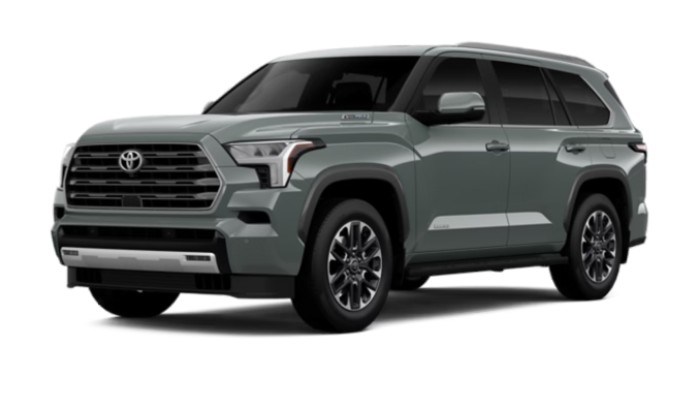
Buying a used Toyota Sequoia can feel a little like shopping for a house. Two examples may look nearly identical from the outside, yet one has been carefully maintained for years while the other is quietly hiding a long list of expensive problems.
That is why identifying the best Toyota Sequoia years to buy requires more than simply choosing the newest SUV we can afford.
The Sequoia has been around for more than two decades, spanning three generations, several powertrains, major technology updates, and countless small improvements. Some years offer outstanding value because they combine proven mechanical components with modern safety equipment. Others make sense mainly when the purchase price is low enough to justify their age.
If we want the short version, 2018-2022 Sequoias are among the strongest used choices for shoppers who want the proven 5.7-liter V8 generation, while 2013-2017 models can provide excellent value at a lower price. Buyers considering the latest generation may prefer 2024 and newer models rather than immediately jumping on the first-year 2023 redesign, although condition, warranty coverage, recalls, and price remain extremely important.
Let's dig deeper because the model-year badge alone never tells the whole story.
Content in this publication
- What Are the Best Toyota Sequoia Years to Buy?
- Why the Toyota Sequoia Has Such a Loyal Following
- Understanding the Three Toyota Sequoia Generations
- Second Generation Toyota Sequoia: 2008-2022
- 2018 Toyota Sequoia: One of the Smartest Years to Buy
- 2019 Toyota Sequoia: Mature and Well Equipped
- 2020 Toyota Sequoia: Possibly the Sweet Spot
- 2021 Toyota Sequoia: Another Excellent Target
- 2022 Toyota Sequoia: Best Year for the Classic Formula?
- 2013-2017 Sequoia: Best Years for Value Hunters
- 2012 Toyota Sequoia: An Interesting Budget Choice
- 2010-2011 Toyota Sequoia: Worth Buying?
- Should We Buy a 2008 Toyota Sequoia?
- Third Generation Toyota Sequoia: 2023 and Newer
- 2023 Toyota Sequoia: Buy or Wait?
- 2024 and Newer Sequoias Make More Sense for Modern-SUV Buyers
- V8 Sequoia vs Hybrid Sequoia: Which Should We Buy?
- What Mileage Is Too High for a Used Toyota Sequoia?
- The Maintenance History Matters More Than the Badge on the Tailgate
- Rust Can Turn a Good Sequoia Year Into a Bad Purchase
- Check Every Four-Wheel-Drive Function
- Do Not Ignore Suspension Condition
- The Best Sequoia Trim Is Not Always the Highest Trim
- Is a Toyota Sequoia Good for Long-Term Ownership?
- Which Toyota Sequoia Year Gives Us the Best Value?
- Which Toyota Sequoia Year Would We Buy?
- How to Choose Between Two Used Sequoias
- Pre-Purchase Inspection: The Step We Should Never Skip
- Best Toyota Sequoia Years to Buy by Type of Buyer
- Conclusion: The Toyota Sequoia Years We'd Buy
- Frequently Asked Questions
What Are the Best Toyota Sequoia Years to Buy?
For most used-SUV shoppers, we would concentrate our search around 2018, 2019, 2020, 2021, and 2022.
Why?
These are late-production examples of the long-running second-generation platform. Toyota had already been building that basic Sequoia architecture for years, while later models gained features that made the SUV feel considerably less dated.
The 2018 update is particularly significant because Toyota refreshed the Sequoia and made Toyota Safety Sense-P standard across the range. The system included technologies such as a pre-collision system with pedestrian detection, lane-departure alert, automatic high beams, and dynamic radar cruise control.
The 2020 model year brought another meaningful improvement: Toyota upgraded the Sequoia multimedia system with compatibility for Apple CarPlay, Android Auto, and Amazon Alexa.
Consequently, late second-generation models strike an attractive balance. We still get the old-school 5.7-liter V8 and body-on-frame construction, but we do not have to sacrifice quite as much technology.
Our general ranking would look like this:
- Best overall used years: 2018-2022
- Best combination of technology and proven hardware: 2020-2022
- Best value years: 2013-2017
- Best lower-budget targets: roughly 2010-2012, assuming excellent maintenance and condition
- Best modern-generation targets: 2024 and newer, particularly when warranty coverage matters
- Year requiring extra first-year-redesign scrutiny: 2023
- Older examples worth buying only after careful inspection: first-generation and early second-generation Sequoias
Those categories are guidelines rather than commandments. A spotless 2015 with complete service records could easily be a smarter purchase than a neglected 2021.
Why the Toyota Sequoia Has Such a Loyal Following
The Sequoia has never really attempted to behave like a crossover.
It is big, heavy, thirsty, spacious, and unapologetically truck-like. That personality is exactly why many owners love it.
For years, the formula was wonderfully straightforward: give families three rows of seating, put everything on a rugged truck-based platform, install a large naturally aspirated V8, and make the mechanical package tough enough for towing, road trips, winter weather, and long-term ownership.
The second-generation Sequoia's familiar 5.7-liter V8 produced 381 horsepower and 401 lb-ft of torque. Toyota was still highlighting those figures in its official material years into the generation.
That engine is one of the biggest reasons shoppers continue hunting for older Sequoias.
It is hardly an economy champion. Feeding one can feel like keeping a refrigerator stocked for a house full of teenagers. Yet for drivers prioritizing simplicity, capacity, and an established powertrain over fuel savings, the trade-off can make sense.
Understanding the Three Toyota Sequoia Generations
Before we decide which Toyota Sequoia year to buy, we should separate the SUV into generations.
Each represents a very different ownership proposition.
First Generation Toyota Sequoia: 2001-2007
The original Sequoia arrived as Toyota's large three-row SUV aimed at American families who wanted something bigger than the 4Runner but less exotic and expensive than the Land Cruiser.
Today, first-generation examples can look incredibly tempting because prices have fallen substantially.
And there is something charming about them. They come from an era when vehicles had fewer screens, fewer electronic assistants, and generally simpler interiors.
But age changes the equation.
At this point, the question is no longer simply, "Is a 2005 Sequoia reliable?"
The more useful question is, "What has happened to this particular 2005 Sequoia during the last two decades?"
Rubber components age. Suspension parts wear. Seals deteriorate. Corrosion can develop. Previous owners skip maintenance. Aftermarket modifications pile up.
A well-preserved first-generation model can still be an appealing enthusiast or budget purchase, but we would not buy one merely because Toyota has a reputation for durability.
Who Should Consider a First-Generation Sequoia?
These models make the most sense for mechanically knowledgeable buyers who prioritize purchase price and durability over modern safety technology, fuel economy, or infotainment.
A pre-purchase inspection becomes essential rather than optional.
Second Generation Toyota Sequoia: 2008-2022
Here is the sweet spot for many shoppers.
Toyota redesigned the Sequoia for 2008, dramatically modernizing the SUV while maintaining its traditional truck-based personality.
This generation remained in production for an unusually long time. That longevity may sound like a disadvantage when we compare the Sequoia with competitors that were redesigned more frequently, but it also created something used-car buyers often love: maturity.
By the late 2010s, Toyota had spent years building fundamentally similar vehicles.
The styling and interior technology certainly became dated compared with newer SUVs, yet the underlying formula remained wonderfully familiar.
Why Later Second-Generation Models Stand Out
The biggest attraction is predictability.
A 2020 Sequoia isn't an experimental interpretation of what a full-size Toyota SUV might become. It is essentially the final evolution of a platform Toyota had refined for more than a decade.
That doesn't guarantee perfection. No vehicle earns that badge.
But if our priorities include established mechanical architecture, strong towing capability, three-row room, and a naturally aspirated V8, this era deserves serious attention.
2018 Toyota Sequoia: One of the Smartest Years to Buy
The 2018 Toyota Sequoia earns a special place on our shortlist.
Toyota introduced refreshed styling along with additional convenience and safety technology. More importantly for family buyers, Toyota Safety Sense-P became standard across the lineup.
That makes 2018 something of a dividing line.
Earlier second-generation Sequoias provide much of the same rugged mechanical character, but the 2018 model feels more appropriate for buyers who want additional driver-assistance technology without abandoning the traditional V8 platform.
Why 2018 Offers Strong Value
Used-car depreciation can sometimes create wonderful opportunities.
A 2018 is old enough to cost substantially less than a nearly new full-size SUV, yet young enough that finding relatively clean examples with reasonable mileage is still realistic.
It can therefore represent the point where ruggedness, modern safety features, and affordability meet.
2019 Toyota Sequoia: Mature and Well Equipped
The 2019 Sequoia follows essentially the same attractive formula.
Toyota continued fitting Toyota Safety Sense-P as standard equipment across the Sequoia range.
For a shopper who finds comparable 2018 and 2019 examples, we would let mileage, maintenance history, trim level, ownership history, and price determine the winner.
Model year should not become an obsession.
A beautifully maintained 2018 Limited with documented servicing is usually more appealing than a 2019 that bounced between owners and missed routine maintenance.
2020 Toyota Sequoia: Possibly the Sweet Spot
If we had to highlight one particularly attractive used model year, the 2020 Toyota Sequoia would be near the top of the page.
Toyota added updated multimedia technology with Apple CarPlay, Android Auto, and Amazon Alexa compatibility across the Sequoia audio lineup. Toyota also introduced the adventurous TRD Pro version for the Sequoia.
Those upgrades matter more than they initially sound.
Older infotainment systems can make an otherwise excellent vehicle feel ancient every single day. Smartphone integration gives us modern navigation, music, podcasts, messaging functions, and familiar apps without needing Toyota to redesign the entire dashboard.
Why We Like the 2020 Sequoia
It combines nearly everything enthusiasts appreciate about the old Sequoia with just enough contemporary technology to make daily driving easier.
We get the 381-horsepower 5.7-liter V8, spacious interior, substantial towing ability, truck-like construction, smartphone connectivity, and Toyota's driver-assistance equipment.
It is old-school machinery wearing just enough modern clothing.
2021 Toyota Sequoia: Another Excellent Target
The 2021 Sequoia continued the established second-generation formula.
Toyota's standard Audio Plus system on SR5 and TRD Sport models included Apple CarPlay, Android Auto, and Amazon Alexa compatibility. The lineup also gained the Nightshade Edition based on the Limited grade.
Mechanically, shoppers searching for proven V8 simplicity still receive essentially what they came for.
Prices may be higher than those of 2018 or 2019 examples, but mileage can also be lower.
That makes 2021 especially attractive for someone planning to keep the vehicle for many years.
2022 Toyota Sequoia: Best Year for the Classic Formula?
The 2022 Toyota Sequoia marked the end of the second generation.
For certain buyers, that alone makes it extremely desirable.
This is the final model year before Toyota replaced the naturally aspirated V8 formula with the completely redesigned hybrid powertrain used by the third generation.
Toyota's official information for the 2022 Sequoia continued to highlight the model's traditional full-size SUV capabilities and 5.7-liter V8.
Why the Final Model Year Matters
Final-year vehicles often appeal to buyers who believe in buying the most mature version of a platform.
By 2022, there was very little mystery surrounding the basic second-generation Sequoia formula.
Of course, desirability can push used prices upward.
That creates an interesting question: should we pay a premium for a 2022 when a 2019 or 2020 delivers most of the same experience?
You may be interested in reading Toyota Sequoia Different Models: Which Sequoia Is Right for You?
Often, the answer is no.
If the price gap becomes substantial, an older late-generation example can deliver better value.
2013-2017 Sequoia: Best Years for Value Hunters
Not everyone needs the newest safety suite or smartphone integration.
If our priority is getting a large, V8-powered Toyota SUV without spending late-model money, the 2013-2017 period deserves attention.
These vehicles sit comfortably inside the mature portion of the second generation.
The design was already established, yet values tend to be lower than those of refreshed 2018-and-newer examples.
The Main Trade-Off
Technology is where age becomes obvious.
Sit inside an older Sequoia after driving a contemporary three-row SUV and the cabin can feel as though someone turned the technological clock backward.
Some buyers will hate that.
Others will smile.
There are fewer layers of menus between us and basic functions, and the large V8 remains the star of the show.
For buyers interested primarily in capability, space, longevity, and straightforward controls, that simplicity can actually be part of the appeal.
2012 Toyota Sequoia: An Interesting Budget Choice
The 2012 model year deserves a mention because Toyota added Trailer Sway Control while continuing to offer the 381-horsepower, 401-lb-ft 5.7-liter V8.
At this age, however, condition overwhelms model-year reputation.
A cheap 2012 with 200,000 miles and questionable maintenance could quickly transform from bargain into financial sinkhole.
Meanwhile, a carefully maintained example with documented cooling-system work, suspension maintenance, fluid changes, and minimal corrosion could remain surprisingly compelling.
This is why shopping for older Toyotas requires discipline.
The Toyota badge should inspire confidence, not blindness.
2010-2011 Toyota Sequoia: Worth Buying?
Potentially, yes.
By 2010 and 2011, the second-generation Sequoia was no longer brand new, which makes these years more appealing to us than blindly choosing the original 2008 launch model.
Toyota documented the same 381-horsepower and 401-lb-ft 5.7-liter engine output for the 2011 Sequoia.
However, any SUV approaching 15 or more years of service should be judged primarily on its present mechanical health.
Think of age like mileage we cannot see on the odometer. Even a low-mileage SUV has spent years heating, cooling, sitting, flexing, and weathering.
Should We Buy a 2008 Toyota Sequoia?
The 2008 model introduced the second generation, making it historically important but not necessarily our first recommendation.
First-year redesigns frequently deserve additional scrutiny because manufacturers are introducing multiple new systems simultaneously.
That does not mean every 2008 Sequoia is problematic.
Far from it.
It simply means that if two vehicles have similar mileage, condition, and pricing, we would generally lean toward a later second-generation example.
Time is another issue.
A 2008 vehicle is now old enough that maintenance history and corrosion deserve far more attention than online reliability scores.
Third Generation Toyota Sequoia: 2023 and Newer
Toyota turned the Sequoia formula upside down for 2023.
The third-generation model was completely redesigned and abandoned the long-running naturally aspirated V8.
Every 2023 Sequoia instead received Toyota's i-FORCE MAX twin-turbo V6 hybrid powertrain producing 437 horsepower and 583 lb-ft of torque.
That is a huge conceptual change.
The modern Sequoia offers considerably more torque, newer technology, modern styling, and greater available towing capability, but it is also mechanically much more complex than its predecessor.
2023 Toyota Sequoia: Buy or Wait?
We would approach a used 2023 Sequoia differently from a 2020 or 2021.
The reason isn't that the 2023 is inherently bad. It is that it represents the first year of an entirely new generation with a new powertrain architecture.
Toyota's redesign was substantial rather than cosmetic.
Additionally, recall history should be checked carefully. For example, 2023-2024 Sequoia Hybrid vehicles were included in a recall related to possible unexpected vehicle movement under certain conditions, and Consumer Reports currently lists multiple recalls associated with the 2023 model.
That does not automatically make a recalled vehicle unsafe to purchase. Recall work is generally performed without charge to the owner.
It does mean we should run the VIN through an official recall lookup before signing anything.
NHTSA specifically recommends checking a vehicle for outstanding recalls, and its recall lookup tools allow owners to determine whether safety campaigns remain open.
2024 and Newer Sequoias Make More Sense for Modern-SUV Buyers
Anyone wanting the third-generation experience may reasonably favor a 2024 or later example.
The 2024 model retained the third-generation hybrid architecture and added options such as a Nightshade package while expanding availability of the TRD Off-Road Package.
The broader advantage is simply that we are moving beyond the first production year.
That does not mean later vehicles become immune to recalls or defects. No modern SUV is.
But buyers who prefer the newest technology, tremendous torque, modern cabin design, and stronger towing capability will probably find the third-generation Sequoia much more attractive than the old V8 models.
The current Sequoia's i-FORCE MAX setup continues to produce 437 horsepower and 583 lb-ft, while Toyota advertises maximum towing capability of up to 9,500 pounds on the 2026 model when properly configured.
V8 Sequoia vs Hybrid Sequoia: Which Should We Buy?
This may be the most important decision in the entire article.
Do we want the proven personality of the second generation or the stronger performance and technology of the third?
A late second-generation Sequoia feels delightfully mechanical. The 5.7-liter V8 is not particularly clever or economical. It simply gets on with the job.
The third-generation Sequoia is different.
Its twin-turbo hybrid powertrain generates considerably more torque, and the entire vehicle feels like it belongs to a newer technological era.
Neither approach automatically wins.
If we value mechanical familiarity, naturally aspirated V8 character, and a lower used purchase price, 2018-2022 becomes extremely appealing.
If we prioritize modern technology, stronger torque, newer safety architecture, warranty coverage, and higher available towing capability, the 2024-and-newer generation deserves our attention.
What Mileage Is Too High for a Used Toyota Sequoia?
There is no magical odometer number where a Sequoia suddenly becomes a bad purchase.
We would rather buy a properly serviced 130,000-mile vehicle than a neglected 70,000-mile one.
Mileage matters, but its story matters more.
Highway mileage accumulated by one meticulous owner can be much easier on a vehicle than years of short trips, heavy towing, deferred oil changes, off-road abuse, and winter exposure.
Once mileage becomes substantial, we should simply become more demanding.
Service records should become thicker, not thinner.
The Maintenance History Matters More Than the Badge on the Tailgate
Toyota reliability has created an unfortunate side effect.
Some owners believe these vehicles cannot be killed.
They can.
A Sequoia still needs engine oil, coolant, transmission servicing, differential maintenance where applicable, brakes, tires, suspension work, batteries, filters, and dozens of other items throughout its life.
Reliability reduces risk. It does not eliminate physics.
A vehicle that has spent years dragging a heavy trailer through mountains should not be evaluated the same way as one used mainly for family highway trips.
That context is enormously valuable.
Rust Can Turn a Good Sequoia Year Into a Bad Purchase
Shoppers in regions that heavily salt roads should inspect the underside extremely carefully.
Frame corrosion can matter far more than whether we are choosing a 2015 or 2018.
Get underneath the vehicle—or pay someone qualified to do it.
You may be interested in readingToyota Sequoia Different Models: Which Sequoia Is Right for You?You may be interested in reading
Toyota Sequoia Equivalent: What SUVs Are the Closest Match?Surface rust and serious structural corrosion are not the same thing. A professional inspection can help distinguish between cosmetic aging and deterioration that should send us running toward another listing.
A shiny paint job means very little if the important metal underneath resembles an archaeological artifact.
Check Every Four-Wheel-Drive Function
If we are buying a 4WD Sequoia, we should confirm the system actually works.
Some large SUVs spend years cruising pavement without their four-wheel-drive components being exercised regularly.
Engage the available modes according to the owner's manual and verify that the system transitions correctly without abnormal warnings or noises.
This is exactly the kind of check buyers skip because the seller says, "Oh yeah, 4WD works perfectly."
Trust is lovely.
Verification is better.
Do Not Ignore Suspension Condition
The Sequoia is a heavy SUV.
That means suspension components have a difficult job.
During the test drive, listen for clunks, rattles, looseness, excessive bouncing, or uneven tire noise.
The vehicle should feel controlled rather than nautical.
Luxury-oriented trims with more complicated suspension equipment deserve particularly careful examination because sophisticated components can be costly once age catches up with them.
The Best Sequoia Trim Is Not Always the Highest Trim
It is tempting to hunt for the most luxurious example available.
But every additional piece of equipment becomes another component that can eventually need repair.
An SR5 or Limited in exceptional condition may be a much smarter long-term purchase than a neglected Platinum simply because the Platinum looks better in the advertisement.
TRD versions can be excellent choices for buyers who actually value the hardware and styling.
Just remember that enthusiast-oriented models sometimes lead harder lives.
Mud in photographs looks cool.
Mud packed into every crevice underneath the SUV tells a different story.
Is a Toyota Sequoia Good for Long-Term Ownership?
That remains one of the Sequoia's strongest arguments.
Few people buy a full-size Toyota SUV because they want something delicate and temporary.
The entire appeal is that we can use it for family transportation, towing, vacations, snow, camping, home-improvement runs, and everyday errands without needing several separate vehicles.
Even current used listings show Sequoias from model years stretching far back into the SUV's history, reflecting just how long these vehicles remain in circulation.
Still, longevity should be viewed as the result of good design plus maintenance.
The best Sequoia year is powerless against an owner who never services it.
Which Toyota Sequoia Year Gives Us the Best Value?
For value, we would begin around 2015-2019.
These vehicles are old enough for meaningful depreciation but modern enough that buyers can still find clean examples.
The 2018 and 2019 models get extra points because Toyota Safety Sense-P was standard.
For shoppers willing to pay more, 2020-2022 may be even stronger choices because the updated multimedia system makes the cabin considerably easier to live with today.
Which Toyota Sequoia Year Would We Buy?
If our own money were on the table and we wanted a used V8 Sequoia, we would search aggressively for a clean 2020, 2021, or 2022 example.
The 2020 model is arguably the value sweet spot.
It brings the refreshed safety-era Sequoia together with Apple CarPlay and Android Auto while retaining the 5.7-liter V8.
If prices were noticeably better, we would happily step backward into a well-maintained 2018 or 2019.
And if budget mattered more than technology, a clean 2013-2017 model would certainly remain on our shopping list.
For the newest generation, we would lean toward 2024 or newer, while carefully checking recall status and warranty history on any individual vehicle.
How to Choose Between Two Used Sequoias
Imagine we find two vehicles.
One is a 2020 with 125,000 miles, one owner, complete dealer records, clean underbody, matching tires, and documented maintenance.
The other is a 2022 with 75,000 miles, four owners, almost no records, mismatched tires, questionable modifications, and visible corrosion.
Which is better?
We would investigate the 2020 first.
That example illustrates why model-year rankings should guide our search rather than control it.
Condition is king.
Maintenance history is queen.
The year printed on the registration comes somewhere after them.
Pre-Purchase Inspection: The Step We Should Never Skip
A professional inspection can be the cheapest expensive thing we ever buy.
Spending money before purchasing a vehicle feels annoying. We understand that.
But paying an independent mechanic to inspect a $20,000, $30,000, or $50,000 SUV can uncover issues worth thousands.
Ask for a thorough inspection covering the engine, cooling system, transmission behavior, driveline, suspension, brakes, tires, underbody, leaks, electrical systems, diagnostic trouble codes, evidence of collision repairs, and overall maintenance condition.
Then use those findings during negotiation.
An inspection is not simply about rejecting a vehicle. Sometimes it helps us buy the right vehicle at the right price.
Best Toyota Sequoia Years to Buy by Type of Buyer
Different buyers should target different years.
Someone who wants maximum simplicity may actively prefer an older V8 model.
A family prioritizing driver-assistance technology may want 2018 or newer.
A smartphone-dependent commuter will probably appreciate the 2020-and-newer second-generation infotainment update.
An off-road enthusiast may hunt specifically for TRD-oriented configurations.
And someone financing a nearly new SUV may prefer the latest hybrid generation because warranty coverage and newer technology matter more than the nostalgia of a V8.
There isn't one universally perfect Sequoia.
There is only the Sequoia that fits our priorities.
Conclusion: The Toyota Sequoia Years We'd Buy
Choosing among the best Toyota Sequoia years to buy becomes much easier once we stop treating every generation as the same vehicle.
For a traditional V8 Sequoia, 2018-2022 models are our strongest overall recommendations. They come from the mature end of the long-running second generation, with 2018 bringing Toyota Safety Sense-P across the lineup and 2020 adding smartphone-friendly multimedia technology.
Within that group, 2020-2022 offers perhaps the best mixture of proven hardware and useful modern features.
For shoppers on tighter budgets, 2013-2017 models can deliver exceptional utility without late-model pricing. Just remember that inspection quality becomes increasingly important as the SUV ages.
The 2023 Sequoia deserves more careful consideration because it was the first year of the completely redesigned hybrid generation, while 2024 and newer models may be more attractive to buyers determined to own the latest platform.
Yet our most important advice has nothing to do with a particular year.
Buy the history, not the reputation.
A Toyota Sequoia may be capable of serving a family for an exceptionally long time, but even the toughest tree in the forest needs healthy roots. Find the cleanest example, verify its maintenance, check outstanding recalls, inspect it professionally, and let condition break any tie between model years.
Do that, and we have a much better chance of buying a Sequoia that feels like an old friend rather than an expensive project.
Frequently Asked Questions
What are the best Toyota Sequoia years to buy used?
For most buyers seeking the traditional V8 Sequoia, 2018-2022 are excellent years to investigate. The 2020-2022 models are especially attractive because they combine the mature second-generation platform with newer infotainment features, including Apple CarPlay and Android Auto.
Is the 2020 Toyota Sequoia a good year?
Yes. The 2020 Sequoia is one of our favorite used targets because Toyota added updated multimedia technology while retaining the familiar 5.7-liter V8 powertrain. It can offer an appealing balance between modern convenience and established mechanical design.
Should we buy a 2022 Toyota Sequoia?
The 2022 model is particularly attractive for shoppers who specifically want the final version of the V8-powered second generation. Because demand for clean late-model V8 examples can keep prices strong, however, we would compare its cost carefully against similar 2020 and 2021 vehicles.
Is the 2023 Toyota Sequoia worth buying used?
It can be, especially for buyers wanting the 437-horsepower i-FORCE MAX hybrid powertrain and modern third-generation design. Because 2023 was the first year of the complete redesign, we would examine service history, warranty status, software updates, and recall completion carefully before purchase.
You may be interested in readingToyota Sequoia Different Models: Which Sequoia Is Right for You?You may be interested in reading
Toyota Sequoia Equivalent: What SUVs Are the Closest Match?You may be interested in reading
 Holden Colorado vs Mazda BT-50: Which Used Ute Is Better?
What matters more on a used Sequoia: year or mileage?
Neither should be considered alone. Maintenance records, rust, accident history, operating condition, previous usage, and a professional pre-purchase inspection can matter more than a small difference in model year or mileage. A well-maintained older Sequoia is often the better purchase than a newer neglected one.
If you want to know other articles similar to Toyota Sequoia Years to Buy: Best Model Years for Reliability and Value you can visit the category Models.
Nissan Rogue Dark Armor vs Platinum: Which Trim Is Better?

Kia Sorento Models: Complete Guide to Trims, Engines and Versions
BYD Shark 6 vs Ranger vs HiLux: Which Ute Makes the Most Sense in 2026?
BYD Shark 6 vs MG U9: Which Ute Makes More Sense in 2026?
BYD Shark 6 vs Ford Ranger Raptor: Which Performance Ute Is Better in 2026?
BYD Shark 6 vs Kia Tasman: Which Ute Is Better?
Leave a Reply
More content of your interest