
Toyota Sequoia Different Models: Which Sequoia Is Right for You?

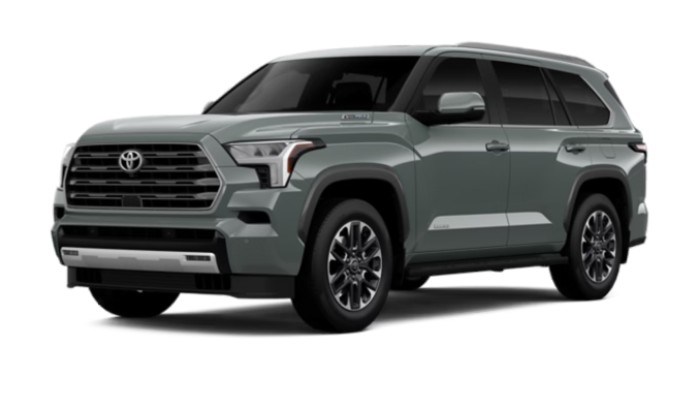
Shopping for a Toyota Sequoia can feel surprisingly complicated. At first glance, every version shares the same basic recipe: a huge three-row SUV, serious towing capability, truck-based construction, and enough road presence to make smaller crossovers look like toys. Dig deeper, though, and the different Toyota Sequoia models have very different personalities.
One is essentially the sensible family workhorse. Another leans heavily into luxury. One looks happiest covered in mud, while another seems more comfortable pulling up outside an expensive hotel.
For the 2026 U.S. model year, Toyota offers six primary Sequoia grades: SR5, Limited, Platinum, 1794 Edition, TRD Pro, and Capstone. SR5 and Limited can be configured with rear-wheel drive or part-time four-wheel drive, while Platinum, 1794 Edition, TRD Pro, and Capstone come with four-wheel drive as standard.
That sounds straightforward enough. But which model gives us the best value? Which one makes sense for families? Is TRD Pro worth paying extra for if we're genuinely going off-road? And what exactly separates Platinum, 1794 Edition, and Capstone when all three occupy the expensive end of the range?
Let's untangle the lineup.
Content in this publication
- Toyota Sequoia Models at a Glance
- What Do All Current Toyota Sequoia Models Have in Common?
- Toyota Sequoia SR5: The Sensible Starting Point
- Toyota Sequoia Limited: The All-Rounder
- Toyota Sequoia Platinum: Luxury Without Going Full Capstone
- Toyota Sequoia 1794 Edition: Luxury With Western Character
- Toyota Sequoia TRD Pro: The Off-Road Specialist
- Toyota Sequoia Capstone: The Flagship
- What About the Toyota Sequoia TRD Sport?
- What About the Sequoia Nightshade Edition?
- How Toyota Sequoia Models Changed Through the Generations
- Second-Generation Sequoia: Bigger, More Powerful, More Choices
- Third-Generation Sequoia: The Hybrid Transformation
- Which Toyota Sequoia Model Is Best for Families?
- Which Toyota Sequoia Model Is Best for Off-Roading?
- Which Sequoia Offers the Best Luxury?
- Which Sequoia Gives Us the Best Value?
- How Should We Choose Between Toyota Sequoia Different Models?
- Are More Sequoia Models Coming?
- Final Thoughts: Which Toyota Sequoia Model Would We Buy?
- FAQs About Toyota Sequoia Models
Toyota Sequoia Models at a Glance
The easiest way to understand the modern Sequoia family is to think of it as a ladder rather than six completely separate SUVs.
Each step changes the emphasis.
- SR5: the practical, value-focused entry model.
- Limited: the sweet spot for additional comfort and technology.
- Platinum: a more sophisticated premium family SUV.
- 1794 Edition: upscale Western-inspired luxury with distinctive interior materials.
- TRD Pro: the serious factory off-road version.
- Capstone: the flagship model aimed primarily at luxury buyers.
The mechanical foundation remains closely related throughout the lineup. What changes dramatically is how Toyota dresses it, equips it, tunes it, and positions it.
Interestingly, the six-grade structure is also set to continue for the announced 2027 Sequoia lineup, so the hierarchy remains highly relevant even as Toyota moves into the next model year.
What Do All Current Toyota Sequoia Models Have in Common?
Before comparing trim levels, we need to acknowledge the elephant—or perhaps the mammoth—in the garage.
The latest-generation Sequoia is no longer available with the big naturally aspirated V8 engines many longtime owners associate with the nameplate.
Instead, the third-generation Sequoia uses Toyota's i-FORCE MAX twin-turbo hybrid powertrain. When Toyota introduced this generation for 2023, it made the hybrid system standard throughout the entire range rather than reserving it for an efficiency-focused variant.
That decision matters because choosing a Sequoia model is now less about choosing an engine and more about choosing equipment, drivetrain, cabin character, and intended use.
In other words, SR5 owners aren't getting the "cheap engine" while Capstone buyers receive the good one. The basic powertrain architecture is shared.
Why That Makes Choosing a Trim Easier
Think of the modern Sequoia lineup like ordering the same excellent steak with increasingly elaborate side dishes.
The foundation is already substantial.
Moving upward primarily buys us nicer materials, additional technology, more convenience features, styling changes, and increasingly specialized equipment rather than fundamentally transforming what powers the SUV.
That makes the middle models particularly interesting because we don't necessarily need the most expensive trim to get the essential Sequoia experience.
Toyota Sequoia SR5: The Sensible Starting Point
The SR5 sits at the entrance to Sequoia ownership, but calling it a bare-bones model would be misleading.
This is still a modern full-size SUV positioned well above ordinary compact and midsize crossovers. More importantly, it shares the fundamental hybrid powertrain and body-on-frame architecture of its more expensive siblings.
For many buyers, that makes the SR5 one of the smartest Toyota Sequoia different models to consider.
Who Should Buy the Sequoia SR5?
We would look closely at an SR5 if our priorities were towing, passenger space, durability, road-trip practicality, and capability rather than luxury badges and decorative trim.
It's especially logical for owners who expect to actually use their SUV.
Mud on the floor mats? Dogs in the cargo area? Boat attached every summer weekend? Kids treating the second row like a traveling cafeteria?
That's SR5 territory.
Paying thousands more for premium upholstery becomes harder to justify when our Sequoia spends its weekends hauling camping equipment.
SR5 Rear-Wheel Drive vs Four-Wheel Drive
One advantage of the SR5 is drivetrain flexibility. Toyota offers the 2026 version in rear-wheel-drive and part-time four-wheel-drive configurations.
Drivers living in warm climates who stay almost entirely on pavement may find rear-wheel drive perfectly adequate.
Anyone expecting snow, trails, rough access roads, boat ramps, or frequent unpaved travel should give 4WD serious consideration.
The SR5 Value Question
Do we really need to climb higher?
Not necessarily.
If our main reason for buying a Sequoia is that we want a powerful full-size Toyota SUV rather than a luxury vehicle, SR5 already covers much of the mission.
Toyota Sequoia Limited: The All-Rounder
If SR5 is the practical choice, Limited is where the Sequoia starts loosening its work boots and putting on a nicer jacket.
Historically, Limited has played this role throughout much of the Sequoia's life. It offers more comfort than the entry model without pushing fully into the flagship territory occupied by Platinum or Capstone.
For the average family buyer, Limited may be the most balanced model in the lineup.
Why the Sequoia Limited Is the Sweet Spot
Every vehicle range tends to contain one trim where price and equipment intersect particularly well.
In the Sequoia family, Limited frequently occupies that space.
We get a noticeably more premium experience without moving all the way into luxury-SUV pricing territory.
That's especially appealing when we're going to use the vehicle every day.
A feature that feels unnecessary during a five-minute test drive can become something we love after three years of commuting, school runs, vacations, and highway travel.
Is Limited Better Than SR5?
Better isn't quite the right word.
It's better equipped.
Someone who simply needs capability may prefer SR5 precisely because it keeps things simpler. Someone spending two hours a day inside the vehicle may easily appreciate Limited's upgrades enough to justify the difference.
The best trim depends less on what looks impressive in a brochure and more on what we'll actually notice every morning.
Toyota Sequoia Platinum: Luxury Without Going Full Capstone
Platinum has long represented the upscale side of the Sequoia lineup.
During the second generation, it sat at the top of the regular range. Toyota continued Platinum into the third generation even after introducing the more luxurious Capstone.
The result is interesting: Platinum is no longer necessarily the king of the castle, but it remains one of the most compelling models.
What Makes the Sequoia Platinum Different?
Platinum shifts the Sequoia's identity from rugged family hauler toward premium long-distance cruiser.
This is the model for buyers who still want the truck-derived toughness of a Sequoia but want their three-row SUV to feel considerably more sophisticated.
For 2026, Toyota makes part-time 4WD standard on Platinum.
That combination gives Platinum an unusual personality.
It's luxurious without pretending to be delicate.
Who Should Choose Platinum?
Picture a family that regularly drives hundreds of highway miles, wants substantial comfort, occasionally tows something heavy, sees winter weather, and plans to keep the SUV for years.
Platinum makes a lot of sense.
We would also consider it when cross-shopping vehicles such as higher-spec GMC Yukons, Chevrolet Tahoes, Ford Expeditions, or premium three-row SUVs but still wanting Toyota's interpretation of the formula.
Platinum Versus Limited
This is where choosing gets tricky.
Limited usually wins the rational argument.
Platinum often wins the emotional one.
If we intend to keep the Sequoia for a decade, paying for the nicer cabin and additional equipment can become easier to justify because we're spreading that enjoyment across thousands of drives.
Toyota Sequoia 1794 Edition: Luxury With Western Character
The 1794 Edition gives the Sequoia something its lineup previously lacked: a distinctly themed luxury model.
Toyota highlights a Saddle Tan leather-trimmed interior and real American walnut trim in the 2026 1794 Edition, creating a warmer, more traditional atmosphere than the technical luxury theme we might associate with other high-end trims.
The name itself has roots in Toyota's Texas connection and has previously appeared prominently within the Tundra family.
What Is the Point of the 1794 Edition?
At first, we might wonder why Toyota needs both Platinum and 1794 Edition.
Their personalities answer the question.
Platinum feels modern and premium.
1794 feels premium but deliberately more distinctive.
Imagine two expensive houses containing similar amenities. One has polished stone, cool tones, and contemporary furniture. The other uses leather, wood, and warmer textures.
Neither is objectively more luxurious.
You may be interested in reading Toyota Sequoia Equivalent: What SUVs Are the Closest Match?
They simply speak different visual languages.
Is the 1794 Edition an Off-Road Model?
Not primarily.
The emphasis is luxury and styling rather than hardcore trail performance, although Toyota does offer additional packages and off-road-oriented configurations depending on model year.
For 2026, 4WD is standard on the 1794 Edition, giving it plenty of underlying capability even though its identity is more ranch retreat than rock crawler.
1794 Edition Versus Platinum
Choose Platinum if we want understated upscale comfort.
Choose 1794 Edition if we want our expensive Sequoia to actually look and feel different inside.
That's arguably the 1794's strongest selling point: character.
Toyota Sequoia TRD Pro: The Off-Road Specialist
Now we arrive at the troublemaker.
TRD Pro doesn't simply add expensive leather and bigger wheels. It changes the Sequoia's mission.
Toyota's TRD Pro family exists for drivers who want substantially more factory-developed off-road capability, and the Sequoia version visually announces those intentions with details such as its heritage-style TOYOTA grille.
For the 2026 Sequoia, TRD Pro comes with standard 4WD.
Why TRD Pro Is Different From the Other Models
Luxury trims ask, "How comfortable can we make this giant SUV?"
TRD Pro asks, "What happens when the pavement ends?"
That difference influences suspension, tires, underbody protection, styling, and off-road hardware.
The resulting SUV looks more aggressive because it actually has a reason to.
Who Needs a Sequoia TRD Pro?
"Need" may be doing some heavy lifting here.
Most people don't need one.
That's part of the fun.
TRD Pro makes sense for buyers who regularly explore rough trails, reach remote campsites, travel on poorly maintained terrain, or simply place off-road performance high on the priority list.
It also appeals enormously to buyers who love its appearance.
And there's nothing wrong with that—as long as we recognize we're paying for hardware that may spend most of its life waiting patiently for an adventure.
TRD Pro Versus a Regular Sequoia With 4WD
This comparison matters.
Buying a four-wheel-drive SR5 or Limited does not suddenly make TRD Pro pointless.
Likewise, buying TRD Pro isn't necessary simply because we occasionally drive down a dirt road.
Regular 4WD models already offer significant utility.
TRD Pro is for buyers who want the stronger off-road emphasis straight from Toyota rather than building their own modified Sequoia afterward.
The Pavement Problem
There's one question we'd ask ourselves before signing for a TRD Pro:
How often are we realistically leaving pavement?
Once a year?
Then we might be purchasing hiking boots to walk around the shopping mall.
Every weekend?
Now we're talking.
Toyota Sequoia Capstone: The Flagship
At the opposite end of the personality spectrum stands Capstone.
Toyota introduced Capstone with the redesigned 2023 Sequoia as the new luxury flagship above Platinum. When that third generation launched, the five-model range consisted of SR5, Limited, Platinum, TRD Pro, and the newly added Capstone.
Today, Capstone continues to occupy that flagship position.
What Is a Toyota Sequoia Capstone?
Think of Capstone as Toyota asking how far it can push a Sequoia toward the luxury segment without changing the badge on the grille to Lexus.
Its purpose isn't to be the cheapest, toughest-looking, or most sensible Sequoia.
It's meant to be the nicest.
For buyers who want the most upscale interpretation of the platform, that's exactly the point.
Who Should Buy the Capstone?
Capstone makes sense when luxury itself is one of our buying priorities.
Maybe we want the Sequoia's towing ability and interior space but don't want the utilitarian atmosphere sometimes associated with truck-based SUVs.
Maybe we're comparing upscale American full-size SUVs.
Or perhaps we simply want the top Sequoia and don't particularly care whether Limited represents better value.
Luxury purchases aren't always spreadsheet decisions.
Capstone Versus TRD Pro
These two high-end Sequoias demonstrate just how wide the model family has become.
TRD Pro says adventure.
Capstone says refinement.
One wears its capability like a muddy pair of boots.
The other polishes those boots before entering the room.
What About the Toyota Sequoia TRD Sport?
Anyone shopping used will eventually encounter a Sequoia TRD Sport.
Don't confuse it with TRD Pro.
Toyota introduced TRD Sport into the Sequoia range for the 2018 model year, when the lineup included SR5, TRD Sport, Limited, and Platinum.
TRD Sport offered sporty styling and chassis changes but was not positioned as the same hardcore off-road package represented later by TRD Pro.
By 2020, Toyota's lineup included both TRD Sport and the newly introduced Sequoia TRD Pro, alongside SR5, Limited, and Platinum.
TRD Sport Versus TRD Pro
This naming can confuse used-car shoppers.
An easy mental shortcut is that TRD Sport leaned toward sporty road character and appearance, whereas TRD Pro was the more serious off-road model.
They're siblings, not twins.
What About the Sequoia Nightshade Edition?
Nightshade is another name shoppers may encounter while researching previous Sequoias.
Toyota added a Nightshade Edition to the 2021 Sequoia lineup, giving buyers a darker, more aggressive cosmetic treatment during the final years of the second generation.
Nightshade shouldn't be understood as an entirely different mechanical generation.
Its main attraction was visual character.
If a used Nightshade catches our eye, therefore, we'd evaluate it primarily based on the underlying model year, maintenance history, mileage, drivetrain, and condition rather than assuming the special-edition name makes it inherently better.
How Toyota Sequoia Models Changed Through the Generations
The Sequoia has evolved dramatically since its arrival in the early 2000s.
Understanding those generations is particularly important if we're shopping used because a 2007 Limited, a 2017 Limited, and a 2026 Limited share a badge but are fundamentally different vehicles.
First-Generation Sequoia: The Simpler Era
The original Sequoia established the basic formula: large Toyota SUV, body-on-frame construction, substantial passenger space, and V8 power.
The trim hierarchy was much simpler than today's range, with SR5 and Limited forming the heart of the lineup.
For used buyers attracted to mechanical simplicity and old-school SUV character, first-generation Sequoias remain fascinating.
But age now matters enormously.
You may be interested in readingToyota Sequoia Equivalent: What SUVs Are the Closest Match?You may be interested in reading
 Holden Colorado vs Mazda BT-50: Which Used Ute Is Better?
A great example with documented care can be appealing. A neglected example can become a restoration project disguised as a bargain.
Second-Generation Sequoia: Bigger, More Powerful, More Choices
The second generation arrived for the 2008 model year and stayed around for an unusually long time, lasting through 2022.
Over its lifespan, the familiar SR5, Limited, and Platinum hierarchy expanded with models such as TRD Sport, TRD Pro, and Nightshade.
By 2018, Toyota officially listed SR5, TRD Sport, Limited, and Platinum versions. By 2020, TRD Pro joined the family as well.
Why Second-Generation Models Still Matter
These are the Sequoias many people picture when they hear the name.
They're big, traditional, V8-powered SUVs from an era before Toyota transformed the vehicle around a hybrid twin-turbo powertrain.
That distinction makes the second generation particularly important on the used market.
A buyer specifically wanting an old-school V8 Sequoia isn't really cross-shopping it against the modern hybrid in mechanical terms. They're choosing between two different philosophies.
Third-Generation Sequoia: The Hybrid Transformation
Everything changed with the 2023 redesign.
Toyota launched the third-generation Sequoia with SR5, Limited, Platinum, TRD Pro, and Capstone grades. The company also made its i-FORCE MAX hybrid powertrain standard across every grade.
Later model years expanded the range further, including the 1794 Edition now present in the 2026 lineup.
This generation feels less like an evolution of the old Sequoia and more like a complete rethink.
Which Generation Is Best?
There's no universal answer.
Someone seeking a relatively inexpensive used V8 SUV may gravitate toward the second generation.
Someone wanting modern technology, massive hybrid torque, contemporary safety systems, and the newest cabin will naturally prefer the third generation.
And collectors of Toyota's older trucks may still have a soft spot for the simplicity of the first generation.
Context beats rankings.
Which Toyota Sequoia Model Is Best for Families?
We'd start with Limited.
SR5 provides the essentials, but Limited strikes a stronger balance when the vehicle is going to spend years carrying children, luggage, groceries, pets, sports equipment, and everything else family life throws at it.
Platinum becomes more attractive for families who prioritize long-distance comfort and have a larger budget.
Capstone is wonderful if luxury matters, but calling it necessary for family duties would be a stretch.
A seven-hour road trip doesn't become seven minutes because the wood trim is nicer.
Which Toyota Sequoia Model Is Best for Off-Roading?
This one is easier.
TRD Pro.
Its purpose within the range is explicitly off-road oriented, and Toyota equips the model accordingly.
That doesn't mean every adventurous buyer needs it.
A regular 4WD Sequoia can handle plenty of situations that would make an ordinary crossover nervous.
But if trail performance is a primary buying criterion rather than an occasional requirement, TRD Pro is the obvious starting point.
Which Sequoia Offers the Best Luxury?
Capstone occupies the flagship position.
But we'd hesitate before automatically calling it the best choice.
Platinum may provide enough luxury for most buyers, while the 1794 Edition offers a more distinctive aesthetic that some people may actually prefer to Capstone's flagship treatment.
Luxury is surprisingly personal.
The most expensive interior isn't automatically the interior we'd most enjoy living with.
Which Sequoia Gives Us the Best Value?
Our value pick is generally Limited, with SR5 close behind.
Why?
Because the underlying Sequoia platform already provides most of the capabilities that attract buyers to this SUV in the first place.
Limited adds enough comfort and convenience to feel substantially upgraded without requiring us to climb to the top of the pricing ladder.
SR5 remains the stronger option for someone prioritizing utility above everything else.
There's a useful rule here: spend money on features we'll use, not trim badges we'll explain.
How Should We Choose Between Toyota Sequoia Different Models?
Instead of starting with price, start with purpose.
Ask what our Sequoia will actually do during 90% of its life.
If that's school runs, highways, family vacations, and occasional towing, Limited or Platinum deserves attention.
If it's camping, rough terrain, overlanding, and trail exploration, look toward TRD Pro.
If we simply want the most luxurious model available, Capstone solves the mystery quickly.
If we love rich leather and Western-inspired design, 1794 Edition has a personality the others don't duplicate.
And if the main attraction is simply owning a capable full-size Sequoia without paying for unnecessary extras, don't underestimate SR5.
The right model isn't the one with the longest equipment sheet.
It's the one whose equipment sheet most closely resembles our actual life.
Are More Sequoia Models Coming?
Toyota has already announced its 2027 Sequoia updates. The six core grades—SR5, Limited, Platinum, 1794 Edition, TRD Pro, and Capstone—remain, while Toyota has also announced a newly available Trailhunter package for the upcoming model year.
That development reinforces an interesting trend.
Toyota isn't merely arranging Sequoias from cheap to expensive anymore. It's creating increasingly distinct personalities within the same vehicle family.
Luxury buyers, off-road enthusiasts, families, and utility-focused owners can all start with essentially the same full-size SUV and end up with something that feels remarkably different.
Final Thoughts: Which Toyota Sequoia Model Would We Buy?
The beauty of the Toyota Sequoia lineup is that there isn't one obvious winner.
For sheer practicality, SR5 makes an excellent case.
For everyday value, we'd lean toward Limited.
For premium family travel, Platinum is difficult to ignore.
For something luxurious with more character, 1794 Edition deserves a look.
For serious adventures, TRD Pro owns its niche.
And for buyers who simply want Toyota's most luxurious Sequoia, Capstone sits at the summit.
The crucial point is not to confuse price with suitability.
A Capstone isn't automatically "better" for someone who spends every weekend driving through mud. A TRD Pro isn't necessarily better for someone whose toughest obstacle is a speed bump outside the grocery store.
Buy the Sequoia that matches the road ahead.
That's usually a much smarter strategy than buying whichever badge sits highest on the ladder.
FAQs About Toyota Sequoia Models
What are the different Toyota Sequoia models?
For the 2026 U.S. lineup, the primary Sequoia grades are SR5, Limited, Platinum, 1794 Edition, TRD Pro, and Capstone. Toyota has announced the same six core grades for the 2027 model year.
What is the highest Toyota Sequoia model?
Capstone is positioned as the luxury flagship of the modern Sequoia family. Toyota originally introduced Capstone with the redesigned 2023 Sequoia as a new premium grade above the established trims.
What is the difference between Sequoia Platinum and Capstone?
Both emphasize comfort and premium equipment, but Capstone occupies the flagship luxury position. Platinum sits below it and can therefore be an attractive compromise for buyers wanting an upscale Sequoia without necessarily choosing the top grade.
What is the best Toyota Sequoia model for off-roading?
TRD Pro is the model specifically oriented toward serious off-road use. It combines standard four-wheel drive with Toyota's TRD-focused trail hardware and distinctive off-road styling.
What is the difference between Sequoia TRD Sport and TRD Pro?
TRD Sport appeared in the second-generation lineup with a sportier appearance and road-oriented character, while TRD Pro was introduced to the Sequoia lineup for 2020 with a stronger emphasis on off-road capability. For 2020, Toyota offered both variants simultaneously, confirming they were separate models rather than different names for the same package.
You may be interested in readingToyota Sequoia Equivalent: What SUVs Are the Closest Match?You may be interested in reading
Holden Colorado vs Mazda BT-50: Which Used Ute Is Better?You may be interested in reading
Holden Colorado and Isuzu D-Max: Differences, Similarities, and Which Is Better?If you want to know other articles similar to Toyota Sequoia Different Models: Which Sequoia Is Right for You? you can visit the category Models.
Volkswagen T-Cross vs Volkswagen T-Roc: Which Is Better?
Hyundai Tucson Weight: Complete Guide to Curb, Gross, and Payload Specs

Honda Passport vs Toyota 4Runner: Which SUV Is Better?
Honda Passport vs Ford Bronco: Which SUV Is Better?
Honda Passport vs Ford Explorer: Which SUV Is Better?
Honda Passport or Pilot: Which SUV Is Better?
Leave a Reply
More content of your interest