
Why Is the Toyota Sequoia So Expensive? A Deep Look at the Price

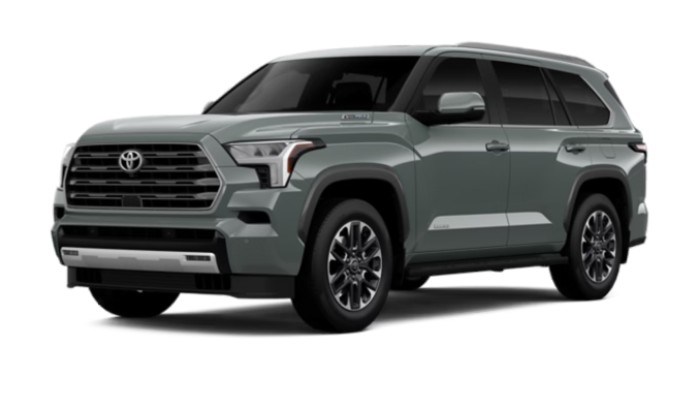
The Toyota Sequoia has never been the budget option in the full-size SUV aisle, but its price has become especially noticeable in recent years. Walk through Toyota's lineup and the difference jumps out immediately. We can buy several capable Toyota SUVs for much less, yet the Sequoia confidently sits near the top of the range with a price tag that can climb substantially once we move into premium trims and start checking option boxes.
So, why is the Toyota Sequoia so expensive?
The short answer is that we're not paying for one isolated feature. We're paying for a combination of heavy-duty construction, a sophisticated hybrid powertrain, serious towing ability, three-row practicality, premium equipment, relatively low-volume production, and the reputation Toyota has built around durable trucks and SUVs.
In other words, the Sequoia is less like an oversized Highlander and more like a Toyota pickup wearing an expensive three-row SUV suit.
The current 2026 Sequoia uses Toyota's i-FORCE MAX twin-turbo V6 hybrid powertrain, producing 437 horsepower and 583 lb-ft of torque. Toyota lists maximum towing capacity at roughly 9,500 pounds depending on configuration. Those aren't ordinary family-crossover numbers, and building a vehicle capable of delivering them isn't cheap.
Let's dig into where the money actually goes.
Content in this publication
- Why Is the Toyota Sequoia So Expensive Compared With Other Toyota SUVs?
- The Sequoia Uses Truck-Based Body-on-Frame Construction
- The i-FORCE MAX Hybrid Powertrain Is Expensive Technology
- The Toyota Sequoia Has Serious Towing Capability
- The Sequoia Is Simply a Huge Vehicle
- Toyota Positions the Sequoia as a Premium Full-Size SUV
- The Sequoia Has Become More Sophisticated Than Older Generations
- Toyota's Reliability Reputation Adds to What Buyers Will Pay
- Strong Resale Expectations Help Support High New Prices
- Production Volume Matters More Than We Might Think
- Why Is the Toyota Sequoia More Expensive Than the Highlander?
- Why Is the Sequoia TRD Pro So Expensive?
- Why Is the Sequoia Capstone So Expensive?
- Dealer Pricing Can Make a Sequoia Seem Even More Expensive
- Inflation Has Changed What a Full-Size SUV Costs
- The Hybrid System Isn't Primarily About Maximum Fuel Savings
- You're Paying for Three-Row Capability Without Giving Up Truck Strength
- Is a Toyota Sequoia Worth the High Price?
- Is the Toyota Sequoia Overpriced?
- Why Used Toyota Sequoias Can Also Be Expensive
- Does the Sequoia Cost More Because It's a Toyota?
- How Can We Pay Less for a Toyota Sequoia?
- What Are We Really Paying for in a Toyota Sequoia?
- Final Thoughts: Why Toyota Sequoia Prices Are So High
- Frequently Asked Questions
Why Is the Toyota Sequoia So Expensive Compared With Other Toyota SUVs?
We first have to understand that the Sequoia belongs to an entirely different category than vehicles such as the RAV4, Highlander, Grand Highlander, or Corolla Cross.
Those vehicles mainly prioritize everyday passenger transportation, comfort, fuel economy, and packaging efficiency. The Sequoia has to do all of that while also behaving like a truck.
It needs to tow substantial trailers, handle rough terrain, carry a large family, survive demanding use, and deliver the sort of performance buyers expect from a premium full-size SUV.
That combination forces Toyota to use more expensive components.
We get a larger frame, stronger suspension components, a more powerful drivetrain, a heavier-duty cooling system, larger brakes, more substantial wheels and tires, and considerably more material throughout the vehicle.
Think of it this way: comparing a Sequoia with a compact crossover purely by price is a little like comparing a commercial refrigerator with the one in our kitchen. They both keep food cold, but they're engineered around completely different workloads.
The Sequoia Uses Truck-Based Body-on-Frame Construction
One of the biggest clues sits underneath the vehicle.
What Does Body-on-Frame Mean?
Most modern crossovers use unibody construction. Their body and underlying structure essentially form one integrated shell.
The Sequoia instead uses body-on-frame construction, sharing its broader truck-based engineering philosophy with Toyota's full-size pickups.
Toyota describes the modern Sequoia as using an advanced body-on-frame architecture.
That approach makes sense for towing, hauling, durability, and off-road use. But it also contributes to manufacturing cost.
We need a substantial separate frame capable of handling forces that ordinary crossovers rarely encounter. The suspension, driveline, mounting points, and related hardware also have to match that level of capability.
Why This Matters to Buyers
Body-on-frame construction brings benefits including:
- Strong towing capability
- Better suitability for heavy-duty use
- Greater ruggedness on rough surfaces
- Truck-like durability
- Strong foundations for serious off-road variants
We're essentially purchasing some pickup-truck capability even if our Sequoia spends most of its life doing school runs.
The i-FORCE MAX Hybrid Powertrain Is Expensive Technology
Here's another major piece of the puzzle.
Every current 2026 Toyota Sequoia uses Toyota's i-FORCE MAX twin-turbo V6 hybrid powertrain, rated at 437 horsepower and 583 lb-ft of torque.
Those numbers reveal something important: this hybrid isn't designed merely to squeeze every possible mile from a gallon of fuel.
It is a performance-oriented hybrid system.
You're Paying for More Than an Engine
Inside the drivetrain equation we have several costly systems working together:
- A twin-turbocharged V6 engine
- Electric motor assistance
- A high-voltage battery system
- Hybrid electronics
- Sophisticated power-management software
- A heavy-duty automatic transmission
- Cooling hardware designed around substantial loads
Each layer adds engineering complexity.
A naturally aspirated gasoline engine connected to a conventional transmission would theoretically be simpler and cheaper. Toyota instead chose a highly sophisticated setup that combines substantial torque with electrification.
Hybrid Torque Is Especially Useful in a Heavy SUV
Torque matters tremendously when we're moving a large vehicle, climbing grades, towing trailers, or accelerating with passengers and cargo onboard.
The Sequoia's 583 lb-ft of torque is one reason it feels dramatically more muscular than its enormous footprint might suggest.
We're paying partly for that effortless sensation—the feeling that the SUV has a deep reserve of muscle waiting underneath our right foot.
The Toyota Sequoia Has Serious Towing Capability
Another answer to "why is the Toyota Sequoia so expensive?" is hiding behind the trailer hitch.
The 2026 Sequoia can tow roughly 9,500 pounds at maximum specification, depending on configuration.
That's serious territory.
A vehicle engineered to pull loads approaching five tons needs far more than a powerful engine.
Heavy Towing Requires Expensive Supporting Hardware
Toyota has to engineer the entire vehicle around that capability, including areas such as braking, chassis strength, thermal management, transmission durability, suspension tuning, and stability control.
That means we're indirectly paying for equipment we may never notice.
Take the SUV on a grocery run and all that capability sits quietly beneath us. Hook up a large boat or travel trailer, though, and suddenly the engineering starts earning its keep.
Why Towing Capacity Raises Vehicle Cost
Consider everything involved:
- The frame must tolerate substantial loads.
- The drivetrain must produce enormous torque reliably.
- Cooling systems must control temperatures under load.
- Brakes must manage a heavy vehicle safely.
- Electronic systems must help stabilize the SUV and trailer.
- Suspension components need suitable strength and control.
Capability is expensive because it has to be engineered into the whole vehicle rather than bolted on afterward.
The Sequoia Is Simply a Huge Vehicle
Sometimes the simplest answer is also one of the most important.
The Sequoia is big.
Really big.
More metal, more glass, more insulation, larger seats, larger doors, larger suspension components, bigger brakes, stronger hardware, larger wheels, and more interior trim all translate into higher material costs.
Size Creates a Price Snowball
The interesting thing about vehicle size is that increasing one dimension usually forces other components to grow too.
A heavier body requires stronger suspension.
Stronger suspension adds weight.
More weight requires greater braking capacity.
Greater weight also demands more drivetrain output.
More drivetrain output generates additional heat.
Additional heat requires better cooling.
Before long, what sounded like "just make the SUV bigger" has turned into a chain reaction of engineering upgrades.
That's why full-size SUVs tend to become expensive remarkably quickly.
Toyota could theoretically strip the Sequoia down and sell it like an industrial work truck.
But that's not really what Sequoia buyers expect.
People shopping in this category often want capability and luxury.
They expect large screens, comfortable seats, advanced driver assistance, premium audio availability, upscale upholstery, impressive exterior styling, power-operated conveniences, multiple climate zones, and enough technology to keep a household entertained.
Move through the Sequoia lineup and the SUV becomes increasingly luxurious.
The upper trims aren't simply rugged transportation with leather thrown over the seats. Toyota offers increasingly sophisticated interiors and comfort features designed to compete for buyers who might otherwise look at more expensive SUVs.
Toyota has continued expanding premium offerings in the Sequoia lineup; for example, recent model years introduced features such as available massaging front seats and the upscale 1794 grade.
That's significant.
Once we're shopping at that level, we're no longer buying merely an engine and four wheels. We're buying experience.
The Sequoia Has Become More Sophisticated Than Older Generations
Anyone remembering an older Sequoia may experience sticker shock when looking at a current model.
But today's Sequoia is dramatically different from the simpler SUVs of previous decades.
Modern Vehicles Carry Far More Technology
The current SUV integrates technologies related to:
- Hybrid propulsion
- Turbocharging
- Driver assistance
- Infotainment
- Digital instrumentation
- Camera systems
- Connectivity
- Terrain management
- Trailer assistance
- Active safety
Every sensor, control module, camera, computer, electric motor, and software system has a development cost attached to it.
And modern vehicles aren't developed in a vacuum.
They must meet increasingly demanding expectations for safety, emissions, refinement, performance, and connectivity.
We may occasionally miss the simplicity of older trucks, but that simplicity was part of why they could be comparatively inexpensive.
Toyota's Reliability Reputation Adds to What Buyers Will Pay
Toyota has spent decades building a reputation for durability.
That reputation has real economic value.
People often willingly pay more for a Toyota because they expect it to remain dependable for years. Whether every individual vehicle perfectly lives up to that reputation is another question, but the brand perception itself is powerful.
Reputation Creates Pricing Power
Imagine two nearly identical SUVs.
One comes from a manufacturer we're unsure about.
You may be interested in reading Hyundai Veloster Turbo Reliability: Is It a Dependable Used Car?
The other wears a badge associated with long-lived trucks, high resale values, and conservative engineering.
Which would we feel more comfortable spending $60,000, $70,000, or even more on?
Exactly.
Brand trust behaves almost like an invisible option package. There's no button for it on the dashboard, yet customers are willing to pay for it.
Strong Resale Expectations Help Support High New Prices
Purchase price tells only half the ownership story.
Resale value matters too.
Large Toyota trucks and SUVs have historically attracted buyers who value longevity, and used examples can remain desirable even after years of use.
Why Resale Value Changes the Cost Equation
Suppose SUV A costs $10,000 less initially but loses $15,000 more in value over several years.
Was it actually cheaper?
Not necessarily.
That's why experienced buyers often evaluate total ownership cost rather than staring exclusively at MSRP.
A high initial price hurts less if a vehicle retains a meaningful portion of that value.
It doesn't make the Sequoia inexpensive, of course. Writing a larger check still feels like writing a larger check. But resale potential can soften the long-term financial impact.
Production Volume Matters More Than We Might Think
The Sequoia isn't Toyota's mass-market volume machine.
Toyota sells mainstream vehicles such as the RAV4 and Corolla in enormous numbers. A full-size, truck-based SUV occupies a narrower niche.
Lower-volume vehicles don't always enjoy the same economies of scale.
Economies of Scale Help Explain the Difference
Imagine developing a specialized component that costs millions of dollars to engineer.
If we spread that cost across one million vehicles, the cost per unit becomes relatively small.
Spread the same investment across a fraction of that number and each vehicle effectively has to carry more of the development burden.
Obviously, real automotive accounting is vastly more complicated than that simple example, but the principle stands.
Production scale matters.
The Sequoia is specialized, and specialization tends to cost money.
Why Is the Toyota Sequoia More Expensive Than the Highlander?
This comparison comes up constantly because both SUVs wear Toyota badges and offer multiple rows of seating.
Yet beneath the surface, they're dramatically different vehicles.
Highlander vs. Sequoia Philosophy
The Highlander is essentially a family crossover.
The Sequoia is a full-size truck-based SUV.
We choose the Highlander when priorities revolve around commuting, family transportation, maneuverability, and efficiency.
We choose the Sequoia when we need considerably more towing capability, ruggedness, interior presence, and truck-like performance.
It's the difference between a hiking boot and a work boot. Both go on our feet, but one is built for much heavier punishment.
Why Is the Sequoia TRD Pro So Expensive?
Now things get even more interesting.
The TRD Pro trim targets buyers who want serious off-road equipment plus distinctive design.
That naturally increases price.
Off-Road Hardware Isn't Just Cosmetic
A legitimate off-road package may involve upgraded suspension, specialized shocks, skid protection, wheels and tires, traction technology, different styling elements, and considerable development work.
The aim isn't simply to make the Sequoia look adventurous in a supermarket parking lot.
Toyota designs the TRD Pro family around genuine off-road capability, and the 2026 Sequoia continues to be offered within that performance-oriented lineup.
The Image Matters Too
We also can't ignore desirability.
TRD Pro models have developed an enthusiast following. People like their visual identity, reputation, and relative exclusivity.
Whenever demand intersects with specialized equipment, prices rarely move downward.
Why Is the Sequoia Capstone So Expensive?
At the opposite end of the personality spectrum sits the luxury-focused side of the lineup.
Instead of leaning harder into trails and dirt, high-end Sequoia versions emphasize refinement.
Think upscale materials, comfort technology, premium design touches, and a more luxurious atmosphere.
At This Level, Toyota Is Selling More Than Utility
A buyer spending premium-SUV money doesn't want to feel like they're riding inside a commercial truck.
They want quietness.
Comfort.
Presence.
Technology.
Craftsmanship.
The challenge for Toyota is delivering that experience without removing the toughness underneath.
That "luxury truck" balancing act costs money.
Dealer Pricing Can Make a Sequoia Seem Even More Expensive
There's an important distinction between MSRP and what we actually pay.
Taxes, destination charges, dealer-installed accessories, financing costs, optional packages, and local market conditions can increase the final number considerably.
Watch the Out-the-Door Price
When comparing Sequoias, we should look beyond the large number printed on the window sticker.
Pay attention to:
- Vehicle MSRP
- Factory options
- Destination or delivery charges
- Dealer-installed accessories
- Documentation fees
- Sales taxes
- Registration expenses
- Financing interest
A vehicle advertised at one price can become considerably more expensive once everything reaches the bottom line.
That's especially painful with a high-dollar SUV because percentages become large numbers remarkably quickly.
Inflation Has Changed What a Full-Size SUV Costs
We should also recognize the broader economic backdrop.
Cars in general have become more expensive over time.
Material costs, labor, electronics, regulatory requirements, logistics, and increasingly sophisticated technology all influence vehicle pricing.
The Sequoia doesn't exist in its own bubble.
Our Expectations Have Also Changed
A decades-old SUV could get away with relatively basic equipment.
Today we expect:
- Large touchscreens
- Smartphone connectivity
- Advanced safety features
- Multiple cameras
- Premium interior materials
- Powerful climate control
- Quiet highway behavior
- Excellent towing
- Strong acceleration
- Reasonable fuel economy
- Luxury-grade comfort
We're essentially asking one vehicle to behave like a truck, family shuttle, luxury car, towing machine, and computer on wheels.
That's an expensive job description.
The Hybrid System Isn't Primarily About Maximum Fuel Savings
Here's a common misconception.
Someone sees "hybrid" and expects Prius-like fuel consumption.
Then they see the Sequoia's size and price and wonder what happened.
The i-FORCE MAX setup serves a different mission.
Toyota lists fuel efficiency of up to an EPA-estimated 22 mpg combined for the 2026 Sequoia, depending on configuration.
That's impressive in context, but efficiency isn't the only purpose.
The Electric Motor Helps Deliver Performance
Hybrid assistance gives Toyota another tool for generating strong low-end torque and responsive acceleration.
In a heavy SUV, that matters.
So we shouldn't think of the Sequoia hybrid as a gigantic Prius.
It's closer to a powerful turbocharged truck drivetrain with electrification woven into the recipe.
You may be interested in readingHyundai Veloster Turbo Reliability: Is It a Dependable Used Car?You may be interested in reading
 Are Volkswagen Amarok Good Cars? An In-Depth Ownership Guide
You're Paying for Three-Row Capability Without Giving Up Truck Strength
Combining family practicality with serious towing ability isn't easy.
A pickup can tow brilliantly, but its passengers sit in two rows and everything else goes into the bed.
A crossover can carry three rows comfortably, but it generally isn't designed for extreme towing workloads.
The Sequoia attempts to bridge those worlds.
Toyota says seating capacity can reach eight occupants depending on configuration.
That versatility carries substantial value for the right buyer.
We can load children into three rows on Monday, pull a boat on Saturday, and head toward rough terrain on Sunday.
Few vehicles truly cover that range.
Is a Toyota Sequoia Worth the High Price?
Here's where the answer becomes personal.
For some buyers, absolutely.
For others, not remotely.
The Sequoia Makes Sense If We Need Its Capabilities
It becomes easier to justify when we regularly use features such as:
- High towing capacity
- Three-row seating
- Strong torque
- Four-wheel-drive capability
- Rugged body-on-frame construction
- Significant cargo versatility
- Long-distance family comfort
- Off-road equipment
If several of those sit near the top of our priority list, the Sequoia can consolidate jobs that might otherwise require multiple compromises.
It Makes Less Sense If We Mostly Commute
If our normal journey consists of driving one or two people through crowded city streets, we're carrying around an enormous amount of unused capability.
We're paying for towing strength we don't use.
We're maneuvering a massive SUV we don't need.
We're buying truck-grade hardware to transport a laptop and two bags of groceries.
In that situation, a Highlander, Grand Highlander, RAV4, or another crossover may be far more rational.
Is the Toyota Sequoia Overpriced?
"Overpriced" and "expensive" aren't synonyms.
An expensive product can still provide appropriate value if its engineering, materials, capability, resale prospects, and features justify the cost.
The Sequoia is unquestionably expensive.
Whether it's overpriced depends on what we expect from it.
Think About Cost Per Capability
Instead of asking only, "How much does it cost?" we should ask:
How much would we need to spend elsewhere to get the same combination of seating, towing, durability, performance, equipment, and brand reputation?
That's the more useful comparison.
A cheaper SUV may look better on paper until we discover it can't tow our trailer.
A luxury SUV might feel nicer but cost significantly more.
A pickup may tow more but lacks enclosed three-row seating.
Every alternative gives something and takes something away.
Why Used Toyota Sequoias Can Also Be Expensive
The surprise doesn't always disappear when we move into the used market.
Clean Sequoias can command substantial prices because the same qualities that attract new buyers also attract used buyers.
Used Buyers Like Proven Durability
A buyer shopping for an older large SUV may care deeply about long-term reliability.
That tends to benefit vehicles with strong durability reputations.
The result?
Demand remains healthy, and sellers don't necessarily have to slash prices just because the odometer has accumulated miles.
Condition Still Matters More Than the Badge
We shouldn't assume every used Sequoia is automatically a good buy.
A neglected Toyota is still a neglected vehicle.
Before purchasing one, we'd want to investigate:
- Maintenance records
- Accident history
- Rust or corrosion
- Suspension condition
- Fluid leaks
- Brake wear
- Tire condition
- Four-wheel-drive operation
- Warning lights
- Previous towing use
Toyota durability is valuable, but it isn't magic.
Does the Sequoia Cost More Because It's a Toyota?
Partly, yes—but not in the simplistic sense that Toyota merely adds money to the sticker because it can.
Brand equity affects prices throughout the car industry.
Toyota has cultivated strong recognition in areas such as reliability, truck durability, resale value, and ownership confidence.
That gives it pricing power.
But the Hardware Still Matters
The Sequoia isn't expensive solely because of the emblem on the grille.
Underneath that badge sits a genuinely complex machine: a full-size body-on-frame SUV with a twin-turbo hybrid powertrain, up to eight seats, sophisticated technology, and around 9,500 pounds of maximum towing capability.
Remove the logo and much of the expensive engineering would still remain.
How Can We Pay Less for a Toyota Sequoia?
If we like the Sequoia but dislike the price, a little patience can help.
Consider these strategies:
- Choose a lower trim. Premium grades can add substantial cost without changing the Sequoia's fundamental strengths.
- Skip unnecessary accessories. Dealer-installed extras can inflate the final price quickly.
- Compare multiple dealers. Pricing and inventory conditions can vary.
- Consider a lightly used model. Someone else may absorb part of the initial depreciation.
- Calculate financing separately. A lower monthly payment doesn't necessarily mean a lower overall price.
- Check total ownership costs. Insurance, fuel, tires, maintenance, taxes, and depreciation matter too.
- Be realistic about capability. If we don't need truck-like towing or ruggedness, a cheaper Toyota crossover might serve us better.
The cheapest Sequoia is often the one we don't over-option.
What Are We Really Paying for in a Toyota Sequoia?
Strip away the marketing language and the price becomes easier to understand.
We're paying for several vehicles rolled into one.
We get the passenger capacity of a large family SUV.
We get much of the toughness associated with a truck.
We get substantial towing ability.
We get a sophisticated electrified powertrain.
We get modern Toyota safety and infotainment technology.
We get available off-road hardware.
We get increasingly luxurious trim choices.
And we're buying into the long-term reputation attached to Toyota's truck family.
Put everything together and the high price suddenly looks less mysterious.
Still painful, perhaps.
But not mysterious.
Final Thoughts: Why Toyota Sequoia Prices Are So High
So, why is the Toyota Sequoia so expensive?
Because Toyota built it to do expensive things.
It has to behave like a family SUV while carrying truck-grade bones. It has to deliver three-row practicality without surrendering serious towing capacity. It combines a powerful 437-horsepower twin-turbo hybrid drivetrain with 583 lb-ft of torque and roughly 9,500 pounds of available towing capability. Then Toyota layers technology, comfort, safety equipment, off-road options, premium trims, and a valuable brand reputation on top.
That's a lot of ingredients.
And like ordering every topping on the menu, eventually the bill gets impressive.
The key question isn't whether the Sequoia is expensive—it clearly is. The better question is whether we need enough of what makes it expensive.
For families who tow heavy trailers, travel long distances, venture off pavement, and want one large vehicle to handle almost everything, the answer may be yes.
For everyone else, the Sequoia can feel like buying a chainsaw to trim a houseplant: tremendously capable, undeniably impressive, and probably more machine than we actually need.
Frequently Asked Questions
1. Why does the Toyota Sequoia cost so much?
The Sequoia costs more than many Toyota SUVs because it combines full-size dimensions, body-on-frame construction, a sophisticated twin-turbo V6 hybrid powertrain, substantial towing capability, three-row seating, advanced technology, and increasingly premium equipment. It's engineered more like a heavy-duty truck-based SUV than a typical crossover.
2. Is the Toyota Sequoia considered a luxury SUV?
The Sequoia is technically sold under Toyota rather than a dedicated luxury brand, but upper trims can deliver a distinctly premium experience. Higher-end versions add upscale interior materials, convenience technologies, comfort equipment, and styling that push the vehicle toward luxury-SUV territory.
3. Why are used Toyota Sequoias still expensive?
Used Sequoias can retain strong demand because many buyers associate Toyota's truck-based models with durability and long service life. Limited supply of clean examples can also support prices. Mileage alone shouldn't determine value, though; maintenance history and condition remain crucial.
You may be interested in readingHyundai Veloster Turbo Reliability: Is It a Dependable Used Car?You may be interested in reading
Are Volkswagen Amarok Good Cars? An In-Depth Ownership GuideYou may be interested in reading
 How Long Do Ram 1500 Last? Mileage, Lifespan, and Reliability Guide
4. Is a Toyota Sequoia worth buying instead of a Highlander?
It can be if we need significantly greater towing capacity, truck-like construction, strong torque, and rugged capability. If our priorities are mainly commuting, family transportation, fuel economy, and easier city driving, a Highlander or Grand Highlander may provide better value.
5. Will the Toyota Sequoia save money because it's a hybrid?
Not necessarily. The Sequoia's hybrid system isn't designed solely around maximizing fuel economy. It also contributes substantially to performance and torque. Toyota rates the current i-FORCE MAX system at 437 horsepower and 583 lb-ft of torque, so its electrification serves capability as well as efficiency.
If you want to know other articles similar to Why Is the Toyota Sequoia So Expensive? A Deep Look at the Price you can visit the category Blog.
How to Reset the Oil Light on a Kia Sportage
Volvo S90 Reliability: Problems, Costs & Best Years
Is Haval Jolion a Good Car? Honest Review, Reliability, Pros and Cons
How to Start Haval Jolion With Spare Key: Complete Guide
How to Calculate Per Diem on an Auto Loan
How to Calculate the Residual Value of a Car
Leave a Reply
More content of your interest