
Toyota Sequoia vs Sienna: Which Toyota Fits Your Life Better?

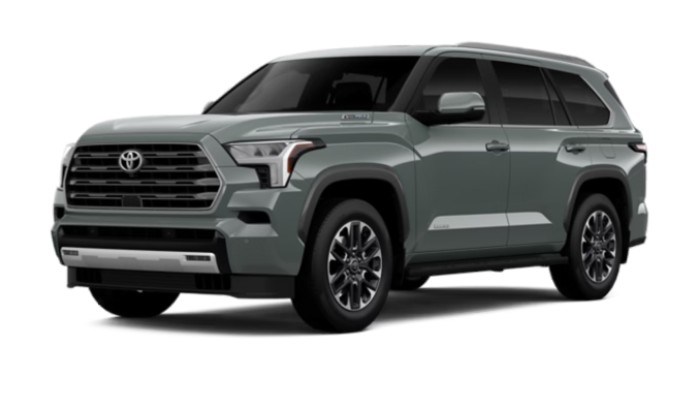
Choosing between the Toyota Sequoia vs Sienna feels a little strange at first. One is a full-size, truck-based SUV with serious towing muscle and a commanding road presence. The other is a family-focused minivan designed to swallow passengers, luggage, groceries, strollers, sports equipment, and practically everything else daily life throws at us.
Yet these two Toyotas overlap more than we might expect. Both offer three rows of seating, hybrid powertrains in current U.S. models, generous interior space, available all-wheel drive in certain configurations, and the reputation that makes Toyota a familiar name on family shopping lists.
The difference is philosophy.
The Sequoia says, “What if our family trips involve a boat, rough roads, snow, or a campsite miles from pavement?” The Sienna asks, “What if we simply want to move everyone comfortably without burning a small fortune in fuel?”
For many buyers, that distinction makes the decision surprisingly easy. Let's dig into the details and find out which one deserves space in our driveway.
Content in this publication
- Toyota Sequoia vs Sienna at a Glance
- The Fundamental Difference: SUV vs Minivan
- Engine and Performance: Sequoia Wins the Muscle Contest
- Fuel Economy: The Sienna Lands a Knockout Punch
- Passenger Capacity: Both Can Carry a Crowd
- Cargo Space: The Sienna Is the Packaging Champion
- Towing Capacity: Sequoia by a Country Mile
- All-Wheel Drive and Four-Wheel Drive Are Not the Same Thing
- Ride Comfort: Two Different Kinds of Luxury
- Parking and City Driving: Sienna Takes the Stress Away
- Interior Practicality: Sienna Was Born for This
- Technology and Features
- Safety: Consider the Whole Vehicle, Not Just Features
- Toyota Sequoia vs Sienna for Road Trips
- Toyota Sequoia vs Sienna for Large Families
- Purchase Price: Sienna Usually Has the Easier Entry Point
- Running Costs: Sienna Has the Structural Advantage
- Reliability: Toyota Reputation Meets Modern Complexity
- Resale Value and Long-Term Ownership
- Sequoia vs Sienna Styling: Heart Versus Head
- Which Is Better for Everyday Commuting?
- Which Is Better for Camping?
- Which Is Better for Dogs and Outdoor Gear?
- Advantages of the Toyota Sequoia
- Advantages of the Toyota Sienna
- Toyota Sequoia vs Sienna: Which Should We Buy?
- Final Verdict
- Frequently Asked Questions
Toyota Sequoia vs Sienna at a Glance
The easiest way to understand this comparison is to forget the badges for a moment and look at what each vehicle was actually built to accomplish.
The Sequoia is Toyota's large body-on-frame SUV. Think of it as a rugged family hauler with pickup-truck DNA hiding beneath a polished cabin. Current versions use Toyota's muscular i-FORCE MAX twin-turbo V6 hybrid system, producing 437 horsepower and 583 lb-ft of torque. Toyota rates properly configured 2026 Sequoia models to tow as much as 9,500 pounds.
The Sienna takes another road entirely. It uses a 2.5-liter four-cylinder hybrid powertrain focused primarily on efficiency. Current 2026 front-wheel-drive versions can achieve an EPA-estimated 36 mpg city and 36 mpg highway, according to Toyota.
In other words, one brings a sledgehammer and the other brings a Swiss Army knife.
Quick Comparison: What Each Toyota Does Best
| Category | Toyota Sequoia | Toyota Sienna |
|---|---|---|
| Vehicle type | Full-size SUV | Minivan |
| Primary strength | Power, towing, capability | Efficiency, space, practicality |
| Current powertrain | Twin-turbo V6 hybrid | Four-cylinder hybrid |
| Seating | Up to 8 | Up to 8 |
| Fuel economy | Up to about 22 mpg combined | Up to about 36 mpg combined |
| Maximum cargo room | About 86.9 cu. ft. | About 101 cu. ft. |
| Towing ability | Up to 9,500 lb | Far more limited |
| AWD/4WD availability | Available 4WD | Available AWD |
| Best for | Towing, adventure, rough conditions | Families, commuting, road trips |
Exact figures vary by trim, drivetrain, equipment, and model year.
The Fundamental Difference: SUV vs Minivan
We can compare horsepower numbers all afternoon, but the biggest difference between the Sienna and Sequoia is architectural.
The Sequoia is a traditional large SUV. Its design emphasizes durability, towing capacity, ground clearance, off-road ability, and truck-like strength.
The Sienna is a purpose-built people carrier. Its shape, floor height, doors, seating layout, cargo area, and hybrid system were developed around transporting families efficiently.
That sounds obvious, but it affects virtually everything else.
Why the Sequoia Feels Like a Truck
Climb into a Sequoia and we sit noticeably higher. The hood feels substantial. The driving position looks over surrounding traffic rather than through it.
That character comes partly from its body-on-frame construction. The layout provides the foundation required for meaningful towing and rugged use but also means we're driving a larger, heavier machine.
Around narrow streets and cramped parking lots, the Sequoia doesn't exactly disappear around us.
It feels substantial because it is substantial.
Why the Sienna Makes Family Life Easier
The Sienna takes advantage of its minivan architecture with a lower floor and huge sliding side doors.
Parents understand the beauty of sliding doors almost immediately.
No more reminding children not to swing the rear door into the neighboring car. No squeezing through a narrow opening while trying to buckle a toddler into a safety seat. No performing parking-lot gymnastics while holding shopping bags.
Once we've lived with powered sliding doors, going back to conventional doors can feel strangely primitive.
Engine and Performance: Sequoia Wins the Muscle Contest
No suspense here.
The Sequoia is dramatically more powerful.
Toyota's current i-FORCE MAX hybrid combines a twin-turbocharged V6 with electric assistance to generate 437 horsepower and 583 lb-ft of torque.
Those figures are serious.
Press the accelerator and the Sequoia doesn't feel like an enormous vehicle struggling to gather momentum. The mountain of torque arrives early and makes highway merging, passing, towing, and climbing grades far more effortless.
The Sienna produces much less power, with its hybrid system rated around 245 total system horsepower in recent/current versions. Toyota's own comparison information lists the Sienna at 245 horsepower.
Does that make it slow?
Not necessarily.
Sienna Performance Is About Sufficiency, Not Excitement
The Sienna's mission is completely different.
It isn't trying to flatten us against our seats when the light turns green. Instead, its hybrid system delivers smooth everyday performance while extracting impressive mileage from a large three-row vehicle.
Around town, electric assistance helps the Sienna move away from stops without feeling lethargic. On the highway, it has enough power for ordinary passing and merging.
Load the cabin with several adults and luggage, however, and the difference between these two vehicles becomes more apparent.
The Sequoia has power in reserve.
The Sienna has enough.
Which One Feels Better Behind the Wheel?
That depends on what we mean by "better."
If better means commanding, strong, and effortless under load, the Sequoia wins.
If better means light, predictable, efficient, and easy to operate in suburbia, the Sienna wins.
Fuel Economy: The Sienna Lands a Knockout Punch
This category isn't close.
A current front-wheel-drive Sienna can return an EPA-estimated 36 mpg city, 36 highway, and 36 combined depending on configuration.
Toyota lists the 2026 Sequoia at up to an EPA-estimated 22 mpg combined, with some configurations rated lower.
Consider what that means over thousands of miles.
Families who drive to school, work, supermarkets, sports practices, weekend activities, and vacations can put enormous annual mileage on their primary vehicle. The Sienna's efficiency advantage compounds every time we pull into a gas station.
For heavy commuters, the difference could become one of the most important ownership considerations.
Why Isn't the Sequoia Hybrid More Efficient?
Because its hybrid system has a different objective.
The word hybrid doesn't automatically mean Prius-like fuel economy.
Toyota's i-FORCE MAX system in the Sequoia primarily supports strong torque and performance while improving efficiency relative to what such a large, powerful SUV might otherwise consume.
The Sienna's hybrid system leans much harder toward conserving fuel.
We could think of the two systems like athletes using the same technology for different sports. One hybrid is a weightlifter; the other is a marathon runner.
Passenger Capacity: Both Can Carry a Crowd
Both vehicles can accommodate up to eight occupants in certain configurations, which is one reason families may cross-shop them despite their completely different formats. Toyota lists eight-seat configurations for both current models.
But eight seats on a brochure don't necessarily mean eight equally convenient seats.
This is where the Sienna's minivan packaging becomes difficult for the Sequoia—or almost any SUV—to beat.
Second-Row Comfort
Both vehicles can provide comfortable second-row accommodations.
Depending on trim, shoppers may encounter bench seating or captain's chairs. Captain's chairs reduce maximum seating capacity but give passengers a more luxurious experience and simplify movement toward the third row.
The Sienna benefits from its long cabin and people-first packaging. Its second row feels like part of the main living area rather than an afterthought.
The Sequoia can still be extremely comfortable, particularly in well-equipped versions, but its design must accommodate drivetrain hardware and SUV capability underneath the cabin.
Third-Row Comfort
Here's where families should pay close attention.
Toyota lists the Sequoia's third-row legroom at approximately 28.1 to 33.7 inches, depending on the position of its sliding third row.
Toyota has listed roughly 38.7 inches of third-row legroom for the Sienna in its published specifications for recent models.
That's a meaningful difference.
Children may be happy in either vehicle, but teenagers and adults are more likely to appreciate the Sienna on longer journeys.
When we're regularly transporting six, seven, or eight people, the Sienna's cabin layout becomes one of its strongest arguments.
Cargo Space: The Sienna Is the Packaging Champion
Big exterior dimensions don't always translate into maximum interior usefulness.
The Sequoia offers plenty of cargo room, but Toyota lists up to about 86.9 cubic feet behind the front row, approximately 49 cubic feet behind the second row, and around 11.5 to 22.3 cubic feet behind the adjustable third row depending on its position.
The Sienna has been rated at approximately 101 cubic feet behind the front seats, 75.2 cubic feet behind the second row, and 33.5 cubic feet behind the third row.
That's the magic of the minivan.
Why the Sienna Holds So Much
The Sienna doesn't need the same heavy-duty rear-drive architecture or rugged ground clearance as the Sequoia.
Its cabin can therefore maximize vertical and horizontal space.
Load a stroller behind the third row.
Add grocery bags.
Add backpacks.
Add a cooler.
Somehow, the Sienna keeps asking, “Anything else?”
The Sequoia is still a highly useful cargo vehicle, particularly with fewer passengers aboard, but its exterior bulk doesn't translate into the cavernous packaging many buyers expect.
The Catch With the Sienna's Second Row
There's an important caveat.
In modern Siennas, the second-row seats are not designed to simply disappear into the floor like the third row. Depending on configuration, that can limit how completely we transform the Sienna into an empty cargo van.
Still, for normal family use, the Sienna's combination of passenger room and luggage capacity remains exceptional.
Towing Capacity: Sequoia by a Country Mile
If towing matters, our comparison may already be over.
Toyota advertises a maximum towing capacity of up to 9,500 pounds for properly equipped 2026 Sequoia models.
That puts campers, boats, utility trailers, and many recreational trailers comfortably within the discussion, assuming the specific vehicle, hitch, payload, trailer configuration, and loading all meet Toyota's requirements.
The Sienna was never engineered to compete at this level.
You may be interested in reading Toyota Sequoia vs GMC Yukon: Which Full-Size SUV Is Better?
If our weekends revolve around towing a substantial trailer, the Sequoia isn't simply preferable—it belongs in another league.
Who Actually Needs the Sequoia's Capability?
The Sequoia makes particular sense if our lifestyle includes:
- Regularly towing a camper, boat, or heavy trailer
- Driving on unpaved or difficult roads
- Traveling in conditions where genuine 4WD capability is valuable
- Carrying people while simultaneously towing substantial weight
- Prioritizing torque and durability over maximum fuel economy
- Wanting a large SUV rather than a minivan regardless of practicality
For everyone else, paying for capability we rarely use may not make financial sense.
All-Wheel Drive and Four-Wheel Drive Are Not the Same Thing
Both models can help when traction deteriorates, but they approach the problem differently.
The Sienna offers an available electronic all-wheel-drive system on various trims. It can provide additional rear-wheel assistance when needed without relying on a conventional mechanical driveshaft arrangement.
That's useful for rain, snow, slippery roads, and everyday confidence.
The Sequoia offers more serious four-wheel-drive hardware in appropriate configurations, fitting its truck-based personality and off-road intentions.
For Snowy Family Driving
For maintained winter roads, the Sienna AWD can be entirely sensible, especially with appropriate winter tires.
For rough trails, deeper snow, steep terrain, or recreational off-road driving, we'd rather have the Sequoia.
Tires remain enormously important regardless of which drivetrain badge is on the tailgate.
Ride Comfort: Two Different Kinds of Luxury
A large SUV can feel luxurious because it isolates us from the outside world with mass, height, and substantial construction.
A minivan can feel luxurious because everything is effortless.
The Sequoia delivers the first experience.
The Sienna delivers the second.
Sequoia Ride Quality
The Sequoia's truck-derived construction gives it a robust feel. Highway cruising can be relaxed and confident, particularly on smoother surfaces.
Yet physics doesn't completely disappear.
A tall, heavy SUV may feel less graceful over broken city pavement than a vehicle engineered primarily around passenger transportation.
Depending on wheel size and trim, ride quality can also change noticeably.
Sienna Ride Quality
The Sienna generally feels easier and more car-like.
Its lower center of gravity and road-focused suspension make normal driving less intimidating, particularly for anyone transitioning from a sedan or crossover.
On long journeys, passengers also benefit from the easier access, spacious rear accommodations, and family-oriented layout.
Parking and City Driving: Sienna Takes the Stress Away
Neither vehicle qualifies as tiny.
The Sienna stretches over 200 inches long, and the Sequoia is a genuinely full-size SUV. We're not squeezing either one into microscopic spaces without paying attention.
Still, the Sienna's lower driving position and family-centric design tend to make urban life easier.
Sliding doors are the secret weapon.
Picture a crowded school parking lot with cars packed tightly together. In the Sequoia, passengers need enough side clearance to swing conventional doors outward.
In the Sienna?
Press a button.
The door slides backward.
Problem solved.
Sequoia Visibility Has Its Own Advantage
The Sequoia fights back with its high seating position.
We get a commanding view of traffic, which many drivers love. Available camera systems and parking assistance technologies can also reduce some of the anxiety created by its sheer size.
Still, technology doesn't shrink a vehicle.
Anyone frequently navigating older parking garages, downtown streets, or compact home garages should measure before buying.
Interior Practicality: Sienna Was Born for This
Minivans are relentlessly practical.
Cupholders appear everywhere.
Storage bins seem to reproduce when nobody is looking.
The floor is relatively low.
The doors are enormous.
The third row is easy to reach.
Families discover these advantages one ordinary Tuesday at a time.
The Sequoia's cabin can feel more premium, rugged, and SUV-like, particularly at higher trims, but the Sienna is better at the little interactions repeated hundreds of times per month.
Loading Children Into Car Seats
This sounds like a minor consideration until we actually do it every morning.
A lower step-in height makes reaching a child seat easier.
Wide sliding doors create an enormous opening.
And because those doors don't swing outward, we can still access the second row in narrow parking spaces.
For families with babies or toddlers, these advantages alone can push the Sienna to the top of the list.
Technology and Features
Both vehicles offer the modern conveniences we expect from contemporary Toyotas, although availability depends heavily on trim and model year.
Large infotainment displays, smartphone integration, USB connectivity, camera systems, driver-assistance technology, heated and ventilated seating, premium audio, and upscale interior materials may be offered depending on configuration.
The Sequoia tends to present technology with a more rugged, premium-SUV flavor.
The Sienna uses technology as another layer of family convenience.
Neither philosophy is inherently better.
We simply need to ask whether we're buying an adventure vehicle that carries a family or a family vehicle that can handle adventures.
Safety: Consider the Whole Vehicle, Not Just Features
Modern Toyota models offer extensive driver-assistance systems through Toyota Safety Sense, although the specific package generation and individual features vary between vehicles and model years.
The 2026 Sequoia is advertised with Toyota Safety Sense 2.5, while Toyota lists Toyota Safety Sense 2.0 for the 2026 Sienna.
Rather than declaring one vehicle automatically "safer" because it is larger, we should compare crash-test results for the exact model year, active-safety equipment, visibility, handling, braking, tires, and how comfortably the primary driver can control the vehicle.
A huge vehicle we find intimidating isn't automatically a better family choice.
Toyota Sequoia vs Sienna for Road Trips
Here's where things get interesting.
Both can be excellent road-trip machines.
The Sequoia gives us effortless passing power, commanding visibility, serious towing ability, and an adventurous sense that the pavement doesn't need to continue forever.
The Sienna offers better passenger space, better third-row comfort, dramatically better fuel economy, easier entry, and more cargo room for ordinary family vacations.
Choose the Sequoia for Adventure Travel
Suppose our vacation involves towing a travel trailer into the mountains.
Easy choice.
Sequoia.
Its powertrain, towing capacity, ground clearance, and available 4WD equipment are exactly why it exists.
Choose the Sienna for Interstate Travel
Now imagine driving six people from one state to another with suitcases behind the third row.
Suddenly the Sienna looks brilliant.
Everyone gets space.
Fuel stops become less painful.
Children can enter and exit easily.
Cargo packaging works beautifully.
The humble minivan starts looking suspiciously like the ultimate luxury road-trip machine.
Toyota Sequoia vs Sienna for Large Families
For most large families, we'd lean toward the Sienna.
Not because the Sequoia lacks space. It doesn't.
But the Sienna uses space more intelligently.
Three-row SUVs often ask us to compromise between third-row occupancy and cargo capacity. The minivan format is much better at carrying people and their belongings simultaneously.
That's an important distinction.
Eight seats are only useful if everyone can bring a suitcase.
When the Sequoia Is Better for a Family
There are absolutely households where the Sequoia makes more sense.
Suppose we live somewhere with rough rural roads. Maybe we tow horses, a boat, an enclosed trailer, or a sizable camper. Perhaps weekends regularly involve remote destinations.
Now the Sienna's efficiency advantage becomes secondary.
Capability comes first.
You may be interested in readingToyota Sequoia vs GMC Yukon: Which Full-Size SUV Is Better?You may be interested in reading
Toyota Sequoia vs Chevy Suburban: Which Full-Size SUV Is Better?Purchase Price: Sienna Usually Has the Easier Entry Point
The price gap can be substantial.
For the 2026 model year, Toyota lists a U.S. starting MSRP around $40,820 for the Sienna LE, while the Sequoia starts around $65,000-plus, depending on the regional listing and destination-related pricing presentation.
Move into premium trims and the Sequoia can climb considerably higher.
That's a huge difference before we've purchased our first gallon of gasoline.
Don't Compare Price Without Comparing Capability
Still, saying the Sienna is simply "better value" would miss the point.
We're paying the Sequoia premium partly for hardware the Sienna doesn't provide: substantial towing capacity, considerably more power, full-size-SUV construction, off-road-oriented configurations, and genuine truck-like capability.
If we need those features, they aren't wasted money.
If we don't, they may be very expensive decoration.
Running Costs: Sienna Has the Structural Advantage
Fuel is only the beginning.
A heavier, more powerful vehicle generally brings larger tires, greater energy consumption, potentially more expensive replacement components, and higher operating costs.
Insurance prices depend on driver profile, location, trim, insurer, coverage levels, and many other factors, so we shouldn't assume one universal figure.
But purely from an efficiency standpoint, the Sienna's advantage is enormous.
Fuel Savings Add Up Quickly
Imagine two families driving roughly the same annual distance.
One averages mileage near the Sienna's mid-30s EPA ratings.
The other averages around the Sequoia's low-20s or below depending on configuration and driving.
Over several years, that efficiency gap can translate into thousands of dollars.
It also means fewer fuel stops—which matters more on family road trips than spreadsheet calculations suggest.
Reliability: Toyota Reputation Meets Modern Complexity
Both carry the Toyota badge, but we shouldn't assume that automatically makes every example trouble-free.
Modern vehicles are complex machines.
The Sequoia combines turbochargers, hybrid components, sophisticated electronics, and substantial drivetrain hardware.
The Sienna also relies on a hybrid system and a growing collection of electronic conveniences.
Toyota has extensive hybrid experience, and its hybrid battery warranty in the U.S. covers 10 years or 150,000 miles from first use on applicable 2020-and-newer vehicles, whichever occurs first.
Still, buyers considering used examples should research the exact model year rather than treating "Sequoia" or "Sienna" as one vehicle spanning decades.
Resale Value and Long-Term Ownership
Both nameplates have historically attracted buyers looking for long-term transportation, but actual resale value depends on age, mileage, condition, region, accident history, configuration, and market demand.
The Sequoia may appeal strongly in markets where large SUVs and tow vehicles are desirable.
The Sienna benefits from something equally powerful: practical scarcity.
There simply aren't many hybrid minivans offering Toyota's particular blend of efficiency and family packaging.
For buyers planning to keep a vehicle for ten years, however, resale value becomes less important than choosing the machine that actually fits everyday life.
Sequoia vs Sienna Styling: Heart Versus Head
Here comes the emotional part.
Many people simply prefer the way an SUV looks.
The Sequoia is imposing. Its proportions communicate strength. Large wheels, a tall hood, wide bodywork, and aggressive trim packages can give it serious road presence.
The Sienna is attractive by minivan standards, but nobody is going to confuse it with a rugged off-roader.
Does that matter?
Of course it does.
Cars aren't refrigerators. We interact with them constantly. We see them every morning, spend hours inside them, clean them, photograph them, and sometimes keep them for a decade.
Practicality matters—but wanting to turn around and look at our vehicle after parking matters too.
Which Is Better for Everyday Commuting?
For most commuters, Sienna.
We get outstanding fuel efficiency for something this large, a lower step-in height, easier maneuverability, practical doors, and plenty of passenger capacity.
Driving a Sequoia alone through congested traffic every day is a bit like wearing hiking boots to walk around the office. It works perfectly well, but we're carrying capability we aren't using.
That doesn't make it wrong.
It simply makes it less efficient.
Which Is Better for Camping?
This depends entirely on what kind of camping we're talking about.
For developed campgrounds accessed by paved roads, the Sienna might actually be better. We get massive interior room, excellent fuel economy, and enough space to create a comfortable sleeping arrangement with some creativity.
For remote trails, serious towing, rocky access roads, or overlanding-style adventures, the Sequoia takes over.
It's the difference between camping near the wilderness and deliberately driving into it.
Which Is Better for Dogs and Outdoor Gear?
Large dogs appreciate space more than badges.
The Sienna's low loading height makes it easier for older or smaller dogs to enter without jumping as high. Its enormous interior is also fantastic for crates and travel equipment.
The Sequoia has advantages where ground clearance and rugged terrain matter.
Mud, rough tracks, camping equipment, trailers, and outdoor adventures fit naturally with the Sequoia's character.
If our Labrador's biggest adventure is visiting the suburban dog park, Sienna.
If the dog has its own hiking backpack, maybe Sequoia.
Advantages of the Toyota Sequoia
The Sequoia's appeal boils down to capability.
It delivers immense torque, confident towing ability, rugged construction, available four-wheel drive, a high driving position, and a substantial SUV presence.
It's the better choice when the journey demands more from the vehicle than simply carrying people.
The greatest mistake would be buying a Sequoia merely because we assume a larger exterior automatically makes it the better family vehicle.
Its real value emerges when we actually use what it can do.
Advantages of the Toyota Sienna
The Sienna wins through relentless usefulness.
It's difficult to beat its combination of passenger capacity, third-row comfort, sliding doors, cargo space, fuel economy, and approachable driving manners.
Even people who swear they'll never drive a minivan sometimes change their minds after using one with children for a week.
Why?
Because the Sienna doesn't ask us to sacrifice practicality for image.
It simply makes annoying parts of family transportation disappear.
Toyota Sequoia vs Sienna: Which Should We Buy?
For most buyers who simply need a roomy three-row family vehicle, we'd choose the Toyota Sienna.
Its fuel economy is dramatically better, the interior makes better use of available space, the third row is more adult-friendly, sliding doors are fantastic in parking lots, and the starting price is substantially lower.
The Toyota Sequoia, however, wins when capability becomes a requirement rather than a preference.
If we tow a large trailer, frequently leave pavement, need truck-like toughness, or simply want the power and presence of a full-size SUV, the Sequoia justifies its extra cost and fuel consumption.
The decision becomes surprisingly straightforward when we ask one question:
Will we genuinely use the Sequoia's extra capability?
If yes, buy the Sequoia.
If not, the Sienna may quietly be the smarter vehicle.
Final Verdict
The Toyota Sequoia vs Sienna comparison isn't really about deciding which Toyota is universally better. It's about deciding what kind of life the vehicle needs to support.
The Sequoia is the stronger machine. It can tow dramatically more, tackle harsher terrain, deliver huge torque, and provide the commanding character buyers expect from a full-size SUV.
The Sienna is the better tool for ordinary family life. It carries people more efficiently, makes third-row access easier, offers enormous usable cargo space, consumes far less fuel, and turns mundane tasks like loading children or groceries into something almost effortless.
If our driveway leads mainly to schools, supermarkets, highways, hotels, and soccer fields, the Sienna is difficult to beat.
If it leads to boat ramps, mountain roads, campsites, trailers, and places where pavement becomes optional, the Sequoia starts earning every inch of its size.
Sometimes the smarter vehicle isn't the more powerful one.
It's the one whose strengths we actually use.
Frequently Asked Questions
1. Is the Toyota Sequoia bigger than the Sienna?
The Sequoia is the more substantial full-size SUV in terms of height, rugged construction, and overall road presence, but the Sienna's minivan architecture can provide more usable interior cargo space. Toyota lists up to about 86.9 cubic feet of maximum cargo room for the current Sequoia versus roughly 101 cubic feet for the Sienna in published specifications.
2. Which has better gas mileage, the Toyota Sequoia or Sienna?
The Sienna wins easily. Current front-wheel-drive 2026 Sienna models are rated at up to 36 mpg city and 36 mpg highway, while the 2026 Sequoia reaches roughly 22 mpg combined in its most efficient configurations.
3. Is the Sequoia or Sienna better for a family of six?
For most families of six, the Sienna is the more practical choice because it provides easier third-row access, excellent passenger room, sliding doors, generous cargo capacity, and much better fuel efficiency. The Sequoia becomes more attractive if the family needs substantial towing capacity or genuine off-road capability.
4. Can a Toyota Sienna replace a Sequoia for road trips?
Absolutely, provided we don't need the Sequoia's towing or off-road abilities. In fact, the Sienna can be the better highway road-trip vehicle thanks to its spacious rear seating, large cargo area, excellent fuel economy, and convenient sliding doors.
5. Is the Toyota Sequoia worth the extra money over a Sienna?
It can be, but only when we'll use what we're paying for. Buyers who tow heavy trailers, drive on challenging terrain, want four-wheel-drive capability, or prefer a powerful full-size SUV may find the Sequoia worth every dollar. Families focused primarily on passenger transportation and everyday practicality will generally receive better value from the Sienna.
You may be interested in readingToyota Sequoia vs GMC Yukon: Which Full-Size SUV Is Better?You may be interested in reading
Toyota Sequoia vs Chevy Suburban: Which Full-Size SUV Is Better?You may be interested in reading
Toyota Sequoia vs Jeep Wagoneer: Which Full-Size SUV Is Better?If you want to know other articles similar to Toyota Sequoia vs Sienna: Which Toyota Fits Your Life Better? you can visit the category Models.
Haval Jolion vs Omoda C5: Which SUV Is Better?
Haval Jolion vs Chery Tiggo 4 Pro: Full Comparison
Haval Jolion vs H6: Which SUV Is Better in 2026?
Haval Jolion vs Toyota Corolla Cross: Which SUV Is Better?
Haval Jolion vs Jaecoo J5: Which SUV Is Better?
Volkswagen T-Cross vs Volkswagen T-Roc: Which Is Better?
Leave a Reply
More content of your interest