
Toyota Sequoia or 4Runner: Which Toyota SUV Should You Buy?

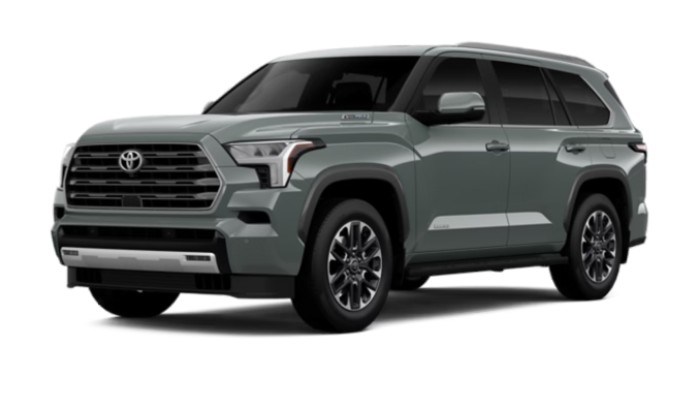
Choosing between the Toyota Sequoia or 4Runner sounds easy until we actually start comparing them. Both wear a Toyota badge. Both have body-on-frame construction. Both can leave pavement behind without immediately wishing they had stayed home. And both tap into Toyota’s long-running reputation for building rugged SUVs.
Yet these two vehicles serve surprisingly different buyers.
The Toyota Sequoia is the larger, stronger, more family-focused option. It gives us three-row practicality, substantial towing capability, a standard hybrid powertrain, and the kind of road presence that makes a regular midsize SUV look almost compact.
The Toyota 4Runner takes another route. It is smaller, easier to manage, considerably less expensive at the bottom of the range, and especially attractive for buyers who genuinely intend to explore trails rather than simply admire their SUV from a paved campground.
For 2026, the distinction has become even more interesting because the latest 4Runner offers modern turbocharged and hybrid powertrains instead of relying on the old naturally aspirated V6 formula. Toyota lists up to 326 horsepower and 465 lb-ft of torque for the 4Runner i-FORCE MAX hybrid, while the Sequoia's standard i-FORCE MAX twin-turbo V6 hybrid produces a much stronger 437 horsepower and 583 lb-ft.
So, Toyota Sequoia or 4Runner—which one should we choose? Let's compare them where the differences really matter.
Content in this publication
- Toyota Sequoia or 4Runner: The Quick Answer
- 2026 Toyota Sequoia vs 4Runner Specs at a Glance
- Toyota Sequoia vs 4Runner Size: The Biggest Difference
- Toyota Sequoia vs 4Runner Engine Performance
- Toyota Sequoia vs 4Runner Off-Road Capability
- Toyota Sequoia vs 4Runner Towing Capacity
- Toyota Sequoia vs 4Runner Fuel Economy
- Toyota Sequoia vs 4Runner Interior Space
- Toyota Sequoia vs 4Runner Cargo Space
- Toyota Sequoia vs 4Runner Comfort
- Toyota Sequoia vs 4Runner Technology
- Toyota Sequoia vs 4Runner Price
- Toyota Sequoia or 4Runner for Daily Driving?
- Toyota Sequoia or 4Runner for a Family?
- Toyota Sequoia or 4Runner for Reliability?
- Toyota Sequoia TRD Pro vs 4Runner TRD Pro
- Toyota 4Runner Trailhunter vs Sequoia
- Toyota Sequoia or 4Runner for Snow?
- Toyota Sequoia or 4Runner for Overlanding?
- Toyota Sequoia or 4Runner for Long Road Trips?
- Advantages of the Toyota Sequoia
- Advantages of the Toyota 4Runner
- Toyota Sequoia or 4Runner: Which One Should We Buy?
- The Most Important Question Isn't Sequoia vs 4Runner
- Toyota Sequoia or 4Runner: Final Verdict
- Frequently Asked Questions
Toyota Sequoia or 4Runner: The Quick Answer
If we want the shortest possible answer, it goes something like this:
Choose the Toyota Sequoia if we need maximum passenger space, serious towing capability, stronger acceleration, three-row family usability, and a more upscale full-size SUV experience.
Choose the Toyota 4Runner if we value trail capability, maneuverability, a lower purchase price, a smaller footprint, and an SUV that feels more naturally suited to off-road adventures.
The Sequoia is like a large expedition ship. It can carry more people, more equipment, and a heavier load.
The 4Runner is more like a rugged adventure boat. It carries less, but it can squeeze into places where the bigger vessel becomes cumbersome.
Neither is automatically better. The better SUV depends on what we're actually asking it to do.
2026 Toyota Sequoia vs 4Runner Specs at a Glance
The numbers immediately explain why Toyota can sell both SUVs without one making the other irrelevant.
| Feature | Toyota Sequoia | Toyota 4Runner |
|---|---|---|
| Vehicle class | Full-size SUV | Midsize SUV |
| Construction | Body-on-frame | Body-on-frame |
| Available seating | Up to 8 | Up to 7 |
| Standard engine | 3.4L twin-turbo V6 hybrid | 2.4L turbo four-cylinder |
| Maximum horsepower | 437 hp | 326 hp |
| Maximum torque | 583 lb-ft | 465 lb-ft |
| Maximum towing capacity | 9,500 lb | 6,000 lb |
| Maximum estimated combined MPG | Up to 22 | Up to 23 |
| 2026 starting MSRP | Around $65,725 | Around $42,270 |
| Best suited to | Families, towing, long trips | Trails, daily driving, adventure |
Toyota currently lists the Sequoia with up to 9,500 pounds of maximum towing capacity, while the 2026 4Runner reaches 6,000 pounds. Toyota also lists seating for up to eight in the Sequoia and up to seven in the 4Runner.
Those numbers create the basic personality of each SUV before we even drive them.
Toyota Sequoia vs 4Runner Size: The Biggest Difference
Physical size may be the most important distinction between these SUVs.
The Sequoia is unmistakably a full-size vehicle. At roughly 208 inches long, it occupies significantly more road, garage, and parking-space real estate than a typical midsize SUV.
The 4Runner is much easier to imagine using on tight trails, crowded city streets, older parking structures, and narrow mountain roads.
Why the Sequoia's Extra Size Matters
Size sounds inconvenient until we start packing people.
A larger body means more room for passengers, luggage, child seats, camping equipment, sports gear, coolers, and everything else that mysteriously multiplies whenever a family leaves home.
Toyota says the 2026 Sequoia offers as much as 86.9 cubic feet of cargo capacity with the rear seats folded, supported by an adjustable cargo-shelf system and a sliding third row.
That flexibility makes the Sequoia feel less like an oversized 4Runner and more like an SUV designed around family logistics.
Why the 4Runner's Smaller Footprint Can Be Better
Bigger isn't always better.
On a narrow trail, an additional few inches can feel like a few feet. Trees, rocks, switchbacks, and deep ruts do not care how impressive our towing capacity looks on a specification sheet.
The 4Runner's smaller body makes placement easier. We can see a line through a tight section and position the vehicle more confidently.
That advantage also appears every Monday morning when the adventure is over and we're trying to park at work.
The Everyday Size Test
Ask ourselves one simple question:
Will we spend more time carrying six people or maneuvering through tight spaces?
Our answer points strongly toward either the Sequoia or 4Runner.
Toyota Sequoia vs 4Runner Engine Performance
This comparison once revolved heavily around naturally aspirated engines. Not anymore.
The current Toyota SUV lineup has embraced turbocharging and hybrid assistance.
Toyota Sequoia i-FORCE MAX Hybrid
Every current Sequoia uses Toyota's i-FORCE MAX twin-turbo V6 hybrid system.
Output is substantial:
- 437 horsepower
- 583 lb-ft of torque
- Up to 9,500 pounds of towing capacity
Toyota lists fuel economy of up to an EPA-estimated 22 MPG combined depending on configuration.
The huge torque figure matters more than the horsepower number suggests. Accelerating a heavy SUV, climbing grades, merging with passengers aboard, or pulling a trailer requires torque, and the Sequoia has plenty of it.
Press the accelerator and the big Toyota does not feel sleepy.
Toyota 4Runner i-FORCE Engine
Standard versions of the 2026 4Runner use Toyota's turbocharged 2.4-liter i-FORCE four-cylinder producing approximately:
278 horsepower and 317 lb-ft of torque.
That may sound modest beside the Sequoia, but remember what we're comparing. The 4Runner does not need to move the same amount of vehicle.
Toyota also offers the hybrid i-FORCE MAX, raising output to as much as:
326 horsepower and 465 lb-ft of torque.
Those are serious numbers for a midsize adventure SUV.
Which SUV Feels Faster?
The Sequoia wins the raw-power contest.
Its hybrid V6 delivers noticeably more torque and horsepower, making it better suited to highway passing, towing, and carrying heavy loads.
But performance isn't only acceleration.
On a rocky trail, controllability matters more than horsepower. We do not need 437 horsepower while crawling over a boulder at walking speed.
That's where the 4Runner begins fighting back.
Toyota Sequoia vs 4Runner Off-Road Capability
Here's where the conversation gets entertaining.
Both SUVs can be seriously capable off pavement, particularly in their adventure-oriented trims. But the 4Runner is ultimately the more natural trail machine.
Toyota offers 4Runner variants including TRD Off-Road, Trailhunter, and TRD Pro, alongside available hardware such as a locking rear differential, Multi-Terrain Select and CRAWL Control.
On appropriate four-wheel-drive versions, Toyota provides a two-speed transfer case with high and low ranges. TRD Off-Road, TRD Pro, and Trailhunter models receive an electronically locking rear differential.
Those aren't decorative badges. They're meaningful tools when traction disappears.
4Runner TRD Pro and Trailhunter
The latest 4Runner gives serious outdoor buyers multiple personalities to choose from.
The TRD Pro leans toward high-performance off-road use.
The Trailhunter is geared toward overlanding and extended backcountry travel.
For someone imagining weekends filled with dirt roads, rocks, remote campsites, mud, and mountain passes, the 4Runner feels purpose-built rather than merely capable.
Can the Sequoia Go Off-Road?
Absolutely.
We should not confuse "larger" with "incapable."
The Sequoia TRD Pro exists specifically because some buyers want full-size room without surrendering serious all-terrain capability.
Its weakness is geometry rather than ambition.
A larger wheelbase and wider body simply require more space. On open desert tracks, forest roads, snow, sand, or broad trails, the Sequoia can feel unstoppable.
Put it on a tight technical trail surrounded by trees and rocks, however, and the smaller 4Runner starts looking like the smarter tool.
Off-Road Winner: Toyota 4Runner
For recreational trail use, we'd choose the 4Runner.
For reaching remote locations with a large family and mountains of equipment, the Sequoia makes a stronger argument.
Toyota Sequoia vs 4Runner Towing Capacity
If towing matters, this category is far less complicated.
The Sequoia can tow up to 9,500 pounds when properly configured. Toyota also offers equipment such as an integrated trailer brake controller and Trailer Sway Control.
The 2026 4Runner has a maximum towing capacity of 6,000 pounds.
A 6,000-pound capacity is respectable for a midsize SUV. It can accommodate many small boats, utility trailers, campers, dirt-bike trailers, and recreational loads.
But the Sequoia plays in another league.
Choose the Sequoia for Serious Towing
The Sequoia makes more sense if we're regularly pulling:
- Large travel trailers
- Heavier boats
- Enclosed car or equipment trailers
- Large utility trailers
- Recreational equipment approaching 4Runner limits
Its 583 lb-ft of torque also gives us more breathing room when climbing hills with a trailer behind us.
Choose the 4Runner for Occasional Recreation
If the trailer is relatively light and towing is something we do a few weekends each year, the 4Runner's 6,000-pound maximum may be perfectly sufficient.
Buying a larger SUV merely because it can tow several thousand pounds more doesn't make much sense if we'll never use the capability.
Toyota Sequoia vs 4Runner Fuel Economy
Neither vehicle is designed primarily around squeezing every mile from a gallon of fuel.
These are rugged body-on-frame SUVs, not aerodynamic crossovers.
Even so, modern powertrains have narrowed the efficiency gap considerably.
Toyota lists the Sequoia at up to 22 MPG combined, while certain 4Runner configurations can reach an estimated 23 MPG combined.
That's interesting because the smaller 4Runner doesn't completely run away with this category.
Hybrid Doesn't Mean Economy Car
Toyota's hybrid systems in these SUVs prioritize more than fuel efficiency.
In both vehicles, electrification contributes heavily to torque and drivability.
You may be interested in reading Cars Similar to Hyundai Veloster: 12 Alternatives Worth Considering
Think of the electric motor less as a tiny accountant counting gasoline droplets and more as an extra pair of hands pushing the SUV when the engine needs help.
The Sequoia especially uses hybridization to make a huge vehicle move with surprising urgency.
Toyota Sequoia vs 4Runner Interior Space
Families should pay very close attention here.
The Sequoia can seat up to eight occupants, while the 4Runner offers configurations with seating for up to seven.
Numbers don't tell the whole story, though.
Sequoia Is Better for Regular Three-Row Use
If we routinely carry children, grandparents, friends, or coworkers, the Sequoia is easier to justify.
Its larger cabin makes the third-row concept more believable.
There's also more flexibility for juggling passengers and cargo.
Imagine a road trip with six people.
Now add luggage.
Then add backpacks.
Then somebody buys souvenirs.
Then someone insists on bringing a cooler roughly the size of a dishwasher.
Suddenly, SUV dimensions stop being theoretical.
4Runner Works Better for Smaller Families
The 4Runner can offer three-row seating in certain configurations, but we would treat those rear seats more as occasional accommodations than as the central reason to buy the vehicle.
For a family of four or five, however, the 4Runner can be wonderfully practical.
We get the rugged SUV experience without carrying a full-size body everywhere we go.
Toyota Sequoia vs 4Runner Cargo Space
Cargo requirements often separate casual SUV buyers from people who genuinely need a large SUV.
The Sequoia offers up to 86.9 cubic feet of cargo capacity with its rear seats folded according to Toyota.
Its third-row cargo arrangement can also be adjusted to create different loading configurations.
The 4Runner remains highly useful, particularly when configured around five passengers rather than maximizing seating.
Which Is Better for Camping?
This depends on how we camp.
For two adults with a tent, cooler, hiking equipment, and recovery gear, the 4Runner is arguably more appealing.
For two adults, three children, a large tent, chairs, cooking equipment, bicycles, food, luggage, and enough supplies to establish a small civilization, give us the Sequoia.
Toyota Sequoia vs 4Runner Comfort
The Sequoia has the advantage when long-distance comfort takes priority.
Its wider cabin, larger overall dimensions, stronger powertrain, and premium upper trims make it better suited to long highway journeys.
The 4Runner isn't uncomfortable, particularly in upscale Limited or Platinum form, but its core identity remains adventure-oriented.
Sequoia as a Road-Trip SUV
A full-size SUV begins making sense after several highway hours.
The cabin feels spacious.
Passengers spread out.
The engine hardly notices hills.
The vehicle feels planted.
We can load it heavily without turning every piece of luggage into a game of three-dimensional Tetris.
4Runner as an Adventure SUV
The 4Runner feels more intimate.
There's less vehicle surrounding us, which is an advantage when we're maneuvering through narrow spaces or navigating a trail.
Some buyers will actually prefer that sensation.
The Sequoia says, "We brought everything."
The 4Runner says, "We brought what we need."
Toyota Sequoia vs 4Runner Technology
Both vehicles have moved far beyond the simple dashboards traditionally associated with rugged Toyota trucks.
Depending on trim, buyers can find large infotainment displays, smartphone connectivity, digital displays, premium audio, cameras, driver-assistance technologies, and convenience features.
Toyota lists an available 14-inch multimedia touchscreen in the Sequoia.
The 4Runner's redesign similarly brings Toyota's newer multimedia and safety technology into what was previously one of the oldest SUV cabins on the market.
Safety Technology
The 2026 4Runner features Toyota Safety Sense 3.0, including technologies such as a pre-collision system, adaptive cruise functionality, lane assistance, automatic high beams, road-sign assistance, and Lane Tracing Assist.
The Sequoia uses Toyota Safety Sense 2.5.
Equipment varies by model, so buyers should compare the exact trim rather than assuming every feature is standard across the range.
Toyota Sequoia vs 4Runner Price
Here comes one of the strongest arguments for the 4Runner.
Toyota currently lists the 2026 4Runner starting around $42,270, although pricing can change with destination charges, configuration, location, and Toyota updates.
Toyota lists the 2026 Sequoia starting around $65,725.
That's a substantial gap.
Why the Sequoia Costs More
We're paying for:
- A larger vehicle
- A significantly more powerful standard hybrid powertrain
- Higher towing capability
- More passenger capacity
- Greater full-size SUV utility
- Additional premium positioning
The Sequoia isn't simply a 4Runner with more metal attached.
It's fulfilling a different role.
But High-End 4Runners Get Expensive Too
Here's where comparison shopping gets interesting.
Toyota lists 2026 versions such as the Trailhunter and TRD Pro around the upper-$60,000 range, depending on configuration.
At that point, we're entering Sequoia territory.
Then the question changes from:
"Can we afford the Sequoia?"
to:
"Do we want full-size practicality or specialized off-road capability?"
That's a much more interesting choice.
Toyota Sequoia or 4Runner for Daily Driving?
For a single person, couple, or smaller family, we'd generally lean toward the 4Runner.
Its size is simply easier to live with.
Parking is easier.
Tight streets are easier.
Garages become less intimidating.
Urban errands require less spatial planning.
The Sequoia can absolutely function as a daily driver, but we should make sure we're actually using its extra capacity.
Driving a huge three-row SUV alone 95% of the time is a bit like commuting with an empty moving truck. It works, but we're carrying capability we rarely use.
When the Sequoia Makes Sense Every Day
The calculation changes if our normal week includes:
- Three or more children
- Multiple car seats
- Frequent carpools
- Regular towing
- Large amounts of equipment
- Long-distance family travel
- Adults regularly using the second and third rows
Then the Sequoia's size stops feeling excessive and starts feeling useful.
Toyota Sequoia or 4Runner for a Family?
For larger families, the Sequoia wins.
Period.
The 4Runner remains suitable for smaller households, but if we're asking the third row to work regularly, we'd rather have the larger vehicle.
Family vehicles live or die by small moments.
Can we access a child seat easily?
Can someone sit behind a tall driver?
Can we load groceries without unloading a stroller?
Can grandparents climb in comfortably?
Is there room for luggage once every seat is occupied?
Those practical questions matter more than approach angles or horsepower when Wednesday afternoon arrives.
You may be interested in readingCars Similar to Hyundai Veloster: 12 Alternatives Worth ConsideringYou may be interested in reading
 Volkswagen Amarok Life: The Sweet Spot in the Amarok Range?
Best for One to Four People: 4Runner
With one to four regular occupants, the 4Runner provides a great balance between passenger room and manageable dimensions.
Best for Five to Eight People: Sequoia
The more passengers we carry, the more persuasive the Sequoia becomes.
Toyota Sequoia or 4Runner for Reliability?
Toyota has built strong reputations around both nameplates, but we should avoid assuming past reliability automatically guarantees identical results from newer generations.
Modern versions use considerably more complex technology than older models.
Turbochargers, hybrid components, advanced electronics, cameras, sensors, and sophisticated transmissions add capability but also complexity.
That's particularly important because today's 4Runner is fundamentally different from the famously simple previous generation.
Which One Should Last Longer?
There isn't a responsible way to declare one guaranteed to last longer based only on the badge.
Maintenance history, driving environment, corrosion exposure, towing habits, modification quality, and routine service matter enormously.
For buyers planning to keep either SUV beyond 150,000 or 200,000 miles, we'd focus less on internet mythology and more on disciplined maintenance.
Used Buyers Should Compare Generations Carefully
A used 4Runner from the previous generation and a new 2026 4Runner are technologically very different vehicles.
Likewise, older V8 Sequoias are mechanically different from today's twin-turbo hybrid Sequoia.
When researching reliability, make sure we're reading information about the correct generation.
Toyota Sequoia TRD Pro vs 4Runner TRD Pro
This is arguably the coolest comparison in the lineup.
Both models wear the TRD Pro badge, but their missions aren't identical.
Sequoia TRD Pro
The Sequoia TRD Pro gives us the rare combination of full-size family space and serious off-road intentions.
It suits buyers who might tow a trailer on Friday, carry a family on Saturday, and head into the wilderness on Sunday.
Its size remains both its greatest advantage and its unavoidable limitation.
4Runner TRD Pro
The 4Runner TRD Pro is more focused.
With a smaller body and trail-centered hardware, it makes more sense for people who consider off-roading one of the primary reasons to own the vehicle.
When terrain becomes narrow and technical, smaller dimensions become an invisible performance upgrade.
Which TRD Pro Would We Buy?
For actual recreational trail driving: 4Runner TRD Pro.
For a family adventure vehicle that must also tow and travel long distances: Sequoia TRD Pro.
Toyota 4Runner Trailhunter vs Sequoia
The Trailhunter adds another wrinkle.
It targets overlanding buyers rather than merely offering a cosmetic outdoor theme.
That makes the 4Runner especially compelling for drivers who want to modify, camp from, or travel long distances through remote terrain.
We can think of it this way:
The Sequoia is built to bring the family and everything they own.
The 4Runner Trailhunter is built to bring us deeper into the wilderness.
If our dream trip involves interstate highways and a large travel trailer, Sequoia.
If it involves a remote dirt route and several nights away from pavement, Trailhunter.
Toyota Sequoia or 4Runner for Snow?
Both can be excellent winter vehicles when equipped appropriately.
The key phrase is equipped appropriately.
Four-wheel drive helps us get moving, but tires strongly influence whether we can stop or turn.
A 4WD system cannot rewrite the laws of physics.
Sequoia Snow Advantages
The Sequoia offers:
- Substantial weight
- Available four-wheel drive
- Strong torque
- Stable highway behavior
- Space for winter equipment and passengers
4Runner Snow Advantages
The 4Runner gives us:
- Four-wheel-drive options
- Lower-range capability on appropriate models
- Available traction-focused off-road systems
- Easier maneuverability on narrow snowy roads
- Less overall bulk
With proper winter tires, either can be formidable in snow.
Toyota Sequoia or 4Runner for Overlanding?
The 4Runner is our pick.
Its proportions, off-road variants, aftermarket appeal, and Trailhunter configuration make it especially compelling.
The Sequoia can make a fantastic overlanding platform too, particularly when interior space is a priority.
But overlanding often takes us down narrower tracks where width and wheelbase matter.
A smaller vehicle also tends to require less planning when navigating obstacles.
Where the Sequoia Wins
A Sequoia-based overland setup gives us considerably more room for:
- Refrigerators
- Storage systems
- Water
- Recovery gear
- Sleeping equipment
- Family camping supplies
It's essentially the difference between carrying a backpack and carrying a closet.
Toyota Sequoia or 4Runner for Long Road Trips?
For long highway journeys, the Sequoia generally wins.
We get more room to stretch out, a stronger powertrain, greater passenger capacity, and more flexibility when packing.
The 4Runner still makes an excellent road-trip vehicle, especially for couples or smaller families.
And when the highway ends?
The 4Runner starts smiling.
Advantages of the Toyota Sequoia
The Sequoia makes the most sense when utility outranks compactness.
Its strongest advantages include:
- More spacious full-size SUV dimensions
- Seating for up to eight
- 437-horsepower hybrid V6
- Huge 583 lb-ft torque output
- Up to 9,500 pounds of towing capacity
- Better suitability for large families
- Strong highway performance
- Large cargo capability
- Premium trims
- Available serious off-road configuration
It is essentially Toyota's answer for buyers who want truck-like strength without giving up SUV passenger practicality.
Advantages of the Toyota 4Runner
The 4Runner counters with a different set of strengths:
- Significantly lower starting price
- Smaller and easier-to-manage dimensions
- Excellent off-road potential
- Multiple adventure-focused trims
- Up to 326 hp and 465 lb-ft with i-FORCE MAX
- Up to 6,000 pounds of towing capacity
- Up to seven seats in appropriate configurations
- Available 2WD, part-time 4WD, and full-time 4WD configurations
- Better trail maneuverability
- Strong appeal for overlanding and outdoor lifestyles
The 4Runner doesn't try to beat the Sequoia at being enormous.
That's precisely why it works.
Toyota Sequoia or 4Runner: Which One Should We Buy?
We can simplify the decision by focusing on lifestyle rather than specifications.
Buy the Toyota Sequoia If...
We should lean toward the Sequoia when:
- We regularly transport more than five people.
- We need serious towing capability.
- We frequently travel with lots of luggage.
- Long highway trips matter more than tight trails.
- We want stronger acceleration and torque.
- We prefer a larger, more premium SUV.
- We genuinely need full-size dimensions.
Buy the Toyota 4Runner If...
The 4Runner is probably better when:
- Most trips involve one to five occupants.
- Off-road driving matters.
- We want something easier to park.
- A lower starting price matters.
- We tow moderate rather than extremely heavy loads.
- We want an overlanding platform.
- We simply don't need a full-size SUV.
The Most Important Question Isn't Sequoia vs 4Runner
The real question is:
How often will we use the capability we're paying for?
That's where many vehicle purchases go sideways.
A Sequoia looks fantastic in the showroom. Its power feels addictive. The space feels luxurious.
But if we're driving alone through downtown traffic every day, those strengths may become unnecessary weight and size.
Likewise, buying a 4Runner because we love the idea of adventure doesn't help if our actual lifestyle involves six passengers and a heavy travel trailer every month.
We should buy for Tuesday morning, not just for the imaginary Saturday featured in an SUV commercial.
Toyota Sequoia or 4Runner: Final Verdict
The Toyota Sequoia and Toyota 4Runner aren't direct substitutes as much as two different interpretations of the rugged SUV formula.
The Sequoia is the better choice for large families, heavy towing, long-distance travel, and anyone who routinely needs full-size capability. Its standard 437-horsepower hybrid powertrain delivers enormous torque, while a maximum towing rating of 9,500 pounds places it well ahead of the 4Runner for serious trailer duty.
The Toyota 4Runner, meanwhile, is likely the sweeter spot for many buyers. It costs considerably less at entry level, remains easier to maneuver, offers legitimate off-road equipment, and now provides a hybrid powertrain producing as much as 326 horsepower and 465 lb-ft of torque. Toyota rates its maximum towing capability at 6,000 pounds, which remains plenty for many recreational users.
If we need space and strength, choose the Sequoia.
If we want maneuverability and adventure capability, choose the 4Runner.
If we're still torn, imagine both SUVs parked in our driveway tomorrow morning.
Are we loading three kids, grandparents, luggage, and a trailer?
Grab the Sequoia keys.
Are we loading two backpacks, camping gear, and a map showing a road that gradually disappears into the mountains?
The 4Runner is calling.
Frequently Asked Questions
1. Is a Toyota Sequoia bigger than a 4Runner?
Yes. The Sequoia is Toyota's full-size SUV, while the 4Runner sits in the midsize SUV category. The Sequoia provides more overall passenger and cargo room and is better suited to larger families, while the 4Runner's smaller dimensions make it easier to maneuver around town and on tight trails.
2. Is the Toyota Sequoia better than the 4Runner?
Not universally. The Sequoia is better for large families, heavy towing, passenger capacity, and long-distance travel. The 4Runner is generally better for buyers who want a smaller footprint, lower entry price, and stronger focus on technical off-road driving.
3. Which can tow more, the Sequoia or 4Runner?
The Sequoia. Toyota rates the 2026 Sequoia for up to 9,500 pounds, compared with up to 6,000 pounds for the 2026 4Runner when properly configured.
4. Which is better off-road, Toyota Sequoia or 4Runner?
The 4Runner gets our vote for dedicated off-road driving because its smaller footprint and adventure-focused trims make it easier to maneuver on technical trails. The Sequoia TRD Pro is still extremely capable and may be better for buyers who need off-road ability together with full-size interior space.
5. Is the Toyota 4Runner cheaper than the Sequoia?
Yes, particularly at the entry level. Toyota currently lists the 2026 4Runner around $42,270 starting MSRP, while the 2026 Sequoia starts around $65,725, though prices can vary with trim, destination charges, options, location, and manufacturer updates.
You may be interested in readingCars Similar to Hyundai Veloster: 12 Alternatives Worth ConsideringYou may be interested in reading
Volkswagen Amarok Life: The Sweet Spot in the Amarok Range?You may be interested in reading
VW Amarok vs Ford Ranger 2025: Which Pickup Is the Better Buy?If you want to know other articles similar to Toyota Sequoia or 4Runner: Which Toyota SUV Should You Buy? you can visit the category Models.
How to Identify Your Ford Fiesta Model
Toyota RAV4 Engine Oil Capacity: Complete Guide

Vauxhall Corsa Models: Complete Guide to Generations, Trims and Versions (1993–2026)
Kia Sportage Trim Levels: Complete 2027 Comparison
Toyota Corolla Cross vs RAV4: Which SUV Is Better?
Haval Jolion vs Omoda C5: Which SUV Is Better?
Leave a Reply
More content of your interest