
BMW M5 Best Year: Which Model Year Is Really the Sweet Spot?

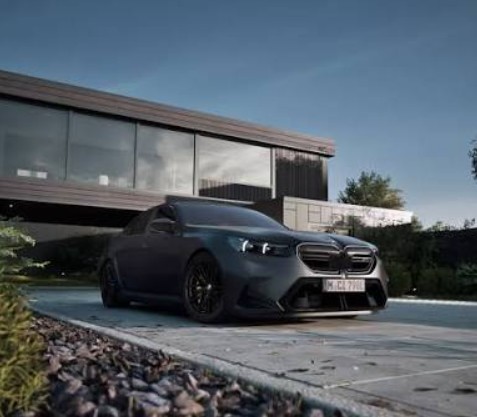
Ask ten BMW enthusiasts about the BMW M5 best year, and we may get ten different answers. One person will swear the E39 is untouchable. Another will defend the screaming V10 E60 until their last breath. Someone who actually needs to get to work every morning may point toward a newer F90 and wonder why the rest of us enjoy making life difficult.
That disagreement is exactly what makes the M5 fascinating.
Since the original E28 appeared in the 1980s, the M5 has repeatedly changed its personality while keeping the same basic recipe: take a comfortable BMW 5 Series, give it a serious performance makeover, and build a sedan capable of embarrassing sports cars.
BMW recognizes seven generations of the M5: the E28, E34, E39, E60, F10, F90, and current G90. Each one represents a different interpretation of what a super sedan should be.
So which year should we actually buy?
For most enthusiasts looking for the best combination of performance, usability, modern technology, and relatively mature engineering, the 2021 BMW M5 Competition is our pick for the best BMW M5 year overall.
But that doesn't mean it's automatically the best M5 for everyone.
If we want the purest driver's car, an E39 may make more sense. If we want outrageous character, the E60 V10 is impossible to ignore. And if maximum modern performance matters most, the later F90 models remain astonishingly capable.
Let's break it down properly.
Content in this publication
- What Is the Best Year for the BMW M5?
- BMW M5 Generations at a Glance
- Best BMW M5 Year Overall: 2021
- Best Classic BMW M5 Year: 2003 E39
- Best BMW M5 for Collectors: E28
- Best Old-School Alternative: E34 M5
- Best BMW M5 Engine Experience: 2008–2010 E60
- Best BMW M5 Value: Late F10
- F10 vs F90: Which Is the Better Used M5?
- Best BMW M5 for Daily Driving: 2021–2023 F90
- What About the BMW M5 CS?
- Is the New G90 the Best BMW M5 Yet?
- BMW M5 Years We Would Approach Carefully
- What to Check Before Buying a Used BMW M5
- Which BMW M5 Generation Is Most Reliable?
- Which BMW M5 Holds Its Value Best?
- BMW M5 Best Year by Buyer Type
- Should We Buy an E39 or F90 M5?
- Is an M5 a Good Used Car?
- How Much Should We Budget After Buying an M5?
- The BMW M5 Best Year Depends on What We Value
- Final Verdict: What Is the BMW M5 Best Year?
- Frequently Asked Questions About the BMW M5 Best Year
What Is the Best Year for the BMW M5?
Our overall recommendation is the 2021 BMW M5 Competition.
Why 2021?
Because by this point the F90 generation had already been on the road for several years, while its facelift brought updated styling and technology without fundamentally rewriting the formula that made the F90 so impressive.
More importantly, the F90 occupies an unusually attractive position in M5 history.
It is modern without feeling completely detached from traditional M-car character. It's astonishingly fast, yet its dimensions and driving experience remain more familiar than those of the heavier electrified G90 that followed.
The F90 introduced M xDrive to the M5 generation, marking the first time an M5 used this configurable all-wheel-drive system. In M5 Competition specification, BMW lists the generation at up to 625 metric horsepower and 750 Nm of torque.
That's supercar territory hiding underneath four doors.
Why the 2021 M5 Competition Hits the Sweet Spot
A great performance car isn't simply the one with the largest number on the specification sheet. If that were true, we'd never discuss older M5s at all.
The 2021 model works so well because it balances several priorities:
- Enormous twin-turbo V8 performance
- M xDrive traction with a rear-wheel-drive mode
- Excellent highway comfort
- Genuine four-door practicality
- Updated F90 styling and technology
- A conventional gasoline drivetrain rather than a plug-in hybrid system
- Enough refinement for daily use
- Ferocious performance when we actually want it
That combination is difficult to beat.
Is the 2021 M5 Perfect?
Absolutely not.
An M5 Competition remains an extremely complicated luxury performance sedan. Parts aren't cheap, maintenance isn't cheap, tires aren't cheap, and deferred maintenance can turn an attractive used-car price into a financial trap.
That's why service history matters almost as much as model year.
A beautifully maintained 2019 M5 can easily be a wiser purchase than a neglected 2021 example.
BMW M5 Generations at a Glance
Before choosing one particular year, we should understand how dramatically the M5 has evolved.
BMW's official M history traces the lineage through seven generations.
| Generation | Approx. Era | Engine Character | Best For |
|---|---|---|---|
| E28 | 1980s | Naturally aspirated inline-six | Collectors |
| E34 | Late 1980s–1990s | Naturally aspirated inline-six | Old-school enthusiasts |
| E39 | Late 1990s–early 2000s | Naturally aspirated V8 | Purists |
| E60 | 2000s | Naturally aspirated V10 | Drama and engine character |
| F10 | 2010s | Twin-turbo V8 | Value and straight-line power |
| F90 | Late 2010s–2020s | Twin-turbo V8, AWD | Best all-around performance |
| G90 | Current generation | Plug-in-hybrid V8 | Technology and extreme output |
Notice what happened over those generations.
The M5 moved from naturally aspirated six-cylinder precision to V8 muscle, then to a high-revving V10, back to a V8 with turbochargers, then all-wheel drive, and finally electrification.
It's almost like watching the entire performance-car industry evolve through one badge.
Best BMW M5 Year Overall: 2021
The 2021 F90 Competition represents the point where BMW had polished an already excellent formula without fundamentally changing what enthusiasts liked about it.
The F90 arrived in 2017 and was a revolutionary M5 because of its M xDrive system. BMW's own historical overview describes the F90 Competition as producing 625 metric horsepower and accelerating from 0–100 km/h in 3.3 seconds.
Numbers tell only half the story, though.
The F90 can behave almost absurdly normally when we aren't pushing it. It has space, comfort, an automatic transmission, modern infotainment, and enough sound insulation to cover enormous distances without exhausting its occupants.
Then we press the right buttons, and the polite executive sedan seems to tear off its business suit.
Why We Prefer 2021 Over an Early F90
Early F90s are tremendously appealing, especially when depreciation puts them within reach of buyers who couldn't have considered one new.
Still, later production typically gives us the benefit of incremental improvements and a fresher vehicle overall.
The 2021 facelift also refreshed the appearance and cabin technology while retaining the fundamentals of the original F90.
That's precisely what we want from a sweet-spot model year: evolution, not unnecessary reinvention.
Best Classic BMW M5 Year: 2003 E39
If someone told us the 2003 BMW M5 is the greatest M5 ever produced, arguing against them would be difficult.
The E39 feels like the point where almost every traditional ingredient came together at once.
It had a naturally aspirated V8.
It had a manual gearbox.
It had rear-wheel drive.
It looked understated.
And it delivered serious speed without surrounding the driver with layers upon layers of electronic complexity.
BMW's E39 used a 4.9-liter V8 producing 400 metric horsepower and 500 Nm of torque, according to BMW M's historical specifications.
Those numbers no longer sound outrageous in an era of 700-horsepower sedans. But the E39's charm isn't about winning a horsepower contest.
It's about connection.
Why 2003 Is Particularly Desirable
The later E39 cars sit at the mature end of the production run. For enthusiasts shopping today, a clean late-production example delivers the fully developed version of a platform already regarded as one of BMW's high points.
A 2003 M5 also looks almost impossibly restrained compared with many modern performance cars.
No enormous wing.
No theatrical exhaust arrangement.
No oversized collection of aerodynamic decorations.
To someone who doesn't know cars, it may simply look like an old BMW sedan.
To someone who does know cars, that's part of the magic.
The E39 M5 Is the Purist's Choice
If our definition of "best" means the M5 that most perfectly embodies the traditional idea of a sports sedan, the E39 wins.
It doesn't need to overpower physics through electronics. It simply gives us a great chassis, a muscular naturally aspirated engine, three pedals, and rear-wheel drive.
Think of it as a perfectly tailored suit with boxing gloves hidden in the pockets.
Best BMW M5 for Collectors: E28
The original E28 occupies another universe entirely.
BMW says the first M5 established the high-performance sedan concept in the mid-1980s. The European specification produced 286 metric horsepower from its 3.5-liter inline-six, and the cars were hand-built.
Today, that heritage matters enormously.
An E28 M5 isn't something we'd typically recommend to someone looking for an inexpensive daily driver. Age alone means ownership requires commitment.
But as a collectible?
Few M5s carry the same historical significance.
Why the First M5 Still Matters
The E28 established the template everyone else eventually copied.
Take a dignified executive sedan.
Keep the appearance relatively discreet.
Then hide serious performance underneath.
Simple idea. Massive consequences.
Without the E28, the modern super-sedan category might look very different.
Best Old-School Alternative: E34 M5
The E34 often gets squeezed between two legends.
Before it sits the groundbreaking E28.
After it sits the adored E39.
That's unfortunate because the E34 has plenty of character of its own.
BMW originally gave the E34 M5 a naturally aspirated inline-six producing 315 metric horsepower, later increasing output to 340 hp in some versions.
It retained a handmade, analog flavor that makes it tremendously appealing today.
Who Should Buy an E34?
An E34 makes sense for buyers who want something rarer and more unusual than an E39 but still want a genuinely old-school M5 experience.
The challenge is finding the right one.
At this age, condition overwhelms model year.
Rust, restoration quality, previous repairs, originality, and maintenance records deserve more attention than a one- or two-year difference in production date.
Best BMW M5 Engine Experience: 2008–2010 E60
Now we arrive at the lunatic.
You may be interested in reading Hyundai Palisade Models: Complete Trim Level Guide
The E60 M5 might be one of the easiest cars in the world to both love and fear.
Its centerpiece is the S85 V10.
BMW's official history lists the E60's naturally aspirated 5.0-liter V10 at 507 metric horsepower, with an engine speed reaching 8,250 rpm.
Read that again.
A four-door executive sedan.
A naturally aspirated V10.
More than 8,000 rpm.
Cars like this aren't coming back.
Why Later E60 Years Are More Appealing
When shopping for complicated performance vehicles, later examples can be attractive because we're looking at a more mature version of the platform.
That's why we'd concentrate on roughly 2008–2010 models, provided maintenance history is excellent.
But the critical phrase there is maintenance history.
The E60 Can Become an Expensive Love Affair
Anyone considering an E60 should budget like they're buying an exotic car disguised as an old sedan.
These cars involve complex electronics and expensive high-performance components. Depending on market and specification, transmissions can also dramatically affect the ownership experience.
We shouldn't buy an E60 because it happens to be the cheapest M5 advertised nearby.
That's bait.
We buy an E60 because we specifically want an E60.
The V10 is the reason to enter the relationship, and proper preventive maintenance is the price of admission.
Best BMW M5 Value: Late F10
The F10 arrived in 2011 and brought the M5 firmly into the turbo era.
Its predecessor's naturally aspirated V10 disappeared. In its place came a 4.4-liter twin-turbo V8, delivering far more torque lower in the rev range. BMW lists output across the generation at roughly 560 to 575 metric horsepower in standard and Competition forms.
The personality changed immediately.
Where the E60 encourages us to chase the tachometer, the F10 simply punches the horizon.
Why the 2015–2016 F10 Is Worth Considering
Later F10 examples can represent excellent value for buyers who want huge power without paying F90 money.
We'd focus primarily on clean, well-maintained 2015 or 2016 models.
By then, the F10 was well established, and buyers can find examples with desirable equipment and updated styling.
But cheap purchase prices can be deceptive.
A 500-plus-horsepower German luxury sedan doesn't suddenly become inexpensive to maintain simply because depreciation cut its resale value in half.
That rule applies to practically every used M5.
F10 vs F90: Which Is the Better Used M5?
This may be one of the most practical comparisons for today's buyer.
The F10 often costs significantly less.
The F90 is substantially more capable.
If our budget comfortably reaches the F90, we'd choose it.
M xDrive transformed the usability of M5 power. Instead of turning every full-throttle launch into a negotiation between tires and traction control, the F90 can deploy enormous power with remarkable efficiency.
Choose the F10 If…
We should choose an F10 when purchase value matters, we prefer rear-wheel-drive character, and we don't need the astonishing traction of the newer car.
Choose the F90 If…
We should choose the F90 if we want the strongest all-around M5 package.
It's faster.
It's easier to deploy.
It's newer.
And it works brilliantly in a wider range of conditions.
Best BMW M5 for Daily Driving: 2021–2023 F90
This is where the F90 truly separates itself from many older M5s.
Can we daily-drive an E39?
Of course.
Could someone commute in an E60?
Absolutely.
But age, parts availability, fuel consumption, maintenance risks, and collector value increasingly complicate those decisions.
A late F90 is easier to integrate into normal life.
We get contemporary comfort and safety technology, modern connectivity, incredible passing power, and all-wheel-drive traction.
Yet we still have a gasoline twin-turbo V8 rather than the plug-in-hybrid architecture of the newest generation.
For many buyers, that's the sweet spot.
What About the BMW M5 CS?
If we're talking about the most special F90, we can't ignore the M5 CS.
The CS turned an already ridiculous sedan into something even sharper and more exclusive.
It's the enthusiast's ultimate expression of the F90 formula.
But is it the best M5 year for the average buyer?
Probably not.
Its rarity, pricing, and special status push it toward collector territory. A regular M5 Competition delivers most of the everyday thrill without requiring us to treat every supermarket parking space like a security threat.
Still, if money is secondary and we want the crown jewel of the F90 family, the CS belongs near the top of the list.
Is the New G90 the Best BMW M5 Yet?
On paper, the newest M5 is extraordinary.
The current M5 uses an electrified V8 powertrain. BMW USA lists the modern M5 Sedan at 717 horsepower and a manufacturer-estimated 0–60 mph time of 3.4 seconds.
That's staggering.
But "newest" and "best year" aren't automatically synonyms.
The G90 represents a dramatically different philosophy.
It introduces plug-in-hybrid technology, significantly greater complexity, and a different physical character than earlier M5s.
Why We Wouldn't Call the G90 the Best Year Yet
Time matters.
A new generation hasn't had the same opportunity to establish a long-term ownership record as older generations.
And while hybrid assistance gives the G90 astonishing capability, some buyers looking specifically for a used M5 may prefer the lighter conceptual simplicity of the F90.
The G90 could eventually prove brilliant.
It simply answers a different question.
BMW M5 Years We Would Approach Carefully
Calling any entire M5 year "bad" oversimplifies the issue.
These are highly complicated performance vehicles, and maintenance history can completely change the ownership equation.
Still, certain eras demand more caution.
The biggest example is the E60.
Its incredible V10 is precisely what makes it desirable—and precisely why ownership shouldn't be approached casually.
Early turbocharged F10 models also deserve careful inspection because we're dealing with aging examples of an intensely powerful and complex drivetrain.
Rather than creating a simplistic blacklist, we should remember one rule:
The cheapest M5 can easily become the most expensive M5.
What to Check Before Buying a Used BMW M5
A pre-purchase inspection should be considered mandatory, especially once we're shopping outside warranty coverage.
Here are the areas we'd prioritize:
- Complete service records: Missing history is a warning sign.
- Cold-start behavior: Listen for abnormal noises and observe warning messages.
- Oil and coolant leaks: Even small leaks can reveal larger maintenance needs.
- Transmission operation: Shifts should behave consistently under normal and spirited driving.
- Suspension condition: M5 suspension components aren't economy-car parts.
- Brake wear: Large high-performance brakes can be expensive to refresh.
- Tire condition: Uneven wear may reveal alignment or suspension problems.
- Electronic systems: Test every expensive button and feature.
- Modification history: Tunes can be fun, but poorly executed modifications add uncertainty.
- Diagnostic scan: Stored errors may reveal problems that aren't obvious during a short test drive.
Maintenance History Matters More Than Mileage
A lower odometer reading looks attractive in an advertisement, but mileage doesn't tell us how the car accumulated those miles.
A carefully maintained 70,000-mile M5 may be preferable to a neglected 40,000-mile example.
Cars hate neglect almost as much as they hate abuse.
Avoid Buying on Price Alone
We understand the temptation.
You may be interested in readingHyundai Palisade Models: Complete Trim Level GuideYou may be interested in reading
Hyundai Palisade Competitors: The Best Three-Row SUV AlternativesA used M5 that originally cost serious money can eventually appear online for the price of a new mainstream sedan.
That feels like winning.
Sometimes it is.
Sometimes it's merely an expensive repair bill wearing leather seats.
Which BMW M5 Generation Is Most Reliable?
Reliability is difficult to rank cleanly because age changes everything.
An E39 has a comparatively traditional mechanical layout, but every E39 is now an older car. Rubber deteriorates. Plastic becomes brittle. Cooling components age. Previous owners leave fingerprints—sometimes literally and mechanically.
Meanwhile, an F90 is substantially more complex but much newer.
So we shouldn't ask only, "Which M5 is most reliable?"
A better question is:
Which M5 can we afford to purchase and maintain correctly?
For a modern daily driver, we'd lean toward a well-documented later F90.
For a simpler enthusiast experience, a properly sorted E39 remains compelling.
Which BMW M5 Holds Its Value Best?
Collectibility follows emotion more than spreadsheets.
Cars become desirable when they represent something that can no longer be reproduced.
That's why the E28 matters.
That's why the E39 matters.
And that's especially why the E60's V10 matters.
Future cars can become faster. They can't recreate the circumstances that produced a naturally aspirated 5.0-liter V10 executive sedan.
Similarly, clean manual E39s have attributes that modern M5s simply don't offer.
If value retention is our priority, originality, rare specifications, documentation, condition, and historical significance matter enormously.
BMW M5 Best Year by Buyer Type
If we had to condense everything into one shopping guide, we'd choose:
| Buyer | Our Pick |
| Best M5 overall | 2021 M5 Competition |
| Best classic M5 | 2003 E39 M5 |
| Best collector M5 | E28 M5 |
| Best engine experience | 2008–2010 E60 M5 |
| Best value | 2015–2016 F10 M5 |
| Best modern daily driver | 2021–2023 F90 M5 |
| Most special F90 | M5 CS |
| Best new-generation technology | G90 M5 |
There's no universal winner because these cars appeal to very different people.
That's part of the fun.
Should We Buy an E39 or F90 M5?
This comparison perfectly illustrates the problem with asking for one definitive best M5.
The E39 is the romantic choice.
The F90 is the rational one.
The E39 gives us a naturally aspirated V8, manual transmission, rear-wheel drive, timeless styling, and the sort of analog interaction enthusiasts increasingly miss.
The F90 gives us devastating speed, modern comfort, all-weather traction, excellent technology, and considerably easier daily usability.
Which would we choose?
For a weekend garage companion: E39.
For one car expected to do almost everything: F90.
Is an M5 a Good Used Car?
It can be an absolutely phenomenal used car for the right owner.
Where else can we buy something capable of hauling passengers comfortably to dinner, devouring an interstate journey, and then accelerating with the fury of a genuine performance machine?
Few cars combine those talents so convincingly.
But we need realistic expectations.
An M5 is not simply a regular 5 Series with a larger engine.
Brakes, tires, cooling systems, suspension hardware, drivetrain components, and electronics can all carry performance-car costs.
The depreciation curve may make the purchase affordable.
It doesn't transform the car into an economy sedan.
How Much Should We Budget After Buying an M5?
We shouldn't spend our entire automotive budget on the purchase price.
Leave room for immediate servicing.
If we're buying an older example, assume there may be items worth refreshing even when the seller believes the vehicle is "perfect."
Fluids, tires, brakes, batteries, suspension components, hoses, seals, and preventative maintenance can quickly add up.
A healthy reserve fund makes M5 ownership dramatically more enjoyable.
The goal isn't simply to afford an M5.
It's to afford our M5 when it needs something.
The BMW M5 Best Year Depends on What We Value
Here's the beautiful problem.
The M5 has never remained one thing for very long.
The E28 is historically important.
The E34 is wonderfully analog.
The E39 might represent the perfect traditional sports-sedan formula.
The E60 has one of the wildest engines ever installed in a production sedan.
The F10 introduced massive turbocharged torque.
The F90 weaponized traction and turned the M5 into a four-door supercar.
The G90 adds electrification and pushes performance technology into another era.
Picking the best one is like choosing the best song from a great album. The answer depends partly on what we want to feel.
Final Verdict: What Is the BMW M5 Best Year?
If we had to recommend just one model to the widest group of buyers, we'd choose the 2021 BMW M5 Competition.
It lands in an extraordinary middle ground.
It's brutally fast but genuinely comfortable.
It's technologically modern without requiring the plug-in-hybrid architecture of the newest generation.
Its M xDrive system makes its massive performance remarkably usable.
And because it comes from the mature portion of the F90 generation, it gives us one of the most polished interpretations of BMW's traditional twin-turbo V8 M5 recipe.
Yet enthusiasts shopping with their hearts rather than their heads may still prefer the 2003 E39 M5.
We can't blame them.
The E39's V8, manual gearbox, discreet body, and rear-wheel-drive chassis capture the classic M5 philosophy beautifully. It doesn't merely represent an older generation. It represents an era of performance cars that isn't coming back.
Then there's the E60.
Buying one purely because it's inexpensive would be questionable.
Buying one because we want to hear a naturally aspirated V10 scream past 8,000 rpm?
That makes considerably more sense.
Ultimately, the best BMW M5 year isn't necessarily the fastest or newest. It's the one whose strengths match the experience we're actually trying to buy.
For most people, that's the F90.
For purists, it's probably the E39.
For collectors, the E28.
For brave romantics with a maintenance budget?
We all know where that V10 is waiting.
Frequently Asked Questions About the BMW M5 Best Year
1. What is considered the best year BMW M5?
The 2021 BMW M5 Competition is one of the strongest all-around choices because it combines the mature F90 platform, tremendous twin-turbo V8 power, M xDrive traction, modern technology, and everyday comfort. Buyers seeking a more analog experience may consider the 2003 E39 M5 the better enthusiast choice.
2. What is the best older BMW M5 to buy?
The E39 M5, particularly a well-maintained late-production example such as a 2003 model, is arguably the strongest classic choice. Its naturally aspirated V8, manual transmission, rear-wheel-drive layout, understated styling, and engaging chassis have made it one of the most celebrated M5 generations.
3. Which BMW M5 has the V10 engine?
The E60-generation BMW M5 uses a naturally aspirated 5.0-liter V10. BMW rated it at 507 metric horsepower, and the engine could rev to approximately 8,250 rpm. Its remarkable engine makes the E60 highly desirable among enthusiasts, although ownership requires a serious approach to maintenance.
4. Is the F90 M5 better than the F10 M5?
For most buyers, yes. The F90 offers newer technology, astonishing performance, and M xDrive traction that allows it to deploy its power more effectively. The F10 can still be attractive because used examples may cost considerably less and retain a traditional rear-wheel-drive character.
5. Is the newest BMW M5 the best M5?
Not necessarily. The current G90 is enormously powerful and technologically advanced, with BMW USA listing the M5 Sedan at 717 horsepower. However, some enthusiasts prefer the conventional twin-turbo V8 F90, naturally aspirated E39, or even the V10 E60 because those generations offer distinctly different driving experiences.
You may be interested in readingHyundai Palisade Models: Complete Trim Level GuideYou may be interested in reading
Hyundai Palisade Competitors: The Best Three-Row SUV AlternativesYou may be interested in reading
 Audi A4 Generations: Complete Guide From B5 to B9
If you want to know other articles similar to BMW M5 Best Year: Which Model Year Is Really the Sweet Spot? you can visit the category Models.
How to Identify Your Ford Fiesta Model
Toyota RAV4 Engine Oil Capacity: Complete Guide

Vauxhall Corsa Models: Complete Guide to Generations, Trims and Versions (1993–2026)
Kia Sportage Trim Levels: Complete 2027 Comparison
Toyota Corolla Cross vs RAV4: Which SUV Is Better?
Haval Jolion vs Omoda C5: Which SUV Is Better?
Leave a Reply
More content of your interest