
BMW M5 Years: A Complete Guide to Every Generation

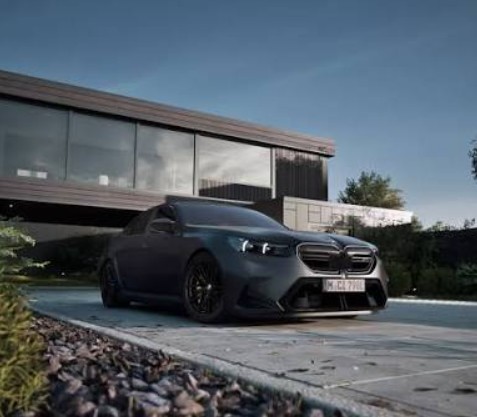
Few performance cars have managed to grow older without losing their identity. The BMW M5 has. Across the BMW M5 years, it has changed engines, gained turbochargers, adopted all-wheel drive, and eventually embraced electrification, yet the basic recipe remains strangely familiar: take a practical BMW 5 Series, give it the heart of a serious sports car, and make the result subtle enough to pass unnoticed in traffic.
The story stretches back roughly four decades. BMW identifies seven M5 generations: the E28 introduced in 1985, E34 in 1988, E39 in 1998, E60 in 2005, F10 in 2011, F90 in 2017, and the G90 beginning in 2024.
But dates alone don't tell us why enthusiasts obsess over certain years. Some M5 generations are loved for simplicity. Others are remembered for outrageous engines. Some transformed the formula so dramatically that they initially divided BMW fans.
So, instead of simply listing BMW M5 model years, we're going to walk through the entire family tree and look at what actually changed.
Content in this publication
- BMW M5 Years at a Glance
- Where the BMW M5 Story Really Begins
- 1985 BMW M5 E28: Where the Legend Started
- 1988 BMW M5 E34: Evolution Instead of Revolution
- 1998 BMW M5 E39: The Generation Many Fans Still Worship
- 2005 BMW M5 E60: The Wild V10 Years
- 2011 BMW M5 F10: Welcome to the Turbo Era
- 2017 BMW M5 F90: The M5 Discovers All-Wheel Drive
- 2024 BMW M5 G90: Electrification Changes Everything Again
- Which BMW M5 Years Had a V10?
- Which BMW M5 Years Had a Manual Transmission?
- Which BMW M5 Years Used a V8?
- Which BMW M5 Generation Is the Most Iconic?
- What Are the Best BMW M5 Years to Own?
- What BMW M5 Years Should Buyers Approach Carefully?
- How BMW M5 Years Reflect Changing Performance Cars
- How Many BMW M5 Generations Are There?
- The BMW M5 Years We Would Remember Most
- Why the M5 Has Survived for So Long
- Conclusion: Every BMW M5 Era Tells a Different Story
- Frequently Asked Questions About BMW M5 Years
BMW M5 Years at a Glance
Before diving into each generation, here's the big picture.
| M5 Generation | Introduction Year | Engine Layout | Defining Character |
|---|---|---|---|
| E28 | 1985 | Naturally aspirated inline-six | The original sleeper |
| E34 | 1988 | Naturally aspirated inline-six | Refined old-school M |
| E39 | 1998 | Naturally aspirated V8 | Analog performance icon |
| E60 | 2005 | Naturally aspirated V10 | High-revving spectacle |
| F10 | 2011 | Twin-turbo V8 | Turbocharged muscle |
| F90 | 2017 | Twin-turbo V8 | AWD super-sedan |
| G90 | 2024 | Plug-in-hybrid twin-turbo V8 | Electrified performance |
BMW's own historical overview follows this seven-generation timeline.
What makes the progression fascinating is that almost every major M5 generation represents a different interpretation of speed. The E28 was lightweight and discreet. The E39 brought V8 torque. The E60 chased revs. The F10 discovered turbocharging. The F90 found traction. The G90 added electricity.
In other words, the M5 hasn't simply become faster. It has repeatedly reinvented how it delivers speed.
Where the BMW M5 Story Really Begins
Technically, the M5 wasn't BMW's first attempt at building a seriously quick 5 Series.
Before it appeared, BMW had produced cars such as the M535i. Those earlier models helped establish the idea that a practical four-door sedan could also behave like a driver's car.
Then BMW M pushed the concept much further.
The first production M5 emerged from the E28-generation 5 Series. BMW says production began near the end of 1984, with the model presented to the press in early 1985.
That distinction explains why enthusiasts sometimes encounter slightly different dates when researching early M5s. For practical purposes, however, 1985 is regarded as the beginning of the BMW M5 lineage.
And what a beginning it was.
1985 BMW M5 E28: Where the Legend Started
The first-generation E28 M5 established a formula that sounds ordinary today but bordered on madness in the mid-1980s.
Take a conservative executive sedan.
Add a motorsport-derived engine.
Change as little about the exterior as possible.
Then surprise almost everything else on the road.
The E28 used a 3.5-liter inline-six related to the engine developed for the BMW M1. BMW lists European output at 286 horsepower, with 340 Nm of torque and a 0–100 km/h time of 6.5 seconds.
Those numbers don't sound supernatural beside a modern M5, but context matters. In 1985, a sedan that could run with dedicated sports cars was extraordinary.
Why Early BMW M5 Years Feel So Different
The E28 came from an age before performance sedans became stuffed with driving modes, adaptive systems, touchscreens, and electronically managed personalities.
There is an appealing purity here.
The car is comparatively narrow. Visibility is excellent. The cabin looks remarkably ordinary. The engine makes its power progressively rather than smashing the driver with an instant wall of torque.
BMW also notes that E28 M5s were handmade through the end of production.
That gives these early cars an almost artisanal quality today.
Who Should Want an E28 M5?
We wouldn't choose an E28 simply because we wanted the fastest M5 available. Modern performance cars will destroy it in a straight line.
We'd want one because it represents the idea in its purest form.
It is the opening chapter—the moment BMW realized that an executive sedan could wear running shoes beneath a business suit.
1988 BMW M5 E34: Evolution Instead of Revolution
When the second M5 arrived, BMW didn't rip up the blueprint.
It sharpened it.
Introduced in 1988, the E34 M5 retained the naturally aspirated inline-six philosophy. Depending on version, output eventually climbed from 315 horsepower to 340 horsepower.
The E34 felt more substantial and mature than the E28. The body was cleaner, the cabin more refined, and the entire vehicle better suited to devouring long motorway journeys.
Yet it still belonged firmly to the analog age.
Why the E34 Is an Important M5 Generation
Modern BMW M cars are built in enormous numbers compared with early examples. The E34 belongs to a different world.
Its engine demanded revs. Steering feedback mattered. Driver involvement wasn't something selected through a menu.
Perhaps its most interesting historical contribution was body style.
BMW introduced an E34 M5 Touring in 1992, the first wagon interpretation of the M5 concept. BMW says fewer than 1,000 E34 M5 Touring examples left the factory.
That makes it particularly fascinating today.
The E34 M5 Touring Was Ahead of Its Time
Think about the idea for a second.
A practical family wagon with genuine BMW M performance sounds perfectly logical now. In the early 1990s, it was delightfully eccentric.
It proved that practicality didn't have to cancel excitement.
That philosophy would disappear from the M5 range for years before eventually returning.
1998 BMW M5 E39: The Generation Many Fans Still Worship
Ask enthusiasts to name the greatest M5 ever made and one code appears again and again:
E39.
There's a reason.
The third-generation M5 arrived in 1998 and brought a major mechanical change. The inline-six era was over. BMW installed a 4.9-liter naturally aspirated V8 producing 400 horsepower and 500 Nm of torque.
Suddenly, the M5 had serious low-end muscle to accompany its appetite for revs.
Why the E39 M5 Became an Icon
The magic wasn't merely the horsepower.
It was balance.
The E39 sits in a sweet spot between classic BMW simplicity and modern performance. It provides more refinement and power than an E34 without surrounding the driver with layers of electronic intervention.
A manual gearbox contributes heavily to the appeal.
So does rear-wheel drive.
So does steering that communicates rather than merely obeys.
The result feels less like a computer interpreting the driver's wishes and more like a mechanical conversation.
Was the E39 the Best BMW M5 Year Range?
"Best" depends on what we value.
If we want maximum acceleration, absolutely not.
If we want the newest technology, again, no.
But if we want an M5 that captures the middle ground between everyday luxury, naturally aspirated V8 character, reasonable dimensions, and old-school involvement, the E39 makes an incredibly persuasive argument.
It's like a perfectly worn leather jacket. Newer designs may be technically superior, yet the older one somehow feels right the moment we put it on.
2005 BMW M5 E60: The Wild V10 Years
Then BMW completely lost its sense of restraint.
And we're rather glad it did.
The E60 M5 appeared in 2005 with one of the most famous engines ever installed in a production sedan: a naturally aspirated 5.0-liter V10.
BMW rated it at 507 horsepower and 520 Nm, while the engine could spin to an astonishing 8,250 rpm.
A V10.
In a four-door executive sedan.
That sentence still sounds ridiculous.
Why the E60 M5 Was So Special
Where the E39 feels muscular and organic, the E60 feels theatrical.
Its engine changes personality as the revs climb. Drive gently and the car can behave like an ordinary luxury sedan. Push deeper into the tachometer and everything becomes sharper, louder, and more frantic.
BMW itself connects the V10 era with the Formula 1 atmosphere of the period, noting the prominence of ten-cylinder engines in F1 when the E60 appeared.
That racing association helped give the car an exotic aura.
The E60 Is Also One of the Most Complicated M5 Eras
This is where nostalgia requires a little caution.
The E60's engineering ambition came with complexity. Its electronics, high-performance V10 and, in many markets, SMG automated manual transmission mean ownership can require commitment.
Therefore, when shopping these BMW M5 years, condition and documented maintenance matter far more than simply finding the cheapest example.
A neglected E60 can turn a dream purchase into a financial thunderstorm.
Why Enthusiasts Keep Coming Back Anyway
Because nothing else feels quite like it.
When that V10 climbs through the rev range, practical arguments begin losing their grip.
The E60 is flawed, dramatic, expensive to ignore, and difficult to forget.
You may be interested in reading BMW M5 Best Year: Which Model Year Is Really the Sweet Spot?
Sometimes great cars aren't great because they're sensible.
They're great because they're memorable.
2011 BMW M5 F10: Welcome to the Turbo Era
By 2011, automotive engineering was changing quickly.
Emissions requirements were tightening. Efficiency mattered more. Manufacturers realized forced induction could provide both enormous torque and respectable everyday drivability.
The fifth-generation F10 M5 reflected that change.
The naturally aspirated V10 disappeared. In its place came a 4.4-liter twin-turbocharged V8.
BMW describes the F10 as the beginning of a new propulsion era for M cars. Standard versions delivered around 560 horsepower, while later Competition versions reached 575 horsepower.
The Biggest Change Wasn't Horsepower
It was torque.
The F10 could deliver huge thrust lower in the rev range, making it feel explosively fast during normal driving.
No need to chase the upper reaches of a V10 tachometer.
Press the throttle and the horizon arrives.
For some enthusiasts, this made the M5 less exotic. For others, it made the car dramatically more usable.
Why F10 BMW M5 Years Matter
The F10 established the modern M5 personality.
Turbocharged V8 power? Check.
Huge midrange torque? Check.
Luxury-car comfort paired with absurd acceleration? Absolutely.
Later generations refined this formula rather than abandoning it.
If the E60 represents the final spectacular act of naturally aspirated M5 engineering, the F10 is the bridge into today's world.
2017 BMW M5 F90: The M5 Discovers All-Wheel Drive
The arrival of the F90 in 2017 marked another turning point.
For the first time, the M5 adopted M xDrive all-wheel drive. BMW itself highlights this as one of the defining innovations of the generation.
Purists initially had reason to worry.
Was an AWD M5 still an M5?
Then people drove it.
Why M xDrive Changed the M5
Previous generations could easily overwhelm their rear tires.
The F90 turned all that V8 power into forward motion.
The result was devastating acceleration.
BMW lists the M5 Competition at 625 horsepower, 750 Nm of torque, and 0–100 km/h in approximately 3.3 seconds.
That is supercar territory hiding inside something capable of carrying four adults and their luggage.
Yet BMW didn't entirely abandon rear-wheel-drive fun. The M xDrive system was designed to preserve the playful character expected of an M car while adding traction when drivers wanted it.
The F90 M5 Competition
The Competition model took the formula further.
More power, chassis revisions, and a sharper personality made it the enthusiast-focused mainstream version.
For many drivers, this generation offers one of the most complete M5 experiences because it combines outrageous capability with enough modern comfort for everyday use.
The 2021 BMW M5 CS
Then came the F90's party trick.
The M5 CS arrived in 2021, representing a harder, more focused interpretation of the platform. BMW identifies it as the first M5 to wear the CS badge.
It turned a luxury super-sedan into something closer to a four-door track weapon.
Weight reduction, additional performance and a more aggressive personality pushed the M5 far beyond its original executive-car mission.
Was it necessary?
Not remotely.
That's part of why it was so appealing.
2024 BMW M5 G90: Electrification Changes Everything Again
After nearly 40 years of M5 evolution, BMW introduced generation seven.
The G90 M5 arrived in 2024 and represents arguably the biggest philosophical shift since the transition from naturally aspirated engines to turbocharging.
Why?
Electricity.
The new M5 combines a high-revving twin-turbo V8 with an electric motor in an M Hybrid plug-in-hybrid powertrain. BMW calls the G90 the seventh generation of the M5.
Why the G90 Is So Different
Previous M5 generations generally followed the familiar pattern of making the combustion engine more powerful.
The G90 adds another source of propulsion entirely.
Electric assistance brings instant torque, allows limited electric driving, and integrates the M5 with the broader electrification strategy shaping modern performance cars.
It also creates trade-offs.
Hybrid hardware adds weight and complexity.
That's why discussion surrounding this M5 generation often sounds very different from debates about an E39 or E60. We're no longer simply talking about engine personality or steering feel. We're discussing where high-performance luxury cars are heading next.
The Return of the M5 Touring
One especially interesting development is the return of the Touring.
After earlier Touring versions such as the E34 and E61, the modern M5 wagon has returned alongside the latest generation. BMW's historical material lists the M5 Sedan and Touring together for the 2024 era.
And that's wonderfully appropriate.
The M5 has always been about combining conflicting ideas.
Speed and comfort.
Aggression and understatement.
Sports-car performance and family-car practicality.
A brutally fast wagon might be the purest expression of that contradiction.
Which BMW M5 Years Had a V10?
Only the E60-generation sedan—and closely related E61 Touring—belonged to the famous V10 period.
BMW introduced the E60 M5 in 2005, while the M5 Touring followed in 2007.
This makes the V10 chapter unusually distinctive within the M5 timeline.
Before it came inline-six and V8 power.
After it came turbocharged V8s.
There was no gradual evolution into another V10 generation. BMW created something extraordinary, used it for one era, and moved on.
That's a major reason these cars remain fascinating.
Which BMW M5 Years Had a Manual Transmission?
Older M5s were strongly associated with manual gearboxes.
The E28, E34 and E39 eras especially appeal to drivers who want traditional three-pedal interaction. The E60 story becomes more complicated because transmission availability varied by market, while subsequent M5 generations increasingly moved toward fast automatic and dual-clutch-style solutions suited to their growing performance.
This transition tells us something important about the M5 itself.
As acceleration increased, the car changed from something that demanded more work from the driver into something capable of producing astonishing performance almost effortlessly.
Neither approach is automatically better.
They're simply different flavors.
Which BMW M5 Years Used a V8?
The V8 has defined more M5 generations than any other engine configuration.
The E39 introduced the naturally aspirated V8 in 1998. BMW replaced it with a V10 for the E60, then returned to V8 power with the turbocharged F10 in 2011. The F90 retained the twin-turbo V8 formula, while the G90 combines a turbocharged V8 with electric assistance.
So if we love V8 M5s, we have several radically different personalities to choose from.
The E39 is analog.
The F10 is muscular.
The F90 is brutally effective.
The G90 is technologically ambitious.
You may be interested in readingBMW M5 Best Year: Which Model Year Is Really the Sweet Spot?You may be interested in reading
 Hyundai Palisade Models: Complete Trim Level Guide
Same basic cylinder count, completely different experiences.
Which BMW M5 Generation Is the Most Iconic?
If we forced ourselves to choose just one, the E39 M5 probably has the strongest claim.
Its reputation rests on more than nostalgia.
It arrived before performance sedans became incredibly heavy and electronically complex, yet it offered enough power and refinement to feel thoroughly modern.
The proportions remain elegant.
The V8 has character.
The manual gearbox keeps the driver involved.
And perhaps most importantly, the E39 doesn't feel like it's trying desperately to prove how advanced it is.
It simply works.
Still, "most iconic" and "best" aren't necessarily the same question.
What Are the Best BMW M5 Years to Own?
We shouldn't treat a single production year as universally superior because age, maintenance and previous ownership have enormous influence on used M5s.
Instead, we can choose by personality.
An E28 suits the collector who values origins.
An E34 appeals to someone wanting classic BMW M engineering with added refinement.
An E39 is arguably the enthusiast sweet spot.
An E60 is the choice for drivers who put engine drama above simplicity.
An F10 delivers serious turbocharged performance for comparatively accessible used-car money.
An F90 offers one of the strongest combinations of modern speed, practicality and usability.
The G90 is for buyers who want to experience BMW M's newest interpretation of the super-sedan.
Notice what's missing from that answer?
The idea that newer automatically means better.
With M5s, every era gives something while taking something else away.
What BMW M5 Years Should Buyers Approach Carefully?
Any poorly maintained one.
That sounds almost too simple, but it matters.
Performance cars live harder lives than ordinary sedans. Previous owners may have launched them repeatedly, modified their engines, neglected fluids, deferred expensive repairs, or sold them just before a major service bill arrived.
The older and more mechanically complicated the M5, the more important a thorough pre-purchase inspection becomes.
One structured checklist is worth remembering when shopping:
- Verify service records instead of accepting verbal maintenance claims.
- Check for accident history and structural repairs.
- Look carefully for aftermarket tuning or evidence the car was previously modified.
- Scan the vehicle electronically for stored faults.
- Inspect cooling, suspension, brakes, tires, drivetrain and fluid leaks.
- Research generation-specific maintenance requirements before buying.
- Budget beyond the purchase price; an inexpensive M5 can still require M5-sized repair money.
In other words, buy the history as much as the car.
How BMW M5 Years Reflect Changing Performance Cars
Look at the generations from a distance and we can almost see the automotive industry changing in real time.
The E28 and E34 represent the age of lightweight, naturally aspirated inline-six performance.
The E39 reflects the rise of muscular luxury sedans.
The E60 captures the wild engineering freedom of the 2000s.
The F10 marks the arrival of turbocharging.
The F90 demonstrates what sophisticated traction systems can do with enormous power.
The G90 shows us the electrified future arriving whether traditionalists are ready for it or not.
That's what makes the M5 timeline interesting even beyond BMW fandom.
It's essentially a rolling history of performance-car engineering.
How Many BMW M5 Generations Are There?
There are seven official BMW M5 generations as of the current G90 model.
BMW's own M heritage material identifies them as E28, E34, E39, E60, F10, F90 and G90.
Seven generations across four decades doesn't sound like many.
Yet those seven cars cover three major engine layouts, naturally aspirated and turbocharged eras, rear- and all-wheel-drive configurations, sedan and wagon bodies, plus conventional and plug-in-hybrid powertrains.
That's enormous evolution packed into a relatively small family tree.
The BMW M5 Years We Would Remember Most
Every M5 generation deserves a chapter, but a few years stand taller in the model's history.
1985 gave us the beginning.
1998 delivered the E39 and its naturally aspirated V8.
2005 unleashed the V10-powered E60.
2011 introduced the turbocharged F10 era.
2017 brought M xDrive with the F90.
2021 produced the first M5 CS.
2024 introduced the hybrid G90 generation.
Those aren't simply dates.
They're turning points.
Why the M5 Has Survived for So Long
Plenty of fast sedans have disappeared.
The M5 survives because it has never been tied to one exact engineering formula.
If BMW had insisted that an M5 must always use an inline-six, there would have been no E39 V8.
If it had insisted on naturally aspirated engines, there would have been no F10.
If rear-wheel drive were untouchable, the F90 wouldn't exist.
And if electrification were forbidden, the G90 wouldn't exist either.
The M5's true identity isn't a particular cylinder count or drivetrain.
It's the contradiction.
It must behave like a sophisticated executive sedan when we're cruising home and something dramatically more exciting when the road opens up.
That idea has survived every mechanical revolution thrown at it.
Conclusion: Every BMW M5 Era Tells a Different Story
Understanding the BMW M5 years isn't just about memorizing chassis codes.
It's about watching one idea evolve.
The E28 created the high-performance executive sedan formula. The E34 refined it. The E39 arguably perfected the old-school version of it. The E60 went wonderfully mad with a V10. The F10 embraced turbocharging. The F90 added remarkable traction and speed. The G90 brought the M5 into the plug-in-hybrid era.
Which one should we want?
That depends on what makes us smile.
For analog charm, we'd look backward.
For engine theater, the E60 calls loudly.
For usable modern performance, the F90 is difficult to ignore.
For the newest technology, the G90 represents the next chapter.
But maybe that's the greatest thing about the M5 family. There isn't one correct answer.
Each generation reflects its era, and every era adds another layer to one of BMW M's longest-running stories.
Frequently Asked Questions About BMW M5 Years
What year was the first BMW M5 made?
The first-generation BMW M5 was produced from late 1984 and publicly introduced in early 1985. BMW therefore recognizes 1985 as the starting point of the M5 lineage. It was based on the E28-generation 5 Series and used a naturally aspirated inline-six with roots in BMW M1 engineering.
How many generations of BMW M5 are there?
There are seven main generations: E28, E34, E39, E60, F10, F90 and G90. They were introduced in 1985, 1988, 1998, 2005, 2011, 2017 and 2024 respectively.
What years did the BMW M5 have a V10?
The V10 belongs to the E60/E61 era introduced during the mid-2000s. BMW launched the E60 M5 in 2005 with a naturally aspirated 5.0-liter V10 producing 507 horsepower. No other M5 generation has used a production V10.
Which BMW M5 generation is considered the best?
There is no universal winner, although the E39 is frequently regarded as one of the most desirable generations because it combines a naturally aspirated V8, rear-wheel drive, understated styling and an engaging old-school driving experience. Buyers prioritizing newer technology and outright performance may prefer the F90 instead.
What is the newest BMW M5 generation?
The newest generation is the G90 BMW M5, introduced in 2024. It is the seventh M5 generation and combines a twin-turbocharged V8 with an electric motor using BMW M's plug-in-hybrid M Hybrid system.
You may be interested in readingBMW M5 Best Year: Which Model Year Is Really the Sweet Spot?You may be interested in reading
Hyundai Palisade Models: Complete Trim Level GuideYou may be interested in reading
Hyundai Palisade Competitors: The Best Three-Row SUV AlternativesIf you want to know other articles similar to BMW M5 Years: A Complete Guide to Every Generation you can visit the category Models.
How to Identify Your Ford Fiesta Model
Toyota RAV4 Engine Oil Capacity: Complete Guide

Vauxhall Corsa Models: Complete Guide to Generations, Trims and Versions (1993–2026)
Kia Sportage Trim Levels: Complete 2027 Comparison
Toyota Corolla Cross vs RAV4: Which SUV Is Better?
Haval Jolion vs Omoda C5: Which SUV Is Better?
Leave a Reply
More content of your interest