
Hyundai Palisade Competitors: The Best Three-Row SUV Alternatives

Shopping for a three-row SUV can feel a little like walking into a restaurant with a 20-page menu. Plenty of choices look good, several appear remarkably similar, and suddenly we are wondering whether we really need captain’s chairs, all-wheel drive, a hybrid powertrain, or enough towing capacity to drag a small planet behind us.
That is exactly why looking closely at Hyundai Palisade competitors matters.
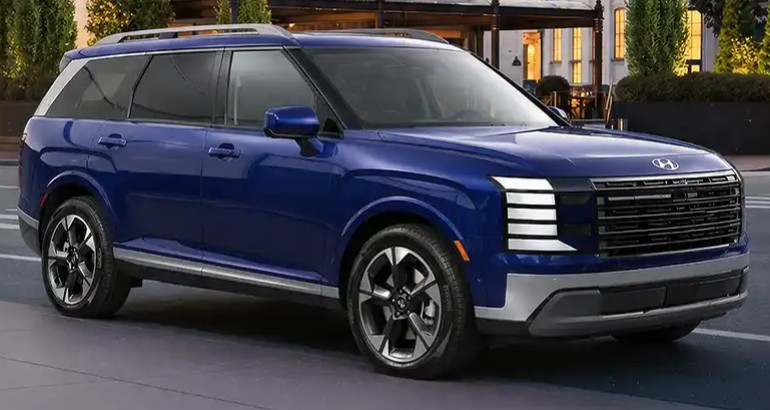
The Hyundai Palisade has carved out a comfortable position among midsize three-row SUVs by combining family-friendly practicality with an interior that often feels more expensive than the badge suggests. The redesigned 2026 Palisade continues that formula with seating for seven or eight people, available HTRAC all-wheel drive, a 287-hp 3.5-liter V6 in gasoline models, and up to 86.7 cubic feet of cargo capacity. Properly configured gasoline models can tow up to 5,000 pounds.
But it certainly does not have the playground to itself.
The Kia Telluride, Toyota Grand Highlander, Honda Pilot, Mazda CX-90, Volkswagen Atlas, Ford Explorer, Subaru Ascent, Chevrolet Traverse, Nissan Pathfinder, and Jeep Grand Cherokee L all approach the same family-SUV problem from slightly different directions.
So which one fits us best?
Rather than declaring one vehicle universally superior, we are going to compare what each competitor does differently and identify the buyer each SUV makes the most sense for.
Content in this publication
- What Makes the Hyundai Palisade So Competitive?
- Hyundai Palisade Competitors at a Glance
- 1. Kia Telluride: The Palisade's Closest Rival
- 2. Toyota Grand Highlander: The Space Champion
- 3. Honda Pilot: The Practical Family Specialist
- 4. Mazda CX-90: The Driver's Alternative
- 5. Volkswagen Atlas: Big, Boxy and Useful
- 6. Ford Explorer: The Performance-Minded Mainstream Choice
- 7. Chevrolet Traverse: Space Without Apology
- 8. Subaru Ascent: AWD Comes First
- 9. Nissan Pathfinder: Traditional SUV Flavor
- 10. Jeep Grand Cherokee L: The Premium-Rugged Alternative
- Which Palisade Competitor Has the Most Cargo Space?
- Which Palisade Competitor Gets the Best Fuel Economy?
- Which Hyundai Palisade Competitor Is Best for Towing?
- Which Palisade Alternative Feels Most Luxurious?
- Which Competitor Is Best for Large Families?
- Palisade vs Competitors: Our Category Winners
- Should We Buy a Hyundai Palisade or a Competitor?
- What to Check During a Test Drive
- Are Cheaper Palisade Alternatives Worth Considering?
- Used Hyundai Palisade Competitors
- How We Would Narrow the Final Shortlist
- Final Thoughts on Hyundai Palisade Competitors
- Frequently Asked Questions
What Makes the Hyundai Palisade So Competitive?
Before examining its rivals, we need a reference point.
The Palisade succeeds because it does not concentrate on a single spectacular statistic. Instead, it behaves like a good decathlete: strong nearly everywhere.
The 2026 gasoline Palisade uses a 287-horsepower 3.5-liter V6, while front-wheel-drive versions carry EPA estimates of 19 mpg city, 25 mpg highway, and 21 mpg combined. Most AWD gasoline versions are rated at 18/24/20 mpg.
Its family-friendly strengths include:
- Seating for seven or eight
- Up to 86.7 cubic feet of cargo space
- Available captain's chairs
- Available HTRAC AWD
- Maximum gasoline-model towing capacity of 5,000 pounds
- Extensive driver-assistance technology
- Upscale Calligraphy trim
- Available relaxation seats
- Large touchscreen-based infotainment system
Hyundai has also broadened the Palisade lineup with a hybrid. The 2026 Palisade Hybrid produces a combined 329 horsepower, while certain front-wheel-drive versions carry EPA estimates as high as 34 mpg combined.
That matters because fuel economy used to be one of the easiest areas where competitors could attack the Palisade.
Now the battlefield is considerably tighter.
Hyundai Palisade Competitors at a Glance
If we are building a Palisade shopping list, these are the SUVs that deserve the most attention.
| Competitor | Main Reason to Consider It |
|---|---|
| Kia Telluride | Closest overall Palisade alternative |
| Toyota Grand Highlander | Excellent space and hybrid choices |
| Honda Pilot | Practical cabin and strong versatility |
| Mazda CX-90 | More engaging driving experience |
| Volkswagen Atlas | Spacious and straightforward |
| Ford Explorer | Strong performance options |
| Chevrolet Traverse | Generous passenger and cargo room |
| Subaru Ascent | Standard AWD and family usability |
| Nissan Pathfinder | Traditional SUV character and towing |
| Jeep Grand Cherokee L | Premium feel and rugged capability |
The interesting part is that these vehicles may compete in one segment, yet they do not necessarily appeal to the same buyer.
The Palisade's Biggest Threats
If we narrowed the field to the most direct rivals, our shortlist would probably start with four names:
Kia Telluride, Toyota Grand Highlander, Honda Pilot, and Mazda CX-90.
Hyundai itself identifies vehicles including the Grand Highlander, Pilot, Telluride, and Ford Explorer among the Palisade's primary midsize SUV competitors.
Now let us dig deeper.
1. Kia Telluride: The Palisade's Closest Rival
The Kia Telluride is inevitably the first vehicle mentioned whenever someone asks what competes with the Hyundai Palisade.
And there is a good reason.
The Palisade and Telluride have historically shared major corporate engineering roots, yet Kia gives the Telluride its own personality. Where the Palisade tends to lean toward polished luxury, the Telluride traditionally wears a slightly tougher, more upright suit.
Think of them as siblings who grew up in the same house but developed different wardrobes.
Palisade vs Telluride Interior
Both vehicles emphasize three-row comfort, but the visual atmosphere differs.
The Palisade often feels elegant and technology-forward, particularly in upper trims. Its dashboard and cabin materials try to create something closer to a premium crossover experience.
The Telluride tends to feel a little more rugged and conventional.
Neither approach is objectively better.
If we want an SUV that feels luxurious without stepping into Genesis, Lexus, or Acura territory, the Palisade makes a strong argument.
If we prefer chunky styling and a more adventurous appearance, the Telluride may speak louder.
Who Should Pick the Telluride?
Consider the Kia if exterior character matters as much as interior refinement.
Otherwise, these two vehicles should usually be test-driven back-to-back because the final decision may come down to pricing, trim availability, styling, and dealer experience rather than a dramatic practical difference.
2. Toyota Grand Highlander: The Space Champion
The regular Toyota Highlander is certainly a Palisade alternative, but the Toyota Grand Highlander is the more direct competitor.
Why?
Size.
Toyota stretched the concept into a genuinely family-oriented three-row SUV with enough passenger and cargo room to compete with the biggest players in the midsize class.
The 2026 Grand Highlander provides as much as 97.5 cubic feet of cargo capacity, exceeding the Palisade's 86.7-cubic-foot maximum.
That difference becomes meaningful when we regularly fold the seats and use the SUV like a moving storage shed.
Grand Highlander Powertrain Variety
Toyota offers one of the strongest powertrain menus in this segment.
The 2026 Grand Highlander is available with:
- A turbocharged gasoline engine
- A conventional hybrid
- A performance-oriented Hybrid MAX
The regular hybrid carries a manufacturer-estimated 34 mpg combined, while the Hybrid MAX produces 362 horsepower.
That gives Toyota an impressive spread between efficiency and power.
Where the Toyota Beats the Palisade
The Grand Highlander is especially compelling if maximum cargo volume or powertrain variety sits near the top of our checklist.
Its hybrid offerings are particularly appealing to families piling on thousands of miles each year.
Where the Palisade Strikes Back
The Palisade counters with a plush cabin, attractive equipment levels, a competitive new hybrid system, and a slightly more luxurious personality.
The Toyota feels intensely rational.
The Hyundai adds a little more theater.
3. Honda Pilot: The Practical Family Specialist
Few automakers understand family transportation better than Honda, and the Honda Pilot proves it.
This is the rival we should examine closely if clever seating, passenger flexibility, and cargo usability matter more than flashy design.
Honda lists the 2026 Pilot with as much as 111.8 cubic feet of maximum cargo capacity in certain configurations, along with 158.4 cubic feet of passenger volume.
That is serious space.
The Pilot's Clever Second Row
One of the Pilot's most useful features is its available removable or stowable second-row center seat arrangement.
It essentially lets us switch between a bench-style configuration and easier third-row access depending on the trip.
That might sound minor in a brochure.
When children, grandparents, backpacks, sports equipment, and groceries are involved simultaneously, it can feel like genius.
Palisade vs Pilot Comfort
The Palisade usually emphasizes sophistication.
The Pilot emphasizes functionality.
We could describe the Hyundai as the stylish hotel lounge and the Honda as the extremely well-designed family room.
Both are comfortable. Their priorities simply differ.
Who Should Choose the Pilot?
The Honda deserves serious attention from shoppers who value:
- Flexible seating
- Generous cargo capacity
- A naturally practical cabin
- Traditional V6 power
- Family-focused design
For pure versatility, the Pilot remains one of the Palisade's strongest competitors.
4. Mazda CX-90: The Driver's Alternative
Now things get interesting.
The Mazda CX-90 competes in the same broad three-row SUV category but feels fundamentally different behind the wheel.
Where many family crossovers ask, "How comfortably can we transport eight people?"
Mazda also asks, "Can we enjoy the road while doing it?"
The answer is yes.
CX-90 Inline-Six Power
The 2026 Mazda CX-90 offers a turbocharged 3.3-liter inline-six engine. Standard versions produce 280 horsepower and 332 lb-ft of torque, while Turbo S versions can produce up to 340 horsepower when using recommended premium fuel.
That powertrain immediately gives the Mazda a distinctive personality.
Even better, standard 280-hp CX-90 models are EPA-rated at approximately 23 mpg city and 28 mpg highway with AWD.
Rear-Biased AWD Changes the Character
Mazda uses a rear-biased AWD layout rather than making the CX-90 feel like another front-drive crossover with power occasionally sent backward.
That architecture helps create more balanced handling.
On a winding road, the Mazda can feel like somebody sneaked sports-car DNA into the family gene pool.
Where the CX-90 Falls Short
Packaging is the trade-off.
The CX-90 offers seating for up to eight, but its cabin prioritizes styling and driving dynamics more heavily than some rivals. Cargo space behind the third row is also less generous than what we get from the roomiest Palisade competitors; Mazda lists up to 14.9 cubic feet behind the third row.
Who Should Choose the Mazda?
Pick the CX-90 if we still care about steering feel after installing child seats.
For enthusiastic drivers, it may be the most emotionally satisfying Palisade alternative.
5. Volkswagen Atlas: Big, Boxy and Useful
The Volkswagen Atlas takes a refreshingly straightforward approach to the three-row SUV formula.
You may be interested in reading Audi A4 Generations: Complete Guide From B5 to B9
It is roomy.
It has a broad cabin.
It looks substantial.
And it does not pretend to be a sports car wearing hiking boots.
That honesty makes it appealing.
Atlas vs Palisade
The Palisade generally creates a more luxurious visual impression, while the Atlas focuses heavily on spatial efficiency.
Adults who actually use the second and third rows may appreciate the Volkswagen's packaging.
Its squared-off exterior shape also pays dividends inside. Boxy SUVs are often excellent family vehicles because engineers do not have to sacrifice as much headroom or cargo volume in the name of dramatic rooflines.
Who Should Buy the Atlas?
The Atlas makes sense if space and simplicity outrank prestige.
Families should pay particular attention to third-row access and driving visibility during a test drive. These practical details often matter far more after three years of ownership than whether the dashboard looked exciting on showroom day.
6. Ford Explorer: The Performance-Minded Mainstream Choice
The Ford Explorer has been a household name in America for decades.
Today's Explorer sits directly in the Palisade's territory but brings a somewhat different personality.
The Ford's rear-drive-based architecture and available higher-output configurations can appeal to drivers who want greater performance than the standard Palisade provides.
Explorer vs Palisade
The Hyundai tends to win buyers through cabin presentation and generous features.
The Ford leans harder into performance and traditional SUV character.
That difference becomes noticeable once we start accelerating, towing, or driving on twistier roads.
The Explorer can feel more athletic.
The Palisade can feel more relaxing.
Who Should Choose the Explorer?
Families who want a three-row SUV without giving up stronger performance credentials should place the Explorer on the list.
But buyers primarily interested in plush comfort may still prefer the Palisade.
7. Chevrolet Traverse: Space Without Apology
The Chevrolet Traverse has long played the size card.
Its modern iterations continue to emphasize family space, aggressive styling, and everyday usability.
If our household regularly fills every seating position, roominess becomes less of a specification and more of a survival tool.
That is where the Traverse earns its place.
Traverse vs Palisade
The Palisade generally feels more upscale.
The Traverse feels bigger and more overtly American in presentation.
Chevrolet also offers adventurous-looking variants that give the Traverse a more rugged visual identity.
For families moving from a full-size SUV but hoping to avoid full-size fuel bills and parking headaches, the Traverse can hit a sweet spot.
8. Subaru Ascent: AWD Comes First
People who live where winter behaves like an angry houseguest should not overlook the Subaru Ascent.
Subaru builds its brand around all-wheel drive, and that naturally attracts families dealing with snow, mountain roads, gravel, and wet weather.
Ascent vs Palisade
The Palisade offers AWD, but front-wheel drive remains part of the lineup.
The Subaru approaches things differently by making AWD central to its identity.
That does not automatically make it superior in poor weather—tires remain enormously important—but buyers who specifically want Subaru's AWD philosophy may find the Ascent appealing.
The Ascent's Personality
The Ascent is less flashy than the Palisade.
And that may be exactly what some people want.
It resembles a durable hiking backpack next to the Hyundai's polished leather carry-on.
Both carry the family. They simply make different fashion statements.
9. Nissan Pathfinder: Traditional SUV Flavor
The Nissan Pathfinder has moved back toward a tougher SUV identity after previous generations leaned more heavily toward crossover softness.
It combines three-row seating with rugged styling and useful towing capability.
Why Consider the Pathfinder?
The Pathfinder is worth comparing if we:
- Tow regularly
- Prefer a conventional SUV appearance
- Need three rows
- Want available AWD
- Like Nissan's straightforward cabin layout
The Palisade may feel more premium inside, but the Pathfinder has an appealing no-nonsense quality.
For camping, road trips, and trailer duty, that personality makes sense.
The Jeep Grand Cherokee L sits near the edge of the Palisade comparison because it can become considerably more expensive.
Still, shoppers looking at loaded Palisade Calligraphy models may naturally wander into Jeep territory.
And once we do, the comparison becomes interesting.
Grand Cherokee L vs Palisade
The Jeep offers:
- Three-row seating
- More traditional SUV proportions
- Strong off-road credentials in suitable configurations
- A premium cabin in higher trims
- Greater rugged-brand appeal
The Palisade counters with excellent value and a family-oriented cabin.
If we rarely leave pavement, paying extra for Jeep capability may not provide much benefit.
But if dirt roads and trails are part of the routine, the Grand Cherokee L makes a stronger case.
Which Palisade Competitor Has the Most Cargo Space?
Cargo figures vary depending on trim and measuring methodology, so comparisons need to be treated carefully.
Still, the Honda Pilot and Toyota Grand Highlander stand out.
Toyota quotes up to 97.5 cubic feet behind the front seats for the Grand Highlander, while Honda lists as much as 111.8 cubic feet for the 2026 Pilot under its measurement methodology. Hyundai lists 86.7 cubic feet for the Palisade with the second and third rows folded.
If maximum cargo capacity is everything, the Palisade is not automatically the class champion.
But numbers only tell part of the story.
Why Cargo Shape Matters
Imagine loading four suitcases.
A vehicle with slightly lower total volume but a square, low cargo floor may actually work better than one with a larger published number and awkward wheel-well intrusions.
That is why we should physically open the liftgate during a test drive.
Bring the stroller if necessary.
Dealers have seen stranger things.
Which Palisade Competitor Gets the Best Fuel Economy?
Hybrid models change this contest dramatically.
Toyota's Grand Highlander Hybrid reaches a manufacturer-estimated 34 mpg combined. Hyundai's new Palisade Hybrid can also reach an EPA-estimated 34 mpg combined in certain front-wheel-drive configurations.
Meanwhile, the Mazda CX-90 offers respectable efficiency from its mild-hybrid inline-six, and a CX-90 plug-in hybrid is available for shoppers who want short-distance electric driving. Mazda lists a 26-mile electric range for the CX-90 PHEV.
For high-mileage families, this part of the comparison deserves serious attention.
A difference of several mpg may look boring on paper.
Multiply it by 15,000 miles a year for five years, and boring becomes money.
Which Hyundai Palisade Competitor Is Best for Towing?
The gasoline Palisade can tow up to 5,000 pounds when properly equipped.
That is enough for many small boats, campers, utility trailers, and recreational equipment.
Several competitors also reach approximately 5,000 pounds in suitable configurations, including the Toyota Grand Highlander and higher-equipped Mazda CX-90 models. Toyota lists a maximum of 5,000 pounds, while Mazda's suitable CX-90 trims can also reach 5,000 pounds.
Do Not Shop by Maximum Towing Alone
Maximum capacity is only one part of the equation.
We also need to consider:
- Payload
- Tongue weight
- Passenger load
- Trailer brakes
- Hitch equipment
- Cooling systems
- Vehicle configuration
A family of six plus luggage reduces the available margin before we even attach the trailer.
Always verify the exact owner's manual and door-jamb payload label for the vehicle being purchased.
Which Palisade Alternative Feels Most Luxurious?
Among mainstream competitors, the Palisade itself remains difficult to beat here.
Upper trims use the old luxury-car trick: give us materials, lighting, displays, comfort features, and visual drama normally associated with more expensive badges.
The Mazda CX-90 is probably its strongest mainstream challenger for interior sophistication.
The Grand Cherokee L can feel more premium as well, although prices may move beyond direct Palisade territory.
Best Luxury Value
For us, the strongest luxury-value battle comes down to:
You may be interested in readingAudi A4 Generations: Complete Guide From B5 to B9You may be interested in reading
 Ford Edge Years to Avoid: The Complete Used-Buyer Guide
Hyundai Palisade vs Mazda CX-90.
The Palisade emphasizes passenger comfort.
The Mazda emphasizes craftsmanship plus driving involvement.
Which Competitor Is Best for Large Families?
Large families should begin with three vehicles:
Honda Pilot, Toyota Grand Highlander, and Hyundai Palisade.
The Pilot offers excellent seating flexibility.
The Grand Highlander provides substantial third-row and cargo space.
The Palisade combines usable room with an especially comfortable cabin.
The winner depends on what annoys us most.
Is it squeezing adults into row three?
Is it fitting luggage behind that row?
Is it children climbing between captain's chairs?
Those questions matter more than horsepower.
Palisade vs Competitors: Our Category Winners
If we simplify this crowded comparison, the landscape looks something like this:
| Category | Strong Pick |
| Best all-around balance | Hyundai Palisade |
| Closest Palisade alternative | Kia Telluride |
| Best cargo-focused choice | Honda Pilot |
| Best hybrid variety | Toyota Grand Highlander |
| Best for driving enthusiasts | Mazda CX-90 |
| Best simple spacious option | Volkswagen Atlas |
| Best performance flavor | Ford Explorer |
| Best standard-AWD mindset | Subaru Ascent |
| Best rugged mainstream alternative | Nissan Pathfinder |
| Best premium rugged option | Jeep Grand Cherokee L |
There is no universal winner because each SUV solves a slightly different version of the same problem.
Should We Buy a Hyundai Palisade or a Competitor?
We should start with the Palisade if our priorities are comfort, equipment, cabin quality, three-row usability, and value.
Then compare it with the rival that directly challenges our biggest priority.
Want more cargo flexibility?
Drive the Pilot.
Want more room and hybrid options?
Try the Grand Highlander.
Want sharper handling?
Drive the CX-90.
Prefer Telluride styling?
Visit Kia.
Want stronger SUV character?
Look at the Pathfinder, Explorer, or Grand Cherokee L.
That method prevents us from wasting an entire Saturday wandering through dealerships comparing vehicles that do not actually solve our needs.
What to Check During a Test Drive
Specifications can help us narrow the list, but a spreadsheet cannot tell us whether our knee hits the dashboard or whether a child can buckle themselves into the third row.
When test-driving Palisade competitors, evaluate the vehicle as we would actually use it.
Try every seating row.
Fold the seats.
Open the cargo area.
Connect the phone.
Reverse into a parking spot.
Drive over broken pavement.
Accelerate onto the highway.
The Five-Minute Third-Row Test
Here is an especially useful trick.
Sit in the third row for at least five minutes.
Not five seconds.
Five minutes.
A seat can feel fine during a quick showroom inspection yet become miserable once we notice knee angle, headroom, seat height, ventilation, and window size.
If adults will regularly sit there, this test can eliminate several vehicles quickly.
Are Cheaper Palisade Alternatives Worth Considering?
Absolutely.
Not everybody needs a fully loaded three-row SUV.
Pricing can change significantly depending on trims, incentives, destination charges, and market conditions. The 2026 Palisade starts at $39,435 before applicable freight and other charges, while Mazda lists the 2026 CX-90 3.3 Turbo Select from $39,300. Toyota lists the 2026 Grand Highlander from $42,260 on its U.S. site.
But base prices are deceptive.
One vehicle may include features standard that require a package on another.
So instead of comparing entry prices, configure each SUV with the equipment we actually want.
That is where the real price comparison begins.
Used Hyundai Palisade Competitors
The used market opens another door.
Previous-generation versions of the Telluride, Pilot, Highlander, Explorer, Pathfinder, Atlas, and Ascent can offer considerable savings.
However, depreciation is only part of the equation.
A cheaper used luxury-oriented SUV can easily become more expensive to own if maintenance, tires, repairs, and insurance are substantially higher.
For used vehicles, condition beats reputation surprisingly often.
A meticulously maintained SUV with complete service records is usually preferable to the supposedly "best" model that has been treated like a rental kart.
How We Would Narrow the Final Shortlist
For most buyers comparing Hyundai Palisade competitors, we would reduce the field to four vehicles:
- Hyundai Palisade – best all-around comfort/value combination.
- Toyota Grand Highlander – excellent for maximum family space and hybrid choices.
- Honda Pilot – exceptionally practical and flexible.
- Mazda CX-90 – strongest choice for drivers who still want an SUV to feel interesting.
The Telluride deserves to join that shortlist whenever its styling or equipment package appeals more than the Palisade's.
Beyond those five, the decision becomes increasingly specialized.
The Atlas emphasizes space.
The Explorer emphasizes performance.
The Ascent emphasizes AWD practicality.
The Pathfinder adds rugged flavor.
The Grand Cherokee L moves toward premium SUV territory.
Final Thoughts on Hyundai Palisade Competitors
The Hyundai Palisade sits in one of the most competitive corners of the automotive market, which is excellent news for us.
Competition forces manufacturers to sharpen their pencils.
The Palisade offers an impressive blend of premium ambience, usable three-row seating, technology, towing ability, and increasingly competitive efficiency thanks to its new hybrid option.
Yet competitors can beat it in specific areas.
The Toyota Grand Highlander offers enormous practicality and outstanding powertrain variety. The Honda Pilot is a masterclass in family-friendly packaging. The Mazda CX-90 makes the school run surprisingly entertaining. The Kia Telluride remains the Palisade's natural sparring partner.
So rather than asking, "What SUV is better than the Hyundai Palisade?", we should ask a smarter question:
"Which SUV is better for the way we actually live?"
That small change in perspective makes choosing among Hyundai Palisade competitors much easier.
Frequently Asked Questions
1. What Is the Closest Competitor to the Hyundai Palisade?
The Kia Telluride is generally the closest direct competitor because it offers similar three-row practicality, equipment, pricing territory, and overall family-oriented positioning. The Honda Pilot and Toyota Grand Highlander are also major rivals.
2. Is the Toyota Grand Highlander Better Than the Hyundai Palisade?
It depends on our priorities. The Grand Highlander offers up to 97.5 cubic feet of cargo space and several powertrains, including efficient hybrid and powerful Hybrid MAX configurations. The Palisade counters with an especially upscale cabin, strong standard equipment, and its own newly available hybrid powertrain.
3. Which Is Better, Hyundai Palisade or Honda Pilot?
Choose the Palisade if premium cabin feel and comfort rank highest. Choose the Pilot if cargo capacity and seating flexibility matter more. Honda lists up to 111.8 cubic feet of maximum cargo capacity for the 2026 Pilot under its measurement methodology.
4. Which Palisade Competitor Is Best on Gas?
Hybrid models lead the pack. Certain 2026 Palisade Hybrid FWD configurations are EPA-rated at up to 34 mpg combined, while Toyota estimates 34 mpg combined for the Grand Highlander Hybrid. Actual fuel economy will depend on configuration and driving conditions.
5. What Is the Sportiest Alternative to a Hyundai Palisade?
The Mazda CX-90 is one of the strongest choices for drivers who prioritize handling. Its rear-biased AWD architecture and available turbocharged inline-six producing up to 340 horsepower give it a notably different character from typical three-row family crossovers.
You may be interested in readingAudi A4 Generations: Complete Guide From B5 to B9You may be interested in reading
Ford Edge Years to Avoid: The Complete Used-Buyer GuideYou may be interested in reading
Ford Edge Competitors: The Best Alternatives to Ford’s Midsize SUVIf you want to know other articles similar to Hyundai Palisade Competitors: The Best Three-Row SUV Alternatives you can visit the category Models.
How to Identify Your Ford Fiesta Model
Toyota RAV4 Engine Oil Capacity: Complete Guide

Vauxhall Corsa Models: Complete Guide to Generations, Trims and Versions (1993–2026)
Kia Sportage Trim Levels: Complete 2027 Comparison
Toyota Corolla Cross vs RAV4: Which SUV Is Better?
Haval Jolion vs Omoda C5: Which SUV Is Better?
Leave a Reply
More content of your interest