
Hyundai Palisade Weight: Complete Guide by Trim and Drivetrain

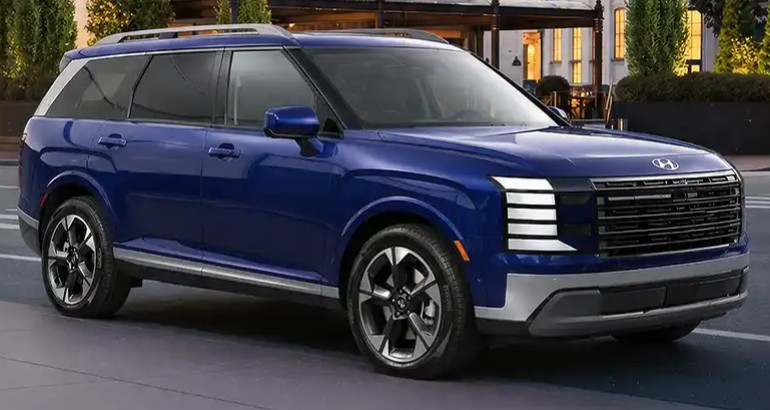
The Hyundai Palisade weight might look like another dry number buried at the bottom of a specification sheet, but it tells us more about this three-row SUV than we might expect. Weight influences acceleration, fuel consumption, braking, payload, towing, tire wear, handling, and even how substantial a vehicle feels from behind the wheel.
With the latest Palisade, there is no single answer to the question, "How much does a Hyundai Palisade weigh?" The figure changes according to drivetrain, seating configuration, trim, and whether we are discussing the gasoline or hybrid version.
For the current U.S.-market Palisade, Hyundai lists curb weights ranging from roughly 4,420 pounds to 4,872 pounds for gasoline versions, depending on configuration. The Palisade Hybrid is heavier, with published curb-weight figures extending from about 4,652 to 5,016 pounds.
That's quite a spread. A loaded hybrid AWD Palisade carries almost 600 pounds more mass than one of the lightest gasoline configurations.
So, what does all that weight mean when we're buying, driving, loading, or towing with a Palisade? Let's unpack the numbers without turning this into an engineering textbook.
Content in this publication
- How Much Does a Hyundai Palisade Weigh?
- What Does Curb Weight Mean?
- Why Does Hyundai Palisade Weight Change Between Trims?
- How Heavy Is the Hyundai Palisade in Kilograms?
- Hyundai Palisade Weight by Seating Capacity
- How Heavy Is the Palisade Compared With a Normal Car?
- Does Hyundai Palisade Weight Affect Performance?
- Does Weight Affect Hyundai Palisade Fuel Economy?
- Hyundai Palisade Weight and Handling
- Does Palisade Weight Improve Ride Comfort?
- Hyundai Palisade Payload Capacity Explained
- Hyundai Palisade Weight and Towing
- What Is the Palisade Gross Vehicle Weight?
- Does Cargo Space Change the Palisade's Weight?
- How Does the Hybrid Palisade Reach 5,000 Pounds?
- Is a Hyundai Palisade Too Heavy?
- Is a Lighter Palisade Better?
- How Does Passenger Weight Affect a Palisade?
- Does Hyundai Palisade Weight Affect Tire Pressure?
- Could Palisade Weight Affect Shipping or Transport?
- Hyundai Palisade Weight in Australia
- Hyundai Palisade Weight in Mexico
- How to Find the Exact Weight of Your Hyundai Palisade
- What the Hyundai Palisade Weight Tells Us About the SUV
- Final Thoughts on Hyundai Palisade Weight
- Frequently Asked Questions
How Much Does a Hyundai Palisade Weigh?
The short answer is that a modern Hyundai Palisade generally weighs between about 4,400 and 5,000 pounds in curb-weight form.
Hyundai's current U.S. specifications show gasoline configurations at figures including 4,420, 4,461, 4,467, 4,493, 4,575, 4,641, 4,718, 4,784, 4,795, and 4,872 pounds, depending on drivetrain, seating layout, and trim.
Hybrid versions add electrical hardware and therefore push the scale higher. Hyundai lists examples ranging from 4,652 pounds for lighter front-wheel-drive configurations to 5,016 pounds for heavier AWD seven-seat versions.
That puts the Palisade squarely in large-family-SUV territory. It isn't a featherweight crossover pretending to be an SUV. There is a fair amount of metal, glass, seating, safety hardware, insulation, technology, and drivetrain equipment moving down the road.
Hyundai Palisade Weight at a Glance
A useful way to think about the current range is:
| Configuration | Approximate Curb Weight |
|---|---|
| Lighter gasoline FWD Palisade | 4,420 lb |
| Heavier gasoline FWD configurations | Up to about 4,718 lb |
| Lighter gasoline AWD configurations | Around 4,467–4,575 lb |
| Heavier gasoline AWD Palisade | Up to about 4,872 lb |
| Palisade Hybrid FWD | About 4,652–4,872 lb |
| Palisade Hybrid AWD | About 4,795–5,016 lb |
These aren't interchangeable numbers. Exact weight depends on the specific trim and seating arrangement, so the vehicle's certification label remains the best source for the individual SUV sitting in your driveway.
What Does Curb Weight Mean?
Here's where vehicle specifications can become confusing.
Curb weight is essentially the weight of the vehicle in operating condition before we add passengers and cargo. The precise regulatory definition can vary by market, but we should think of it as the SUV itself with its normal operating fluids and equipment.
It does not mean the Palisade is allowed to weigh only that much.
Once we climb aboard with three kids, suitcases, a cooler, a stroller, and enough snacks to survive a cross-country road trip, the vehicle's actual operating weight rises.
Curb Weight vs Gross Vehicle Weight
Curb weight and gross vehicle weight are two different animals.
Curb weight tells us approximately how much the SUV weighs by itself.
Gross Vehicle Weight Rating, or GVWR, tells us the maximum permissible loaded weight specified for the vehicle. It includes the vehicle itself plus occupants, luggage, accessories, and other applicable loads.
For perspective, an example 2026 Palisade configuration listed by Edmunds has a curb weight of 4,872 pounds and a gross weight of 6,327 pounds.
That difference is important because we shouldn't simply keep throwing luggage into the cargo area until the hatch struggles to close.
Why Does Hyundai Palisade Weight Change Between Trims?
Two Palisades parked beside each other can look nearly identical yet weigh noticeably different amounts.
Why?
Think of vehicle equipment like filling a backpack. One extra feature isn't particularly heavy, but stack dozens of them together and the difference becomes substantial.
Higher trims may include larger wheels, panoramic roof hardware, powered seating systems, extra motors, additional comfort equipment, upgraded interior components, sound insulation, and other hardware.
All-wheel drive brings additional mechanical components as well.
Then we have hybrid equipment.
AWD Adds Weight
Front-wheel drive is mechanically simpler because engine power primarily travels to the front wheels.
An AWD Palisade needs additional drivetrain hardware to send torque toward the rear axle. That typically means more shafts, couplings, housings, and supporting hardware underneath the SUV.
On current gasoline configurations, Hyundai's specifications illustrate how AWD can increase curb weight, although the exact difference varies by trim and seating arrangement.
If we're deciding between FWD and AWD, this extra mass isn't necessarily a disadvantage. We're trading some weight for additional traction capability.
Hybrid Hardware Adds More Pounds
The hybrid Palisade carries an electrified powertrain with equipment a conventional gasoline SUV doesn't need.
That additional hardware explains why its curb-weight range sits higher.
The current U.S. Palisade Hybrid reaches as much as 5,016 pounds in certain AWD seven-passenger configurations.
That's more than 2.5 U.S. tons.
Yet weight alone doesn't determine efficiency. Hybrid assistance can recover energy during deceleration and reduce how much work the gasoline engine performs in certain conditions. In other words, a heavier hybrid can still use fuel more intelligently than a lighter conventional drivetrain.
How Heavy Is the Hyundai Palisade in Kilograms?
For readers outside the United States, pounds can feel like measuring a swimming pool with teaspoons.
Using approximate conversions:
- 4,420 lb equals roughly 2,005 kg
- 4,575 lb equals roughly 2,075 kg
- 4,795 lb equals roughly 2,175 kg
- 4,872 lb equals roughly 2,210 kg
- 5,016 lb equals roughly 2,275 kg
So we can broadly describe today's Palisade as a vehicle weighing roughly 2.0 to 2.3 metric tonnes, depending on specification.
Regional versions can differ. Hyundai Australia's 2026 Palisade Hybrid specification sheet, for example, lists kerb weights ranging between 2,175 and 2,304 kg, depending on seven- or eight-seat specification.
That is why we should avoid assuming a U.S. figure applies perfectly to an Australian, Mexican, Korean, or other-market Palisade.
Hyundai Palisade Weight by Seating Capacity
The Palisade is typically offered with either seven- or eight-passenger seating depending on trim and market.
An eight-seat model usually uses a second-row bench, while seven-passenger versions generally substitute individual captain's chairs.
Does that dramatically transform the SUV's mass?
Not necessarily, but seating hardware contributes to specification differences.
Hyundai's U.S. chart lists separate curb-weight categories for seven- and eight-passenger configurations, confirming that seating arrangement is part of the weight calculation.
Does Seven-Seat Mean Lighter?
Not automatically.
It's tempting to assume fewer seats always mean less weight, but trim equipment matters just as much.
A luxurious seven-seat Palisade with AWD and additional equipment could weigh considerably more than an eight-passenger FWD version.
That's why comparing only seat count can be misleading.
How Heavy Is the Palisade Compared With a Normal Car?
This is where the numbers become easier to visualize.
A Palisade weighing roughly 4,500 to 5,000 pounds carries significantly more mass than a typical compact sedan or small crossover.
We feel that difference.
A large SUV tends to move with the composure of a cruise ship compared with a compact hatchback. It isn't necessarily slow or clumsy, but physics becomes impossible to ignore.
More mass generally requires more energy to accelerate and more braking effort to slow down.
That's one reason tire condition, brake maintenance, and correct inflation matter so much on vehicles this size.
Does Hyundai Palisade Weight Affect Performance?
Absolutely.
Imagine pushing an empty shopping cart and then the same cart loaded with bags of concrete. Same wheels, same person pushing it—but the experience changes immediately.
Vehicles work under the same basic laws of physics.
Acceleration
More weight requires more energy to accelerate.
A heavier Palisade configuration therefore asks more from its powertrain during hard acceleration than a lighter equivalent would.
That doesn't mean the heavier version feels painfully slow. Modern powertrains and transmission calibration help disguise weight impressively well.
But mass never completely disappears.
Passing and Highway Driving
At highway speed, aerodynamics become increasingly important, yet vehicle mass still matters when we're asking the SUV to gain speed quickly.
Add seven adults plus luggage and we're giving the engine an even bigger job.
This is why a fully loaded SUV may feel slightly less eager during highway passing than it does with only a driver aboard.
Does Weight Affect Hyundai Palisade Fuel Economy?
Yes, although weight is only one factor.
Fuel consumption is affected by:
- Vehicle mass
- Aerodynamic drag
- Engine efficiency
- Transmission programming
- Drivetrain
- Tire design
- Temperature
- Traffic
- Terrain
- Driving style
A heavier vehicle generally requires more energy to accelerate, especially in stop-and-go driving.
However, cruising at a steady highway speed is a different story. At that point, aerodynamic resistance becomes a major piece of the puzzle.
The hybrid complicates the picture even further because regenerative braking can recover some of the energy that would otherwise disappear as heat.
So we shouldn't automatically conclude, "heavier equals worse MPG" without considering the drivetrain.
Hyundai Palisade Weight and Handling
A Palisade doesn't try to behave like a lightweight sports car, and that's perfectly fine.
Its mission is different.
We're dealing with a three-row family SUV built to transport people comfortably, absorb highway miles, and provide enough space for the chaos that tends to follow families everywhere.
Weight can actually contribute to the substantial sensation many drivers associate with larger SUVs.
Why the Palisade Can Feel Planted
Mass, wheelbase, suspension tuning, and track width combine to influence stability.
A heavier SUV can feel settled over long highway undulations because it doesn't react to every bump like a cork floating on water.
But there is a trade-off.
Once we ask that mass to change direction aggressively, physics sends us the bill.
The suspension and tires must manage considerable lateral force.
Braking Matters More With a Heavy SUV
Brakes convert kinetic energy into heat.
More mass means more kinetic energy at a given speed.
That makes proper brake maintenance especially important on a vehicle weighing around two tonnes or more.
A Palisade loaded with passengers and luggage may demand significantly more from its braking system than the same SUV carrying only a driver.
Does Palisade Weight Improve Ride Comfort?
Weight alone doesn't create comfort, but larger, heavier vehicles often have characteristics that can contribute to a calm ride.
The Palisade combines its considerable mass with a long wheelbase and suspension tuned for family-SUV duties.
Instead of dancing over every imperfection, it tends to feel substantial.
We might describe it as the difference between riding in a sturdy armchair and sitting on a folding stool. Both technically support us, but one feels far more settled.
Still, wheel and tire choice matters. Large wheels with lower-profile tires can transmit sharper impacts even when fitted to a heavy vehicle.
Hyundai Palisade Payload Capacity Explained
This is one of the most misunderstood parts of SUV ownership.
Payload isn't simply "how much luggage fits in the trunk."
Payload generally includes passengers, cargo, and other weight added to the vehicle.
Suppose we load:
- Two adults at 180 lb each: 360 lb
- Three passengers at 130 lb each: 390 lb
- Luggage: 250 lb
- Cooler and travel equipment: 100 lb
We've already added 1,100 pounds.
Suddenly, payload doesn't look like an abstract specification anymore.
For the exact allowable load, use the tire-and-loading label or certification information attached to the individual vehicle rather than relying on generic internet figures.
Hyundai Palisade Weight and Towing
Weight conversations become especially important when trailers enter the picture.
The gasoline 2026 Palisade can be rated to tow up to 5,000 pounds in applicable configuration, according to published U.S. specifications.
But towing capacity should never be interpreted as permission to attach a 5,000-pound trailer, fill every seat, pack the cargo bay to the roof, and assume everything remains within limits.
Trailer Tongue Weight Counts
A trailer transfers part of its weight onto the tow vehicle through the hitch.
That load influences how much available capacity remains for passengers and cargo.
This is where understanding curb weight, GVWR, axle limits, and payload becomes genuinely useful rather than merely interesting.
If we're planning regular towing, the driver's door-jamb labels and owner's manual deserve more attention than a single headline towing number.
What Is the Palisade Gross Vehicle Weight?
Gross vehicle weight shouldn't be confused with curb weight.
As mentioned earlier, one 2026 configuration documented by Edmunds shows a 4,872-pound curb weight and 6,327-pound gross weight figure.
Regional specifications can differ again. Hyundai Australia's 2026 Hybrid documentation lists a Gross Vehicle Mass of 3,000 kg for eight-seat versions and 2,980 kg for seven-seat versions.
These international differences illustrate an important point: always use specifications written for the country where the vehicle is sold.
Why GVWR Matters
GVWR exists because every vehicle component has limits.
Suspension springs, tires, axles, wheels, brakes, and structural components are engineered around defined loads.
Exceeding those limits can affect:
- Braking distances
- Steering behavior
- Tire temperature
- Suspension performance
- Stability
- Component durability
Packing until "everything fits" isn't the same thing as staying within the vehicle's rated capacity.
Does Cargo Space Change the Palisade's Weight?
Folding seats doesn't change the vehicle's curb weight in any meaningful way.
But filling the space certainly changes its actual operating weight.
This distinction sounds obvious until we see an enormous cargo area and instinctively treat all that volume as unrestricted carrying capacity.
Cargo volume measures space.
Payload measures allowable weight.
A cargo bay filled with pillows may occupy every cubic inch while adding little mass. The same space filled with landscaping blocks could overload the vehicle long before we run out of room.
Volume and payload are cousins, not twins.
How Does the Hybrid Palisade Reach 5,000 Pounds?
Batteries, electric motors, power electronics, cabling, cooling equipment, and related structural components all contribute mass.
That's why Hyundai's U.S. hybrid specifications reach 5,016 pounds for certain AWD configurations.
Interestingly, the number shouldn't automatically scare us.
Modern vehicles are engineered as complete systems. Suspension, brakes, tires, and chassis calibration are developed with the vehicle's expected weight in mind.
The important question isn't simply whether 5,000 pounds sounds heavy.
It's whether the entire platform has been engineered to control those 5,000 pounds effectively.
Is a Hyundai Palisade Too Heavy?
For a compact car? Absolutely.
For a modern three-row SUV? Not really.
The Palisade needs enough structure to accommodate three seating rows, crash protection, substantial doors, large wheels, comfort equipment, climate-control hardware, sound insulation, drivetrain components, and modern safety technology.
We can't demand limousine-like quietness, three rows of seats, AWD, a panoramic roof, electrification, and dozens of powered features while expecting the finished vehicle to weigh as much as a small hatchback.
It's like ordering a double cheeseburger and being surprised that it weighs more than a salad.
Is a Lighter Palisade Better?
Not automatically.
A lighter FWD configuration may offer advantages for drivers who don't need AWD or every luxury feature.
Less weight can theoretically help acceleration, efficiency, and responsiveness.
But choosing a vehicle solely because it weighs 150 pounds less would be missing the forest for the trees.
The better Palisade is the one whose drivetrain and equipment match how we're actually going to use it.
Who Should Consider FWD?
Front-wheel drive can make sense when we:
- Spend most of our time on paved roads
- Live in a mild climate
- Don't need extra traction regularly
- Prefer mechanical simplicity
- Want to minimize unnecessary drivetrain mass
Who Should Consider AWD?
AWD becomes more attractive when we regularly face:
- Snow
- Loose surfaces
- Steep roads
- Wet or slippery terrain
- Unpaved access roads
The modest increase in weight may be a perfectly reasonable price for the capability.
How Does Passenger Weight Affect a Palisade?
Here's an easy detail to overlook: eight-passenger capacity doesn't mean eight passengers of any size plus unlimited cargo.
Eight adults weighing an average of 170 pounds would add 1,360 pounds before anyone loads a suitcase.
That's substantial.
Families traveling with younger children will naturally add less passenger mass, leaving greater room within the vehicle's permitted load for luggage.
Whenever we're carrying a full complement of adults and substantial cargo, checking the Palisade's actual load limits becomes more important.
Does Hyundai Palisade Weight Affect Tire Pressure?
The recommended tire pressures already account for the vehicle manufacturer's intended operating conditions.
We shouldn't compensate for the Palisade's heavy curb weight by arbitrarily increasing tire pressure.
Instead, follow the tire-pressure label located on the vehicle.
Correct inflation is particularly important because an underinflated tire carrying a heavy SUV can generate excessive heat.
The numbers printed on the tire sidewall aren't necessarily the normal recommended pressures for the vehicle, either. The vehicle placard is the place to start.
Could Palisade Weight Affect Shipping or Transport?
Yes.
If we're shipping a Palisade internationally, using an auto transporter, crossing a weight-restricted route, or putting the SUV onto specialized transport equipment, vehicle weight may matter.
In those situations, don't assume "around 4,500 pounds" is precise enough.
A hybrid AWD Palisade can weigh hundreds of pounds more than an entry gasoline FWD model.
Use the exact model specification or vehicle documentation.
Hyundai Palisade Weight in Australia
The Australian-market 2026 Palisade offers a useful example of how market-specific specifications differ.
Hyundai Australia's Hybrid documentation lists:
- Seven-seat kerb weight: 2,175–2,294 kg
- Eight-seat kerb weight: 2,185–2,304 kg
- Seven-seat GVM: 2,980 kg
- Eight-seat GVM: 3,000 kg
- Payload range: roughly 686–815 kg depending on configuration
Those aren't necessarily the numbers we should use for a U.S.-specification Palisade.
Regional differences in equipment, regulations, drivetrain choices, and specification methodology can alter published weight.
Hyundai Palisade Weight in Mexico
Another useful international reference comes from Hyundai Mexico.
Its 2026 Palisade Hybrid technical sheet lists a vehicle weight of 2,284 kg and gross vehicle weight of 2,980 kg for the specified version.
Once again, this demonstrates why searching "Palisade weight" without specifying year and market can produce apparently contradictory answers.
Often, neither source is wrong. They're simply describing different vehicles.
How to Find the Exact Weight of Your Hyundai Palisade
Internet specifications are excellent for shopping and comparison, but when precision matters, use the information attached to the actual vehicle.
Start with:
- The certification label on the driver's door or door jamb.
- The tire-and-loading information label.
- The owner's manual.
- Hyundai's official specifications for the exact model year and market.
- A certified vehicle scale when actual loaded weight is required.
That final option matters when towing or carrying unusually heavy loads because curb weight and real-world loaded weight are not the same.
Don't Forget Aftermarket Accessories
Accessories can quietly eat into available payload.
Roof equipment, running boards, heavy floor systems, cargo organizers, towing hardware, aftermarket wheels, protection equipment, and other permanent additions all contribute mass.
Individually they may seem trivial. Collectively, they're like loose change in a jar—eventually, the jar becomes surprisingly heavy.
What the Hyundai Palisade Weight Tells Us About the SUV
Numbers around 4,400 to 5,000 pounds reveal exactly what kind of vehicle we're dealing with.
The Palisade isn't attempting to be a minimalist crossover.
It's a substantial three-row family machine designed around passenger space, refinement, equipment, and long-distance usability.
That mass influences how it accelerates and stops, but it also contributes to the sense of solidity many people want from a large SUV.
The key is understanding that weight isn't simply "good" or "bad."
It's part of a bigger engineering equation.
Final Thoughts on Hyundai Palisade Weight
The Hyundai Palisade weight varies significantly depending on the version we choose. Current U.S. gasoline models span roughly 4,420 to 4,872 pounds, while the hybrid lineup can range from approximately 4,652 to 5,016 pounds.
That's a meaningful difference, especially when we're thinking about payload, towing, fuel use, transportation, or overall driving dynamics.
More importantly, curb weight shouldn't be viewed in isolation.
A heavier AWD model might deliver the traction we need. A hybrid may carry extra electrical hardware yet offer efficiency advantages. A highly equipped trim can weigh more but provide the comfort features that made us interested in the Palisade in the first place.
In other words, weight is one piece of the puzzle—not the entire picture.
If we're simply comparing trims, published curb weight is plenty useful. If we're towing or loading the vehicle heavily, however, we should move beyond generic figures and check the labels and ratings on the individual Palisade.
That's where a specification stops being trivia and starts becoming something genuinely useful.
Frequently Asked Questions
1. How much does a Hyundai Palisade weigh?
A current U.S.-market Hyundai Palisade generally has a curb weight of roughly 4,420 to 5,016 pounds, depending on whether it uses the gasoline or hybrid drivetrain, FWD or AWD, trim level, and seating configuration.
2. How much does a Hyundai Palisade weigh in kilograms?
Depending on configuration, current Palisade models weigh approximately 2,000 to 2,275 kg in many U.S.-spec versions. International versions vary. Hyundai Australia, for instance, lists the 2026 Hybrid at between 2,175 and 2,304 kg.
3. Is the Hyundai Palisade Hybrid heavier than the gasoline model?
Yes. The hybrid incorporates additional electric-drive and battery hardware. Hyundai's current U.S. specifications list hybrid curb weights reaching 5,016 pounds, while current gasoline configurations top out around 4,872 pounds in Hyundai's published chart.
4. Does AWD make the Hyundai Palisade heavier?
Generally, yes. AWD requires additional drivetrain components, which add mass compared with an otherwise similar front-wheel-drive vehicle. The exact difference depends on the trim and seating configuration.
5. Is curb weight the same as GVWR on a Palisade?
No. Curb weight describes the vehicle itself in its specified operating condition, while GVWR represents the maximum permitted loaded vehicle weight. Passengers and cargo therefore matter when determining how heavily a Palisade is actually loaded.
If you want to know other articles similar to Hyundai Palisade Weight: Complete Guide by Trim and Drivetrain you can visit the category Service and Parts.
Nissan Qashqai Fuel Tank Capacity: Complete Guide

Suzuki Swift Fuel Tank Capacity: Complete Guide
Mazda CX-5 Weight (2013–2026): Complete Guide in Pounds and KG
Kia Sportage Dashboard Symbols and Warning Lights

MINI Cooper Weight (2002–2027): Complete Weight Chart & Guide

Toyota RAV4 Engine Sizes: Complete Guide (1994–2026)
Leave a Reply
More content of your interest