
Hyundai Palisade Tyre Size: Complete Wheel and Tyre Guide

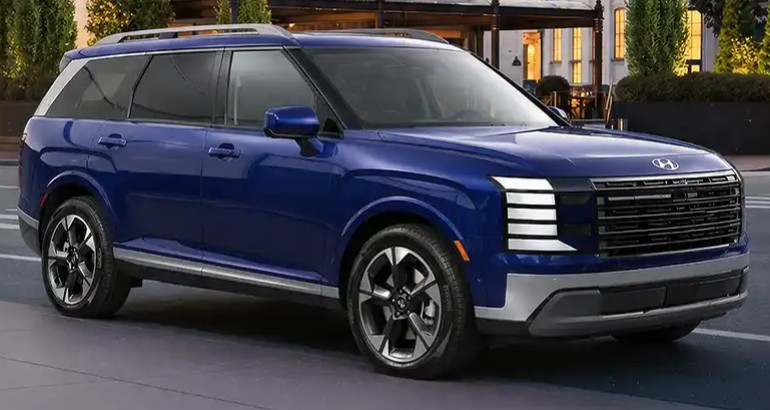
Choosing the correct Hyundai Palisade tyre size sounds simple until we start looking across different model years, trim levels, and countries. One Palisade may leave the showroom on practical 18-inch wheels, another may wear stylish 20-inch alloys, and newer-generation models in certain markets can roll on 21-inch wheels.
That variation matters.
Tyres influence far more than appearance. They affect ride comfort, steering response, road noise, fuel consumption, braking, speedometer accuracy, and even how confidently the Palisade handles poor roads. Put another way, tyres are the shoes of the SUV. A beautiful pair in the wrong size can cause more trouble than they're worth.
For many first-generation Palisade models, two sizes appear repeatedly: 245/60 R18 and 245/50 R20. Hyundai's 2025 U.S. specifications, for example, list 245/60 R18 tyres on 18-inch-wheel versions and 245/50 R20 tyres on trims equipped with 20-inch wheels.
However, that shouldn't be interpreted as a universal rule for every Palisade ever produced. The redesigned 2026 Palisade can use different sizes depending on the market. Hyundai Australia's 2026 specification sheet, for instance, lists 255/50 R20 tyres for the Elite and 265/45 R21 tyres for the Calligraphy.
So, before ordering tyres online or driving into a tyre shop, let's understand what all those numbers mean and how to identify the correct setup for our particular SUV.
Content in this publication
- What Is the Standard Hyundai Palisade Tyre Size?
- Hyundai Palisade 18-Inch vs 20-Inch Tyres
- 2026 Hyundai Palisade Tyre Size Changes
- How to Read a Hyundai Palisade Tyre Size
- Where Can We Find the Correct Palisade Tyre Size?
- Can We Put Wider Tyres on a Hyundai Palisade?
- Can We Fit 20-Inch Wheels to a Palisade With 18-Inch Wheels?
- Can We Downsize Palisade Wheels?
- Hyundai Palisade Tyre Size and Fuel Economy
- Hyundai Palisade Tyre Size for Snow and Winter Driving
- Hyundai Palisade Tyre Pressure and Tyre Size
- What Happens If We Use the Wrong Palisade Tyre Size?
- Should All Four Palisade Tyres Match?
- How Long Do Hyundai Palisade Tyres Last?
- How Often Should Palisade Tyres Be Rotated?
- Best Type of Tyre for the Hyundai Palisade
- OEM vs Aftermarket Hyundai Palisade Tyres
- How to Choose the Right Replacement Palisade Tyres
- Hyundai Palisade Tyre Size by Generation: The Big Picture
- Conclusion: Which Hyundai Palisade Tyre Size Should We Use?
- Frequently Asked Questions
What Is the Standard Hyundai Palisade Tyre Size?
For many Palisade models from the first generation, the most common factory tyre sizes are:
- 245/60 R18 with 18-inch wheels
- 245/50 R20 with 20-inch wheels
Hyundai's 2023 U.S. owner's manual confirms both tyre configurations, pairing 245/60 R18 tyres with 7.5J x 18 wheels and 245/50 R20 tyres with 7.5J x 20 wheels.
The same pairing has appeared in other international Palisade specifications. Hyundai Indonesia, for example, documented both 18 x 7.5J wheels with 245/60 R18 tyres and 20 x 7.5J wheels with 245/50 R20 tyres.
That's useful because it shows these aren't obscure aftermarket combinations. They have been genuine factory configurations used by Hyundai.
Still, the word standard deserves an asterisk the size of a spare wheel. Tyre specifications can change by model year, drivetrain, trim level, and sales region.
Hyundai Palisade 18-Inch Tyre Size
The traditional 18-inch Palisade setup uses 245/60 R18 tyres.
Let's decode that quickly.
245 means the tyre is approximately 245 millimetres wide.
60 represents the aspect ratio. The sidewall height is approximately 60% of the tyre's width.
R means radial construction, which is the normal construction used by modern passenger vehicles.
18 refers to the wheel diameter in inches.
The 18-inch tyre's relatively tall sidewall is one of its greatest strengths. There's more rubber between the wheel and the road, which can soften potholes, broken pavement, and rough surfaces.
If comfort matters more to us than flashy wheel design, the 18-inch configuration can be the sweet spot.
Why 18-Inch Palisade Tyres Make Sense
Large SUVs don't necessarily need enormous wheels.
An 18-inch wheel paired with a 60-series tyre gives the Palisade a generous sidewall. That sidewall acts almost like an extra cushion attached to the suspension. It won't turn a crater into freshly paved asphalt, but it can make harsh impacts feel less dramatic.
The additional sidewall can also be helpful on gravel roads and imperfect urban streets, where low-profile tyres are more vulnerable to wheel damage.
There is another practical advantage: replacement 18-inch tyres are often less expensive than equivalent premium 20- or 21-inch tyres.
For families covering high annual mileage, that difference can become meaningful over several tyre replacements.
Hyundai Palisade 20-Inch Tyre Size
For many first-generation Palisade trims equipped with 20-inch wheels, Hyundai uses 245/50 R20 tyres. Hyundai USA lists this size across several 2025 trims fitted with 20-inch alloys.
Compared with the 18-inch tyre, the 20-inch version maintains the same 245 mm nominal width but uses a shorter 50-series sidewall.
That changes the personality of the SUV.
A shorter sidewall flexes less during steering inputs. As a result, steering can feel slightly sharper and the vehicle may feel more planted through corners.
There's also the visual factor.
Twenty-inch wheels fill the Palisade's large arches nicely. The SUV already has a substantial body, and larger wheels complement its proportions rather than looking lost underneath it.
But style brings compromises.
The reduced sidewall transmits more road imperfections into the cabin, and the wheel itself sits closer to potholes and curbs.
Hyundai Palisade 18-Inch vs 20-Inch Tyres
If we placed two otherwise identical Palisades side by side, one on 18-inch wheels and the other on 20s, the biggest difference wouldn't necessarily appear in straight-line performance. We'd notice it mainly in ride character.
The 18-inch setup generally favors comfort and practicality.
The 20-inch setup generally favors appearance and slightly more immediate road feel.
Neither configuration is automatically better.
Think of the 18-inch tyre as a comfortable hiking boot. It has more cushioning and doesn't panic when the pavement gets ugly. The 20-inch tyre is closer to a fitted running shoe: sharper and sleeker, but with less material separating our feet from the ground.
Which Palisade Tyre Size Gives the Better Ride?
For comfort alone, we'd normally lean toward the smaller wheel with the taller sidewall.
That means 245/60 R18 has an inherent advantage over 245/50 R20 when both are appropriate factory sizes for the vehicle.
The taller sidewall absorbs minor road impacts more easily. It can make expansion joints, patched roads, and smaller potholes less noticeable.
Tyre construction still matters, of course. A stiff 18-inch tyre could feel harsher than a particularly comfort-oriented 20-inch tyre. Pressure also has an enormous impact.
But all else being equal, more sidewall usually means greater compliance.
Which Size Looks Better?
Now we're entering subjective territory.
Most people would probably consider the 20-inch wheels visually more dramatic. Larger rims expose more alloy and less rubber, making the Palisade appear slightly more premium.
But we'd hesitate to choose wheels exclusively from the parking lot.
Once we're driving every day, comfort, tyre replacement cost, road conditions, and durability matter more than the few seconds we spend admiring the SUV before climbing aboard.
2026 Hyundai Palisade Tyre Size Changes
The arrival of the redesigned Palisade makes tyre-size discussions more complicated.
The new generation doesn't necessarily carry forward the exact 18- and 20-inch combinations familiar from previous models.
For example, Hyundai Australia's June 2026 specifications list 255/50 R20 109V XL tyres on the Palisade Elite and 265/45 R21 108V XL tyres on the Calligraphy. The corresponding factory wheels are 20 x 8.0J and 21 x 8.5J respectively.
This is exactly why blindly searching for “Palisade tyre size” can lead us into trouble.
A tyre that perfectly fits a 2023 Palisade may have no relevance to a newly redesigned 2026 model.
Hyundai Palisade 255/50 R20 Tyres
A 255/50 R20 tyre is 10 mm wider nominally than the familiar 245/50 R20 configuration.
The 50-series aspect ratio remains, but because the tyre itself is wider, the sidewall is also slightly taller in absolute terms.
This type of setup makes sense on a larger, newer-generation SUV. Hyundai can gain additional tyre contact while maintaining a reasonable amount of sidewall.
The tyre specification also illustrates why wheel diameter alone tells us very little.
Saying that a Palisade “has 20-inch tyres” isn't precise enough. Several entirely different tyre dimensions can fit 20-inch wheels, and they are not automatically interchangeable.
Hyundai Palisade 265/45 R21 Tyres
At the premium end, certain new-generation Palisade models can use 265/45 R21 tyres. Hyundai Australia lists that combination for its 2026 Calligraphy specification.
This is a considerably wider and larger-wheel setup than the classic 245/60 R18 configuration.
It gives the Palisade a muscular stance, with the wheels visually filling the arches.
The trade-off is predictable: 21-inch tyres tend to be more expensive, and their relatively shorter sidewalls provide less cushioning against impacts.
If we live somewhere with smooth highways, that may barely matter.
If our commute resembles an obstacle course of potholes, suddenly an extra inch of wheel doesn't sound quite as glamorous.
How to Read a Hyundai Palisade Tyre Size
Suppose our tyre says:
245/50 R20 102V
Every part tells us something.
The first figure, 245, is nominal section width in millimetres.
The second figure, 50, is the sidewall height expressed as a percentage of that width.
The R indicates radial construction.
The 20 is the diameter of the wheel that the tyre is designed to fit.
Then we may see a load index and speed rating.
Those final markings shouldn't be ignored when replacing tyres. Matching diameter is only part of choosing a suitable tyre.
Why Load Rating Matters on a Palisade
The Palisade isn't a lightweight hatchback.
It's a substantial three-row SUV designed to transport passengers, luggage, and sometimes tow a trailer. Tyres therefore need sufficient load capacity for the vehicle's requirements.
We shouldn't select tyres simply because the width and diameter look right.
The replacement tyre must also satisfy the specified load and speed requirements for that particular Palisade.
Newer factory tyres may even carry an XL, or Extra Load, designation. Hyundai Australia's 2026 Palisade specification, for example, identifies both its listed 20- and 21-inch tyre combinations as XL tyres.
Where Can We Find the Correct Palisade Tyre Size?
When uncertainty exists, the vehicle itself should beat a random search result.
The tyre-information label—normally located around the driver's door opening—provides vehicle-specific tyre information. The owner's manual is another primary reference.
We can also inspect the tyre currently installed, although that isn't foolproof on a used Palisade because a previous owner may have changed wheels or tyres.
Our safest approach is to compare several pieces of information:
- Check the tyre placard on the vehicle.
- Check the owner's manual for the exact model year.
- Confirm the wheel diameter and specification.
- Verify tyre load and speed requirements.
- If aftermarket wheels are fitted, confirm their width, offset, clearance, and approved tyre dimensions before purchasing replacements.
That's considerably safer than assuming every Palisade uses whatever Google displays first.
Can We Put Wider Tyres on a Hyundai Palisade?
Technically, aftermarket tyre changes are possible.
Whether they're sensible is another question.
Going wider may increase the tyre's footprint and change steering feel, but it can also create clearance problems, alter rolling diameter, increase weight, affect fuel consumption, and change how the vehicle behaves in rain or snow.
A wider tyre isn't automatically a better tyre.
The suspension, wheel width, steering geometry, ABS, stability control, and drivetrain were engineered around particular tyre dimensions.
Small, carefully chosen changes may work perfectly well. Big changes made purely for appearance can create an expensive chain reaction.
What Happens If the Tyre Diameter Changes?
Tyre diameter affects how far the vehicle travels during each wheel revolution.
Increase the overall diameter substantially and the Palisade travels farther per revolution. Reduce it and the opposite happens.
That can influence speedometer readings and gearing behavior.
Electronic systems also expect predictable wheel speeds. A mismatched diameter—especially if only one or two tyres differ—can create unnecessary complications.
On an AWD Palisade, maintaining closely matched tyres becomes particularly important because the drivetrain continuously manages torque between the axles.
Why Tyre Circumference Should Stay Close to Factory
Suppose we love the idea of a wider tyre.
We shouldn't simply increase width while keeping every other number unchanged.
Tyre sizing works like a recipe. Change one ingredient and we may need to adjust another to preserve the finished dimensions.
A tyre professional can calculate suitable alternatives with an overall rolling diameter close to the factory configuration.
That helps maintain predictable speedometer behavior, suspension clearance, and electronic-system operation.
Can We Fit 20-Inch Wheels to a Palisade With 18-Inch Wheels?
Because Hyundai has sold first-generation Palisades with both 18- and 20-inch factory configurations, owners sometimes consider upgrading an 18-inch model to 20-inch wheels.
In principle, such a conversion can be possible if we use the proper wheel dimensions, offset, load capacity, tyre size, and clearance.
But factory availability doesn't mean every wheel from every Palisade automatically fits every other Palisade.
Model-year changes, brake dimensions, wheel offsets, hub specifications, and market differences still matter.
We should treat wheel upgrades as engineering decisions rather than decoration.
Use the wrong wheel offset and the wheel may sit too far inward or outward. Too far inward can create suspension clearance problems. Too far outward can alter steering behavior and increase the chance of tyre-to-body contact.
Does Moving to 20-Inch Wheels Improve Handling?
Potentially, but don't expect the Palisade to transform into a sports sedan.
The shorter sidewall usually reduces tyre flex and can make steering feel more immediate.
The downside is greater exposure to harsh impacts.
We therefore wouldn't upgrade simply because “bigger means better.” On a large family SUV, comfort is part of performance too.
A suspension that keeps passengers relaxed after three hours of highway driving is doing its job beautifully.
Can We Downsize Palisade Wheels?
Wheel downsizing can appeal to drivers who want better ride comfort, cheaper replacement tyres, or more sidewall for rough roads.
Again, brake clearance and wheel specifications need to be verified first.
An 18-inch factory-style package can make considerable sense on compatible first-generation models because Hyundai itself offered 18-inch wheels with 245/60 R18 tyres.
The situation can be different on the redesigned generation, where brake dimensions and wheel specifications may have changed.
Never assume that an older 18-inch Palisade wheel will automatically clear the brakes on a newer vehicle.
Hyundai Palisade Tyre Size and Fuel Economy
Could wheel and tyre choice change fuel economy?
Yes, although tyre size isn't acting alone.
Rolling resistance, tread pattern, tyre compound, width, inflation pressure, wheel weight, and aerodynamics all play a role.
A larger wheel is frequently heavier. A wider tyre may create more rolling and aerodynamic resistance. Aggressive all-terrain tread can also consume more energy than an efficiency-focused highway tyre.
The difference may be modest in normal driving, but over tens of thousands of miles or kilometres, small changes accumulate.
That's another reason factory sizing deserves respect: it's part of the vehicle's overall efficiency package.
Hyundai Palisade Tyre Size for Snow and Winter Driving
Winter tyres deserve slightly different thinking.
In snowy regions, drivers sometimes prefer a smaller wheel with a taller tyre sidewall where an approved configuration exists. That setup can reduce wheel-replacement costs and provide additional protection during winter pothole season.
Tyre width also affects snow behavior.
A huge, wide tyre can look impressive but isn't necessarily the best solution for deep snow. Winter performance depends far more on compound, tread design, temperature characteristics, and proper sizing.
If we routinely drive through real winter weather, a dedicated winter tyre in a manufacturer-compatible size is far more valuable than chasing maximum wheel diameter.
Hyundai Palisade Tyre Pressure and Tyre Size
Tyre size and tyre pressure are connected, but the pressure printed on the tyre sidewall isn't the pressure we should automatically use.
The Palisade's recommended pressure is vehicle-specific.
As an example, Hyundai's 2023 U.S. Palisade owner's manual specifies 35 psi (240 kPa) for both the 245/60 R18 and 245/50 R20 factory tyres under the conditions shown in its tyre-and-wheel specification table.
However, we shouldn't automatically apply 35 psi to every Palisade generation and every market.
Always use the pressure specified on our particular vehicle's tyre-information label or owner's manual.
Why?
Because vehicle weight, tyre specification, load rating, and generation can change.
Pressure should also be checked when tyres are cold. Driving heats the tyre and temporarily raises internal pressure, which can make a warm reading misleading.
What Happens If We Use the Wrong Palisade Tyre Size?
Using an incorrect tyre may seem harmless if it physically fits the wheel, but the consequences can range from annoying to genuinely problematic.
Incorrect sizing may affect:
steering response, ABS behavior, traction-control calibration, ride quality, clearance, braking, speedometer readings, fuel consumption, and drivetrain operation.
There can also be mechanical contact.
A tyre that is too tall or wide might rub against suspension or body components when steering, carrying passengers, or driving over bumps.
That's why “it bolts on” isn't a sufficient standard.
A wheel and tyre combination should remain compatible through the full steering and suspension range.
Should All Four Palisade Tyres Match?
Ideally, yes.
Matching all four tyres gives the vehicle the most consistent handling, braking, wet-weather behavior, and rolling characteristics.
Hyundai's manual guidance is conservative here: when replacing tyres, Hyundai advises using the same size, type, brand, construction, and tread pattern originally supplied with the vehicle.
In real-world situations, one damaged tyre sometimes has to be replaced before the others.
The closer the replacement is to the remaining tyres in size, specification, and tread depth, the better.
AWD models deserve particular attention because large rolling-circumference differences can create unwanted differences in wheel speed.
How Long Do Hyundai Palisade Tyres Last?
There's no meaningful single mileage figure that applies to every Palisade tyre.
Life expectancy depends on tyre model, compound, driving habits, alignment, pressure, road temperature, vehicle loading, road quality, and rotation frequency.
A Palisade driven gently on long highway journeys may treat its tyres kindly.
Another Palisade that spends its life making short city trips, clipping potholes, carrying heavy loads, and accelerating aggressively may wear the same tyre much faster.
Instead of focusing exclusively on mileage, inspect tread wear and tyre condition regularly.
Uneven wear often tells us something.
Excess wear on both shoulders may indicate prolonged underinflation. Center wear can point toward excessive pressure in some circumstances. Wear concentrated on one edge may suggest alignment or suspension issues.
Tyres can become diagnosticians if we know how to read them.
How Often Should Palisade Tyres Be Rotated?
Rotation helps distribute wear across the tyre set because front and rear tyres don't necessarily work equally.
Front tyres perform most steering duties and may experience different loads from the rear tyres.
Regular rotation can therefore help us use more of the tread we've already paid for.
The exact interval should follow the maintenance information applicable to our model and tyres rather than an arbitrary universal number.
It's also worth checking alignment when unusual wear appears rather than rotating the problem to another corner and pretending it disappeared.
Best Type of Tyre for the Hyundai Palisade
There isn't one ideal tyre for every Palisade owner.
Instead, we should think about how we actually use the SUV.
A highway-oriented touring tyre makes sense for families prioritizing comfort, low noise, and long-distance driving.
All-season tyres provide broad versatility in climates without extreme winter conditions.
Drivers facing frequent snow may want dedicated winter tyres.
Those travelling repeatedly on gravel or unsealed roads may value stronger construction and more rugged tread—provided the tyre remains suitable for the Palisade and the intended wheel size.
We shouldn't buy tyres for the adventures we imagine on Sunday afternoon. We should buy them for the roads we genuinely drive Monday through Friday.
OEM vs Aftermarket Hyundai Palisade Tyres
OEM-style replacement tyres offer predictability.
Their dimensions and characteristics are selected to suit the vehicle's intended balance of comfort, noise, efficiency, handling, and load capacity.
Aftermarket alternatives can still be excellent—and sometimes better for a specific priority.
For example, we may find tyres offering better wet grip, longer tread life, reduced noise, stronger winter performance, or a lower purchase price.
The key is distinguishing different brand from different specification.
Changing brands while keeping the correct dimensions and ratings is relatively straightforward.
Changing tyre size introduces considerably more variables.
How to Choose the Right Replacement Palisade Tyres
When it's finally time to buy, we shouldn't begin with brand loyalty.
Start with specifications.
Confirm our model year, trim, wheel diameter, factory tyre size, load requirement, and speed rating.
Then think about driving conditions.
Do we prioritize quiet highway cruising? Heavy rain? Snow? Long tread life? Rough roads? Premium steering feel?
Once those priorities are clear, comparisons become much easier.
We can also avoid one common mistake: buying the cheapest tyre available simply because tyres feel like an unavoidable expense.
They're also the only components permanently responsible for connecting a two-ton-plus SUV to the road.
Brakes, horsepower, electronic stability control, and AWD can only do so much if the tyres don't provide adequate grip.
Hyundai Palisade Tyre Size by Generation: The Big Picture
The easiest way to understand Palisade tyre sizing is to separate the generations.
For first-generation vehicles, 245/60 R18 and 245/50 R20 are major factory sizes appearing across Hyundai documentation and specifications.
For the redesigned generation, specifications can differ substantially. The Australian 2026 Palisade, for example, uses 255/50 R20 or 265/45 R21 depending on trim.
Other markets may have their own combinations.
Therefore, we shouldn't search by model name alone.
The truly useful query is closer to: Hyundai Palisade tyre size + model year + trim + country.
That extra information can be the difference between ordering four tyres that fit perfectly and ordering four very expensive rubber circles that don't.
Conclusion: Which Hyundai Palisade Tyre Size Should We Use?
For many first-generation Hyundai Palisades, the answer is pleasantly straightforward: 245/60 R18 for models with 18-inch wheels and 245/50 R20 for many models with 20-inch wheels. Hyundai documentation confirms both configurations.
But the Palisade has evolved.
New-generation versions can run wider 20-inch tyres or even 21-inch wheels, depending on market and trim.
So our best move isn't memorizing a number. It's verifying the specification attached to our exact vehicle.
Check the driver's-door tyre placard. Check the owner's manual. Confirm the wheel. Match the tyre's required load and speed characteristics.
If we're considering aftermarket wheels or alternative sizing, calculate the complete package rather than focusing on wheel diameter alone.
The Palisade is designed to be a comfortable, capable family SUV. The right tyres help preserve that personality. Choose wisely, and they quietly disappear beneath us—which, in many ways, is exactly what a good tyre should do.
Frequently Asked Questions
1. What tyre size does a Hyundai Palisade use?
Many first-generation Palisade models use 245/60 R18 tyres with 18-inch wheels or 245/50 R20 tyres with 20-inch wheels. Hyundai's U.S. documentation confirms these factory configurations for relevant model years and trims. Always verify the tyre placard on your own vehicle because specifications vary by year and market.
2. What size tyres are on a Hyundai Palisade with 20-inch wheels?
Many first-generation models with 20-inch wheels use 245/50 R20 tyres. Newer Palisades may differ, however. Hyundai Australia's 2026 Elite specification uses 255/50 R20, demonstrating why wheel diameter alone isn't enough to identify the correct tyre.
3. Can I replace Palisade 20-inch wheels with 18-inch wheels?
It may be possible on compatible models, particularly where Hyundai offered both wheel sizes from the factory. However, wheel width, offset, hub fitment, brake clearance, load rating, and overall tyre diameter must all be appropriate. We shouldn't assume that every 18-inch Palisade wheel fits every model year or generation.
4. Are 18-inch or 20-inch tyres better for the Palisade?
Neither is universally better. An 18-inch wheel with a taller tyre sidewall generally prioritizes comfort, pothole protection, and replacement cost. A 20-inch setup usually offers a sportier appearance and somewhat sharper response. Our road conditions and priorities should determine which configuration makes more sense.
5. Can I install wider tyres on my Hyundai Palisade?
Possibly, but wider tyres need to remain compatible with the wheel width, wheel offset, body clearance, suspension, overall rolling diameter, load requirement, and electronic systems. Before deviating from Hyundai's factory tyre size, have the proposed combination checked by a qualified tyre or wheel specialist.
If you want to know other articles similar to Hyundai Palisade Tyre Size: Complete Wheel and Tyre Guide you can visit the category Service and Parts.
Nissan Qashqai Fuel Tank Capacity: Complete Guide

Suzuki Swift Fuel Tank Capacity: Complete Guide
Mazda CX-5 Weight (2013–2026): Complete Guide in Pounds and KG
Kia Sportage Dashboard Symbols and Warning Lights

MINI Cooper Weight (2002–2027): Complete Weight Chart & Guide

Toyota RAV4 Engine Sizes: Complete Guide (1994–2026)
Leave a Reply
More content of your interest