
Alfa Romeo Tonale vs Mazda CX-5: Which SUV Wins?

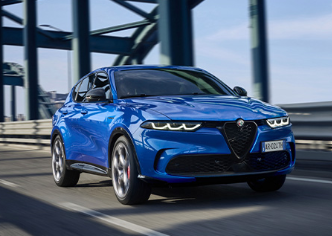
Choosing between the Alfa Romeo Tonale vs Mazda CX-5 is a little like choosing between a tailored Italian jacket and an exceptionally good everyday coat. Both can look smart, both can make us feel comfortable, and both get the job done. Yet they approach the compact SUV formula from very different directions.
The Alfa Romeo Tonale wants emotion to be part of the purchase. Its dramatic front end, unmistakable three-plus-three lighting signature, driver-focused cockpit, and available electrified powertrains make it feel different before we even turn the steering wheel.
The Mazda CX-5 takes another route. Mazda concentrates on balance: attractive design, predictable road manners, useful interior space, straightforward controls, and a price structure aimed squarely at mainstream compact-SUV buyers.
For 2026, the difference is particularly interesting. The U.S.-market CX-5 entered a new generation with a larger body, standard all-wheel drive, a 187-hp 2.5-liter four-cylinder engine, and a substantially modernized cabin. Meanwhile, the latest international Tonale range includes 130-hp diesel, 175-hp hybrid, and 270-hp plug-in-hybrid configurations, although availability differs considerably by country.
So, which one deserves our money? Let's compare them properly.
Content in this publication
- Alfa Romeo Tonale vs Mazda CX-5 at a Glance
- What Separates the Tonale and CX-5?
- Alfa Romeo Tonale vs Mazda CX-5 Dimensions
- Interior Design: Italian Drama vs Japanese Restraint
- Which Has the Better Interior Quality?
- Passenger Space and Everyday Comfort
- Cargo Space: Mazda Plays the Practical Card
- Alfa Romeo Tonale vs Mazda CX-5 Performance
- Handling: Which SUV Is More Fun to Drive?
- Ride Comfort
- Fuel Economy and Electrification
- All-Wheel Drive Comparison
- Technology and Infotainment
- Safety and Driver Assistance
- Reliability and Long-Term Ownership
- Maintenance Costs
- Price and Value for Money
- Which SUV Feels More Premium?
- Which Is Better for Families?
- Which Is Better for Driving Enthusiasts?
- Which Is Better for City Driving?
- Alfa Romeo Tonale vs Mazda CX-5: Pros and Cons
- Who Should Buy the Alfa Romeo Tonale?
- Who Should Buy the Mazda CX-5?
- Alfa Romeo Tonale vs Mazda CX-5: Our Verdict
- Conclusion
- Frequently Asked Questions
Alfa Romeo Tonale vs Mazda CX-5 at a Glance
Before getting buried in specifications, we can summarize the personalities of these two SUVs rather easily.
| Category | Alfa Romeo Tonale | Mazda CX-5 |
|---|---|---|
| Overall character | Sporty, distinctive, premium-leaning | Refined, practical, mainstream |
| Seating | Five | Five |
| Powertrain philosophy | Hybrid, PHEV and other market-dependent engines | Conventional gasoline for 2026 U.S. launch |
| AWD availability | Available/standard depending on powertrain and market | Standard on 2026 U.S. models |
| Driving personality | Sharp and driver-focused | Smooth and balanced |
| Interior style | Sporty and dramatic | Clean and upscale |
| Technology | Strong digital presentation | Larger, simplified modern interface |
| Practicality | Good | Generally stronger |
| Efficiency potential | Excellent with electrified versions | Competitive conventional gasoline economy |
| Best suited to | Drivers wanting personality and electrification | Buyers prioritizing practicality and value |
Neither SUV wins every category. That's precisely why this comparison is interesting.
What Separates the Tonale and CX-5?
The biggest distinction isn't horsepower, touchscreen size, or even price. It's philosophy.
Alfa Romeo built the Tonale as an extension of a sporting brand. Even though we're dealing with a family-friendly crossover, the steering, cockpit and exterior design attempt to preserve the emotional ingredients people associate with an Alfa.
Mazda approaches premium territory without positioning the CX-5 as a traditional luxury vehicle. The result is an SUV that can feel more expensive than we might expect without requiring us to pay for a prestige badge.
Think of the Tonale as the extrovert arriving at dinner in Italian tailoring. The Mazda is the quieter guest who somehow has everything organized.
The Tonale Makes the Stronger First Impression
Few compact SUVs look quite like the Alfa Romeo Tonale.
The shield-shaped grille immediately tells us what we're looking at, while the narrow lighting and sculpted body keep it from disappearing into a supermarket parking lot full of generic crossovers.
Current Tonale models also retain Alfa Romeo's distinctive full-LED three-plus-three lighting theme. Depending on trim, wheel sizes can range from relatively sensible 17-inch designs to striking 20-inch wheels.
This is one of those vehicles that may tempt us to look back after parking it.
The Mazda CX-5 Chooses Understated Elegance
The CX-5 has never needed exaggerated styling to make its point.
For 2026, Mazda redesigned the SUV while keeping its familiar Kodo design philosophy. The latest generation has a longer wheelbase, a broader visual stance, and Mazda lettering across the rear rather than relying exclusively on conventional badging.
Where the Alfa shouts a little, the Mazda whispers.
Which approach works better comes down almost entirely to taste.
Alfa Romeo Tonale vs Mazda CX-5 Dimensions
Size matters in a compact SUV, but interpreting dimensions requires care because the 2026 CX-5 is significantly different from the model many shoppers may remember.
Mazda lists the new U.S.-market CX-5 at approximately 4,690 mm long, 1,860 mm wide, and 1,690 mm tall, with a 2,815-mm wheelbase.
The current Tonale measures roughly 4,522 mm long and 1,841 mm wide, while height varies slightly according to version. Alfa lists the regular Tonale at about 1,601 mm high, while the plug-in-hybrid version measures roughly 1,614 mm.
That means the newest CX-5 is noticeably longer.
Which SUV Is Easier Around Town?
Here's where the Tonale's smaller footprint becomes attractive.
When squeezing into narrow parking spaces, moving through dense streets, or negotiating a cramped garage, an extra 15 or 20 centimeters of vehicle can suddenly feel enormous.
The Mazda isn't a giant SUV by any stretch, but the Tonale's shorter body gives it an advantage for buyers who regularly live with tight urban spaces.
Bigger Isn't Automatically Better
A bigger crossover may offer more passenger and luggage versatility, but exterior size creates compromises.
We should ask ourselves a simple question: how often will we use the extra space?
If our SUV spends five days each week carrying one or two people through city traffic, compact exterior dimensions can be more useful than theoretical maximum cargo capacity.
Interior Design: Italian Drama vs Japanese Restraint
Climb inside these SUVs and their different personalities become even clearer.
The Tonale cockpit places the driver at the center of the experience. Alfa currently equips it with a 12.3-inch customizable digital instrument cluster and a 10.25-inch central touchscreen, while wireless Apple CarPlay and Android Auto are available across the current range described by Alfa Romeo.
The binnacle surrounding the instrumentation deliberately recalls classic Alfa dashboards.
It's theatrical without becoming ridiculous.
The 2026 CX-5 takes a cleaner approach. U.S. base models feature a 12.9-inch touchscreen with Google built-in, while upper configurations add additional equipment and cabin upgrades.
The Mazda feels less like a sports car wearing hiking boots and more like a modern family SUV that has been through finishing school.
Which Has the Better Interior Quality?
This contest is closer than the badges suggest.
Alfa Romeo has the more prestigious European image, yet Mazda has become extremely good at creating cabins that appear richer than their price tags.
Soft-touch materials, thoughtful ergonomics and restrained styling have long been Mazda strengths. The CX-5's advantage is that its interior doesn't need theatrical details to feel polished.
The Tonale counters with personality.
Higher trims can introduce leather, Alcantara, aluminum pedals, paddle shifters, ambient lighting and upgraded seating. Current Tonale Ti equipment, for example, can include eight-way powered front seats, ventilation and a heated steering wheel, depending on market specification.
If we define luxury as quiet sophistication, the Mazda makes a convincing argument.
If we define it as character, occasion and visual identity, the Alfa has the edge.
Passenger Space and Everyday Comfort
The Mazda's larger 2026 footprint matters here.
A longer wheelbase can provide designers with more freedom when balancing front-seat comfort, rear legroom and cargo capacity. Mazda explicitly describes the new CX-5 as having a more spacious interior and expanded cargo area compared with its predecessor.
That makes the Mazda particularly appealing for families.
The Tonale remains perfectly viable as a five-seat compact SUV, but its dimensions make it more obviously compact. Four adults should fit comfortably for normal journeys, although buyers regularly carrying taller rear passengers may appreciate the Mazda's roomier architecture.
Which One Works Better With Children?
For family use, small conveniences quickly become big conveniences.
Wide-opening doors, rear-seat room, cargo access and usable storage can matter more than acceleration figures when we're trying to install a child seat while holding three shopping bags.
The CX-5 has the advantage if practicality dominates our priorities.
The Tonale remains useful, but buyers choosing it are accepting a little less utilitarian focus in return for style, electrification and personality.
Cargo Space: Mazda Plays the Practical Card
This is one area where we should be careful with online comparisons.
Older CX-5 specifications are still widely circulated. The outgoing 2025 U.S. CX-5 provided 29.1 cubic feet behind the rear seats and as much as 59.3 cubic feet with the second row folded. The redesigned 2026 model is larger, and Mazda specifically says its cargo capacity has expanded, so older figures should not automatically be applied to the new vehicle.
Similarly, Tonale cargo capacity depends on powertrain.
Alfa Romeo quotes up to 385 liters for the current plug-in-hybrid Tonale and as much as 1,430 liters with the rear seats folded.
Why the difference between Tonale variants? Batteries have to live somewhere.
That's one of the compromises hidden underneath many plug-in hybrids.
Which Has the More Useful Trunk?
For maximum family practicality, we'd lean toward the Mazda.
The Tonale's cargo compartment remains perfectly useful for groceries, luggage and normal daily life, but the CX-5's larger footprint gives it more flexibility when hauling bulky items.
For buyers who regularly carry strollers, sports equipment or several suitcases, that advantage deserves real weight in the buying decision.
Alfa Romeo Tonale vs Mazda CX-5 Performance
Now things get much more interesting.
A blanket horsepower comparison doesn't work because Tonale engines vary around the world.
Alfa's current international range includes a 130-hp 1.6-liter diesel, a 175-hp 1.5-liter hybrid and a 270-hp plug-in-hybrid Q4. The 175-hp hybrid uses a seven-speed dual-clutch transmission and a 48-volt electric system.
The plug-in Q4 combines a turbocharged 1.3-liter gasoline engine with an electric rear motor. Alfa quotes 270 hp and a 0–100 km/h time of about 6.6 seconds for that version.
By comparison, the redesigned 2026 U.S.-market Mazda CX-5 initially launches with a naturally aspirated 2.5-liter four-cylinder making 187 hp and 186 lb-ft of torque. It uses a six-speed automatic transmission and standard i-Activ AWD.
You may be interested in reading Alfa Romeo Tonale Competitors: The Best Alternatives Compared
So if we're comparing the CX-5 against the strongest Tonale PHEV, the Alfa has a substantial performance advantage.
Does the Mazda Feel Slow?
Numbers never tell the entire story.
A 187-hp engine isn't especially muscular in today's SUV market, but the CX-5 isn't intended to be a drag-strip hero. Its powertrain emphasizes progressive response and familiarity.
There's also something refreshing about a naturally aspirated engine paired with a conventional automatic transmission. No complicated choreography is required. Press the accelerator and the car gets on with it.
Still, buyers coming from turbocharged crossovers may wish for more punch.
The Tonale PHEV Has More Urgency
The Tonale plug-in hybrid operates in another performance league.
Electric torque gives it immediate response, and with the gasoline engine and electric motor working together, acceleration feels far more energetic than what we'd expect from an ordinary family crossover.
It's the version that best supports Alfa Romeo's sporty branding.
The catch? Complexity, price and charging habits all enter the equation.
Handling: Which SUV Is More Fun to Drive?
This may be the most important chapter for enthusiastic drivers.
Alfa Romeo deliberately gives the Tonale relatively quick steering. The company quotes a 13.6:1 steering ratio for the diesel version and emphasizes a MacPherson-type suspension layout at both axles designed around agility and responsiveness.
The result is a crossover that wants to feel alert.
Mazda is hardly asleep at the wheel, though.
The 2026 CX-5 receives revised suspension components and Mazda's latest G-Vectoring Control Plus system, including an electronic brake limited-slip differential intended to improve traction. Mazda also offers Normal, Sport and Off-Road drive modes on the new U.S. model.
The difference is subtle but important.
The Tonale chases excitement.
The CX-5 chases harmony.
Steering Feel and Driver Involvement
If we enjoy a winding road, we'd probably choose the Alfa.
Its sharper responses make ordinary corners feel more significant. The steering wheel becomes part of the experience rather than simply a device for pointing the vehicle.
The Mazda is more relaxed but still composed.
That's arguably a better recipe for drivers who want handling confidence without constantly being reminded that their family crossover is trying to impersonate a sports sedan.
Ride Comfort
Sporty suspension can be a blessing on a smooth road and a nuisance when the pavement looks like it has survived an artillery exercise.
That's the compromise.
Large-wheel Tonales can look spectacular, but low-profile tires leave less rubber between the wheel and the road. Buyers living around potholes may prefer smaller wheels even if they sacrifice some visual drama.
The CX-5 generally takes a more rounded approach. Mazda's redesigned 2026 suspension was specifically developed alongside its new wheel-and-tire package, suggesting that ride and handling refinement received serious attention rather than being treated as separate targets.
Neither should be confused with a floating luxury limousine, but the Mazda's character is likely to satisfy a broader range of drivers.
Fuel Economy and Electrification
This is where comparing these vehicles becomes particularly tricky.
The 2026 U.S. CX-5's 2.5-liter engine carries EPA estimates of 24 mpg city, 30 mpg highway and 26 mpg combined. Mazda has also confirmed that a hybrid CX-5 powertrain will arrive in 2027.
The Tonale takes a more aggressive electrification strategy.
Its current 175-hp hybrid can move electrically during certain low-speed situations, maneuvering and coasting, while the plug-in-hybrid Q4 uses a much larger 15.5-kWh battery. Alfa quotes as much as 61 km of WLTP combined electric range for the latest PHEV specification.
Just remember that WLTP range and U.S. EPA efficiency figures aren't directly interchangeable.
When the Tonale PHEV Makes Sense
A plug-in hybrid works brilliantly when we actually plug it in.
Imagine commuting 30 or 40 kilometers per day, returning home every evening, connecting the car overnight and repeating the pattern. A meaningful proportion of everyday driving could happen without relying heavily on gasoline.
Now imagine never charging it.
We're carrying around a battery, electric motor and associated hardware without fully exploiting them.
That's like buying hiking boots and never leaving the sofa.
When the CX-5 Makes More Sense
Drivers who cannot charge at home may appreciate the Mazda's simplicity.
Fill the tank. Drive. Repeat.
There's no charging strategy and no need to calculate whether installing a home charger is worthwhile.
Until Mazda's 2027 hybrid arrives, however, the current CX-5 doesn't deliver the same electrified-driving possibilities as the Tonale.
All-Wheel Drive Comparison
Mazda deserves credit for simplifying this conversation in the United States.
Every 2026 CX-5 launches with standard i-Activ AWD.
With the Tonale, configuration matters.
The plug-in-hybrid Q4 provides electrified all-wheel drive by using the gasoline engine to drive the front wheels and an electric motor for the rear axle.
That setup is clever because it avoids relying on a conventional mechanical connection to power the rear wheels.
For slippery climates, both approaches can inspire confidence. Tire choice, however, remains enormously important. AWD helps us accelerate; winter tires help us steer and stop.
Technology and Infotainment
The Tonale delivers a strong digital environment.
Its 12.3-inch configurable instrument panel combines nicely with the 10.25-inch infotainment screen, and wireless smartphone integration keeps the dashboard from becoming a nest of cables.
Mazda has dramatically moved the CX-5 forward for 2026.
The new model introduces a 12.9-inch center touchscreen on the base U.S. 2.5 S and Google built-in through Mazda Connected Services. Wireless Apple CarPlay and Android Auto compatibility appears on higher trims such as the Select.
Which is better?
The Alfa's digital instrument presentation feels sportier.
The Mazda's larger central display feels more contemporary.
Safety and Driver Assistance
Modern compact SUVs are expected to carry a substantial electronic safety toolkit, and neither vehicle ignores that requirement.
Depending on specification, the Tonale offers features including autonomous emergency braking, lane-keeping assistance, adaptive cruise control, traffic-sign recognition, drowsiness detection and automatic high beams. Higher equipment packages can add blind-spot monitoring, rear cross-path detection and a 360-degree camera system.
Mazda likewise equips the latest CX-5 with an expanded suite of active-safety technology, and the 2026 redesign makes safety assistance an important part of its updated equipment strategy.
We wouldn't choose between these vehicles purely by counting assistance systems, though. Trim availability differs, so buyers should compare the exact two vehicles sitting on the dealer lot rather than relying on a generic model-level checklist.
Reliability and Long-Term Ownership
This is where the Mazda may feel like the safer bet to conservative buyers.
The CX-5's appeal has traditionally included conventional engineering and broad mainstream ownership. For 2026, Mazda continues using its naturally aspirated 2.5-liter engine and six-speed automatic transmission at launch rather than completely reinventing the powertrain.
The Tonale's electrified configurations are inherently more complicated.
That doesn't automatically make them unreliable. Complexity and unreliability are not synonyms. But buyers planning to keep a vehicle for ten or fifteen years may feel more comfortable with the Mazda's straightforward mechanical package.
Dealer coverage matters too.
A fantastic car becomes considerably less charming when the nearest specialist workshop is hundreds of kilometers away.
Maintenance Costs
We shouldn't assume the Alfa will automatically become a financial disaster or that the Mazda will cost pennies to maintain.
You may be interested in readingAlfa Romeo Tonale Competitors: The Best Alternatives ComparedYou may be interested in reading
 Nissan X-Trail Years: Generations, Changes, and the Best Era to Buy
Ownership costs depend heavily on market, labor rates, warranty terms and parts availability.
Still, Mazda's mainstream positioning and larger dealer footprint in many markets can make routine servicing simpler.
Premium tires can also change the calculation. A Tonale sitting on beautiful 20-inch wheels may require significantly more expensive replacement rubber than a version on smaller rims.
This is one of those boring details that becomes surprisingly interesting when four tires need replacing at once.
Price and Value for Money
In the United States, the redesigned 2026 Mazda CX-5 begins at $29,990 before destination and other charges, while the listed lineup extends through Premium Plus at $38,990.
Tonale pricing is harder to generalize because the model's lineup and powertrains differ greatly between regions.
More importantly, these vehicles don't occupy exactly the same philosophical position.
Mazda tries to give us premium atmosphere at mainstream-SUV money.
Alfa Romeo asks us to pay more attention to design, brand identity and electrified performance.
Value therefore depends on what we're buying.
If we're buying transportation, the Mazda is difficult to ignore.
If we're buying something we want to feel attached to every morning, the Alfa starts making more sense.
Badge aside, this isn't a knockout victory for either vehicle.
The Mazda can feel remarkably mature. Its styling is restrained, its interior avoids cheap visual tricks, and upper trims make a persuasive premium impression.
The Alfa feels special in another way.
The steering-wheel start button, instrument design, exterior detailing and optional cabin materials create more theatre.
Mazda gives us sophistication.
Alfa gives us occasion.
Neither philosophy is wrong.
Which Is Better for Families?
For most families, we'd give the CX-5 the advantage.
The larger new-generation body, spacious cabin emphasis and expanded cargo capacity align naturally with family priorities. Mazda has effectively taken one of the CX-5's traditional strengths—its ability to balance driving enjoyment with everyday usefulness—and given it more breathing room for 2026.
The Tonale remains perfectly suitable for smaller families, particularly those attracted to a PHEV.
If the daily routine involves school runs, urban commuting and predictable charging at home, the Alfa's plug-in system could actually suit family life beautifully.
Which Is Better for Driving Enthusiasts?
Tonale.
Not because the Mazda is dull. Far from it.
Mazda remains one of the manufacturers that understands steering and chassis balance better than its price point would suggest.
But Alfa Romeo builds emotional expectations into its badge. The Tonale responds with quicker steering, sportier cabin cues and, in plug-in Q4 form, considerably stronger acceleration.
It's the SUV we'd choose if Sunday-morning roads matter almost as much as Monday-morning commuting.
Which Is Better for City Driving?
This one is closer.
The Tonale's shorter overall length helps in tight environments, while electrified versions can make stop-and-go driving particularly pleasant.
The CX-5 counters with excellent visibility priorities, predictable controls and a comfortable everyday personality.
If streets and parking spaces are genuinely tight, we'd prefer the Tonale's dimensions.
If city driving is simply part of a broader mix that includes family trips and highway journeys, the CX-5's additional space may outweigh its larger footprint.
Alfa Romeo Tonale vs Mazda CX-5: Pros and Cons
Strip away the marketing language and the decision becomes relatively straightforward. The Tonale's strongest qualities are its unmistakable Italian styling, available electrified powertrains, stronger PHEV performance, distinctive cockpit, quick steering and sense of occasion. Its compromises include less cargo flexibility in plug-in form, potentially higher ownership costs, a smaller dealer footprint in some regions and greater powertrain complexity. The CX-5's strengths are its roomy new-generation body, standard AWD in the 2026 U.S. model, attractive pricing, polished interior, straightforward 187-hp gasoline drivetrain and strong everyday usability. Its primary weaknesses are the lack of a 2026 hybrid at launch, relatively modest straight-line performance and a personality that may feel conservative next to the Alfa.
Who Should Buy the Alfa Romeo Tonale?
Buy the Tonale if driving something distinctive matters.
It's especially appealing when we want a compact SUV without surrendering entirely to practicality. It still carries people and luggage, yet it gives us visual drama and a stronger sense that someone cared about how the driver would feel.
The plug-in Q4 is particularly compelling for drivers who can charge regularly and want genuinely strong performance.
In other words, choose the Tonale with your heart—but make sure the practical numbers still work for your life.
Who Should Buy the Mazda CX-5?
Buy the CX-5 if balance matters more than novelty.
It doesn't require us to explain away many compromises. The cabin is roomy, the exterior remains stylish, AWD is standard on the 2026 U.S. version, pricing is competitive and the naturally aspirated engine is straightforward.
It's the kind of vehicle we can recommend to someone without knowing every detail of their life.
That's a powerful compliment.
The Mazda may not generate the same emotional pull as the Alfa, but it quietly removes reasons not to buy it.
Alfa Romeo Tonale vs Mazda CX-5: Our Verdict
So, where do we land?
For the best all-around compact SUV, we'd choose the Mazda CX-5.
Its combination of practicality, room, pricing, standard AWD in the current U.S. model and everyday refinement makes it the easier recommendation for the majority of buyers.
But the result changes when emotion enters the equation.
The Alfa Romeo Tonale is more distinctive and, in plug-in Q4 form, substantially more powerful than the 187-hp 2026 CX-5. It also offers something increasingly rare among compact crossovers: genuine personality.
The Mazda is the sensible winner.
The Alfa is the tempting one.
And sometimes the car we enjoy owning isn't the one that wins the spreadsheet.
Conclusion
The Alfa Romeo Tonale vs Mazda CX-5 comparison proves how differently two manufacturers can interpret the same basic idea.
The Mazda CX-5 focuses on space, refinement, approachable pricing and balanced road manners. The redesigned 2026 version pushes those strengths further with a larger body, modernized technology and standard AWD in the United States.
The Tonale approaches compact-SUV ownership with more flair. Its Italian design, driver-centered interior and available hybrid and plug-in-hybrid powertrains give it a personality the Mazda can't quite replicate.
For families and value-conscious buyers, we'd lean toward the Mazda CX-5.
For enthusiasts, style-conscious buyers and drivers able to exploit plug-in charging, we'd seriously consider the Alfa Romeo Tonale.
Ultimately, this isn't simply a question of which SUV is better.
It's a question of what we expect a car to do for us.
If we want something rational, versatile and easy to recommend, the Mazda wins.
If we want to feel something every time the garage door opens, the Alfa may be worth the compromises.
Frequently Asked Questions
Is the Alfa Romeo Tonale better than the Mazda CX-5?
The Tonale is better for buyers prioritizing distinctive styling, electrification and a sportier personality. The CX-5 is arguably the stronger all-rounder because it emphasizes passenger space, practicality, value and everyday refinement. Which one is "better" therefore depends largely on whether we prioritize emotion or versatility.
Which is faster, Alfa Romeo Tonale or Mazda CX-5?
It depends on the Tonale powertrain, but the current Tonale plug-in-hybrid Q4 clearly has the performance advantage. Alfa Romeo quotes 270 hp and approximately 6.6 seconds from 0–100 km/h. The 2026 U.S.-market CX-5 launches with a 187-hp naturally aspirated 2.5-liter four-cylinder.
Which has more space, Mazda CX-5 or Alfa Romeo Tonale?
The redesigned 2026 CX-5 is the larger vehicle overall, measuring about 4,690 mm long compared with approximately 4,522 mm for the Tonale. Mazda also specifically highlights increased passenger and cargo room in its latest redesign, making the CX-5 the more practical choice for many families.
Is the Tonale more fuel-efficient than the CX-5?
Potentially, particularly if we choose a Tonale plug-in hybrid and charge it consistently. The current Tonale PHEV can travel up to 61 km electrically under the WLTP combined test cycle. By comparison, Mazda rates the 2026 U.S. CX-5 gasoline model at an EPA-estimated 24 mpg city, 30 mpg highway and 26 mpg combined. Because WLTP electric range and EPA gasoline economy use different methodologies, the figures shouldn't be compared directly.
You may be interested in readingAlfa Romeo Tonale Competitors: The Best Alternatives ComparedYou may be interested in reading
Nissan X-Trail Years: Generations, Changes, and the Best Era to BuyYou may be interested in reading
Nissan X-Trail Years to Avoid: Used Buyer’s GuideWill the Mazda CX-5 get a hybrid?
Yes. Mazda currently states that a hybrid CX-5 powertrain is planned to launch in 2027. That means buyers comparing 2026 models will find a conventional 2.5-liter gasoline engine in the U.S.-market CX-5, whereas the Tonale already offers electrified options in several markets.
If you want to know other articles similar to Alfa Romeo Tonale vs Mazda CX-5: Which SUV Wins? you can visit the category Models.
Kia Carnival Generations: Complete History From 1998 to Today
Kia Carnival Variants: Complete Guide to Trims, Engines and Features
Kia Carnival Years to Avoid: A Smart Used-Buyer Guide
Kia Carnival Alternative: Best Family Vehicles to Consider
Nissan X-Trail Years to Avoid: Used Buyer’s Guide
Nissan X-Trail Years: Generations, Changes, and the Best Era to Buy
Leave a Reply
More content of your interest