
Kia Carnival Generations: Complete History From 1998 to Today

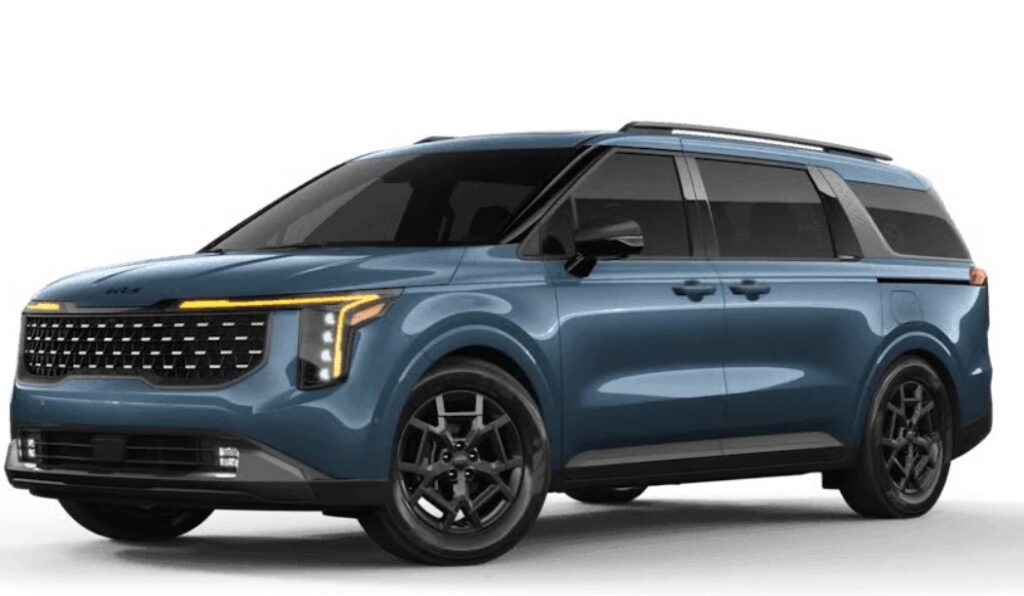
The Kia Carnival generations tell a surprisingly interesting story. What began as a practical Korean minivan in the late 1990s has evolved into a polished, SUV-inspired people mover loaded with technology, premium seating, and modern safety equipment.
And the transformation hasn't been subtle.
Place an original Carnival beside a current model and they almost look as though they came from different manufacturers. The first was unapologetically a minivan: tall, functional, and built around practicality. Today's Carnival hides much of its minivan DNA beneath squared-off styling, a broad grille, dramatic lighting, and an interior that can feel closer to a luxury lounge than an old-fashioned family van.
Kia introduced the first-generation Carnival in 1998. Four generations have followed the basic evolutionary path from affordable MPV to increasingly sophisticated family vehicle. The name can become confusing because several markets—including North America—historically knew the Carnival as the Kia Sedona. Kia eventually consolidated the naming strategy, and North America received the Carnival name for the 2022 model year.
Let's walk through every major generation, what changed, and how the Carnival became the vehicle we recognize today.
Content in this publication
- Kia Carnival Generations at a Glance
- Why Kia Carnival Generation Dates Can Be Confusing
- First-Generation Kia Carnival: 1998 Onward
- Second-Generation Kia Carnival: The VQ Era
- Third-Generation Kia Carnival: The YP Changes Everything
- Fourth-Generation Kia Carnival: KA4
- The Carnival Name Reaches North America
- How Kia Carnival Styling Changed Through Four Generations
- How Carnival Technology Evolved
- Kia Carnival Engines Across the Generations
- Which Kia Carnival Generation Is Best?
- Which Kia Carnival Generation Has the Most Modern Design?
- Is the Kia Sedona a Different Vehicle From the Carnival?
- Carnival vs Grand Carnival: Is It Another Generation?
- What Changed Most Between the First and Fourth Generations?
- Buying a Used Kia Carnival by Generation
- The Evolution of Carnival Reliability
- Why the Kia Carnival Survived While Many Minivans Disappeared
- Kia Carnival Generations: Which One Should We Choose?
- Conclusion: Four Generations, One Consistent Idea
- Frequently Asked Questions About Kia Carnival Generations
Kia Carnival Generations at a Glance
Before diving into the details, here's the broad family tree.
| Generation | Approximate Introduction | Common Code | Main Character |
|---|---|---|---|
| First generation | 1998 | KV-II | Simple, affordable family MPV |
| Second generation | 2006 | VQ | Larger, safer and more refined |
| Third generation | 2014 | YP | Modern styling and stronger technology |
| Fourth generation | 2020 | KA4 | SUV-inspired premium MPV |
Exact model years vary according to country. For instance, North American buyers received the Sedona on a different timetable than some Asian, European, and Australian markets. Kia's global history nevertheless recognizes four primary Carnival generations, with the fourth generation introduced in 2020.
Why Kia Carnival Generation Dates Can Be Confusing
Search for Carnival history and you'll quickly notice different websites giving different dates.
Are they wrong?
Not necessarily.
Manufacturers frequently introduce a vehicle in their domestic market before exporting it elsewhere. Model years can also start later than calendar-year production, while facelifts sometimes create what enthusiasts informally call another "generation" even though the underlying platform remains substantially unchanged.
Then there's the Sedona name.
In several international markets, Kia sold the same basic vehicle as the Kia Sedona. North American buyers, for example, knew three generations primarily by that name before Kia replaced the Sedona badge with Carnival for the 2022 model year.
So when shopping used, we shouldn't rely solely on a registration year. Checking the market, generation, chassis designation, engine and production date gives us a much clearer picture.
First-Generation Kia Carnival: 1998 Onward
Where the Carnival Story Started
Kia introduced the original Carnival in January 1998, during an important period in the company's history. Kia describes the model as helping establish its family-vehicle credentials and strengthening its position in Korea's emerging minivan market.
The formula was straightforward: give families lots of room without making them pay premium-car money.
That sounds obvious today, but affordability became one of the Carnival's defining characteristics. Instead of trying to reinvent transportation, Kia concentrated on providing the ingredients people actually needed—multiple seats, sliding doors, luggage capacity and reasonable comfort.
It was the automotive equivalent of a large backpack. It wasn't particularly glamorous, but it could swallow practically everything a family threw at it.
First-Generation Design
Looking back, the original Carnival appears unmistakably late-1990s.
Its shape was rounded, upright and functional. Large windows improved visibility, while the long cabin maximized passenger space. There was little attempt to disguise the vehicle as something else.
It looked like a minivan because it was a minivan.
That philosophy contrasts sharply with the latest Carnival, where designers deliberately use SUV-like visual elements to make the vehicle appear tougher and more upscale.
Kia's heritage archive lists the original model at approximately 4,890 mm long and 1,895 mm wide, with front-wheel drive.
Engines in the Early Carnival
Engine availability depended heavily on the country.
The first generation could be found with gasoline V6 power or four-cylinder diesel engines. Kia's historical specifications identify displacement ranging from roughly 2.5 to 2.9 liters for the initial model.
Different export markets later received additional engine configurations.
Diesel mattered particularly in markets where fuel economy and low-speed pulling power were important. Gasoline V6 versions generally delivered smoother operation, though consumption could be substantial by today's standards.
What Driving a First-Generation Carnival Feels Like
Anyone moving from a modern Carnival into an early model will notice the decades immediately.
Steering is less sophisticated. Cabin insulation is simpler. Transmission behavior feels more old-school. Infotainment, if we can even call the original entertainment systems that, belongs to another technological universe.
Still, that simplicity can be part of the appeal.
Early Carnivals focused on basic transportation rather than enormous screens, software menus and dozens of electronic systems.
Second-Generation Kia Carnival: The VQ Era
The second-generation Carnival arrived during the mid-2000s and represented a substantial maturity jump.
If generation one established the idea, generation two started polishing it.
The vehicle became more competitive internationally, particularly against established minivans from Toyota, Honda and Chrysler. Depending on market, buyers could encounter short- and long-wheelbase configurations. Long-wheelbase versions were sometimes marketed as the Grand Carnival. The second generation also provided the basis for the Hyundai Entourage sold in North America.
A More Serious Family Vehicle
This generation looked broader and considerably more substantial.
The styling remained conventional by modern standards, but proportions became more confident. Kia was moving away from the bargain-first identity attached to some of its earlier vehicles.
Cabin design improved as well.
Families increasingly expected minivans to perform several jobs simultaneously. They had to carry children during the week, luggage on vacation, groceries on Saturday and perhaps seven or eight adults occasionally.
The second-generation Carnival leaned into that versatility.
Short-Wheelbase vs Long-Wheelbase Carnival
One interesting feature of this era was the availability of different body lengths in some markets.
The shorter vehicle was easier to maneuver, while long-wheelbase versions emphasized passenger and cargo capacity. That distinction matters to used-car buyers because two Carnivals from the same period can have noticeably different dimensions and practicality.
Think of them as two suitcases from the same collection. They share the design, but one gives you considerably more room to pack.
The Tiger Nose Arrives
Later versions of the second generation began incorporating Kia's emerging corporate styling.
The company's now-famous "Tiger Nose" grille helped give facelifted Carnivals a stronger visual identity. Updated second-generation models adopted this design language around the beginning of the 2010s.
It seems like a small detail, yet it represented something bigger.
Kia was developing a recognizable face.
Instead of producing vehicles that merely occupied market segments, the company increasingly wanted customers to recognize a Kia before seeing the badge.
Third-Generation Kia Carnival: The YP Changes Everything
The third generation arrived in 2014 and marked one of the largest steps forward in Carnival history. Unlike the preceding generation's multiple wheelbase strategies, Kia moved to a long-wheelbase-only approach for this iteration.
In North America, this generation appeared as the redesigned 2015 Kia Sedona.
And visually, it was difficult to miss the transformation.
The YP Carnival became sharper and more architectural.
The hood looked stronger. The front fascia became more assertive. Body surfacing was cleaner. Kia couldn't completely erase the minivan proportions—physics is stubborn—but it certainly made them more appealing.
This was an important turning point because buyers were increasingly migrating toward SUVs.
Minivans had an image problem.
They were incredibly practical, yet many drivers associated them with purely utilitarian family transportation. Kia began addressing that problem through styling rather than sacrificing the sliding doors and interior packaging that make MPVs so effective.
Third-Generation Interior Improvements
The cabin evolved just as dramatically.
Materials became more sophisticated, dashboard layouts cleaner and infotainment more important. Depending on trim and market, passengers could enjoy increasingly luxurious seating arrangements and convenience equipment.
North American Sedonas offered seven- or eight-passenger configurations, while smartphone integration such as Apple CarPlay and Android Auto became available during the generation.
That technology now sounds ordinary, but it dramatically changed the family-road-trip experience.
Remember carrying folders full of CDs?
Suddenly our phones became navigation system, music library, podcast player and communication hub simultaneously.
Safety Technology Takes a Bigger Role
The third generation also belongs to the period when active driver-assistance technology began spreading through mainstream family cars.
Depending on year and trim, equipment could include features such as forward-collision assistance, blind-spot monitoring, parking aids and other electronic driver-support systems.
You may be interested in reading Which Is the Best BMW M4? Complete Buyer’s Guide
This mattered enormously for a vehicle designed to spend much of its life carrying families.
Passive crash protection remained critical, of course, but vehicles were increasingly expected to help drivers avoid an accident in the first place.
Why the Third Generation Still Matters
For used-car shoppers, the YP occupies an interesting middle ground.
It feels substantially more modern than early Carnivals without necessarily carrying the price or electronic complexity of the newest models.
A well-maintained example can therefore make sense for families interested primarily in space and practicality.
Condition matters more than reputation alone, however. Service history, mileage, accident repairs, sliding-door operation, electronics and market-specific powertrains should all be inspected before purchasing any older Carnival.
Fourth-Generation Kia Carnival: KA4
Then Kia changed the formula again.
Introduced in 2020, the fourth-generation KA4 Carnival pushed the model considerably closer to the visual language of an SUV while retaining its fundamental MPV architecture and front-wheel-drive layout. Kia itself positions this generation as a more premium, versatile vehicle than its predecessors.
It is still extraordinarily practical.
It simply doesn't advertise that practicality from a mile away.
The SUV-Inspired Transformation
Look at a KA4 from the front and the traditional minivan image almost disappears.
We get a substantial hood, large grille, sculpted bodywork and more rugged detailing. The roofline and sliding rear doors eventually reveal what we're dealing with, but the first impression is considerably more SUV-like than before.
That wasn't accidental.
Consumers love SUVs, while minivan demand has contracted in many markets. Instead of abandoning the advantages of an MPV, Kia wrapped them in styling designed to speak the visual language buyers increasingly prefer.
Smart move? We'd say so.
You still get the enormous door openings and efficient cabin packaging, but without quite as much school-run-van energy.
A Significantly Larger Presence
Kia's heritage specifications list the fourth-generation Carnival at approximately 5,155 mm long and 1,995 mm wide, illustrating how substantial the vehicle has become compared with the original 1998 model.
That growth translates into serious road presence.
It also reminds us to think practically before buying. Large vehicles provide wonderful interior room, but narrow garages, compact parking spaces and tight city streets don't magically become wider.
Measure the garage before falling in love with the cabin.
Fourth-Generation Carnival Interior
Inside, the KA4 represents another major leap.
Large digital displays, modern infotainment, extensive connectivity, multi-zone comfort equipment and sophisticated seating arrangements can make high-spec versions genuinely luxurious.
Second-row seating receives particular attention on premium configurations in various markets. Depending on specification, the Carnival can move beyond "people carrier" territory and resemble a mobile lounge.
Yet its greatest trick isn't any single gadget.
It's flexibility.
A family vehicle lives several lives. Monday morning it carries children. Friday night it carries friends. Saturday afternoon it becomes a cargo hauler. Vacation week transforms it into a rolling storage container.
The Carnival's interior is engineered around precisely that reality.
The Carnival Name Reaches North America
For American and Canadian consumers, the transition from Sedona to Carnival created an apparent extra generation that doesn't actually exist.
The 2021 Kia Sedona was followed by the 2022 Kia Carnival.
Despite the name change, the Carnival represented Kia's new fourth-generation MPV rather than an unrelated model. Cars.com records the North American Sedona generations as 2002–2005, 2006–2014 and 2015–2021 before the Carnival replaced it for 2022.
This distinction is useful when researching parts, reliability reports or used values.
A North American "2018 Carnival" search may produce limited results because the equivalent vehicle there was called Sedona. In other countries, Carnival was already the familiar badge.
How Kia Carnival Styling Changed Through Four Generations
We can summarize the design journey in three words:
Van to crossover.
Okay, technically that's only three words, but it captures roughly three decades of development.
Generation one prioritized function. Generation two added polish. Generation three introduced much stronger design confidence. Generation four actively tries to blur the visual boundary between MPV and SUV.
That evolution mirrors the wider automotive market.
Families never stopped needing space. What changed was what buyers wanted that space to look like.
Kia adapted without throwing away the Carnival's strongest assets.
How Carnival Technology Evolved
Technology offers an even clearer picture of progress.
An original Carnival came from an era when a CD player could genuinely feel like desirable equipment. Today's models exist in a world of digital instrument displays, smartphone connectivity, multiple cameras and active safety assistance.
Across the generations, the major progression includes:
- More sophisticated infotainment and smartphone integration
- Increasing availability of driver-assistance systems
- Better parking technology and exterior cameras
- Improved passenger comfort and climate control
- More advanced powertrain management
- Greater connectivity between vehicle and mobile devices
- Increasingly sophisticated premium seating and convenience functions
The shift is enormous.
But newer isn't automatically better for everybody.
Some owners prefer the simplicity of older vehicles because fewer sophisticated systems can mean fewer expensive electronic components to diagnose as the vehicle ages. Other drivers gladly accept additional complexity in exchange for better safety, comfort and everyday convenience.
Kia Carnival Engines Across the Generations
Trying to describe "the Carnival engine" is impossible because specifications differ drastically by generation and country.
The broad pattern is easier to understand.
Early models used gasoline V6 and diesel power depending on region. That strategy continued through later generations, although individual engine capacities and transmission choices evolved considerably.
Kia's heritage archive lists gasoline V6 and four-cylinder diesel configurations for the first generation, while the fourth-generation archive similarly reflects multiple powertrain families across global markets.
Consequently, we should never assume that an Australian, Korean, European and North American Carnival from the same generation has the same engine.
That's particularly important when researching reliability.
An issue affecting one powertrain doesn't automatically apply to every Carnival built during that generation.
Which Kia Carnival Generation Is Best?
There isn't a universal winner because "best" depends on what we're buying it for.
If affordability and mechanical simplicity dominate the decision, an older generation might make sense—assuming condition is excellent.
If we want a modern cabin without paying nearly-new prices, the third-generation YP can be particularly attractive.
If technology, contemporary styling and premium comfort matter most, the fourth-generation KA4 is the obvious destination.
The sweet spot for a used purchase is often a well-maintained later example of a generation rather than the cheapest vehicle available.
Why?
Manufacturers frequently make small running improvements throughout a model's life, while later examples naturally have fewer years of accumulated wear.
Still, service history beats calendar year.
A beautifully maintained older Carnival can be a much safer purchase than a neglected newer one.
Which Kia Carnival Generation Has the Most Modern Design?
Fourth generation. Easily.
The KA4 represents a deliberate attempt to move the Carnival away from stereotypical minivan styling.
You may be interested in readingWhich Is the Best BMW M4? Complete Buyer’s GuideYou may be interested in reading
 Kia Carnival Diesel vs Hybrid: Which One Should We Buy?
Previous versions increasingly softened the visual distinction between MPV and crossover, but generation four takes the idea much further. Its long hood, bold front end and straighter surfaces give it a more SUV-like personality.
Walk around the side, though, and the sliding doors reveal the secret.
And that's actually its superpower.
Traditional SUVs generally use conventional rear doors and sacrifice some packaging efficiency for style. The Carnival keeps the huge side openings families love while presenting them in a more fashionable shell.
Is the Kia Sedona a Different Vehicle From the Carnival?
Not in the way many shoppers assume.
Sedona was primarily a market-specific name used for the Carnival family.
This explains why researching Carnival generations can become messy. In North America, for example, the first locally marketed Sedona arrived for 2002, even though the global Carnival story began in 1998. North America continued using Sedona through the 2021 model year before adopting Carnival for 2022.
So if we're tracing the vehicle's complete family tree, Sedona history belongs inside Carnival history.
Carnival vs Grand Carnival: Is It Another Generation?
Usually, no.
"Grand Carnival" has been used in certain markets to identify longer, differently configured or market-specific versions of the Carnival rather than an entirely separate generation.
That's why badges alone shouldn't dictate our parts or maintenance research.
A mechanic or parts supplier may ask for the VIN, chassis code, engine or build date because those details identify the vehicle much more precisely than "Grand Carnival."
What Changed Most Between the First and Fourth Generations?
Almost everything except the mission.
That's what makes the Carnival interesting.
Its fundamental job remains remarkably consistent: carry lots of people and their belongings comfortably.
But the execution has evolved dramatically.
The original model was approximately 4.89 meters long according to Kia's heritage specifications. The fourth-generation model stretches to roughly 5.16 meters and is also wider.
Technology has changed even more dramatically.
Where early examples relied primarily on straightforward mechanical engineering and basic convenience equipment, current versions incorporate the electronics buyers expect from contemporary premium vehicles.
Design perhaps represents the most emotionally significant shift.
The Carnival stopped apologizing for being practical.
Instead, Kia made practicality look desirable.
Buying a Used Kia Carnival by Generation
Generation guides are useful, but they shouldn't become shortcuts.
Suppose someone tells us that one Carnival generation is "the reliable one."
Does that mean a 15-year-old example with questionable maintenance is automatically better than a carefully serviced newer vehicle?
Of course not.
When evaluating a used Carnival, examine maintenance records, engine behavior from a cold start, transmission operation, fluid condition, suspension noises, air-conditioning performance, electrical accessories, powered doors where fitted, warning lights and evidence of previous collision damage.
For diesel versions, market-specific emissions equipment and service history deserve additional attention.
For heavily optioned newer models, verify every electronic feature individually.
Sliding doors deserve special attention because families operate them thousands of times over a vehicle's life. Make sure they open, close and latch correctly.
In other words, buy the individual vehicle—not merely the generation's reputation.
The Evolution of Carnival Reliability
Reliability discussions also need context.
The nameplate has existed since 1998. Comparing an early Carnival with a KA4 as though they're mechanically identical makes little sense.
Powertrains changed. Transmissions changed. electronics changed. Manufacturing changed. Safety systems changed.
Even two vehicles from the same generation may use different engines depending on market.
Therefore, reliability research should always include the model year + engine + transmission + market, not merely the words "Kia Carnival."
That's a far more useful search strategy.
Why the Kia Carnival Survived While Many Minivans Disappeared
The global automotive graveyard contains plenty of discontinued MPVs.
Yet Carnival survived.
Why?
Partly because the concept remains extremely useful.
Crossovers can look adventurous, but a boxier passenger vehicle usually extracts more usable room from a similar footprint. Sliding doors are brilliant in tight parking spaces. Low floors make entry easier. Proper third-row packaging matters when adults actually need to sit there.
Kia kept those functional advantages while continuously refreshing the vehicle's image.
The Carnival evolved rather than stubbornly defending the traditional minivan aesthetic.
That might be its biggest achievement.
Kia Carnival Generations: Which One Should We Choose?
The first generation is primarily relevant today to budget buyers, enthusiasts and markets where older Carnivals remain common.
The second generation offers more refinement but is now old enough that condition should dominate the buying decision.
The third generation arguably represents the transition into the modern era, with considerably better styling, comfort, connectivity and available safety technology.
The fourth generation delivers the complete modern Carnival experience: SUV-inspired looks, sophisticated cabins and significantly greater technological ambition.
For most buyers who can afford one, generation four is naturally the most appealing.
For value-focused used buyers, generation three deserves serious consideration.
Whichever one we choose, the golden rule remains simple: inspect the particular vehicle rather than buying purely according to generation.
Conclusion: Four Generations, One Consistent Idea
The history of the Kia Carnival generations is really the history of Kia learning how to package practicality more attractively.
The 1998 original established the foundation with plenty of passenger space and straightforward family transportation. Generation two made the formula more competitive and refined. Generation three brought the Carnival into a noticeably more sophisticated era. Generation four then transformed it into the bold, SUV-inspired MPV we recognize today.
Kia didn't eliminate the minivan.
It modernized it.
And perhaps that's why the Carnival remains relevant. Beneath the sharper styling, digital displays and premium features sits the same basic idea that made the original useful nearly three decades ago: families need space.
The packaging around that idea has simply become much better.
Frequently Asked Questions About Kia Carnival Generations
1. How many Kia Carnival generations are there?
There are four main Kia Carnival generations. The first was introduced in 1998, the second arrived during the mid-2000s, the third debuted in 2014, and the fourth was introduced in 2020. Exact model-year availability varies according to country.
2. When did the fourth-generation Kia Carnival begin?
Kia introduced the fourth-generation KA4 Carnival in 2020. Some export markets received it later according to their local model-year schedules. North America adopted the Carnival name with the 2022 model year.
3. Are the Kia Carnival and Kia Sedona the same vehicle?
Broadly, yes. Sedona was the name Kia used for the Carnival in several markets, including North America. The U.S. Sedona ended after the 2021 model year and was replaced by the fourth-generation Carnival for 2022.
4. What is the best Kia Carnival generation to buy used?
The answer depends on budget and priorities. Third-generation models offer a useful balance between modern equipment and used pricing, while fourth-generation Carnivals provide the newest design and technology. Regardless of generation, maintenance history and mechanical condition should heavily influence the decision.
5. What generation is the current Kia Carnival?
The contemporary Carnival belongs to the fourth-generation KA4 family originally introduced in 2020. Kia's fourth-generation architecture represents the biggest styling shift in the model's history, emphasizing a more premium and SUV-inspired appearance.
You may be interested in readingWhich Is the Best BMW M4? Complete Buyer’s GuideYou may be interested in reading
Kia Carnival Diesel vs Hybrid: Which One Should We Buy?You may be interested in reading
Kia Carnival Years: Generations, Changes, and Best Years to KnowIf you want to know other articles similar to Kia Carnival Generations: Complete History From 1998 to Today you can visit the category Models.
How to Identify Your Ford Fiesta Model
Toyota RAV4 Engine Oil Capacity: Complete Guide

Vauxhall Corsa Models: Complete Guide to Generations, Trims and Versions (1993–2026)
Kia Sportage Trim Levels: Complete 2027 Comparison
Toyota Corolla Cross vs RAV4: Which SUV Is Better?
Haval Jolion vs Omoda C5: Which SUV Is Better?
Leave a Reply
More content of your interest