
Kia Carnival Not Starting: Causes, Diagnosis, and Fixes

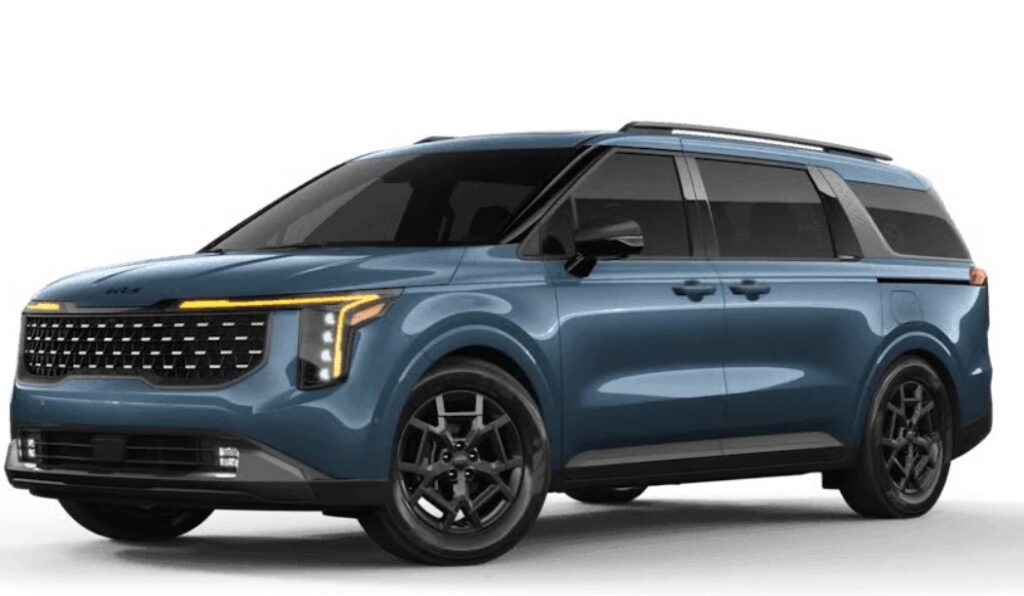
A Kia Carnival not starting can turn an ordinary morning into a frustrating guessing game. You climb in, press the brake, hit the Start button, and instead of hearing the engine settle into its usual rhythm, you get silence, clicking, slow cranking, warning messages, or an engine that turns over but stubbornly refuses to fire.
The good news? A Carnival that will not start does not automatically mean the engine has suffered a serious failure. Quite often, the cause is much simpler: a weak 12-volt battery, loose battery terminals, a smart-key problem, an issue with the brake-pedal signal, incorrect gear-position recognition, or another electrical fault.
The trick is not to throw parts at the vehicle like darts at a board. We want to identify what happens when we try to start it. That first symptom dramatically narrows the possibilities.
In this guide, we'll walk through the most likely causes, the checks we can safely make ourselves, and the warning signs that tell us it's time to stop troubleshooting and call a professional.
Content in this publication
- Why Is My Kia Carnival Not Starting?
- Kia Carnival Not Starting: Quick Symptom Check
- A Weak or Dead 12-Volt Battery Is a Prime Suspect
- Check the Battery Terminals Before Replacing Anything
- Can You Jump-Start a Kia Carnival?
- Kia Carnival Clicks but Won't Start
- Kia Carnival Cranks but Won't Start
- Check the Fuel Level—Even If It Seems Obvious
- Smart Key Problems Can Prevent Starting
- What If a New Key Battery Doesn't Fix It?
- Kia Carnival Says “Press Brake Pedal to Start Engine”
- Make Sure the Carnival Is Really in Park
- Could a Fuse Cause a Kia Carnival Not to Start?
- Immobilizer Problems and the Kia Carnival
- Could the Fuel Pump Cause a Kia Carnival No-Start?
- What About the Crankshaft or Camshaft Sensors?
- Can an Alternator Cause a Kia Carnival Not to Start?
- Why Does My Kia Carnival Start Sometimes but Not Others?
- Kia Carnival Won't Start After Sitting Overnight
- Kia Carnival Won't Start After Battery Replacement
- Kia Carnival Won't Start but Lights Work
- Kia Carnival Won't Start and There's No Clicking
- Kia Carnival Doesn't Recognize the Key
- Should We Disconnect the Battery to Reset the Carnival?
- Could Remote Start Work When Normal Starting Doesn't?
- When Should We Stop Troubleshooting?
- How Much Can a Kia Carnival No-Start Repair Cost?
- How to Prevent Future Kia Carnival Starting Problems
- Is a Kia Carnival Not Starting Usually Serious?
- Conclusion: Diagnosing a Kia Carnival That Won't Start
- Frequently Asked Questions
Why Is My Kia Carnival Not Starting?
Starting a modern Kia Carnival requires several systems to cooperate almost instantly.
The battery must provide sufficient voltage. The smart key must be recognized. The vehicle must know that the transmission is in an acceptable starting position. The brake-pedal input generally needs to be detected on push-button-start models. The immobilizer must authorize the key, the starter must turn the engine, and the engine-management system must provide the correct fuel and ignition conditions.
One broken link can prevent the whole chain from working.
Kia's own Carnival guidance separates a no-start condition into two useful categories: an engine that doesn't turn over or turns slowly, and an engine that turns over normally but doesn't start.
That distinction should be our starting point too.
Kia Carnival Not Starting: Quick Symptom Check
Before opening the hood, pay attention to the vehicle.
Our symptoms often tell us more than ten minutes of random inspection.
Use this sequence:
- No dashboard lights and no response: suspect a discharged battery, battery connection, main electrical supply, or related electrical fault.
- Rapid clicking when Start is pressed: a weak battery or poor battery connection moves high on the list.
- One solid click but no cranking: the battery may still be weak, but the starter circuit or starter motor becomes more suspicious.
- Engine cranks very slowly: check battery condition and battery-terminal connections first.
- Engine cranks normally but will not fire: think beyond the starter battery toward fuel delivery, ignition, engine-management sensors, immobilizer authorization, or other control-system faults.
- “Key not detected” appears: investigate the smart key and key-fob battery before assuming a major vehicle failure.
- Vehicle goes into ACC or ON mode but won't crank: confirm the brake is firmly depressed and the transmission is correctly positioned in Park.
- It starts with a jump but not by itself: battery condition or charging-system performance deserves investigation.
- It starts sometimes and fails other times: intermittent battery connections, smart-key detection, starter circuitry, switches, sensors, or wiring may be involved.
- It starts and immediately stalls: immobilizer, fuel, air, sensor, or engine-management issues become more relevant.
Now let's dig deeper.
A Weak or Dead 12-Volt Battery Is a Prime Suspect
When a Kia Carnival suddenly refuses to start, the 12-volt battery is one of the first places we should look.
Why?
Starting an engine demands a substantial burst of electrical current. A battery can still have enough energy to illuminate parts of the dashboard yet lack sufficient power to operate the starter properly.
That can be deceptive. We see screens and lights and assume, “The battery can't be dead.”
Not necessarily.
Signs of a Weak Kia Carnival Battery
Typical symptoms include slow cranking, rapid clicking, dim interior lights, flickering dashboard electronics, electrical systems resetting, or the vehicle becoming dramatically less responsive when we press Start.
Kia specifically recommends checking the battery connections when the engine doesn't turn over or turns slowly. Its Carnival guidance also says to switch on an interior light and observe whether it dims or goes out when the starter is operated; that behavior can indicate a discharged battery.
That is a remarkably useful simple test.
Why the Battery Can Suddenly Go Flat
Sometimes the battery is simply reaching the end of its useful life.
But other causes are possible.
Cold or extreme weather can expose a marginal battery. A light or electrical accessory may have been left operating. Repeated short trips might not replenish the energy consumed during starting. A charging-system issue could prevent the battery from recovering properly.
Accessories installed in the vehicle can matter as well. Kia notes that external electrical devices drawing excessive current while parked can contribute to battery discharge.
A permanently connected dash cam is one example worth considering.
Check the Battery Terminals Before Replacing Anything
A healthy battery cannot do its job properly if the electrical connection between the battery and vehicle is poor.
Loose, damaged, or heavily contaminated battery terminals can mimic a failing battery.
We therefore want to inspect the connections before spending money.
Look for obvious looseness, corrosion, damage, or a terminal that can move when it shouldn't. Kia's guidance specifically says battery connections should be clean and tight when diagnosing a Carnival that cranks slowly or doesn't turn over.
If you're uncomfortable working around a vehicle battery, however, don't experiment. Electrical troubleshooting can create sparks or damage electronics when performed incorrectly.
Can You Jump-Start a Kia Carnival?
A jump-start may help when insufficient battery power is preventing the engine from starting, provided the procedure is appropriate for your exact Carnival model and powertrain.
This is where the owner's manual matters.
Carnival specifications and powertrains have varied between countries and model years, and newer models may incorporate different electrical architectures. We should therefore follow the jump-start procedure written for the exact vehicle rather than relying on generic instructions from another car.
If the engine starts after receiving external battery assistance, that's useful diagnostic information.
It does not, however, prove that replacing the battery will automatically fix everything.
The battery could be discharged because it is deteriorated, but it might also have gone flat because the charging system is not replenishing it or because an electrical draw is draining it while parked.
The “Starts With a Jump, Dies Again Later” Scenario
Suppose we jump-start the Carnival on Monday, drive it for a while, park it overnight, and Tuesday morning it is dead again.
That pattern deserves proper diagnosis.
Repeatedly jump-starting the vehicle treats the symptom. We still need to understand why the battery is losing usable charge.
A battery test, charging-system test, and potentially a parasitic-draw test can provide far more useful answers than simply buying another battery.
Kia Carnival Clicks but Won't Start
Clicking gives us an important clue.
Fast, repetitive clicking commonly points toward insufficient electrical power reaching the starter. The starter solenoid engages, voltage collapses, it disengages, voltage recovers slightly, and the cycle repeats.
A single stronger click is slightly different.
The starter relay or solenoid may be engaging without the starter motor actually turning the engine. Battery voltage still needs to be verified first, because a weak battery can cause misleading symptoms. Once adequate power and solid connections have been established, starter-circuit diagnosis becomes more important.
Could the Starter Motor Be Bad?
Yes.
Starter motors eventually wear, although we shouldn't condemn the starter merely because the engine won't crank.
Before replacing one, a technician normally wants to establish that the starter is receiving the correct electrical command and sufficient current.
Otherwise we're swapping an expensive component based on a symptom rather than evidence.
That is like replacing a door because the key won't turn.
Kia Carnival Cranks but Won't Start
This is an entirely different diagnostic branch.
If the starter is spinning the engine at what sounds like normal speed, then the battery and starter have already accomplished a major part of their job.
The question changes from:
Why isn't the engine turning?
to:
Why isn't a turning engine actually running?
An internal-combustion engine generally needs suitable fuel delivery, air, compression, correct timing, ignition where applicable, and functioning engine-management inputs.
Modern vehicles coordinate these through sensors and computers. Therefore, a Carnival that cranks normally but doesn't start may require diagnostic scanning rather than old-fashioned trial and error.
Check the Fuel Level—Even If It Seems Obvious
It sounds almost too simple to mention.
Still, checking the actual fuel level is worthwhile, and Kia itself includes fuel level among the first things to consider when the engine doesn't start.
Why can this fool us?
A faulty fuel-level reading, parking on an incline with very little fuel, or simply forgetting how far we've driven since the previous fill can complicate matters.
We don't want to spend an afternoon investigating sophisticated electronics only to discover that the tank was effectively empty.
Smart Key Problems Can Prevent Starting
Push-button ignition adds convenience but also introduces another link in the starting chain: electronic key recognition.
The vehicle needs to recognize a valid smart key.
Kia states that its immobilizer system verifies whether the smart key is valid; without a valid key, the engine will not start.
If the cluster displays Key not detected, don't immediately assume that the entire immobilizer system has failed.
The key-fob battery may simply be weak.
How to Start a Kia Carnival With a Weak Key-Fob Battery
Kia provides a backup method on relevant smart-key Carnival models.
If the smart-key battery is weak or the key isn't operating correctly, Kia says the engine can be started by using the smart key itself against the ENGINE START/STOP button.
Kia's 2026 Carnival feature guide similarly instructs the driver to hold the fob against the Engine Start/Stop button while pressing the brake pedal when the fob battery is dead.
This is a great troubleshooting shortcut.
If the Carnival starts using that method but normally shows intermittent key-detection problems, replacing the fob battery becomes a logical next step.
What If a New Key Battery Doesn't Fix It?
Then we dig deeper.
Possible causes include a damaged key, smart-key receiver problem, electrical interference, immobilizer fault, or another vehicle-side issue.
If you own a properly programmed spare key, trying it can help differentiate a key-specific problem from a vehicle-specific one.
Kia also cautions that interference around immobilizer keys can contribute to starting problems and recommends professional service when the immobilizer itself is malfunctioning.
The key lesson is simple: don't automatically blame the starter motor when the car is literally telling us that it cannot detect its key.
Kia Carnival Says “Press Brake Pedal to Start Engine”
A push-button Carnival normally expects the brake pedal to be depressed during startup.
According to Kia, a Press brake pedal to start engine message can appear when the Start/Stop button has been operated without the vehicle detecting the required brake input.
First, press the brake firmly and try again.
If you're already doing that and the warning remains, the vehicle may not be correctly recognizing the brake-pedal signal.
This is where the brake-light circuit becomes interesting.
Check Whether the Brake Lights Work
If practical and safe, have another person observe the rear lights while you press the brake pedal.
No brake lights may indicate a brake-light circuit problem that could also interfere with normal push-button starting.
The exact cause could involve a fuse, switch, wiring, or another component, so don't assume the brake-pedal switch itself is automatically defective.
Interestingly, Kia's Carnival documentation notes that a blown stop-lamp fuse can prevent normal starting and describes an emergency starting procedure for applicable models.
Because procedures can differ between generations and markets, consult your specific owner's manual before attempting any alternative starting method.
Make Sure the Carnival Is Really in Park
Our gear selector may look like it's in Park while the vehicle's control system isn't receiving the expected position signal.
Kia indicates that the smart-key starting system expects an appropriate transmission position and notes that the engine can also start in Neutral on relevant models, although Park is recommended for normal starting.
The dashboard may also display Shift to P or N to start engine when starting is attempted in another gear position.
If a vehicle refuses to start in Park but consistently starts in Neutral, that clue should be communicated to the technician. It may help direct diagnosis toward transmission-range sensing, selector recognition, adjustment, wiring, or related circuitry.
Could a Fuse Cause a Kia Carnival Not to Start?
Potentially.
A vehicle's starting and engine-management systems rely on numerous protected electrical circuits. A failed fuse associated with an important circuit can create a no-start condition.
But we need to resist the temptation to randomly replace fuses.
Use the fuse diagram for your exact Carnival model and year. If a replacement fuse immediately fails again, don't keep installing new ones.
A fuse blows to protect a circuit from excessive current. Repeated failure suggests an underlying electrical problem that needs diagnosis.
Immobilizer Problems and the Kia Carnival
The immobilizer exists to stop an unauthorized key from starting the vehicle.
That is excellent when someone is trying to steal the Carnival.
It is considerably less charming when we're standing in our own driveway.
Kia explains that vehicles equipped with smart-key systems electronically verify whether the key is valid before allowing the engine to start.
So if there are immobilizer warnings, repeated key-recognition failures, or a no-start condition that changes depending on which key is used, immobilizer or key authorization should remain on the diagnostic radar.
Don't Try to Bypass the Immobilizer
This isn't a system we want to modify casually.
Kia specifically warns against altering or adjusting the immobilizer because doing so can create electrical problems and leave the vehicle inoperable.
Proper scanning and key-system diagnosis are safer than improvised bypass attempts.
Could the Fuel Pump Cause a Kia Carnival No-Start?
Yes, especially when the engine cranks normally but doesn't actually run.
The engine needs fuel delivered at the correct pressure and quantity. A malfunctioning pump, electrical supply problem, relay-related issue, control-system fault, restriction, or other fuel-delivery problem can therefore cause a crank-no-start condition.
Still, diagnosing the fuel pump by sound alone isn't reliable enough.
Not hearing a pump doesn't prove the pump has failed, and hearing something doesn't prove correct fuel pressure exists.
A technician can test actual fuel-system operation rather than guessing.
What About the Crankshaft or Camshaft Sensors?
Modern engine-management systems depend heavily on position information.
Crankshaft and camshaft sensors help the engine computer determine engine position and timing. Certain failures involving these sensors or their circuits may create hard starting, intermittent stalling, extended cranking, a check-engine light, or a crank-no-start situation.
What makes intermittent sensor failures irritating is that the vehicle may behave perfectly when it reaches the workshop.
That's why stored diagnostic trouble codes and live sensor data can be valuable.
Can an Alternator Cause a Kia Carnival Not to Start?
Indirectly, absolutely.
The alternator does not normally perform the initial cranking job—that belongs primarily to the 12-volt battery and starter system—but it replenishes battery energy while the engine operates.
If the charging system stops working properly, the Carnival may continue running temporarily on stored battery energy. Eventually voltage falls too far, electrical systems begin acting strangely, the engine may stop, and the battery may no longer contain enough energy for another start.
So when a Carnival repeatedly needs jump-starts even though its battery tests reasonably well, the charging system deserves attention.
Battery and alternator diagnosis should work together rather than becoming an either/or guessing contest.
Why Does My Kia Carnival Start Sometimes but Not Others?
Intermittent faults are automotive hide-and-seek.
A weak battery connection may behave differently with temperature and vibration. An aging starter may work ten times and refuse on the eleventh. A key may occasionally fail to communicate. A sensor could misbehave when hot. Wiring can develop intermittent contact.
This is why we should document exactly what happens during each failure.
Does it click?
Does it crank?
Does the dashboard illuminate normally?
Does Key not detected appear?
Does moving the selector help?
Does it happen only after the vehicle sits overnight?
Does it happen after a long drive?
Patterns turn an unpredictable problem into diagnostic evidence.
Kia Carnival Won't Start After Sitting Overnight
When the Carnival reliably starts after being driven but struggles after sitting overnight, battery discharge moves higher on our list.
A deteriorating battery may lose usable voltage while parked.
Alternatively, something might remain electrically active after shutdown.
Interior electronics, an improperly installed accessory, a dash camera, charger, aftermarket alarm, tracking equipment, or an electrical module that fails to enter sleep mode could contribute.
Again, we don't want to guess.
A parasitic-current test measures how much current the vehicle draws after systems have shut down. If the draw is excessive, the technician can isolate the responsible circuit.
Kia Carnival Won't Start After Battery Replacement
Replacing the battery should solve a problem caused solely by a failed battery—but it cannot repair everything else.
If the vehicle still won't start, verify that the replacement battery is correct, sufficiently charged, and properly connected.
Then return to the symptom.
If there is no crank, investigate the electrical starting chain.
If the vehicle cranks strongly, move toward engine-management diagnosis.
If smart-key warnings appear, investigate key recognition.
This disciplined approach prevents the shiny new battery from distracting us from the actual fault.
Kia Carnival Won't Start but Lights Work
This is one of the most common misconceptions in no-start troubleshooting.
“Everything lights up, so the battery must be fine.”
No.
Lighting and electronics generally demand far less current than cranking an engine. A marginal battery may power the instrument panel perfectly and then collapse under the much heavier starter load.
Kia's own recommendation to observe whether the interior light dims while attempting to start reflects precisely this principle.
Battery voltage under load tells us more than simply seeing whether the radio switches on.
Kia Carnival Won't Start and There's No Clicking
Complete silence changes the investigation.
We may be dealing with insufficient battery power, poor electrical connections, a failure of the vehicle to authorize starting, a brake-input problem, gear-position recognition, smart-key detection, starter-control circuitry, or the starter itself.
Look carefully at the cluster.
Modern vehicles often explain what they're unhappy about.
A message requesting Park, the brake pedal, the key, or another action can save us from chasing mechanical problems that don't exist.
Kia says this warning can appear when the vehicle has a problem operating the Engine Start/Stop button system. The manual advises trying the button again and recommends professional inspection if the warning repeatedly appears.
If the message becomes a recurring visitor, treat it as evidence rather than background noise.
Kia Carnival Doesn't Recognize the Key
Start with the simplest possibility: the smart-key battery.
Then try the manufacturer-provided backup starting method using the fob directly against the Start/Stop button where applicable.
If available, test the spare key.
If neither key works normally, the odds begin shifting away from a single bad fob and toward the vehicle's detection or authorization system.
A scan tool capable of communicating with the relevant body and immobilizer modules may then be needed.
Should We Disconnect the Battery to Reset the Carnival?
We wouldn't make battery disconnection our universal first fix.
Disconnecting electrical power may reset certain temporary states, but it can also erase settings or create additional initialization requirements depending on model and equipment.
Most importantly, a reset can temporarily hide symptoms without fixing the underlying cause.
If a battery is weak, test it.
If a diagnostic trouble code is present, read it.
If the vehicle won't recognize the key, diagnose that system.
Troubleshooting beats ritual.
Could Remote Start Work When Normal Starting Doesn't?
The answer depends on the nature of the fault.
Remote start itself has operating requirements, including correct locking and authorization conditions. Kia's 2025 Carnival guidance, for example, describes using the smart key to lock the vehicle and then activating the remote-start button within the specified sequence.
If remote start works while normal in-cabin starting doesn't, that difference can provide diagnostic clues involving brake input, Start/Stop button operation, or other controls.
But don't treat remote start as a workaround for an unresolved safety-related starting fault.
When Should We Stop Troubleshooting?
Basic observations are useful. Endless DIY experimentation isn't.
Professional diagnosis becomes sensible when the battery and connections appear sound but the Carnival still will not crank, when the engine cranks strongly but never starts, when immobilizer warnings persist, when fuses repeatedly blow, when electrical problems recur, when the vehicle stalls after starting, or when symptoms involve smoke, overheating, burning smells, leaking fuel, or damaged wiring.
A proper scan can access fault information from vehicle modules that our eyes and ears simply cannot provide.
That can make the difference between replacing three innocent parts and repairing one guilty component.
How Much Can a Kia Carnival No-Start Repair Cost?
There is no meaningful universal figure because “won't start” describes a symptom, not a repair.
A key-fob battery is inexpensive.
A replacement 12-volt battery costs considerably more.
Starter, alternator, sensor, wiring, fuel-system, control-module, or immobilizer repairs can climb further, and labor rates vary widely between countries and workshops.
Diagnosis has value precisely because it prevents unnecessary parts replacement.
Spending money to identify the problem can feel annoying, but buying the wrong component is usually more annoying.
How to Prevent Future Kia Carnival Starting Problems
Preventive care won't eliminate every surprise, but it tilts the odds in our favor.
Pay attention when cranking begins sounding slower than usual. Have an aging battery tested rather than waiting for complete failure. Keep battery connections secure and free from serious corrosion. Don't ignore charging-system warnings. Replace a weakening smart-key battery before it becomes completely exhausted.
We should also be cautious with aftermarket electrical accessories.
Equipment that remains powered while the Carnival is parked may place an unnecessary load on the 12-volt battery. Kia specifically acknowledges that external electrical devices can contribute to battery discharge.
Little warnings today often prevent bigger inconveniences tomorrow.
Is a Kia Carnival Not Starting Usually Serious?
Not necessarily.
A no-start feels dramatic because the vehicle becomes instantly unusable, but the underlying cause can be surprisingly ordinary.
A discharged battery can strand us just as effectively as a failed starter.
A dead key-fob battery can make a perfectly healthy engine appear useless.
A poor electrical connection can impersonate a much more expensive malfunction.
Our smartest move is therefore to categorize the symptom before judging the severity.
If the engine doesn't crank, investigate the starting and authorization side first.
If it cranks normally but refuses to run, shift attention toward fuel, ignition, sensors, engine management, or immobilizer operation.
That simple divide can save a lot of wasted time.
Conclusion: Diagnosing a Kia Carnival That Won't Start
When we encounter a Kia Carnival not starting, the temptation is to imagine the worst. In reality, good diagnosis starts with something much simpler: listening to what the vehicle does.
No crank?
Begin with battery power, electrical connections, Park/Neutral recognition, brake-pedal detection, smart-key authorization, and the starter circuit.
Slow crank?
Battery condition and connections become particularly important.
Normal crank but no start?
Now we're looking more closely at fuel delivery, engine-management inputs, ignition-related operation, sensors, immobilizer authorization, and other control-system faults.
And if the dashboard says Key not detected, Press brake pedal to start engine, or Shift to P or N, don't ignore it. Modern cars often hand us clues directly.
The objective isn't to replace the most likely part.
It's to prove what's wrong.
Approach the problem systematically and the Carnival becomes much less mysterious. Instead of searching blindly through an electrical maze, we're following breadcrumbs toward the actual fault.
Frequently Asked Questions
1. Why won't my Kia Carnival start but the lights come on?
The battery can still be weak even if the dashboard and headlights operate. Starting the engine requires substantially more electrical current than powering lights. Battery condition, terminal connections, starter operation, smart-key authorization, brake input, and transmission position should all be considered.
2. Why does my Kia Carnival click but not start?
Rapid clicking often suggests inadequate battery power or a poor electrical connection. A single click can also involve the starter circuit or starter motor. Battery voltage and connections should be tested before replacing the starter.
3. Can a dead Kia Carnival key-fob battery stop the car from starting?
It can interfere with normal smart-key detection. On applicable Carnival models, Kia provides a backup procedure in which the smart key is held directly against the Engine Start/Stop button while starting the vehicle.
4. Why does my Kia Carnival crank but not start?
If the engine turns at normal speed but doesn't run, the problem may involve fuel delivery, engine-management sensors, ignition-related operation, immobilizer authorization, wiring, or other control-system faults. Diagnostic scanning is often the most efficient next step.
5. Why does my Kia Carnival only start with a jump?
A weak or discharged 12-volt battery is a strong possibility, but we shouldn't automatically assume the battery itself is defective. A charging-system problem or excessive electrical draw while parked can repeatedly discharge an otherwise usable battery. Battery and charging-system testing can distinguish between these possibilities.
If you want to know other articles similar to Kia Carnival Not Starting: Causes, Diagnosis, and Fixes you can visit the category Common Problems.
Volvo XC40 Sound Not Working? Complete Troubleshooting Guide

Mazda Diesel Engine Problems: Common Faults and Fixes
Volkswagen Key Not Detected or No Key Error: Causes and Fixes
Volvo S90 Common Problems: Reliability & Repair Guide
Volvo S90 No Sound: Causes, Fixes and Solutions

Nissan Rogue Smells Like Gas: Causes and Fixes
Leave a Reply
More content of your interest