
Mazda CX-9 vs CX-5: Which Mazda SUV Is Better?

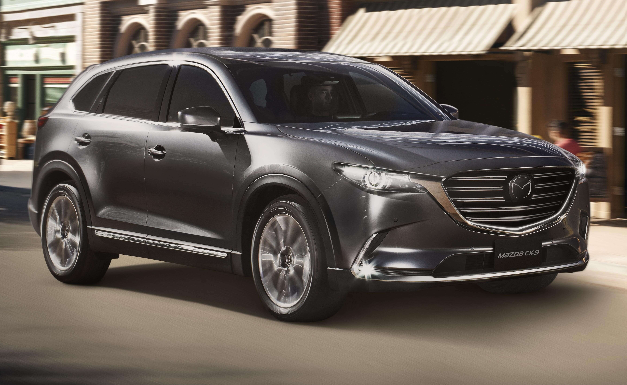
Comparing the Mazda CX-9 vs CX-5 looks straightforward until we actually start living with the numbers. Both wear the same Mazda badge, both have handsome styling, both lean toward the sportier side of the SUV world, and both feel more sophisticated inside than we might expect from mainstream crossovers.
Yet these two Mazdas serve very different purposes.
The Mazda CX-5 is essentially the nimble everyday choice. It is compact enough for city driving, spacious enough for a small family, and generally easier on fuel, tyres, parking spaces, and our wallet.
The Mazda CX-9, meanwhile, is the family hauler. It stretches considerably farther, adds a third row of seating, offers more overall passenger capacity, and feels like the vehicle we would choose when children, luggage, relatives, road trips, and weekend equipment all need to come along.
So which is better?
There isn't a universal winner. There is only the Mazda that makes more sense for the way we actually drive.
Let's dig deeper.
Content in this publication
- Mazda CX-9 vs CX-5 at a Glance
- What Is the Main Difference Between the Mazda CX-5 and CX-9?
- Mazda CX-9 vs CX-5 Size Comparison
- Mazda CX-9 vs CX-5 Interior Space
- Mazda CX-9 vs CX-5 Seating Capacity
- Mazda CX-9 vs CX-5 Cargo Space
- Mazda CX-9 vs CX-5 Engine Performance
- Mazda CX-9 vs CX-5 Turbo Performance
- Mazda CX-9 vs CX-5 Fuel Economy
- Mazda CX-9 vs CX-5 Ride Comfort
- Mazda CX-9 vs CX-5 Handling
- Mazda CX-9 vs CX-5 AWD Capability
- Mazda CX-9 vs CX-5 Safety
- Mazda CX-9 vs CX-5 Reliability
- Mazda CX-9 vs CX-5 Maintenance Costs
- Mazda CX-9 vs CX-5 Insurance Costs
- Mazda CX-9 vs CX-5 Technology
- Mazda CX-9 vs CX-5 Interior Quality
- Mazda CX-9 vs CX-5 for Families
- Mazda CX-9 vs CX-5 for City Driving
- Mazda CX-9 vs CX-5 for Highway Driving
- Mazda CX-9 vs CX-5 for Couples
- Mazda CX-9 vs CX-5 for Dogs and Pets
- Mazda CX-9 vs CX-5 Used Car Value
- Is a Used Mazda CX-9 Better Than a Newer CX-5?
- Important Note: The CX-9 Has Been Replaced in Some Markets
- Mazda CX-9 vs CX-5: Pros and Cons
- Who Should Buy the Mazda CX-5?
- Who Should Buy the Mazda CX-9?
- Mazda CX-9 vs CX-5: Which Is Better?
- Final Verdict
- Frequently Asked Questions
Mazda CX-9 vs CX-5 at a Glance
Before disappearing into the details, here's the simple version.
| Feature | Mazda CX-5 | Mazda CX-9 |
|---|---|---|
| Vehicle class | Compact SUV | Three-row midsize SUV |
| Seating | 5 | Typically 6 or 7 |
| Third row | No | Yes |
| City friendliness | Excellent | Moderate |
| Interior space | Good | Much greater |
| Cargo versatility | Good | Better overall |
| Fuel economy | Usually better | Usually higher consumption |
| Performance feel | Agile and light | Strong and refined |
| Family suitability | Small families | Larger families |
| Parking | Easier | Requires more space |
| Used purchase cost | Generally lower | Varies widely by year |
| Road-trip comfort | Very good | Excellent |
The easiest way to think about it is this: the CX-5 feels like a tailored jacket, while the CX-9 feels like a stylish travel suitcase. One is compact and easy to wear every day; the other carries far more when life gets complicated.
What Is the Main Difference Between the Mazda CX-5 and CX-9?
Size and seating are the defining differences.
The CX-5 is a conventional five-seat compact SUV. It works beautifully for singles, couples, commuters, and families that rarely need more than two rows.
The CX-9 moves into three-row territory. Depending on configuration and model year, it can carry six or seven occupants, making it a significantly more practical choice for bigger households.
That additional capacity affects almost everything else.
The CX-9 is:
- Longer
- Heavier
- Roomier
- More powerful in many comparable versions
- More difficult to park
- Generally more expensive to fuel
- Better suited to large families
The CX-5 is:
- More compact
- Easier to manoeuvre
- More economical in many versions
- Better suited to urban environments
- Usually less expensive to own
- Simpler for daily commuting
Neither formula is inherently superior.
We just need to decide whether we genuinely need the extra metal surrounding the CX-9.
Mazda CX-9 vs CX-5 Size Comparison
Park a CX-5 beside a CX-9 and the difference becomes obvious almost immediately.
The CX-5 feels compact without feeling tiny. It fits naturally into shopping-centre car parks, suburban garages, and narrow urban streets.
The CX-9 occupies noticeably more road.
That extra length is exactly what gives it room for a third row, but it also means we have more vehicle to manage every time we reverse into a tight parking bay.
Why the Smaller CX-5 Can Be an Advantage
Bigger isn't automatically better.
For someone driving mostly around town, the CX-5's smaller footprint can make daily life considerably easier.
We notice it when:
- Parallel parking
- Entering narrow garages
- Negotiating crowded car parks
- Driving through older city streets
- Making tight U-turns
- Washing the vehicle
- Finding a space at busy shopping centres
A CX-5 simply asks less of us.
When the CX-9's Extra Size Pays Off
Start adding passengers and bags, however, and the equation changes.
The CX-9 earns its larger dimensions when our typical journey sounds something like this:
Two adults. Three children. Grandmother coming along. A stroller in the back. Sports bags. Groceries. Maybe luggage.
At that point, the CX-5 can suddenly feel like we're playing automotive Tetris.
The CX-9 breathes more easily.
Mazda CX-9 vs CX-5 Interior Space
Interior design has traditionally been one of Mazda's strongest cards.
Rather than filling cabins with random buttons, chrome strips, and visual noise, Mazda interiors usually favour clean layouts, restrained styling, and driver-focused ergonomics.
Both models benefit from that philosophy.
The difference is how much room surrounds it.
Front-Seat Space
For drivers and front passengers, both vehicles can feel surprisingly similar.
We get comfortable seating positions, a relatively premium dashboard presentation, and a cockpit that doesn't scream “budget family crossover.”
The CX-9 naturally creates a broader, airier impression because the entire vehicle is larger.
Still, if we're judging only the front seats, the CX-5 rarely feels inadequate.
Second-Row Space
The gap widens behind the front seats.
CX-5 rear passengers generally receive sufficient room for adults and children, but three adults across the second row can become cosy.
The CX-9 offers more family-friendly flexibility.
Some versions also use second-row captain's chairs, creating a more luxurious arrangement and easier access toward the third row.
Captain's Chairs or Bench Seat?
Captain's chairs are excellent if we regularly carry four or five people.
They provide:
- Better individual comfort
- Easier third-row access
- More shoulder space
- A premium lounge-like atmosphere
However, a second-row bench can make more sense when maximum seating capacity matters.
This is an important detail when shopping for a used CX-9 because different trims and model years may be configured differently.
Mazda CX-9 vs CX-5 Seating Capacity
Here lies the most obvious dividing line.
The CX-5 seats five people.
The CX-9 offers three rows and, depending on configuration, accommodates six or seven.
If we never use more than five seats, buying the CX-9 purely because it is bigger may be unnecessary.
But if we regularly need that third row, the CX-5 cannot compete.
Is the CX-9 Third Row Suitable for Adults?
Yes, but expectations matter.
Like many midsize three-row SUVs, the CX-9's rear-most seats are generally better suited to:
- Children
- Teenagers
- Smaller adults
- Shorter trips
Adults can use them, but nobody should expect limousine levels of legroom.
We can think of the third row more like an occasional guest room than the master bedroom.
It is incredibly useful when needed, but most adults probably won't volunteer to spend six hours back there.
Mazda CX-9 vs CX-5 Cargo Space
Cargo space is another area where raw measurements don't tell the entire story.
The CX-9 is the larger vehicle overall, but when all three rows are upright, some of its rear volume is naturally consumed by the third-row seats.
Fold those seats down and the vehicle becomes much more useful.
Fold both rear rows and we gain the kind of carrying space the CX-5 simply cannot match.
The CX-5, meanwhile, benefits from a straightforward two-row layout.
Which Is Better for Everyday Luggage?
For normal daily use—groceries, gym bags, backpacks, a couple of suitcases—the CX-5 is more than adequate for many households.
The CX-9 begins to justify itself when we regularly carry bulkier items such as:
- Large strollers
- Multiple suitcases
- Sports equipment
- Camping gear
- Children's bicycles
- Pet crates
- Large shopping loads
- Family holiday luggage
If our weekends frequently involve moving half the house, the CX-9 wins.
Mazda CX-9 vs CX-5 Engine Performance
Here's where the comparison becomes more interesting.
Mazda has long tried to make its SUVs feel more engaging than appliances on wheels.
Even the practical CX-9 has traditionally been tuned to deliver controlled body movement and responsive steering rather than simply floating down the road like a boat.
How Does the CX-5 Feel to Drive?
The CX-5's smaller dimensions are immediately noticeable.
It changes direction eagerly, feels manageable on narrow roads, and often behaves more like a tall hatchback than a lumbering SUV.
Around corners, we can place it confidently.
Around town, it rarely feels oversized.
That sense of agility is one of its strongest qualities.
How Does the CX-9 Feel to Drive?
The CX-9 feels more substantial.
Physics still exists, so a larger three-row SUV cannot disguise all of its weight. Yet Mazda did a remarkably good job of making the CX-9 feel controlled and responsive relative to its size.
It feels planted rather than clumsy.
On highways, that size can actually become an advantage. The CX-9 settles into longer journeys with the relaxed character we expect from a more substantial touring vehicle.
Mazda CX-9 vs CX-5 Turbo Performance
Engine availability varies significantly depending on market, model year, and trim, so we should always check the specifications for the exact vehicle we're considering.
Where turbocharged engines are involved, both models can deliver strong everyday acceleration.
The major difference is how they use that performance.
You may be interested in reading Mazda CX-9 vs Honda Pilot: Which Three-Row SUV Is Better?
In the CX-5, turbo power can feel playful.
In the CX-9, it feels purposeful.
We press the accelerator in the CX-5 and think, “This is surprisingly quick.”
We press it in the CX-9 loaded with passengers and think, “Good—this thing can actually move everyone without struggling.”
Mazda CX-9 vs CX-5 Fuel Economy
The CX-5 generally has the advantage here.
That isn't surprising. It is smaller and lighter, and in many configurations it uses less fuel than the larger CX-9.
The precise figures depend heavily on:
- Engine
- Model year
- Drivetrain
- Wheel size
- Driving environment
- Traffic
- Driving style
- Vehicle load
Rather than obsessing over one laboratory number, we should think about our actual driving routine.
City Drivers Should Think Carefully
If we're commuting through heavy traffic five days per week, the difference between a compact SUV and a larger three-row crossover can accumulate quickly.
More weight requires more energy to move.
Over thousands of miles or kilometres, small differences in consumption become real money.
Highway Drivers May Mind Less
Owners who spend most of their time cruising at consistent highway speeds may find the fuel-cost gap easier to tolerate.
And if the CX-9 replaces the need for a second vehicle during family trips, its extra fuel usage might feel entirely reasonable.
Mazda CX-9 vs CX-5 Ride Comfort
The CX-5 leans toward the sporty side of compact SUV tuning.
We feel connected to the road, but depending on tyre size and road quality, sharper bumps can occasionally make themselves known.
The CX-9 generally feels more relaxed.
Its longer wheelbase and greater mass naturally help it settle into highway cruising.
Which Is Better for Long Road Trips?
For two to four people, the CX-5 can be an excellent road-trip vehicle.
For five or more people, the CX-9 makes far more sense.
Space becomes comfort after several hours.
A few centimetres of extra breathing room may sound insignificant in the showroom. Four hours into a family holiday, they can feel priceless.
Mazda CX-9 vs CX-5 Handling
If driving enjoyment sits near the top of our priorities, the CX-5 is difficult to ignore.
Its smaller body naturally gives it an advantage when roads become twisty.
It feels:
- Lighter
- More immediate
- Easier to position
- More playful
- Less intimidating in tight spaces
The CX-9 handles impressively for a three-row SUV, but that qualifier matters.
The laws of physics don't negotiate.
A large family crossover carrying several passengers simply cannot behave exactly like a smaller SUV.
Mazda CX-9 vs CX-5 AWD Capability
All-wheel-drive availability differs between years and markets, but both nameplates have been offered with Mazda's i-ACTIV AWD technology.
AWD can improve traction when driving through:
- Heavy rain
- Loose surfaces
- Snow
- Gravel roads
- Slippery inclines
But AWD does not transform either Mazda into a dedicated off-road vehicle.
These are road-focused SUVs first.
For occasional dirt tracks, ski trips, wet roads, and unpredictable weather, AWD can provide useful extra confidence.
For serious rock crawling?
We would look elsewhere.
Mazda CX-9 vs CX-5 Safety
Both vehicles have been positioned as family-oriented SUVs, so safety equipment is an important part of the comparison.
Depending on year and trim, available driver-assistance technology may include features such as:
- Automatic emergency braking
- Blind-spot monitoring
- Rear cross-traffic alert
- Lane-departure warning
- Lane-keeping assistance
- Adaptive cruise control
- Parking sensors
- Surround-view cameras
The newer the vehicle, the more important it becomes to compare actual trim specifications rather than simply assuming every example carries identical technology.
A Used CX-9 Deserves Extra Inspection
Because the CX-9 is now primarily a used-vehicle purchase in some markets, condition matters just as much as equipment.
We should inspect:
- Service history
- Tyre condition
- Brake wear
- Suspension noises
- Fluid leaks
- Warning lights
- Electronics
- Air-conditioning operation
- Previous accident repairs
A beautifully equipped vehicle with neglected maintenance is still a neglected vehicle.
Mazda CX-9 vs CX-5 Reliability
Reliability conversations become complicated because we're comparing vehicles that may come from different production years, engines, and ownership histories.
A properly maintained older CX-9 could easily be a better purchase than an abused newer CX-5.
Likewise, a low-mileage CX-5 with complete service records may be less risky than a bargain-priced CX-9 that has spent years towing, carrying heavy loads, and skipping maintenance.
Service History Matters More Than the Badge
When buying used, we would prioritise:
- Documented maintenance
- Independent pre-purchase inspection
- Consistent oil-change history
- Evidence of proper repairs
- Condition over cosmetic presentation
- Correct tyres and even tyre wear
- Absence of suspicious warning lights
Shiny paint photographs wonderfully.
Maintenance invoices tell us much more.
Mazda CX-9 vs CX-5 Maintenance Costs
The CX-5 will generally be easier on the budget simply because it is a smaller vehicle.
Larger SUVs tend to bring larger consumables.
The CX-9 may require us to spend more on:
- Tyres
- Fuel
- Brakes
- Suspension components
- Registration in some regions
- Insurance in certain markets
These differences might not be dramatic individually, but ownership costs arrive like dripping water: slowly, repeatedly, and eventually enough to fill a bucket.
If we don't need the CX-9's size, paying to maintain that unused capability makes little sense.
Mazda CX-9 vs CX-5 Insurance Costs
Insurance pricing depends far more on our location and personal profile than on a simple CX-5-versus-CX-9 rule.
Insurers may consider:
- Driver age
- Driving history
- Postal code
- Vehicle value
- Repair costs
- Theft statistics
- Engine output
- Annual mileage
- Coverage level
For that reason, we should request quotes for the exact vehicles we're considering.
Never assume the smaller Mazda automatically costs less to insure.
Sometimes it will.
Sometimes the quote surprises us.
Mazda CX-9 vs CX-5 Technology
Technology changes rapidly across model years.
A newer CX-5 may therefore offer a fresher multimedia experience than an older CX-9 even though the CX-9 originally occupied the more expensive position in Mazda's range.
That creates an interesting used-car dilemma.
Would we rather have:
- A newer, smaller vehicle with fresher technology?
Or:
- An older, larger, more luxurious vehicle with more space?
There is no wrong answer.
But there is a wrong assumption: that bigger automatically means technologically newer.
Mazda CX-9 vs CX-5 Interior Quality
This category is surprisingly close.
Mazda has built much of its modern identity around making mainstream vehicles feel slightly more premium than their prices suggest.
Soft-touch surfaces, clean dashboard lines, tasteful trim materials, and restrained styling help both cabins age gracefully.
The CX-9 generally creates a richer impression because it was positioned higher in the lineup.
Upper trims can feel genuinely upscale.
Yet a well-equipped CX-5 is hardly basic.
CX-9 wins overall.
But the CX-5 may deliver the better premium-to-price ratio.
That's an important distinction.
The CX-9 gives us more.
The CX-5 can give us enough.
Mazda CX-9 vs CX-5 for Families
This is where the CX-9 starts flexing.
For a couple with one child, the CX-5 is probably all the SUV most households need.
Two children?
Still perfectly reasonable.
You may be interested in readingMazda CX-9 vs Honda Pilot: Which Three-Row SUV Is Better?You may be interested in reading
Mazda CX-9 vs CX-8: Which Three-Row Mazda SUV Is Better?Three children?
Now we need to think carefully about child-seat width, luggage, pushchairs, and how often friends or grandparents travel with us.
Once our passenger count begins creeping upward, the CX-9 becomes dramatically more appealing.
Choose the CX-5 for a Small Family If:
- We normally carry four people or fewer
- We live in a dense urban area
- We value fuel efficiency
- We rarely need a third row
- Parking space is limited
- We want lower operating costs
Choose the CX-9 for a Larger Family If:
- We regularly transport five or more people
- We need three rows
- We carry substantial luggage
- Road trips are frequent
- Rear-seat flexibility matters
- We don't mind higher running costs
Mazda CX-9 vs CX-5 for City Driving
The CX-5 wins convincingly.
Its dimensions are simply easier to deal with.
Imagine squeezing through a busy underground car park after work.
Concrete pillar on one side.
SUV on the other.
Shopping trolley drifting through the aisle.
Someone waiting impatiently behind us.
Which Mazda would we rather manoeuvre?
Probably the CX-5.
The CX-9 isn't impossible to drive in a city, of course. Cameras and parking sensors help enormously.
But the CX-5 requires less mental bandwidth.
Mazda CX-9 vs CX-5 for Highway Driving
Move out onto an open highway and the CX-9 begins fighting back.
The larger Mazda feels naturally suited to long-distance touring.
It provides:
- Greater passenger flexibility
- More overall cabin space
- Strong cruising ability
- Better suitability for large families
- Greater luggage versatility
The CX-5 remains comfortable and capable, but its smaller dimensions become more noticeable when every seat is occupied.
Mazda CX-9 vs CX-5 for Couples
This is an easy one.
Unless we regularly transport family members, large dogs, substantial equipment, or mountains of luggage, the CX-5 is probably the smarter purchase.
Buying a CX-9 for two people can be a little like renting a four-bedroom house because friends might visit twice a year.
Nice?
Absolutely.
Necessary?
Probably not.
Mazda CX-9 vs CX-5 for Dogs and Pets
Pet owners may appreciate the extra flexibility of the CX-9.
Large breeds, crates, travel beds, and luggage can consume cargo space rapidly.
A CX-5 can comfortably accommodate many dogs, but the CX-9 provides more options when pets travel alongside multiple passengers.
For owners of one medium-sized dog, the CX-5 should generally suffice.
Two large dogs plus children?
The CX-9 starts looking much more attractive.
Mazda CX-9 vs CX-5 Used Car Value
The used market creates perhaps the most fascinating part of this comparison.
Because CX-9s have depreciated from a higher original price point, shoppers can sometimes find used examples with impressive equipment for relatively attainable money.
That can make the CX-9 look like a bargain.
But purchase price is only the opening chapter.
We also need to consider:
- Fuel
- Tyres
- Insurance
- Servicing
- Age-related repairs
- Depreciation
- Registration
- Financing
A cheaper used CX-9 isn't necessarily cheaper to own than a newer CX-5.
Is a Used Mazda CX-9 Better Than a Newer CX-5?
Sometimes, yes.
If we value space, seven-seat practicality, and higher-end equipment, a well-maintained CX-9 may provide far more vehicle for similar money.
But if our priorities are warranty coverage, newer technology, efficiency, and lower running costs, the newer CX-5 will often make more sense.
This is where we need to stop comparing badges and start comparing individual vehicles.
A five-year-old top-trim CX-9 and a nearly new mid-trim CX-5 may cost similar money while delivering radically different ownership experiences.
Important Note: The CX-9 Has Been Replaced in Some Markets
Anyone researching the Mazda CX-9 vs CX-5 should know that the CX-9 is no longer a current new model in the United States.
Mazda discontinued the U.S.-market CX-9 after the 2023 model year, with the newer CX-90 taking its place in Mazda's larger SUV strategy.
That doesn't make the CX-9 irrelevant.
Quite the opposite.
It means the model is now particularly interesting to used-car buyers searching for a premium-feeling three-row Mazda without paying the price of Mazda's latest large SUVs.
Mazda CX-9 vs CX-5: Pros and Cons
Mazda CX-5 Pros
- Easier to park
- Better suited to city driving
- Generally more economical
- Lower likely running costs
- Enjoyable handling
- Premium-feeling cabin
- Ideal size for couples and smaller families
Mazda CX-5 Cons
- No third row
- Less overall cargo flexibility
- Can feel cramped with five adults
- Less suitable for very large families
Mazda CX-9 Pros
- Three-row seating
- Excellent family practicality
- More overall space
- Strong highway comfort
- Premium cabin atmosphere
- Good driving dynamics for its size
- Excellent road-trip vehicle
Mazda CX-9 Cons
- Higher fuel consumption
- Harder to park
- More expensive consumables
- Third row isn't enormous
- Older examples may require more maintenance
- Discontinued in some major markets
Who Should Buy the Mazda CX-5?
We would recommend the CX-5 to buyers who want an SUV without feeling like they're driving something unnecessarily large.
It makes the most sense for:
- Singles
- Couples
- Small families
- Commuters
- Urban drivers
- Buyers prioritising economy
- Drivers who enjoy responsive handling
Its great strength is balance.
Nothing feels excessively large, thirsty, complicated, or cumbersome.
It simply fits easily into everyday life.
Who Should Buy the Mazda CX-9?
The CX-9 is the more convincing option when our lifestyle demands space.
We would favour it for:
- Families with three or more children
- Drivers regularly carrying grandparents or friends
- Frequent road trippers
- Owners transporting large amounts of luggage
- Buyers who need three rows
- People wanting a more substantial SUV
- Used buyers seeking strong equipment levels
The extra size has a purpose.
If we're going to use it, it's worth having.
Mazda CX-9 vs CX-5: Which Is Better?
For most people who don't need seven-seat capability, we would choose the Mazda CX-5.
It's easier to live with, easier to park, generally cheaper to run, and still delivers the attractive styling and engaging road manners that draw buyers toward Mazda in the first place.
But families needing three rows should choose the CX-9 without trying to squeeze their lifestyle into the smaller vehicle.
That's the heart of this comparison.
The CX-5 wins on efficiency and simplicity.
The CX-9 wins on capacity and versatility.
Trying to declare one universally superior misses the point.
Final Verdict
The Mazda CX-9 vs CX-5 decision isn't really about which SUV has the longest specification sheet.
It's about how much vehicle our daily life genuinely demands.
The CX-5 is the agile all-rounder. It slips neatly into city life, carries a small family comfortably, offers useful cargo space, and keeps ownership relatively manageable.
The CX-9 takes the same Mazda philosophy and stretches it—literally.
More seats. More space. More road-trip flexibility. More family usefulness.
But also more fuel, more tyre, more parking space, and more vehicle to maintain.
If our normal journey involves one to four people, the CX-5 is usually the sweet spot.
If we regularly hear someone shouting, “Where is everyone going to sit?”, the CX-9 probably answered the question before we finished asking it.
And that's really the difference.
The CX-5 is the Mazda we choose because we want an SUV.
The CX-9 is the Mazda we choose because we need more SUV.
Frequently Asked Questions
1. Is the Mazda CX-9 bigger than the CX-5?
Yes. The Mazda CX-9 is substantially larger than the CX-5 and belongs to a larger three-row SUV category. Its additional length and cabin space allow it to accommodate more passengers and provide greater overall versatility.
2. Does the Mazda CX-5 have seven seats?
No. The Mazda CX-5 is a five-seat SUV with two rows. Buyers requiring six or seven seats should consider a CX-9 or another three-row model.
3. Which is more fuel-efficient, the CX-5 or CX-9?
The CX-5 is generally more fuel-efficient because it is smaller and lighter. Actual consumption varies by engine, drivetrain, model year, traffic conditions, and driving style.
4. Is the Mazda CX-9 better for families than the CX-5?
For larger families, yes. Its three-row seating and greater overall interior capacity make the CX-9 better suited to households that regularly carry five or more occupants. Smaller families may find the CX-5 easier and cheaper to own.
5. Should I buy a CX-9 or CX-5?
Choose the CX-5 if you prioritise easy parking, lower running costs, efficiency, and five-seat practicality. Choose the CX-9 if you genuinely need three rows, extra passenger space, and greater cargo flexibility.
You may be interested in readingMazda CX-9 vs Honda Pilot: Which Three-Row SUV Is Better?You may be interested in reading
Mazda CX-9 vs CX-8: Which Three-Row Mazda SUV Is Better?You may be interested in reading
Mazda CX-9 vs RAV4: Which SUV Is the Better Choice?If you want to know other articles similar to Mazda CX-9 vs CX-5: Which Mazda SUV Is Better? you can visit the category Models.
Toyota Hilux Generations: Complete History, Evolution, and Key Differences
BMW M2 vs M340i: Which BMW Performance Car Should We Buy?
BMW M2 vs Porsche 911: Which Sports Car Makes More Sense?
BMW M2 vs Mustang GT: Which Performance Coupe Should We Buy?
BMW M2 vs Porsche Cayman: Which Sports Car Is Better?
BMW M2 vs Supra: Which Sports Car Deserves Your Money?
Leave a Reply
More content of your interest