

Mazda CX-9 vs CX-8: Which Three-Row Mazda SUV Is Better?

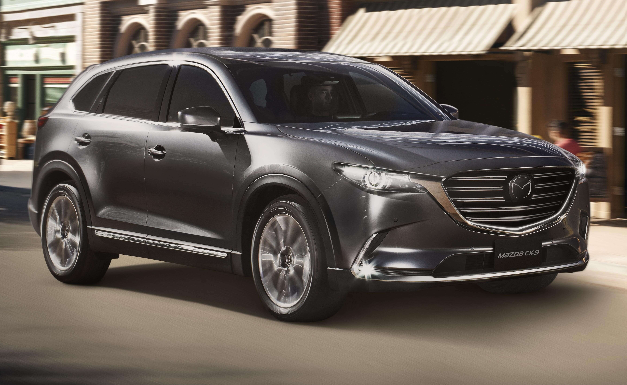
Choosing between the Mazda CX-9 vs CX-8 looks straightforward until we actually start comparing them. Both are stylish three-row SUVs. Both deliver the polished cabin quality Mazda became known for. Both can carry a family without making us feel like we have traded driving enjoyment for practicality.
Yet they are not simply two sizes of the same recipe.
The Mazda CX-9 is the bigger, wider and more powerful SUV, particularly attractive if we regularly carry adults, need extra cargo room or simply enjoy the effortless punch of a turbocharged petrol engine. The Mazda CX-8 is narrower, easier to manoeuvre and potentially much more economical, especially when equipped with its diesel engine.
Think of them as two different interpretations of the family SUV. The CX-9 stretches its legs and says, "Bring everyone." The CX-8 replies, "Sure—but let's not make parking harder than it needs to be."
So which one deserves a place in our driveway?
Let's break it down.
Content in this publication
- Mazda CX-9 vs CX-8 at a Glance
- What Is the Main Difference Between Mazda CX-8 and CX-9?
- Mazda CX-9 vs CX-8 Dimensions
- Interior Space and Passenger Comfort
- Mazda CX-8 vs CX-9 Third-Row Space
- Boot Space: CX-8 vs CX-9
- Mazda CX-9 vs CX-8 Engine Options
- Fuel Economy: Mazda CX-8 vs CX-9
- Driving Experience
- Ride Comfort and Refinement
- Mazda CX-9 vs CX-8 Towing Capacity
- CX-8 vs CX-9 AWD Capability
- Technology and Infotainment
- Safety
- Reliability and Used-Car Considerations
- Running Costs
- Family Practicality
- Mazda CX-8 vs CX-9 for City Driving
- Mazda CX-8 vs CX-9 for Road Trips
- Are the Mazda CX-8 and CX-9 Still Available New?
- Mazda CX-9 vs CX-8: Pros and Cons
- Which Is Better: Mazda CX-8 or CX-9?
- Final Verdict
- Frequently Asked Questions
Mazda CX-9 vs CX-8 at a Glance
Before diving into the details, here is the simplest way to separate them.
| Feature | Mazda CX-8 | Mazda CX-9 |
|---|---|---|
| Seating | Up to 7 | Up to 7 |
| Overall character | Slimmer, efficient family SUV | Larger, more powerful family SUV |
| Typical petrol engine | 2.5L naturally aspirated | 2.5L turbocharged |
| Diesel option | Yes, depending on model/year | No |
| Drivetrain | FWD/AWD depending on version | FWD/AWD depending on version |
| Length | Around 4.9 m | Around 5.1 m |
| Third-row space | Good for occasional use | Generally roomier |
| Cargo room | Good | Better |
| Parking | Easier | Requires more space |
| Best for | Efficiency and urban practicality | Space and performance |
Specifications vary slightly by year and trim, so buyers shopping used examples should always check the exact vehicle rather than assuming every CX-8 or CX-9 is identical.
What Is the Main Difference Between Mazda CX-8 and CX-9?
The biggest difference is surprisingly easy to understand: the CX-8 gives us much of the CX-9's practicality in a narrower body.
Mazda originally positioned the CX-8 between the CX-5 and CX-9. It was designed as a three-row alternative for people who wanted seven seats without necessarily wanting the physical bulk of Mazda's largest SUV. Mazda itself described it as shorter and narrower than the CX-9 when introducing the vehicle in Australia.
The CX-9 takes the opposite approach. It embraces its size.
It feels broader, more substantial and better suited to families regularly using all three rows. Its turbocharged engine also gives it considerably more muscle when accelerating, overtaking or carrying a full load.
CX-8 Is the More Compact Choice
At roughly 4.9 metres long, the CX-8 is hardly small. Yet next to the CX-9, it feels notably easier to place on narrow streets and inside tighter parking spaces.
That distinction matters more than a specification table suggests.
Anyone who has tried squeezing a seven-seat SUV between concrete pillars in an underground car park knows that a few centimetres can suddenly feel like several metres.
CX-9 Feels Like the True Full-Size Option
The CX-9 stretches beyond five metres in length and has a noticeably wider body.
That additional footprint brings advantages:
- More shoulder room
- A broader-feeling cabin
- More useful cargo capacity
- A generally more accommodating third row
- Greater road presence
If space is our number-one priority, the CX-9 starts with an advantage.
Mazda CX-9 vs CX-8 Dimensions
Exterior size is one of the clearest differences between these SUVs.
Mazda has previously quoted approximately 4,900 mm in length for the CX-8 and 5,075 mm for the CX-9 in Australian family-SUV information.
That roughly 175 mm difference does not sound dramatic until we park them.
The CX-8 feels like a long midsize SUV. The CX-9 behaves more like a genuine large SUV.
Why Width Matters More Than We Think
Length gets most of the attention, but width can have a greater influence on everyday usability.
The narrower CX-8 is easier to navigate through:
- Shopping-centre car parks
- Older garages
- Narrow suburban streets
- Tight driveways
- Congested school pickup areas
The CX-9's extra width helps interior comfort, particularly when passengers are sitting beside one another, but it also makes us more aware of the vehicle's edges.
Which One Is Easier to Drive in the City?
For regular urban driving, we would choose the CX-8.
It gives us three-row flexibility without constantly reminding us that we are piloting a large family SUV.
The CX-9 is certainly manageable, especially with parking sensors and cameras on suitably equipped versions, but physics remains physics. Bigger cars need bigger spaces.
Interior Space and Passenger Comfort
This is where the comparison becomes interesting.
Because the vehicles share a similar family-oriented philosophy, the CX-8 does not feel dramatically inferior when we first climb inside. Both deliver attractive dashboards, logical controls and an interior atmosphere that feels more sophisticated than the average mainstream SUV.
But spend time moving through all three rows and the CX-9's larger dimensions begin paying dividends.
Front-Row Comfort
Both models are strong performers up front.
Mazda generally focuses heavily on driving position, steering-wheel placement and supportive front seats, and that philosophy is obvious here.
The CX-8 feels slightly more intimate.
The CX-9 feels broader and airier.
Neither gives us the sensation that we bought a seven-seater simply because practicality forced our hand.
Second-Row Space
Most families will find both vehicles comfortable in the second row.
There is useful legroom, decent headroom and enough adjustment to balance second- and third-row passenger space.
Higher specifications may add luxury features such as heated seats, premium upholstery or alternative seating arrangements depending on market and model year.
For two adults or a pair of growing teenagers, either SUV works well.
Put three passengers across the second row regularly, however, and the CX-9's broader cabin becomes more attractive.
Mazda CX-8 vs CX-9 Third-Row Space
This could easily decide the entire comparison.
Both SUVs have been offered with three rows, but the third row does not serve exactly the same purpose.
CX-8 Third Row: Useful but Best for Occasional Duty
The CX-8's third row works particularly well for:
- Children
- Teenagers on shorter journeys
- Occasional extra passengers
- School runs
- Family visits
Adults can use it, but we would not choose the CX-8 specifically to transport seven adults several hours every weekend.
It is better viewed as a spacious five-seater that can become a seven-seater whenever necessary.
CX-9 Third Row: Better for Frequent Seven-Seat Use
The CX-9 is the more convincing choice if row three will regularly be occupied.
There is simply more vehicle around the passengers.
That does not transform the rear into business class, of course. Most three-row SUVs still ask third-row passengers to make some compromises.
But if our teenager keeps drawing the short straw and being sent to the back, the CX-9 is likely to generate fewer complaints.
Boot Space: CX-8 vs CX-9
Seven seats are wonderful until we realise seven people usually bring seven people's belongings.
Mazda previously listed approximately 209 litres of luggage capacity for the CX-8 and 230 litres for the CX-9 with the third rows in use, while capacity with row three folded was quoted at roughly 742 litres and 810 litres respectively. Measurement methods and specifications can vary, so those figures should be treated as useful comparative references rather than universal numbers for every version.
The important point is simple:
The CX-9 carries more.
With All Seven Seats Raised
Neither vehicle turns into a cargo van with all rows occupied.
There is enough space for smaller bags, shopping or carefully arranged luggage, but a seven-person airport run can require strategic packing.
The CX-9's additional room helps.
With the Third Row Folded
Fold the rearmost seats and both vehicles become significantly more practical.
The CX-8 suddenly works beautifully for a family of four or five taking luggage on holiday.
The CX-9 feels larger again, making it especially appealing for:
- Prams
- Sports equipment
- Camping gear
- Large suitcases
- Family road trips
If cargo space frequently matters, the CX-9 wins.
Mazda CX-9 vs CX-8 Engine Options
Here we find perhaps the greatest philosophical difference between them.
The CX-9 became known for its 2.5-litre turbocharged petrol engine, while the CX-8 offered a broader mix in Australia over its life, including petrol and diesel options. Mazda's diesel CX-8 used its 2.2-litre Skyactiv-D engine, and Mazda originally promoted it for strong torque and fuel efficiency.
You may be interested in reading Mazda CX-9 vs RAV4: Which SUV Is the Better Choice?
That immediately gives these SUVs different personalities.
CX-9 Turbo Petrol Performance
The CX-9's turbo petrol engine is the choice for drivers who appreciate easy acceleration.
Rather than needing to be worked hard, it produces strong torque low in the rev range.
Press the accelerator and the SUV moves with more enthusiasm than something this large has any right to.
It is particularly satisfying when:
- Merging onto a motorway
- Overtaking
- Climbing hills
- Carrying several passengers
- Towing
The CX-9 feels relaxed because the engine rarely seems intimidated by the vehicle's weight.
CX-8 Petrol Engine
Petrol CX-8 versions are generally calmer.
The naturally aspirated 2.5-litre engine provides adequate everyday performance but does not offer the same muscular surge as the turbo CX-9.
For commuting, school runs and normal suburban driving, that may not matter at all.
For drivers who enjoy strong acceleration, the CX-9 wins comfortably.
CX-8 Diesel Engine
The diesel is where the CX-8 develops its own identity.
Its substantial torque suits the SUV well, particularly on motorways and longer journeys.
It can also deliver significantly better fuel economy than a turbo-petrol CX-9.
For high-mileage drivers, that difference becomes difficult to ignore.
Fuel Economy: Mazda CX-8 vs CX-9
If we drive tens of thousands of kilometres every year, the CX-8 diesel is the obvious model to investigate.
Mazda's original Australian CX-8 diesel launch quoted combined-cycle fuel consumption as low as 5.7 L/100 km for the Sport FWD diesel and 6.0 L/100 km for specified AWD versions, although later specifications and testing standards can differ.
Real-world consumption naturally depends on traffic, tyres, load, driving style and model year.
The CX-9's turbo petrol engine is thirstier.
That is not surprising. We are feeding a large, powerful petrol SUV.
Which Is Better for Long-Distance Driving?
A diesel CX-8 makes an extremely convincing highway companion.
It combines:
- Strong low-speed torque
- Low cruising effort
- Good fuel efficiency
- Seven-seat flexibility
- Comfortable road manners
The CX-9 remains excellent for long trips but prioritises power and space rather than minimum fuel consumption.
If our journeys involve hundreds of kilometres of open road, the CX-8 diesel has a clear economic advantage.
Driving Experience
Mazda's ability to make ordinary family vehicles enjoyable to drive has long been part of its appeal.
Neither SUV behaves like a sports car—and we should be suspicious of anyone claiming otherwise—but both feel more connected than many large family SUVs.
CX-8 Feels Lighter on Its Feet
The CX-8's slimmer dimensions make it feel easier to thread through bends and urban traffic.
Steering is predictable, body control is generally tidy, and the car rarely feels as cumbersome as its seating capacity suggests.
It shrinks around us surprisingly well.
CX-9 Feels More Powerful and Planted
The CX-9 feels heavier because it is larger, yet its turbo engine helps disguise that weight.
It can be remarkably satisfying on flowing roads.
Instead of feeling like a bus wearing stylish clothes, it feels like a proper passenger vehicle that happens to have three rows.
Which Is More Fun to Drive?
Our answer depends on what we call fun.
For agility and ease: CX-8.
For acceleration and effortless power: CX-9.
Ride Comfort and Refinement
Both SUVs lean toward comfort rather than aggressive sportiness.
The CX-9's longer, more substantial body gives it a mature highway character. It feels composed on long journeys and isolates passengers effectively from the outside world.
The CX-8 is also refined but can feel slightly more compact and responsive.
Wheel size matters. Large alloy wheels may look fantastic while providing less tyre sidewall to absorb broken surfaces. Buyers prioritising comfort should not automatically assume the biggest wheel package is the best one.
Mazda CX-9 vs CX-8 Towing Capacity
Towing capability varies by engine, drivetrain and model year, so this is an area where buyers absolutely should check the compliance plate and owner's documentation for the particular vehicle.
Certain Australian versions of both models can reach roughly 2,000 kg braked towing capacity, while some CX-8 configurations may have lower limits.
Capacity alone also does not tell the whole story.
We must consider:
- Towball download
- Gross vehicle mass
- Gross combination mass
- Payload
- Passenger weight
- Luggage weight
A vehicle capable of towing a particular trailer on paper may not legally do so while simultaneously carrying seven adults and a boot full of luggage.
Which One Would We Choose for Towing?
For occasional moderate towing, either may work depending on specification.
For drivers who also want strong petrol performance, we prefer the CX-9.
For frequent highway kilometres where fuel economy matters, a diesel CX-8 deserves serious consideration.
CX-8 vs CX-9 AWD Capability
Both have been available with all-wheel drive in relevant configurations.
Neither is intended to replace a heavy-duty four-wheel-drive vehicle.
Their AWD systems are better understood as tools for improving traction and confidence on:
- Wet roads
- Gravel
- Snow
- Slippery inclines
- Light unsealed-road driving
The CX-9's available AWD adds confidence to an already stable large SUV. Mazda has specifically promoted the CX-9 AWD for slippery and snowy driving conditions.
The CX-8 AWD offers similar reassurance in a slightly more manageable package.
For serious off-road expeditions, though, we would look elsewhere.
Technology and Infotainment
Technology depends heavily on year and specification.
That matters when shopping used.
The later CX-8 received particularly useful updates. For the 2023 update, Mazda fitted a 10.25-inch Mazda Connect display along with wireless Apple CarPlay and Android Auto across the Australian range.
Earlier examples of both vehicles can have older multimedia systems.
That creates an unusual used-car buying situation: a later, high-spec CX-8 may actually feel more modern inside than an older CX-9 costing similar money.
Don't Shop by Badge Alone
When comparing used vehicles, examine the actual equipment.
A newer CX-8 may offer features missing from an older CX-9, including depending on trim:
- Improved infotainment
- Smartphone connectivity
- 360-degree camera systems
- Upgraded driver assistance
- Premium audio
- Heated and ventilated seating
Model grade can matter almost as much as model name.
Safety
Both SUVs were designed around family use and Mazda equipped them with a strong range of active and passive safety systems for their time.
Depending on year and trim, equipment may include technologies such as:
- Autonomous emergency braking
- Blind-spot monitoring
- Rear cross-traffic alert
- Lane-departure warning
- Lane-keeping assistance
- Adaptive cruise control
- Parking sensors
- Surround-view cameras
When buying used, we should verify the exact specification rather than relying on a generic advertisement claiming "full safety package."
You may be interested in readingMazda CX-9 vs RAV4: Which SUV Is the Better Choice?You may be interested in reading
Mazda CX-9 vs Subaru Forester: Which SUV Makes More Sense?A later vehicle can contain meaningful safety improvements over an early version of the same model.
Reliability and Used-Car Considerations
Neither SUV should be purchased solely because Mazda has a generally positive reputation.
A used vehicle's maintenance history matters enormously.
What to Check on a Used CX-8
Pay particular attention to:
- Complete service records
- Diesel servicing history
- Diesel particulate filter operation where applicable
- Oil level and condition
- Warning lights
- Transmission behaviour
- Suspension noises
- Uneven tyre wear
- Electronics and cameras
A diesel can be excellent for long-distance driving but may be less suitable for a life consisting almost entirely of short, low-speed trips.
What to Check on a Used CX-9
Inspect:
- Cooling-system condition
- Service history
- Turbocharged-engine performance
- Oil or coolant leaks
- Transmission shifts
- AWD operation if equipped
- Suspension wear
- Electrical equipment
- Tyres and brakes
The CX-9 is a large, relatively powerful SUV, meaning consumables can naturally cost more than they would on a smaller Mazda.
A pristine example with documented servicing is worth paying more for than a suspicious bargain.
Running Costs
This category favours the CX-8 in several scenarios.
Fuel is the obvious reason, particularly with the diesel.
The CX-8 may also use less expensive tyres depending on trim and can potentially be easier on fuel during everyday driving.
The CX-9 counters with a simpler decision for buyers who prefer petrol and do not want a diesel powertrain.
Fuel Cost vs Maintenance Priorities
Buying the diesel purely because its fuel-consumption number looks impressive is not always wise.
We should think about how we actually drive.
If our weekly routine involves long motorway journeys, the diesel CX-8 makes sense.
If we travel only short distances around town, a petrol model may be the more natural choice even if it consumes more fuel.
The cheapest vehicle on paper is not always the cheapest vehicle for our lifestyle.
Family Practicality
This is the heart of the Mazda CX-9 vs CX-8 comparison.
For families, both vehicles solve similar problems in different ways.
The CX-8 says:
"We need seven seats sometimes, but we still live in the real world of narrow car parks."
The CX-9 says:
"We bought a seven-seat SUV because we actually intend to use all seven seats."
That distinction should guide our decision.
Choose the CX-8 If We Have a Smaller Family
For families with two or three children who only occasionally need the third row, the CX-8 is beautifully balanced.
We gain flexibility without carrying the CX-9's extra bulk everywhere we go.
Choose the CX-9 If Every Seat Matters
If grandparents, friends, teenagers or additional children regularly occupy the back, the CX-9 makes more sense.
Those few extra centimetres suddenly become precious real estate.
Mazda CX-8 vs CX-9 for City Driving
The CX-8 wins.
Not dramatically—but clearly.
Its narrower body makes everyday manoeuvring easier, and we are likely to appreciate that advantage every time we enter a tight car park.
Visibility and assistance systems can make both manageable, yet no camera system can physically shrink a car.
Urban families should give the CX-8 serious consideration.
Mazda CX-8 vs CX-9 for Road Trips
This one is much closer.
The CX-8 diesel offers brilliant range and efficiency.
The CX-9 offers superior space and stronger acceleration.
If four people are travelling with luggage, we might choose the CX-8 diesel.
If six or seven people are travelling with luggage, give us the CX-9.
Simple.
Are the Mazda CX-8 and CX-9 Still Available New?
In Australia, neither belongs to Mazda's current new-car range.
Mazda announced that the CX-9 would leave the Australian line-up as its newer large-SUV generation arrived, while Australia-bound CX-8 production ceased at the end of 2023 and remaining stock continued into early 2024.
That means this comparison is now especially relevant to used-car buyers.
Mazda's current Australian SUV range has shifted toward models such as the CX-80 and CX-90, which form part of its newer Large Architecture family.
Does That Make a Used CX-8 or CX-9 a Bad Buy?
Not at all.
Discontinued does not mean obsolete.
In fact, depreciation can make these vehicles particularly interesting if we want a refined three-row Mazda without paying new-generation prices.
The trick is buying on condition, history and suitability—not merely chasing the cheapest listing.
Mazda CX-9 vs CX-8: Pros and Cons
Mazda CX-8 Pros
- Easier to manoeuvre
- Narrower exterior
- Available diesel efficiency
- Seven-seat flexibility
- Refined interior
- Good long-distance economy
- Practical without feeling excessively large
Mazda CX-8 Cons
- Third row is tighter
- Less cargo room than CX-9
- Petrol versions lack CX-9's turbo punch
- Diesel ownership may not suit short-trip drivers
Mazda CX-9 Pros
- More spacious interior
- Better third-row usability
- Larger cargo area
- Strong turbocharged performance
- Excellent highway character
- Impressive family versatility
Mazda CX-9 Cons
- Bigger footprint
- Harder to park
- Higher petrol consumption
- Potentially higher tyre and running costs
- No diesel alternative
Which Is Better: Mazda CX-8 or CX-9?
There is no universal winner because Mazda did a clever thing: it gave these vehicles sufficiently different strengths.
For most buyers who only occasionally use seven seats, we would lean toward the Mazda CX-8. It is easier to live with, potentially much more economical and still offers plenty of family practicality.
For households that regularly use all three rows, the Mazda CX-9 is the better vehicle. Its extra width, cargo room and turbocharged power make it feel more naturally suited to heavy family duty.
Our Quick Recommendation
Choose the CX-8 if:
- Fuel efficiency matters
- We drive long distances
- We live in a city
- Seven seats are an occasional requirement
- We want a diesel option
- Parking space is limited
Choose the CX-9 if:
- We frequently carry six or seven people
- Cargo space matters
- We prefer stronger acceleration
- We want turbo petrol performance
- We regularly take family road trips
- Exterior size is not a concern
Final Verdict
The Mazda CX-9 vs CX-8 battle is less about identifying the objectively superior SUV and more about identifying how much space we genuinely need.
The CX-9 is the heavyweight. It is bigger, stronger and more accommodating. With its turbocharged petrol engine, it delivers the sort of effortless performance that makes a fully loaded SUV feel surprisingly energetic.
The CX-8 is the strategist. It trims away unnecessary width and bulk while retaining three rows, an attractive cabin and genuine long-distance ability. Add the diesel engine and it becomes particularly compelling for drivers who cover substantial mileage.
If we were buying for a family of four that occasionally carries grandparents or friends, we would take the CX-8.
If our third row is going to work for a living rather than sit folded beneath the boot floor, we would take the CX-9.
Sometimes bigger really is better.
But only when we actually need bigger.
Frequently Asked Questions
1. Is the Mazda CX-9 bigger than the CX-8?
Yes. The CX-9 is longer and notably wider than the CX-8. Mazda previously quoted lengths of about 5,075 mm for the CX-9 and 4,900 mm for the CX-8 in Australia. That additional size contributes to greater passenger and cargo space, while the slimmer CX-8 is easier to manoeuvre.
2. Which has more boot space, Mazda CX-8 or CX-9?
The CX-9 generally provides more cargo capacity. Mazda has previously listed around 230 litres behind the CX-9's third row versus roughly 209 litres for the CX-8, with the advantage becoming larger once the third rows are folded. Exact figures can vary by specification and measurement method.
3. Is the Mazda CX-8 more fuel-efficient than the CX-9?
It can be significantly more economical, particularly with the 2.2-litre diesel engine. Mazda quoted combined consumption as low as 5.7 L/100 km for an early Australian CX-8 diesel FWD variant. The turbo-petrol CX-9 prioritises power and performance and normally uses more fuel.
4. Which is better for a family, CX-8 or CX-9?
The CX-8 is excellent for smaller families that occasionally require seven seats, particularly if easy parking and fuel efficiency matter. The CX-9 is better for larger households that frequently use the third row or carry substantial luggage.
You may be interested in readingMazda CX-9 vs RAV4: Which SUV Is the Better Choice?You may be interested in reading
Mazda CX-9 vs Subaru Forester: Which SUV Makes More Sense?You may be interested in reading
Mazda CX 9 Similar Cars: The Best Alternatives to Consider5. Should we buy a used Mazda CX-8 or CX-9?
Choose primarily according to condition and usage. A well-maintained CX-8 is ideal if we value economy and manageable dimensions, while a well-kept CX-9 makes more sense if passenger space and turbo performance are priorities. In either case, a full service history and pre-purchase inspection are more important than choosing one badge over the other.
If you want to know other articles similar to Mazda CX-9 vs CX-8: Which Three-Row Mazda SUV Is Better? you can visit the category Models.
Land Rover Defender 90 Alternative: The Best Rivals Worth Considering
Land Rover Defender 90 Models: Complete Guide to Trims, Engines and Versions
Toyota Hilux Generations: Complete History, Evolution, and Key Differences
BMW M2 vs M340i: Which BMW Performance Car Should We Buy?
BMW M2 vs Porsche 911: Which Sports Car Makes More Sense?
BMW M2 vs Mustang GT: Which Performance Coupe Should We Buy?
Leave a Reply
More content of your interest