

Mazda CX-9 vs Subaru Forester: Which SUV Makes More Sense?

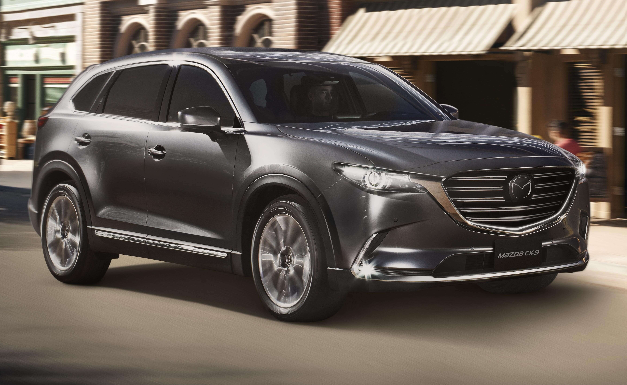
Comparing the Mazda CX-9 vs Subaru Forester is a little like comparing a spacious family house with a clever city apartment. Both can make everyday life comfortable, both offer all-wheel-drive confidence, and both have loyal owners—but they approach the SUV formula from very different directions.
The Mazda CX-9 is a midsize three-row crossover designed for families that want extra passenger capacity, strong turbocharged performance, and an interior that feels surprisingly upscale. The Subaru Forester, meanwhile, is a compact two-row SUV that concentrates on visibility, efficiency, cargo flexibility, ground clearance, and easy everyday usability.
There is also an important timing difference. Mazda discontinued the CX-9 in the U.S. after the 2023 model year, replacing its role with newer products such as the CX-90. The Forester remains in production, with the current 2026 range offering gasoline, hybrid, and Wilderness variants.
That means this comparison is especially useful for shoppers looking at a used Mazda CX-9 versus a new or used Subaru Forester.
So, which one should we put in the driveway? Let's break it down.
Content in this publication
- Mazda CX-9 vs Subaru Forester at a Glance
- The Biggest Difference: Three Rows vs Two
- Mazda CX-9 vs Subaru Forester Engine Performance
- Transmission: Automatic vs CVT
- Driving Experience: Mazda Feels Smaller Than It Is
- Mazda CX-9 vs Subaru Forester AWD Capability
- Interior Quality: Mazda Takes the Premium Route
- Passenger Space
- Cargo Space and Everyday Practicality
- Fuel Economy: Subaru Strikes Back
- Towing Capacity
- Safety Technology
- Infotainment and Connectivity
- Comfort on Long Road Trips
- City Driving and Parking
- Mazda CX-9 vs Subaru Forester Reliability
- Ownership Costs
- Forester Wilderness vs Mazda CX-9
- Mazda CX-9 Advantages
- Subaru Forester Advantages
- Who Should Buy the Mazda CX-9?
- Who Should Buy the Subaru Forester?
- Mazda CX-9 vs Subaru Forester: Which Is Better for Families?
- Mazda CX-9 vs Subaru Forester: Our Final Verdict
- Frequently Asked Questions
Mazda CX-9 vs Subaru Forester at a Glance
Before diving into the details, here's the basic personality of each SUV.
| Category | Mazda CX-9 | Subaru Forester |
|---|---|---|
| SUV class | Midsize crossover | Compact crossover |
| Seating | 6–7 depending on configuration | 5 |
| Drive system | AWD on later U.S. models | Standard AWD |
| Engine character | Turbocharged and powerful | Efficiency-focused |
| Transmission | 6-speed automatic | CVT |
| Best for | Families, highways, performance | Daily driving, outdoors, efficiency |
| Third row | Yes | No |
| Ground-clearance focus | Moderate | Strong |
| Driving feel | Sporty and refined | Comfortable and predictable |
| Current availability | Used in U.S. | New and used |
The biggest lesson is simple: these SUVs solve different problems.
If we regularly carry six people, the CX-9 immediately makes more sense. If we rarely carry more than four or five passengers and would rather have a shorter, more economical SUV, the Forester has the advantage.
The Biggest Difference: Three Rows vs Two
This is where the comparison really begins.
The Mazda CX-9 is fundamentally a family-oriented three-row crossover. Depending on trim and seating configuration, later models accommodate six or seven occupants. The 2023 CX-9 Touring, for example, came with second-row captain's chairs and seating for six, while some versions offered a second-row bench for seven.
The Forester seats five.
That difference changes almost everything.
When the Mazda CX-9 Makes More Sense
Imagine school pickup, grandparents visiting, or a weekend road trip with several children. Suddenly that third row isn't an unnecessary luxury—it's the difference between taking one vehicle and taking two.
The CX-9 therefore works better for:
- Families with three or more children
- Drivers who occasionally transport six or seven people
- Buyers who need greater passenger flexibility
- Long-distance family road trips
- Anyone moving up from a smaller crossover
However, the CX-9's third row shouldn't be mistaken for minivan-level accommodation. Adults can use it, but it is better suited to children or shorter journeys.
When the Subaru Forester Makes More Sense
If our household consists of two adults, one or two children, and perhaps a dog, carrying around an unused third row every day doesn't necessarily help.
The Forester packages its five seats intelligently, providing plenty of passenger room without requiring the length and bulk of a midsize SUV.
That compact footprint becomes surprisingly valuable in parking garages, crowded streets, and tight driveways.
Mazda CX-9 vs Subaru Forester Engine Performance
This category heavily favors the Mazda.
The final U.S.-market CX-9 used Mazda's 2.5-liter turbocharged Skyactiv-G engine. On premium 93-octane fuel, Mazda rated it at 250 horsepower and 320 lb-ft of torque. On regular 87-octane fuel, output dropped to 227 horsepower and 310 lb-ft.
That's a healthy amount of torque.
Press the accelerator and the CX-9 feels muscular rather than merely adequate. It doesn't need to scream its way through the rev range to get moving. Torque arrives early, making highway merging and overtaking pleasantly effortless.
Forester Performance Is About Practicality
The conventional 2026 Forester uses a 2.5-liter Subaru Boxer four-cylinder engine paired with a continuously variable transmission. Subaru also now offers hybrid versions of the Forester.
The Forester isn't trying to be a sports SUV.
Acceleration is sufficient for normal commuting, suburban traffic, and motorway driving, but it doesn't provide the turbocharged punch that gives the CX-9 its relaxed confidence.
Our Performance Winner: Mazda CX-9
If driving enjoyment and passing power matter, we'd pick the Mazda without much hesitation.
The difference isn't subtle.
Transmission: Automatic vs CVT
The CX-9 pairs its turbo engine with a traditional six-speed automatic transmission.
We like this combination because it behaves naturally. Gear changes are easy to predict, and hard acceleration gives us actual shifts rather than the long engine drone sometimes associated with continuously variable transmissions.
The Forester's Lineartronic CVT takes another approach.
Its main priorities are smoothness and efficiency. Around town, that's perfectly sensible. The transmission simply manages engine speed without demanding much attention from the driver.
Which Transmission Feels Better?
For us, the Mazda wins on feel.
A traditional automatic suits the CX-9's stronger engine and more driver-focused personality.
The Subaru's CVT makes sense for its mission, though. If maximum efficiency matters more than involvement, there's nothing inherently wrong with that approach.
Driving Experience: Mazda Feels Smaller Than It Is
One of the CX-9's greatest strengths has always been its ability to disguise its size.
Large family crossovers can sometimes feel like furniture vans wearing alloy wheels. The CX-9 doesn't.
Its steering is responsive, body movement is well managed, and the chassis feels unusually coordinated for a three-row SUV.
Mazda also equipped later CX-9 models with i-Activ AWD and G-Vectoring Control Plus, reinforcing the vehicle's road-focused character.
Through flowing roads, the Mazda feels almost playful by family-SUV standards.
The Forester Takes a Relaxed Approach
The Forester doesn't encourage us to chase corners.
Instead, it emphasizes easy control, predictable handling, and excellent outward visibility.
That's arguably more useful during normal ownership.
Parking is easier. Narrow streets feel less intimidating. Seeing cyclists, pedestrians, road edges, and surrounding traffic requires less effort.
The Subaru feels like a pair of comfortable hiking boots. The Mazda feels more like a well-tailored pair of driving shoes.
Neither philosophy is wrong.
Mazda CX-9 vs Subaru Forester AWD Capability
Both vehicles take all-wheel drive seriously.
The CX-9 came standard with Mazda's i-Activ AWD in its later U.S. years, with the system continuously adjusting torque distribution according to driving conditions.
The Forester has an even stronger identity around all-weather traction. Subaru's Symmetrical All-Wheel Drive is standard throughout the 2026 Forester lineup.
Forester Has the Advantage Off Pavement
Here's where the Subaru starts stretching its legs.
Standard 2026 Foresters offer about 8.7 inches of ground clearance, while the more adventurous Wilderness increases that to approximately 9.3 inches.
Available X-MODE systems are also designed to improve traction in challenging conditions.
If we're regularly driving through:
- Deep snow
- Muddy access roads
- Rough campsites
- Gravel trails
- Steep rural roads
…the Forester is the more natural companion.
AWD Winner: Subaru Forester
The CX-9 offers excellent all-weather road confidence.
The Forester offers that plus stronger adventure credentials.
Open the door of a high-spec CX-9 and it's easy to wonder whether Mazda accidentally wandered into luxury territory.
Materials, control weighting, dashboard design, and seating surfaces tend to feel more sophisticated than we'd expect from a mainstream three-row crossover.
The final CX-9 range could include equipment such as leather upholstery, heated seating, ventilated front seats, a head-up display, Nappa leather, genuine wood-style detailing, and a 360-degree monitor depending on trim.
Forester Interior: Function Before Theatre
The Forester's cabin has traditionally been less theatrical.
That's not necessarily criticism.
Its strengths are practical:
- Excellent visibility
- Easy entry and exit
- Straightforward seating position
- Generous headroom
- Wide-opening doors
- Useful storage areas
The current generation has also become more polished, with available features including an 11.6-inch touchscreen, wireless Apple CarPlay and Android Auto, and wireless charging.
Still, if we're chasing that almost-luxury feeling, the Mazda gets our vote.
Passenger Space
This category needs nuance.
You may be interested in reading Mazda CX 9 Similar Cars: The Best Alternatives to Consider
The CX-9 is physically larger and carries more people, but larger exterior dimensions don't automatically mean every passenger has acres of space.
The first two rows are generally comfortable, particularly when captain's chairs are fitted.
Third-row passengers compromise more.
The Forester has no third row to package, allowing Subaru to dedicate its cabin entirely to five occupants.
Which Is Better for Four Adults?
Surprisingly, the Forester can feel extremely spacious for its exterior size.
Its upright body and generous glass area create an airy environment, particularly in the rear.
If we're transporting four adults rather than six people, we may actually prefer the Subaru's simpler cabin arrangement.
Which Is Better for Large Families?
CX-9. Easily.
Five seats cannot defeat six or seven when those extra seats are genuinely needed.
Cargo Space and Everyday Practicality
Cargo figures can be misleading when comparing two-row and three-row vehicles.
The CX-9's luggage area becomes considerably smaller when all three rows are in use. Fold the third row, however, and it becomes much more useful for large loads.
The Forester takes a simpler approach.
Current 2026 versions offer roughly 27.5 to 29.6 cubic feet behind the rear seats, depending on trim, and as much as 74.4 cubic feet with the rear seatbacks folded in certain configurations.
That boxy shape works beautifully for luggage, bicycles, camping gear, pet crates, and bulky household items.
The Forester Is a Cargo Tetris Champion
Numbers tell only part of the story.
A square opening, tall roof, and upright rear body make the Forester remarkably useful.
Sometimes a technically smaller vehicle swallows awkward objects better simply because its cargo area resembles a box rather than a fashionable wedge.
The Forester is that vehicle.
Fuel Economy: Subaru Strikes Back
This is one of the clearest Forester advantages.
We're comparing a turbocharged three-row midsize crossover with a lighter compact SUV. Physics was never going to be neutral.
The gasoline 2026 Forester can achieve up to 26 mpg city and 33 mpg highway in certain trims, while hybrid configurations can reach figures as high as 35 mpg city and 34 mpg highway according to Subaru's published specifications.
The rugged Wilderness sacrifices some economy for its more adventurous setup.
CX-9 Owners Pay for the Extra Muscle
The CX-9's stronger turbo engine, larger body, and heavier construction inevitably require more fuel.
If we drive 15,000 or 20,000 miles per year, that difference can become significant.
And remember, the Mazda delivers its highest advertised power output when using premium fuel, although it can operate on regular gasoline with reduced output.
Fuel-Economy Winner: Subaru Forester
No drama here.
The Subaru wins.
Towing Capacity
Perhaps surprisingly, the current Forester deserves more respect here than older compact SUVs might suggest.
Most 2026 Forester versions are rated to tow up to 1,500 pounds, while the Wilderness increases maximum capacity to 3,500 pounds when properly equipped.
That makes the Wilderness particularly interesting for outdoor enthusiasts with a small trailer.
The CX-9 is also capable of handling modest recreational towing, and its abundant turbocharged torque feels well suited to pulling additional weight.
Which Would We Tow With?
For occasional lightweight towing, either can work depending on model specifications.
If we're comparing a regular Forester with a CX-9, we'd favor the Mazda.
If we're considering the Forester Wilderness, the contest becomes much closer.
Always check the owner's manual, exact model year, equipment requirements, tongue-weight limits, and trailer-braking rules before towing.
Safety Technology
Both brands have invested heavily in driver-assistance technology.
The 2023 CX-9 included a substantial collection of Mazda i-Activsense systems, including features such as:
- Radar cruise control with stop-and-go capability
- Smart Brake Support
- Pedestrian detection
- Blind-spot monitoring
- Rear cross-traffic alert
- Lane-departure warning
- Lane-keeping assistance
Subaru counters with its EyeSight suite.
Current Forester models feature standard EyeSight driver-assistance technology, while additional equipment such as emergency steering assistance and a 360-degree surround-view monitor is available on certain configurations.
Newer Forester Has a Technology-Age Advantage
This comparison reveals the problem of comparing a discontinued model with a current one.
A 2023 CX-9 may have been extremely well equipped for its time, but the 2026 Forester benefits from several additional years of hardware and software development.
When shopping used, however, trim level matters enormously.
A high-spec CX-9 may offer conveniences missing from a lower-spec Forester.
Infotainment and Connectivity
Later CX-9 models used a 10.25-inch center display with Mazda Connect, Apple CarPlay and Android Auto. Mazda's rotary controller remains one of those features people either immediately appreciate or initially find strange.
We happen to like physical controls while driving.
Touchscreens look clean in photographs, but attempting to hit a tiny virtual button while bouncing across imperfect pavement can feel like trying to sign our name during an earthquake.
The Forester takes the more contemporary touchscreen route.
Available equipment on the 2026 model includes an 11.6-inch display, wireless smartphone integration, and wireless charging.
Technology Winner Depends on Preference
Want newer interfaces and wireless connectivity?
Forester.
Prefer tactile controls and fewer touchscreen interactions?
The CX-9 may actually feel friendlier.
Comfort on Long Road Trips
This is where the CX-9 earns back points.
Its longer wheelbase, stronger engine, quieter premium-oriented cabin, and relaxed highway performance create a convincing long-distance vehicle.
Load up the family, point the nose toward another state, and the CX-9 feels at home.
Highway passing doesn't require much planning. Seats in higher trims are supportive. The cabin generally feels substantial.
Forester Road-Trip Strengths
The Forester counters with different advantages:
- Better fuel economy
- Excellent visibility
- Easy access
- Useful cargo space
- Comfortable suspension
- Less intimidating exterior dimensions
For two adults and two children, we'd happily tour in either.
For six occupants, there isn't much debate.
City Driving and Parking
Now the tables turn.
A Forester is simply easier to maneuver.
That becomes important if most of our week consists of supermarket parking lots, school runs, underground garages, and crowded urban roads.
The 2026 Forester measures roughly 183.3 inches long in most versions.
The CX-9 belongs to a larger class, and we notice the extra vehicle behind us when reversing into a small parking space.
You may be interested in readingMazda CX 9 Similar Cars: The Best Alternatives to ConsiderYou may be interested in reading
Mazda CX-9 Versus Subaru Ascent: Which Three-Row SUV Is Better?Urban Winner: Subaru Forester
Unless we require the Mazda's third row, smaller wins here.
Mazda CX-9 vs Subaru Forester Reliability
Reliability comparisons become tricky because we're dealing with different model years, engines, maintenance histories, and ownership conditions.
A well-maintained CX-9 with comprehensive service records could be a safer purchase than a neglected Forester—and vice versa.
The smart approach isn't to buy the badge.
Buy the individual vehicle.
Used CX-9 Inspection Priorities
When shopping for a used CX-9, we'd pay close attention to:
- Complete service history
- Engine cooling system condition
- Oil or coolant leaks
- Turbocharger behavior
- Transmission operation
- AWD maintenance
- Suspension wear
- Electronics
- Accident history
- Evidence of proper oil-change intervals
A pre-purchase inspection becomes especially valuable.
Used Forester Inspection Priorities
For a Forester, check:
- CVT operation
- Oil consumption history where relevant to older generations
- Wheel bearings
- Suspension condition
- AWD-related tire matching
- Electrical accessories
- Cooling system
- Service records
Four matching tires matter particularly on AWD vehicles. Substantial differences in tire circumference aren't something we'd ignore.
Ownership Costs
The Forester should generally be cheaper to fuel.
Its smaller size may also mean lower tire and consumable costs depending on trim.
A used CX-9, however, has another interesting advantage: depreciation.
Someone else has already absorbed a substantial portion of the vehicle's original new-car price.
A well-kept used CX-9 can therefore deliver an unexpectedly luxurious driving experience for the money.
The Used-Car Value Equation
This is where things get interesting.
Suppose our budget buys either:
- A newer modestly equipped Forester, or
- A slightly older high-spec CX-9 Grand Touring or Signature.
The Mazda might give us significantly more interior luxury and performance.
The Subaru may give us newer technology, potentially lower running costs, and fewer age-related maintenance concerns.
Neither answer is automatically better.
Forester Wilderness vs Mazda CX-9
If outdoor adventures are a priority, the Forester Wilderness deserves its own section.
The 2026 Wilderness offers approximately 9.3 inches of ground clearance and increases towing capacity to as much as 3,500 pounds.
It also carries Subaru's adventure-focused philosophy much further than the road-biased CX-9.
Choose Forester Wilderness If We Regularly Go Beyond Pavement
We're talking about people who genuinely use:
- Forest roads
- Snow-covered mountain routes
- Rough campsites
- Fishing access roads
- Muddy trails
The CX-9 has AWD and can handle poor weather, but we'd choose the Subaru when pavement becomes optional.
Mazda CX-9 Advantages
The CX-9's strongest qualities are straightforward:
- Three-row seating
- Six- or seven-passenger capability
- Powerful turbocharged engine
- Strong torque
- Traditional automatic transmission
- Premium-feeling cabin
- Engaging road manners
- Excellent long-distance character
- Strong used-car value potential
- More sophisticated overall driving feel
Its personality appeals to drivers who need a family vehicle but don't want to feel as though they've surrendered completely to practicality.
Subaru Forester Advantages
The Forester answers with an equally persuasive list:
- Smaller, easier-to-drive dimensions
- Standard AWD
- Excellent outward visibility
- Strong ground clearance
- Better fuel efficiency
- Flexible cargo area
- Five spacious seats
- Strong outdoor capability
- Available hybrid drivetrain
- Available Wilderness model
- Current new-car availability
- Newer infotainment and safety technology
It is less glamorous, perhaps, but relentlessly sensible.
And sensible isn't boring when sensible saves us money every week.
Who Should Buy the Mazda CX-9?
We'd lean toward the Mazda CX-9 if:
- We need more than five seats
- Highway driving dominates our routine
- Strong acceleration matters
- We enjoy driving
- Interior quality ranks highly
- We don't mind higher fuel consumption
- We're comfortable shopping used
- We want a family SUV that feels slightly premium
The CX-9 is especially attractive for families that need occasional third-row seating but don't want something that drives like an enormous traditional SUV.
The CX-9 Sweet Spot
A carefully maintained late-model CX-9 with documented service history could be a compelling used purchase.
Because Mazda discontinued the model in the U.S. after 2023, there is no equivalent brand-new CX-9 today.
That makes condition and history more important than ever.
Who Should Buy the Subaru Forester?
We'd choose the Subaru Forester if:
- Five seats are enough
- Fuel economy matters
- We live somewhere with snow or poor roads
- We enjoy camping and outdoor activities
- Cargo versatility matters more than a third row
- We value outward visibility
- We want easier parking
- We prefer purchasing a new vehicle
- We want access to a hybrid powertrain
- We need serious ground clearance without buying a huge SUV
The Forester isn't trying to impress us at the valet stand.
It wants to get us, our family, our dog, and half a camping store to the mountains without unnecessary drama.
There's something refreshingly appealing about that.
Mazda CX-9 vs Subaru Forester: Which Is Better for Families?
This depends entirely on family size.
For one or two children, we'd probably pick the Forester if efficiency and practicality are the priorities.
For three or more children, the CX-9 becomes much more compelling.
That third row fundamentally changes its usefulness.
Small Family: Forester
A household of four probably doesn't need the Mazda's additional length or fuel consumption.
Large Family: CX-9
Need six seats regularly?
The Subaru is eliminated before the comparison even begins.
Don't Buy More SUV Than We Need
This is perhaps the most useful lesson of the entire comparison.
It's easy to believe bigger automatically means better.
It doesn't.
Driving a three-row crossover 365 days per year because we might need six seats twice is a questionable trade-off.
On the other hand, forcing a five-seat SUV to serve a six-person household isn't practicality either.
Buy for the life we actually live.
Mazda CX-9 vs Subaru Forester: Our Final Verdict
So, which SUV wins?
There isn't one universal winner because the Mazda CX-9 and Subaru Forester belong to different categories.
The Mazda CX-9 is the better choice for buyers who need three rows, stronger acceleration, a more premium cabin, and a more engaging highway driving experience. Its turbocharged engine gives it the effortless muscle the Forester simply doesn't attempt to match.
The Subaru Forester is our pick for buyers who need only five seats and prioritize fuel economy, visibility, cargo practicality, ground clearance, easy maneuverability, and outdoor versatility.
If we were buying for a family of six, we'd choose the CX-9.
If we were buying for two adults and one or two children, we'd probably choose the Forester.
If we spent weekends exploring mountain roads, the Forester Wilderness would look especially attractive.
And if we simply loved driving and wanted a used family SUV that felt considerably more expensive than an ordinary mainstream crossover? We'd be hunting for a beautifully maintained CX-9.
That's why the real question isn't, “Which SUV is better?”
It's which SUV better fits our life?
Frequently Asked Questions
1. Is the Mazda CX-9 bigger than the Subaru Forester?
Yes. The CX-9 is a midsize three-row crossover, while the Forester is a compact two-row SUV. The Mazda provides seating for six or seven depending on configuration, whereas the Subaru Forester seats five.
2. Is the Subaru Forester more fuel-efficient than the Mazda CX-9?
Generally, yes. The Forester's smaller size and efficiency-focused drivetrain give it a substantial advantage. Current gasoline Foresters can achieve up to 33 mpg highway in certain configurations, while available hybrid versions improve efficiency further.
3. Which is better in snow, Mazda CX-9 or Subaru Forester?
Both have capable AWD systems, but the Forester has the advantage for severe winter and rough-road driving because of its substantial ground clearance, standard Symmetrical AWD, and available X-MODE technology. The Wilderness model increases ground clearance to around 9.3 inches.
You may be interested in readingMazda CX 9 Similar Cars: The Best Alternatives to ConsiderYou may be interested in reading
Mazda CX-9 Versus Subaru Ascent: Which Three-Row SUV Is Better?You may be interested in reading
 BMW M2 vs M3: Which BMW M Car Is the Better Choice?
4. Which is faster, Mazda CX-9 or Subaru Forester?
The CX-9 is the stronger performer. Its 2.5-liter turbo engine produces up to 250 horsepower and 320 lb-ft of torque on premium fuel in the final U.S. model, giving it noticeably stronger acceleration than the conventional Forester.
5. Should I buy a used Mazda CX-9 or a new Subaru Forester?
Choose the CX-9 if you need three rows, stronger performance, and a more premium driving experience. Choose the new Forester if five seats are sufficient and you prefer greater fuel efficiency, newer technology, stronger rough-road ability, and the benefits associated with purchasing a current-production vehicle.
If you want to know other articles similar to Mazda CX-9 vs Subaru Forester: Which SUV Makes More Sense? you can visit the category Models.
Honda Passport vs Toyota 4Runner: Which SUV Is Better?
Honda Passport vs Ford Bronco: Which SUV Is Better?
Honda Passport vs Ford Explorer: Which SUV Is Better?
Honda Passport or Pilot: Which SUV Is Better?
Honda Passport vs Jeep Grand Cherokee: Which SUV Is Better?
Honda Passport vs Nissan Pathfinder: Which SUV Is Better?
Leave a Reply
More content of your interest