

BMW M2 vs M3: Which BMW M Car Is the Better Choice?

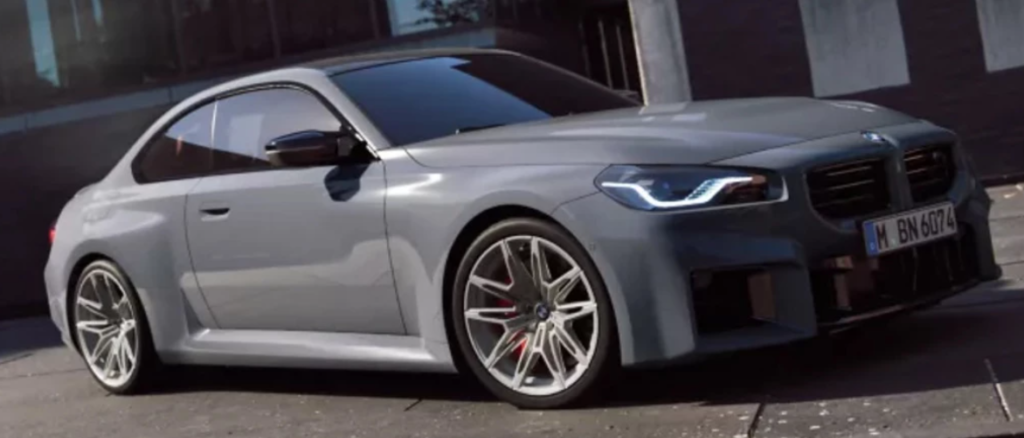
Choosing between the BMW M2 vs M3 looks easy until we actually start comparing them. Both are fast. Both use serious BMW M engineering. Both can turn a quiet back road into something that feels suspiciously like our own private race circuit.
Yet they are surprisingly different cars.
The BMW M2 is the smaller, two-door troublemaker. It feels compact, muscular, slightly mischievous, and focused on putting the driver at the center of everything.
The BMW M3 is the more mature athlete. It adds four doors, extra cabin space, greater versatility, and—depending on the version—more power and available all-wheel drive without becoming remotely boring.
So which one should we buy?
If we want the shortest answer, the M2 generally makes more sense for drivers prioritizing involvement and value, while the M3 makes more sense when we want devastating performance without sacrificing everyday practicality.
But the real story is considerably more interesting.
Content in this publication
- BMW M2 vs M3 at a Glance
- BMW M2 vs M3 Engine: More Similar Than You Might Expect
- BMW M2 vs M3 Size: Small Coupe Against Sports Sedan
- BMW M2 vs M3 Weight
- BMW M2 vs M3 Driving Experience
- BMW M2 vs M3 Handling
- BMW M2 vs M3 Manual Transmission
- BMW M2 vs M3 Automatic Transmission
- BMW M2 vs M3 xDrive
- BMW M2 vs M3 Interior
- BMW M2 vs M3 Practicality
- BMW M2 vs M3 Comfort
- BMW M2 vs M3 Sound
- BMW M2 vs M3 Styling
- BMW M2 vs M3 Price
- BMW M2 vs M3 Running Costs
- BMW M2 vs M3 for Daily Driving
- BMW M2 vs M3 for Track Days
- BMW M2 vs M3 Reliability
- Used BMW M2 vs Used BMW M3
- BMW M2 vs M3: Which Is Faster?
- BMW M2 vs M3: Which Is More Fun?
- BMW M2 vs M3: Which Is Better for Families?
- BMW M2 vs M3: Which Offers Better Value?
- BMW M2 vs M3 Pros and Cons
- BMW M2 vs M3: Our Verdict
- Frequently Asked Questions About the BMW M2 vs M3
BMW M2 vs M3 at a Glance
Before diving deeper, here is the basic personality difference.
| Category | BMW M2 | BMW M3 |
|---|---|---|
| Body style | Two-door coupe | Four-door sedan |
| Character | Compact and playful | Fast and versatile |
| Engine | Turbocharged inline-six | Turbocharged inline-six |
| Manual available | Yes | Yes, on standard M3 |
| Automatic available | Yes | Yes |
| AWD availability | Available on newer M2 variants | Available on M3 Competition xDrive |
| Passenger practicality | Moderate | Excellent |
| Rear-seat access | Limited | Easy |
| Best for | Enthusiasts | Performance + daily usability |
The current M2 and standard M3 each offer 473 horsepower in BMW's U.S. specification, while the M3 Competition increases output to 503 horsepower and the M3 Competition xDrive reaches 523 horsepower.
That immediately tells us something important: buying the larger M3 doesn't automatically mean the base version has dramatically more power.
The real difference lies in how each car packages that performance.
BMW M2 vs M3 Engine: More Similar Than You Might Expect
Under the hood, these two cars share more DNA than their shapes suggest.
Both rely on BMW M's turbocharged 3.0-liter inline-six architecture. It's an engine family designed for enormous mid-range punch, strong high-rpm performance, and the kind of acceleration that makes overtaking feel almost comically easy.
The M2's compact body gives that engine a slightly different personality.
Push the throttle and the car feels like someone fired a cannon from underneath the hood.
The M3 feels equally serious, but there is a more polished layer to the delivery. It seems less like a small coupe trying to escape from underneath us and more like a sophisticated performance sedan effortlessly compressing the road ahead.
BMW M2 Power Output
Current BMW specifications list the M2 Coupe at 473 horsepower, paired with either a six-speed manual or an available eight-speed M Steptronic automatic transmission. BMW quotes 0–60 mph in around 4.1 seconds with the manual and 3.9 seconds with the automatic.
That's already supercar-level acceleration by the standards of not very long ago.
And remember: the M2 is theoretically the entry point into BMW's full-fat M lineup.
Entry-level clearly doesn't mean slow.
BMW M3 Power Output
The standard M3 also produces 473 horsepower and uses a six-speed manual with rear-wheel drive.
Move to the M3 Competition and output rises to 503 horsepower, while the M3 Competition xDrive delivers 523 horsepower. BMW lists 0–60 mph times of approximately 4.1 seconds for the manual M3, 3.8 seconds for the rear-drive Competition and 3.4 seconds for the Competition xDrive.
Does the M3 Feel Noticeably Faster?
In ordinary road driving, the gap between a manual M2 and manual M3 isn't enormous.
Once we introduce the M3 Competition xDrive, though, things change quickly.
Its combination of extra power, automatic transmission and all-wheel-drive traction turns launches into something approaching teleportation.
The M2 can feel wild.
The fastest M3 feels almost ruthlessly efficient.
BMW M2 vs M3 Size: Small Coupe Against Sports Sedan
One of the biggest differences appears before we even start the engines.
The M2 is physically shorter.
BMW lists the current rear-wheel-drive M2 at about 180.3 inches long with a 108.1-inch wheelbase, while the M3 stretches to approximately 189.1 inches with a 112.5-inch wheelbase.
That difference influences almost everything.
The M2 feels easier to place on narrow roads. It rotates eagerly through tighter corners and creates a stronger sensation of sitting inside a small performance machine.
The M3 feels longer, calmer and more planted.
Which Feels Smaller Behind the Wheel?
Definitely the M2.
Even though modern M2 generations have grown considerably compared with earlier BMW coupes, the car still feels more compact from the driver's seat.
Turn into a sharp bend and we feel as though the front and rear axles are working close around us.
The M3 doesn't feel clumsy, but we remain more conscious of its length.
In return, its longer wheelbase brings extra stability.
BMW M2 vs M3 Weight
Here's where things become interesting.
We might assume that the M2 is dramatically lighter because it is smaller.
Not necessarily.
Modern performance cars carry substantial structural reinforcement, cooling hardware, brakes, electronics and safety equipment. As a result, the current M2 isn't a featherweight.
BMW lists the manual M3 at about 3,840 lb, while different M2 configurations can approach similar territory depending on drivetrain and equipment. The M3 Competition xDrive climbs to roughly 3,990 lb.
So the M2's appeal isn't simply about low mass.
It's about compact proportions.
That distinction matters.
A smaller car can feel more agile even when the scale doesn't reveal an enormous advantage.
BMW M2 vs M3 Driving Experience
If specifications settled every comparison, choosing cars would be incredibly boring.
The biggest reason to compare an M2 and M3 is how differently they translate similar ingredients into driving sensations.
The M2 Feels More Playful
The M2's shorter dimensions create a cheekier personality.
The front end reacts quickly. The rear axle feels close. Throttle adjustments seem to have an immediate influence on the car's attitude.
It encourages us to interact with it.
The experience can feel like driving a terrier with 473 horsepower: compact, energetic and always ready to chase something.
The M3 Feels More Complete
The M3 approaches the same problem differently.
It gives us enormous grip, excellent body control and fierce acceleration while maintaining the composure expected from a premium sedan.
That's the magic trick.
We could drive to work Monday morning, carry colleagues to lunch, put luggage in the trunk, then spend Saturday morning attacking a winding road.
Few performance cars bridge those worlds quite as naturally.
Which Is More Fun?
If "fun" means feeling the chassis move beneath us and having maximum interaction at road speeds, we'd lean toward the M2.
If fun means spectacular speed combined with a chassis that seems capable of almost anything, the M3 is harder to beat.
BMW M2 vs M3 Handling
Both cars deliver serious performance, but their handling personalities aren't identical.
The M2 has a compact footprint that rewards quick directional changes.
The M3 has the advantage of a longer platform that provides tremendous stability, especially at higher speeds.
Think of it this way:
- M2: boxer moving rapidly around the ring.
- M3: heavyweight athlete with astonishing balance.
- M3 Competition xDrive: the heavyweight athlete has apparently acquired rocket boosters.
For tighter mountain roads, the M2 can feel particularly alive.
For long, fast sweepers, the M3 often inspires more confidence.
BMW M2 vs M3 Manual Transmission
Here's something enthusiasts should celebrate: BMW still lets us change gears ourselves.
Both the standard M2 and standard M3 remain available with a six-speed manual transmission.
That's increasingly rare.
Why the Manual M2 Makes So Much Sense
If we were building a BMW specifically around driver engagement, the manual M2 would be extremely tempting.
Its formula is gloriously straightforward:
- turbocharged inline-six;
- rear-wheel drive;
- manual gearbox;
- compact coupe body;
- serious M chassis tuning.
No, it isn't the fastest configuration.
And that's almost the point.
When performance cars become extraordinarily fast, interaction can matter more than another few tenths of a second.
Manual M3: The Grown-Up Enthusiast Choice
The manual M3 delivers much of the same appeal while adding sedan practicality.
That makes it one of the most unusual new performance cars available.
Need four doors?
Want a manual?
Want almost 500 horsepower?
You may be interested in reading BMW M2 vs M240i: Which BMW 2 Series Is Really Worth It?
There aren't many alternatives.
BMW M2 vs M3 Automatic Transmission
The eight-speed M Steptronic automatic changes the personality of both cars.
It shifts quickly, suits hard acceleration and removes much of the interruption between bursts of power.
For commuting, it is obviously easier.
For maximizing speed, it's also the logical choice.
But we'd ask ourselves one question before ordering:
Are we buying the car to achieve the quickest possible acceleration time, or because we enjoy driving it?
There isn't a wrong answer.
There is simply a different answer for different drivers.
BMW M2 vs M3 xDrive
All-wheel drive adds another layer to this comparison.
Traditionally, BMW M cars were associated strongly with rear-wheel drive. Modern M xDrive models have changed that equation.
The M3 Competition xDrive can deploy enormous power with startling efficiency.
Instead of wrestling for traction, the car hooks up and launches.
The result is a quoted 3.4-second 0–60 mph time in current U.S. specification.
BMW has also expanded M2 drivetrain choices, adding M xDrive availability while retaining rear-wheel-drive variants.
Do We Really Need AWD?
For most road driving?
Probably not.
But drivers living somewhere with poor weather or those who enjoy brutal standing-start acceleration may love it.
Rear-wheel drive feels more traditional.
M xDrive feels more devastating.
BMW M2 vs M3 Interior
Inside, the family resemblance is obvious.
Both cars embrace BMW's modern digital cockpit design, M-specific graphics, heavily bolstered seats and customizable performance settings.
Yet the atmosphere differs.
The M2 feels like a coupe first.
The M3 feels like a premium sports sedan that happens to possess outrageous performance.
Front-Seat Experience
For the driver, both are excellent.
Available carbon bucket seats can make the cabin feel dramatically more serious, although we'd strongly recommend sitting in them before ordering.
They're brilliant at holding us in place during aggressive cornering.
Getting in and out every day?
That's a different conversation.
Rear-Seat Space
The M3 wins without debate.
Four doors alone transform usability.
Adults can access the back without folding a front seat forward, and the additional cabin space makes the M3 far more comfortable for regular passengers.
The M2's rear seats are useful, but we'd treat them as occasional rather than ideal adult accommodation.
BMW M2 vs M3 Practicality
This could be the factor that decides the entire comparison.
The M2 asks us to accept compromises because it's a coupe.
The M3 barely asks us to compromise at all.
Choose the M2 If We:
- rarely carry rear passengers;
- prefer two-door styling;
- want something smaller;
- prioritize driving involvement;
- already have another practical vehicle;
- want access to serious BMW M performance at a lower price.
Choose the M3 If We:
- frequently carry passengers;
- need four doors;
- want one vehicle for almost everything;
- need greater everyday versatility;
- value highway comfort;
- want access to Competition and xDrive variants.
That last point matters.
For a one-car household, the M3 is incredibly persuasive.
BMW M2 vs M3 Comfort
Neither should be mistaken for a luxury cruiser.
They are genuine M cars, so suspension firmness is part of the deal.
Still, adaptive suspension allows both vehicles to soften their responses for ordinary driving.
The M3 generally feels like the more relaxed long-distance machine.
Its longer wheelbase helps smooth out road imperfections, while its sedan layout produces a more spacious environment.
The M2 communicates more.
For enthusiasts, that's good news.
For passengers on a six-hour road trip?
Maybe not always.
BMW M2 vs M3 Sound
Both use turbocharged inline-six engines, so the soundtrack has the same basic ingredients.
We get a deep growl at lower rpm, increasingly aggressive induction and exhaust noise as revs climb, and the characteristic mechanical smoothness of an inline-six.
The M2 often feels noisier and more theatrical simply because of its tighter cabin and coupe personality.
The M3's sound complements a more sophisticated overall experience.
Neither provides the screaming naturally aspirated soundtrack of old-school M cars, but their turbocharged performance is on another level.
BMW M2 vs M3 Styling
This is entirely subjective, and BMW's modern designs aren't exactly shy.
The M2 has chunky proportions, pronounced arches and a compact, almost cartoonishly muscular stance.
Some people adore it.
Others need time.
The M3 is more dramatic.
Its large vertical kidney grilles immediately dominate the front end, while flared bodywork ensures nobody mistakes it for an ordinary 3 Series.
Which One Looks More Special?
The M2 arguably looks more unusual because its proportions are so distinctive.
The M3 looks more aggressive.
Park either beside its standard BMW relative and the difference is obvious.
These cars don't whisper.
They announce themselves.
BMW M2 vs M3 Price
Pricing can move between model years and markets, but the hierarchy remains straightforward: the M2 sits below the M3.
BMW's U.S. lineup currently places the M2 beneath the M3, with larger premiums required for M3 Competition and Competition xDrive configurations.
That strengthens the M2's value argument.
We're receiving an engine and performance experience remarkably close to that of the standard M3 while spending less.
Is the M3 Worth the Extra Money?
That depends entirely on whether we'll use what the extra money buys.
If we need:
- four doors;
- better rear-seat accommodation;
- available Competition power;
- available M xDrive;
- greater everyday versatility;
then yes.
If we simply want an M car to enjoy on weekends, the M2 may actually be the smarter purchase.
BMW M2 vs M3 Running Costs
Neither belongs in the "cheap transportation" category.
Large performance tires, powerful brakes, premium fuel and specialist servicing inevitably cost more than running an ordinary 2 Series or 3 Series.
Insurance may also be substantial.
The M3 can become particularly expensive when fitted with larger performance options and carbon-ceramic hardware.
Before purchasing either car, we'd budget for:
- premium tires;
- brake replacement;
- fuel;
- insurance;
- scheduled maintenance;
- potential track-day consumables.
Buying the car is only the opening chapter.
Keeping a high-performance M car operating properly is part of the ownership equation.
You may be interested in readingBMW M2 vs M240i: Which BMW 2 Series Is Really Worth It?You may be interested in reading
BMW M2 vs M3 vs M4: Which BMW M Car Should We Buy?BMW M2 vs M3 for Daily Driving
Can we daily-drive an M2?
Absolutely.
Would the M3 be easier?
For most people, yes.
Four doors make parking-lot life easier whenever passengers are involved. The larger cabin is more comfortable. The longer wheelbase settles highway driving.
The M2 counters with smaller exterior dimensions.
For drivers frequently navigating tight streets or compact parking spaces, that can matter more than we'd expect.
Best Daily Driver: BMW M3
If we're choosing purely on everyday usability, the M3 wins.
It's remarkable how ordinary it can feel during mundane errands considering the performance hiding underneath.
Then we select a more aggressive drive mode, press the throttle and suddenly that practical sedan seems to have misplaced its manners.
BMW M2 vs M3 for Track Days
Both belong on a circuit.
However, we'd choose differently depending on our priorities.
Why the M2 Works Brilliantly on Track
The M2's compact wheelbase makes it entertaining and adjustable.
We can feel what the chassis is doing.
It encourages experimentation.
For learning vehicle balance, it may be the more satisfying tool.
Why the M3 Is Devastatingly Effective
The M3 combines power, chassis sophistication and stability.
In Competition xDrive form, it also gains enormous traction.
The result is a car that can cover ground extremely quickly without feeling nervous.
Where the M2 feels like a toy built for adults, the M3 feels like precision machinery.
BMW M2 vs M3 Reliability
Modern M cars are complex machines, so maintenance history matters tremendously—especially when buying used.
The engine itself is engineered to tolerate enormous output, but supporting systems can be expensive when something fails.
We'd pay particular attention to:
- documented servicing;
- cooling-system health;
- brake condition;
- tire wear;
- suspension damage;
- signs of track abuse;
- aftermarket engine tuning;
- transmission servicing;
- accident history.
A heavily modified bargain can become very expensive very quickly.
The cheapest M car to buy isn't necessarily the cheapest M car to own.
Used BMW M2 vs Used BMW M3
The used-car comparison becomes even more fascinating because several generations enter the conversation.
Earlier M2 models developed a strong reputation for compact dimensions and lively handling, while older M3 generations include everything from high-revving naturally aspirated machines to modern turbocharged sedans.
Why Buy a Used M2?
A used M2 can deliver extraordinary enthusiast value.
Its appeal centers on simplicity of concept: small coupe, big engine, rear-wheel drive.
Earlier examples may also feel more compact and analogue than today's cars.
Why Buy a Used M3?
A used M3 gives us far more choices.
Depending on generation, we can find:
- naturally aspirated six-cylinder models;
- V8-powered models;
- twin-turbo six-cylinder models;
- manual transmissions;
- dual-clutch transmissions;
- traditional rear-wheel drive;
- modern xDrive.
Few performance-car nameplates have evolved as dramatically.
Which Will Hold Value Better?
Special configurations usually have the strongest enthusiast appeal.
Manual transmissions, desirable colors, limited editions and clean unmodified examples tend to attract attention.
But we'd buy the car we genuinely want rather than attempting to predict collectible values.
Cars are better when driven.
BMW M2 vs M3: Which Is Faster?
If we compare standard manual versions, the difference is small.
Once Competition and xDrive variants enter the equation, the M3 clearly takes the acceleration crown.
BMW quotes approximately:
- M2 automatic: 3.9 seconds 0–60 mph;
- M2 manual: 4.1 seconds;
- M3 manual: 4.1 seconds;
- M3 Competition: 3.8 seconds;
- M3 Competition xDrive: 3.4 seconds.
But numbers only explain part of the experience.
On a narrow road, an M2 might actually feel faster because we're more involved.
And feeling fast can sometimes be more entertaining than simply being fast.
BMW M2 vs M3: Which Is More Fun?
Here we'd give the M2 a slight advantage.
The M3 is extraordinary.
But the M2's smaller proportions and coupe layout make it feel less sensible—and performance cars benefit from a little irrationality.
We sit closer to the rear axle.
The car responds eagerly.
A manual gearbox adds another layer of involvement.
The M2 constantly reminds us that we bought something unnecessary.
That's exactly why it works.
BMW M2 vs M3: Which Is Better for Families?
M3.
By a landslide.
The M2 technically has rear seats, but regularly installing children, carrying adults or loading belongings through a two-door body becomes tiresome.
The M3 solves that problem while sacrificing very little performance.
Want to drop the kids at school and then enjoy a mountain road?
The M3 understands the assignment.
BMW M2 vs M3: Which Offers Better Value?
From a pure performance-per-dollar standpoint, the M2 is difficult to ignore.
It provides astonishing power, a genuine M chassis and available manual transmission for less money than the M3.
The standard M3 becomes worthwhile when its practicality matters.
And the Competition models justify themselves when outright performance takes priority.
So value isn't merely about price.
It's about how much of the car we actually use.
BMW M2 vs M3 Pros and Cons
BMW M2 Pros
- Compact dimensions
- Fantastic driver engagement
- Strong acceleration
- Manual transmission available
- Lower entry price
- Distinctive coupe styling
- Excellent performance value
BMW M2 Cons
- Awkward rear-seat access
- Less passenger space
- Smaller fuel tank
- Not dramatically lighter than the M3
- Firm ride
- Less practical as an only car
BMW M3 Pros
- Four-door practicality
- Excellent rear-seat access
- Powerful Competition versions
- Available M xDrive
- Strong high-speed stability
- Manual available on the standard model
- Capable of serving as a genuine everyday car
BMW M3 Cons
- Higher purchase price
- Larger exterior dimensions
- Potentially higher running costs
- Less compact feeling
- Performance can be difficult to exploit fully on public roads
BMW M2 vs M3: Our Verdict
Choosing between the BMW M2 vs M3 ultimately comes down to one question:
How much practicality do we really need?
If we don't regularly carry passengers and want a BMW M car primarily because driving itself matters, the M2 is wonderfully compelling.
It's smaller, cheaper and emotionally engaging.
The M3 is the better all-round car.
Four doors dramatically improve usefulness. Competition variants deliver more power. xDrive turns acceleration into something almost surreal. Yet underneath all that practicality remains a genuine performance car.
So our recommendations are simple.
Choose the BMW M2 if the weekend drive matters more than Monday morning convenience.
Choose the BMW M3 if we want one car capable of handling Monday morning, Friday night and Sunday at the racetrack.
And if we can't decide?
We should probably drive both.
Specifications can tell us which car is faster.
Only the driver's seat tells us which one we actually want.
Frequently Asked Questions About the BMW M2 vs M3
1. Is the BMW M2 faster than the M3?
The standard M2 and standard M3 are closely matched in straight-line performance, particularly with manual transmissions. However, higher-performance M3 Competition models are faster, especially the M3 Competition xDrive, which benefits from additional horsepower and all-wheel-drive traction.
2. Is the BMW M2 cheaper than the M3?
Yes. The M2 occupies a lower position in BMW's M lineup and generally has a lower starting price than the M3. The price gap becomes larger when comparing the M2 with M3 Competition or M3 Competition xDrive models.
3. Is the BMW M2 or M3 better for daily driving?
The M3 is generally the better daily driver because its four-door body, larger rear passenger area and longer wheelbase make it easier to live with. The M2 remains perfectly usable every day but requires more compromises.
You may be interested in readingBMW M2 vs M240i: Which BMW 2 Series Is Really Worth It?You may be interested in reading
BMW M2 vs M3 vs M4: Which BMW M Car Should We Buy?You may be interested in reading
BMW M2 vs Audi RS3: Which Performance Car Is Better?4. Which is more fun to drive, the BMW M2 or M3?
Many enthusiasts may prefer the M2 because its shorter dimensions and coupe layout produce a more compact, playful experience. The M3 feels more stable and sophisticated, while the M2 often feels more interactive.
5. Should we buy an M2 or M3?
Buy the M2 if driver engagement, compact dimensions and value matter most. Buy the M3 if we want greater practicality, additional performance options and enough versatility to function comfortably as our only car.
If you want to know other articles similar to BMW M2 vs M3: Which BMW M Car Is the Better Choice? you can visit the category Models.
Honda Passport vs Toyota 4Runner: Which SUV Is Better?
Honda Passport vs Ford Bronco: Which SUV Is Better?
Honda Passport vs Ford Explorer: Which SUV Is Better?
Honda Passport or Pilot: Which SUV Is Better?
Honda Passport vs Jeep Grand Cherokee: Which SUV Is Better?
Honda Passport vs Nissan Pathfinder: Which SUV Is Better?
Leave a Reply
More content of your interest