

BMW M2 vs M3 vs M4: Which BMW M Car Should We Buy?

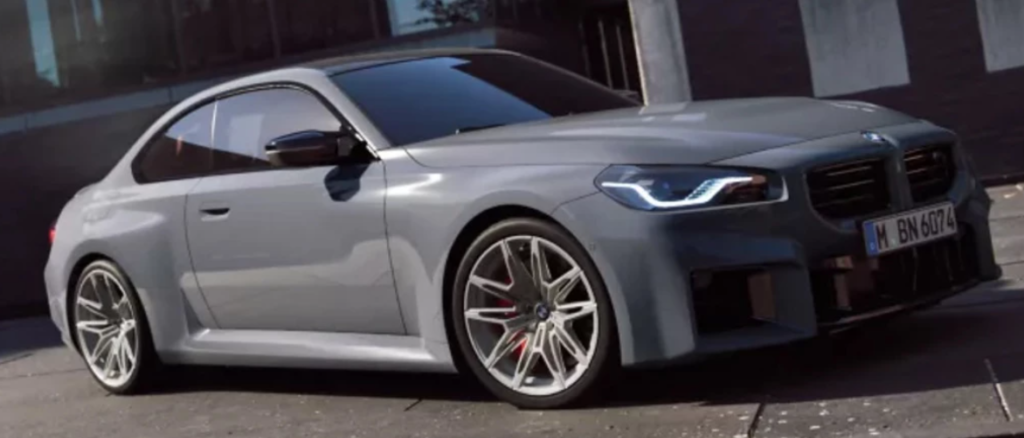
Choosing between the BMW M2 vs M3 vs M4 sounds simple until we actually start looking at what each car offers. They share the same BMW M bloodline, turbocharged six-cylinder muscle, rear-wheel-drive character in key configurations, and enough performance to turn an ordinary commute into something that feels suspiciously like qualifying day.
Yet they are far from interchangeable.
The M2 is the compact troublemaker. The M3 is the practical performance hero. The M4 takes much of the M3's mechanical brilliance and wraps it in a lower, more dramatic coupe body.
So which one deserves our money?
That depends less on which BMW posts the biggest number and more on what we expect our performance car to do when the excitement of the first few weeks wears off. Do we want a smaller car that feels playful every time the road bends? Do we need four doors without sacrificing serious performance? Or do we want the visual presence of a proper high-performance coupe?
Let's dig into the BMW M2 vs M3 vs M4 debate and find the sweet spot.
Content in this publication
- BMW M2 vs M3 vs M4 at a Glance
- What Makes the BMW M2 Different?
- What Makes the BMW M3 Special?
- What Makes the BMW M4 Different?
- BMW M2 vs M3 vs M4 Performance
- BMW M2 vs M3 vs M4 Handling
- Which One Feels Most Like a Traditional BMW M Car?
- BMW M2 vs M3 vs M4 Manual Transmission
- BMW M2 vs M3 vs M4 for Daily Driving
- BMW M2 vs M3 vs M4 Interior Space
- BMW M2 vs M3 vs M4 Exterior Design
- BMW M2 vs M3 vs M4 Comfort
- BMW M2 vs M3 vs M4 Track Use
- BMW M2 vs M3 vs M4 Running Costs
- Which Offers the Best Value?
- BMW M2 vs M3 vs M4 in Bad Weather
- BMW M2 vs M3 vs M4 Sound and Character
- Which BMW M Car Is the Most Fun?
- Which BMW M Car Is the Fastest?
- Which Is the Best BMW M Car for Beginners?
- Should We Buy an M2 Instead of an M3?
- Should We Buy an M3 Instead of an M2 or M4?
- Should We Buy an M4 Instead of an M3?
- BMW M2 vs M3 vs M4: Our Final Ranking
- Conclusion: Which Wins the BMW M2 vs M3 vs M4 Battle?
- Frequently Asked Questions
BMW M2 vs M3 vs M4 at a Glance
Before getting buried in technical details, we can summarize the personalities of these three cars quite easily.
| Model | Personality | Body Style | Best For |
|---|---|---|---|
| BMW M2 | Compact, playful, aggressive | 2-door coupe | Driving enthusiasts |
| BMW M3 | Fast, practical, versatile | 4-door sedan | Daily driving and performance |
| BMW M4 | Fast, stylish, refined | 2-door coupe | Performance with visual drama |
Current BMW specifications show how closely related they have become. BMW lists the standard M2 and M3 at 473 hp in current U.S. specifications, while the M4 Competition produces 503 hp and the M4 Competition xDrive reaches 523 hp. BMW also offers higher-output Competition and xDrive versions within the broader M3 range.
But numbers only tell part of the story.
The real difference appears when we drive them, live with them, park them, carry passengers in them, and attack our favorite road.
What Makes the BMW M2 Different?
The M2 is the smallest member of this trio, and that immediately influences its character.
It feels like the M car designed for people who wake up early on Sunday simply because the roads are empty.
Its dimensions are more compact, its proportions are muscular, and its personality feels slightly less grown-up than the M3 or M4. That's a compliment.
Where the larger cars can feel like devastatingly fast executive machines, the M2 often feels more like a sports car that happens to have usable rear seats.
The M2 Is the Mischievous One
There's something refreshingly direct about the M2.
We sit relatively close to the rear axle. The car feels compact around us. Direction changes feel immediate. Tight roads become entertaining instead of frustrating.
Imagine three athletes.
The M3 is the decathlete.
The M4 is the sprinter wearing an expensive suit.
The M2 is the boxer dancing around the ring looking for an opening.
That's the basic personality difference.
BMW currently equips the manual M2 with its 3.0-liter turbocharged inline-six, 473 hp, a six-speed manual gearbox and rear-wheel drive. BMW also offers an automatic transmission, while newer M2 versions expand the range with M xDrive all-wheel drive.
Why Enthusiasts Gravitate Toward the M2
The M2 appeals because it strips the modern M-car idea down to its essentials:
- Powerful six-cylinder engine
- Compact coupe proportions
- Available manual transmission
- Strong rear-wheel-drive character
- Serious chassis capability
- Less emphasis on rear-seat practicality
- A more playful personality
It isn't necessarily slow compared with the M3 or M4. Far from it.
The attraction is simply different.
What Makes the BMW M3 Special?
The BMW M3 has spent decades proving that practicality does not have to kill excitement.
That's still the core formula.
We get a legitimate high-performance machine with four doors, a useful rear seat, a respectable trunk, and the ability to behave like a normal premium sedan when nobody is asking it to attack a corner.
Then we push the right buttons, find an empty stretch of road, and the polite business suit comes off.
The M3 Is the Ultimate All-Rounder
Among the BMW M2 vs M3 vs M4, the M3 is arguably the easiest car to justify.
Need to take friends somewhere?
No problem.
Need to carry a child seat?
Much easier.
Need to drive several hours on the motorway?
Easy.
Want to spend a weekend chasing braking points on a circuit?
Also possible.
That's the M3's magic trick.
It manages to be absurd without becoming inconvenient.
BMW currently lists the standard M3 with 473 hp, rear-wheel drive and a six-speed manual transmission, while Competition versions increase performance and offer automatic and xDrive configurations.
Does Practicality Make the M3 Less Exciting?
Not really.
That's the fascinating part.
Years ago, buying the practical option usually meant accepting a significant performance penalty. Today, the M3 can deliver astonishing acceleration while carrying four adults more comfortably than the M2.
The M3 may feel larger and more mature, but mature doesn't mean boring.
Think espresso served in a travel mug.
It's still espresso.
What Makes the BMW M4 Different?
Mechanically, the M4 is closely related to the M3.
Emotionally, though, it plays a different game.
The M4 trades the sedan body for two-door coupe proportions. That means fewer doors, slightly more awkward rear-seat access, and arguably much stronger visual drama.
For some buyers, that's enough.
The M4 Is the Statement Car
Park an M3 outside a restaurant and people who know cars will notice.
Park an M4 there and considerably more people may notice.
The low roofline, broad stance, long hood and coupe silhouette give it the presence we traditionally associate with expensive grand tourers and serious performance cars.
Current Competition versions produce up to 523 hp with M xDrive according to BMW's U.S. specifications.
But performance alone doesn't explain the M4.
It's the sense of occasion that matters.
The M4 feels special before we even start the engine.
BMW M2 vs M3 vs M4 Performance
Now we reach the part everyone wants to talk about.
Speed.
All three cars are extremely fast by ordinary road standards. In fact, the difference between them becomes far less meaningful on public roads than internet debates sometimes suggest.
Straight-Line Acceleration
The most powerful Competition xDrive configurations naturally dominate standing-start acceleration because all-wheel drive allows them to deploy enormous power without wasting as much energy spinning the rear tires.
BMW currently quotes 0–60 mph times around 3.4 seconds for the M3 Competition xDrive and M4 Competition xDrive, while the automatic M2 and newer M2 xDrive variants remain seriously quick themselves.
But do we really buy one of these cars because one reaches 60 mph a few tenths sooner?
Sometimes.
Yet acceleration numbers can become misleading.
A car isn't a spreadsheet.
Which Feels Fastest?
The quickest car is not always the car that feels quickest.
The M2's compact cabin and shorter proportions can make ordinary speeds feel more dramatic.
The M3 delivers speed with brutal confidence.
The M4 can feel almost effortless, particularly in powerful Competition form.
That creates three different sensations:
M2: energetic.
M3: devastating.
M4: polished and dramatic.
BMW M2 vs M3 vs M4 Handling
This is where the choice becomes genuinely interesting.
All three cars offer enormous capability, but they don't communicate with the driver in exactly the same way.
M2 Handling
The M2's shorter overall footprint gives it a distinct personality on narrow roads.
It changes direction eagerly. It feels compact. We don't spend as much time mentally calculating whether the next bend is wide enough for the car.
On a tight mountain road, that matters.
The M2 can feel like the road has suddenly become wider.
M3 Handling
The M3 feels larger but planted.
There is tremendous confidence in fast corners, especially when traction and stability matter more than outright playfulness.
It's a car we can push hard without feeling as though the chassis is constantly trying to surprise us.
For many drivers, that makes the M3 quicker in the real world.
M4 Handling
The M4 delivers a broadly similar dynamic foundation to the M3, but its coupe packaging changes the experience.
We sit in something that looks and feels more purpose-built.
On wide, flowing roads, the M4 can be magnificent.
You may be interested in reading BMW M2 vs Audi RS3: Which Performance Car Is Better?
It doesn't necessarily transform the underlying experience compared with the equivalent M3, but the coupe atmosphere adds theater.
Which One Feels Most Like a Traditional BMW M Car?
For many enthusiasts, the answer is the M2.
Why?
Because traditional M cars were rarely about outright horsepower supremacy.
They were about balance.
Compact dimensions. Rear-wheel drive. A powerful engine up front. Strong communication. Enough practicality to use regularly.
The M2 captures that recipe surprisingly well.
That doesn't automatically make it better.
It simply makes it nostalgic in a way the larger cars cannot completely replicate.
BMW M2 vs M3 vs M4 Manual Transmission
The manual gearbox deserves its own section because it dramatically changes the personality of these cars.
BMW continues to offer six-speed manual versions of the standard M2 and M3 in the U.S. market.
That's increasingly unusual.
Should We Choose the Manual?
If our priority is maximum involvement, absolutely consider it.
The manual forces us to participate.
Every downshift becomes a decision. Every launch requires coordination. Every perfect gear change feels earned.
The automatic is quicker.
The manual may be more memorable.
And when we're buying a car primarily because driving makes us happy, memories count.
BMW M2 vs M3 vs M4 for Daily Driving
Here's where fantasy meets Monday morning.
Driving enthusiasts love talking about track capability, but most M cars spend considerably more time in traffic, parking garages, grocery-store car parks and motorway lanes.
M2 as a Daily Driver
The M2 works surprisingly well as a daily car for one or two people.
Its biggest limitations are obvious:
- Smaller rear seating area
- Two-door access
- Less passenger flexibility
- Less cargo versatility than an M3
- More coupe-related compromises
If we rarely carry passengers, none of that matters much.
M3 as a Daily Driver
The M3 wins this category.
Four real doors change everything.
Passengers climb in normally. Bags fit easily. Everyday errands require fewer compromises.
We can own an M3 as our only car without constantly reminding ourselves that we bought a performance vehicle.
That's perhaps its greatest strength.
M4 as a Daily Driver
The M4 sits between the two philosophically.
It has the larger-car refinement associated with the M3 platform but retains the compromises of a coupe.
If we want comfort and performance without needing four-door convenience, it works brilliantly.
BMW M2 vs M3 vs M4 Interior Space
Interior space could determine the entire comparison before horsepower even enters the conversation.
The M3 clearly offers the easiest rear-seat access.
Open a rear door. Sit down.
Simple.
With the M2 or M4, rear passengers need to climb behind the front seats.
That may be fine twice a month.
Do it twice a day and it becomes irritating.
Which Is Best for Families?
M3.
No suspense here.
If we regularly transport children, adults, parents or coworkers, the M3 makes vastly more sense.
It gives us supercar-rivaling pace in certain situations without forcing passengers through the front doors like they're entering the back row of a cinema.
BMW M2 vs M3 vs M4 Exterior Design
Now we enter subjective territory.
And that's where things get fun.
M2 Design
The M2 looks compact, muscular and almost cartoonishly aggressive from certain angles.
Its short proportions emphasize width.
Some love it immediately.
Others need time.
M3 Design
The M3 blends aggression with sedan proportions.
It's arguably the sleeper of the three—not because it looks subtle, exactly, but because the four-door shape gives it a touch of normality.
That contrast is appealing.
A practical sedan shouldn't move like an M3 does.
Yet it does.
M4 Design
The M4 is the most theatrical.
Its coupe profile instantly communicates performance.
If appearance carries significant weight in our decision, the M4 makes a persuasive argument before we even drive it.
BMW M2 vs M3 vs M4 Comfort
None of these cars is designed to float down the road like a luxury limousine.
They're M cars.
Suspension tuning, large wheels and performance-focused tires inevitably introduce firmness.
Still, the M3 and M4 generally feel like more substantial long-distance machines.
The M2 has a more compact, busy personality.
Some drivers call that exciting.
Others call it tiring.
Neither group is wrong.
Best for Long Journeys
For repeated long-distance use, we'd lean toward:
- BMW M3
- BMW M4
- BMW M2
The M3 takes first place mainly because it combines comfort with the easiest passenger access and the strongest everyday usability.
BMW M2 vs M3 vs M4 Track Use
Track driving changes our priorities.
Practicality suddenly matters less.
Chassis communication, brake consistency, tire costs, weight transfer and driver involvement become more important.
Why the M2 Makes Sense on Track
The M2's compact nature makes it a compelling driver's car.
On technical circuits, its smaller footprint can make it particularly entertaining.
It's the car we'd choose if our objective were simple:
Arrive.
Drive hard.
Smile.
Go home.
Why the M3 Makes Sense on Track
The M3 brings enormous capability while remaining the car we can comfortably drive to work the next morning.
That dual personality is difficult to beat.
Why the M4 Makes Sense on Track
Fast, flowing circuits suit the M4 beautifully.
Competition xDrive versions combine immense acceleration with serious traction, making them formidable high-speed tools.
The M4 feels less like a compact sports car and more like a high-performance missile.
BMW M2 vs M3 vs M4 Running Costs
Here's the boring section that becomes extremely interesting after purchase.
None of these cars should be considered inexpensive performance motoring.
Potential ownership expenses include:
- High-performance tires
- Premium fuel
- Insurance
- Brake components
- Scheduled servicing
- Performance alignment
- Consumables after track use
- Depreciation
- Optional extended protection
The M2 may offer the lowest entry point, but that doesn't make it cheap to operate.
Big performance creates big consumable bills.
A rear tire does not care that we bought the smaller M car.
Which Offers the Best Value?
This may be the M2's strongest argument.
You may be interested in readingBMW M2 vs Audi RS3: Which Performance Car Is Better?You may be interested in reading
BMW M2 vs Supra: Which Sports Car Deserves Your Money?It provides a huge percentage of the M3 and M4 experience while occupying a smaller package and typically sitting lower in the range.
If we don't need four doors and aren't obsessed with maximum straight-line performance, paying significantly more may not dramatically increase enjoyment.
That's an important distinction.
More car does not always equal more fun.
Sometimes more car simply equals more car.
When the M3 Is Worth Paying More For
The M3 becomes worth the extra money when we actually use its versatility.
If we need rear doors every day, the difference isn't theoretical.
It's practical.
Suddenly the additional cost buys something we experience every morning.
When the M4 Is Worth Paying More For
The M4 makes sense when emotional appeal matters.
Some buyers simply want a coupe.
They want to open the garage door and see something low, wide and dramatic waiting inside.
Cars are emotional purchases.
Pretending otherwise doesn't make us smarter.
BMW M2 vs M3 vs M4 in Bad Weather
Traditional rear-wheel-drive M cars are hugely entertaining, but buyers who experience rain, snow or slippery winters may appreciate BMW's M xDrive system.
Current versions of the M3 and M4 are available with M xDrive, and BMW has expanded that concept to the M2 range as well.
All-wheel drive transforms the way these cars deploy power.
Instead of negotiating with the rear tires every time we use full throttle, the drivetrain can fire the car forward with astonishing confidence.
Does xDrive Ruin the Fun?
Not necessarily.
Modern M xDrive systems are designed to preserve a rear-driven character rather than simply making the car behave like an ordinary AWD sedan.
Purists may still prefer rear-wheel drive.
Drivers chasing maximum performance may prefer xDrive.
Both arguments are reasonable.
BMW M2 vs M3 vs M4 Sound and Character
Because these cars share related turbocharged inline-six engineering, none sounds completely alien beside the others.
Yet cabin acoustics, exhaust tuning, gearing and driving position alter the experience.
The M2 tends to feel rawer because of its size.
The M3 combines aggression with the sensation of driving a seriously fast sedan.
The M4 feels more theatrical because the coupe shape puts us in the right mental frame before the engine even wakes up.
Character is not something a dyno can measure.
That's why test drives matter.
Which BMW M Car Is the Most Fun?
Our vote?
M2.
Not because it is objectively superior.
Because fun is often generated by interaction rather than capability.
The M2 encourages us to explore its personality at speeds that feel slightly more accessible.
It's still incredibly powerful, but it wraps that power in a smaller package.
The result feels cheeky.
And cheeky cars tend to become memorable cars.
Which BMW M Car Is the Fastest?
In equivalent modern configurations, the higher-output Competition xDrive M3 and M4 models generally hold the acceleration advantage.
BMW currently quotes 523 hp and approximately 3.4 seconds from 0–60 mph for both M3 Competition xDrive and M4 Competition xDrive in its U.S. range.
That is absurdly fast for cars capable of handling normal everyday responsibilities.
Still, unless drag-strip launches dominate our weekends, the difference between "very fast" and "slightly more very fast" may be less important than it appears online.
Which Is the Best BMW M Car for Beginners?
Odd question?
Maybe not.
Modern M cars offer so much performance that experience matters.
A driver moving from an ordinary 200-hp car into a powerful rear-drive M model should approach the transition respectfully.
For everyday usability, the M3 might actually be the easiest introduction because its longer, more stable character can feel reassuring.
But electronic driver aids are not magical force fields.
Physics still sends invoices.
Should We Buy an M2 Instead of an M3?
Buy the M2 if we:
- Mostly drive alone or with one passenger
- Prefer smaller sports cars
- Want maximum driver involvement
- Love the idea of a manual coupe
- Frequently drive tight, winding roads
- Don't need easy rear-seat access
- Want strong value within the full M range
The M2 is the heart-over-head option that still makes plenty of logical sense.
Should We Buy an M3 Instead of an M2 or M4?
Buy the M3 if we:
- Need four doors
- Regularly carry passengers
- Want one car to handle almost everything
- Still want genuine track capability
- Prefer understated practicality
- Need family-friendly usability
- Want performance without coupe compromises
The M3 is probably the smartest choice here.
It does almost everything exceptionally well.
Should We Buy an M4 Instead of an M3?
Buy the M4 if we:
- Prefer coupe styling
- Rarely need easy rear-seat access
- Want maximum visual presence
- Like grand-touring character
- Value style as much as practicality
- Want Competition and xDrive performance in a dramatic package
The M4 isn't necessarily a better M3.
It's a different answer to the same question.
And sometimes that's exactly what we want.
BMW M2 vs M3 vs M4: Our Final Ranking
Trying to produce one universal winner would miss the point.
Instead, we'd rank them by purpose.
Best for pure driving fun: BMW M2
The compact dimensions and playful personality make it our enthusiast choice.
Best overall: BMW M3
It's brutally fast, practical, spacious enough for real life and still deeply entertaining.
Best for style and presence: BMW M4
The coupe shape creates an occasion every time we walk toward it.
Our Personal Pick
If we were buying one car to use every day?
M3.
If another practical vehicle were already sitting in the garage?
M2.
If we wanted the car that made us turn around for another look after parking?
M4.
That tells us everything we need to know.
Conclusion: Which Wins the BMW M2 vs M3 vs M4 Battle?
The BMW M2 vs M3 vs M4 comparison isn't really about finding the objectively superior car. These three machines represent different interpretations of the same M philosophy.
The M2 concentrates the experience. It's compact, playful and enthusiast-focused.
The M3 expands the experience. It adds four-door practicality without removing the insanity.
The M4 dramatizes the experience. It packages enormous performance in a shape that feels special before the engine even starts.
If driving enjoyment per inch matters most, we'd take the M2.
If we need one performance car capable of doing almost everything, we'd choose the M3.
If styling, coupe proportions and high-speed presence matter as much as practicality, we'd take the M4.
There isn't a wrong answer here.
The real question is simpler:
What kind of compromises are we willing to make when we're not driving flat-out?
Answer that, and the right M car usually chooses itself.
Frequently Asked Questions
1. Is the BMW M2 better than the M3?
The BMW M2 can be better for drivers prioritizing compact dimensions, coupe styling and playful handling. The M3 is generally the better all-rounder because it offers four doors, more passenger convenience and similarly serious performance.
2. Is the BMW M3 faster than the BMW M4?
Equivalent M3 and M4 configurations are extremely close because they share substantial mechanical DNA. Current Competition xDrive versions are both rated at 523 hp by BMW in the U.S. market, with manufacturer-listed 0–60 mph times of about 3.4 seconds.
3. Is the BMW M2 a real M car?
Absolutely. The M2 is a full BMW M model rather than an M Performance model. It uses dedicated M engineering, high-performance chassis components and BMW's turbocharged inline-six performance architecture.
4. Which is better for everyday driving, M2, M3 or M4?
The BMW M3 is usually the best daily driver because four doors make passenger access substantially easier while retaining the performance expected from a full M car. The M4 is excellent for drivers who prefer a coupe, while the M2 suits buyers willing to sacrifice some practicality for compactness and character.
You may be interested in readingBMW M2 vs Audi RS3: Which Performance Car Is Better?You may be interested in reading
BMW M2 vs Supra: Which Sports Car Deserves Your Money?You may be interested in reading
BMW M2 vs Porsche Cayman: Which Sports Car Is Better?5. Which BMW M car should we buy: M2, M3 or M4?
Choose the M2 for maximum involvement and compact fun, the M3 for the best combination of performance and practicality, and the M4 when coupe styling and visual presence matter most.
If you want to know other articles similar to BMW M2 vs M3 vs M4: Which BMW M Car Should We Buy? you can visit the category Models.
Honda Passport vs Toyota 4Runner: Which SUV Is Better?
Honda Passport vs Ford Bronco: Which SUV Is Better?
Honda Passport vs Ford Explorer: Which SUV Is Better?
Honda Passport or Pilot: Which SUV Is Better?
Honda Passport vs Jeep Grand Cherokee: Which SUV Is Better?
Honda Passport vs Nissan Pathfinder: Which SUV Is Better?
Leave a Reply
More content of your interest