
BMW M2 vs M240i: Which BMW 2 Series Is Really Worth It?

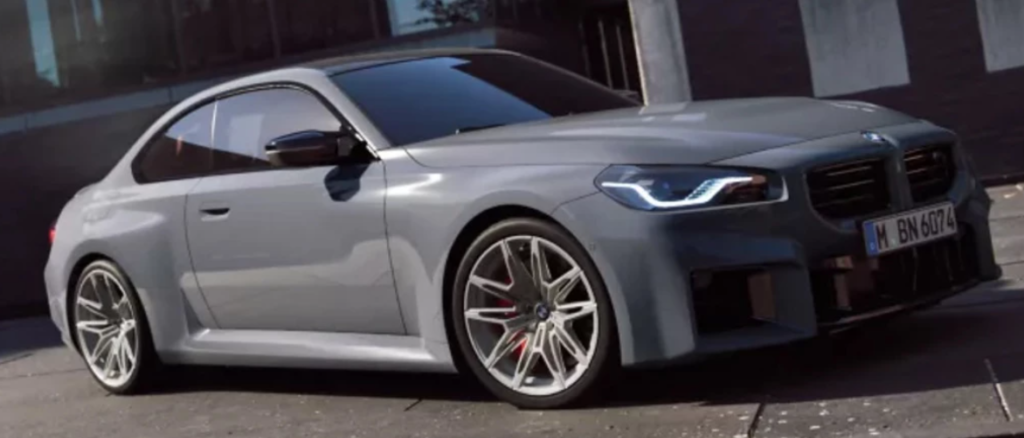
The BMW M2 vs M240i debate is one of those automotive arguments where neither side is exactly wrong. Both cars are compact BMW coupes. Both use turbocharged inline-six engines. Both are seriously quick. Both can turn an ordinary drive to the supermarket into an excuse to take the long way home.
Yet they are fundamentally different animals.
The BMW M240i is the polished all-rounder. It gives us substantial performance without constantly reminding us that we bought a serious sports car. The M2, meanwhile, is the rowdier sibling—the one that arrives at dinner wearing racing shoes.
So, should we spend extra money on the full-fat M car, or is the M240i actually the smarter purchase?
In this comparison, we will examine performance, engines, handling, comfort, practicality, interior quality, running costs, daily usability, value, and more. More importantly, we will look beyond specification sheets and ask the question that actually matters: which one would we rather live with?
Content in this publication
- BMW M2 vs M240i at a Glance
- What Is the Main Difference Between the BMW M2 and M240i?
- BMW M2 vs M240i Engine Comparison
- BMW M2 vs M240i Horsepower
- BMW M2 vs M240i 0–60 MPH
- BMW M2 vs M240i Transmission
- BMW M2 vs M240i Handling
- Rear-Wheel Drive vs xDrive
- BMW M2 vs M240i Ride Comfort
- BMW M2 vs M240i Interior
- BMW M2 vs M240i Practicality
- BMW M2 vs M240i Dimensions
- BMW M2 vs M240i Weight
- BMW M2 vs M240i Fuel Economy
- BMW M2 vs M240i Running Costs
- BMW M2 vs M240i for Daily Driving
- BMW M2 vs M240i for Track Driving
- BMW M2 vs M240i Exhaust Sound
- BMW M2 vs M240i Styling
- BMW M2 vs M240i Price
- BMW M2 vs M240i Reliability
- Which Is Better for Modification?
- Who Should Buy the BMW M240i?
- Who Should Buy the BMW M2?
- BMW M2 vs M240i: Which One Would We Choose?
- Conclusion: M2 or M240i?
- Frequently Asked Questions
BMW M2 vs M240i at a Glance
Before diving deeper, here is the basic picture.
| Category | BMW M2 | BMW M240i |
|---|---|---|
| Engine | 3.0L turbo inline-six | 3.0L turbo inline-six |
| Character | Dedicated M performance car | Performance-oriented daily coupe |
| Available manual | Yes | No |
| Automatic | 8-speed | 8-speed |
| Drivetrain | RWD / M xDrive depending on version | RWD / xDrive |
| Ride | Firmer | More comfortable |
| Handling | Sharper, more adjustable | Fast, secure, easier |
| Daily usability | Good | Excellent |
| Track capability | Excellent | Good |
| Running costs | Higher | Lower |
| Best for | Enthusiasts | Everyday performance buyers |
BMW's current U.S. specifications list the M2 at 473 hp, while the current M240i is rated at 386 hp. BMW quotes 0–60 mph in as little as 3.6 seconds for the M2 M xDrive and 4.1 seconds for the M240i xDrive.
Those numbers already tell us something important: the difference is no longer merely cosmetic.
What Is the Main Difference Between the BMW M2 and M240i?
The simplest explanation is that the M240i is an extremely powerful BMW 2 Series, while the M2 is a genuine BMW M car engineered around performance.
That sounds obvious, but it affects almost everything.
BMW gives the M2 more than additional horsepower. It receives wider bodywork, more aggressive chassis tuning, performance-focused suspension hardware, larger wheels and brakes, more extensive cooling, greater adjustability and a much more serious approach to handling.
The M240i takes the opposite route. It wants to be fast without becoming exhausting.
Think of the M240i as a premium road car that happens to be outrageously quick. The M2 feels more like a sports car that BMW has somehow made civilized enough for commuting.
Is the M240i a Real M Car?
Not quite.
The M240i belongs to BMW's M Performance category rather than being a full BMW M model.
That distinction does not make the M240i slow or uninteresting. Far from it. In real-world driving, it can embarrass plenty of dedicated sports cars.
But the M2 receives the deeper engineering treatment associated with BMW M.
The M2 is not simply an M240i with more boost and aggressive bumpers.
BMW M2 vs M240i Engine Comparison
Both cars use 3.0-liter turbocharged inline-six engines, but they come from different branches of BMW's engine family.
The M240i uses BMW's immensely capable B58-based six-cylinder configuration. It is smooth, responsive and wonderfully flexible.
The M2 uses an M-developed twin-turbo inline-six related to the engines found in larger M cars.
That difference becomes obvious as the revs rise.
BMW M240i Engine Character
The M240i engine feels effortless.
Press the accelerator at moderate rpm and it simply gathers speed. There is little drama and virtually no need to hunt for power.
It works beautifully as a road engine because torque is available almost everywhere.
Cruising through traffic?
Easy.
Overtaking on a highway?
Done before we have finished thinking about it.
Leaving a motorway ramp?
Suddenly we are travelling considerably faster than expected.
The engine is like a strong current under calm water. It rarely seems stressed.
BMW M2 Engine Character
The M2 feels angrier.
BMW's current M2 specification lists 473 horsepower, with automatic versions producing up to 443 lb-ft of torque. The standard six-speed manual version is listed at 406 lb-ft.
More importantly, the M2 encourages us to use that performance.
The throttle response feels more urgent. The upper end of the rev range feels more alive. The car seems to ask us to keep going rather than settle down.
Where the M240i whispers, "Relax, I've got this," the M2 says, "Are we having fun yet?"
Which Engine Is Better?
For everyday driving, we might actually prefer the relaxed flexibility of the M240i.
For enthusiasm?
M2.
No hesitation.
Its engine feels more special because it belongs in a car specifically built around performance.
BMW M2 vs M240i Horsepower
This is where the separation becomes obvious.
Current BMW U.S. figures place the M240i at 386 horsepower, while the M2 develops 473 horsepower.
That roughly 87-hp gap looks substantial on paper, although straight-line driving does not always make the M240i feel dramatically slower.
Why?
Traction.
The M240i xDrive can deploy its power remarkably efficiently. From a standstill, it grabs the road and launches cleanly.
The M2's advantage becomes more obvious once speeds rise, particularly when accelerating hard beyond ordinary urban speeds.
BMW M2 vs M240i 0–60 MPH
Acceleration numbers can be surprising.
BMW currently quotes:
- M240i RWD: approximately 4.4 seconds
- M240i xDrive: approximately 4.1 seconds
- M2 manual: approximately 4.1 seconds
- M2 automatic RWD: approximately 3.9 seconds
- M2 M xDrive: approximately 3.6 seconds
Actual results depend on specifications and conditions, but BMW's official figures show how close these cars can appear when judged purely by launch times.
That leads to an interesting conclusion.
The M240i Is Already Ridiculously Fast
For normal road driving, an M240i does not feel like the cheaper, slower consolation prize.
It feels rapid enough that using its full capability regularly becomes difficult.
A four-second-ish 0–60 car is not merely quick. It is quicker than most circumstances require.
So if acceleration is the only reason we are considering an M2, the M240i deserves serious thought.
BMW M2 vs M240i Transmission
One of the biggest differences concerns driver involvement.
M240i Automatic Transmission
The M240i comes with an eight-speed automatic.
Fortunately, it is an excellent gearbox.
In normal driving it slips through gears almost invisibly. Switch into Sport mode and it becomes more alert, holding lower gears and responding quickly through the paddle shifters.
It perfectly matches the M240i's mission.
Fast when needed.
Relaxed when not.
The M2 Still Offers a Manual
This matters.
BMW still offers the M2 with a six-speed manual transmission alongside the eight-speed automatic.
For purists, that may settle the entire BMW M2 vs M240i debate.
A manual M2 is not necessarily the quickest version.
It does not need to be.
The attraction is participation.
Operating the clutch, choosing the gear and balancing throttle ourselves transforms the experience. The journey becomes interactive rather than merely fast.
Manual M2 or Automatic M2?
We would choose:
- Manual if driving engagement matters most.
- Automatic if speed and convenience matter most.
- M240i automatic if everyday usability dominates the decision.
BMW M2 vs M240i Handling
Here we reach the M2's strongest argument.
Drive both cars quickly through a sequence of bends and the difference becomes clearer than any horsepower figure could show.
The M240i is capable.
The M2 is communicative.
How the M240i Feels Through Corners
The M240i turns accurately and generates plenty of grip.
With xDrive, it can feel almost unshakeable.
That confidence is useful on wet roads, cold mornings and imperfect surfaces. We can drive quickly without feeling as though the car is constantly demanding concentration.
The downside?
It feels slightly filtered compared with the M2.
Everything happens correctly, but the car does not always pull us into the process.
How the M2 Feels Through Corners
The M2 is broader, more serious and more adjustable.
Its Adaptive M Suspension is specifically aimed at combining performance with usable road comfort, but the overall chassis remains far more focused.
Turn into a corner and the front end feels eager.
Add throttle and the rear becomes part of the conversation.
Brake hard and the chassis feels composed.
You may be interested in reading BMW M2 vs M3 vs M4: Which BMW M Car Should We Buy?
Change direction rapidly and we understand where the extra money went.
The M2 gives us more information and more freedom to influence what happens next.
Which Handles Better?
The M2.
Easily.
But here is the twist: the M240i may be easier to drive quickly on normal roads.
Its limits are accessible, its traction is reassuring and it demands less commitment.
The M2 gives us the bigger playground. The M240i gives us an easier game.
Rear-Wheel Drive vs xDrive
Both lineups now make drivetrain choice an important consideration.
The M240i can be configured with rear-wheel drive or xDrive in BMW's current U.S. range, while the M2 family includes rear-wheel-drive versions and an M xDrive model.
Why Choose Rear-Wheel Drive?
Rear-wheel drive offers the purer traditional BMW experience.
Benefits include:
- Less drivetrain complexity
- More classic handling balance
- Greater rear-end adjustability
- Slightly lighter weight
- More enthusiast appeal
Why Choose xDrive?
All-wheel drive brings:
- Better traction
- Faster launches
- Greater confidence in poor weather
- Easier deployment of power
- More everyday security
For year-round commuting in wet or snowy conditions, xDrive is difficult to argue against.
For someone chasing that classic small-M-car personality, rear-wheel drive remains enormously appealing.
BMW M2 vs M240i Ride Comfort
The M240i wins here.
Its suspension still feels sporty, particularly with larger wheels, but it generally absorbs rough roads more gracefully.
The M2 is not unbearable.
Far from it.
Modern adaptive suspension gives it considerably more versatility than old-school performance cars. But even in softer settings, the M2 continuously reminds us that body control took priority over plushness.
Potholes land harder.
Expansion joints feel sharper.
Rough urban roads communicate more through the cabin.
If our typical journey involves traffic, uneven streets and long motorway drives, the M240i makes life easier.
BMW M2 vs M240i Interior
At first glance, the cabins are familiar.
Both cars belong to the same basic 2 Series family, so much of the fundamental architecture and technology is shared.
Yet the atmosphere differs.
M240i Interior
The M240i feels sporty but civilized.
We get the modern BMW digital interface, supportive seats, premium materials and an environment that works equally well for commuting or long-distance travel.
Nothing screams "track car."
That may actually be its biggest strength.
M2 Interior
The M2 turns the theatre up.
Depending on specification, it can be equipped with aggressive M seats, distinctive trim, M-specific displays and performance-oriented controls.
BMW also offers options such as M Carbon bucket seats and an M Carbon roof on the M2.
With those seats installed, the cabin feels far more exotic.
The downside?
Carbon buckets can be inconvenient if we regularly climb in and out of the car.
What feels heroic during a Sunday drive may feel less heroic while trying to escape a tight parking space wearing office clothes.
BMW M2 vs M240i Practicality
Neither car is a family SUV, obviously.
Still, these are surprisingly usable coupes.
BMW lists up to 13.8 cubic feet of cargo capacity for the current M2, and the rear seatbacks can fold when additional loading space is needed.
The M240i similarly maintains a useful trunk and small rear seats.
Rear Seat Space
Adults can use the rear seats.
Would they volunteer to spend three hours there?
Probably not.
The back seats work best for:
- Children
- Occasional passengers
- Bags
- Jackets
- Emergency transport
If rear-seat practicality matters regularly, neither should be our first choice.
But among sports coupes, both remain impressively livable.
BMW M2 vs M240i Dimensions
Interestingly, the cars are close in overall length.
BMW lists the M2 at approximately 180.3 inches long, compared with roughly 179.4 inches for the M240i.
The M2 is noticeably wider, however, at roughly 74.3 inches versus 72.4 inches for the M240i.
That added width contributes to the M2's stance.
Park them side by side and the difference is obvious.
The M240i looks muscular.
The M2 looks like it has been doing deadlifts.
BMW M2 vs M240i Weight
Neither car is featherweight.
Depending on drivetrain and transmission, BMW lists current M2 curb weights ranging from approximately 3,814 pounds to 3,988 pounds, while M240i configurations fall in a similar broad neighborhood depending on drivetrain and model specification.
This surprises some enthusiasts because the M2 is physically compact.
But modern performance cars carry sophisticated suspension, safety systems, electronics, powerful engines and substantial structural reinforcement.
Fortunately, the M2 disguises its mass remarkably well once moving.
BMW M2 vs M240i Fuel Economy
No one buys either car because they want Prius-like fuel consumption.
Still, the M240i generally has the advantage.
BMW currently lists the U.S.-spec M240i at up to approximately 23 mpg city and 32 mpg highway, depending on configuration.
The M2's additional performance hardware, broader tires and more aggressive state of tune inevitably make efficiency less of a priority.
Over 10,000 or 15,000 miles per year, those differences begin to matter.
Not dramatically.
But enough.
BMW M2 vs M240i Running Costs
Purchase price is only the opening act.
Performance cars consume expensive things.
Tires.
Brakes.
Fuel.
Insurance.
And occasionally our financial optimism.
Why the M2 Costs More to Own
The M2 generally brings higher costs because it uses more performance-focused components.
Expect potentially greater expenditure on:
- Tires
- Brake components
- Insurance
- Fuel
- Performance-specific replacement parts
- Track consumables if driven hard
Why the M240i Makes Financial Sense
The M240i gives us an enormous proportion of the excitement without demanding the same performance-car lifestyle.
That is a powerful argument.
For many owners, the M240i represents the sweet spot where speed, comfort and ownership costs intersect.
BMW M2 vs M240i for Daily Driving
This round goes to the M240i.
It is easier to relax in.
The suspension is friendlier.
The power delivery feels effortless.
xDrive versions inspire confidence in poor weather.
The automatic gearbox works beautifully in traffic.
And visually, it attracts less attention.
The M2 can absolutely function as a daily driver, but it always feels more intense.
That might be exactly what we want.
You may be interested in readingBMW M2 vs M3 vs M4: Which BMW M Car Should We Buy?You may be interested in reading
BMW M2 vs Audi RS3: Which Performance Car Is Better?Some people do not want their sports car to disappear into the background Monday through Friday.
Others do.
BMW M2 vs M240i for Track Driving
Now the pendulum swings heavily toward the M2.
The M2 exists partly because BMW knows some buyers want to explore performance beyond ordinary road driving.
Its chassis tuning, brakes, cooling capacity, suspension calibration and overall adjustability make it the natural choice for track work.
The M240i can certainly handle spirited laps, but repeated heavy track use exposes the difference between an M Performance road car and a dedicated M machine.
Do We Actually Need the M2 for Road Driving?
Probably not.
But "need" is a dangerous word when discussing sports cars.
Nobody needs nearly 500 horsepower in a compact coupe.
We buy these cars because driving can be more than transportation.
The M2 just takes that philosophy further.
BMW M2 vs M240i Exhaust Sound
Both inline-six engines sound good.
The M240i offers the creamy, bass-rich tone associated with BMW's turbocharged six-cylinder engines.
The M2 sounds harder and more aggressive, particularly under load.
BMW equips the M2 with a valve-controlled rear exhaust, reinforcing its more theatrical personality.
Neither delivers the completely unfiltered soundtrack of older naturally aspirated M cars, but the M2 unquestionably feels more dramatic.
BMW M2 vs M240i Styling
This is entirely subjective.
The M240i has a relatively understated design.
It looks sporty without announcing itself three streets away.
The M2 is different.
Wide fenders, aggressive bumpers, large openings and its squat proportions create a far more confrontational appearance.
Some love it.
Others need time.
We think the styling makes more sense in person because the exaggerated width communicates what the M2 actually is.
Which BMW Looks More Expensive?
M2.
Which Is More Discreet?
M240i.
Choose your personality.
BMW M2 vs M240i Price
BMW's current U.S. lineup places the M240i at a substantially lower starting price than the M2.
At the time of writing, BMW lists the M240i starting around $53,600, the M240i xDrive around $55,600, and the M2 around $69,500, before options and destination-related costs.
That gap is significant.
Once options enter the conversation, the difference can grow further.
Is the M2 Worth the Extra Money?
It depends what we are paying for.
If we only want speed?
Probably not.
The M240i is already absurdly quick.
If we want steering response, chassis adjustability, track capability, aggressive styling, a manual transmission and the authentic M experience?
Then yes.
The premium makes much more sense.
BMW M2 vs M240i Reliability
Both rely on modern BMW turbocharged six-cylinder powertrains with strong reputations compared with some older-generation BMW engines.
However, reliability depends heavily on maintenance, driving style and ownership history.
A gently driven M240i with regular servicing will naturally live a different life from an M2 that spends every other weekend attacking racetracks.
When buying used, we would prioritize:
- Complete maintenance history
- Quality tires fitted in matching sets
- Evidence of proper servicing
- Brake condition
- Signs of tuning
- Accident history
- Suspension condition
- Unusual drivetrain noises
A cheaper modified example can quickly become the expensive option.
Which Is Better for Modification?
Both cars have enormous tuning potential.
The M240i's turbocharged six-cylinder engine responds extremely well to aftermarket upgrades, which explains why tuned examples can produce startling power.
The M2 begins from a higher-performance foundation.
That means suspension, brakes, cooling and chassis hardware are already designed around more ambitious driving.
Modified M240i vs Stock M2
A modified M240i can certainly outrun a stock M2 in a straight line.
But that does not turn it into an M2.
This distinction matters.
Acceleration is only one ingredient.
The M2's appeal comes from how the entire car behaves together.
Who Should Buy the BMW M240i?
We would recommend the M240i if you:
- Drive the car every day
- Value comfort
- Want excellent fuel economy for the performance
- Prefer subtle styling
- Want xDrive traction
- Rarely visit racetracks
- Prioritize value
- Want serious speed without serious compromises
For most buyers, the M240i is probably the rational choice.
And that is not faint praise.
It may be one of BMW's best all-round performance cars.
Who Should Buy the BMW M2?
Choose the M2 if you:
- Care deeply about handling
- Want a true BMW M car
- Want a manual gearbox option
- Plan occasional track days
- Prefer aggressive styling
- Enjoy adjusting the car's behavior
- Want something that feels special every time you drive it
- Are willing to sacrifice some comfort and efficiency
The M2 is the emotional choice.
But sometimes emotional decisions are why we love cars in the first place.
BMW M2 vs M240i: Which One Would We Choose?
If we needed one car for everything, we would have a difficult time ignoring the BMW M240i xDrive.
It is brutally quick.
Comfortable.
Usable in poor weather.
Relatively discreet.
And considerably cheaper than an M2.
For commuting Monday through Friday and attacking a mountain road on Sunday, it makes almost absurdly good sense.
But if the question becomes which car would we choose purely because we love driving?
M2.
Its additional power is only part of the attraction.
The chassis feels more alive. The stance feels more serious. The manual gearbox remains available. The whole car feels as though engineers were allowed to chase excitement instead of merely optimizing versatility.
The M240i is the car our head recommends.
The M2 is the car we would keep glancing back at after parking.
Conclusion: M2 or M240i?
The BMW M2 vs M240i comparison ultimately comes down to how much performance we actually want to interact with.
The M240i offers nearly everything most drivers could realistically need. Its turbocharged six-cylinder engine is powerful, smooth and flexible. It accelerates with shocking urgency, especially with xDrive, yet remains comfortable enough for daily commuting and long road trips.
That combination makes it arguably the better all-round car.
The M2 goes further.
It trades some comfort, subtlety and financial sensibility for sharper responses, additional power, serious chassis hardware and a genuinely different personality.
The M240i feels like a fast luxury coupe.
The M2 feels like an event.
And that distinction matters more than any number in a specification table.
For most drivers, the M240i is enough.
For enthusiasts who hate the phrase "enough," the M2 exists.
Frequently Asked Questions
1. Is the BMW M2 much faster than the M240i?
The M2 has considerably more horsepower, but the difference in straight-line acceleration can be smaller than expected, especially when comparing a rear-wheel-drive M2 with an M240i xDrive. BMW currently quotes 0–60 mph in approximately 4.1 seconds for the M240i xDrive and as little as 3.6 seconds for the M2 M xDrive.
2. Is the M240i basically an M2?
No. They share the same general vehicle family and both use turbocharged six-cylinder engines, but the M2 receives dedicated M chassis tuning, wider bodywork, different suspension hardware, more performance-focused braking and cooling, and significantly greater adjustability.
3. Is the M240i better for daily driving than the M2?
For most people, yes. The M240i generally offers a more comfortable ride, lower operating costs and a less aggressive personality while remaining extremely fast.
4. Can you get a BMW M2 with a manual transmission?
Yes. BMW currently offers the rear-wheel-drive M2 with a six-speed manual transmission, while an eight-speed automatic is also available.
5. Is the BMW M2 worth the extra money over the M240i?
It is worth the additional cost if handling, driver engagement, track performance, a manual transmission and the authentic BMW M experience matter to us. If our priorities are everyday speed, comfort and value, the M240i is the smarter purchase.
You may be interested in readingBMW M2 vs M3 vs M4: Which BMW M Car Should We Buy?You may be interested in reading
BMW M2 vs Audi RS3: Which Performance Car Is Better?You may be interested in reading
BMW M2 vs Supra: Which Sports Car Deserves Your Money?If you want to know other articles similar to BMW M2 vs M240i: Which BMW 2 Series Is Really Worth It? you can visit the category Models.
Honda Passport vs Toyota 4Runner: Which SUV Is Better?
Honda Passport vs Ford Bronco: Which SUV Is Better?
Honda Passport vs Ford Explorer: Which SUV Is Better?
Honda Passport or Pilot: Which SUV Is Better?
Honda Passport vs Jeep Grand Cherokee: Which SUV Is Better?
Honda Passport vs Nissan Pathfinder: Which SUV Is Better?
Leave a Reply
More content of your interest