
BMW M2 vs Audi RS3: Which Performance Car Is Better?

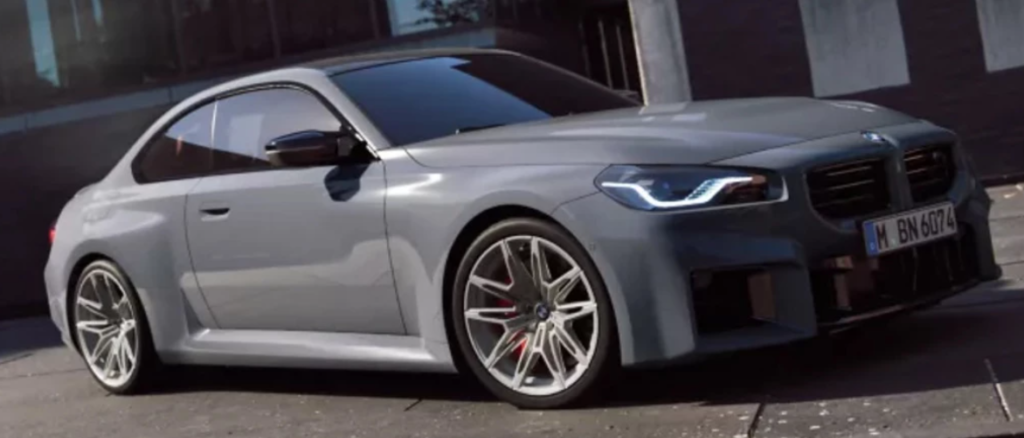
Choosing between the BMW M2 and Audi RS3 sounds easy until we actually look beneath the numbers. Both are compact, brutally quick German performance cars. Both can turn an ordinary commute into something that feels suspiciously like a qualifying lap. And both deliver enough performance to make much more expensive sports cars nervous.
Yet they approach the same mission from almost opposite directions.
The BMW M2 is the traditionalist. It gives us a 3.0-liter turbocharged straight-six, muscular proportions, and—crucially—a rear-wheel-drive configuration that puts driver involvement near the top of its priority list. A six-speed manual remains available, while an eight-speed automatic caters to drivers who prefer quicker, easier shifts. BMW currently rates the M2 at up to 473 hp in the U.S. specification.
The Audi RS3, meanwhile, takes a more technological route. Its fascinating 2.5-liter turbocharged five-cylinder engine produces 394 hp in current U.S. specification, paired with a seven-speed dual-clutch transmission and quattro all-wheel drive. Audi quotes a rapid 3.6-second 0–60 mph time.
So which one deserves our money?
If we only examine horsepower, the BMW looks stronger. If we only examine acceleration, the Audi suddenly fights back. But cars like these are bought with the heart as much as the calculator.
Let's dig deeper.
Content in this publication
- BMW M2 vs Audi RS3 at a Glance
- Engine Comparison: Six Cylinders vs Five
- BMW M2 vs Audi RS3 Performance
- Rear-Wheel Drive vs Quattro AWD
- Handling: Which Is More Fun?
- BMW M2 vs Audi RS3 on a Track
- Sound: BMW M2 or Audi RS3?
- Transmission: Manual Fun vs Dual-Clutch Speed
- Interior Comparison
- Practicality: Audi Lands a Heavy Punch
- Size and Road Presence
- Weight: Neither Car Is a Featherweight
- Ride Comfort and Everyday Use
- Wet and Winter Driving
- Fuel Economy
- Reliability and Ownership Considerations
- BMW M2 vs Audi RS3 Price and Value
- Which Car Feels More Special?
- Who Should Buy the BMW M2?
- Who Should Buy the Audi RS3?
- BMW M2 vs Audi RS3: Which Is Faster?
- BMW M2 vs Audi RS3: Which Is More Fun?
- BMW M2 vs Audi RS3: Which Is the Better Daily Driver?
- Final Verdict: BMW M2 or Audi RS3?
- Frequently Asked Questions
BMW M2 vs Audi RS3 at a Glance
Before we disappear down the performance-car rabbit hole, here's the basic picture.
| Feature | BMW M2 | Audi RS3 |
|---|---|---|
| Engine | 3.0L turbo inline-six | 2.5L turbo five-cylinder |
| Power | Up to 473 hp* | 394 hp* |
| Torque | Up to 443 lb-ft* | 369 lb-ft* |
| Transmission | 6-speed manual / 8-speed automatic | 7-speed dual-clutch |
| Traditional drivetrain | Rear-wheel drive | quattro AWD |
| 0–60 mph | From 3.9 sec automatic* | 3.6 sec* |
| Doors | 2 | 4 |
| Character | Raw, playful, muscular | Fast, secure, versatile |
*Figures shown are current U.S.-market manufacturer specifications and can vary by model year, transmission, drivetrain, equipment, and country. BMW also now offers an M xDrive version of the M2, rated at 3.6 seconds to 60 mph.
That table already exposes the central difference.
The M2 wants us involved.
The RS3 wants to make going very fast almost ridiculously easy.
Engine Comparison: Six Cylinders vs Five
This is where the comparison becomes deliciously unusual.
Neither manufacturer followed the predictable four-cylinder route. Instead, BMW and Audi have given their compact performance cars engines with genuine personality.
BMW M2: The Straight-Six Muscle Car
BMW's turbocharged 3.0-liter inline-six feels almost excessive in a car this compact—and that's exactly why we love the idea.
Current U.S. technical data lists 473 horsepower from the M2, with torque reaching 443 lb-ft with the eight-speed automatic. The six-speed manual version produces slightly less peak torque at 406 lb-ft.
The straight-six gives the M2 a broad, muscular personality. Rather than feeling like a small engine being pushed to its limits, it has the sensation of a larger performance engine stuffed into a relatively compact body.
Press the accelerator and the car doesn't merely become quicker. It seems to tighten its shoulders.
There's substantial power available throughout the rev range, which makes overtaking effortless and corner exits genuinely entertaining.
Audi RS3: The Five-Cylinder Wild Card
Audi's engine may have one fewer cylinder, but calling it less interesting would be a serious mistake.
The 2.5-liter turbocharged inline-five is one of the RS3's greatest attractions. In current U.S. specification, Audi rates it at 394 hp and 369 lb-ft of torque.
Its unusual firing order gives it a soundtrack unlike the endless sea of turbocharged four-cylinder performance cars around it.
Audi itself highlights the engine's distinctive 1-2-4-5-3 firing order, which contributes to that unmistakable five-cylinder voice.
Which Engine Has More Character?
This is wonderfully subjective.
The BMW engine feels bigger, stronger and more traditional. There's something reassuringly old-school about a longitudinal straight-six driving the rear wheels.
The Audi's five-cylinder engine feels stranger and more exotic. Its sound is arguably its secret weapon.
Our simplified verdict?
BMW wins for muscle. Audi wins for theatre.
BMW M2 vs Audi RS3 Performance
On paper, we might expect the more powerful BMW to leave the Audi staring at its taillights.
Reality is less cooperative.
Traction matters.
A lot.
0–60 MPH Acceleration
Audi quotes the 2026 RS3 at 3.6 seconds from 0–60 mph. Its quattro system can distribute the engine's power across four driven wheels, helping the car launch with extraordinary consistency.
The rear-wheel-drive BMW M2 is officially rated at:
- 4.1 seconds with the six-speed manual
- 3.9 seconds with the eight-speed automatic
BMW's newer M xDrive-equipped M2 cuts that figure to 3.6 seconds, putting it directly alongside the Audi on manufacturer claims.
So the Audi can be quicker than a conventional rear-wheel-drive M2 off the line despite having less power.
That's the magic of traction.
Rolling Acceleration Tells Another Story
Once both cars are already moving, horsepower becomes more important and the M2's larger engine has room to stretch its legs.
That extra power can make the BMW feel especially forceful at higher speeds, whereas the Audi's greatest party trick is how efficiently it converts its output into forward movement immediately.
Think of it like two sprinters.
The RS3 launches from the blocks almost perfectly.
The M2 may need half a moment to settle itself, but once moving, its larger lungs become obvious.
Rear-Wheel Drive vs Quattro AWD
For many enthusiasts, this section determines the winner before anything else matters.
Why the BMW M2 Feels More Traditional
The classic M2 formula is delightfully uncomplicated:
engine in front, driven wheels behind.
That layout naturally encourages adjustability. Add throttle mid-corner and the balance changes. Push harder and the rear axle becomes part of the conversation.
We're not merely passengers issuing commands. We participate.
The M2 therefore feels closer to the traditional sports-coupe blueprint.
The Manual Transmission Matters
There's another giant advantage for purists: BMW still offers a six-speed manual transmission on the M2.
Is it the quickest choice?
No.
Does that matter?
For some buyers, absolutely not.
Using three pedals turns every downshift into an event. The driver decides exactly when the next gear arrives. In an era when automatic transmissions are becoming overwhelmingly dominant, that choice gives the M2 something increasingly rare.
Why the Audi RS3's Quattro System Works So Well
The Audi attacks the road differently.
Its standard quattro system works with an RS torque splitter, which can vary torque distribution at the rear axle. Audi even provides an RS Torque Rear setting designed to produce more playful handling characteristics.
That matters because older AWD performance cars sometimes felt as if their primary objective was simply preventing anything exciting from happening.
The RS3 is smarter than that.
It provides immense traction without completely sterilizing the experience.
Handling: Which Is More Fun?
Fun cannot be measured in horsepower.
If it could, every enthusiast would simply buy whatever vehicle produced the largest number and we'd all go home early.
The M2 and RS3 demonstrate why chassis personality matters.
BMW M2 on a Twisty Road
The M2 feels like a compact coupe built around its drivetrain.
Its proportions, driving position and rear-drive balance encourage us to explore what the chassis is doing underneath us.
Turn into a corner and there is a sense that the car expects participation.
It doesn't simply solve the corner for us.
That distinction matters.
The M2 is like a conversation with an enthusiastic friend. Sometimes loud, occasionally mischievous, but rarely boring.
Audi RS3 Through the Same Corner
The RS3 is enormously capable, but its philosophy is different.
Where the BMW asks, “What shall we do?”
The Audi seems to say, “Don't worry, I've got this.”
Its traction allows us to apply power extremely early. The torque splitter helps rotate the car more eagerly than a conventional front-biased AWD layout might suggest.
The result is point-and-fire performance.
Brake. Turn. Aim. Accelerate.
Gone.
Which Has Better Steering Feel?
Neither car needs old-fashioned hydraulic steering to be accurate, but steering character matters more in the BMW because so much of its appeal revolves around feedback and involvement.
The RS3's steering serves its precision-focused personality well. The M2 tends to make the driver more conscious of chassis balance.
You may be interested in reading BMW M2 vs Supra: Which Sports Car Deserves Your Money?
For enthusiasts chasing interaction rather than mere speed, we'd lean toward the BMW.
BMW M2 vs Audi RS3 on a Track
Take both cars onto a circuit and their personalities become even clearer.
The M2 gives us more power and a chassis fundamentally suited to traditional rear-drive performance driving. Its dimensions and drivetrain allow experienced drivers to manipulate balance using throttle input.
The RS3 fights back with devastating traction and consistency.
Which Is Easier to Drive Fast?
RS3.
Almost unquestionably.
Its all-wheel-drive traction gives the driver confidence when applying throttle out of slower corners. That means less hesitation and fewer dramatic corrections.
The M2 demands slightly more respect.
And ironically, that's exactly why some drivers will prefer it.
Beginner vs Experienced Track Drivers
For someone relatively new to track driving, the RS3 can flatter the driver.
For someone who actively enjoys managing weight transfer, throttle and rear-axle movement, the M2 may provide a deeper experience.
Neither approach is wrong.
One delivers confidence.
The other delivers involvement.
Sound: BMW M2 or Audi RS3?
We can debate suspension geometry all afternoon, but sometimes the heart makes its decision through the ears.
The BMW straight-six produces a deep, aggressive sound with the classic smoothness associated with six cylinders arranged in one line.
Then the Audi starts.
That five-cylinder rhythm instantly sounds different.
There's a faint echo of Audi's rally heritage in the concept, and the unusual engine note gives the RS3 something that cannot be expressed on a specification sheet.
For pure sonic uniqueness, the RS3 gets our vote.
Transmission: Manual Fun vs Dual-Clutch Speed
This category might produce the clearest split of the entire comparison.
BMW M2 Transmission Choices
BMW gives us two fundamentally different experiences:
- Six-speed manual
- Eight-speed automatic
The automatic is faster and easier.
The manual is slower and more engaging.
That's not a criticism. In fact, it may be the manual's biggest attraction.
Audi RS3 S Tronic
Audi pairs the RS3 with a seven-speed S tronic dual-clutch transmission.
It suits the car beautifully.
Changes happen quickly, acceleration is seamless, and the transmission supports the RS3's entire philosophy: deploy performance with minimum drama.
There is no manual option.
For many buyers, that won't matter.
For the person searching specifically for a compact manual performance car, it matters enormously.
Interior Comparison
Performance cars still spend plenty of their lives crawling through traffic, sitting in parking lots and carrying coffee.
So let's climb inside.
BMW M2 Interior
The M2 cabin makes its intentions clear.
The driving position is low and purposeful. BMW's digital displays bring plenty of technology into the experience, but the basic architecture still feels centered around the person behind the steering wheel.
Depending on options, buyers can push the cabin farther toward either everyday comfort or track-day aggression.
The result feels like a sports coupe first.
Audi RS3 Interior
The Audi provides a slightly different atmosphere.
Its four-door body gives it a fundamentally more conventional everyday layout, while RS-specific graphics, trim and displays remind us that this isn't merely an A3 wearing an expensive body kit.
Audi's current U.S. specification includes a 10.1-inch MMI display.
The cockpit feels compact, technical and purposeful.
If we value a more discreet performance-car environment, the Audi has significant appeal.
Practicality: Audi Lands a Heavy Punch
Here's where the BMW suffers.
Two doors are cool until someone wants to sit in the back.
Audi RS3 as a Daily Driver
Four doors fundamentally change the experience.
Passengers enter normally. Installing child seats is easier. Rear-seat access doesn't require a small gymnastics routine.
The RS3 is effectively a compact performance sedan capable of disguising itself as ordinary transport when necessary.
Current Audi data for the 2026 RS3 Sedan in some markets lists approximately 321 liters of luggage capacity, though exact figures and measuring standards vary by country.
BMW M2 Practicality
The BMW is still reasonably usable by sports-car standards.
There's a real trunk.
There are rear seats.
But nobody will confuse it with the more accessible Audi.
The M2 is a coupe because being a coupe is part of its identity.
Buyers have to accept the compromise.
Size and Road Presence
One unexpected characteristic of the modern M2 is that it isn't particularly tiny.
BMW lists current M2 dimensions at approximately 180.3 inches long and 74.3 inches wide, with a wheelbase of 108.1 inches.
Its swollen arches and square shoulders make it look muscular.
The RS3 takes a subtler route. It resembles a compact premium sedan that has been sent to the gym, whereas the M2 looks ready for a fight before we've even started the engine.
Want attention?
M2.
Prefer something slightly more discreet?
RS3.
Weight: Neither Car Is a Featherweight
Modern performance cars are powerful, sophisticated and safe.
The price we pay is mass.
BMW lists the rear-drive M2 at approximately 3,814 lb with the manual and 3,867 lb with the automatic in current U.S. technical specifications. The M xDrive version is heavier still.
These aren't lightweight sports cars in the traditional Lotus sense.
Instead, both manufacturers use sophisticated chassis systems, powerful brakes, wide tires and substantial horsepower to control the mass.
The amazing thing isn't that modern performance cars are heavy.
It's how effectively they hide it.
Ride Comfort and Everyday Use
Would we want to commute in them?
Yes—but one is easier.
RS3 Comfort
Audi fits the RS3 with adaptive suspension with damper control, allowing the car to adjust its damping and strike a compromise between body control and everyday compliance.
Combined with AWD and four doors, that flexibility strengthens its daily-driver credentials.
Bad weather?
School run?
Office commute?
Weekend mountain road?
You may be interested in readingBMW M2 vs Supra: Which Sports Car Deserves Your Money?You may be interested in reading
BMW M2 vs Porsche Cayman: Which Sports Car Is Better?The RS3 can move between those roles remarkably easily.
M2 Comfort
The M2 remains perfectly capable of daily use, but we feel more of its sporting intentions.
That's part of the bargain.
It asks us to sacrifice a little civility for a stronger sense of occasion.
For an enthusiast, that may not feel like a sacrifice at all.
Wet and Winter Driving
If we live somewhere with regular rain, snow or cold winters, drivetrain layout deserves serious consideration.
The RS3's quattro AWD provides an obvious traction advantage when conditions deteriorate, although tires remain enormously important—AWD cannot magically give summer performance tires winter grip.
The traditional rear-drive M2 demands greater care.
BMW's addition of an M xDrive M2 changes that equation considerably, however. The AWD model combines the M2's 473-hp output with enhanced traction and an official 3.6-second 0–60 mph figure.
That makes the latest M2 lineup much harder for the Audi to beat purely on traction.
Fuel Economy
If fuel economy is our number-one concern, we've wandered into the wrong showroom.
Neither car exists to save the last teaspoon of petrol.
Audi's global 2026 data lists combined WLTP consumption for the RS3 Sedan at roughly 8.9–9.3 L/100 km, depending on configuration. Those numbers should not be directly compared with EPA figures because testing procedures differ.
Real-world consumption for either model can vary dramatically.
Drive gently and the figures may seem surprisingly reasonable.
Start enjoying the turbocharger frequently and the fuel gauge can descend like an elevator with a broken cable.
Reliability and Ownership Considerations
Neither the BMW M2 nor Audi RS3 should be treated like a cheap economy car with a body kit.
These are sophisticated high-performance machines.
That means buyers should budget for:
- Premium fuel
- Performance tires
- More expensive brakes
- Proper scheduled servicing
- Higher insurance costs
- Potentially expensive out-of-warranty repairs
- More frequent consumable replacement if used on track
A used example deserves careful inspection.
Service history matters more than shiny paint.
A meticulously maintained M2 or RS3 that has been driven enthusiastically can be a better purchase than a suspiciously cheap car with vague maintenance records.
BMW M2 vs Audi RS3 Price and Value
Pricing varies considerably between countries, model years and options, but the two cars now occupy increasingly similar financial territory.
In the U.S., Audi lists the 2026 RS3 from $66,100, before destination charges, options and other applicable fees.
BMW's current M-model listings put the M2 in roughly the same premium-performance neighborhood, meaning the decision isn't simply “cheap car versus expensive car.”
Options can quickly transform either vehicle's final transaction price.
That means we should compare actual configurations rather than headline MSRP alone.
Which Car Feels More Special?
This question might matter more than everything we've discussed so far.
Performance has become almost absurdly accessible.
Three-point-something seconds to 60 mph is no longer exotic-supercar territory.
So what gives a performance car emotional value?
Character.
The M2 has that strange combination of excess and simplicity: a big straight-six, compact coupe body, available manual gearbox and rear-drive roots.
The RS3 counters with one of the industry's most distinctive engines, quattro traction, dramatic acceleration and everyday four-door practicality.
They're special for completely different reasons.
Who Should Buy the BMW M2?
Choose the BMW M2 if our priorities sound something like this:
- Driver involvement matters more than practicality.
- We want rear-wheel-drive dynamics.
- A manual transmission is important.
- We prefer a coupe.
- We enjoy adjusting a car with the throttle.
- Straight-six power appeals to us.
- Weekend drives matter as much as commuting.
- We may occasionally visit a track.
The M2 is the car for somebody who sometimes takes the long road home simply because the road is good.
Who Should Buy the Audi RS3?
Choose the Audi RS3 if we want:
- Extremely rapid launches.
- Standard AWD traction.
- Four-door practicality.
- A more versatile daily driver.
- A fast dual-clutch transmission.
- Excellent wet-weather confidence.
- The distinctive sound of a five-cylinder engine.
- Huge performance without abandoning everyday usability.
It's the car for somebody who wants one vehicle to handle Monday morning traffic and Sunday morning back roads without feeling seriously compromised in either environment.
BMW M2 vs Audi RS3: Which Is Faster?
This apparently simple question needs qualification.
From a standing start, the RS3 is exceptionally difficult to beat because its quattro AWD system allows it to deploy power efficiently. Audi quotes 3.6 seconds to 60 mph.
A rear-wheel-drive automatic M2 is officially rated at 3.9 seconds, while the manual takes 4.1 seconds.
But BMW's newer M2 M xDrive is also rated at 3.6 seconds.
Therefore, “the RS3 is quicker” is no longer universally accurate.
Transmission, drivetrain, model year, tires, surface and testing method matter enormously.
BMW M2 vs Audi RS3: Which Is More Fun?
Our answer?
M2.
Not because it's automatically better in every corner.
Not because it's always faster.
Because it asks more from us.
The rear-driven layout, available manual transmission and straight-six engine create more opportunities for interaction.
The RS3 occasionally feels like a remarkably talented machine helping us perform.
The M2 feels like we're performing together.
That distinction is tiny on paper and enormous from behind the wheel.
BMW M2 vs Audi RS3: Which Is the Better Daily Driver?
Here the advantage swings dramatically toward Audi.
RS3 wins.
Four doors make life easier. AWD makes variable weather easier. The dual-clutch transmission makes traffic easier. The compact sedan body is easier to explain to anyone who doesn't understand why we need a 400-horsepower car in the first place.
The M2 can absolutely work every day.
The Audi simply requires fewer excuses.
Final Verdict: BMW M2 or Audi RS3?
The BMW M2 vs Audi RS3 battle doesn't produce one universal winner because these cars answer two different interpretations of the same question.
“How should we make a compact car exciting?”
BMW's answer is delightfully traditional.
Give it a powerful straight-six. Drive the rear wheels. Offer a manual gearbox. Build a stout little coupe around the whole thing and allow the driver to wrestle with physics.
Audi's answer is more calculated.
Take a compact sedan. Install a gloriously strange five-cylinder turbo engine. Add a sophisticated quattro system with torque vectoring. Launch it down the road with ruthless efficiency.
If we want the best pure enthusiast experience, we'd choose the BMW M2, particularly in rear-wheel-drive/manual form.
If we want the best all-round performance car, we'd choose the Audi RS3.
The Audi is easier to live with, easier to drive quickly and easier to justify as our only vehicle.
The BMW is harder to forget.
And sometimes that's what buying a performance car is really about.
We don't always want the car that makes the most sense.
Sometimes we want the one that makes us look back after we've parked it.
BMW M2 vs Audi RS3 Winner by Category
| Category | Winner |
|---|---|
| Engine power | BMW M2 |
| Engine sound | Audi RS3 |
| Launch acceleration | Audi RS3 / M2 xDrive |
| Driver involvement | BMW M2 |
| Manual transmission | BMW M2 |
| Wet-weather traction | Audi RS3 |
| Practicality | Audi RS3 |
| Rear-seat access | Audi RS3 |
| Track-day personality | BMW M2 |
| Everyday versatility | Audi RS3 |
| Traditional sports-car feel | BMW M2 |
| One-car solution | Audi RS3 |
In other words, the head chooses the RS3 surprisingly often.
The heart keeps staring at the M2.
Frequently Asked Questions
1. Is a BMW M2 faster than an Audi RS3?
It depends on which M2 we're comparing. Audi quotes the current RS3 at 3.6 seconds from 0–60 mph, while BMW rates the rear-wheel-drive M2 at 3.9 seconds with the automatic and 4.1 seconds with the manual. The newer M2 M xDrive is rated at 3.6 seconds, effectively matching Audi's manufacturer claim. Higher-speed performance can tell a different story because the BMW has considerably more horsepower.
2. Is the Audi RS3 better than the BMW M2 for daily driving?
For most drivers, yes. The RS3's four doors, quattro AWD system, automatic dual-clutch gearbox and sedan layout make it easier to use every day. The M2 remains surprisingly practical for a performance coupe, but accessing its rear seats is less convenient and its personality is more overtly sports-car focused.
3. Which sounds better, BMW M2 or Audi RS3?
Both sound distinctive, but we'd give the RS3 the edge for uniqueness. Its turbocharged five-cylinder engine has an unusual firing order and unmistakable exhaust note. The M2's turbo straight-six sounds deeper and more traditional, so drivers who love classic BMW six-cylinder character may still prefer it.
You may be interested in readingBMW M2 vs Supra: Which Sports Car Deserves Your Money?You may be interested in reading
BMW M2 vs Porsche Cayman: Which Sports Car Is Better?You may be interested in reading
BMW M2 vs Mustang GT: Which Performance Coupe Should We Buy?4. Which is better for track driving, M2 or RS3?
We'd favor the M2 for drivers prioritizing involvement and chassis adjustability, especially the rear-wheel-drive version. Its powerful straight-six and RWD architecture create a more traditional sports-car experience. The RS3 remains extremely effective on track, particularly for drivers who value traction, confidence and consistency rather than rear-drive playfulness.
5. Should I buy a BMW M2 or Audi RS3?
Buy the BMW M2 if you want maximum driver engagement, rear-wheel-drive character, an available manual gearbox and coupe styling. Buy the Audi RS3 if you want AWD traction, blistering acceleration, four-door practicality and a more versatile everyday performance car. Neither is objectively wrong—the better choice depends on whether we value interaction or versatility more.
If you want to know other articles similar to BMW M2 vs Audi RS3: Which Performance Car Is Better? you can visit the category Models.
Honda Passport vs Toyota 4Runner: Which SUV Is Better?
Honda Passport vs Ford Bronco: Which SUV Is Better?
Honda Passport vs Ford Explorer: Which SUV Is Better?
Honda Passport or Pilot: Which SUV Is Better?
Honda Passport vs Jeep Grand Cherokee: Which SUV Is Better?
Honda Passport vs Nissan Pathfinder: Which SUV Is Better?
Leave a Reply
More content of your interest