

Mazda CX-9 vs RAV4: Which SUV Is the Better Choice?

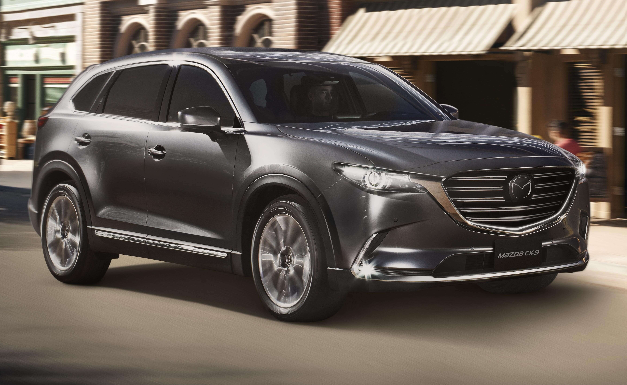
Comparing the Mazda CX-9 vs RAV4 might seem a little unusual at first. After all, these two SUVs do not occupy exactly the same corner of the market. The Mazda CX-9 is a larger, three-row SUV designed for families that need more passenger space, while the Toyota RAV4 is a compact two-row SUV built around efficiency, practicality, and everyday usability.
Yet plenty of buyers end up considering both.
Why? Because real-world car shopping rarely follows neat vehicle categories. We might start looking for something economical like the RAV4, then realize extra seating would be useful. Or perhaps we're attracted to the Mazda CX-9's upscale interior but wonder whether carrying around a bigger SUV every day makes sense.
That's where this comparison gets interesting.
The Toyota RAV4 behaves like the sensible all-rounder that seems ready for almost anything. The Mazda CX-9, meanwhile, feels more like a premium family SUV wearing a mainstream badge. One saves space and fuel. The other gives us performance, refinement, and three rows of seats.
So, which one belongs in our driveway?
Let's break it down.
Note: Features, engine specifications, fuel economy, towing limits, and trim availability vary by model year and market. When buying a particular vehicle, we should always verify specifications for that exact version.
Content in this publication
- Mazda CX-9 vs RAV4 at a Glance
- What Is the Biggest Difference Between the Mazda CX-9 and RAV4?
- Mazda CX-9 vs Toyota RAV4 Exterior Size
- Mazda CX-9 vs RAV4 Interior Space
- Mazda CX-9 vs RAV4 Cargo Space
- Mazda CX-9 vs RAV4 Performance
- Mazda CX-9 vs RAV4 Fuel Economy
- Mazda CX-9 vs RAV4 Hybrid Options
- Mazda CX-9 vs RAV4 Driving Experience
- Mazda CX-9 vs RAV4 Interior Quality
- Technology and Infotainment
- Mazda CX-9 vs RAV4 Safety
- Mazda CX-9 vs RAV4 Reliability
- Mazda CX-9 vs RAV4 Maintenance Costs
- Mazda CX-9 vs RAV4 Towing Capacity
- Mazda CX-9 vs RAV4 for Families
- Mazda CX-9 vs RAV4 for Road Trips
- Mazda CX-9 vs RAV4 for City Driving
- Mazda CX-9 vs RAV4 for Highway Driving
- Mazda CX-9 vs RAV4 AWD Capability
- Mazda CX-9 vs RAV4 Resale Value
- Buying a Used Mazda CX-9 vs Used RAV4
- Which Is Better for Couples?
- Which Is Better for a Family of Five?
- Which Is Better for a Family of Seven?
- Mazda CX-9 vs RAV4: Pros and Cons
- Mazda CX-9 vs RAV4: Which One Should We Buy?
- Conclusion: Mazda CX-9 or Toyota RAV4?
- Frequently Asked Questions
Mazda CX-9 vs RAV4 at a Glance
Before going deeper, here's the simplest way to understand these SUVs.
| Category | Mazda CX-9 | Toyota RAV4 |
|---|---|---|
| Vehicle class | Midsize SUV | Compact SUV |
| Seating | Up to 7 | 5 |
| Rows | 3 | 2 |
| Driving character | Powerful and refined | Easy and efficient |
| Interior feel | More premium | More practical |
| Cargo practicality | Excellent with rear seats folded | Excellent for its size |
| Fuel economy | Higher consumption | Generally better |
| Hybrid availability | No conventional CX-9 hybrid | Available on many RAV4 generations/markets |
| City usability | Bigger and heavier | Easier to park |
| Best suited to | Larger families | Everyday commuting and small families |
The difference is almost like comparing a comfortable family lounge with a well-designed backpack. Both can carry our stuff, but they approach the job differently.
What Is the Biggest Difference Between the Mazda CX-9 and RAV4?
The biggest difference is size.
The CX-9 belongs to a larger category and offers a third row of seating. The RAV4 is a compact crossover with two rows.
That distinction changes almost everything else.
A larger vehicle typically brings:
- More passenger capacity
- Greater overall length
- More weight
- More interior flexibility
- Higher fuel consumption
- More challenging city parking
The RAV4 takes the opposite approach. Toyota packages a useful amount of passenger and cargo room into a vehicle that remains easy to maneuver.
So before worrying about horsepower or infotainment systems, we should ask ourselves one question:
Do we genuinely need three rows of seats?
If the answer is yes, the CX-9 immediately gains a major advantage.
If not, the RAV4's smaller footprint may actually make it the more useful vehicle.
Mazda CX-9 vs Toyota RAV4 Exterior Size
Put these vehicles next to each other and the difference becomes obvious.
The CX-9 is longer and generally feels substantially bigger from behind the wheel. It was designed to accommodate three rows rather than simply maximize five-seat practicality.
The RAV4 has more compact dimensions.
Why the RAV4's Smaller Size Matters
Smaller does not necessarily mean worse.
In everyday life, the RAV4 can be easier to:
- Park in tight garages
- Navigate through crowded streets
- Position in shopping-center parking spaces
- Drive through narrow roads
- Maneuver around urban neighborhoods
Think of the RAV4 as wearing running shoes while the CX-9 arrives in hiking boots. The Mazda can carry more people comfortably, but the Toyota often feels lighter on its feet.
When the CX-9's Extra Size Helps
That extra metal becomes useful once passengers and luggage start piling in.
A family transporting children, grandparents, sports equipment, school bags, groceries, and holiday luggage may quickly appreciate the CX-9's larger cabin.
Size becomes a burden only when we aren't using it.
If we're regularly filling the seats, it becomes an advantage.
Mazda CX-9 vs RAV4 Interior Space
This is where the comparison moves strongly toward the Mazda.
The CX-9 provides three rows of seating, while the RAV4 provides two.
First-Row Comfort
Both SUVs offer comfortable front seating, but their personalities differ.
The Mazda generally creates a more cockpit-like driving environment. The dashboard tends to feel driver-focused, and higher specifications can appear surprisingly luxurious.
The RAV4 prioritizes straightforward functionality.
Toyota interiors often make controls easy to identify and operate. We don't need five minutes of detective work just to find an everyday function.
Second-Row Space
Both can comfortably carry adults in the second row, although the CX-9's larger overall dimensions help create a more spacious family environment.
For parents installing child seats, the additional room can make daily routines easier.
A few extra centimeters might sound irrelevant on paper.
Try fastening a child into a car seat while carrying a backpack and holding an umbrella during heavy rain, though, and suddenly every centimeter feels valuable.
Third-Row Seating
Here the RAV4 simply cannot compete.
There is no third row in the conventional RAV4.
The CX-9 can accommodate additional passengers, making it more flexible for families that occasionally need six or seven seats.
However, we should keep expectations realistic. Like many midsize three-row SUVs, the rear-most seats are generally more suitable for children or shorter journeys than for large adults travelling several hours.
Who Actually Needs the Third Row?
The CX-9 makes particular sense for:
- Families with three or more children
- Parents who regularly transport children's friends
- Multi-generational households
- Carpooling
- Buyers who occasionally need seven-seat flexibility
For couples or families with only one or two children, the third row may spend most of its life folded.
In that situation, paying for the larger vehicle deserves more thought.
Mazda CX-9 vs RAV4 Cargo Space
Cargo comparisons become more complicated because seating configuration matters.
With all rows occupied, the CX-9 must dedicate considerable interior space to passengers. Folding the third row dramatically increases its cargo usefulness.
The RAV4, meanwhile, does not have to package a third row. Its cargo area therefore remains straightforward and practical.
RAV4 Cargo Area
One reason the RAV4 has become such a popular family crossover is that its boot is genuinely useful.
It can handle everyday items such as:
- Weekly groceries
- Baby strollers
- Suitcases
- Sports equipment
- Camping supplies
- Pet carriers
The relatively manageable exterior dimensions make that practicality even more impressive.
CX-9 Cargo Flexibility
The Mazda becomes much more versatile once we begin folding seats.
With the third row folded, the rear area becomes considerably more useful. Fold additional seats and the CX-9 transforms into a large cargo carrier.
For moving bulky objects, carrying holiday luggage, or supporting an active family lifestyle, that flexibility can be valuable.
Which Has the Better Boot?
There isn't one universal answer.
Choose the RAV4 if we want efficient cargo packaging without carrying the dimensions of a large SUV.
Choose the CX-9 if we want maximum cabin versatility and occasionally need additional passenger capacity.
Mazda CX-9 vs RAV4 Performance
Here's where things get fun.
The Mazda CX-9 was known in many markets for its turbocharged petrol engine, providing strong torque and effortless acceleration.
The RAV4's powertrain lineup varies significantly depending on model year and market, with petrol and electrified versions available in different regions.
The basic driving philosophies remain different.
How the Mazda CX-9 Feels
The CX-9 tends to deliver strong low- and mid-range response.
Press the accelerator and the SUV moves with more urgency than its family-friendly dimensions might suggest.
Mazda has traditionally placed unusual emphasis on steering feel and chassis tuning. As a result, the CX-9 can feel more engaging than we'd expect from a three-row family SUV.
It doesn't shrink around us like a sports car, obviously.
But it does a convincing impression of a large SUV that actually enjoys corners.
How the Toyota RAV4 Feels
The RAV4 places greater emphasis on predictable, easy everyday driving.
Its smaller size also makes it feel less cumbersome.
Depending on the powertrain, acceleration can range from perfectly adequate to surprisingly quick, particularly with some electrified variants.
The core experience, however, remains accessibility.
Get in. Drive. Park. Repeat tomorrow.
There's very little drama.
And for many owners, that's exactly the point.
Mazda CX-9 vs RAV4 Fuel Economy
Fuel economy is one of the RAV4's strongest advantages.
A smaller, lighter SUV typically requires less energy to move around, and Toyota's extensive use of hybrid technology in the RAV4 range has made efficiency especially important to the model's identity.
The CX-9's larger body, heavier weight, and performance-oriented turbo engine generally mean greater fuel consumption.
Why This Difference Matters More Than It Seems
Imagine driving 20,000 kilometers every year.
Even a relatively small difference in fuel consumption begins multiplying across:
- Daily commutes
- School runs
- Weekend trips
- Traffic jams
- Holiday journeys
Over several years, operating costs can diverge considerably.
If fuel efficiency sits near the top of our priority list, the RAV4 is usually the more logical choice.
You may be interested in reading Mazda CX-9 vs Subaru Forester: Which SUV Makes More Sense?
Can the CX-9 Still Make Sense?
Absolutely.
Fuel isn't the only cost involved in choosing the wrong vehicle.
Suppose we buy the RAV4 and repeatedly struggle because we genuinely need seven seats. Saving money at the pump won't magically create two additional chairs.
Efficiency needs to be considered alongside usefulness.
Mazda CX-9 vs RAV4 Hybrid Options
This category heavily favors the Toyota.
The RAV4 has been offered with hybrid powertrains in many markets, giving buyers another route toward lower fuel consumption without committing to a fully electric vehicle.
Depending on region and year, plug-in hybrid versions have also existed.
The CX-9 did not build its identity around hybrid technology.
Who Should Consider a RAV4 Hybrid?
A RAV4 Hybrid can make particular sense for drivers who:
- Spend significant time in urban traffic
- Cover high annual mileage
- Want reduced fuel use
- Prefer smooth low-speed operation
- Don't require three rows
- Want electrification without depending entirely on charging
For many everyday drivers, this may be the sweet spot in the entire comparison.
Mazda CX-9 vs RAV4 Driving Experience
Numbers tell only half the story.
Cars also have personalities.
The CX-9 feels more like the SUV we choose because we actually enjoy driving.
The RAV4 feels more like the SUV we choose because we appreciate how little effort ownership demands.
Steering and Handling
Mazda traditionally tunes its vehicles with more driver engagement in mind.
Despite its larger dimensions, the CX-9 can feel composed through curves and reassuring at highway speeds.
The Toyota generally feels lighter and easier around town.
We could describe the distinction this way:
The Mazda asks us to enjoy the road. The Toyota asks where we're going.
Neither philosophy is wrong.
Ride Comfort
Both can provide comfortable everyday transportation, though wheel size, tire profile, suspension specification, and road quality all influence the experience.
The CX-9's longer wheelbase and larger body can contribute to a planted highway feel.
The RAV4's smaller dimensions can make it more convenient over urban routes.
Always test-drive the actual trim we're considering. Larger alloy wheels can significantly alter ride comfort on both vehicles.
Mazda CX-9 vs RAV4 Interior Quality
Interior atmosphere represents another CX-9 strength.
Mazda has spent years pushing its cabins toward premium territory without necessarily attaching premium-brand prices.
Materials, control layout, seating design, and overall presentation can make the CX-9 feel more expensive than expected.
RAV4 Interior Philosophy
Toyota takes a more utilitarian approach.
The cabin is designed to survive daily life.
That's not an insult.
Mud, coffee, children, gym equipment, groceries, dogs—real cars experience real chaos.
The RAV4 generally embraces that reality rather than pretending every journey involves white gloves and a violin soundtrack.
Which Cabin Feels Better?
For visual sophistication and perceived luxury, we'd lean toward the Mazda.
For rugged everyday practicality, the Toyota makes a strong argument.
Technology and Infotainment
Technology comparisons depend heavily on model year because both vehicles changed significantly throughout their production cycles.
Later versions may offer features such as:
- Smartphone integration
- Touchscreen or controller-based infotainment
- Digital driver information
- Multiple USB connections
- Premium audio systems
- Navigation
- Surround-view cameras on selected trims
- Driver-assistance technology
Rather than asking which badge has the larger screen, we should ask something more useful:
Can we operate the system easily while driving?
Good infotainment disappears into the background.
Bad infotainment turns changing a radio station into a university entrance exam.
When buying used, spend several minutes testing the system before committing.
Mazda CX-9 vs RAV4 Safety
Both Mazda and Toyota place considerable emphasis on active safety technology, particularly on later models.
Depending on year and specification, equipment may include:
- Automatic emergency braking
- Adaptive cruise control
- Lane-departure warning
- Lane-keeping assistance
- Blind-spot monitoring
- Rear cross-traffic alert
- Parking sensors
- Reversing camera
- Surround-view monitoring
However, safety technology evolves quickly.
A newer RAV4 may have systems that differ substantially from an older CX-9, and vice versa.
Don't Compare Safety by Model Name Alone
When shopping used, compare the exact:
- Model year
- Trim level
- Safety package
- Market specification
- Crash-test generation
Two vehicles carrying the same model name can have surprisingly different technology.
Mazda CX-9 vs RAV4 Reliability
Toyota enjoys one of the strongest reliability reputations in the automotive industry, and the RAV4 benefits from that perception.
Its massive global popularity also means there is extensive long-term ownership data, broad parts availability in many markets, and plenty of mechanics familiar with the model.
The CX-9 can also provide reliable service when properly maintained, but its turbocharged drivetrain and larger, heavier construction make maintenance history especially important when shopping used.
Used CX-9 Buying Priorities
We would pay close attention to:
- Complete service records
- Cooling-system condition
- Oil-change history
- Transmission behavior
- Suspension condition
- Turbocharger performance
- Signs of neglected maintenance
- Recalls or technical campaigns relevant to the exact year
Used RAV4 Buying Priorities
We would check:
- Service history
- Hybrid battery condition where applicable
- Previous accident repairs
- Tire wear
- Suspension noises
- Electronic functions
- AWD operation where equipped
- Model-year-specific recalls or known issues
A reliable model that has been neglected can become expensive.
A carefully maintained vehicle with proper documentation is often the smarter purchase than blindly choosing a badge.
Mazda CX-9 vs RAV4 Maintenance Costs
The RAV4 generally has an advantage when we're trying to minimize ownership expenses.
Why?
It's smaller, commonly sold, and designed for mass-market practicality.
Depending on region, parts availability may also be excellent.
The CX-9's larger tires, larger brakes, turbocharged engine, and heavier overall construction can increase certain maintenance expenses.
We shouldn't evaluate ownership costs using fuel alone.
Larger vehicles may also require more money for:
- Tires
- Brake components
- Fuel
- Insurance
- Registration in some jurisdictions
- Suspension components
- Routine servicing
None of these necessarily make the CX-9 expensive to own, but costs can accumulate.
The question becomes whether we actually use the additional capability we're paying for.
Mazda CX-9 vs RAV4 Towing Capacity
The CX-9's larger platform and stronger turbocharged engine can give it an advantage for towing, depending on specification and market.
The RAV4's towing capacity varies dramatically between versions and regions.
Some configurations are considerably more capable than others.
Never Assume Towing Limits
Before attaching a trailer, caravan, boat, or equipment trailer, verify:
- Maximum braked towing capacity
- Maximum unbraked towing capacity
- Tow-ball download
- Gross vehicle mass
- Gross combination mass
- Payload
- Local licensing regulations
Towing isn't simply about whether the engine feels powerful enough.
Legal weight limits matter.
If towing is central to our buying decision, the CX-9 may be more appealing, but the specific vehicle's official rating must always be checked.
Mazda CX-9 vs RAV4 for Families
This category depends almost entirely on family size.
Small Families
For one or two children, the RAV4 makes enormous sense.
It gives us:
- Five seats
- Useful cargo capacity
- Easier parking
- Better efficiency
- Lower running costs
- Plenty of everyday versatility
Why haul an empty third row everywhere if we're unlikely to use it?
Larger Families
This is where the CX-9 earns its keep.
Three rows provide breathing room.
Suddenly transporting another child, relative, or friend no longer means taking two cars.
The Third-Row Insurance Policy
Even families that don't need seven seats every day may appreciate having them occasionally.
It's a little like carrying an umbrella.
Most of the time, we barely notice it.
Then the rain starts.
You may be interested in readingMazda CX-9 vs Subaru Forester: Which SUV Makes More Sense?You may be interested in reading
Mazda CX 9 Similar Cars: The Best Alternatives to ConsiderMazda CX-9 vs RAV4 for Road Trips
Long-distance travel gives the Mazda an opportunity to shine.
The CX-9's larger cabin and confident highway behavior can make family road trips feel more relaxed.
Passengers have more seating flexibility, and folding unused seats creates additional luggage room.
However, the Toyota fights back with efficiency.
If we're travelling huge distances and carrying only two to five passengers, the RAV4's lower fuel consumption can substantially reduce travel costs.
Best Road-Trip Choice
Choose the CX-9 when passenger space and comfort matter most.
Choose the RAV4 when economy and easier maneuverability matter more.
Mazda CX-9 vs RAV4 for City Driving
Here we'd choose the RAV4.
A compact SUV simply makes more sense in dense urban environments.
Parking a RAV4 after driving a CX-9 can feel like switching from a suitcase to a carry-on bag.
The Toyota's advantages include:
- Shorter overall footprint
- Easier parking
- Better fuel efficiency
- Lower urban running costs
- Simpler maneuvering
The Mazda isn't impossible to use in the city—not even close.
It simply asks us to manage more vehicle than necessary if we're usually driving alone.
Mazda CX-9 vs RAV4 for Highway Driving
The CX-9 closes the gap quickly once the road opens up.
Its larger platform, substantial power delivery, and more premium cabin environment can make it an excellent highway cruiser.
Overtaking can feel effortless with the turbo engine, and the vehicle tends to feel stable at speed.
The RAV4 remains perfectly capable on highways, of course.
Its advantage comes from consuming less fuel while doing it.
So we're essentially choosing between:
CX-9: more effortless performance and spaciousness.
RAV4: more efficient transportation.
Mazda CX-9 vs RAV4 AWD Capability
Both models have been offered with all-wheel-drive systems, depending on market and variant.
Neither should automatically be considered a hardcore off-roader simply because AWD is available.
They are primarily road-focused SUVs.
RAV4 Adventure Potential
Some RAV4 versions have greater adventure-oriented capability than others, and the compact dimensions can be useful on narrow tracks.
Toyota also offers different AWD technologies depending on powertrain.
CX-9 AWD Purpose
The CX-9's AWD system is more about adding confidence and traction to a large family SUV than turning it into a rock-crawling machine.
For snow, rain, gravel roads, and slippery conditions, AWD can be useful.
For serious off-road exploration, we'd look more carefully at ground clearance, tires, underbody protection, approach angles, and dedicated 4WD hardware rather than simply reading an AWD badge.
Mazda CX-9 vs RAV4 Resale Value
The RAV4 traditionally performs strongly in the used-car market because demand is broad.
Compact SUVs are popular with:
- Families
- Commuters
- Older drivers
- Outdoor enthusiasts
- First-time SUV buyers
- Fleet operators
That creates a large pool of potential future buyers.
The CX-9 appeals to a more specific customer—someone wanting a larger three-row SUV.
Does That Make the CX-9 a Bad Used Buy?
Not necessarily.
Depreciation can actually work in our favor when buying used.
A well-maintained CX-9 may deliver a level of performance, space, and interior quality that originally cost considerably more than its current second-hand price suggests.
Sometimes another owner's depreciation becomes our bargain.
Buying a Used Mazda CX-9 vs Used RAV4
Used examples make this comparison especially interesting.
A similarly priced CX-9 and RAV4 may not be the same age, mileage, or equipment level because they started life in different categories.
Why the CX-9 Can Look Tempting Used
Used CX-9s may offer:
- More seats
- More power
- More premium equipment
- Larger dimensions
- Greater highway comfort
Suddenly, the bigger Mazda can look like a huge amount of car for the money.
Why the RAV4 Remains Sensible
The Toyota's appeal becomes obvious over years rather than minutes.
Potential benefits include:
- Better fuel economy
- Easier resale
- Simpler daily operation
- Strong demand
- Broad servicing familiarity
- Hybrid availability
The Mazda may win our heart during a 20-minute test drive.
The Toyota may win our spreadsheet five years later.
Which Is Better for Couples?
For most couples, we'd choose the RAV4 unless there is a specific need for additional space.
The Toyota is large enough for road trips, shopping, hobbies, camping equipment, and everyday life without becoming unnecessarily cumbersome.
The CX-9 makes more sense if we:
- Regularly carry relatives or friends
- Tow frequently
- Need considerable cargo flexibility
- Strongly prefer its performance
- Expect our family to grow
Otherwise, the extra dimensions could simply become unused capacity.
Which Is Better for a Family of Five?
Now things become much closer.
Five people technically fit in a RAV4, but whether they fit comfortably depends on passenger ages, child-seat requirements, luggage, and journey length.
A CX-9 gives a family of five more options.
One child can sit in the third row. The second row becomes less crowded. Luggage can be reorganized around the unused seats.
Space isn't only about maximum capacity.
It's about reducing friction.
Anyone who has listened to three children argue over the middle seat knows exactly what we mean.
Which Is Better for a Family of Seven?
Easy.
The Mazda CX-9.
The RAV4 only provides five seats.
If seven-seat capability is mandatory, this comparison effectively ends here.
Mazda CX-9 vs RAV4: Pros and Cons
Mazda CX-9 Pros
- Three-row seating
- Strong turbocharged performance on many versions
- More premium-feeling interior
- Spacious family cabin
- Engaging driving dynamics for its size
- Excellent highway comfort
- Greater passenger flexibility
Mazda CX-9 Cons
- Higher fuel consumption
- Larger exterior dimensions
- Potentially higher running costs
- More difficult to park
- Third row reduces luggage space when occupied
- No conventional hybrid alternative
Toyota RAV4 Pros
- Excellent everyday practicality
- Better fuel economy
- Hybrid availability
- Easier urban driving
- Strong resale appeal
- Useful cargo space
- Broad market popularity
Toyota RAV4 Cons
- Only five seats
- Less powerful than some CX-9 versions
- Cabin can feel less premium
- Less spacious for large families
- Cannot match the Mazda's three-row flexibility
Mazda CX-9 vs RAV4: Which One Should We Buy?
Here's the simplest answer.
Buy the Mazda CX-9 if:
We need three rows, regularly carry more than five people, enjoy stronger performance, value an upscale cabin, or simply want the extra flexibility of a larger SUV.
Buy the Toyota RAV4 if:
We rarely carry more than five people, prioritize fuel economy, drive frequently in the city, want hybrid options, or prefer lower-cost and lower-effort everyday ownership.
Our Overall Verdict
For most households that genuinely need only five seats, we'd lean toward the Toyota RAV4.
It uses its dimensions brilliantly. It is practical without becoming cumbersome, economical without being tiny, and versatile enough for commuting, school runs, road trips, and weekend adventures.
But that doesn't mean it's universally better.
The Mazda CX-9 plays a different game.
When we need six or seven seats—or simply want more power, refinement, and passenger space—the Mazda suddenly becomes the obvious choice.
Ultimately, asking whether the CX-9 or RAV4 is better is a bit like asking whether a three-bedroom house is better than a stylish apartment.
It depends entirely on how many people need the keys.
Conclusion: Mazda CX-9 or Toyota RAV4?
The Mazda CX-9 vs RAV4 comparison proves that the best SUV isn't necessarily the largest, fastest, cheapest, or most economical one.
It's the SUV whose strengths match our actual life.
The RAV4 is the better fit for buyers who value efficiency, easy urban use, five-seat practicality, lower operating costs, and hybrid availability. For everyday transportation, it strikes an exceptionally useful balance.
The CX-9 is for households asking more from their SUV. More seats. More cabin space. More performance. More road-trip flexibility. More of that substantial, premium feeling that makes a large SUV satisfying to drive.
We shouldn't buy the Mazda merely because bigger sounds better.
And we shouldn't buy the Toyota simply because it consumes less fuel.
Instead, look at the seats we actually use, the kilometers we drive, where we park, what we carry, and how much we want to spend every month.
Once we answer those questions, the right SUV usually makes itself obvious.
Frequently Asked Questions
1. Is the Mazda CX-9 bigger than the Toyota RAV4?
Yes. The Mazda CX-9 is a midsize three-row SUV, while the Toyota RAV4 is a smaller two-row compact SUV. The CX-9 offers considerably more passenger capacity and can seat up to seven people, depending on configuration.
2. Is the RAV4 more fuel-efficient than the Mazda CX-9?
Generally, yes. The RAV4's smaller size and lighter construction contribute to lower fuel consumption, while hybrid RAV4 versions can improve efficiency further. Actual economy depends on model year, engine, drivetrain, traffic, and driving conditions.
3. Which is more reliable, the Mazda CX-9 or Toyota RAV4?
Both can provide dependable service when properly maintained, but the RAV4 benefits from Toyota's particularly strong reputation for long-term durability. When buying used, however, maintenance history and the condition of the individual vehicle are more important than reputation alone.
You may be interested in readingMazda CX-9 vs Subaru Forester: Which SUV Makes More Sense?You may be interested in reading
Mazda CX 9 Similar Cars: The Best Alternatives to ConsiderYou may be interested in reading
Mazda CX-9 Versus Subaru Ascent: Which Three-Row SUV Is Better?4. Is the Mazda CX-9 better than the RAV4 for families?
For larger families, the CX-9 is usually better because it offers three rows and seating for up to seven. For smaller families that need only five seats, the RAV4 can be the better option because it offers plenty of practicality while being cheaper to fuel and easier to park.
5. Should we buy a Mazda CX-9 or RAV4 for daily driving?
For typical commuting and city driving, we'd generally choose the RAV4 because of its compact dimensions and better efficiency. If our daily routine regularly involves carrying six or seven passengers, long highway trips, or substantial cargo, the CX-9 makes more sense.
If you want to know other articles similar to Mazda CX-9 vs RAV4: Which SUV Is the Better Choice? you can visit the category Models.
Land Rover Defender 90 Alternative: The Best Rivals Worth Considering
Land Rover Defender 90 Models: Complete Guide to Trims, Engines and Versions
Toyota Hilux Generations: Complete History, Evolution, and Key Differences
BMW M2 vs M340i: Which BMW Performance Car Should We Buy?
BMW M2 vs Porsche 911: Which Sports Car Makes More Sense?
BMW M2 vs Mustang GT: Which Performance Coupe Should We Buy?
Leave a Reply
More content of your interest