
BMW M2 vs Porsche Cayman: Which Sports Car Is Better?

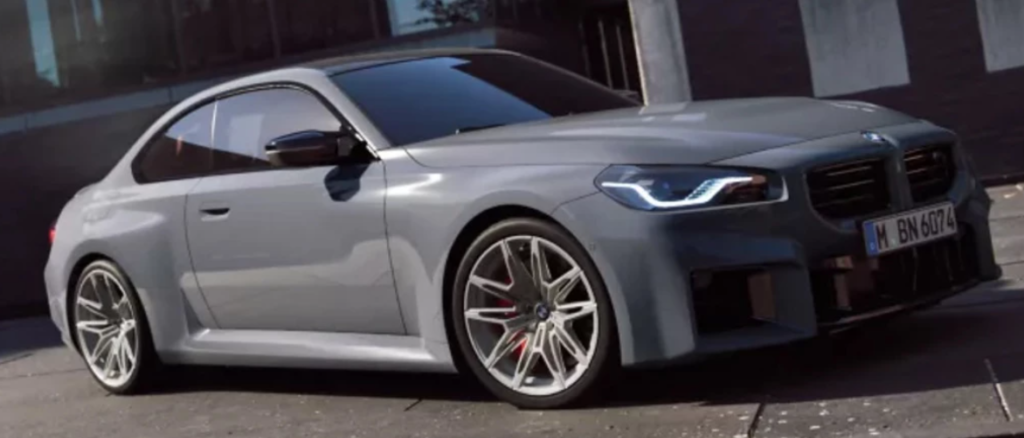
Choosing between the BMW M2 and Porsche Cayman sounds simple until we actually drive—or seriously consider—the two cars. Both are compact, rear-drive performance machines. Both can be bought with a manual transmission. Both come from brands with decades of motorsport history. And both can transform an ordinary stretch of tarmac into something we suddenly want to drive twice.
Yet these two cars approach performance from very different directions.
The BMW M2 is the muscle-bound troublemaker of the pair. It gives us a turbocharged inline-six, huge torque, dramatic acceleration, usable rear seats, and the sense that there is always more performance waiting underneath our right foot.
The Porsche 718 Cayman is more surgical. Its mid-engine layout, lighter construction, low seating position, and beautifully balanced chassis make it feel like the car was designed around a winding road rather than adapted to one.
So, in a BMW M2 vs Porsche Cayman comparison, which one deserves our money?
The short answer is straightforward: the M2 is the better all-round performance car, while the Cayman is the purer sports car.
But that barely scratches the surface.
Content in this publication
- BMW M2 vs Porsche Cayman at a Glance
- The Fundamental Difference: Muscle vs Balance
- BMW M2 vs Porsche Cayman Performance
- BMW M2 vs Cayman Handling
- Steering Feel: Porsche Has the Edge
- BMW M2 vs Porsche Cayman Engine Character
- Manual Transmission Comparison
- Automatic Transmission: A Different Story
- BMW M2 vs Cayman Interior
- Practicality: The M2 Fights Back Hard
- Daily Driving Comfort
- BMW M2 vs Porsche Cayman Sound
- Track Driving
- BMW M2 vs Cayman Styling
- Build Quality and Perceived Quality
- Price and Value
- Used BMW M2 vs Used Porsche Cayman
- Modification Potential
- Which Car Feels More Special?
- Who Should Buy the BMW M2?
- Who Should Buy the Porsche Cayman?
- BMW M2 vs Porsche Cayman: Category Winners
- Final Verdict: BMW M2 or Porsche Cayman?
- Frequently Asked Questions
BMW M2 vs Porsche Cayman at a Glance
Before diving deeper, here is how their personalities compare.
| Category | BMW M2 | Porsche 718 Cayman |
|---|---|---|
| Layout | Front-engine, rear-wheel drive* | Mid-engine, rear-wheel drive |
| Engine | 3.0L turbo inline-six | 2.0L turbo flat-four on base model |
| Power | 473 hp | 300 hp base Cayman |
| Transmission | 6-speed manual / 8-speed auto | Manual / PDK depending on version |
| Seats | 4 | 2 |
| Character | Powerful, playful, practical | Precise, light, focused |
| Best for | Everyday performance | Pure driving enjoyment |
*Current M2 availability can also include M xDrive depending on market and configuration.
BMW currently lists the M2 at 473 horsepower, with the rear-drive automatic reaching 60 mph in a claimed 3.9 seconds and the manual version doing it in 4.1 seconds.
The Porsche Cayman range varies considerably depending on trim. The familiar base 718 Cayman produces 300 hp, while the Cayman S produces 350 PS and the naturally aspirated Cayman GTS 4.0 reaches 400 PS.
Those numbers already tell us something important: comparing an M2 with a Cayman is not merely a horsepower contest.
If it were, BMW would win before we reached the first corner.
The Fundamental Difference: Muscle vs Balance
Think of these cars as two athletes.
The BMW M2 is a heavyweight boxer with surprisingly quick feet.
The Cayman is a gymnast.
The BMW hits harder. Accelerating out of a corner produces that wonderfully addictive turbocharged shove that presses us into the seat. The Porsche usually feels lighter and more delicate, allowing us to position the car with tiny steering, brake, and throttle adjustments.
Neither philosophy is wrong.
They're simply aimed at slightly different drivers.
Why the M2 Feels So Aggressive
The M2's turbocharged 3.0-liter straight-six dominates the experience.
Power arrives with tremendous authority, and there is enough torque to make the rear tires feel like willing participants in whatever mischief we're planning.
BMW's current technical specifications quote 473 hp and up to 443 lb-ft of torque with the automatic transmission. The six-speed manual receives 406 lb-ft.
That means overtaking rarely requires a committee meeting.
Press the accelerator, wait a heartbeat, and the horizon gets closer.
Why the Cayman Feels So Natural
The Cayman wins its admirers differently.
Its engine sits behind the occupants but ahead of the rear axle. That mid-engine layout concentrates mass close to the middle of the vehicle.
The result?
Balance.
Turn into a corner and the Porsche seems to rotate around our hips. There is less sensation of dragging a heavy nose into the bend and more feeling that the entire car responds as one object.
Porsche itself emphasizes the mid-engine architecture as a defining element of the 718's handling philosophy.
BMW M2 vs Porsche Cayman Performance
Raw performance is where the comparison becomes interesting.
The M2 brings substantially more horsepower than the standard Cayman. It also produces the kind of low- and mid-range torque that makes the BMW feel brutally fast without demanding high engine speeds.
The standard Cayman cannot match that punch.
But numbers don't tell us how quickly a car builds confidence.
Straight-Line Speed: BMW Takes It
If our favorite activity involves motorway ramps, overtaking, rolling acceleration, or simply feeling a violent surge of torque, the M2 is difficult to beat.
BMW claims:
- 473 hp
- 406 lb-ft with the manual
- 443 lb-ft with the automatic
- 0–60 mph in 4.1 seconds with the manual
- 0–60 mph in 3.9 seconds with rear-drive automatic
- 155 mph electronically limited top speed
Current BMW specifications also list a curb weight of approximately 3,814 lb for the manual M2.
The standard Cayman has less power. Porsche lists the familiar base 718 Cayman at 300 hp, while higher versions progressively close the gap.
Floor both cars on a straight road and the BMW feels like it has been launched from a slingshot.
What About the Cayman GTS 4.0?
Now things get much more interesting.
The 718 Cayman GTS 4.0 uses a naturally aspirated 4.0-liter six-cylinder boxer producing 400 PS. Porsche quotes 0–100 km/h in as little as 4.0 seconds depending on specification and market, with a top speed around 288–293 km/h in published configurations.
It still doesn't possess the M2's tidal wave of turbo torque.
But the GTS engine offers something BMW cannot replicate quite as convincingly: escalating drama as the revs climb.
The M2 punches.
The GTS sings.
BMW M2 vs Cayman Handling
Here the Porsche starts collecting points quickly.
We shouldn't call the M2 clumsy—it absolutely isn't. BMW M has performed impressive engineering magic considering the car's power and weight.
The front end responds quickly, the rear differential helps distribute power intelligently, and the car can be wonderfully adjustable under throttle.
Still, physics always sends the invoice.
The M2 is heavier and taller than a Cayman.
Cayman: The Cornering Specialist
The Cayman communicates its intentions almost immediately.
We sit low.
The center of gravity feels low.
The steering feels measured rather than nervous.
The front tires don't have a heavy engine sitting directly over them.
Everything conspires to give us confidence.
On an unfamiliar mountain road, that matters more than 100 extra horsepower.
We can brake, point the nose toward an apex, feel the chassis settle, and squeeze the accelerator progressively as the road opens.
There's rhythm to it.
M2: More Drama, More Adjustability
The M2 is less delicate but arguably more entertaining when we're deliberately provoking it.
Give the BMW too much throttle while exiting a slow corner and we become immediately aware that hundreds of horsepower are heading toward the driven wheels.
That tension is part of the appeal.
The car feels alive.
Where the Cayman whispers information through the steering wheel and chassis, the M2 sometimes shouts.
Neither is boring.
But we'd choose the Cayman for precision and the M2 for theater.
Steering Feel: Porsche Has the Edge
Modern electrically assisted steering systems have improved dramatically, but enthusiasts still obsess over feedback.
Fair enough.
Steering is our primary conversation with the front tires.
The Cayman tends to provide the clearer dialogue. Weight builds naturally through corners, and the relationship between steering input and chassis response feels beautifully consistent.
The M2's steering is quick and accurate, but the overall sensation feels more filtered.
Is that a deal-breaker?
For most people, no.
For someone buying a car primarily because they love steering through winding roads every Sunday morning, possibly.
BMW M2 vs Porsche Cayman Engine Character
This may be the most personal part of the whole comparison.
BMW's Turbocharged Inline-Six
BMW's straight-six is phenomenal.
There is something deeply satisfying about a high-output inline-six producing huge torque across a broad rev range. We don't have to chase the tachometer needle around the dial to access serious performance.
The engine is flexible enough for commuting yet ferocious enough for track work.
It is the better engine if we judge an engine by:
- accessible performance;
- torque;
- tuning potential;
- everyday flexibility;
- overtaking ability;
- power per dollar.
Porsche's Boxer Engines
The base Cayman uses a turbocharged four-cylinder boxer.
It performs well, but its soundtrack has always been more controversial among Porsche enthusiasts than the older naturally aspirated six-cylinder cars.
Then we reach the GTS 4.0.
Suddenly, everything changes.
Its naturally aspirated six-cylinder boxer engine makes 400 PS and represents a more traditional Porsche sports-car experience.
It rewards revs rather than simply overwhelming us with torque.
Which Engine Would We Choose?
For everyday driving: M2.
For emotional involvement: Cayman GTS 4.0.
For sheer value: M2.
For sound at high rpm: Cayman GTS 4.0.
Manual Transmission Comparison
Both cars deserve applause simply for keeping manual transmissions alive.
In an era when performance cars increasingly behave like smartphones with tires, physically selecting our own gears feels wonderfully old-fashioned.
The M2 offers a six-speed manual, and BMW's current specifications confirm it remains available alongside the automatic.
You may be interested in reading BMW M2 vs Mustang GT: Which Performance Coupe Should We Buy?
The Cayman range has also offered manual transmissions across several versions, alongside Porsche's excellent PDK dual-clutch gearbox.
Which Manual Is Better?
We'd give Porsche the advantage in tactility.
The Cayman gearbox typically feels more mechanical and deliberate.
The BMW's manual provides plenty of involvement, but the shift action isn't quite the centerpiece of the experience.
Still, we'd happily drive either.
And twenty years from now, enthusiasts may look back at both cars and ask why anyone ever ordered the automatic.
Automatic Transmission: A Different Story
Choose two pedals and the decision changes.
BMW uses an eight-speed automatic that suits the M2's torque-rich personality extremely well.
It is smooth in daily traffic, quick when driven hard, and perfectly happy firing through gears during full-throttle acceleration.
Porsche's PDK remains one of the benchmark performance transmissions.
Its shifts are lightning quick and intuitively timed.
For a dedicated sports-car experience, we prefer PDK.
For blending daily comfort and performance, BMW's automatic is excellent.
BMW M2 vs Cayman Interior
The differences become much larger once we stop driving.
The BMW is unmistakably the more contemporary environment.
Large digital displays, modern infotainment, configurable driving modes, substantial seats, and a relatively conventional coupe layout make the M2 easy to live with.
The Cayman feels more compact and purposeful.
That simplicity can actually become part of its charm.
M2 Interior Strengths
The BMW offers:
- rear seats;
- greater cabin storage;
- newer-looking digital technology;
- easier everyday entry and exit;
- more space for personal belongings;
- stronger grand-touring ability.
It feels like a normal premium coupe that has consumed an alarming amount of caffeine.
Cayman Interior Strengths
The Cayman focuses our attention forward.
The seating position is lower.
The windscreen feels more sports-car-like.
There are only two seats.
Everything reminds us that this machine was designed around the driver rather than a family.
If we're looking for occasion, Porsche wins.
If we're looking for convenience, BMW wins easily.
Practicality: The M2 Fights Back Hard
Sports-car purists may roll their eyes at practicality.
Then they need to transport luggage.
Or groceries.
Or another human.
Suddenly practicality seems remarkably interesting.
The BMW M2 has two small rear seats. They aren't luxurious, but they exist, and that already gives the BMW an enormous versatility advantage.
Fold them down and the M2 can carry surprisingly bulky items.
The Cayman's Clever Trick
Don't assume the Porsche is useless, though.
Because its engine sits in the middle, the Cayman can provide luggage compartments at both ends of the car.
Porsche specifically highlights the 718's two luggage compartments as one of the benefits accompanying its mid-engine architecture.
For two people taking a weekend trip, the Cayman can therefore be more practical than its shape suggests.
Still, no storage compartment can replace rear seats when we suddenly need to carry a third passenger.
The M2 wins practicality.
Daily Driving Comfort
Can we daily-drive both cars?
Absolutely.
Should we?
That depends on our tolerance for compromise.
Living With the M2 Every Day
This is where BMW's broader mission pays dividends.
The M2 can play commuter on Monday and sports car on Sunday without feeling schizophrenic.
Visibility is reasonable.
The cabin isn't absurdly cramped.
There are rear seats.
The automatic transmission behaves sensibly in traffic.
And when the road finally clears, we can unleash nearly 500 horsepower.
That's a compelling formula.
Living With the Cayman Every Day
Daily-driving a Cayman requires slightly more dedication.
We sit lower.
Entry and exit demand more effort.
There are only two seats.
Visibility and cargo flexibility differ from a normal coupe.
But here's the funny thing: those compromises continually remind us that we're driving something special.
Even a coffee run can feel like an event.
BMW M2 vs Porsche Cayman Sound
If we're comparing the M2 with the four-cylinder Cayman, we'd choose the BMW soundtrack.
The inline-six sounds richer and more muscular.
Against the Cayman GTS 4.0?
Different story.
A naturally aspirated flat-six climbing through the rev range provides an increasingly rare sensory experience.
Turbocharging is fantastic for torque.
Natural aspiration is fantastic for anticipation.
One pushes us forward.
The other encourages us to keep chasing the redline.
Track Driving
Take both cars onto a circuit and their philosophies become unmistakable.
The M2 provides huge acceleration and enormous opportunities to experiment with throttle balance.
It's playful.
It rewards confidence.
It can turn a track day into a graduate course in rear-wheel-drive car control.
The Cayman feels more immediately at home.
Why the Cayman Works So Well on Track
Its advantages include:
- mid-engine balance;
- lower perceived mass;
- predictable rotation;
- excellent visibility toward corner apexes;
- strong braking confidence;
- precise chassis responses.
The driver needs less time to understand what the vehicle wants.
That makes the Porsche particularly rewarding on technical circuits.
Why the M2 Is Still Brilliant
Power.
Lots of it.
The M2 explodes down straights and gives us tremendous freedom to adjust the vehicle with the accelerator.
It feels more physical.
More demanding.
Possibly more exhausting.
But also hilarious.
If lap-time consistency and finesse matter most, we'd want the Cayman.
If the objective is to exit the circuit laughing like an idiot, the BMW has a powerful argument.
BMW M2 vs Cayman Styling
Beauty lives in the eye of the person signing the finance agreement, so declaring an objective winner would be silly.
Still, their approaches couldn't be more different.
The Cayman follows Porsche's evolutionary design philosophy.
Low nose.
Rounded fenders.
Compact cabin.
You may be interested in readingBMW M2 vs Mustang GT: Which Performance Coupe Should We Buy?You may be interested in reading
BMW M2 vs Porsche 911: Which Sports Car Makes More Sense?Wide hips.
Its proportions immediately communicate "sports car."
The M2 is more aggressive.
Its squared-off elements, swollen wheel arches, muscular stance, and unusual detailing give it enormous visual presence.
Which One Ages Better?
Our money would be on the Cayman.
Porsche tends to evolve shapes slowly, which helps older models remain visually relevant.
The BMW may become more strongly associated with its particular era.
That isn't necessarily bad.
Some controversial BMW designs actually become more interesting as time passes.
Build Quality and Perceived Quality
Both feel premium, but not in exactly the same way.
BMW gives us more technology for the money.
Porsche gives us a stronger sense of bespoke sports-car construction.
Touchpoints matter in a car like this.
Where the M2 sometimes reminds us that its architecture shares DNA with conventional BMW models, the Cayman continually feels like a dedicated sports car.
Whether that distinction justifies Porsche pricing is another question.
Price and Value
This is one of the M2's strongest weapons.
In the U.S., BMW currently lists the M2 Coupe from $69,500, while the M2 M xDrive is listed higher.
Porsche's U.S. configurator lists a 2025 base 718 Cayman from $75,400 before applicable extras and fees.
That comparison becomes particularly striking because the BMW makes substantially more power.
But Porsche pricing deserves a warning label.
Options can multiply quickly.
We can start configuring one innocent Cayman and emerge twenty minutes later wondering why painted air vents suddenly seem essential.
M2 Value Proposition
For the money, the M2 gives us:
- a powerful six-cylinder engine;
- serious straight-line performance;
- rear seats;
- manual-transmission availability;
- everyday practicality;
- genuine track capability.
That combination is difficult to match.
Cayman Value Proposition
The Porsche asks us to value something harder to put on a spreadsheet:
feel.
Balance.
Steering.
Seating position.
Control weighting.
Mid-engine behavior.
Those qualities cannot be summarized with horsepower-per-dollar arithmetic.
Used BMW M2 vs Used Porsche Cayman
The used market complicates everything—and in a good way.
Instead of comparing one new M2 against one current Cayman, our budget may put several generations and trims within reach.
Suddenly we might be choosing between:
- a newer BMW M2;
- a base 718 Cayman;
- a Cayman S;
- an older six-cylinder Cayman;
- a higher-mileage Cayman GTS.
At that point, condition and maintenance history become more important than the badge.
Which Used Car Should We Prioritize?
For a daily driver, we'd lean toward a well-maintained M2.
For a weekend car, an excellent Cayman becomes extremely tempting.
For long-term enthusiast appeal, naturally aspirated six-cylinder Cayman variants deserve special attention.
Whatever we choose, a thorough pre-purchase inspection is non-negotiable.
Modification Potential
Want to modify the car?
The M2 is practically waving its hand from the back of the classroom.
Turbocharged BMW engines have historically attracted enormous aftermarket support, and the M2's already substantial output means tuners have a strong platform to work with.
Wheels, suspension, exhaust systems, engine software, brake components, and aerodynamic parts are widely available.
The Cayman can certainly be modified too, but its appeal is often less about creating monstrous power and more about refining an already coherent chassis.
That leads us to a philosophical question:
Do we want to build something faster, or preserve something beautifully balanced?
For tuners, M2.
For purists, Cayman.
Which Car Feels More Special?
This question matters more than spec sheets suggest.
A sports car isn't an appliance.
We don't buy one simply because it completes transportation tasks efficiently.
We buy one because walking into the garage should trigger something.
The Cayman does that exceptionally well.
Its shape, seating position, two-seat cabin, engine placement, and controls constantly remind us that we're in a dedicated sports car.
The BMW M2 feels more like a normal car possessed by a slightly unhinged alter ego.
That's incredibly appealing too.
The Porsche feels special before we turn the key.
The BMW often feels most special when we press the accelerator.
Who Should Buy the BMW M2?
Choose the M2 if:
- you want serious acceleration;
- you need occasional rear seats;
- you plan to use the car every day;
- you love turbocharged torque;
- you want strong tuning potential;
- you want maximum performance per dollar;
- you enjoy playful rear-drive behavior;
- you want one car to do almost everything.
The BMW is particularly compelling for someone who can own only one performance car.
It asks fewer sacrifices.
Who Should Buy the Porsche Cayman?
Choose the Cayman if:
- handling matters more than horsepower;
- you value steering precision;
- you don't need rear seats;
- you regularly drive winding roads;
- you want a dedicated sports-car seating position;
- chassis balance matters deeply to you;
- you're searching for emotional rather than numerical performance.
The Cayman makes most sense when driving itself is the objective.
And Who Should Buy the Cayman GTS 4.0?
Someone who values engine character almost as much as chassis balance.
Its naturally aspirated six-cylinder engine transforms the experience and creates a fascinating alternative to the immensely powerful turbocharged BMW.
It's expensive.
It's less practical.
And from a purely rational perspective, the M2 can look like the smarter purchase.
But sports cars aren't supposed to be entirely rational.
BMW M2 vs Porsche Cayman: Category Winners
Let's simplify the comparison.
Straight-line performance: BMW M2
Engine torque: BMW M2
Handling precision: Porsche Cayman
Steering feel: Porsche Cayman
Chassis balance: Porsche Cayman
Practicality: BMW M2
Rear-seat space: BMW M2
Technology: BMW M2
Track finesse: Porsche Cayman
Modification potential: BMW M2
Sports-car atmosphere: Porsche Cayman
Performance value: BMW M2
Daily-driver ability: BMW M2
Naturally aspirated engine experience: Cayman GTS 4.0
All-round ability: BMW M2
Pure sports-car experience: Porsche Cayman
Final Verdict: BMW M2 or Porsche Cayman?
There is no universal winner in the BMW M2 vs Porsche Cayman battle because the two cars solve different versions of the same problem.
The BMW asks:
How much performance can we fit into a compact coupe without making it useless every day?
Its answer is convincing.
We get extraordinary acceleration, a six-cylinder engine, optional manual transmission, rear seats, modern technology, and enough chassis capability to embarrass much more expensive machinery.
The Porsche asks a different question:
How connected can a modern sports car make us feel?
Its answer is equally persuasive.
The Cayman sacrifices practicality and, in base form, considerable horsepower to deliver balance, precision, and driver involvement.
If we could have only one car, we'd take the BMW M2. It does too many things brilliantly and provides enormous performance for the money.
If we already had another vehicle for ordinary life and wanted something purely for Saturday mornings, mountain roads, and track days, we'd take the Porsche Cayman.
And if budget allowed a Cayman GTS 4.0?
That's where logic starts losing the argument.
The M2 is the better performance bargain.
The Cayman is the better scalpel.
Ultimately, choosing between them depends on whether we want our sports car to make everyday life more exciting—or make driving itself the event.
Frequently Asked Questions
1. Is the BMW M2 faster than the Porsche Cayman?
The BMW M2 is substantially more powerful than the base Porsche 718 Cayman and is generally quicker in straight-line acceleration. The current M2 produces 473 hp, whereas the standard Cayman produces 300 hp. Higher-performance Cayman variants significantly narrow that gap, and outright acceleration should always be compared trim-for-trim.
2. Does the Porsche Cayman handle better than the BMW M2?
For pure handling balance, we'd give the Cayman the advantage. Its mid-engine architecture, compact proportions, lower sports-car seating position, and carefully tuned chassis make it exceptionally composed through corners. The M2 remains extremely capable but feels heavier and more aggressive.
3. Is the BMW M2 more practical than the Porsche Cayman?
Yes. The BMW has rear seats, more conventional cabin packaging, and greater flexibility for everyday use. The Cayman compensates partly with front and rear luggage compartments, but it remains strictly a two-seater.
4. Which is better for daily driving, BMW M2 or Porsche Cayman?
We'd choose the BMW M2 for daily use. Its additional passenger capacity, easier cabin access, strong technology package, generous torque, and more conventional coupe layout make it easier to live with. The Cayman can certainly be daily-driven, but it demands more compromise.
You may be interested in readingBMW M2 vs Mustang GT: Which Performance Coupe Should We Buy?You may be interested in reading
BMW M2 vs Porsche 911: Which Sports Car Makes More Sense?You may be interested in reading
BMW M2 vs M340i: Which BMW Performance Car Should We Buy?5. Should I buy a BMW M2 or Porsche Cayman?
Buy the BMW M2 if you prioritize power, practicality, value, tuning potential, and everyday usability. Buy the Porsche Cayman if steering, balance, mid-engine handling, and the sensation of driving a dedicated sports car matter more. For one-car ownership, the M2 gets our vote; for a pure weekend machine, we'd choose the Cayman.
If you want to know other articles similar to BMW M2 vs Porsche Cayman: Which Sports Car Is Better? you can visit the category Models.
Land Rover Defender 90 Alternative: The Best Rivals Worth Considering
Land Rover Defender 90 Models: Complete Guide to Trims, Engines and Versions
Toyota Hilux Generations: Complete History, Evolution, and Key Differences
BMW M2 vs M340i: Which BMW Performance Car Should We Buy?
BMW M2 vs Porsche 911: Which Sports Car Makes More Sense?
BMW M2 vs Mustang GT: Which Performance Coupe Should We Buy?
Leave a Reply
More content of your interest