
Infiniti QX60 Fuel Economy: MPG, Range and Real-World Guide

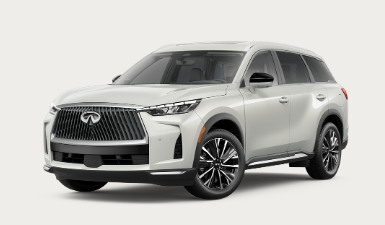
The Infiniti QX60 fuel economy story is more interesting than a simple MPG number suggests. This is a three-row luxury crossover designed to carry a family, luggage, and occasionally a trailer, so nobody expects it to sip fuel like a compact hybrid. Still, efficiency matters. A difference of even one or two miles per gallon starts adding up when we commute every day, take long road trips, or keep the vehicle for several years.
The biggest thing we need to understand is that not every QX60 behaves the same at the pump. Older versions use Infiniti's familiar 3.5-liter V6, while newer models moved to a smaller 2.0-liter VC-Turbo four-cylinder. Front-wheel-drive and all-wheel-drive versions also carry slightly different ratings.
For 2026, Infiniti lists the QX60 PURE and LUXE FWD at an EPA-estimated 22 mpg city, 28 mpg highway and 24 mpg combined. AWD versions are rated at 22 city, 27 highway and 24 combined.
Those numbers make the modern QX60 reasonably efficient for a large luxury crossover. But EPA figures are only the starting line. How we drive, where we drive, tire pressure, temperature, cargo, traffic, fuel quality, and even how often we use remote start can move the real number in either direction.
So, what should an owner actually expect?
Let's dig into it.
Content in this publication
- What Is the Infiniti QX60 Fuel Economy?
- 2026 Infiniti QX60 Fuel Economy
- 2025 Infiniti QX60 Fuel Economy
- 2024 Infiniti QX60 Fuel Economy
- Older Infiniti QX60 Fuel Economy
- Infiniti QX60 FWD vs AWD Fuel Economy
- How Far Can an Infiniti QX60 Travel on a Tank?
- Real-World Infiniti QX60 MPG
- What Hurts QX60 Fuel Economy Most?
- Does Driving Mode Affect QX60 MPG?
- Does Premium Gas Improve Infiniti QX60 Fuel Economy?
- How Much Fuel Does the QX60 Use Per 100 Miles?
- Infiniti QX60 City Fuel Economy
- Infiniti QX60 Highway Fuel Economy
- Does Towing Reduce QX60 Fuel Economy?
- Do Tires Affect Infiniti QX60 MPG?
- How to Improve Infiniti QX60 Fuel Economy
- Is the Newer QX60 More Fuel-Efficient Than the V6?
- Is the Infiniti QX60 Fuel-Efficient Enough for Daily Driving?
- Who Should Care Most About QX60 MPG?
- Final Verdict on Infiniti QX60 Fuel Economy
- Frequently Asked Questions
What Is the Infiniti QX60 Fuel Economy?
For a recent QX60, the simple answer is roughly 24 mpg combined.
The 2025 QX60 introduced the 2.0-liter VC-Turbo engine, rated at 268 horsepower and 286 lb-ft of torque. Infiniti lists its fuel economy at 22/28/24 mpg for FWD and 22/27/24 mpg for AWD.
The 2026 model continues with essentially the same EPA numbers.
That means an owner whose driving is divided between urban streets and open highways can reasonably use 24 mpg as the official benchmark. It is not a guarantee, though. Think of the EPA rating like the nutritional label on a restaurant menu: useful for comparison, but your actual experience depends on what happens in the real world.
Infiniti QX60 MPG at a Glance
| Model | City MPG | Highway MPG | Combined MPG |
|---|---|---|---|
| 2026 QX60 FWD | 22 | 28 | 24 |
| 2026 QX60 AWD | 22 | 27 | 24 |
| 2025 QX60 FWD | 22 | 28 | 24 |
| 2025 QX60 AWD | 22 | 27 | 24 |
| 2024 QX60 FWD | 21 | 26 | 23 |
| 2024 QX60 AWD | 20 | 25 | 22 |
| 2020 QX60 FWD | 20 | 27 | 22 |
| 2020 QX60 AWD | 19 | 26 | 22 |
The 2024 figures come from Infiniti's specifications for the V6-powered QX60, while the 2020 model shows how the previous-generation vehicle compared.
The improvement may look modest on paper, but moving a luxury three-row SUV from roughly 22 mpg combined to 24 mpg combined represents a meaningful reduction in fuel consumption over thousands of miles.
2026 Infiniti QX60 Fuel Economy
If we're shopping for a newer QX60, the 2026 model is one of the easiest versions to understand.
Infiniti's official EPA estimates are 22 city, 28 highway and 24 combined for PURE and LUXE FWD models. For PURE, LUXE, SPORT and AUTOGRAPH AWD models, the official estimates are 22 city, 27 highway and 24 combined.
Interesting, isn't it?
AWD normally carries a more obvious fuel-economy penalty because the vehicle has additional hardware and drivetrain losses. Here, however, the official combined figure remains 24 mpg.
The difference appears mainly on the highway, where FWD receives a 28-mpg estimate versus 27 mpg for AWD.
Is 24 MPG Good for the QX60?
Within the context of a spacious three-row luxury crossover, 24 mpg combined is respectable.
We should not judge the QX60 as if it were a small sedan. It has seating for up to seven, substantial cargo capacity, luxury equipment, significant weight, and available towing capability. Moving that much vehicle through the air requires energy.
A 24-mpg combined rating therefore strikes a reasonable balance between capability and efficiency.
Could a hybrid do better? Certainly.
But among traditional gasoline-powered midsize luxury SUVs, the QX60's newer powertrain avoids feeling wildly thirsty.
2025 Infiniti QX60 Fuel Economy
The 2025 model year is especially significant because Infiniti changed the QX60's engine philosophy.
Instead of the previous naturally aspirated 3.5-liter V6, the 2025 QX60 received a 2.0-liter VC-Turbo four-cylinder producing 268 horsepower and 286 lb-ft of torque. Infiniti paired it with a nine-speed automatic transmission.
Its EPA estimates climbed to 22 mpg city, 28 highway and 24 combined with FWD, while AWD models achieved 22 city, 27 highway and 24 combined.
That doesn't transform the QX60 into an economy car, but the improvement is meaningful because it arrives without turning the vehicle into something dramatically less capable.
Why the VC-Turbo Engine Matters
Infiniti's VC-Turbo technology changes its compression characteristics depending on what the engine needs.
During lighter-load driving, the engine can prioritize efficiency. Ask for stronger acceleration and it can adapt toward performance instead.
It's a bit like changing shoes halfway through a race without stopping: one setup favors efficiency, while another helps when more effort is required.
This does not mean every turbocharged QX60 will automatically deliver 24 mpg. Turbo engines can become noticeably thirstier when driven aggressively because boost allows the engine to consume much more air and fuel under load.
A gentle right foot and a heavy right foot can therefore produce very different fuel-economy experiences.
2024 Infiniti QX60 Fuel Economy
Move back one model year and the picture changes.
The 2024 QX60 still used the 3.5-liter V6 producing 295 horsepower and 270 lb-ft of torque. Infiniti rated the FWD version at 21 mpg city, 26 mpg highway and 23 mpg combined. AWD models were rated at 20 city, 25 highway and 22 combined.
For drivers who love a naturally aspirated V6, that trade-off may be worthwhile. The engine has a different personality and power delivery than the later turbocharged four-cylinder.
From a fuel-efficiency perspective, however, the newer powertrain has the advantage.
2024 vs 2025 QX60 MPG
Compare the official numbers directly.
A 2024 FWD QX60 reaches 23 mpg combined, while the 2025 equivalent reaches 24 mpg. The improvement is larger with AWD: 22 mpg combined for 2024 versus 24 mpg for 2025.
That might not sound dramatic while standing at the dealership.
Over years of ownership, however, those small improvements matter.
Fuel economy works like compound interest in reverse. A tiny inefficiency repeated every commute, every school run and every vacation eventually becomes a meaningful expense.
Older Infiniti QX60 Fuel Economy
The earlier QX60 followed a different mechanical recipe.
For example, Infiniti listed the 2019 model with a 295-hp 3.5-liter V6 and continuously variable transmission. The FWD version carried EPA estimates of 20 city, 27 highway and 22 combined, while AWD came in at 19 city, 26 highway and 22 combined.
The 2020 model posted similar figures: 20/27/22 mpg for FWD and 19/26/22 for AWD.
So if we're comparing a used first-generation QX60 against a current one purely on fuel consumption, the newer model has an edge.
That said, purchase price, depreciation, maintenance and insurance can easily outweigh a small MPG difference. Fuel economy should be part of the buying decision rather than the entire decision.
Infiniti QX60 FWD vs AWD Fuel Economy
Should we choose FWD simply to save gasoline?
Probably not unless maximizing efficiency is genuinely one of our top priorities.
On the 2026 QX60, FWD and AWD both achieve an EPA-estimated 24 mpg combined. FWD's primary advantage appears in highway driving, where it is rated at 28 mpg compared with 27 mpg for AWD.
The decision should therefore revolve more around where and how we drive.
Drivers living in areas with frequent snow, heavy rain, steep terrain or slippery roads may value AWD far more than a one-mpg highway advantage. Someone living in a warm, relatively flat area and spending most of their time on paved roads may prefer the simplicity of FWD.
When FWD Makes More Sense
FWD is appealing when we want the simplest configuration, spend most of our time on dry roads, and want to squeeze the best possible highway efficiency from the QX60.
When AWD Makes More Sense
AWD earns its keep when traction matters more frequently. The reassuring part is that modern QX60 AWD models no longer demand a major official combined-MPG sacrifice.
How Far Can an Infiniti QX60 Travel on a Tank?
The 2025 QX60 has an 18.5-gallon fuel tank.
If we multiply 18.5 gallons by the official 24-mpg combined rating, we get a mathematical maximum of roughly 444 miles.
But that does not mean we should expect to drive 444 miles between every gas-station visit.
Real vehicles do not routinely consume every usable drop of fuel. Drivers normally refuel before the tank reaches empty, and traffic, terrain, weather and driving style reduce or increase range.
For normal planning, it's better to think in terms of a comfortable buffer rather than chasing the theoretical maximum.
Highway Range Can Be Surprisingly Good
At the FWD highway rating of 28 mpg, multiplying 28 by 18.5 gives a theoretical figure of around 518 miles.
Again, that's laboratory-style arithmetic rather than a promise.
Still, it explains why the QX60 can work well as a long-distance family cruiser. A steady highway journey gives the powertrain time to settle into its efficient operating range instead of constantly accelerating several thousand pounds from a stop.
Real-World Infiniti QX60 MPG
EPA estimates are designed mainly to help us compare vehicles under standardized testing.
Real life refuses to behave like a standardized test.
Spend a week making short trips through dense traffic and your average could sit below the official combined rating. Take a relaxed road trip on relatively flat highways and efficiency may improve substantially.
Rather than obsessing over one tank, we should evaluate several consecutive fill-ups.
A single tank can be distorted by unusual circumstances. Maybe we sat in traffic for two hours. Perhaps we carried six passengers and luggage. Maybe temperatures dropped dramatically. Perhaps the car spent half the week idling with climate control running.
Track five or ten tanks and a much clearer pattern emerges.
What Hurts QX60 Fuel Economy Most?
A large crossover has to fight several invisible enemies. Weight, aerodynamic drag, rolling resistance and acceleration all demand energy.
The biggest everyday factors include:
- Rapid acceleration and repeated hard braking.
- High-speed highway driving, especially well above normal cruising speeds.
- Stop-and-go urban traffic.
- Long periods of idling or frequent remote-start use.
- Low tire pressure.
- Carrying unnecessary cargo.
- Roof boxes and other accessories that increase aerodynamic drag.
- Towing a trailer.
- Cold weather and repeated short journeys.
- Aggressive driving that keeps the turbocharger working harder on newer models.
Of these, speed is often underestimated. Air resistance rises sharply as speed increases. Push a broad three-row SUV faster through the atmosphere and the vehicle begins fighting what feels like an increasingly strong invisible wall.
Does Driving Mode Affect QX60 MPG?
It can.
Driving modes change how the vehicle responds to throttle input and, depending on the configuration, can influence transmission and drivetrain behavior.
The important thing is not to treat an economy-oriented setting like a magic button.
If we floor the accelerator between every traffic light, no software label will rescue our MPG.
The biggest savings usually come from smooth driving. Accelerate progressively, maintain momentum where safe, look farther down the road and avoid unnecessary brake-throttle-brake cycles.
Smoothness beats gimmicks.
Cruise Control and Highway Economy
Cruise control can help on relatively flat highways because it prevents the little speed variations that often creep into human driving.
On rolling terrain, however, rigidly maintaining a chosen speed may sometimes demand extra throttle on inclines. A skilled driver who allows modest speed changes can occasionally do better.
The larger lesson is simple: consistency is our friend.
Fuel requirements and recommendations should always be checked against the owner's manual for the exact model year.
Current QX60 inventory is identified by Infiniti as using premium unleaded gasoline, and Infiniti says its latest QX60 is designed to use premium unleaded fuel for peak operating efficiency.
Using the correct octane matters most for delivering the engine performance and operating characteristics engineers intended.
However, buying expensive fuel should not be viewed as a shortcut to miraculous MPG.
Premium gasoline is not a bottle of extra miles. The engine, driving conditions and driver's behavior remain much more important.
How Much Fuel Does the QX60 Use Per 100 Miles?
MPG can sometimes hide how much gasoline we're actually burning.
At 24 mpg, the QX60 uses approximately 4.17 gallons to travel 100 miles.
At 22 mpg, consumption rises to roughly 4.55 gallons per 100 miles.
That difference looks small until we stretch it across 10,000 or 15,000 annual miles.
This is why improving from 22 to 24 mpg is more valuable than the two-digit difference first appears.
Infiniti QX60 City Fuel Economy
City driving is where the QX60 has the hardest job.
Every time we stop, the vehicle must accelerate its mass again. Energy converted into forward motion eventually disappears as heat through the brakes.
The newer QX60's official 22-mpg city rating is therefore quite respectable considering its size.
Still, urban owners should expect the greatest variability.
A suburban trip with flowing 35-to-50-mph roads bears little resemblance to crawling through downtown traffic at rush hour, even though both may casually be called "city driving."
Infiniti QX60 Highway Fuel Economy
Highway conditions flatter the QX60.
The vehicle is already moving, gear changes become less frequent, and we no longer have to accelerate its full mass every few hundred yards.
That's why a 2026 FWD QX60 rises from 22 mpg city to 28 mpg highway, while AWD is rated at 27 mpg highway.
For families covering substantial interstate mileage, this matters.
A QX60 may not look particularly efficient during a week of short school runs, yet behave much more economically during a long vacation journey.
Does Towing Reduce QX60 Fuel Economy?
Absolutely.
Towing adds weight and, usually more importantly at highway speeds, aerodynamic resistance.
A tall camper can act like a parachute tied to the back of the vehicle. The engine must produce considerably more power simply to maintain speed.
There is no single trustworthy towing-MPG figure because trailers vary enormously.
A lightweight, aerodynamic trailer creates a completely different load from a heavy travel trailer with a broad frontal area.
If towing is part of our routine, we should budget for noticeably higher fuel consumption rather than expecting EPA numbers.
Do Tires Affect Infiniti QX60 MPG?
Yes, and they're among the easiest things to overlook.
Underinflated tires increase rolling resistance. The engine then has to work harder simply to keep the vehicle moving.
Oversized aftermarket wheels and heavier tire combinations can also alter efficiency, acceleration and ride quality.
We should follow the pressure specification listed for the vehicle rather than inflating tires according to the maximum pressure printed on the tire sidewall.
Proper tire pressure brings a rare combination of benefits: better efficiency, predictable handling and healthier tire wear.
How to Improve Infiniti QX60 Fuel Economy
We don't need hypermiling tricks or painfully slow driving.
The biggest gains come from boring, repeatable habits.
Accelerate smoothly. Leave space ahead so we don't constantly brake and accelerate. Keep tires correctly inflated. Remove unnecessary roof accessories when they aren't being used. Avoid carrying heavy items indefinitely. Combine multiple short errands into one longer trip when practical. Keep the vehicle properly maintained.
Most importantly, watch the long-term MPG display rather than treating the instantaneous fuel-economy gauge like a video game.
One steep hill means nothing.
A three-month average tells a story.
Maintenance Matters More as a QX60 Ages
A well-maintained older QX60 can continue delivering reasonable fuel consumption, while neglected components can gradually hurt performance.
Incorrect tire pressure, worn ignition components, contaminated filters, alignment problems or mechanical faults can all make the engine work harder.
If fuel economy suddenly drops without an obvious change in weather, driving pattern or traffic, we shouldn't automatically assume the vehicle is simply getting old.
A sudden change deserves investigation.
Is the Newer QX60 More Fuel-Efficient Than the V6?
According to official EPA estimates, yes.
The 2024 V6 QX60 is rated as high as 23 mpg combined with FWD and 22 mpg combined with AWD. The 2025 VC-Turbo model improves that to 24 mpg combined with either drivetrain.
That gives the newer engine a measurable advantage.
Whether it is the better QX60 overall is more subjective.
Some buyers enjoy the sound and naturally aspirated response of a V6. Others care more about stronger low-end torque and improved fuel economy.
Neither preference is irrational.
Fuel Economy Shouldn't Be Viewed in Isolation
If we're purchasing used, a beautifully maintained V6 QX60 with complete service history could easily make more financial sense than spending thousands more solely to gain one or two mpg.
Fuel economy is one chapter of the ownership story.
Purchase price, depreciation, maintenance, reliability, insurance, financing and eventual resale value belong in the same book.
Is the Infiniti QX60 Fuel-Efficient Enough for Daily Driving?
For many owners, yes.
Twenty-four combined MPG is not headline-grabbing efficiency in an age of hybrids and EVs, but it is practical for a large gasoline-powered luxury crossover.
The key question is what we're comparing it against.
If we are moving from a compact hybrid, fuel costs may feel painful.
If we are downsizing from a large body-on-frame SUV with a bigger engine, the QX60 could feel relatively frugal.
Context changes everything.
Who Should Care Most About QX60 MPG?
Fuel economy deserves extra attention when we drive high annual mileage.
Someone covering 20,000 miles each year will feel the difference between 20 and 24 mpg far more than someone driving 5,000 miles.
Likewise, drivers who spend most of their time in congested urban traffic should focus on city figures rather than being seduced by the larger highway number.
Our own driving pattern matters more than somebody else's review.
Final Verdict on Infiniti QX60 Fuel Economy
The Infiniti QX60 fuel economy is competitive enough to make this three-row luxury crossover a practical everyday vehicle without pretending it is an efficiency champion.
Recent models deliver the best official figures in the QX60's history. The 2025 and 2026 versions reach an EPA-estimated 24 mpg combined, with FWD models rated at 22 mpg city and 28 highway and AWD models at 22 city and 27 highway.
Older V6 versions generally consume a little more fuel. The 2024 model is rated at 23 mpg combined with FWD and 22 with AWD, while 2019 and 2020 examples sit around 22 mpg combined.
So, is the QX60 economical?
For a seven-seat luxury crossover, we'd say reasonably so.
The newest VC-Turbo models make the strongest efficiency case, especially if we're putting substantial mileage on the vehicle. But smart driving habits still matter. A patient driver on flowing roads can make the QX60 feel surprisingly sensible, while an aggressive driver fighting city traffic can turn even sophisticated engine technology into a frequent visitor at the fuel pump.
That, ultimately, is the lesson: EPA MPG gives us the map, but the way we drive determines the journey.
Frequently Asked Questions
1. What is the Infiniti QX60 fuel economy?
The 2026 Infiniti QX60 is EPA-rated at 22 mpg city, 28 mpg highway and 24 mpg combined in PURE and LUXE FWD configurations. AWD versions are rated at 22 city, 27 highway and 24 combined.
2. Is the Infiniti QX60 good on gas?
For a gasoline-powered three-row luxury crossover, newer QX60 models deliver respectable efficiency. A 24-mpg combined rating is reasonable considering the vehicle's passenger capacity, size and performance, although hybrid competitors can deliver considerably better consumption.
3. How many miles can an Infiniti QX60 go on a full tank?
The 2025 QX60 has an 18.5-gallon tank. Combining that capacity with the official 24-mpg combined estimate produces a theoretical range of about 444 miles. Actual usable range varies significantly with driving conditions and owners normally refuel before the tank is completely empty.
4. Is the QX60 AWD less fuel-efficient than FWD?
Slightly on the highway. For 2026, FWD versions are rated at 28 mpg highway while AWD models receive a 27-mpg estimate. Both configurations, however, are officially rated at 24 mpg combined.
5. Which Infiniti QX60 gets the best fuel economy?
Among recent models, the VC-Turbo-powered 2025 and 2026 QX60 perform particularly well, reaching up to 22 mpg city, 28 highway and 24 combined in FWD form. This improves on the 2024 V6 model's 21/26/23-mpg FWD rating.
If you want to know other articles similar to Infiniti QX60 Fuel Economy: MPG, Range and Real-World Guide you can visit the category Driving.
BMW i7 Range Miles: How Far Can This Luxury EV Really Go?

Land Rover Defender 90 MPG: Real-World Fuel Economy Explained

Toyota Hilux Long Range Fuel Tank: Complete Buyer’s Guide

How Fast Is a BMW M2? Acceleration, Top Speed and Real-World Performance
Toyota Hilux Fuel Consumption: Real-World MPG, Diesel Economy, and Running Costs
Subaru XV Fuel Consumption: MPG, Real-World Economy, and What to Expect
Leave a Reply
More content of your interest