

BMW i7 Range Miles: How Far Can This Luxury EV Really Go?

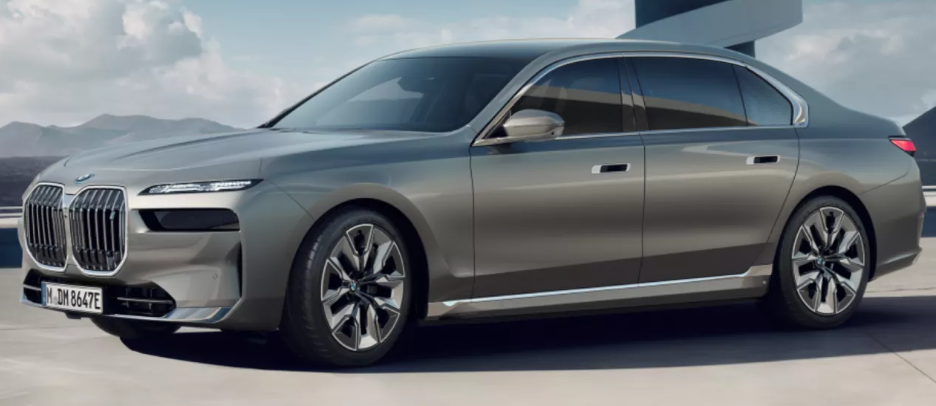
The BMW i7 range in miles is one of the first numbers most buyers check before seriously considering BMW’s flagship electric sedan. And that makes perfect sense. An electric luxury car can have reclining rear seats, massive screens, whisper-quiet acceleration, and enough technology to make a private jet jealous, but none of that feels quite as impressive if we are constantly hunting for the next charger.
Fortunately, range is one area where the BMW i7 performs surprisingly well for such a large, heavy, luxurious electric sedan.
For the 2026 BMW i7 lineup in the United States, BMW lists estimated ranges of approximately 301–314 miles for the i7 eDrive50, 296–311 miles for the i7 xDrive60, and 268–285 miles for the performance-focused i7 M70, depending partly on wheel and tire configuration.
There is another number worth knowing, though. BMW's newer U.S. i7 information now advertises an estimated maximum range of up to 350 miles and a 115.5-kWh battery. Those figures relate to BMW's updated i7 specifications and should not be confused with the established 2026 figures above.
So, can an i7 comfortably handle a road trip? Does the M70 lose too much range? How far should we realistically expect to drive between charging stops?
Let's unpack it.
Content in this publication
- BMW i7 Range Miles at a Glance
- How Many Miles Can a BMW i7 Go on a Full Charge?
- BMW i7 eDrive50 Range
- BMW i7 xDrive60 Range
- BMW i7 M70 Range
- The New BMW i7 and the 350-Mile Range Figure
- EPA Range vs Real-World BMW i7 Range
- How Highway Speed Affects BMW i7 Range
- Does Cold Weather Reduce BMW i7 Range?
- Does Air Conditioning Reduce BMW i7 Range?
- How Wheels and Tires Affect BMW i7 Range Miles
- BMW i7 Charging Speed and Long-Distance Range
- How Far Can We Travel Using 80% of the Battery?
- Can the BMW i7 Handle Long Road Trips?
- BMW i7 Range Compared With Daily Driving
- How to Get More BMW i7 Range Miles
- Which BMW i7 Has the Best Range?
- Is BMW i7 Range Good Enough?
- Who Should Choose the eDrive50, xDrive60, or M70?
- Final Thoughts: BMW i7 Range Is More Than One Number
- Frequently Asked Questions About BMW i7 Range Miles
BMW i7 Range Miles at a Glance
If we want the simple answer first, here it is.
For the U.S.-market 2026 lineup, the approximate BMW-published ranges are:
| BMW i7 model | Estimated range |
|---|---|
| BMW i7 eDrive50 | 301–314 miles |
| BMW i7 xDrive60 | 296–311 miles |
| BMW i7 M70 | 268–285 miles |
BMW notes that actual range depends on factors such as the specific model, wheels and tires, driving style, traffic, accessories, outside temperature, and charging conditions.
Those distinctions matter.
Two BMW i7s parked beside each other can look nearly identical yet travel noticeably different distances from a full battery simply because one has larger wheels, more powerful motors, or a driver with a heavier right foot.
Think of the advertised range as the size of our travel budget. How quickly we spend that budget depends on how we drive.
How Many Miles Can a BMW i7 Go on a Full Charge?
Under favorable conditions, we can expect a BMW i7 to travel somewhere around 270 to just over 310 miles per charge in 2026 specification, depending on the model.
Choose the efficiency-focused eDrive50, and BMW lists as much as approximately 314 miles.
Choose the xDrive60 with all-wheel drive, and the maximum listed figure sits around 311 miles.
Move up to the muscular M70 and maximum range falls to about 285 miles because its mission changes. The M70 is designed to combine limousine comfort with serious performance.
BMW's current next-generation/update information pushes the ceiling higher still, advertising an estimated up to 350 miles.
That makes the answer to “How far does a BMW i7 go?” more nuanced than a single number.
Why BMW i7 Range Is Given as a Range
You may notice BMW frequently publishes something like “301–314 miles” rather than one fixed figure.
Why?
Because wheel and tire choices affect efficiency.
Large alloy wheels look fantastic on a luxury sedan this imposing. They can also increase aerodynamic drag and rolling resistance. Wider performance tires may provide additional grip, but grip is not free. The battery has to provide the energy necessary to overcome that extra resistance.
BMW itself warns that tire and wheel selection can alter estimated electric range.
That means buyers who care deeply about maximum range should resist automatically choosing the largest wheel package in the configurator.
Sometimes smaller wheels are the quiet heroes of EV efficiency.
BMW i7 eDrive50 Range
The BMW i7 eDrive50 is the version we would look at first if maximizing range matters more than maximizing acceleration.
BMW lists its 2026 estimated range at approximately 301 to 314 miles.
Unlike the dual-motor xDrive versions, the eDrive50 uses rear-wheel drive. Fewer driven wheels and a powertrain oriented more toward efficiency help it squeeze more distance from the battery.
BMW's technical information lists the 2026 eDrive50 with 449 horsepower and rear-wheel drive, so this certainly isn't a slow “economy” version.
That's the amusing thing about modern premium EVs: the sensible model still has more power than many traditional sports cars.
Is the eDrive50 the Best i7 for Long Distances?
For many drivers, yes.
Its combination of range, performance, refinement, and rear-wheel-drive simplicity makes it arguably the sweet spot for buyers who expect frequent motorway or interstate journeys.
We give up some traction compared with xDrive, but in return we can potentially gain a little useful range.
If our priority list looks like this:
- Maximum driving distance
- Luxury and comfort
- Lower energy consumption
- Strong but not extreme performance
- Fewer charging stops on long trips
…the eDrive50 makes a compelling case.
BMW i7 xDrive60 Range
The BMW i7 xDrive60 sits near the center of the lineup and may be the most balanced version.
BMW lists the 2026 xDrive60 at approximately 296–311 miles of estimated range.
BMW technical specifications list 536 horsepower and all-wheel drive for the 2026 xDrive60.
In other words, we sacrifice only a modest amount of maximum range compared with the eDrive50 while gaining another driven axle and significantly more performance.
That's a trade many luxury-car buyers will happily make.
Does xDrive Reduce BMW i7 Range?
Generally, yes, although not dramatically in this case.
Adding a front electric motor increases capability, but it also adds mechanical and electrical demands. More hardware generally means more weight and potentially greater energy consumption.
Yet BMW manages the compromise rather well.
At the upper end of BMW's published numbers, we're comparing approximately:
- 314 miles for the eDrive50
- 311 miles for the xDrive60
That's hardly a dramatic penalty.
Of course, actual differences on the road depend on configuration and conditions.
BMW i7 M70 Range
Then we reach the mischievous member of the family: the BMW i7 M70.
BMW lists approximately 268–285 miles of estimated 2026 range.
BMW's technical specifications list the M70 with 650 horsepower, 749 lb-ft of torque, all-wheel drive, and a claimed 0–60 mph time of about 3.5 seconds.
That is remarkable considering we are talking about a gigantic luxury sedan weighing more than three tons in running order.
But physics always sends a bill.
Why Does the BMW i7 M70 Have Less Range?
The M70 sacrifices efficiency in exchange for performance.
Several things work against it:
- More powerful electric motors
- Performance-oriented tires
- Larger available wheels
- Greater rolling resistance
- Additional drivetrain demands
- Drivers being tempted to use all 650 horsepower
That last one matters more than we sometimes admit.
Nobody buys a 650-horsepower electric luxury sedan and accelerates like a driving instructor every single day.
Power is addictive.
Every enthusiastic launch converts battery energy into velocity at an impressive rate.
Is 285 Miles Still Enough?
For most owners, absolutely.
A genuine driving range somewhere around the high-200-mile mark is more than enough for normal commuting, shopping, school runs, business travel, and most weekend journeys.
Long road trips simply require slightly more charging planning.
If we value maximum range above everything else, buy the eDrive50.
If we want our luxury limousine to occasionally behave like it swallowed a sports car, the M70 starts making sense.
The New BMW i7 and the 350-Mile Range Figure
Here is where online research can become confusing.
BMW's current U.S. i7 page says the updated BMW i7 has an estimated range of up to 350 miles and lists battery capacity at 115.5 kWh. BMW identifies those range numbers as preliminary estimates that can vary with equipment, driving conditions, temperature, and other factors.
Meanwhile, BMW's dedicated 2026 EV range guide continues to list the earlier 2026 figures of up to 314 miles for the eDrive50, 311 miles for the xDrive60, and 285 miles for the M70.
Therefore, when searching “BMW i7 range miles,” we should always check which model year a page is describing.
Otherwise, we may accidentally compare two different versions of the car.
Why the Newer BMW i7 Can Travel Farther
A larger usable energy reserve is obviously important, but range improvements do not depend entirely on stuffing more battery cells under the floor.
EV manufacturers can gain miles through:
- Battery chemistry improvements
- More efficient electric motors
- Improved power electronics
- Reduced electrical losses
- Better thermal management
- Lower rolling resistance
- Aerodynamic optimization
- Smarter energy recuperation
- Updated vehicle software
EV efficiency is a game of tiny percentages.
Save a little energy at the motor, a little at the tires, a little through aerodynamics, and suddenly the car travels dozens of extra miles.
EPA Range vs Real-World BMW i7 Range
This may be the most important section of the entire article.
An official range figure is not a promise that our BMW i7 will travel exactly that distance every time.
BMW explicitly warns that actual range varies with vehicle specification, wheel and tire selection, driving habits, traffic, accessories, outside temperature, and charging conditions.
That's normal for every EV.
Gasoline cars behave similarly—we just tend to notice it less because refueling takes a few minutes and petrol stations are everywhere.
What BMW i7 Range Should We Expect in Normal Driving?
Rather than obsessing over one number, we prefer thinking in scenarios.
A mild day with mixed city and suburban driving may allow the car to approach its rated efficiency.
Sustained high-speed highway driving can reduce range because aerodynamic drag increases rapidly with speed.
Cold winter driving can reduce it further because the battery operates less efficiently and the cabin requires heating.
And if we combine freezing weather, high speeds, large wheels, strong headwinds, and aggressive acceleration?
Our theoretical 300-mile luxury EV suddenly becomes considerably less ambitious.
That does not indicate a fault. It is energy consumption doing exactly what physics says it should.
How Highway Speed Affects BMW i7 Range
Speed matters enormously in an EV.
At lower urban speeds, electric cars can be wonderfully efficient, particularly because regenerative braking can recover energy that would otherwise disappear as heat.
Highway driving is different.
Once we're cruising rapidly, aerodynamic resistance becomes the main enemy.
The faster we push this enormous sedan through the air, the harder its motors must work.
70 MPH vs 80 MPH
Those extra 10 mph may feel insignificant from behind the wheel.
To the battery, they're not.
Aerodynamic drag increases dramatically as velocity rises. Consequently, maintaining 80 mph generally consumes more energy per mile than maintaining 70 mph.
If maximum range is our goal, modestly reducing cruising speed can make a surprisingly meaningful difference.
It is not exciting advice.
It is effective advice.
Does Cold Weather Reduce BMW i7 Range?
Yes.
Cold weather can reduce the range of practically every battery-electric vehicle.
The effect comes from several directions at once.
The battery itself may be less efficient when cold. Meanwhile, occupants quite reasonably want a warm cabin, heated seats, window demisting, and perhaps a heated steering wheel.
All of that requires energy.
Preconditioning Can Help
One of the smartest habits for EV ownership is preconditioning while the vehicle remains connected to external power.
BMW specifically recommends preconditioning the cabin while plugged in as one method of helping maximize electric range.
Instead of asking the battery to warm the entire cabin immediately after departure, we can use grid electricity before leaving.
It's essentially like packing lunch before starting the journey instead of stopping halfway to cook it.
Does Air Conditioning Reduce BMW i7 Range?
Yes, but we should keep the issue in perspective.
Running climate control consumes energy, so extreme heating or cooling can influence driving range.
However, comfort is one of the main reasons anyone buys an i7.
Spending six figures on a luxury EV only to sweat through summer because we desperately want to preserve four extra miles rather defeats the purpose.
A better strategy is efficiency without obsession:
- Precondition while plugged in.
- Use sensible cabin temperatures.
- Use seat heating where appropriate.
- Avoid unnecessarily extreme climate settings.
- Let the automatic climate system manage comfort efficiently.
BMW itself recommends being moderate with heating and cooling when trying to maximize range.
How Wheels and Tires Affect BMW i7 Range Miles
This deserves special attention because buyers choose wheels before taking delivery.
Large wheels often look spectacular.
They can also cost us range.
BMW explicitly includes tire and wheel selection among the variables affecting estimated driving range.
Why Bigger Wheels Can Reduce EV Range
Large wheels and wider performance tires may bring:
- Higher rolling resistance
- Increased aerodynamic turbulence
- Greater unsprung mass
- Wider contact patches
- Stickier tire compounds
Each effect may appear small individually.
Together, they matter.
Choose Your Priorities Before Ordering
If we mostly drive around town and charge every night, losing some range for spectacular-looking wheels may be irrelevant.
If we routinely drive 250 miles between cities, the efficiency-oriented wheel configuration becomes much more valuable.
There isn't one correct choice.
There is only the choice that matches how we actually drive.
BMW i7 Charging Speed and Long-Distance Range
Battery range tells only half the road-trip story.
Charging speed tells the other half.
For the 2026 i7 eDrive50, xDrive60 and M70, BMW technical specifications list a maximum DC charging rate of 195 kW and approximately 34 minutes for a 10–80% DC fast-charge session under suitable conditions.
BMW also estimates roughly 71–88 miles of range can be added in 10 minutes, depending on the i7 version and relevant conditions.
That matters more than chasing an enormous theoretical full-charge number.
Why We Usually Don't Charge to 100% on Road Trips
DC fast charging typically slows as the battery approaches a very high state of charge.
So instead of arriving at a charger with 25% and waiting until 100%, road-trip strategy often works better like this:
- Arrive with a relatively low battery level.
- Charge rapidly through the battery's faster charging zone.
- Leave around 70–80% when appropriate.
- Drive to the next well-positioned fast charger.
- Repeat.
It sounds complicated on paper.
Once we've done it a few times, it becomes routine.
How Far Can We Travel Using 80% of the Battery?
This is a more practical question than maximum range.
Suppose our i7 is capable of roughly 300 miles from 100% to near empty.
Using only an approximate 10–80% operating window represents 70% of the battery's available range.
Simple arithmetic gives us:
300 × 0.70 = about 210 miles.
So on a long road trip, something around 180–220 miles between rapid charging sessions can be a comfortable planning window depending on weather, speed, elevation, battery percentage, and charger availability.
That is far less stressful than trying to extract every last theoretical mile.
Can the BMW i7 Handle Long Road Trips?
Definitely.
The i7 might actually be one of the most pleasant ways to cover hundreds of miles.
Its strengths are practically tailor-made for interstate journeys:
- Extremely quiet electric powertrain
- Long wheelbase
- Luxurious seating
- Strong highway range
- Fast DC charging
- Advanced driver-assistance technology
- Excellent overtaking power
- High-quality climate control
- Exceptional rear-seat comfort
The question becomes less “Can the i7 road trip?” and more “How good is the charging infrastructure along our route?”
Range Anxiety Changes Once We Understand the Car
Before owning an EV, 20% battery can feel terrifying.
After some experience, it simply becomes information.
The vehicle calculates remaining range. Navigation can help guide us toward charging. We begin learning which stations are dependable and where stopping naturally fits into the trip.
Eventually the battery percentage starts feeling like a fuel gauge rather than a countdown timer.
BMW i7 Range Compared With Daily Driving
Here's another useful perspective.
Imagine we drive 40 miles per day.
Even with an effective 280-mile driving range, that represents roughly a full week of commuting distance before considering recharging.
And most EV owners with home charging do not wait for the battery to approach zero anyway.
They arrive home, plug in, and wake up with the desired charge level.
Home Charging Changes the Range Equation
This is where EV life differs fundamentally from gasoline-car ownership.
With a petrol vehicle, we intentionally drive somewhere to buy fuel.
With an EV and home charging, the “fuel station” sits where the car sleeps.
That means someone driving 30, 40, or 50 miles daily may rarely care whether the maximum range is 285 or 314 miles.
Long-distance travel is where the difference becomes meaningful.
How to Get More BMW i7 Range Miles
We don't need to crawl along behind trucks to maximize range.
A few sensible habits can make a noticeable difference.
Drive Smoothly
BMW recommends gentle acceleration and smooth driving when maximizing EV range.
The i7's instant torque makes hard acceleration entertaining, but repeated bursts of full power consume considerable energy.
Smooth inputs preserve momentum.
Use Regenerative Braking Intelligently
Regenerative braking allows the electric motors to recover some kinetic energy during deceleration.
BMW specifically recommends maximizing regenerative braking where appropriate.
We aren't creating free energy—the laws of physics remain stubbornly employed—but we are recovering energy that conventional friction brakes would otherwise turn into heat.
Check Tire Pressure
Underinflated tires create additional rolling resistance.
That hurts efficiency and can accelerate tire wear.
Check pressures periodically, particularly when temperatures change significantly.
Precondition Before Leaving
Warm or cool the cabin while the car remains connected to external power whenever practical.
That lets us start the trip comfortable without immediately demanding as much energy from the traction battery.
Reduce Unnecessary Weight
An i7 is already enormous, so a few shopping bags are not going to ruin its efficiency.
Still, permanently carrying heavy equipment we never use serves little purpose.
Slow Down Slightly
This is perhaps the most powerful highway-range trick.
Reducing cruising speed even modestly can significantly cut aerodynamic losses.
The i7 is so quiet that high speed barely feels high.
Our battery knows better.
Which BMW i7 Has the Best Range?
For the 2026 U.S. lineup, the BMW i7 eDrive50 is the range leader, with BMW listing approximately 301–314 miles depending on configuration.
The xDrive60 follows closely at roughly 296–311 miles.
The M70 trades some efficiency for enormous performance and comes in at approximately 268–285 miles.
BMW's newer i7 specification raises the headline figure to an estimated up to 350 miles, so buyers shopping later versions should confirm the precise model year and configuration rather than relying on an older range chart.
Is BMW i7 Range Good Enough?
For most luxury EV buyers, yes.
A 300-ish-mile range sits in a useful sweet spot.
It's enough that normal daily driving becomes almost trivial, while long trips remain perfectly achievable with sensible charging stops.
Could 450 or 500 miles be even better?
Of course.
But battery range exists within a system of compromises involving weight, cost, charging speed, packaging, and efficiency.
At some point, adding a gigantic battery simply means carrying hundreds of pounds of extra cells every single day for a road trip we might take three times per year.
The i7 takes a more balanced approach.
Who Should Choose the eDrive50, xDrive60, or M70?
Our choice becomes easier when we stop staring exclusively at horsepower.
Choose the i7 eDrive50 If…
We want maximum 2026 range, rear-wheel drive, strong performance, and the least complicated route to efficient luxury.
It is the rational choice without feeling remotely basic.
Choose the i7 xDrive60 If…
We want all-wheel-drive confidence and significantly more performance while sacrificing very little headline range.
For many people, this is the sweet spot.
Choose the i7 M70 If…
We genuinely care about performance and accept that additional speed comes with reduced range.
Nobody needs 650 horsepower in a luxury sedan.
That's precisely why it's fun.
Final Thoughts: BMW i7 Range Is More Than One Number
The BMW i7 range in miles cannot be reduced to one universal figure.
For the 2026 U.S. lineup, BMW lists roughly 301–314 miles for the eDrive50, 296–311 miles for the xDrive60, and 268–285 miles for the M70.
BMW's newer i7 information pushes the potential maximum higher, with an estimated up to 350 miles and a larger 115.5-kWh battery, illustrating how quickly premium EV technology continues evolving.
But the number printed on a specification sheet tells only part of the story.
Speed matters. Temperature matters. Wheels matter. Tires matter. Climate control matters. Driving style matters.
Most importantly, charging availability matters.
We wouldn't judge a gasoline 7 Series solely by the number of gallons in its tank, and we shouldn't judge the electric i7 solely by its maximum EPA-style range either.
Taken as a complete package, the i7 offers enough driving distance for everyday life and serious road trips while surrounding us with the sort of comfort that makes 300 miles feel much shorter than they actually are.
And perhaps that's the real achievement.
The BMW i7 doesn't merely travel a long way.
It makes the miles disappear.
Frequently Asked Questions About BMW i7 Range Miles
1. How many miles can a BMW i7 travel on a full charge?
For the 2026 U.S. lineup, BMW lists approximately 301–314 miles for the i7 eDrive50, 296–311 miles for the xDrive60, and 268–285 miles for the i7 M70, depending on configuration. BMW's newer i7 information advertises a maximum estimated range of up to 350 miles.
2. Which BMW i7 has the longest range?
Among the established 2026 U.S. models, the BMW i7 eDrive50 offers the longest BMW-listed range at up to approximately 314 miles. It uses rear-wheel drive and emphasizes efficiency more strongly than the higher-performance versions.
3. Why does the BMW i7 M70 have less range?
The M70 uses more powerful motors and performance-focused hardware and tires. Its approximately 650-horsepower output prioritizes acceleration and performance, increasing energy consumption compared with the eDrive50 and xDrive60.
4. Can a BMW i7 travel 300 miles without charging?
Yes, certain i7 configurations are rated at or above approximately 300 miles under suitable conditions. Whether we actually achieve 300 miles depends on speed, weather, wheel choice, climate-control use, driving style, elevation, and other variables.
5. Is the BMW i7 suitable for long-distance driving?
Yes. Its roughly 300-mile-class range, comfortable cabin and DC fast-charging capability make the i7 well suited to long journeys. BMW lists a 10–80% DC charging time of around 34 minutes for 2026 versions under appropriate charging conditions, making longer trips practical with planned charging stops.
If you want to know other articles similar to BMW i7 Range Miles: How Far Can This Luxury EV Really Go? you can visit the category Driving.
Can Nissan Rogue Pull a Boat? Complete Towing Guide
Can Nissan Rogue Be Flat Towed? Complete Towing Guide
Are Nissan Rogue Good on Gas? MPG, Fuel Economy, and Real-World Costs
Can Nissan Rogue Drive in Snow? Complete Winter Driving Guide

Kia Sorento Diesel Fuel Consumption: MPG, Efficiency and Real-World Range
Haval Jolion Hybrid Fuel Consumption: How Efficient Is It Really?
Leave a Reply
More content of your interest