
BMW i7 Charging Time: How Long Does It Really Take?

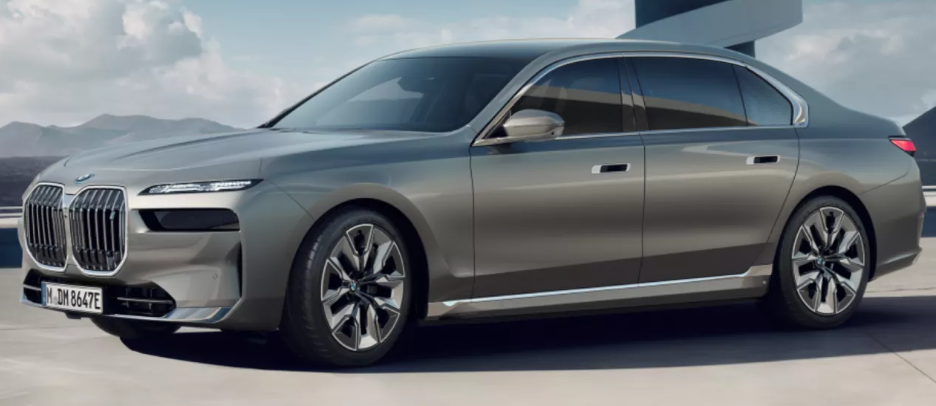
The BMW i7 charging time is one of the first things we should understand before living with BMW’s flagship electric luxury sedan. The i7 may feel like a rolling private jet—with huge screens, plush seats, serious performance, and near-silent acceleration—but eventually every electric car needs to plug in.
So, how long does a BMW i7 take to charge?
The short answer is that it depends heavily on which BMW i7 model year we are talking about, the charger we use, the battery temperature, and the starting state of charge.
For current newer BMW i7 specifications in the United States, BMW lists up to 240 kW DC fast charging, allowing a 10%-to-80% charge in approximately 29 minutes on compatible versions. BMW's current U.K. specification goes slightly further, quoting as much as 250 kW and around 28 minutes from 10% to 80%.
However, many i7s already on the road—including U.S.-spec 2026 i7 eDrive50, xDrive60, and M70 models—are rated for 195 kW DC charging and roughly 34 minutes from 10% to 80%.
That difference matters.
Let's unpack everything from overnight home charging to highway fast charging, battery preconditioning, charging curves, 80%-to-100% charging, cold weather, and how we can actually spend less time connected to a charger.
Content in this publication
- BMW i7 Charging Time at a Glance
- Why BMW i7 Charging Time Varies by Model Year
- How Long Does a BMW i7 Take to Charge at a Fast Charger?
- BMW i7 Home Charging Time
- Can the BMW i7 Charge at 22 kW AC?
- BMW i7 Charging at a 350 kW Station
- What Determines the Real BMW i7 Charging Time?
- BMW i7 Battery Preconditioning Explained
- Why BMW i7 Charging Slows Above 80%
- Is It Faster to Make Two Short Charging Stops?
- BMW i7 Charging Time vs Everyday Driving
- How to Reduce BMW i7 Charging Time
- Is the BMW i7 a Fast-Charging Electric Car?
- BMW i7 Charging Time for Different Owners
- BMW i7 Charging Time: 2026 vs Newer Models
- Is Home Charging or DC Fast Charging Better?
- Does Charger Power Always Equal Charging Power?
- What Is a Good BMW i7 Charging Strategy?
- Closing Thoughts: Is BMW i7 Charging Fast Enough?
- Frequently Asked Questions About BMW i7 Charging Time
BMW i7 Charging Time at a Glance
Before diving into the details, this table gives us a practical picture.
| Charging Situation | Approximate BMW i7 Charging Time |
|---|---|
| Newer i7 DC fast charging, 10%-80% | About 28-29 minutes |
| 2026 U.S. i7 DC fast charging, 10%-80% | About 34 minutes |
| 2026 U.S. i7 Level 2 AC, 0%-100% | About 10 hours |
| Newer U.S. i7 AC, 0%-100% | About 11 hours |
| U.K. 11 kW AC example | Around 11.5 hours |
| U.K. 22 kW AC configuration | Around 5 hours 45 minutes |
| 80%-100% on DC | Considerably slower per added percentage |
BMW currently lists the newer U.S. i7 50 xDrive and i7 60 xDrive at 240 kW maximum DC charging, with 10%-to-80% charging taking about 29 minutes. BMW also lists approximately 11 hours for a complete AC charge in those specifications.
For comparison, the U.S.-spec 2026 i7 xDrive60 peaks at 195 kW, takes around 34 minutes for the same 10%-to-80% window, and is listed at roughly 10 hours for AC 0%-to-100% charging.
In other words, when someone tells us, "The i7 charges in 34 minutes," that can be correct—but it isn't the whole story anymore.
Why BMW i7 Charging Time Varies by Model Year
Electric-car specifications evolve quickly.
Unlike a gasoline car where the size of the fuel filler hasn't fundamentally changed our refueling experience, EV charging hardware can improve significantly during a vehicle's production cycle.
That is exactly why researching BMW i7 charging time requires us to look beyond a single headline number.
2026 BMW i7 Charging Speed
For the U.S.-spec 2026 range, BMW publishes a maximum DC charging power of 195 kW for models including the i7 eDrive50, i7 xDrive60, and i7 M70.
BMW lists approximately 34 minutes for charging from 10% to 80%.
That is still perfectly respectable for such a large luxury EV.
Thirty-four minutes is roughly enough time for us to stop, use the restroom, grab coffee, answer a couple of messages, and discover that somebody somehow ordered a meal large enough for an entire football team.
By the time everyone returns to the car, charging may already be nearly finished.
Newer BMW i7 Charging Speed
The newer specification changes the equation.
BMW's current U.S. technical information lists as much as 240 kW of maximum DC charging power for the new i7 50 xDrive and i7 60 xDrive, dropping the advertised 10%-to-80% time to approximately 29 minutes.
BMW U.K. publishes up to 250 kW and a minimum DC 10%-to-80% time of approximately 28 minutes for current specifications.
Regional equipment and specifications can differ, so we should always check the technical data for the exact vehicle and country rather than assuming every i7 uses identical charging hardware.
How Long Does a BMW i7 Take to Charge at a Fast Charger?
For most road trips, this is the number that really matters.
With the right high-power DC station, we can expect roughly half an hour for the useful 10%-to-80% charging window in many BMW i7 versions.
Why 10% to 80% instead of 0% to 100%?
Because batteries don't charge at maximum speed from beginning to end.
Think of filling a glass from a faucet. At first we can open the tap wide. As the water approaches the rim, we naturally slow down to avoid spilling it everywhere.
An EV battery behaves somewhat similarly.
BMW explains that lithium-ion charging slows significantly as the battery approaches full charge, which is why manufacturers commonly quote charging performance through approximately 80% rather than 100%.
10% to 80% Is the BMW i7 Sweet Spot
On a long-distance trip, repeatedly charging from approximately 10% to 80% often makes more sense than sitting at a station waiting for 100%.
Suppose we arrive with 12% remaining.
We plug in.
Around half an hour later, depending on the i7 version and charging conditions, we could be approaching 80%.
At that point, continuing toward 100% may take disproportionately longer because charging power begins falling.
For many trips, we're better off unplugging, driving another substantial stretch, and stopping again later.
How Much Range Can 10 Minutes of Charging Add?
This might actually be a more useful measurement than total charging time.
BMW states that newer U.S. i7 versions can add approximately 105 to 110 miles of estimated range after 10 minutes of high-power charging, depending on configuration and conditions.
The 2026 i7 xDrive60 is listed at approximately 82 to 87 miles after 10 minutes, while the 2026 M70 is listed at roughly 71 to 80 miles.
That means even a relatively short charging stop can be meaningful.
If we're only 60 miles from our destination, waiting for the battery to reach 80% could be unnecessary.
BMW i7 Home Charging Time
Public DC charging gets all the attention because huge numbers such as 195 kW and 240 kW look exciting.
But home charging is where many EV owners spend most of their charging lives.
And that completely changes the conversation.
Instead of asking, "How long does the i7 take to charge?" we can ask something much more useful:
Will it be ready when we wake up?
Usually, yes—with an appropriate Level 2 installation.
BMW i7 Level 2 Charging Time
BMW lists roughly 10 hours for an AC 0%-to-100% charge on its U.S.-spec 2026 i7 eDrive50, xDrive60, and M70 models.
Current newer U.S. specifications list around 11 hours for a full AC charge on relevant i7 versions.
That may initially sound slow compared with half-hour DC charging.
In practice, however, it barely matters.
We arrive home at 7 p.m., connect the car, walk inside, eat dinner, watch something, sleep, wake up, and leave.
The car was charging during hours when we weren't using it anyway.
That's why home charging can feel more convenient than visiting a gas station despite technically taking much longer.
You Rarely Charge From 0% to 100% at Home
Here's another important detail.
The 10- or 11-hour figure describes something close to a full battery cycle.
Most owners won't arrive home at exactly 0%.
Imagine returning with 55% remaining and wanting 80% the next morning.
Now we're only replenishing one-quarter of the battery, so the charging session is dramatically shorter than the quoted 0%-to-100% figure.
This is why advertised full-charge times can exaggerate how long everyday charging actually feels.
Can the BMW i7 Charge at 22 kW AC?
This depends on the market and vehicle configuration.
BMW U.K.'s technical specifications show configurations with 22 kW maximum AC charging, with a quoted 0%-to-100% minimum charging time of around 5 hours 45 minutes. Other specifications show 11 kW AC and approximately 11 hours 30 minutes.
That's an enormous difference.
With 22 kW three-phase AC charging available, the i7 can replenish its large battery surprisingly quickly without needing a DC fast charger.
However, we shouldn't assume that an i7 sold in another market has exactly the same onboard AC charger. Electrical infrastructure also varies enormously between countries.
Always match three things:
- the car's maximum AC charging capability,
- the wallbox or station's output,
- and the electrical supply available at the property.
The weakest link determines the actual charging rate.
BMW i7 Charging at a 350 kW Station
This causes plenty of confusion.
We might pull into a charging station proudly labeled 350 kW, plug in our i7, glance at the screen, and wonder:
"Why am I not getting 350 kW?"
Because the charger rating tells us what the station can potentially provide. The vehicle decides what it can accept.
A 2026 U.S. i7 limited to 195 kW isn't suddenly going to consume 350 kW simply because the charger has extra capacity.
Likewise, a newer 240 kW-capable i7 can use more of that station's potential—but still won't draw the full 350 kW.
It's like connecting a garden hose to a fire hydrant. The hydrant might have enormous capacity, but the hose remains the limiting factor.
What Determines the Real BMW i7 Charging Time?
The advertised number is achieved under favorable circumstances.
Real life is messier.
Several variables influence what we see at the charger:
- Battery state of charge when plugging in
- Battery temperature
- Outside temperature
- Maximum output available from the charger
- Charging-station congestion or power sharing
- Battery preconditioning
- Vehicle model year and charging hardware
- Battery management software
- Whether we charge past 80%
- AC electrical capacity when charging at home
That explains why two apparently identical i7s at different chargers can produce noticeably different charging sessions.
Battery Temperature Matters More Than Many Drivers Expect
Lithium-ion batteries have preferred operating temperatures.
When the pack is too cold, the car may restrict charging power to protect the battery. Extremely high battery temperatures can also affect performance.
So that gigantic "350 kW" sign outside the charging station doesn't guarantee spectacular speed when we arrive on a freezing morning with a stone-cold battery.
The battery needs to be ready too.
BMW i7 Battery Preconditioning Explained
Preconditioning is one of the simplest ways to improve DC charging performance.
When the vehicle knows we're heading toward a fast charger, it can prepare the high-voltage battery so that it reaches a more favorable temperature before we plug in.
BMW specifically notes that a preheated or precooled high-voltage battery can charge particularly quickly and efficiently in the 10%-to-80% range.
That sounds technical, but our takeaway is beautifully simple:
Use the car's navigation system when traveling to a DC fast charger whenever possible.
The car has more opportunity to prepare itself.
Cold Weather and BMW i7 Charging Time
Winter is where battery preparation becomes particularly valuable.
A cold battery cannot always accept its peak charging rate immediately.
If we jump into a freezing i7, drive two miles to a charger, and plug in, we may see disappointing speeds.
Drive longer while routing to the charging station, however, and the system has more time to condition the pack.
The difference can be significant.
Why BMW i7 Charging Slows Above 80%
This is completely normal.
BMW explains that the charging curve changes as the lithium-ion battery approaches higher states of charge. After roughly 80%, current is gradually reduced as part of the process of safely bringing the battery toward full charge.
So imagine we're on a highway journey.
Our i7 reaches 80%.
We're comfortable.
The kids have finished their snacks.
The coffee has arrived.
And we're watching the charger crawl toward 90%, then 95%, then 100%.
Unless we genuinely need that additional energy to reach our next destination, we're often wasting time.
Should We Charge the BMW i7 to 100%?
There is nothing inherently wrong with reaching 100% when the journey requires it.
If we're leaving for a long road trip tomorrow morning, having maximum available range can make sense.
But daily life is different.
BMW recommends maintaining a high-voltage battery state of charge between approximately 10% and 80% to optimize battery service life. The charging target can also be adjusted through the My BMW App on supported vehicles.
That doesn't mean 81% is suddenly dangerous.
It means the 10%-80% area is generally a sensible everyday operating window.
Is It Faster to Make Two Short Charging Stops?
Sometimes, yes.
This is one of those ideas that feels counterintuitive until we understand the charging curve.
Suppose we're traveling far enough to need significant additional energy.
Option one is stopping once and charging from 10% all the way toward 100%.
Option two is charging roughly 10%-80%, driving farther, and later making another short fast-charging stop.
Depending on route and charger availability, the second strategy can be faster because we spend more time inside the battery's strongest charging zone.
We're effectively surfing the fastest part of the charging curve rather than dragging ourselves through its slowest section.
BMW i7 Charging Time vs Everyday Driving
Charging statistics matter, but context matters more.
Imagine we commute 40 miles per day.
Even if our particular i7 consumes enough energy that we use 12%-15% of the battery during that commute, we don't need to replenish the entire battery every night.
We simply replace what we consumed.
Plug in at home, go inside, and tomorrow morning we're ready again.
That's the hidden advantage of home EV charging.
With gasoline, we wait until the tank falls low and dedicate time to refueling.
With an i7, charging can happen almost invisibly while we're doing something else.
Road Trips Are the Real Charging Test
Long-distance travel is different because we actually wait for the vehicle.
That's why the 10%-to-80% DC figure deserves more attention than a 0%-to-100% home figure when evaluating whether the i7 fits our lifestyle.
A roughly 29-34 minute fast-charging stop is not instantaneous.
But once food, restroom breaks, stretching, messages, and coffee are involved, the perceived waiting time can be surprisingly small.
How to Reduce BMW i7 Charging Time
The easiest gains don't require modifying anything.
Arrive at DC stations with a relatively low battery rather than repeatedly topping up a nearly full pack. Route to fast chargers through the navigation system so battery preconditioning can work. Avoid unnecessarily waiting for 100% during highway trips. Choose a DC station capable of supplying at least the power your version of the i7 can accept.
At home, install an appropriate Level 2 charging solution rather than relying on very low-power charging as your everyday strategy.
The goal isn't necessarily to achieve the maximum advertised kW number every single time.
The goal is to make charging fit naturally into our schedule.
Is the BMW i7 a Fast-Charging Electric Car?
It depends on our benchmark.
A 195 kW peak doesn't place older i7 versions among the absolute fastest-charging EV architectures on the market. Yet the ability to move from 10% to 80% in roughly 34 minutes remains perfectly workable for long-distance luxury travel.
The newer i7 improves the picture, with BMW publishing 240 kW in the United States and as much as 250 kW in current U.K. specifications, reducing the ideal 10%-to-80% stop to roughly 28-29 minutes.
More importantly, charging performance shouldn't be judged by peak power alone.
A car might briefly hit an enormous number and quickly taper.
Another might maintain strong power for longer.
What we ultimately care about isn't the biggest number flashing on the charger's screen.
It's how quickly we can get enough useful range to continue driving.
BMW i7 Charging Time for Different Owners
The same car can produce completely different ownership experiences.
For the Daily Commuter
If we have dependable Level 2 home charging, charging time almost disappears as an inconvenience.
Plug in overnight and leave whenever needed.
For the Apartment Owner
Without reliable charging at home or work, public infrastructure becomes much more important.
Now location, reliability, price, station availability, and charging speed matter dramatically more.
For the Long-Distance Driver
Frequent highway drivers should focus on DC fast-charging performance and charger availability along regular routes.
A few minutes saved at each stop can eventually add up.
For the Occasional Road-Tripper
If we only take a long journey a few times per year, the difference between 29 and 34 minutes is unlikely to transform the ownership experience.
Home charging convenience will probably matter much more during the other 360 days.
BMW i7 Charging Time: 2026 vs Newer Models
Here is perhaps the most important comparison for shoppers researching used and new examples.
| Specification | 2026 U.S. i7 | Newer Current i7 Example |
|---|---|---|
| Maximum DC rate | 195 kW | Up to 240 kW U.S. |
| DC 10%-80% | About 34 min | About 29 min |
| Typical listed AC 0%-100% | About 10 hr | About 11 hr |
| 10-minute DC range gain | Model-dependent | Up to about 105-110 mi |
BMW's current technical pages show both sets of specifications, making the model-year distinction especially important when comparing vehicles.
We therefore shouldn't shop based on the words BMW i7 alone.
Check the model year.
Check the exact variant.
Check the charging specifications for the market where the car was sold.
Five minutes might not sound enormous, but faster charging combined with additional range gained during a short stop can improve a frequent road-tripper's experience.
Is Home Charging or DC Fast Charging Better?
They serve different purposes.
Home AC charging is slower but typically more convenient for routine use. DC fast charging is dramatically quicker but is primarily valuable during travel or when we need a large amount of energy quickly.
Think of home charging as charging our phone overnight.
We don't stand next to the bed impatiently staring at the battery percentage.
DC fast charging is different. We're actively waiting, so every minute counts.
That distinction helps explain why a 10-hour home charge can feel effortless while a 40-minute public charge can feel noticeable.
Does Charger Power Always Equal Charging Power?
No, and understanding this saves us plenty of confusion.
Suppose our 2026 i7 accepts a maximum of 195 kW and we connect it to a 350 kW charger.
The station's rating does not override the vehicle limit.
Likewise, connecting a newer 240 kW-capable i7 to a 150 kW station means the charger itself becomes the bottleneck.
And even when both charger and car support high power, the car may not continuously draw its advertised maximum.
State of charge and battery temperature continually influence the charging curve.
Peak charging power is therefore a ceiling, not a promise.
What Is a Good BMW i7 Charging Strategy?
For everyday ownership, simplicity usually wins.
Charge at home when practical and set an appropriate daily target. Use departure scheduling or climate functions when useful. During road trips, navigate toward high-power DC stations and let the vehicle prepare the battery.
Arrive relatively low when practical, charge through the battery's faster zone, and leave once we have enough energy for the next stage.
Don't obsess over reaching 100% unless we actually need 100%.
A good EV road trip isn't about maximizing the battery percentage at every stop.
It's about minimizing unnecessary standing still.
Closing Thoughts: Is BMW i7 Charging Fast Enough?
For most owners with home charging, the BMW i7 charging time should be far less intimidating than the size of its battery might suggest.
The U.S.-spec 2026 i7 family can charge from approximately 10% to 80% in around 34 minutes at up to 195 kW, while newer U.S. i7 specifications improve maximum DC charging to as much as 240 kW and approximately 29 minutes. Current U.K. specifications quote up to 250 kW and approximately 28 minutes under suitable conditions.
At home, we're generally looking at an overnight Level 2 session for a complete charge, but everyday charging is normally much shorter because few of us repeatedly arrive at 0%.
And that's the real lesson.
Charging an i7 isn't about chasing the fastest possible number every day. It's about plugging in when the car is parked anyway and using high-power charging strategically when traveling.
Once we start thinking that way, the experience changes.
The giant luxury sedan suddenly feels less like something we constantly have to "refuel" and more like a smartphone on wheels: use it during the day, connect it when convenient, and wake up ready to go.
Frequently Asked Questions About BMW i7 Charging Time
1. How long does a BMW i7 take to charge from 10% to 80%?
It depends on the model year. U.S.-spec 2026 i7 versions are rated at up to 195 kW DC and approximately 34 minutes from 10% to 80%. Newer U.S. i7 specifications advertise up to 240 kW and roughly 29 minutes, while current U.K. specifications quote around 28 minutes with up to 250 kW capability.
2. How long does the BMW i7 take to charge at home?
With appropriate Level 2 AC charging, BMW lists approximately 10 hours for a complete 0%-to-100% charge on 2026 U.S. i7 models, while newer U.S. specifications list around 11 hours. Everyday sessions will usually be considerably shorter because owners rarely replenish the entire battery at once.
3. What is the maximum BMW i7 charging speed?
It varies by version. U.S.-spec 2026 i7 eDrive50, xDrive60, and M70 models are listed at 195 kW maximum DC charging, whereas newer U.S. i7 specifications reach up to 240 kW. Current U.K. technical information lists as much as 250 kW for applicable models.
4. Why does my BMW i7 charge slowly after 80%?
That's expected behavior. As lithium-ion batteries approach higher states of charge, charging power decreases. BMW explains that the process above roughly 80% takes longer, which is one reason DC fast-charging times are usually advertised using the 10%-to-80% window.
5. Should I charge my BMW i7 to 100% every night?
It generally isn't necessary for normal daily driving. BMW recommends operating within approximately 10%-80% state of charge to optimize high-voltage battery service life. Charging to 100% can still make sense before a journey where maximum available range is useful.
If you want to know other articles similar to BMW i7 Charging Time: How Long Does It Really Take? you can visit the category Service and Parts.
Volvo S90 Engine Oil: Type, Capacity & Change Guide
Volvo S90 Boot Space: Size, Capacity and Practicality
SEO Title: Volvo S90 Oil Capacity: Complete Guide by Engine

Kia Sorento Oil Type: Complete Guide by Year & Engine
Kia Sorento Engine Capacity: Complete Guide by Year
Peugeot 308 Clutch Replacement Cost: Complete UK Guide for 2026
Leave a Reply
More content of your interest