

BMW i7 Reliability: Is BMW’s Electric Flagship Built to Last?

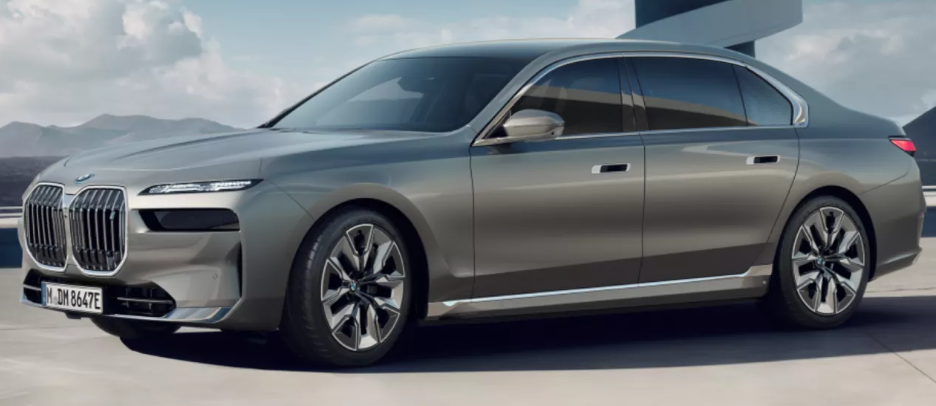
The BMW i7 is a fascinating car to judge for reliability. On one hand, it removes many of the mechanical parts that traditionally make an aging luxury sedan expensive: no turbocharged gasoline engine, no conventional automatic transmission, no exhaust system, no spark plugs, and no engine-oil changes. On the other hand, the i7 might be one of the most technologically complicated sedans BMW has ever put on the road.
So, is the BMW i7 reliable?
Our short answer is promising, but not proven enough to call bulletproof. The electric motors and high-voltage battery are not currently the parts that worry us most. Instead, the bigger reliability questions involve software, electronics, braking hardware, control modules, sensors, luxury equipment, and the enormous collection of powered features packed into the car.
There is another important point. The i7 only arrived for the 2023 model year, which means we simply do not have the decade-plus ownership history available for something like an older 7 Series. Consumer Reports, for example, currently lists overall reliability for the 2025 i7 as unavailable rather than assigning a meaningful long-term reliability prediction.
That does not make the i7 unreliable. It means we should separate what we know from what we are merely trying to predict.
Let’s dig into it.
Content in this publication
- How Reliable Is the BMW i7?
- Why the i7 Could Be More Reliable Than a Gasoline 7 Series
- What About BMW i7 Battery Reliability?
- BMW i7 Battery Problems: Should We Be Worried?
- BMW i7 Software Reliability Is the Bigger Story
- BMW i7 Loss-of-Power Recall
- BMW i7 Brake System Reliability
- BMW i7 Electrical Problems
- Are BMW i7 Recalls a Reliability Red Flag?
- BMW i7 Infotainment Reliability
- Will the BMW i7 Air Suspension Be Reliable?
- The i7's Luxury Features Create Reliability Risk
- Common Areas We Would Monitor on a BMW i7
- BMW i7 12-Volt Battery Reliability
- BMW i7 Charging Reliability
- Does the BMW i7 Require Much Maintenance?
- What About Brake Wear?
- Is a Used BMW i7 Reliable?
- Which BMW i7 Model Year Is Most Reliable?
- BMW i7 Warranty Coverage Gives Buyers Some Reassurance
- Can a BMW i7 Last 10 Years?
- Is BMW EV Technology Mature Enough?
- BMW i7 Reliability vs. Traditional Luxury Cars
- Is the BMW i7 Expensive to Repair?
- How to Make a BMW i7 More Reliable
- Who Should Buy a BMW i7?
- Who Should Avoid a Used BMW i7?
- BMW i7 Reliability Verdict
- Closing Thoughts
- Frequently Asked Questions About BMW i7 Reliability
How Reliable Is the BMW i7?
At this stage, we would describe BMW i7 reliability as average to potentially above average for its extremely complex luxury-EV class, provided the vehicle has received all applicable software updates and recall work.
That qualification matters.
A simpler electric car has relatively few systems competing for our attention. The i7 is different. Think of it as a luxury hotel suite traveling down the highway at 70 mph. It can have electrically operated doors, adaptive air suspension, giant digital displays, advanced driver-assistance systems, powered rear seats, complex climate controls, sophisticated lighting, cameras everywhere, and even an available theater-style rear entertainment screen.
Every one of those features can work perfectly for years. But every additional motor, sensor, controller and piece of software creates another potential failure point.
BMW i7 Reliability at a Glance
| Area | Our Reliability Outlook |
|---|---|
| Electric motors | Good |
| High-voltage battery | Good so far |
| Basic EV drivetrain | Good |
| Software | Mixed |
| Infotainment | Average |
| Electronics | Average |
| Braking electronics | Some recall history |
| Air suspension | Too early for long-term verdict |
| Luxury accessories | Potential long-term concern |
| Overall long-term reliability | Still developing |
The crucial distinction is this: an i7 can have an excellent electric drivetrain while still experiencing frustrating electrical or software problems.
And in a six-figure luxury sedan, frustration tends to become expensive very quickly once warranties disappear.
Why the i7 Could Be More Reliable Than a Gasoline 7 Series
One of the strongest arguments in the i7's favor is mechanical simplicity.
A conventional BMW 7 Series can include an internal-combustion engine, cooling circuits, turbochargers, fuel-delivery equipment, emissions equipment, engine lubrication systems and a multi-speed automatic transmission.
The i7 eliminates much of that.
Fewer Traditional Mechanical Components
An electric powertrain dramatically reduces the number of routine mechanical wear items.
There is no engine oil slowly collecting contaminants. No spark plugs firing millions of times. No turbocharger spinning at astonishing speeds. No fuel injectors spraying gasoline. No timing-chain system buried inside an engine.
That doesn't mean EVs are maintenance-free. It simply means their maintenance profile is different.
For buyers who remember how expensive complicated flagship BMW engines could become as they aged, that simplicity is attractive.
Electric Motors Have a Natural Reliability Advantage
Electric motors are wonderfully straightforward compared with combustion engines.
They contain relatively few moving parts and do not experience combustion pressure, fuel contamination or the constant heating and cooling cycles found inside gasoline engines.
That gives the i7's motor system a theoretical longevity advantage.
Of course, motors still depend on bearings, cooling, power electronics, sensors and control software. Nothing mechanical is immortal.
But if we were choosing one component of the i7 to worry least about, the basic electric motors would be near the top of our list.
What About BMW i7 Battery Reliability?
The high-voltage battery is probably the first thing many potential EV buyers worry about.
Understandably so. A replacement traction battery sounds terrifyingly expensive.
Fortunately, there is currently little evidence suggesting that widespread premature battery degradation is a defining BMW i7 problem.
BMW's U.S. warranty documentation for 2026 vehicles provides 8 years or 100,000 miles of high-voltage battery defect coverage, together with battery-capacity protection. For applicable 2026 BMW BEVs, capacity coverage applies if battery capacity drops below 70% during that 8-year/100,000-mile period.
Battery Degradation Is Normal
Every lithium-ion battery gradually loses usable capacity.
That's chemistry, not necessarily a defect.
A battery that delivers slightly less range after several years does not automatically mean the pack is failing. Temperature, charging habits, mileage, high-speed charging frequency and simple calendar aging all influence degradation.
BMW itself acknowledges that battery capacity decreases with age and use.
For most owners, the more useful question is therefore not, "Will my battery lose capacity?"
It will.
The better question is, "Will it lose capacity unusually quickly?"
So far, there isn't enough long-term i7 data to suggest that severe degradation is widespread.
BMW i7 Battery Problems: Should We Be Worried?
Not excessively, but we would still perform proper checks when buying used.
BMW has had safety campaigns involving electric vehicles, including isolated battery-related manufacturing concerns. However, individual recalls should not automatically be interpreted as evidence that every i7 battery pack is defective.
For example, a 2025 NHTSA recall involving improperly assembled high-voltage battery cell modules included just four 2023–2024 i7 vehicles in the reported U.S. population.
That is worth knowing, but it is not evidence of a fleet-wide battery catastrophe.
When shopping for a used i7, battery condition should still be verified through diagnostic data rather than assumptions.
BMW i7 Software Reliability Is the Bigger Story
This is where things become more complicated.
Today's luxury EV is partly a car and partly a rolling computer network. The i7 relies extensively on software to coordinate propulsion, charging, displays, infotainment, driver assistance, climate systems and numerous convenience features.
Most of the time, this makes the i7 feel almost futuristic.
When something goes wrong, however, the same complexity can become irritating.
Software Can Create Problems Without Anything Physically Breaking
A sensor can be healthy.
A motor can be healthy.
The battery can be healthy.
Yet incorrect software logic can still generate errors, disable functionality or trigger warning messages.
This is not unique to BMW. Software-driven reliability has become an industry-wide challenge as cars become more computerized.
The i7 illustrates that transition particularly well.
BMW i7 Loss-of-Power Recall
One important example arrived with NHTSA recall 25V395.
The campaign included certain 2023–2024 BMW i7 vehicles. According to BMW's NHTSA filing, electric-drive-motor software could incorrectly detect an electrical isolation condition and shut down the high-voltage system. Approximately 5,505 i7 vehicles were listed in one updated filing as potentially involved.
What Could Happen?
The system could display a red warning before shutting down the high-voltage system roughly 15–20 seconds later. BMW stated that power-assisted steering and braking remained available, but loss of propulsion while driving could obviously increase accident risk.
The good news?
BMW developed a software remedy that could be installed by dealers or delivered through an over-the-air update.
This episode neatly summarizes modern EV reliability. There may be nothing physically wrong with the motor, yet software controlling the motor can still create a serious drivability problem.
BMW i7 Brake System Reliability
The braking system has also received attention.
Certain i7 models were included in BMW's 24V-104 Integrated Brake recall. The affected integrated brake module could malfunction, potentially reducing power brake assistance while also affecting ABS and Dynamic Stability Control functionality.
BMW later confirmed that certain 2023–2025 i7 vehicles could be affected and that eligibility must be checked by VIN.
Does the Recall Mean the i7 Has Bad Brakes?
No.
A safety recall means a potentially defective component or condition has been identified and addressed. It should influence our assessment, but we should not conclude that every i7 has faulty brakes.
What matters for a used buyer is whether the individual vehicle has had the campaign completed.
A clean-looking car with incomplete recalls is far less attractive to us than a properly maintained example with documentation showing every campaign completed.
BMW i7 Electrical Problems
Electrical complexity may ultimately prove more important to long-term i7 ownership than motor or battery durability.
A 2026 recall illustrates why.
NHTSA campaign 26V096 covers certain 2023–2025 i7 xDrive60 and 2024–2025 i7 eDrive50 models, among other BMW vehicles. The issue involves an air-conditioning wiring harness that can potentially become damaged during cabin-air-filter replacement. A damaged harness could short-circuit and create a fire risk. BMW's remedy involves inspecting the wiring and installing replacement components or retaining hardware as required.
Again, this does not mean i7s routinely catch fire.
It does demonstrate something important about flagship-car reliability: sometimes a seemingly minor system, such as HVAC wiring, can become a significant concern because everything is interconnected and tightly packaged.
Are BMW i7 Recalls a Reliability Red Flag?
We wouldn't automatically walk away from the i7 because recalls exist.
Almost every major manufacturer issues recalls, particularly as vehicles become more technologically sophisticated.
Instead, we would ask three questions.
Did BMW identify the issue? Is there a proper remedy? Has that remedy been completed on the vehicle we're considering?
If the answers are yes, a recall becomes much less alarming.
One unresolved campaign matters more to us than five campaigns already correctly completed.
You may be interested in reading Are Toyota Hilux Reliable? A Complete Long-Term Reliability Guide
NHTSA recommends checking recalls using the vehicle's 17-digit VIN because model-level recall lists do not determine whether one specific car is affected.
BMW i7 Infotainment Reliability
The enormous curved displays and sophisticated iDrive interface are central to the i7 experience.
They're also another area where occasional electronic quirks can appear.
Infotainment glitches do not necessarily leave us stranded beside the road, but they matter enormously in a luxury car. When we spend premium money, a frozen menu, missing smartphone connection or unresponsive display feels more annoying than it would in an economy hatchback.
Software Updates Matter More Than Ever
Keeping an i7 updated is not equivalent to updating the navigation maps in an old car.
Software versions can affect multiple systems.
That means we would consider software-update history part of normal maintenance. A prospective used-i7 buyer should confirm that outstanding updates and campaigns have been completed rather than assuming everything is current.
Will the BMW i7 Air Suspension Be Reliable?
This is one area where time will tell.
Air suspension provides much of the i7's exceptional ride comfort. It lets the enormous sedan glide over imperfect pavement like the road has suddenly been ironed flat.
But air suspension is more complicated than conventional steel springs.
Compressors, air lines, electronic controllers, level sensors and air springs all create potential long-term service points.
Why This Matters More After Warranty
A failing air-suspension component doesn't necessarily make an i7 fundamentally unreliable.
It can, however, make an older i7 expensive to own.
This distinction matters. Reliability and ownership cost are related, but they are not identical.
A vehicle might rarely break down yet still produce eye-watering repair bills when it eventually does.
With the i7, we'd be considerably more comfortable owning one at three years old than at twelve years old without an extended warranty.
The i7's Luxury Features Create Reliability Risk
The i7 is loaded with equipment that doesn't exist on ordinary EVs.
Depending on specification, we may find sophisticated powered seats, automated doors, advanced ambient lighting, rear entertainment equipment, panoramic glass technology, electronically controlled vents, powered shades and complex driver-assistance hardware.
Each individual feature may be reliable.
The problem is multiplication.
Imagine that 30 sophisticated systems are each extremely dependable. The chance of something eventually needing attention is naturally greater than in a simpler car containing only ten such systems.
That is the luxury-car paradox.
More features make the vehicle better when new and potentially more demanding as it ages.
Common Areas We Would Monitor on a BMW i7
Rather than expecting one catastrophic weakness, we would monitor a collection of electronic and chassis systems.
- Infotainment freezing, restarting or connectivity glitches
- Warning messages that disappear after restarting the vehicle
- Driver-assistance sensor or camera faults
- Charging errors or unexpected interruptions
- Air-suspension warnings or uneven ride height
- Electrically powered door or seat problems
- Climate-control irregularities
- 12-volt battery weakness causing strange electronic symptoms
- Uncompleted software updates
- Open safety recalls
- Unusual high-voltage warnings
- Excessive tire wear caused by weight or alignment
None of these automatically means the i7 suffers from widespread defects. They are simply the areas we would pay closest attention to during ownership or a pre-purchase inspection.
BMW i7 12-Volt Battery Reliability
One small battery deserves more attention than most buyers give it.
Like other EVs, the i7 still uses a low-voltage electrical system alongside its giant traction battery.
A weak 12-volt battery can potentially trigger an assortment of confusing electrical warnings because many computers, controllers and accessories depend on stable low-voltage power.
Don't Assume Every Warning Means the Main Battery Is Dying
When a modern vehicle suddenly lights its dashboard like a Christmas tree, our first instinct may be to imagine a catastrophic high-voltage failure.
Sometimes the problem can be much simpler.
That is why proper diagnostics matter. Replacing parts based on warning messages alone is an expensive way to troubleshoot a sophisticated BMW.
BMW i7 Charging Reliability
Charging problems can originate from several different places: the vehicle, charger, cable, electrical installation, software or public charging network.
That's why an occasional unsuccessful charge shouldn't immediately condemn the i7.
Home Charging Is an Important Test
If we were inspecting a used i7, we would want to see it charge properly.
Ideally, we'd test both AC charging and DC fast charging when practical.
Repeated charging interruptions, unexplained charging-speed limitations or persistent error messages deserve investigation before purchase.
The charging system is fundamental enough that we would never accept "it probably just needs an update" without diagnosis.
Does the BMW i7 Require Much Maintenance?
Routine mechanical maintenance is lighter than on an equivalent gasoline luxury sedan.
There is no engine oil to change and no traditional engine tune-up.
However, maintenance still includes items such as tires, brakes, brake fluid, cabin filters, suspension components, wiper blades and inspections.
BMW's U.S. maintenance program currently includes scheduled maintenance for new vehicles during the first three years or 36,000 miles, subject to program terms.
Heavy EVs Can Be Hard on Tires
This is one ownership expense we shouldn't underestimate.
The i7 is a large, extremely heavy, extremely powerful car.
Combine instant electric torque with large performance-oriented wheels and tires, and rubber can disappear more quickly than expected—especially if we enjoy that effortless acceleration.
Tire wear is not technically a reliability defect, but it contributes significantly to real-world running costs.
What About Brake Wear?
Regenerative braking can reduce reliance on the physical friction brakes.
That sounds like a straightforward reliability advantage, and in many ways it is.
Brake pads may last much longer than they would in a similar gasoline luxury sedan.
However, brakes that are used less frequently can sometimes develop corrosion depending on climate, storage conditions and driving habits.
So we shouldn't ignore them simply because regeneration performs much of the daily stopping.
Is a Used BMW i7 Reliable?
A used i7 can be a fascinating purchase.
Depreciation can turn an extraordinarily expensive flagship into something much more attainable within only a few years.
That's tempting.
Very tempting.
But the cheapest i7 advertised may not be the cheapest one to own.
Service History Matters More Than Price
We would rather pay slightly more for a documented car with current software, completed recalls and a clean diagnostic history.
A heavily discounted example with mysterious warnings can become the automotive equivalent of buying a luxury mansion because the purchase price looks cheap—then discovering the roof, elevators and swimming pool all need repairs.
What We Would Check Before Buying
Start with the VIN.
Check every outstanding recall.
Then have a BMW specialist or dealer perform a full diagnostic scan. Ask for battery information where available, verify charging operation and test every electronic feature you can find.
Yes, every feature.
Move every seat.
Use every door.
Test the cameras.
Operate the climate control.
Try the rear electronics.
Check suspension operation.
Luxury cars hide expensive problems behind very elegant surfaces.
Which BMW i7 Model Year Is Most Reliable?
We do not yet have enough long-term evidence to crown one definitive winner.
The earliest 2023 cars naturally deserve slightly more scrutiny because they represent first-year production of an extremely sophisticated new generation.
That doesn't automatically make 2023 a bad year.
Later production generally benefits from accumulated manufacturing experience, software revisions and previously identified issues being corrected.
Should We Avoid the 2023 BMW i7?
Not automatically.
A properly updated 2023 i7 with completed recalls, excellent service history and remaining warranty could make more sense than a neglected newer car.
Condition beats calendar.
You may be interested in readingAre Toyota Hilux Reliable? A Complete Long-Term Reliability GuideYou may be interested in reading
How Long Do Toyota Hilux Last? Real-World Lifespan ExplainedThat said, if two otherwise identical examples cost similar money, we would normally lean toward the newer vehicle because it gives us more remaining warranty and potentially includes later production improvements.
BMW i7 Warranty Coverage Gives Buyers Some Reassurance
BMW's U.S. new-vehicle warranty is generally 4 years or 50,000 miles, whichever occurs first.
The high-voltage battery receives substantially longer coverage.
This matters because the most intimidating theoretical EV repair—the traction battery—is protected much longer than most of the luxury electronics surrounding it.
The Expensive Years May Come Later
The situation becomes more interesting after the basic warranty expires.
Imagine an eight-year-old i7.
Its battery may still be within applicable battery coverage, yet an air-suspension component, powered-door mechanism, display, climate module or luxury-seat feature may not be.
That is why extended warranty coverage can be particularly attractive on a highly optioned electric flagship.
Can a BMW i7 Last 10 Years?
We see no fundamental reason why it cannot.
The electric motors and battery architecture are capable of long service lives if properly engineered and maintained.
The real question is not whether the i7 can physically survive ten years.
It almost certainly can.
The question is how expensive it will be to keep every luxury feature working perfectly after ten years.
Those are very different things.
Could an i7 Reach 150,000 Miles?
Potentially, yes.
Nothing about the electric drivetrain makes 150,000 miles unrealistic.
Battery degradation, suspension wear, electronics and accessory repairs will become increasingly relevant as mileage accumulates, however.
We would therefore hesitate to predict Toyota-like low-cost longevity.
The i7 was engineered to be an extraordinary luxury sedan first, not the cheapest possible car to operate for 20 years.
Is BMW EV Technology Mature Enough?
BMW did not suddenly discover electric vehicles when the i7 appeared.
The company has accumulated EV experience through models including the i3, i4 and iX, along with years of plug-in hybrid development.
That experience matters.
The i7's underlying electric-drive technology therefore feels considerably less experimental than someone looking only at the model's 2023 introduction might assume.
The New Part Is the Complete Package
The challenge is not simply making an electric motor turn.
It's integrating enormous batteries, thermal management, adaptive suspension, braking electronics, sophisticated software, advanced infotainment and luxury equipment into one seamless product.
That's the harder reliability equation.
BMW i7 Reliability vs. Traditional Luxury Cars
Compared with an older combustion-powered luxury flagship, the i7 trades one kind of complexity for another.
We lose engine and transmission complexity.
We gain electronic and software complexity.
Which one is preferable?
For many owners, we'd choose the EV arrangement.
A software bug can be maddening, but some bugs are fixable remotely. A worn turbocharger or internal engine failure definitely isn't downloading a repair overnight.
Still, software cannot fix damaged suspension hardware, failed screens or malfunctioning powered accessories.
So the i7 isn't a maintenance-free technological miracle.
It's simply complicated in a new way.
Is the BMW i7 Expensive to Repair?
It can be.
This is a flagship BMW containing sophisticated proprietary equipment. Labor rates are high, parts can be expensive and some problems require specialist diagnostic tools.
Therefore, we would separate frequency of failure from financial risk.
An i7 could be fairly reliable and still become costly when something eventually breaks.
That's why warranty status has unusually high value on this model.
How to Make a BMW i7 More Reliable
The simplest strategy is also the least glamorous: stay ahead of problems.
Keep software current. Complete recalls quickly. Follow BMW service recommendations. Avoid repeatedly ignoring warning messages. Maintain correct tire pressures. Have suspension or charging irregularities investigated early.
And don't treat electronics as disposable annoyances.
If a warning repeatedly returns, document it while the vehicle is still under warranty.
Small intermittent issues have a funny habit of becoming permanent shortly after warranty coverage ends.
Who Should Buy a BMW i7?
The i7 makes the most sense for someone who wants extraordinary comfort, technology and electric performance and accepts that flagship-level complexity accompanies them.
We particularly like the ownership proposition when the car has substantial warranty coverage remaining.
A buyer seeking minimal long-term repair risk above everything else may be happier with a simpler EV.
But that's almost missing the point.
Nobody buys an i7 because it has the fewest buttons, computers and luxury features.
We buy it because it makes ordinary journeys feel unusually special.
Who Should Avoid a Used BMW i7?
A heavily depreciated i7 can look almost irresistible.
But if a surprise four-figure repair would seriously disrupt our finances, buying a complicated luxury car immediately after its comprehensive warranty ends is probably not the smartest move.
The purchase price is merely the admission ticket.
Maintenance, insurance, tires and potential repairs still belong to a vehicle that originally occupied BMW's flagship territory.
BMW i7 Reliability Verdict
So, where do we finally land?
The BMW i7 appears reasonably reliable at the drivetrain level, and there is currently no clear evidence that catastrophic battery or electric-motor failures define the model.
The greater concerns involve software, electronics and the sheer complexity of the vehicle.
Several safety recalls across early model years—including campaigns involving the integrated braking system, electric-drive software and certain electrical wiring—show why checking an individual vehicle's VIN and repair history is essential.
But we should not confuse recalls with proof that every i7 is unreliable.
For us, the biggest unanswered question is what happens when today's i7s are eight, ten or twelve years old and all those screens, air-suspension components, powered accessories and electronic controllers have endured years of real-world use.
The electric drivetrain may end up being the least dramatic part of the story.
Closing Thoughts
The i7 represents a strange but compelling turning point for luxury-car reliability.
BMW has removed many of the complicated mechanical systems that traditionally gave older flagship sedans their fearsome repair reputations. Then it replaced them with an orchestra of computers, sensors, controllers and electric accessories.
Is that progress?
In many ways, yes.
The i7's core electric drivetrain looks encouraging, battery warranty protection is substantial, and software updates can sometimes resolve problems that once required physical repairs.
Yet we wouldn't call the BMW i7 bulletproof—not yet.
There simply isn't enough long-term history.
For a new or warranty-covered buyer, we would have relatively little hesitation assuming the specific car has no unresolved recalls. For someone planning to keep an i7 far beyond warranty coverage, we'd budget generously for aging luxury electronics and suspension components.
The i7 may ultimately prove that a massive, technology-packed BMW flagship can age better as an EV than it did with a combustion engine.
We just need a few more years to know whether that promise becomes reality.
Frequently Asked Questions About BMW i7 Reliability
1. Is the BMW i7 a reliable car?
So far, the BMW i7 shows encouraging drivetrain reliability, but there is not yet enough long-term ownership data to label it exceptionally reliable. Software, electronics and luxury equipment are more concerning than the basic electric motors or battery.
2. Does the BMW i7 have battery problems?
There is currently no evidence of widespread premature high-voltage battery failure defining the i7. Battery capacity naturally declines with age and use, and BMW provides substantial high-voltage battery warranty protection in the U.S.
3. What are the most common BMW i7 reliability concerns?
The areas we would monitor most closely are software glitches, electronic warning messages, infotainment problems, charging irregularities, braking-system campaigns, air-suspension components and electrically powered luxury features.
You may be interested in readingAre Toyota Hilux Reliable? A Complete Long-Term Reliability GuideYou may be interested in reading
How Long Do Toyota Hilux Last? Real-World Lifespan ExplainedYou may be interested in reading
Why Are Toyota Hilux So Tough? The Engineering Behind the Legend4. How long will a BMW i7 last?
A properly maintained BMW i7 could realistically remain usable well beyond 100,000 miles and potentially reach 150,000 miles or more. The larger question is how expensive its luxury electronics and suspension equipment will become as the car ages.
5. Should I buy a used BMW i7?
Yes, a used i7 can offer extraordinary value after depreciation, but we would prioritize warranty coverage, documented service history, completed recalls, current software and a professional diagnostic inspection. The cheapest example is not necessarily the best value.
If you want to know other articles similar to BMW i7 Reliability: Is BMW’s Electric Flagship Built to Last? you can visit the category Blog.
Are Toyota Hilux Any Good? The Real-World Answer
Which Toyota Hilux Is the Most Reliable? The Best Years and Engines
Why Are Toyota Hilux So Tough? The Engineering Behind the Legend
How Long Do Toyota Hilux Last? Real-World Lifespan Explained
Are Toyota Hilux Reliable? A Complete Long-Term Reliability Guide
Infiniti QX60 Reliability: Is This Luxury SUV Dependable?
Leave a Reply
More content of your interest