
Subaru XV vs Outback: Which Subaru Is Better for You?

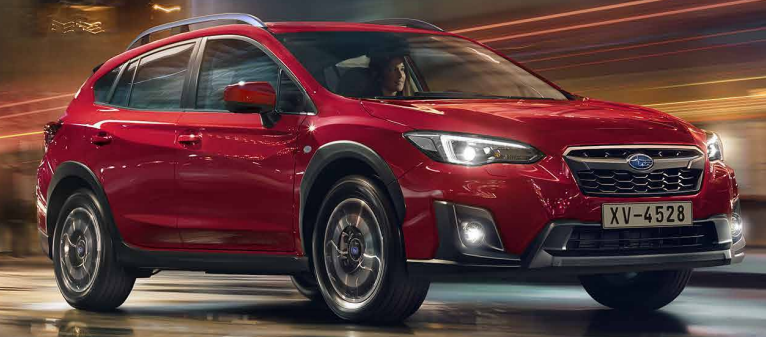
Choosing between the Subaru XV vs Outback sounds simple until we actually start comparing them. Both wear the Subaru badge, both lean heavily into all-wheel-drive capability, and both can handle the sort of weather that makes ordinary hatchbacks look nervous. Yet they serve noticeably different buyers.
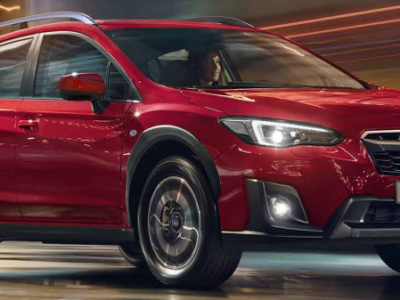
The Subaru XV is the smaller, lighter-footed choice. It slips into tight parking spaces without drama, feels at home in busy suburbs, and still provides the raised ride height and rugged personality that make Subaru crossovers appealing.
The Outback plays a different game. It is longer, roomier, stronger when towing, and generally better suited to families, long-distance driving, camping equipment, dogs, luggage, and the thousand other things we somehow decide to carry on road trips.
Think of the XV as a hiking shoe and the Outback as a proper trekking boot. Both can leave the pavement, but one is easier to live with every day while the other is prepared for heavier adventures.
There is also an important naming detail. In markets including Australia, the Subaru XV was replaced by the Crosstrek name for its next generation, meaning shoppers looking at a new equivalent to the XV will now encounter the Crosstrek instead.
So, which one deserves your driveway? Let us break it down.
Content in this publication
- Subaru XV vs Outback at a Glance
- What Is the Main Difference Between the Subaru XV and Outback?
- Subaru XV vs Outback Size Comparison
- Interior Space: XV vs Outback
- Subaru XV vs Outback Boot Space
- Subaru XV vs Outback Ground Clearance
- All-Wheel Drive and Traction
- Engine Performance
- Subaru XV vs Outback Fuel Economy
- Ride Comfort and Refinement
- Handling and Driving Feel
- Subaru XV vs Outback Towing Capacity
- Safety Comparison
- Technology and Infotainment
- Reliability: Subaru XV vs Outback
- Maintenance Costs
- XV vs Outback for Families
- Subaru XV vs Outback for Camping
- XV vs Outback for Daily Commuting
- Which Is Better on Long Road Trips?
- Subaru XV vs Outback for Older Drivers
- Should You Buy a Used Subaru XV or Outback?
- What About the Subaru Crosstrek?
- Subaru XV vs Outback: Pros and Cons
- Which Subaru Should We Buy?
- Final Verdict: Subaru XV vs Outback
- Frequently Asked Questions
Subaru XV vs Outback at a Glance
Before diving into the details, this is the basic personality split.
| Category | Subaru XV | Subaru Outback |
|---|---|---|
| Vehicle type | Compact crossover/SUV | Large crossover/wagon-style SUV |
| Best environment | City and mixed driving | Highway, family travel and touring |
| Passenger space | Good for its size | Significantly roomier |
| Cargo capacity | Moderate | Much larger |
| Parking ease | Excellent | Requires more room |
| AWD capability | Very good | Very good |
| Ground clearance | Excellent | Excellent |
| Towing ability | Light-duty | Far stronger |
| Running costs | Generally lower | Generally higher |
| Long-distance comfort | Good | Better |
| Best buyer | Singles, couples, small families | Families, travellers, campers |
The biggest mistake we can make is assuming the Outback is automatically better because it is larger. Bigger only helps when we actually need the space.
For many drivers, the XV is precisely appealing because it gives us much of the Subaru experience without making us drive a large vehicle every day.
What Is the Main Difference Between the Subaru XV and Outback?
The biggest difference is size and purpose.
The XV was designed as a compact crossover. It essentially blends hatchback-like dimensions with extra ride height, substantial ground clearance and Subaru's AWD philosophy.
The Outback is a considerably larger machine designed around passenger comfort, luggage capacity and long-distance versatility.
Put another way, the XV asks:
"How little vehicle do we need while still being adventure-ready?"
The Outback asks:
"How much can we take with us?"
That distinction shapes nearly everything else, from fuel consumption and parking to rear-seat comfort and towing.
Subaru XV vs Outback Size Comparison
Walk around these two vehicles side by side and the difference becomes obvious.
A late-generation XV measures roughly 4.5 metres long depending on model and market, while modern Outbacks stretch close to 4.9 metres. As one current reference point, Australia's MY26 Outback is listed at 4,880 mm long and 1,880 mm wide.
That extra length matters.
The XV feels noticeably more manageable in:
- Underground car parks
- Shopping centres
- Narrow suburban streets
- Small garages
- Parallel parking spaces
- Crowded city traffic
The Outback never feels enormous compared with a full-size body-on-frame SUV, but we are still dealing with considerably more car.
Which Is Easier to Park?
The XV wins comfortably.
Its shorter body makes judging spaces easier, particularly when reversing between other vehicles.
That sounds like a minor advantage until we park twice a day, five days a week, for several years. Suddenly 30 or 40 centimetres of extra vehicle starts feeling very real.
The Outback's cameras and parking technology can compensate, depending on trim and model year, but they cannot physically make the vehicle shorter.
City Winner: Subaru XV
If most journeys involve congestion, apartment parking or narrow streets, the XV's dimensions are a genuine everyday advantage.
Interior Space: XV vs Outback
This is where the Outback begins earning its larger footprint.
Front-seat accommodation is comfortable in both vehicles, but the Outback generally offers a broader, airier cabin. Put adults in the second row and the distinction becomes even more important.
The XV works perfectly well for occasional rear passengers and smaller families. However, when we regularly carry four adults, child seats or teenagers, the Outback simply gives everyone more breathing room.
Rear Seat Comfort
The XV's rear seats are surprisingly usable for a compact crossover.
Yet physics remains physics.
The Outback has more room to distribute between passengers and luggage, making it the stronger choice for families who frequently travel together.
Long trips exaggerate that advantage.
Ten minutes around town? No problem.
Four hours with adults in the back? The Outback's additional room begins to feel worth every extra centimetre of exterior length.
Subaru XV vs Outback Boot Space
Cargo space may be the single most decisive factor in this comparison.
The XV provides useful everyday storage, but it is not a cargo champion. Depending on generation, drivetrain and market, boot capacity varies, and hybrid hardware can further affect usable space.
By contrast, the Outback is built around luggage-carrying ability.
Australia's current MY26 Outback lists approximately 530 litres with the rear seats upright, illustrating just how much emphasis Subaru places on cargo capacity in the larger model.
The current Crosstrek—the successor to the XV—lists roughly 291 to 315 litres depending on powertrain in Australia.
The comparison tells the story.
When the Outback's Larger Boot Matters
Choose the Outback if we regularly carry:
- Large suitcases
- Camping equipment
- A large dog
- Pushchairs
- Golf clubs
- Bikes or outdoor gear
- Family shopping
- Work equipment
- Children's sports equipment
With the XV, we may occasionally need to fold the rear seats.
With the Outback, there is a much better chance everything simply fits.
Cargo Winner: Subaru Outback
No contest here. If luggage capacity drives the buying decision, the Outback is the better tool.
Subaru XV vs Outback Ground Clearance
Here comes an interesting twist.
We might expect the larger Outback to tower over the XV, but both vehicles offer impressive ground clearance relative to ordinary crossovers.
The outgoing XV was known for approximately 220 mm of ground clearance in many markets. Its Crosstrek successor continues with 220 mm in Australia.
The latest Australian Outback range offers substantial clearance as well, with MY26 versions listed at 220 mm and up to 240 mm on certain variants.
That makes both surprisingly capable when roads deteriorate.
Does the Outback Have Better Off-Road Ability?
Not automatically.
On a narrow trail, the smaller XV can actually feel easier to position. Its shorter body makes threading between obstacles less intimidating, and its relatively compact footprint suits tight tracks.
The Outback fights back with greater touring ability, stronger engines in certain versions and considerably better towing capacity.
Neither is a hardcore rock crawler.
But for gravel roads, snow, muddy campsites, forestry tracks and badly maintained rural roads, both have far more ability than their road-friendly styling might suggest.
All-Wheel Drive and Traction
All-wheel drive is central to the personality of both vehicles.
Subaru's Symmetrical AWD philosophy is one of the reasons buyers cross-shop the XV and Outback in the first place.
Instead of buying a conventional front-wheel-drive crossover that only sends power rearward occasionally, Subaru's approach is designed around AWD from the beginning.
What does that mean to us?
Confidence.
Not superhero-level invincibility—tyres still matter enormously—but predictable traction in conditions such as:
- Wet roads
- Gravel
- Loose surfaces
- Mud
- Light snow
- Steep driveways
- Uneven rural roads
Current Subaru Crosstrek models continue to combine Symmetrical AWD with X-Mode, while the current Outback also retains AWD and X-Mode as core capability features.
XV vs Outback in Snow
Both are strong choices where winter weather matters.
The smaller XV feels nimble, while the Outback gives us greater room for passengers and winter gear.
With appropriate tyres, either can make a slippery morning commute far less stressful than many two-wheel-drive alternatives.
Still, AWD helps us accelerate—it does not magically shorten braking distances.
Good tyres remain essential.
Engine Performance
Engine choices depend heavily on year and country, so shoppers should compare the exact vehicles they are considering rather than assuming every XV or Outback shares the same powertrain.
Broadly, however, the Outback usually offers more performance potential.
Many XV models rely on naturally aspirated four-cylinder Boxer engines paired with a continuously variable transmission.
The result is adequate rather than electrifying.
Around town, that is fine. On the highway, especially with several passengers and luggage, we may occasionally wish for more punch.
You may be interested in reading Subaru XV vs Crosstrek: Are They Really Different Cars?
The Outback's larger engine options—and turbocharged choices in some generations and markets—give it a stronger performance ceiling.
Which Feels Faster?
The Outback can be noticeably quicker in more powerful versions.
That matters most when:
- Overtaking
- Climbing long hills
- Carrying several passengers
- Towing
- Merging onto fast highways
The XV's advantage is not outright speed.
Its charm is lightness and simplicity.
It can feel more eager around town because there is less vehicle surrounding us, even if stopwatch figures tell another story.
Subaru XV vs Outback Fuel Economy
Smaller normally means thriftier, and that principle generally applies here.
The XV has less mass to move and typically uses smaller engines. Consequently, it tends to consume less fuel than equivalent larger Outback versions.
However, comparing advertised numbers without considering powertrain can become misleading.
An XV petrol, XV hybrid, naturally aspirated Outback and turbocharged Outback are four different propositions.
Who Should Prioritise the XV?
The XV makes more sense if we:
- Drive mostly in town
- Rarely tow
- Carry limited luggage
- Want lower fuel bills
- Prefer smaller tyres and potentially lower consumable costs
- Do not need Outback-sized passenger space
Over five years of ownership, even modest differences in fuel and consumables can become meaningful.
Ride Comfort and Refinement
The Outback takes this category.
Its longer wheelbase and touring-oriented character make it feel more settled at highway speeds.
Long undulating roads are its natural habitat.
The XV feels more compact and connected. Some drivers will prefer that sensation, especially in town, but the Outback normally feels like the more mature long-distance cruiser.
Imagine two aircraft.
The XV is the short-haul jet: nimble, practical, quick to get in and out of.
The Outback is the long-haul cabin: more room to stretch and less tiring after hours behind the wheel.
Road Noise
Exact refinement depends on generation, tyres and road surface, but larger premium-oriented variants of the Outback generally provide a calmer experience at motorway speeds.
If our weekly routine includes several hundred highway kilometres, this difference should not be dismissed.
Handling and Driving Feel
Here the XV fights back.
Because it is smaller and lighter, it generally feels more agile.
Steering it through city streets or a winding country road requires less mental recalibration than piloting the longer Outback.
The Outback remains impressively controlled for its dimensions, but we notice its extra bulk.
Which Is More Fun to Drive?
For low-speed agility: XV.
For effortless high-speed touring: Outback.
Neither is pretending to be a sports car.
That is perfectly fine. A Labrador does not need to run like a greyhound to be lovable.
Subaru XV vs Outback Towing Capacity
Anyone planning to tow should pay close attention here because this is one of the Outback's biggest advantages.
Towing capacities vary by model year and engine, but the larger Outback is generally designed for substantially heavier loads.
For example, Subaru Australia's MY26 Outback lists braked towing capacities of approximately 2,000 to 2,100 kg depending on variant.
The current Crosstrek equivalent offers up to 1,400 kg for petrol versions and 1,270 kg for hybrid versions when appropriately equipped in Australia.
Older XV specifications differ, so buyers should always check the exact VIN/model-year documentation before towing.
What Can the XV Tow?
The XV suits lighter recreational loads.
Think small trailers rather than serious caravans.
What Can the Outback Tow?
The Outback is far better suited to buyers considering:
- Larger trailers
- Boats
- Camping trailers
- Heavier recreational equipment
- Some caravans, subject to weight limits
Towing Winner: Subaru Outback
If towing sits anywhere near the top of our priority list, the Outback is the logical starting point.
Safety Comparison
Safety has traditionally been one of Subaru's strongest selling arguments.
Depending on model year and specification, features may include versions of Subaru EyeSight driver assistance, autonomous emergency braking, lane assistance, adaptive cruise control, blind-spot monitoring and other active safety technologies.
Newer models naturally tend to receive newer generations of these systems.
The important thing when shopping used is not merely reading "EyeSight" in an advertisement.
Check exactly what the model year includes.
Visibility
Both models generally offer good outward visibility, but the XV's compact proportions make judging surrounding traffic particularly easy.
The Outback compensates through available cameras and driver-assistance technology on newer versions.
Neither vehicle should intimidate a reasonably experienced driver.
Technology and Infotainment
Technology changes dramatically between generations, making a broad XV-versus-Outback verdict difficult.
Older XVs can feel more conventional inside, with smaller screens and plenty of physical controls.
Newer Subaru models have shifted toward larger touchscreens and expanded smartphone integration.
Whether that is actually better depends on our taste.
Some people want an enormous vertical screen.
Others would happily trade three inches of display for a proper physical button.
Generally, the Outback.
It occupies a higher position in Subaru's range and commonly receives additional comfort and convenience equipment in equivalent trims.
Depending on specification, that can include:
- Higher-grade seat materials
- Heated seats
- Power adjustment
- Larger infotainment systems
- Premium audio
- More rear passenger amenities
- Additional camera systems
The XV feels functional.
The Outback feels more substantial.
Reliability: Subaru XV vs Outback
Neither model gets an automatic reliability victory simply because both are Subarus.
Service history matters more than the badge.
The best used XV or Outback is usually the one that has been maintained properly, driven sensibly and inspected carefully before purchase.
CVT servicing deserves particular attention.
So does oil consumption history on certain older Subaru engines, cooling system condition, suspension wear and evidence of neglected maintenance.
Used Subaru Checklist
Before buying either model, we would check:
- Complete service history
- Correct engine oil maintenance
- CVT behaviour when cold and warm
- Fluid leaks
- Suspension noises
- Wheel-bearing noise
- Uneven tyre wear
- Battery condition
- Air-conditioning performance
- Dashboard warning lights
- EyeSight operation where fitted
- Evidence of accident repairs
- Underbody damage from off-road driving
A pristine service record is worth more than a fancy trim badge.
Maintenance Costs
The XV should generally cost slightly less to operate simply because it is a smaller vehicle.
Tyres may be less expensive depending on wheel size. Fuel consumption is usually lower. Brake components can also face less mass.
But Subaru ownership is not bargain-basement motoring.
AWD systems add complexity compared with basic front-wheel-drive hatchbacks, and scheduled servicing should not be ignored.
The Outback carries the additional reality of being a larger, heavier and potentially more powerful vehicle.
That usually means spending somewhat more over the long term.
One Important AWD Tyre Consideration
Matching tyres matter on an AWD vehicle.
Replacing a single badly worn tyre while leaving three heavily used tyres in place may create undesirable differences in rolling circumference.
When buying used, inspect all four tyres.
You may be interested in readingSubaru XV vs Crosstrek: Are They Really Different Cars?You may be interested in reading
Subaru XV vs Impreza: Which Subaru Should You Choose?If one is suspiciously new while the others are nearly worn out, ask why.
XV vs Outback for Families
This depends on family size.
A couple with one young child may find the XV completely adequate.
Two children plus a stroller, weekend bags and shopping? We will start appreciating the Outback.
Add a dog and the decision becomes easier still.
Choose the XV for a Family If:
- We have one child
- Most journeys are urban
- Parking space is limited
- We rarely carry large luggage loads
- Lower running costs matter
Choose the Outback for a Family If:
- We regularly use every seat
- We carry child seats and pushchairs
- Long road trips are common
- We own a large dog
- We camp
- Boot space is a priority
The Outback gives a family more room to grow into.
Subaru XV vs Outback for Camping
Both wear hiking boots metaphorically, but the Outback carries the bigger backpack.
For simple overnight camping trips, the XV is fantastic.
Fold the seats, add roof bars and pack carefully. Its smaller body can even be advantageous on tight forest tracks.
The Outback suits more ambitious travel.
Camping chairs, cooler boxes, tents, cooking equipment, bedding and bags disappear into its larger cargo area far more easily.
If our definition of camping involves packing half the house, buy the Outback.
XV vs Outback for Daily Commuting
The XV is arguably the sweeter commuter.
Why drag around unused cargo capacity every morning?
Its compact size makes traffic easier, parking simpler and short journeys less cumbersome.
The Outback still behaves perfectly well in urban environments, but we are paying for space that commuters may rarely use.
This is why choosing purely on specification sheets can mislead us.
The best vehicle is not the one with the highest numbers.
It is the one whose strengths match our routine.
Which Is Better on Long Road Trips?
Outback.
This is where it shines.
Extra space, stronger performance options, a larger cargo area and a more relaxed touring character make the Outback a natural interstate companion.
Passengers can spread out. Bags do not need to be stacked like a game of Tetris. The vehicle feels planted and mature.
The XV can certainly travel long distances—we would happily road-trip one—but the Outback requires fewer compromises.
Subaru XV vs Outback for Older Drivers
This comparison becomes more personal.
Both offer raised seating positions that can make entry and exit easier than in low hatchbacks.
The XV's compact footprint is useful for drivers who dislike manoeuvring large vehicles.
The Outback provides more cabin space and may be easier when loading mobility equipment or larger luggage.
A test drive matters enormously here.
Numbers cannot tell us whether a seat fits our back.
Should You Buy a Used Subaru XV or Outback?
On the used market, budget changes the equation.
The same money may buy:
- A newer XV with lower kilometres, or
- An older Outback with more kilometres and greater capability.
We would usually prioritise condition over size.
A beautifully maintained XV is preferable to a tired Outback purchased only because it has the bigger engine and boot.
Likewise, if we genuinely need Outback space, buying an XV because it is slightly cheaper may lead to buyer's remorse every time the luggage compartment fills.
The Used-Car Sweet Spot
Look for:
- Full service documentation
- Sensible mileage for age
- No unresolved warning lights
- Smooth CVT operation
- Matching quality tyres
- Clean underbody condition
- No evidence of water intrusion
- Independent pre-purchase inspection
Never let shiny paint distract us from mechanical history.
What About the Subaru Crosstrek?
This deserves its own section because the naming can confuse shoppers.
The Crosstrek is effectively the continuation of the XV lineage in markets where Subaru retired the XV name.
Subaru Australia officially described the incoming Crosstrek as the next-generation XV when announcing the naming change.
Therefore, a shopper comparing a brand-new small Subaru SUV against a new Outback today may actually need to search for:
Subaru Crosstrek vs Outback
rather than:
Subaru XV vs Outback.
The underlying buying decision remains remarkably similar.
Compact agility versus large-scale versatility.
Subaru XV vs Outback: Pros and Cons
Subaru XV Pros
- Easier to park
- More agile around town
- Lower likely running costs
- Excellent ground clearance
- Standard AWD character in many markets
- Good visibility
- Great choice for couples and small families
- Capable on gravel and rough roads
- Less intimidating dimensions
Subaru XV Cons
- Smaller boot
- Less rear-seat space
- Limited towing ability
- Performance can feel modest
- Not as relaxed when heavily loaded
- Less suitable for large families
Subaru Outback Pros
- Spacious cabin
- Large cargo area
- Excellent road-trip comfort
- Strong towing capacity
- Greater performance potential
- Useful ground clearance
- Excellent family versatility
- Better for camping equipment
- Feels more substantial on highways
Subaru Outback Cons
- More expensive to buy in comparable condition
- Higher likely fuel consumption
- Larger tyres and consumables can cost more
- Harder to park
- Bigger than some drivers actually need
- Higher ownership costs can accumulate
Which Subaru Should We Buy?
Here is the simplest way to decide.
Buy the Subaru XV If…
We want a compact crossover that can handle city life Monday to Friday and disappear down a gravel road on Saturday.
The XV fits drivers who value:
simplicity + manoeuvrability + AWD capability.
It is especially attractive for singles, couples, commuters and smaller families.
Buy the Subaru Outback If…
We regularly carry people, luggage or trailers and spend meaningful time on open roads.
The Outback fits drivers who value:
space + comfort + towing + touring ability.
Families and outdoor travellers will usually make better use of its strengths.
Our Overall Winner
There is no universal winner.
For everyday urban driving, we would choose the Subaru XV.
For family use, travelling, towing and camping, we would choose the Subaru Outback.
If we can park the Outback comfortably and will genuinely use its extra room, the added versatility is difficult to beat.
If that space would spend 90% of its life empty, the XV is the smarter purchase.
Final Verdict: Subaru XV vs Outback
The Subaru XV vs Outback battle is ultimately less about which vehicle is superior and more about how much Subaru we actually need.
The XV is compact without feeling fragile. It offers genuine ground clearance, AWD confidence and everyday practicality in a footprint that remains easy to live with. It feels like the adventurous hatchback that refuses to grow up—and that is exactly why many owners love it.
The Outback is the grown-up traveller.
It asks for more parking space and more money at the fuel pump, but in return we receive considerably more room for passengers, luggage and recreational equipment, plus much stronger towing potential.
If our life revolves around city streets, commuting and occasional weekend escapes, the XV makes enormous sense.
If weekends involve children, suitcases, camping equipment, dogs, trailers or long stretches of highway, the Outback quickly justifies its size.
The easiest question to ask ourselves is this:
Will we use the extra Outback space every week?
If the answer is yes, buy the Outback.
If the answer is no, the XV may be all the Subaru we ever need.
Frequently Asked Questions
1. Is the Subaru XV better than the Outback?
The Subaru XV is better for drivers who prioritise compact dimensions, easy parking, urban manoeuvrability and potentially lower running costs. The Outback is better for buyers who need additional passenger space, cargo capacity, towing ability and long-distance comfort.
2. Is the Subaru Outback much bigger than the XV?
Yes. The Outback is significantly longer and provides substantially more luggage capacity. That makes it more practical for families and touring, while the XV is noticeably easier to manoeuvre in cities and small parking spaces.
3. Which is better off-road, Subaru XV or Outback?
Both offer impressive rough-road capability for crossover vehicles. The XV's smaller dimensions can make it easier on narrow tracks, while the Outback offers greater touring capacity and stronger towing potential. Neither should be considered a replacement for a dedicated hardcore 4WD where extreme terrain is involved.
You may be interested in readingSubaru XV vs Crosstrek: Are They Really Different Cars?You may be interested in reading
Subaru XV vs Impreza: Which Subaru Should You Choose?You may be interested in reading
Subaru XV vs Forester: Which Subaru SUV Should You Choose?4. Which is cheaper to run, Subaru XV or Outback?
The XV will generally be cheaper to run because it is smaller and lighter and usually uses less fuel than comparable Outback variants. Actual ownership costs depend on engine, model year, mileage, servicing, tyre choice and driving conditions.
5. Did Subaru discontinue the XV?
The XV name has disappeared from some markets rather than the vehicle concept disappearing completely. In Australia, for example, Subaru introduced the Crosstrek as the next generation of the XV. Buyers shopping for a new XV-style Subaru should therefore consider the current Crosstrek.
If you want to know other articles similar to Subaru XV vs Outback: Which Subaru Is Better for You? you can visit the category Models.
Land Rover Defender 90 vs 110 vs 130: Which Defender Is Right for You?
Land Rover Defender 90 vs 110: Which Defender Should You Buy?
Which Toyota Hilux Is the Best? The Complete Buyer’s Guide
Subaru XV vs Nissan Qashqai: Which Crossover Is Better?
Subaru XV vs Mazda CX-30: Which Compact SUV Should We Choose?
Subaru XV vs Toyota RAV4: Which SUV Is the Better Buy?
Leave a Reply
More content of your interest