
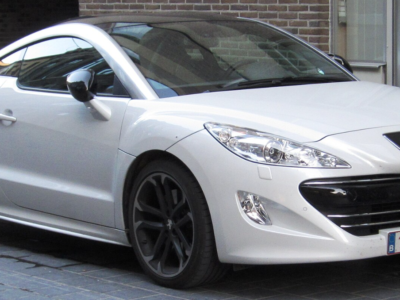
Peugeot RCZ Engine Size: Complete Petrol and Diesel Guide

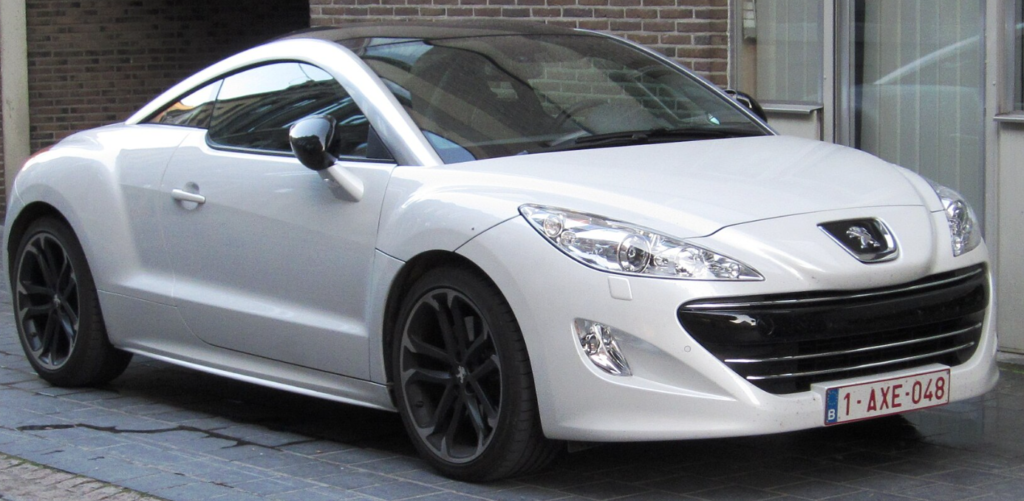
The Peugeot RCZ engine size question sounds simple until we start looking at the different versions of this stylish French coupé. At first glance, we might expect a car with the RCZ's dramatic double-bubble roof, wide stance, and sports-car proportions to hide a fairly large engine beneath its bonnet.
It doesn't.
In fact, Peugeot took almost the opposite approach.
Most Peugeot RCZ models use a 1.6-litre turbocharged petrol engine with a displacement of 1,598 cc, while diesel versions use a 2.0-litre HDi engine measuring 1,997 cc. Peugeot managed to squeeze several very different power outputs from that same compact 1.6-litre petrol engine, culminating in the spectacular 270 hp RCZ R. Contemporary Peugeot technical specifications confirm 1,598 cc for the THP petrol family and 1,997 cc for the 2.0 HDi.
So engine capacity alone tells only half the RCZ story.
Two RCZs can both have "1.6" written on their specifications yet feel like completely different cars. One might produce around 156 hp and concentrate on everyday usability, while another delivers 270 hp and behaves like a small French firecracker.
Let's dig into exactly what engines Peugeot fitted to the RCZ, how their sizes compare, and what those numbers actually mean when we're behind the wheel.
Content in this publication
- What Is the Peugeot RCZ Engine Size?
- Peugeot RCZ 1.6 THP Engine Size Explained
- Peugeot RCZ 1.6 THP 156 Engine
- Peugeot RCZ 1.6 THP 200 Engine Size
- Peugeot RCZ R Engine Size
- Peugeot RCZ 2.0 HDi Engine Size
- 1.6 THP vs 2.0 HDi: Which Engine Is Actually Larger?
- Peugeot RCZ Engine Sizes by Version
- Did the Peugeot RCZ Ever Have a 2.0 Petrol Engine?
- How Many Cylinders Does the Peugeot RCZ Have?
- Which Peugeot RCZ Engine Size Is Best for Daily Driving?
- Is the 1.6-Litre Peugeot RCZ Underpowered?
- Peugeot RCZ Engine Size and Fuel Economy
- Peugeot RCZ Engine Size and Performance
- What Engine Size Should We Look for When Buying a Peugeot RCZ?
- Why the Peugeot RCZ Engine Range Is More Interesting Than It Looks
- Closing Thoughts on Peugeot RCZ Engine Size
- Frequently Asked Questions
What Is the Peugeot RCZ Engine Size?
The Peugeot RCZ was primarily offered with two engine capacities:
| Peugeot RCZ engine | Exact displacement | Fuel | Typical power |
|---|---|---|---|
| 1.6 THP | 1,598 cc | Petrol | 150–270 hp depending on version/market |
| 2.0 HDi | 1,997 cc | Diesel | Around 163 hp |
UK technical specifications list the mainstream 1.6 THP 156, 1.6 THP 200, and 2.0 HDi 163 models at 1,598 cc, 1,598 cc, and 1,997 cc respectively. Other markets received slightly different outputs and transmission combinations, so badges and horsepower figures can vary even when the underlying displacement remains the same.
That's the short answer.
The more interesting answer is that Peugeot extracted an unusually broad range of personalities from those two engine sizes.
Is Every Petrol Peugeot RCZ a 1.6?
Essentially, yes, for the production petrol RCZ range we're discussing.
The familiar petrol engine is the 1.6 THP, with 1,598 cc of displacement. Peugeot offered it in several states of tune depending on the model year and country.
That means seeing "1.6" in an advertisement doesn't immediately tell us how quick an RCZ is.
We need the power output as well.
A regular 156 hp RCZ and a 270 hp RCZ R both use engines nominally measuring 1.6 litres. Yet the experience separating them is less like comparing twins and more like comparing a house cat with a leopard.
What Size Is the Peugeot RCZ Diesel Engine?
The diesel RCZ uses Peugeot's 2.0-litre HDi, with an exact displacement of 1,997 cc.
Peugeot's documentation lists this turbo-diesel at approximately 163 hp, with strong low-rev torque being one of its main attractions.
Interestingly, this makes the diesel RCZ physically larger in engine displacement than even the range-topping RCZ R.
Yet engine size and performance don't always walk hand in hand.
The 1.6-litre RCZ R is dramatically more powerful.
Peugeot RCZ 1.6 THP Engine Size Explained
The petrol Peugeot RCZ uses a 1,598 cc four-cylinder turbocharged engine.
THP stands for Turbo High Pressure, and this family of engines was developed during the PSA Peugeot Citroën and BMW cooperation era. Peugeot described the original 1.6 THP architecture as a 1,598 cc four-cylinder petrol engine designed to combine relatively small capacity with turbocharging and strong specific output.
That's an important part of understanding the RCZ.
Instead of relying on a naturally aspirated 2.5-, 3.0-, or 3.5-litre engine to make a sporty coupé interesting, Peugeot used turbocharging to make a relatively small engine punch above its weight.
How Big Is 1,598 cc in Litres?
Engine displacement is usually rounded when manufacturers create vehicle badges.
Therefore:
1,598 cc = 1.598 litres, conventionally advertised as 1.6 litres.
Those 1,598 cubic centimetres represent the combined swept volume of the engine's four cylinders.
We don't need to get lost in engineering textbooks here. Think of displacement as one measurement of how much air and fuel an engine can process through its cylinders during its operating cycle.
Historically, bigger engines generally meant more power.
Turbocharging changed that equation considerably.
A smaller engine can be fed much more air under pressure, allowing it to burn more fuel and produce substantially more power than its displacement might suggest.
The RCZ is a perfect demonstration.
Peugeot RCZ 1.6 THP 156 Engine
The approximately 156 hp version sits toward the accessible end of the petrol RCZ family.
Its capacity remains 1,598 cc.
Peugeot's UK specifications quoted 156 bhp for this engine, with turbocharging and direct petrol injection. Depending on model year and market, it could be paired with a six-speed manual or automatic transmission.
Is the 1.6 THP 156 a Small Engine for the RCZ?
On paper, perhaps.
In reality, not particularly.
We have to remember that the RCZ isn't a giant grand tourer. It doesn't need a huge engine merely to move with reasonable enthusiasm.
The turbocharger gives the 1.6 THP much more mid-range muscle than we'd associate with an old-school naturally aspirated 1.6.
For everyday commuting, motorway cruising, weekend drives, and occasional spirited use, the lower-output THP can therefore make plenty of sense.
We shouldn't judge this engine by capacity alone.
Why the Turbo Matters More Than the Badge Suggests
Without turbocharging, 1.6 litres sounds fairly ordinary.
Add direct injection, turbo pressure, carefully calibrated engine management, and substantial low-rpm torque, and suddenly those 1,598 cc start behaving very differently.
That's one of the central themes of the RCZ range: same displacement, dramatically different execution.
Peugeot RCZ 1.6 THP 200 Engine Size
Move to the RCZ 1.6 THP 200, and we still have the same nominal capacity.
It's 1,598 cc.
But Peugeot raised output to around 200 bhp.
Contemporary specifications gave the 200 bhp engine approximately 275 Nm of maximum torque, demonstrating how significantly the characteristics could change without increasing cylinder capacity.
1.6 THP 156 vs 200: Is the Engine Actually Bigger?
No.
This is one of the easiest RCZ specifications to misunderstand.
The 200 version isn't a 2.0 petrol engine.
It remains a 1.6.
The extra performance comes through engine specification, calibration and related component differences rather than an increase from 1.6 to 2.0 litres.
That's useful knowledge when browsing used cars because a listing simply saying "Peugeot RCZ 1.6" is incomplete information.
We want to know which 1.6.
How Does the 200 hp Version Feel Different?
The more powerful version suits the RCZ's styling particularly well.
The car already looks like something that escaped from a motor-show stand, so the stronger engine gives the performance more opportunity to match the drama outside.
We get greater urgency when accelerating, stronger performance at higher speeds, and a noticeably sportier overall character.
Yet we haven't added a single cubic centimetre.
That's clever engineering.
Peugeot RCZ R Engine Size
Now we reach the most fascinating answer to the Peugeot RCZ engine size question.
The RCZ R also uses a 1.6-litre engine.
More precisely, it has 1,598 cc.
But Peugeot Sport transformed this compact turbocharged four-cylinder into an engine producing approximately 270 hp (199 kW) and 330 Nm of torque. Peugeot stated that the engine delivered close to 170 hp per litre, an extraordinary specific output for a production car at the time.
How Can a 1.6-Litre RCZ Produce 270 hp?
This is where calling the RCZ R "just another 1.6" becomes seriously misleading.
Peugeot Sport didn't simply turn up the boost and hope for the best.
The R engine received extensive engineering changes intended to support its much higher output and demanding performance role. Peugeot documented modifications including a strengthened engine block, forged pistons, revised connecting-rod components, specialised thermal treatment and a specifically developed twin-scroll turbocharger.
In other words, the displacement might match an ordinary THP on paper, but the hardware was engineered for a very different mission.
Imagine two houses built on identical plots of land. One is a cottage; the other is a four-storey townhouse.
The footprint hasn't changed.
What engineers did with the available space certainly has.
RCZ R Specific Power
Specific power tells us how much output an engine generates per litre of displacement.
The RCZ R produces roughly 170 hp per litre, according to Peugeot's launch material.
That's why displacement by itself is such a poor tool for judging modern turbo engines.
If we'd guessed the RCZ R's output solely from its 1.6-litre size, we'd probably have underestimated it by a country mile.
Peugeot RCZ 2.0 HDi Engine Size
The alternative to the petrol THP range was the 2.0 HDi turbo-diesel.
Its exact displacement is 1,997 cc.
Peugeot specifications show this engine producing around 163 hp, with a six-speed manual gearbox in the familiar configuration.
Where the petrol engines encourage us to explore the upper part of the rev range, the diesel's party trick is torque.
How Much Torque Does the RCZ 2.0 HDi Have?
Depending on market specification and documentation, published figures sit around 320–340 Nm.
For example, Peugeot UK documentation listed 320 Nm for one specification, while Australian material quoted 340 Nm for its version. This illustrates why we should check the exact market and model year before treating one specification sheet as universally applicable.
That torque changes the way the RCZ drives.
Instead of chasing revs, we can surf the diesel's muscular mid-range.
It's less theatrical than the RCZ R, admittedly, but on a long motorway journey it can feel wonderfully effortless.
Why Did Peugeot Use a Larger Diesel Engine?
Diesel and petrol engines operate differently and are engineered around different priorities.
The 2.0 HDi wasn't intended to beat the RCZ R in a horsepower contest.
It aimed to combine the coupé body with strong pulling power, relaxed long-distance performance, and relatively economical cruising.
That makes the HDi an interesting contradiction.
It's the largest-displacement RCZ engine, but it isn't the most powerful.
Again, capacity doesn't tell the whole story.
1.6 THP vs 2.0 HDi: Which Engine Is Actually Larger?
Purely in displacement terms, the 2.0 HDi is larger.
We have:
1,997 cc in the diesel versus 1,598 cc in the petrol.
That's a difference of 399 cc.
Yet the petrol range stretches far beyond the diesel in maximum horsepower when we move into the higher-output versions.
This gives the RCZ lineup an unusual hierarchy.
The biggest engine isn't the flagship performance engine.
Does a Bigger Peugeot RCZ Engine Mean More Power?
No.
The perfect proof is sitting right inside the RCZ range.
The 1,997 cc HDi produces roughly 163 hp, while the 1,598 cc RCZ R reaches 270 hp.
That's more than 100 hp of additional output from an engine nearly 400 cc smaller.
Turbo pressure, fuel delivery, internal components, thermal management, airflow, engine calibration, compression characteristics and numerous other factors influence output.
Engine displacement is important.
It just isn't king anymore.
Peugeot RCZ Engine Sizes by Version
When we're checking an RCZ advertisement, registration document, auction listing, or prospective purchase, these are the main configurations worth recognising:
- 1.6 THP petrol: 1,598 cc, sold in several outputs depending on year and country, including roughly 150/156 hp and other market-specific versions.
- 1.6 THP 200 petrol: 1,598 cc, higher-performance mainstream manual version.
- 1.6 THP RCZ R petrol: 1,598 cc, heavily developed Peugeot Sport version producing around 270 hp.
- 2.0 HDi diesel: 1,997 cc, generally around 163 hp and focused heavily on torque and long-distance economy.
Market differences matter, particularly with automatic petrol models and horsepower ratings. Peugeot's own handbook shows several petrol outputs across international specifications rather than one universal engine lineup.
Did the Peugeot RCZ Ever Have a 2.0 Petrol Engine?
This question appears frequently because people see the 2.0 HDi and assume Peugeot must also have sold a 2.0 petrol.
The mainstream production range instead centred around the 1.6 THP petrol and 2.0 HDi diesel.
So when we encounter a Peugeot RCZ described simply as "2.0," we should expect it to be referring to the diesel unless the listing contains inaccurate or unusual market-specific information that needs checking.
Did the Peugeot RCZ Have a V6?
No production RCZ needs a V6 to explain its performance.
Its striking proportions can make the car look as though a six-cylinder engine ought to be hiding beneath that long bonnet, but Peugeot pursued smaller turbocharged four-cylinder power instead.
And in the RCZ R, that decision produced remarkable results.
There is something almost mischievous about a coupé looking this exotic while getting its most potent performance from just 1.6 litres.
How Many Cylinders Does the Peugeot RCZ Have?
The familiar RCZ petrol and diesel engines discussed here are four-cylinder engines.
The 1.6 THP is a turbocharged four-cylinder petrol engine, while the 2.0 HDi is a four-cylinder turbo-diesel.
Again, Peugeot resisted the temptation to increase cylinder count merely to make the RCZ appear more prestigious.
Instead, it focused on turbocharging, chassis balance, efficiency, styling, and usable performance.
Does Four-Cylinder Power Suit a Sports Coupé?
Absolutely—provided we judge the engine by what it does rather than by how many cylinders appear on a specification sheet.
A larger six-cylinder engine can sound richer and feel smoother.
There's no denying that.
But a compact turbocharged four-cylinder can reduce weight over the front axle, improve efficiency, and produce serious performance when properly engineered.
The RCZ R exists as the most obvious argument.
Which Peugeot RCZ Engine Size Is Best for Daily Driving?
Here's where personal priorities matter much more than raw numbers.
Someone commuting through town might appreciate the regular THP's balance of performance and everyday usability.
A driver covering enormous motorway distances may naturally be drawn toward the 2.0 HDi.
An enthusiast who wants the most intense factory RCZ experience is probably researching the RCZ R rather than wondering whether 1.6 litres sounds "big enough."
We should therefore choose by engine version, condition, maintenance history, transmission and intended use—not simply by displacement.
Why Service History Matters More Than Engine Size
A beautifully maintained 1.6 THP and a neglected 1.6 THP might technically have exactly the same capacity.
They're not remotely the same used-car proposition.
The same applies to the diesel.
Ageing performance cars reward evidence.
Invoices, documented servicing, correct fluids, sensible ownership and careful inspection tell us far more than a shiny engine cover ever will.
When buying an older RCZ, capacity is merely the beginning of the conversation.
Is the 1.6-Litre Peugeot RCZ Underpowered?
We shouldn't assume so.
Even within the RCZ family, the question is too broad because there are multiple 1.6-litre outputs.
A lower-output THP prioritises a different balance from the 200 hp model, while comparing either with the RCZ R demonstrates just how flexible the basic displacement can be.
The important question isn't:
"Is 1.6 litres enough?"
It's:
"Which 1.6 RCZ are we talking about?"
That small change makes our research much more useful.
Why Modern Turbo Engines Make Capacity Misleading
For decades, enthusiasts could make rough assumptions from displacement.
A 1.6 was modest.
A 2.0 was healthier.
A 3.0 sounded serious.
Turbocharging scrambled those old rules.
Forced induction means an engine doesn't have to rely solely on atmospheric pressure to fill its cylinders.
Push more air through a relatively small engine, combine it with appropriate fuelling and strong internals, and its effective performance potential rises dramatically.
Peugeot exploited that principle throughout the RCZ petrol range.
Peugeot RCZ Engine Size and Fuel Economy
We shouldn't automatically assume the smallest-capacity RCZ will always use the least fuel in every real-world situation.
Official figures vary by engine, transmission, market and test cycle.
Driving style matters enormously too.
A high-output turbo engine driven aggressively can drink fuel with enthusiasm, while a diesel RCZ cruising steadily over long distances plays an entirely different game.
This is why engine displacement should never be used as a shortcut for estimating running costs.
Petrol or Diesel for Long Distances?
Historically, the 2.0 HDi was the RCZ option most clearly aimed at drivers covering long distances efficiently.
Its strong torque makes motorway driving relaxed, while the diesel technology was designed around exactly that sort of use.
A petrol THP may suit lower annual mileage or drivers prioritising petrol-engine characteristics.
But because the RCZ is now an older used car, condition can outweigh theoretical efficiency advantages.
Saving a small amount at the pump means little if we buy the wrong example and immediately inherit expensive maintenance.
Peugeot RCZ Engine Size and Performance
There's a wonderful lesson hidden inside the RCZ specification sheet.
Performance isn't proportional to displacement.
Consider the two extremes.
The 2.0 HDi has nearly two litres of displacement and strong torque.
The RCZ R has only 1.6 litres yet became the most powerful production Peugeot of its era, with the company quoting 270 hp, 330 Nm, and 0–100 km/h performance below six seconds.
It's difficult to find a cleaner example of downsizing done with sporting intent.
What Is the Fastest Peugeot RCZ Engine?
The factory performance hero is the 1.6 THP 270 used in the RCZ R.
And yes, we're repeating the capacity deliberately because it's the part that surprises so many people:
1.6 litres.
Not 2.0.
Not 2.5.
Not V6.
Just 1,598 cc with a great deal of Peugeot Sport engineering wrapped around it.
What Engine Size Should We Look for When Buying a Peugeot RCZ?
Rather than searching for the "largest engine," we should search for the RCZ that matches how we'll actually use it.
The regular 1.6 THP models cover the broadest petrol territory.
The 200 hp model adds a stronger sporting flavour.
The 2.0 HDi appeals to a very different sort of owner, particularly where long-distance driving dominates.
And the RCZ R is the enthusiast special—a much rarer, more focused machine whose 1.6-litre designation barely hints at what sits underneath.
Check the Exact Version Before Buying Parts
This is especially important.
We shouldn't order engine components simply because an advertisement says "RCZ 1.6."
There are different THP specifications and power outputs.
Model year, engine code, VIN and regional specification should be verified before ordering important mechanical parts.
That tiny bit of homework can prevent an enormous headache later.
Engine Capacity Isn't an Engine Code
This distinction deserves attention.
Two engines can have the same 1,598 cc capacity while using different specifications and components.
Displacement describes size.
An engine code identifies the specific engine configuration much more precisely.
When maintenance or repairs are involved, the second piece of information can be vastly more useful.
Why the Peugeot RCZ Engine Range Is More Interesting Than It Looks
On paper, the lineup appears almost suspiciously simple.
One 1.6-litre petrol family.
One 2.0-litre diesel.
That's hardly the stuff of bedroom-wall poster mythology.
But look deeper and things become fascinating.
Peugeot used the 1.6 THP almost like a musician uses the same guitar through different amplifiers. The basic capacity stayed familiar while the output, response, tuning and purpose changed.
At the top, Peugeot Sport pushed the concept remarkably far with the RCZ R.
Suddenly 1.6 litres didn't sound humble at all.
It sounded clever.
Closing Thoughts on Peugeot RCZ Engine Size
So, what is the Peugeot RCZ engine size?
For most petrol models, the answer is 1.6 litres or 1,598 cc.
For the diesel, it's 2.0 litres or 1,997 cc.
Those numbers are straightforward.
What makes the story interesting is everything Peugeot achieved within them.
The 1.6 THP appears in different power outputs, from comparatively relaxed everyday versions to the 200 hp model and finally the 270 hp RCZ R. Meanwhile, the physically larger 2.0 HDi delivers the diesel alternative, prioritising muscular torque and long-distance efficiency.
The RCZ therefore reminds us why displacement shouldn't be mistaken for personality.
A number stamped on a specification sheet is only the size of the canvas.
What engineers paint on it is another matter entirely.
Frequently Asked Questions
1. What engine size is a Peugeot RCZ?
The Peugeot RCZ mainly uses either a 1.6-litre petrol engine with 1,598 cc or a 2.0-litre diesel engine with 1,997 cc. Different versions of the 1.6 THP were offered with substantially different power outputs.
2. What engine size is the Peugeot RCZ R?
The Peugeot RCZ R has a 1.6-litre, 1,598 cc turbocharged petrol engine. Despite its relatively small displacement, Peugeot Sport developed it to produce approximately 270 hp and 330 Nm.
3. Is the Peugeot RCZ 2.0 petrol or diesel?
The familiar production 2.0-litre RCZ is the HDi diesel, with 1,997 cc of displacement. Mainstream petrol RCZ models use the 1.6-litre THP engine.
4. Is the Peugeot RCZ 200 a 2.0-litre engine?
No. The "200" refers to approximately 200 bhp, not 2.0 litres of displacement. The RCZ THP 200 still uses the 1,598 cc 1.6-litre turbo petrol engine.
5. Does the Peugeot RCZ R have a bigger engine than the normal RCZ?
Not necessarily. The RCZ R retains the 1,598 cc 1.6-litre displacement found across the petrol family, but Peugeot Sport extensively developed the engine to achieve far greater output. Its additional performance comes from its engineering and specification rather than a larger engine capacity.
If you want to know other articles similar to Peugeot RCZ Engine Size: Complete Petrol and Diesel Guide you can visit the category Service and Parts.
Peugeot RCZ Weight: A Complete Guide to Kerb Weight and Specs
Peugeot RCZ Boot Space: How Practical Is This Stylish Coupé?
Peugeot RCZ Tyre Pressure: Complete PSI and Bar Guide
Mazda CX-8 Engine Size: Complete Petrol and Diesel Guide
Mazda CX-8 Warning Lights: Meanings, Causes, and What to Do
Mazda CX-8 Diesel Fuel Tank Capacity: Size, Range, and Refuelling Guide
Leave a Reply
More content of your interest