
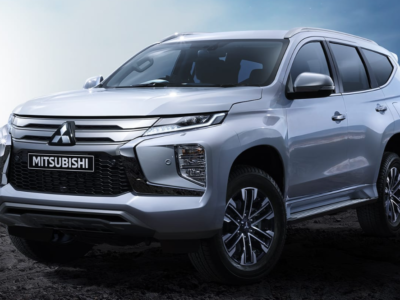
Mazda CX 8 vs CX 80: Which Three-Row Mazda Makes More Sense?

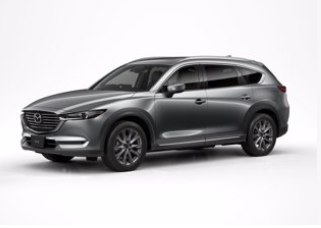
The Mazda CX 8 vs CX 80 comparison is more interesting than it first appears. At a glance, both are elegant three-row SUVs with familiar Mazda styling, family-friendly cabins, and seating for up to seven people. Park them next to each other, though, and the relationship starts to look less like an ordinary model update and more like a generational leap.
The CX-8 belonged to Mazda’s previous SUV philosophy: relatively light, manageable in size, powered by conventional four-cylinder petrol or diesel engines, and designed to blend into everyday family life without feeling enormous. The CX-80 takes a different route. It sits on Mazda’s newer Large Architecture platform, uses longitudinal engines, standard all-wheel drive in Australia, offers electrified powertrains, and pushes noticeably further toward the premium end of the market.
For an apples-to-apples comparison, we’ll primarily use Australian-market specifications, comparing the final CX-8 with the current CX-80. That distinction matters because engines, trim levels, towing capacities, and even seating arrangements vary between countries.
Mazda ended Australian-bound CX-8 production at the end of 2023 after more than five years and almost 25,000 local sales. The CX-80 subsequently joined Mazda’s new-generation large-SUV range as a six- or seven-seat model.
So, is the CX-80 simply a newer CX-8 wearing a more expensive jacket? Not quite. Let’s dig into what actually changed.
Content in this publication
- Mazda CX 8 vs CX 80 at a Glance
- Is the Mazda CX-80 the Replacement for the CX-8?
- Mazda CX 8 vs CX 80 Dimensions
- Exterior Design: Familiar Mazda, Different Attitude
- Mazda CX 8 vs CX 80 Interior
- Third-Row Space and Family Practicality
- Mazda CX 8 vs CX 80 Boot Space
- Mazda CX 8 vs CX 80 Engine Performance
- CX-80 Petrol Mild Hybrid
- CX-80 Diesel Mild Hybrid
- CX-80 Plug-In Hybrid: The Option the CX-8 Never Had
- Transmission and Driving Character
- Rear-Biased Architecture Changes the Experience
- Mazda CX 8 vs CX 80 Fuel Economy
- Towing Capacity: CX-80 Has More Headroom
- Technology: A Clear Generational Difference
- Running Costs and Ownership
- CX-8 vs CX-80 for City Driving
- CX-8 vs CX-80 for Long-Distance Touring
- CX-8 vs CX-80 for a Large Family
- What the CX-8 Still Does Extremely Well
- Where the CX-80 Moves the Game Forward
- Mazda CX 8 vs CX 80: Which Suits Which Buyer?
- What to Check Before Buying Either Mazda
- Final Thoughts on Mazda CX 8 vs CX 80
- Frequently Asked Questions
Mazda CX 8 vs CX 80 at a Glance
The biggest differences become obvious when we place the core Australian specifications side by side.
| Specification | Mazda CX-8 | Mazda CX-80 |
|---|---|---|
| Length | 4,925 mm | 4,990 mm |
| Width | 1,845 mm | 1,890 mm |
| Wheelbase | 2,930 mm | 3,120 mm |
| Seating | 6 or 7 | 6 or 7 |
| Petrol engine | 2.5L four-cylinder | 3.3L turbo inline-six MHEV |
| Diesel engine | 2.2L twin-turbo four-cylinder | 3.3L turbo inline-six MHEV |
| Plug-in hybrid | No | Yes |
| Transmission | 6-speed automatic | 8-speed automatic |
| Maximum power | 140 kW | Up to 241 kW |
| Maximum torque | Up to 450 Nm | Up to 550 Nm |
| AWD | Diesel models | Standard on current Australian CX-80 powertrains |
| Maximum braked towing | 2,000 kg | Up to 2,500 kg |
The final Australian CX-8 measured 4,925 mm long, 1,845 mm wide and rode on a 2,930 mm wheelbase. The CX-80 stretches to 4,990 mm, is 1,890 mm wide and, more importantly, has a substantially longer 3,120 mm wheelbase.
That 190 mm wheelbase increase tells us more than the modest 65 mm difference in overall length. Mazda has rearranged the proportions, creating a cabin that feels more substantial while simultaneously moving the vehicle toward a rear-drive-oriented premium platform.
Is the Mazda CX-80 the Replacement for the CX-8?
In practical showroom terms, the CX-80 occupies much of the territory previously covered by the CX-8. It gives families three rows of seats without requiring them to move to Mazda’s larger CX-90.
Still, calling it a direct replacement oversimplifies the story.
Mazda officially discontinued the CX-8 in Australia in 2023 as part of a broader transition toward electrified vehicles. The CX-80 arrived as part of Mazda’s newer Large Product Group, alongside models such as the CX-60, CX-70 and CX-90.
Think of the CX-8 as the end of one chapter and the CX-80 as the beginning of another rather than the same character wearing new clothes.
The CX-8 Formula Was Simpler
The CX-8 offered straightforward mechanical choices.
Buyers could choose a:
- 2.5-litre naturally aspirated petrol engine with front-wheel drive
- 2.2-litre twin-turbo diesel with all-wheel drive
- six-speed automatic transmission
- six- or seven-seat configuration depending on grade
Its mission was easy to understand: provide CX-9-like family usefulness in a slightly narrower body.
The CX-80 Has Bigger Ambitions
The CX-80 moves substantially further upstream.
Its Australian powertrain family includes:
- 3.3-litre turbo petrol inline-six with 48V mild-hybrid assistance
- 3.3-litre turbo diesel inline-six with 48V mild-hybrid assistance
- 2.5-litre four-cylinder plug-in hybrid
- eight-speed automatic transmission
- i-Activ AWD
The current petrol mild hybrid produces 209 kW and 450 Nm, the diesel produces 187 kW and 550 Nm, while the PHEV develops a combined 241 kW and 500 Nm.
Those are not small evolutionary steps.
Mazda CX 8 vs CX 80 Dimensions
Dimensionally, the CX-80 is unmistakably the bigger machine, but not by a ridiculous amount.
The old CX-8 was already nearly five metres long. The CX-80 crosses even closer to that threshold while adding 45 mm of body width.
CX-8 Dimensions
The final Australian CX-8 measured:
- Length: 4,925 mm
- Width: 1,845 mm
- Height: approximately 1,720-1,725 mm
- Wheelbase: 2,930 mm
Those dimensions were part of the CX-8's appeal. It provided three-row accommodation without feeling as wide as many large SUVs.
CX-80 Dimensions
The CX-80 measures:
- Length: 4,990 mm
- Width: 1,890 mm excluding mirrors
- Height: 1,710 mm
- Wheelbase: 3,120 mm
So although the CX-80 is only 65 mm longer overall, its wheelbase has grown by 190 mm.
Why the Longer Wheelbase Matters
Wheelbase is where some of the CX-80's architectural transformation hides.
A longer distance between the axles can help create more useful passenger space and different proportions while also changing how the car feels from behind the wheel.
The CX-80 has the long-bonnet, cab-rearward stance associated with Mazda's new longitudinal Large Architecture. The CX-8 looks more compact and traditionally crossover-like by comparison.
One feels like a familiar family SUV. The other wears its premium ambitions on its sleeve.
Exterior Design: Familiar Mazda, Different Attitude
Neither SUV screams for attention.
That is part of Mazda's design appeal.
The CX-8 has smooth surfaces, a relatively slim body and proportions that remain handsome even beside newer vehicles. There are fewer visual tricks than we find on many contemporary SUVs.
The CX-80 carries the same Kodo design philosophy but stretches it over a broader, more substantial canvas.
The long bonnet immediately changes the visual character. Its body appears planted rather than simply tall, and the wider stance gives it more road presence without becoming excessively aggressive.
Which One Feels Easier in Town?
This is where the older CX-8 still makes a strong practical argument.
An extra 45 mm of width might sound trivial on paper, but squeeze into a tight shopping-centre parking bay and those millimetres suddenly feel like centimetres.
The CX-8 is also considerably lighter depending on the version. Late Australian examples started around 1,799 kg for the petrol, with diesel models generally around 1,949 kg or more. By comparison, current CX-80 variants start above two tonnes, with the PHEV exceeding 2.2 tonnes in several grades.
The CX-80 therefore feels like the more substantial vehicle because, quite literally, it is.
Mazda CX 8 vs CX 80 Interior
Open the doors and the change in Mazda's priorities becomes even clearer.
The CX-8 interior aged well. Its straightforward dashboard, rotary controller, physical switches and clean shapes provide an atmosphere that is pleasantly free of gimmicks.
The CX-80 retains Mazda's preference for restrained design but layers on considerably more technology and richer materials.
CX-8 Cabin
Late CX-8 models could already be impressively equipped. Depending on grade, equipment included leather or Nappa leather upholstery, heated seats, ventilated front seats, a head-up display, wireless smartphone integration and Bose audio.
This means a high-spec used CX-8 does not suddenly feel ancient just because the CX-80 exists.
Its cabin is more analogue, yes, but sometimes simplicity ages gracefully.
CX-80 Cabin
The CX-80 turns up the luxury dial.
Current Australian grades offer equipment such as wireless Apple CarPlay and Android Auto, a 360-degree monitor, wireless phone charging, available 12.3-inch infotainment, a panoramic sunroof, Bose audio, Nappa leather and ventilated seats depending on trim.
Six Seats or Seven?
Both SUVs can be found with two distinct cabin philosophies.
Seven-seat versions use a conventional second-row bench. Certain premium variants replace it with two captain's chairs, creating a six-seat cabin.
Captain's chairs feel almost limousine-like on long journeys, but there is a trade-off: you lose one seating position.
Families regularly carrying five children or needing every available seat will probably prefer the bench.
Third-Row Space and Family Practicality
Three-row SUVs often sell themselves on the promise of seven-seat versatility, but not every third row deserves to be called a proper seat.
Both Mazdas are more convincing than compact seven-seat crossovers.
You may be interested in reading Mazda CX-8 vs Kia Sorento: Which Family SUV Makes More Sense?
The CX-80's longer wheelbase helps here. Mazda specifically engineered it as a three-row vehicle, and the second-row seats provide a one-touch mechanism to help passengers reach the back. Mazda also offers third-row ventilation as part of its three-zone climate system.
For families regularly carrying six or seven people, those small details matter far more than another tenth of a second off an acceleration time.
Mazda CX 8 vs CX 80 Boot Space
Cargo comparisons require a little caution because Mazda's published CX-8 and CX-80 figures were measured using different configurations.
The CX-8 brochure quotes 242 litres with the third row raised when including underfloor storage and measuring to the roof, expanding to 775 litres with the third row folded, including underfloor storage and measured to the roof.
The CX-80's current brochure quotes 258 litres with all seats up to seatback height including underfloor storage, 566 litres with the third row down to seatback height, and as much as 1,971 litres with both rear rows down and cargo measured to the ceiling.
Because those measuring methods differ, we would not treat 242 versus 258 litres as a perfectly controlled laboratory comparison.
The practical message is simpler: neither becomes a cargo van with seven occupants aboard, but both leave enough room for smaller bags and everyday family items. Fold the third row and the story changes dramatically.
Mazda CX 8 vs CX 80 Engine Performance
Here lies perhaps the largest mechanical divide.
CX-8 Petrol Engine
The CX-8's 2.5-litre naturally aspirated petrol four-cylinder produces:
- 140 kW
- 252 Nm
- 6-speed automatic
- front-wheel drive
Official combined consumption was listed at 8.1 L/100 km.
It is a conventional, uncomplicated setup and suits drivers who value predictable response more than effortless acceleration.
CX-8 Diesel Engine
The CX-8's 2.2-litre twin-turbo diesel produces:
- 140 kW
- 450 Nm
- 6-speed automatic
- i-Activ AWD
Official combined fuel consumption was 6.0 L/100 km.
Its generous low-rpm torque made it particularly well suited to touring and carrying a full family.
CX-80 Petrol Mild Hybrid
The new 3.3-litre turbocharged inline-six petrol changes the personality considerably.
It generates 209 kW and 450 Nm, accompanied by Mazda's 48V M Hybrid Boost system and an eight-speed automatic. Australian combined consumption is listed at 8.4 L/100 km.
It may consume roughly similar fuel to the old naturally aspirated CX-8 petrol on the official cycle, yet it produces substantially more power and torque.
That is like replacing a reliable commuter train with an express service without dramatically enlarging the fuel bill.
CX-80 Diesel Mild Hybrid
For long-distance drivers, the 3.3-litre inline-six diesel may be particularly interesting.
Mazda quotes:
- 187 kW
- 550 Nm
- 5.2 L/100 km combined
- 48V mild-hybrid assistance
- AWD
Compared with the CX-8 diesel's 140 kW and 450 Nm, the newer engine has substantially more muscle while posting a lower official combined-consumption figure.
Real-world consumption will naturally vary with load, traffic, temperature and driving style.
CX-80 Plug-In Hybrid: The Option the CX-8 Never Had
The PHEV completely changes the conversation.
It combines a 2.5-litre petrol engine with an electric motor and 17.8 kWh lithium-ion battery. Combined output is 241 kW and 500 Nm, while Mazda lists up to 65 km of electric range under the Australian test standard.
Official combined fuel consumption is 2.7 L/100 km, but plug-in-hybrid numbers need context.
That figure assumes regular battery charging and a test cycle that takes electric running into account. Drive long distances without plugging in and your actual petrol consumption will differ considerably.
Who Benefits Most From the PHEV?
It makes the most sense when we can charge frequently.
A family whose weekday routine consists of school runs, supermarket trips and relatively short commutes may complete a significant portion of its daily travel electrically.
For someone driving hundreds of motorway kilometres every week with little access to charging, the diesel deserves closer examination.
Transmission and Driving Character
The CX-8 uses Mazda's familiar six-speed automatic.
It may lack the headline appeal of eight, nine or ten ratios, but its behaviour is straightforward and predictable.
The CX-80 uses a newer eight-speed automatic as part of the Large Architecture package.
Yet transmission count alone does not define refinement. Buyers test-driving the CX-80 should pay attention to low-speed smoothness, throttle calibration and how each powertrain behaves in stop-start traffic.
The CX-80 is fundamentally the more sophisticated drivetrain package, while the CX-8 feels lighter and mechanically simpler.
Rear-Biased Architecture Changes the Experience
The CX-80's platform represents more than larger engines.
Mazda's Large Architecture uses longitudinally mounted powertrains, shifting the vehicle's basic proportions and dynamics away from the transverse architecture associated with the CX-8.
For drivers, this contributes to a more traditional premium-car sensation: long bonnet ahead, substantial body behind and a driving position that feels more integrated into a large touring vehicle.
The CX-8 remains pleasant to drive, but the CX-80 feels engineered with a more ambitious dynamic target.
Mazda CX 8 vs CX 80 Fuel Economy
The official Australian numbers make an intriguing comparison.
The late CX-8 achieved:
- 2.5 petrol: 8.1 L/100 km
- 2.2 diesel: 6.0 L/100 km
The CX-80 is listed at:
- 3.3 petrol mild hybrid: 8.4 L/100 km
- 3.3 diesel mild hybrid: 5.2 L/100 km
- 2.5 PHEV: 2.7 L/100 km under the applicable test cycle
The diesel comparison is especially revealing. Despite gaining displacement, cylinders, power and torque, the CX-80 diesel posts a lower official combined figure.
The petrol CX-80 consumes slightly more on paper than the CX-8 petrol, but remember that we are comparing a 209 kW turbo inline-six AWD SUV against a 140 kW four-cylinder FWD vehicle.
Context changes everything.
Towing Capacity: CX-80 Has More Headroom
Families buying a large SUV often think beyond school bags.
There are boats. Caravans. Trailers. Weekend toys.
The petrol CX-8 was rated for up to 1,800 kg braked towing, while diesel models could handle 2,000 kg, when appropriately equipped.
The CX-80 extends that capability.
Current Australian specifications list up to 2,500 kg braked towing for certain variants, although the D50e diesel is listed at 2,000 kg in the latest specification sheet. The exact figure therefore depends on powertrain and configuration rather than simply being “2.5 tonnes for every CX-80.”
Always check the exact variant, vehicle payload, tow-ball download and applicable local regulations before towing.
Technology: A Clear Generational Difference
Technology dates vehicles faster than leather or chrome.
The CX-8 remained competitive late in life, with a 10.25-inch Mazda Connect screen, wireless Apple CarPlay and Android Auto, head-up display and a broad selection of driver-assistance systems.
You may be interested in readingMazda CX-8 vs Kia Sorento: Which Family SUV Makes More Sense?You may be interested in reading
Mazda CX-8 vs CX-9: Which Three-Row Mazda Makes More Sense?The CX-80 adds a newer electronics architecture, available 12.3-inch infotainment, connected services, enhanced camera technology and greater feature depth across upper grades.
CX-80 Safety Technology
Mazda Australia currently advertises the CX-80 with a five-star ANCAP safety rating and features including driver monitoring, Smart Brake Support, Lane Keep Assist and available enhanced 360-degree camera functionality.
We would still judge individual safety equipment by exact model year and grade, particularly when shopping for a used CX-8.
Running Costs and Ownership
Here the newer vehicle does not automatically dominate.
A used CX-8 can represent substantially less capital tied up in a family SUV. Its conventional powertrains are also well understood after years in service.
The CX-80 adds more complexity: mild-hybrid equipment, newer electronic systems, turbocharged six-cylinder engines or a high-voltage plug-in-hybrid system depending on variant.
That does not automatically make it unreliable or expensive to own. It simply means buyers should compare warranty coverage, insurance, servicing and purchase price rather than concentrating exclusively on fuel economy.
The Used CX-8 Advantage
Depreciation has already done some of the financial work for second-hand buyers.
Instead of stretching a budget toward a brand-new CX-80, shoppers may find a high-grade CX-8 with Nappa leather, Bose audio, a sunroof and strong family equipment for significantly less than a current premium-grade CX-80.
That can be a compelling equation.
But Condition Matters More Than Badge
With a used CX-8, service history becomes crucial.
We would rather own a properly maintained lower-spec example with complete records than a neglected flagship that happens to have beautiful leather.
Inspect diesel usage history carefully as well. Modern diesels generally prefer regular longer-distance driving rather than living exclusively on very short urban journeys.
CX-8 vs CX-80 for City Driving
Urban life slightly reshuffles the comparison.
The CX-8 is:
- narrower
- lighter
- mechanically simpler
- available with petrol front-wheel drive
The CX-80 counters with:
- modern parking cameras
- available advanced 360-degree views
- electric assistance
- PHEV capability
- newer driver aids
A driver navigating tight older streets may appreciate the CX-8's slimmer footprint.
Someone with home charging and a predictable short commute may find the CX-80 PHEV far more appealing.
CX-8 vs CX-80 for Long-Distance Touring
This is where the CX-80 begins to stretch its legs.
The longer wheelbase, powerful six-cylinder options, stronger available towing capability and modern cabin technology create a convincing long-distance package.
The 3.3 diesel in particular looks purpose-built for big journeys, combining 550 Nm with an official 5.2 L/100 km combined figure.
The CX-8 diesel remains a strong touring formula, though. At 450 Nm and 6.0 L/100 km officially, it hardly turns into a poor highway car simply because its successor is faster.
Think polished grand tourer versus dependable travelling companion.
CX-8 vs CX-80 for a Large Family
Our priorities would start with seating configuration rather than engine output.
A six-seat captain-chair version can be fantastic if passengers value comfort and easy third-row access. A seven-seat bench is better if maximum capacity matters.
We would also physically install child seats before purchasing where possible.
Specifications tell us width. They do not tell us whether a particular rear-facing seat leaves enough room for a tall front passenger or whether three specific child restraints fit comfortably across the bench.
Family practicality lives in centimetres.
What the CX-8 Still Does Extremely Well
Newer does not erase the strengths of what came before.
The CX-8 remains appealing because it offers a rare combination of:
- three-row practicality
- relatively narrow dimensions
- attractive styling
- proven conventional drivetrains
- strong diesel torque
- comfortable road manners
- potentially attractive used pricing
It feels like an SUV designed around real-world compromises.
That can be more valuable than winning a specification-sheet battle.
Where the CX-80 Moves the Game Forward
The CX-80's improvements are much broader than an infotainment upgrade.
We gain a longer wheelbase, inline-six engines, hybrid technology, a plug-in option, eight-speed transmission, newer safety equipment, richer interior presentation and greater towing capacity on selected variants.
Current Australian customers can choose petrol mild hybrid, diesel mild hybrid or plug-in hybrid power, and the CX-80 is offered with either six or seven seats.
It represents Mazda trying to make a family SUV feel like something we might buy because we want it, not merely because we need three rows.
Mazda CX 8 vs CX 80: Which Suits Which Buyer?
Rather than declaring one universally superior, the useful question is what each vehicle is optimized for.
The CX-8 makes particular sense when purchase value, narrower dimensions, traditional mechanical simplicity and used-car affordability are priorities. A well-maintained diesel also remains attractive for long-distance drivers who do not need more than a 2,000 kg towing rating.
The CX-80 makes particular sense when we want stronger performance, modern technology, greater cabin sophistication, electrification or up to 2.5-tonne towing capability on applicable variants.
For buyers choosing between a used CX-8 and a new CX-80, the price difference may ultimately matter more than another 100 Nm of torque.
What to Check Before Buying Either Mazda
Before signing anything, we would work through a simple checklist:
- Confirm the exact powertrain. Petrol, diesel and PHEV versions have dramatically different characteristics.
- Check the seat layout. Six and seven seats are not interchangeable once we actually need that seventh passenger.
- Test third-row access. Bring the people who will genuinely use it.
- Compare towing ratings by variant. Do not assume every CX-80 can tow the same amount.
- Measure your garage. The CX-80 is wider and has a substantially longer wheelbase.
- Consider your driving pattern. PHEV, diesel and petrol power each favour different usage.
- For a used CX-8, inspect service history carefully.
- Compare insurance and servicing costs before focusing solely on fuel economy.
- Test-drive on ordinary roads. Ride quality at suburban speeds matters more than showroom ambience.
- Load the boot. A stroller tells us things a specification table never will.
Final Thoughts on Mazda CX 8 vs CX 80
The fascinating thing about the Mazda CX 8 vs CX 80 comparison is how clearly it shows Mazda's evolution.
The CX-8 is leaner, simpler and refreshingly straightforward. It gives families three rows without demanding the dimensions of a giant SUV, and late examples still offer plenty of comfort and technology.
The CX-80 is more ambitious. Its long-wheelbase Large Architecture, inline-six mild hybrids, plug-in-hybrid alternative and richer technology transform it into something closer to a premium grand-tourer with a third row.
We should therefore resist viewing this purely as “old Mazda versus new Mazda.”
It is really value-focused traditional family SUV versus modern electrified premium family SUV.
For used-car shoppers, the CX-8 remains relevant precisely because the CX-80 moved upward rather than merely replacing everything that made the older model appealing.
And for buyers who wanted the CX-8 idea but wished it had more power, more technology, more towing muscle and a genuinely modern drivetrain portfolio? The CX-80 is Mazda's answer.
Frequently Asked Questions
1. Is the Mazda CX-80 bigger than the CX-8?
Yes. Australian specifications list the CX-80 at 4,990 mm long and 1,890 mm wide versus 4,925 mm and 1,845 mm for the CX-8. The biggest difference is wheelbase: 3,120 mm for the CX-80 compared with 2,930 mm for the CX-8.
2. Does the Mazda CX-80 have seven seats?
Yes. The Australian CX-80 is available with seven seats, while selected configurations use two second-row captain's chairs to create a six-seat layout.
3. Which has more powerful engines, CX-8 or CX-80?
The CX-80 has significantly higher available outputs. The old Australian CX-8 petrol and diesel both produced 140 kW, while current CX-80 versions offer 209 kW petrol mild-hybrid, 187 kW diesel mild-hybrid and up to 241 kW from the plug-in hybrid.
4. Is the CX-80 more fuel-efficient than the CX-8?
It depends on the engine. The CX-80 diesel is officially rated at 5.2 L/100 km compared with 6.0 L/100 km for the late CX-8 diesel. The CX-80 petrol mild hybrid is rated at 8.4 L/100 km versus 8.1 L/100 km for the CX-8 petrol, although the newer engine provides far greater output and AWD. The CX-80 PHEV has a 2.7 L/100 km official figure under its applicable plug-in-hybrid test cycle.
You may be interested in readingMazda CX-8 vs Kia Sorento: Which Family SUV Makes More Sense?You may be interested in reading
Mazda CX-8 vs CX-9: Which Three-Row Mazda Makes More Sense?You may be interested in reading
 Mitsubishi Pajero Sport Models: Generations, Trims, Engines, and Differences Explained
5. Can the Mazda CX-80 tow more than the CX-8?
On applicable variants, yes. The CX-8 was rated up to 1,800 kg braked with petrol power and 2,000 kg with the diesel. Current CX-80 variants can reach 2,500 kg, although the exact rating varies by powertrain, with current Australian D50e diesel specifications listing 2,000 kg.
If you want to know other articles similar to Mazda CX 8 vs CX 80: Which Three-Row Mazda Makes More Sense? you can visit the category Models.
Mitsubishi Pajero Sport Models: Generations, Trims, Engines, and Differences Explained
Mazda CX-8 vs CX-9: Which Three-Row Mazda Makes More Sense?
Mazda CX-8 vs Kia Sorento: Which Family SUV Makes More Sense?
Peugeot RCZ Models: Complete Guide to Versions, Trims and Engines
Toyota Hilux Like Cars: The Best Alternatives Worth Considering
Toyota Hilux and Fortuner Same Engine: Are They Really Identical?
Leave a Reply
More content of your interest